Stanza · Audio guide
Château de Vincennes Audio Guide
A place to remember. A story to take with you.
The Château de Vincennes is a former fortress and royal residence located on the eastern edge of Paris. It is known for its 14th-century keep and the Sainte-Chapelle de Vincennes, which is an example of…
Download Stanza, then search for “Château de Vincennes”.
About the tour
One guide. Your kind of visit.
The Château de Vincennes is a former fortress and royal residence located on the eastern edge of Paris. It is known for its 14th-century keep and the Sainte-Chapelle de Vincennes, which is an example of Flamboyant Gothic architecture.
Ready when you are.
- 01Get the free Stanza app.
iOS & Android
- 02Find your guide.
“Château de Vincennes”
- 03Download before you go.
Works offline
Audio guide / 15 narrated stops
Inside the guide
Get to know a few of the stories before you go. Open a stop to read more.
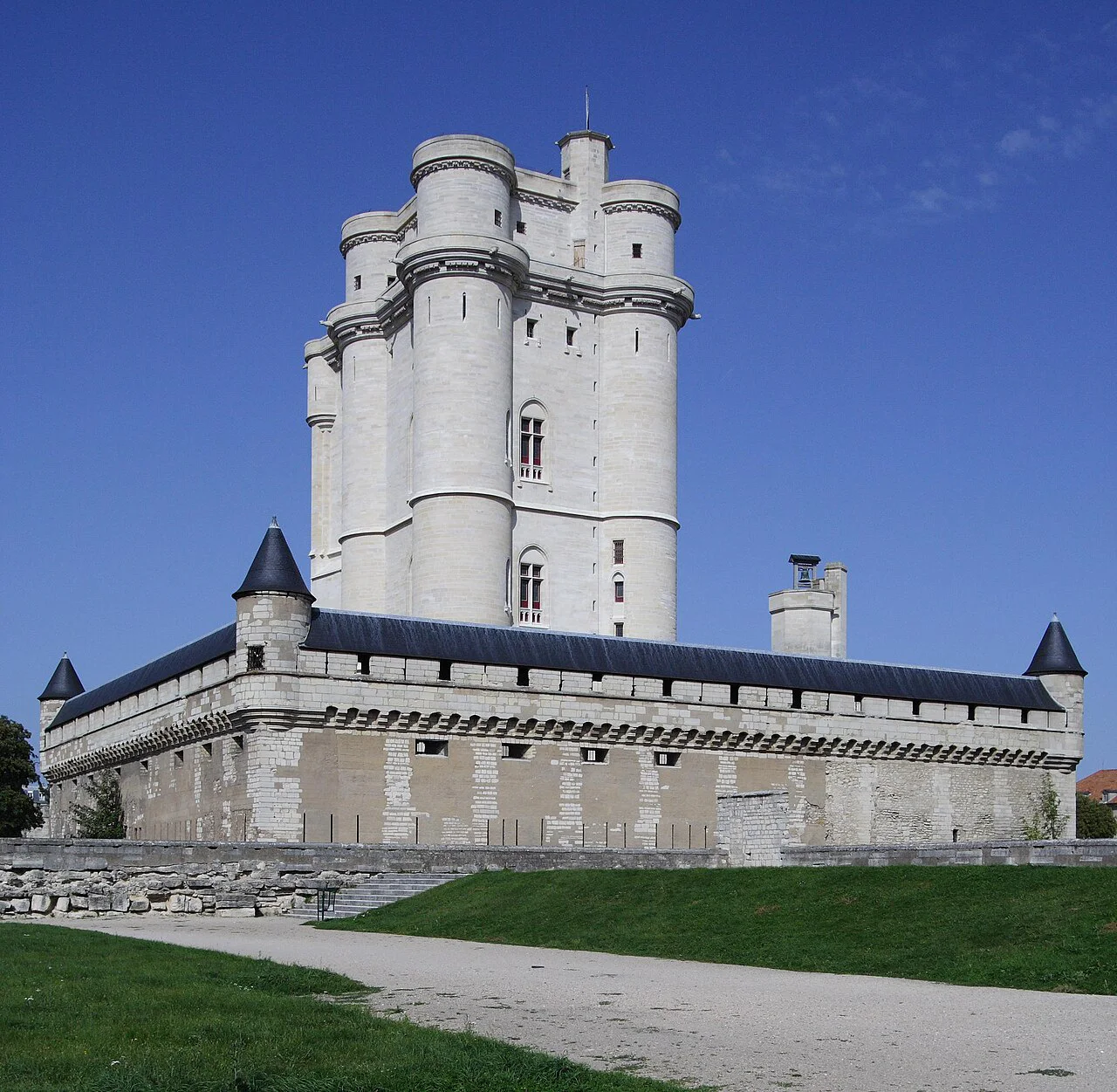
01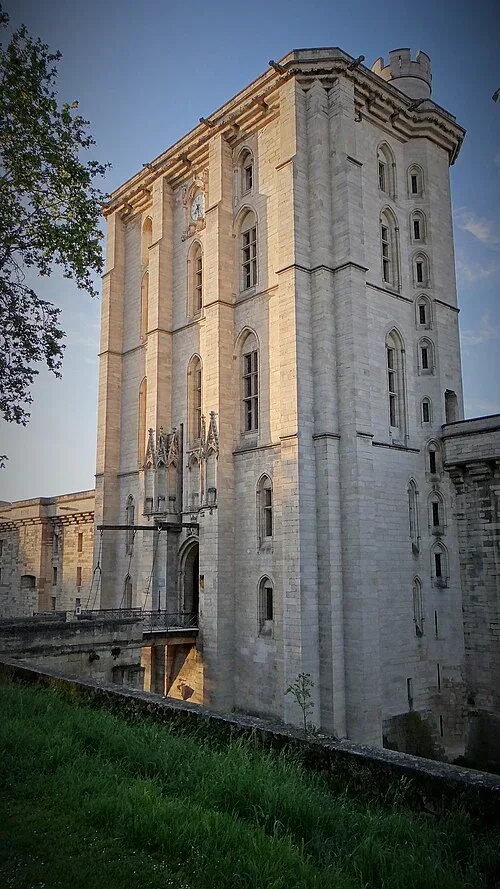 Tour du Village: The Grand Northern Gatehouse
Tour du Village: The Great Gatehouse
Welcome to the Château de Vincennes, a royal fortress and residence on the eastern edge of Paris, and the largest royal castle-fortress to survive in France. Kings came here for the hunting. In 1178 Louis VII made this a royal residence for the game in the surrounding forest, which also lay near two old Roman roads and could be reached by water on the Marne and the Seine. His successors used the place only now and then. Saint Louis was different. Apart from his palace in Paris, he spent more time here than anywhere else, holding meetings of the royal council in these buildings. The story goes that he delivered justice sitting under an oak in the forest, hearing complaints from anyone who came. His queen, Margaret of Provence, and their children often stayed here while he was away in Paris. This gate opens onto five centuries of royal building: a fortress, a palace, a chapel and a prison, raised by French kings inside a single enclosure.
Photo: Ibex73 · CC BY-SA 4.0
02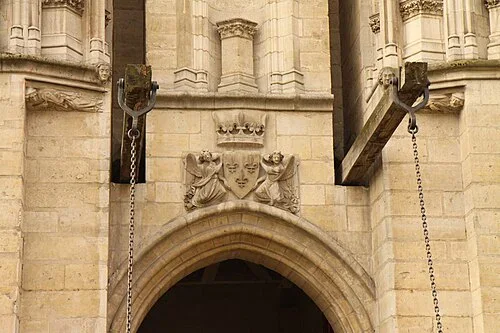 Tour du Village: The Grand Northern Gatehouse
The Drawbridge of the Tour du Village
Getting into a royal fortress was meant to impress a friend and stop an enemy. Above the arch of this gatehouse sits the royal coat of arms beneath a carved crown, held up on either side by angels. The heavy chains hanging here once connected to a drawbridge. Wooden beams pivot at the top of the wall, so the bridge could be hauled up level with the doorway and lowered again for guests. When it was raised, the only way in was across empty air. This northern tower was the ceremonial threshold of the whole complex, the gate through which kings and their courts arrived.
Photo: Thesupermat · CC BY-SA 3.0
03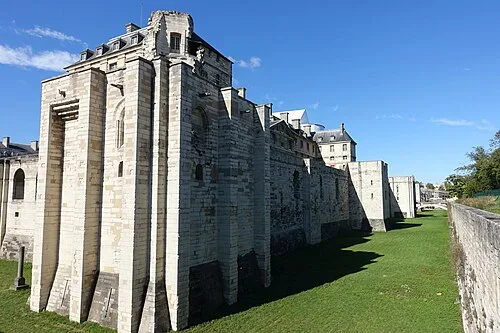 The Dry Moat and General Daumesnil's Defense
The Dry Moat and Outer Curtain Wall
The whole fortress sits on flat ground, so its builders dug deep and built high. A moat, lined with stone, runs around a curtain wall more than a kilometre long, with towers rising from it. Most of those towers were cut down in the nineteenth century; the Village tower beside the main gate kept its full height. In modern times this moat took on a darker role. Close to the fortress, on 15 October 1917, a firing squad shot Mata Hari, the Dutch-born dancer convicted of spying for Germany. On 20 August 1944, as Paris was being liberated, German soldiers executed twenty-six policemen and Resistance fighters in the eastern moat and buried them in a common grave. Another execution in this moat, in 1804, is remembered at a monument inside the chapel.
Listen in the appGuilhem Vellut from Paris, France · CC BY 2.0
04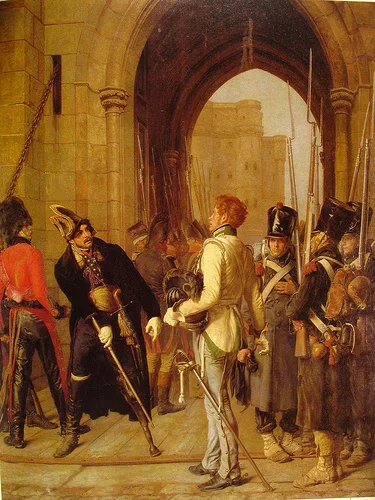 The Dry Moat and General Daumesnil's Defense
Daumesnil Refuses to Surrender Vincennes
In 1814, with Napoleon beaten in Russia and the allied armies closing on Paris, this fortress had one defiant governor. General Pierre Daumesnil, appointed by Napoleon in 1812, had left a leg on the battlefield of Wagram in 1809 and walked on a wooden one. When the allies demanded he hand over the castle, he answered: 'I shall surrender Vincennes when I get my leg back.' He held out in March 1814 during the battle of Paris, and then again in 1815, when Russian and Prussian troops tried to seize the arsenal inside. With fewer than two hundred men he endured a siege of more than five months, unmoved by pressure or by offers of money. Only a direct order from the restored king, Louis XVIII, made him open the gates, and he is said to have marched out brandishing the tricolour. The painting of his refusal dates from 1882, a romantic tribute by Gaston Mélingue rather than a record of the scene.
Listen in the appGaston Mélingue · Public domain
05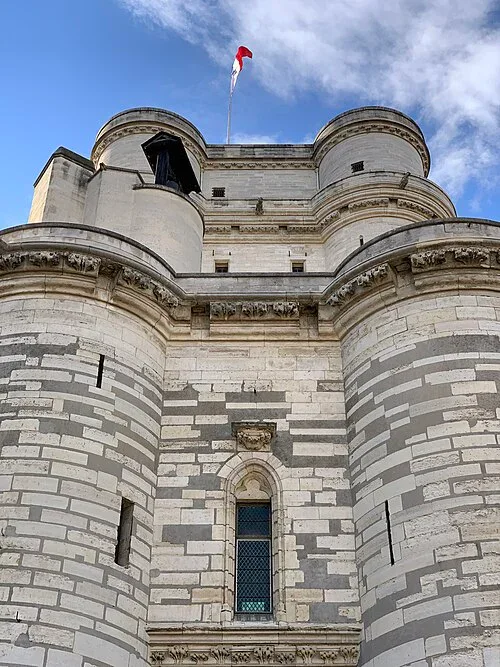 The Châtelet and Europe's Tallest Medieval Keep
The Châtelet Gatehouse of the Keep
Beyond the outer walls, the great tower had defenses of its own: a castle within a castle. A rectangular stone wall about fifty metres on a side encircles the keep, crenellated at the top, its walkway once open to the sky and later roofed, today under slate. At each corner a small watch turret juts out over the wall, giving guards a clear view along every face. The fortified gatehouse, the châtelet, controls the way through. Its second floor held the king's working rooms: a small chapel, a hall and a chamber, set right beside the gate. The stonework alternates pale and dark courses, and the projecting machicolations above let defenders drop stones on anyone reaching the wall.
Listen in the appPhoto: Chabe01 · CC BY-SA 4.0
06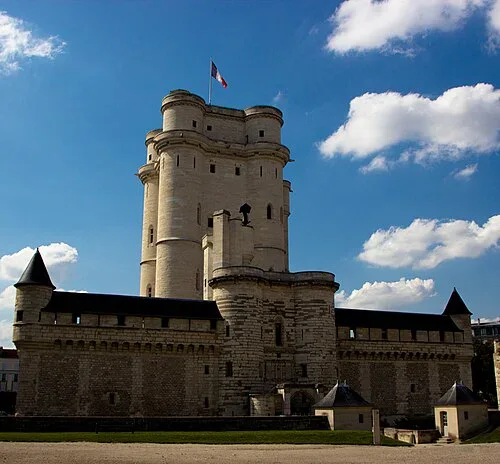 The Châtelet and Europe's Tallest Medieval Keep
The Donjon: Europe's Tallest Medieval Keep
The great tower at the centre was the whole point of the place. Work began around 1337, under Philip VI. Later, defeats in the Hundred Years' War, the capture of King John II by the English, and the Parisian uprising under Étienne Marcel convinced John and his son, the future Charles V, that they needed a secure residence close to Paris but outside its reach. By 1364 the three lower levels of the keep stood finished, and Charles V moved in around 1367 or 1368 while builders were still at work. When the tower was complete, in 1369 or 1370, it was the tallest fortified structure in Europe, about fifty metres high. It served as a royal residence and, just as deliberately, as a statement: royal power made visible in stone, raised by a king who no longer trusted Paris.
Listen in the appMad · CC BY-SA 3.0
07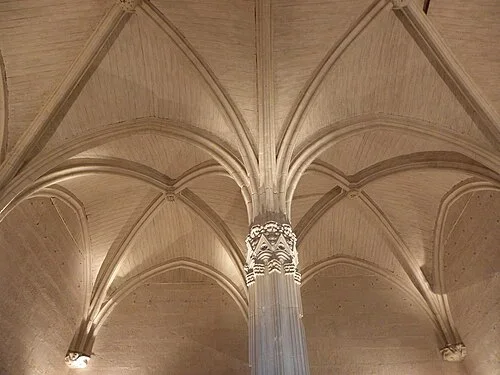 Charles V's Royal Apartments: Council Hall and Bedchamber
The Council Hall of the Keep
Government ran from inside this tower. The first floor held the meeting hall of the King's Council, where royal business was decided behind these walls; when needed, the same floor served as bedchambers for the queen and those close to the king. The vaulted stone ceiling rests on a central column, and hidden in the structure is something remarkable for the fourteenth century: iron. More than two and a half kilometres of iron bars were built into the tower, reinforcing doorways, windows and corridor ceilings, with belts of iron wrapping the tower at ground level and again at the fifth and sixth floors. Vincennes is one of the earliest known examples of reinforced construction. Even the oak panelling on these walls has a story: studies of the wood show it was cut between 1367 and 1371, in the Baltic region or present-day Poland, and some of it is still in place.
Listen in the appPhoto: GO69 · CC BY-SA 3.0
08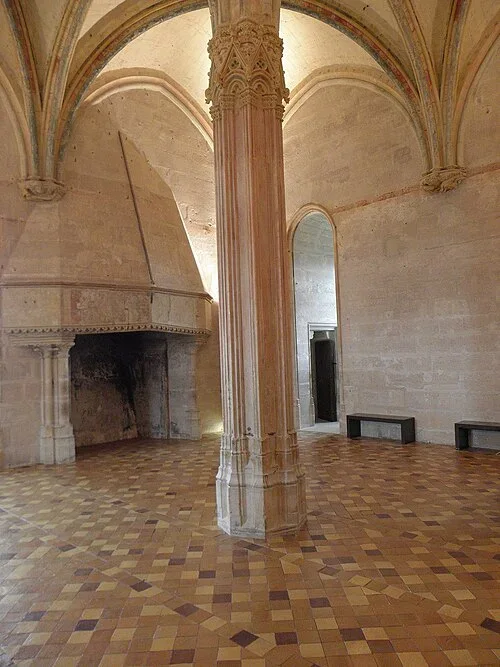 Charles V's Royal Apartments: Council Hall and Bedchamber
The King's Bedchamber
One floor above the council, the king slept. This was the bedchamber of Charles V, decorated for him while the tower was being finished. A monumental fireplace warms one side of the room, and a carved column rises to the vaulted ceiling. The walls were once covered in oak panelling, and the vaults were painted with fleurs-de-lys and the royal coat of arms against a blue background; traces of that decoration are still visible. Set into the north wall is a small oratory, a private place of prayer joined to the king's own bedroom. Its wood panelling has long since disappeared.
Listen in the appPhoto: GO69 · CC BY-SA 3.0
09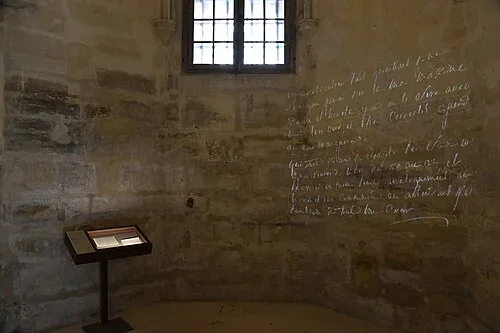 The Upper Keep: State Prison and Inmate Inscriptions
The Marquis de Sade's Cell
After the kings left, the plain upper floors of the keep found a new use: a state prison for people the crown wanted out of sight, held under royal arrest warrants. The Marquis de Sade spent years here, from 1777 to 1784. The writer Honoré Mirabeau was imprisoned over the same span. Jean Henri Latude, a celebrated escape artist, got out of Vincennes twice, and once out of the Bastille as well. The iron bars on this window date from the prison years. In 1784 Mirabeau published articles exposing the abuses of the royal justice system and the practice of holding prisoners without trial, and the keep's days as a prison came to an end.
Listen in the appPhoto: Paul Hermans · CC BY-SA 4.0
10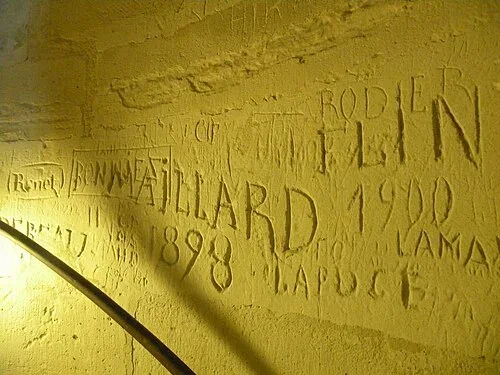 The Upper Keep: State Prison and Inmate Inscriptions
Graffiti in the Stair Turret
The climb to the top runs through narrow spiral stairways set into the walls. In the Middle Ages the only way into the keep was on the first floor, across a bridge from the châtelet terrace; the ground-floor entrances were added much later, in the eighteenth century. The plainest floors, without ornament, housed servants and soldiers, and stores of munitions for the weapons mounted at the windows. The sixth floor has no windows at all and a ceiling barely two metres high. From 1752 the upper floors served mainly as prison cells. The walls carry layers of carved names and dates, mostly from the seventeenth and eighteenth centuries, and later hands added their own, including dates as late as 1900.
Listen in the appPhoto: Chatsam · CC BY-SA 3.0
- 11
The Sainte-Chapelle: Flamboyant Facade
A chapel for the Crown of Thorns, begun in 1379 and finished in a very different age.
- 12
Renaissance Stained Glass of the Sainte-Chapelle
The Apocalypse in Renaissance glass, and how the chapel survived life as a munitions store.
- 13
The Tomb of the Duc d'Enghien
The marble monument to the young prince shot in the moat on Napoleon's order in 1804.
- 14
The King's Pavilion (Pavillon du Roi)
Le Vau's classical palaces, the court's departure to Versailles, and the fire that gutted the interiors.
- 15
The Queen's Pavilion (Pavillon de la Reine)
The bunker beneath the Queen's Pavilion where France's defense was directed in 1940, and the château today.
Château de Vincennes
Frequently asked questions
How much does the guide cost?
Free app download. Listed guide price: $1.99. Guide price shown in the app. Audio guide only. Venue admission is separate.
Can I listen without internet?
Yes. Download the guide’s audio, images, and maps in the app before your visit. Your downloaded content is then available offline.
Can I listen in my language?
This audio guide is available in 15 languages, including English.
Do I need to follow a schedule?
No. This is a self-guided experience. Choose your stops, pause whenever you like, and return to a story at your own pace.
At your own pace
Explore Château de Vincennes.
Download Stanza, then search for “Château de Vincennes”.
Free app download · Guide price shown in the app
Keep exploring
Nearby audio guides
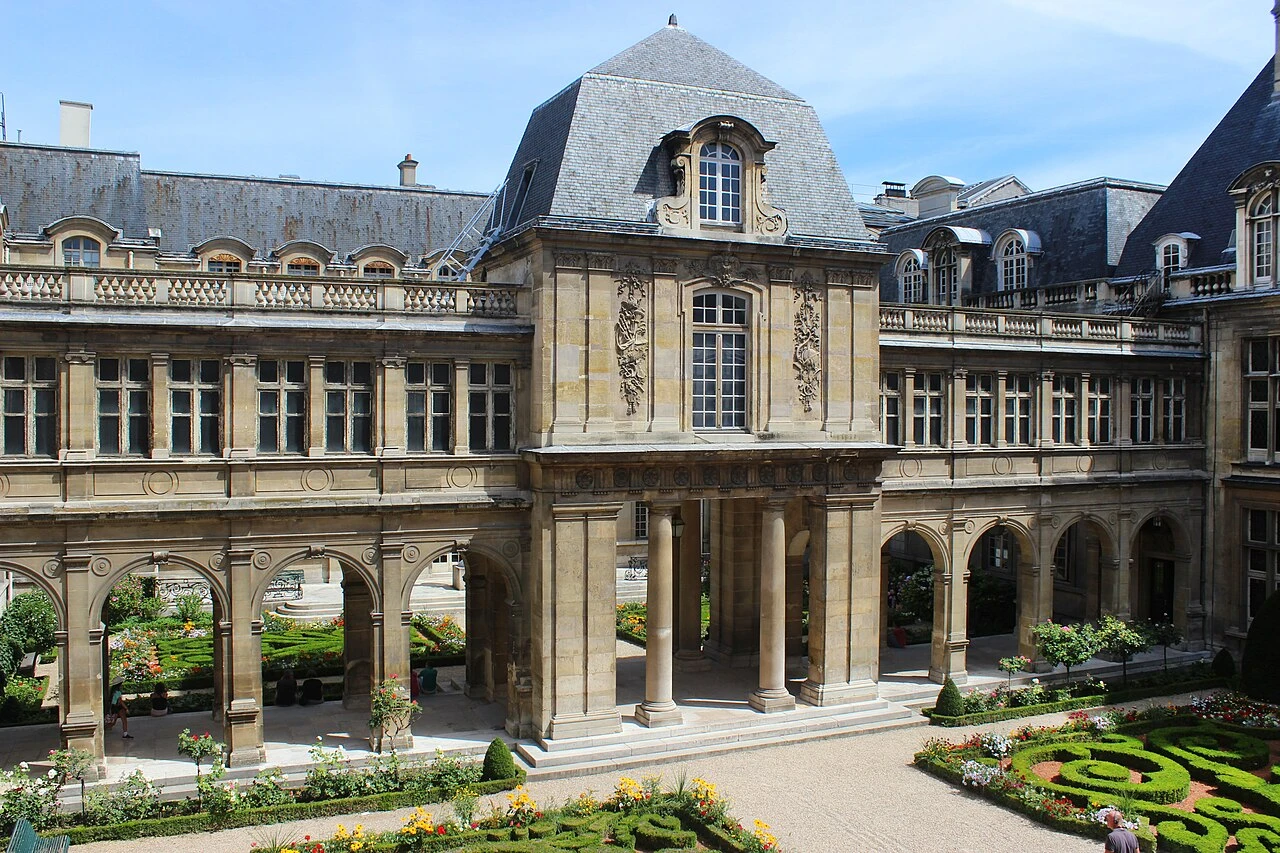
Paris · 6 km
Musée Carnavalet
Content & sources
Miguel Hermoso Cuesta · CC BY-SA 4.0
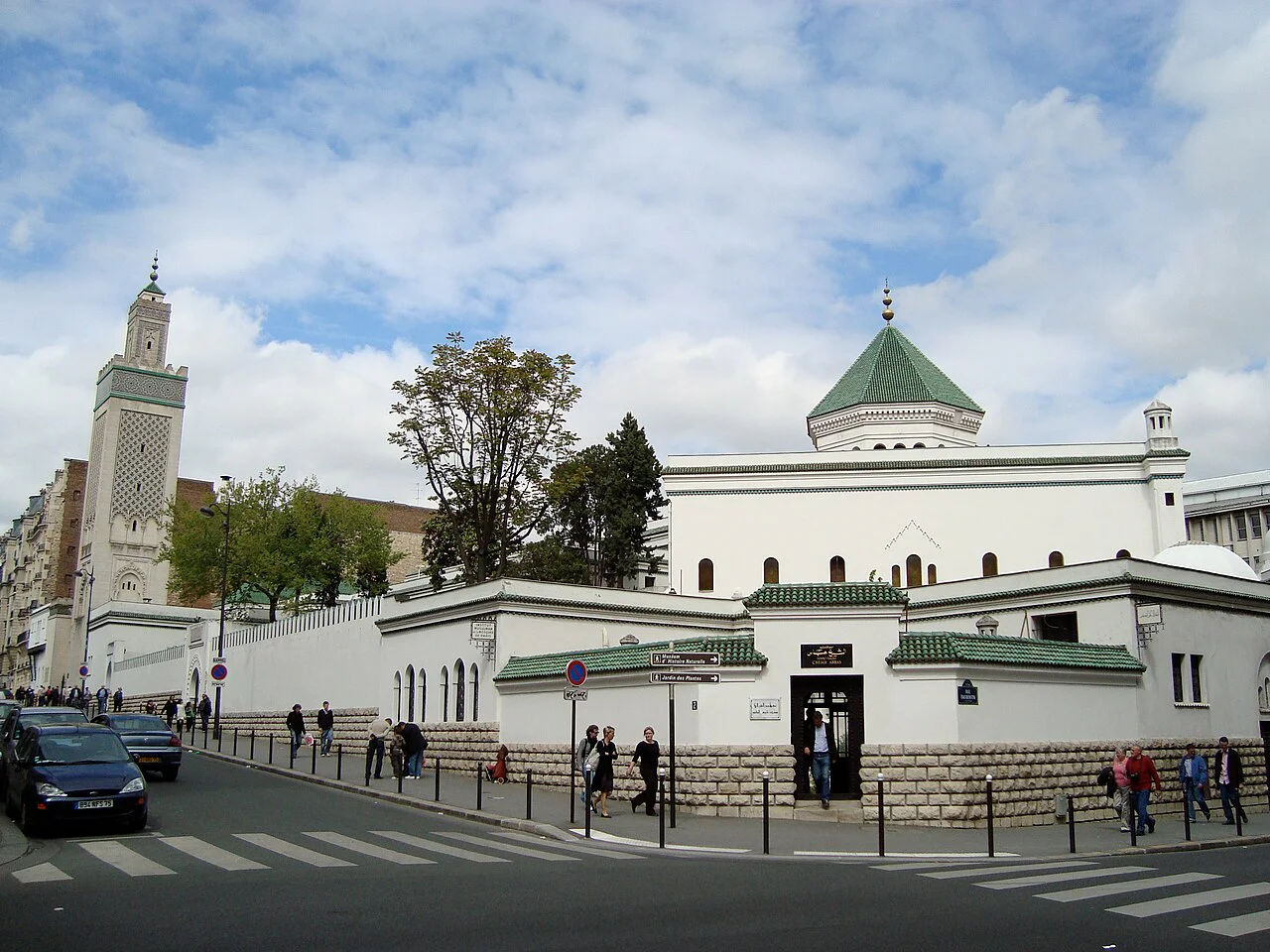
Paris · 6 km
Grande mosquée de Paris
Content & sources
Photo: LPLT · CC BY-SA 4.0
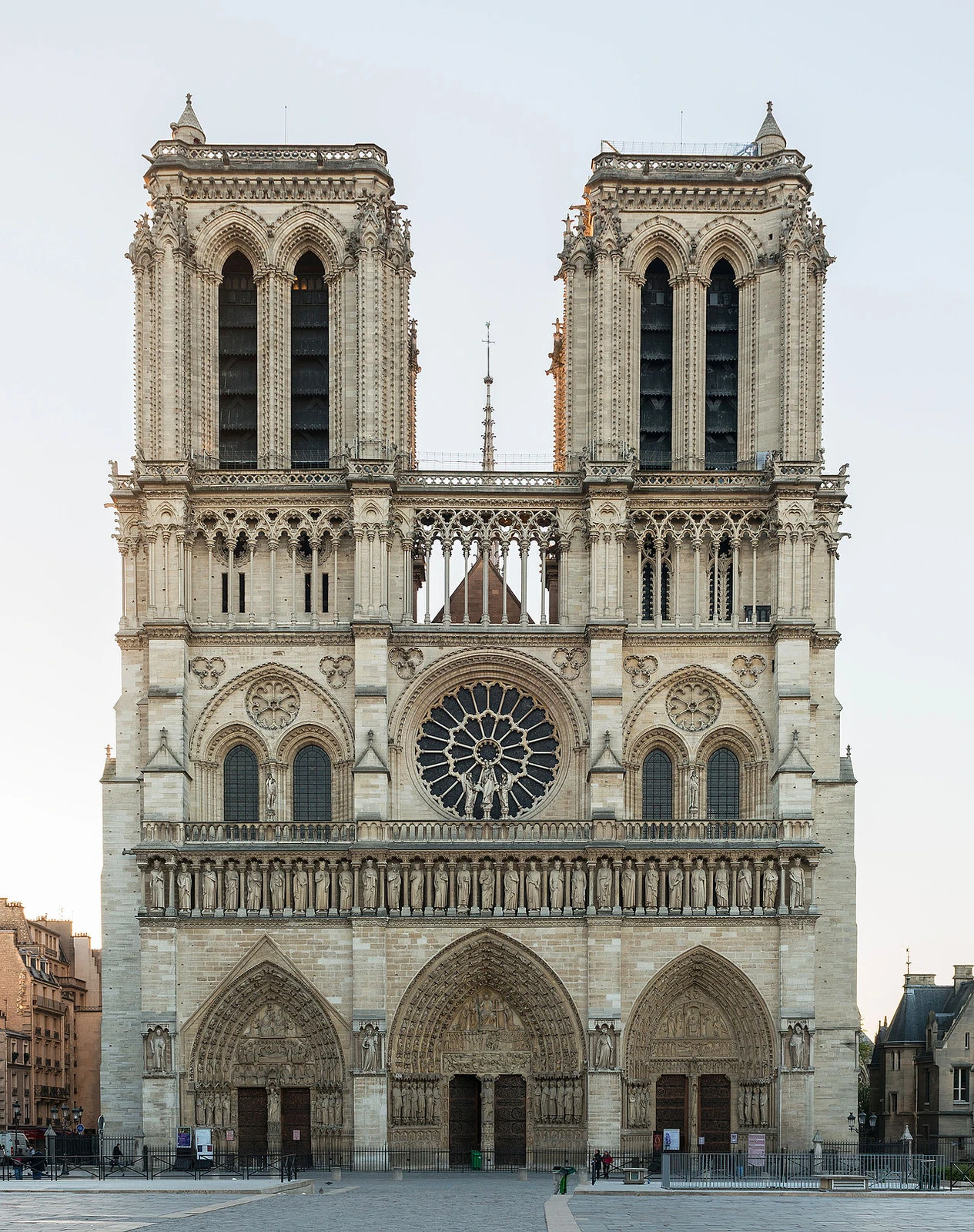
Paris · 6 km
Notre-Dame de Paris
Content & sources
DXR · CC BY-SA 3.0
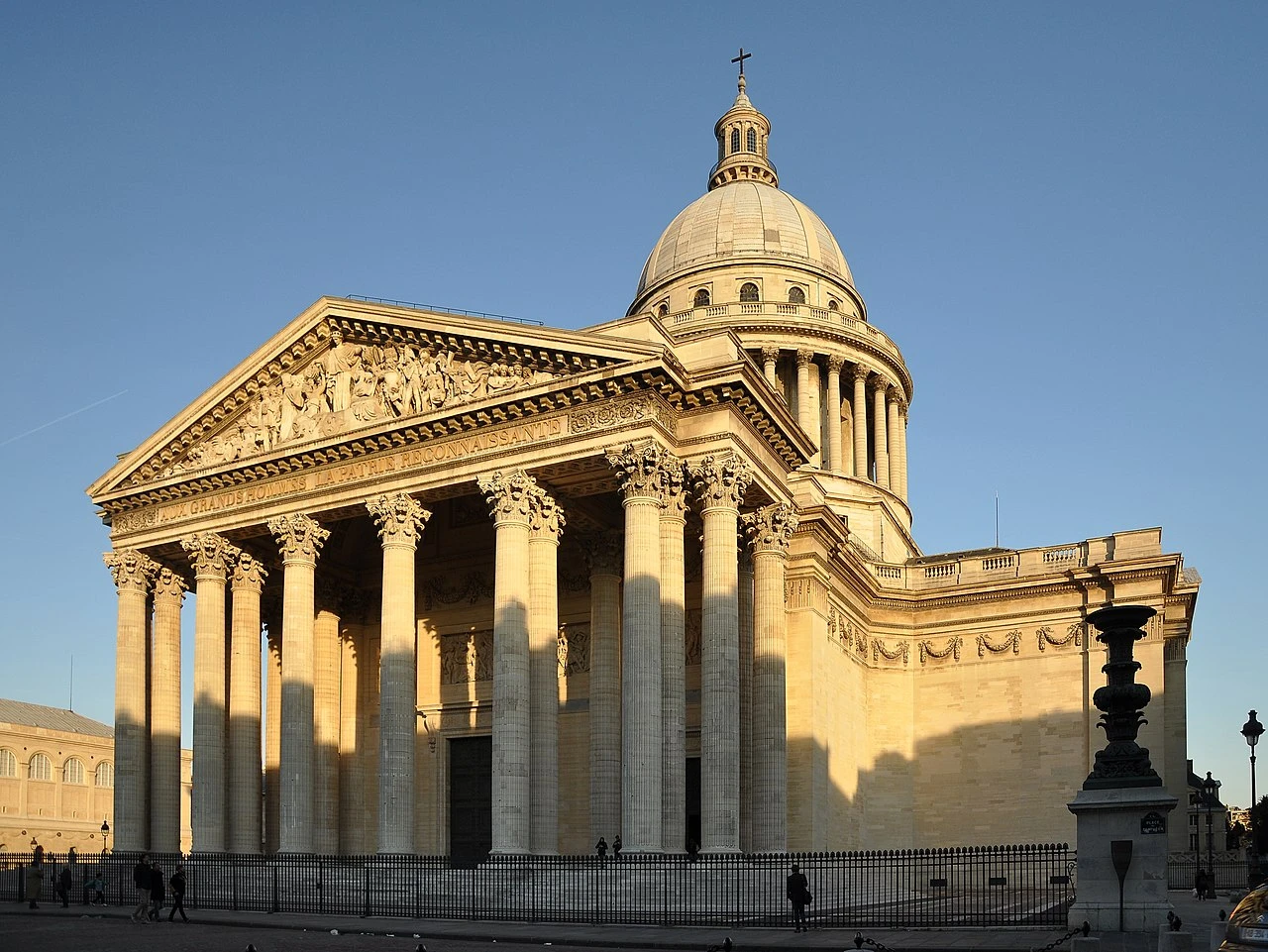
Paris · 7 km
Panthéon
Content & sources
Photo: Moonik · CC BY-SA 3.0