Stanza · Audio guide
PanthéonAudio guide
A place to remember. A story to take with you.
A grand neoclassical building in Paris, France, originally constructed as a church dedicated to St. Genevieve. It now serves as a national mausoleum for France's most distinguished citizens, housing the…
Download Stanza, then search for “Panthéon”.
About the tour
One guide. Your kind of visit.
A grand neoclassical building in Paris, France, originally constructed as a church dedicated to St. Genevieve. It now serves as a national mausoleum for France's most distinguished citizens, housing the remains of figures like Voltaire, Rousseau, and Marie Curie.
Ready when you are.
- 01Get the free Stanza app.
iOS & Android
- 02Find your guide.
“Panthéon”
- 03Download before you go.
Works offline
Audio guide / 25 narrated stops
Inside the guide
Get to know a few of the stories before you go. Open a stop to read more.
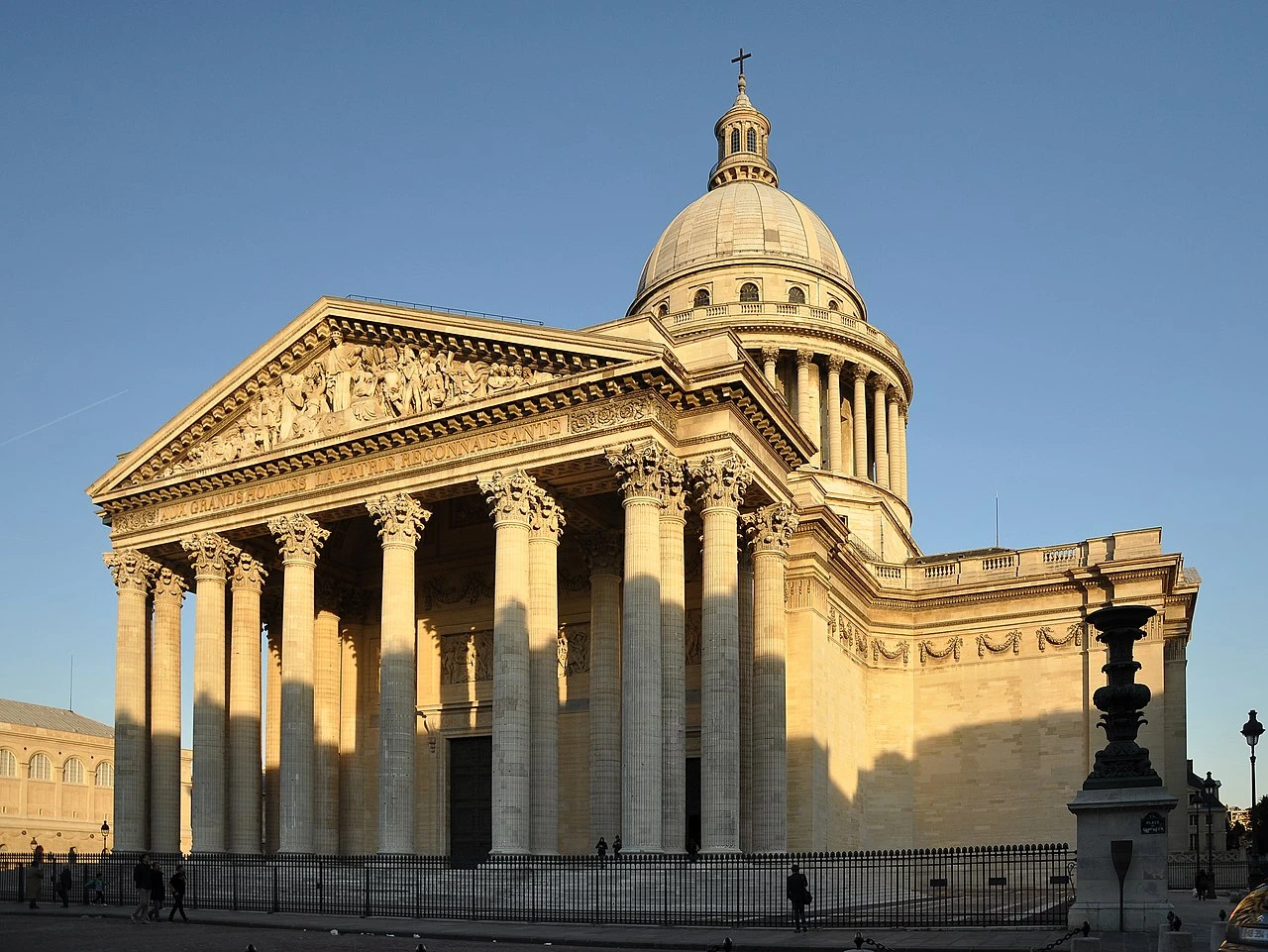
01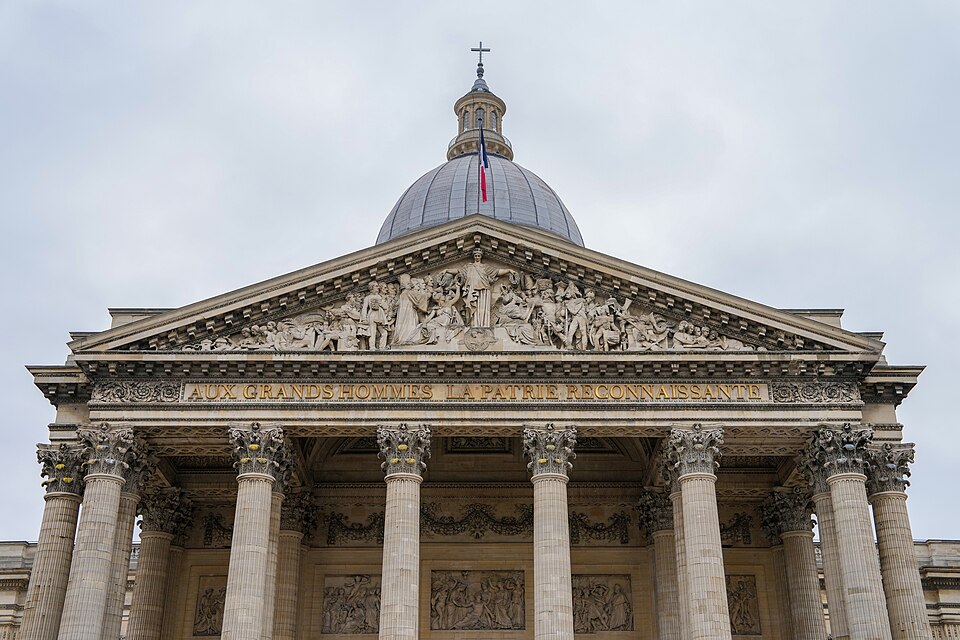 The Portico and PedimentThe Neoclassical Facade
Welcome to one of the most significant landmarks in the French capital. As you stand before this imposing structure, you are witnessing the pinnacle of 18th-century neoclassical architecture. This massive monument reaches a total height of 83 meters, stretching 110 meters in length and 84 meters in width. Its design was a deliberate attempt by architect Jacques-Germain Soufflot to move away from the ornate Baroque style of the previous era, seeking instead the purity and mathematical order of ancient Greek and Roman architecture. The story of its construction begins in 1758, but its origins are rooted in a personal vow. In 1744, King Louis XV fell gravely ill in the city of Metz. He promised that if he recovered, he would replace the crumbling, ancient Abbey of Saint Genevieve with a magnificent new church dedicated to the patron saint of Paris. He did recover, and construction began fourteen years later. However, the project would take decades to complete, spanning through periods of immense social and political upheaval. What began as a king’s tribute to a saint would eventually be transformed by the French Revolution into a secular temple dedicated to the great figures of the French nation. As you gaze at the facade, imagine the transition from a site of royal religious devotion to the ultimate symbol of national civic identity.
Photo: Giles Laurent · CC BY-SA 4.0
02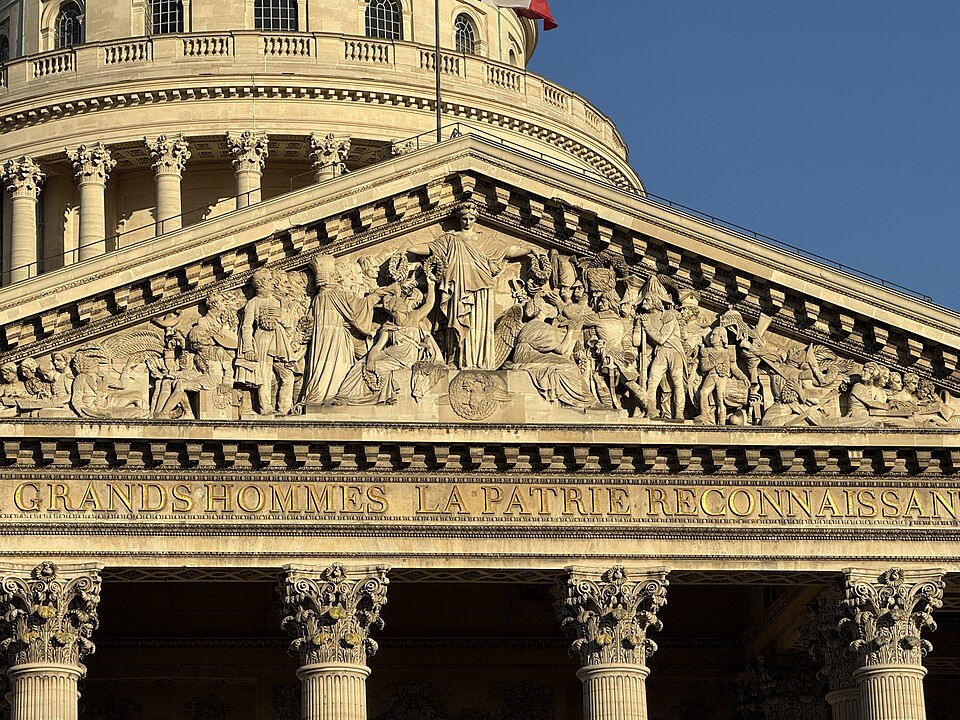 The Portico and PedimentThe Front Pediment
Notice the striking inscription carved into the stone above the columns: 'Aux grands hommes la patrie reconnaissante,' which translates to 'To great men, the grateful homeland.' This single sentence fundamentally changed the identity of this building, marking its official transition from the Church of Saint Genevieve to a secular temple of national gratitude. It serves as a permanent reminder that the individuals honored inside earned their place through service to the republic rather than divine right. The sculptural group filling the triangular pediment was created by the artist David d'Angers and added in 1837. It is a dense, symbolic scene that captures the spirit of the French nation. At the very center stands a figure representing the Motherland, or France herself. She is depicted distributing laurel wreaths to great citizens as a mark of high honor. Flanking her are allegorical figures representing Liberty, who hands out the crowns, and History, who records the names of the honored for eternity. Below them, you can see a variety of figures representing the diverse fields of achievement that France honors—from soldiers and scientists to artists and politicians. This pediment serves as a visual manifesto for the Panthéon, establishing it as a place where the collective memory of the nation is preserved through the celebration of individual excellence.
Photo: Chabe01 · CC BY-SA 4.0
03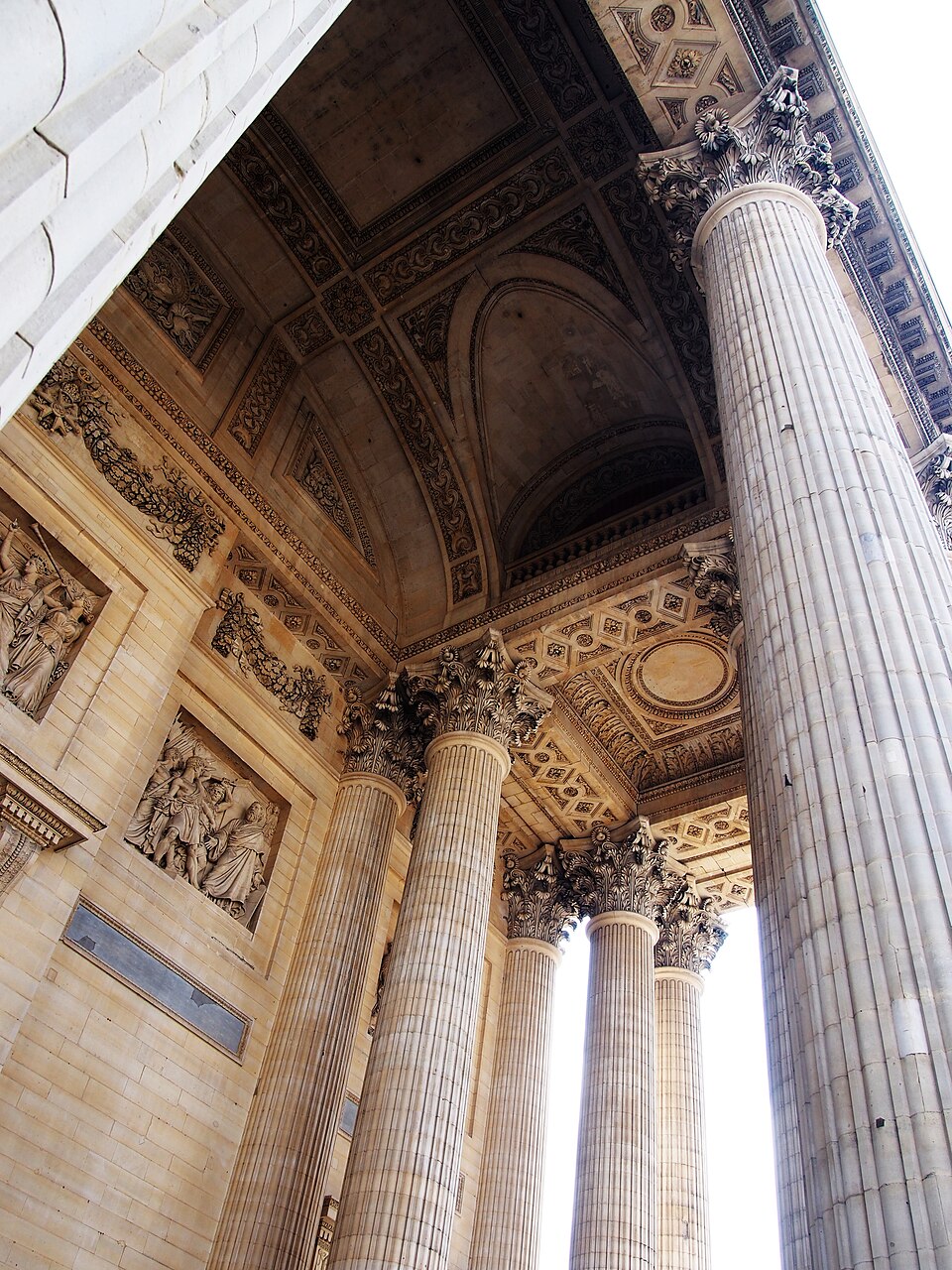 The Narthex and Entrance PorticoThe Corinthian Portico
The grand entrance of the Panthéon is defined by its magnificent portico, supported by twenty-two massive Corinthian columns. These pillars were modeled directly after those of the ancient Pantheon in Rome, reflecting the neoclassical desire to bring the grandeur of antiquity to the streets of 18th-century Paris. Each column is meticulously carved, featuring the characteristic acanthus leaf capitals that define the Corinthian order. The scale is intentionally overwhelming, designed to make the visitor feel small in the face of the monument's significance. Achieving this architectural feat was a monumental struggle for the architect, Jacques-Germain Soufflot. The project was constantly plagued by financial difficulties, shifting political winds, and intense professional jealousy. Many contemporary critics were skeptical of Soufflot’s vision, creating a public controversy regarding the stability of such massive stone structures. They feared the weight of the masonry would cause the building to collapse under its own gravity. Because of these challenges and the sheer complexity of the design, the project took thirty-two years to complete. Soufflot spent the latter half of his life defending his engineering choices, and sadly, he died before the portico was finished. Today, these columns stand as a testament to his persistence and his revolutionary belief that stone could be used to create spaces that were both massive in scale and elegantly proportioned.
Listen in the appPhoto: Qrup133 · CC BY-SA 4.0
04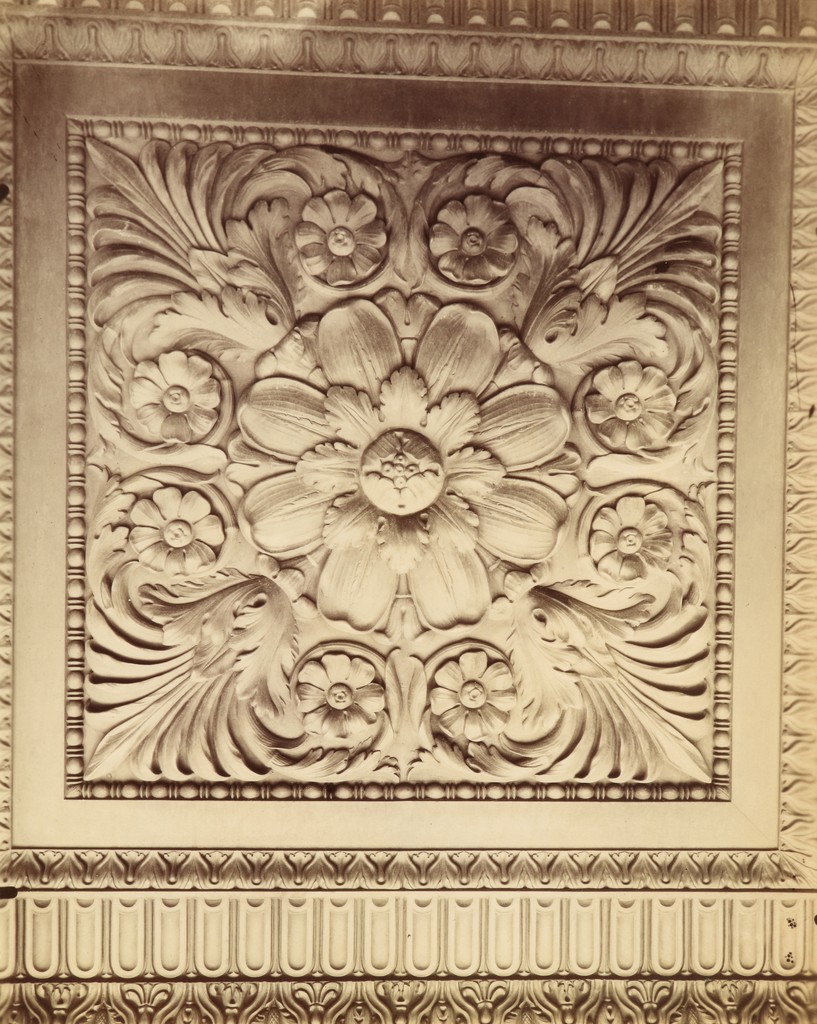 The Narthex and Entrance PorticoThe Bronze Doors
As you approach the entrance, take a moment to consider the transition this threshold represents. In this historical photograph from 1912 by Eugène Atget, we see the building at a time when its identity as a secular monument was finally settled, yet its religious past remained visible in every stone. These doors have witnessed the building's identity being rewritten four times during the 19th century as it toggled between a church and a national memorial. However, not all the history here is ancient. In 2005, a secret group of urban explorers known as 'Untergunther' revealed a fascinating hidden chapter of the building's life. For an entire year, several members of the group lived in a secret, expertly equipped workshop hidden inside the Panthéon. They weren't there to cause damage; they were there to save a piece of the building's heritage. The 19th-century clock had been broken and neglected for years, and the state had no plans to fix it. Working in total secrecy and often during the night, they meticulously repaired the clock’s complex mechanisms for free. They only revealed their presence to the administration once the clock was ticking perfectly again. This story highlights the deep personal connection many feel toward this monument, showing that it remains a living, breathing part of the city, with secrets still tucked away behind its official facade.
Listen in the appEugГЁne Atget · Public domain
05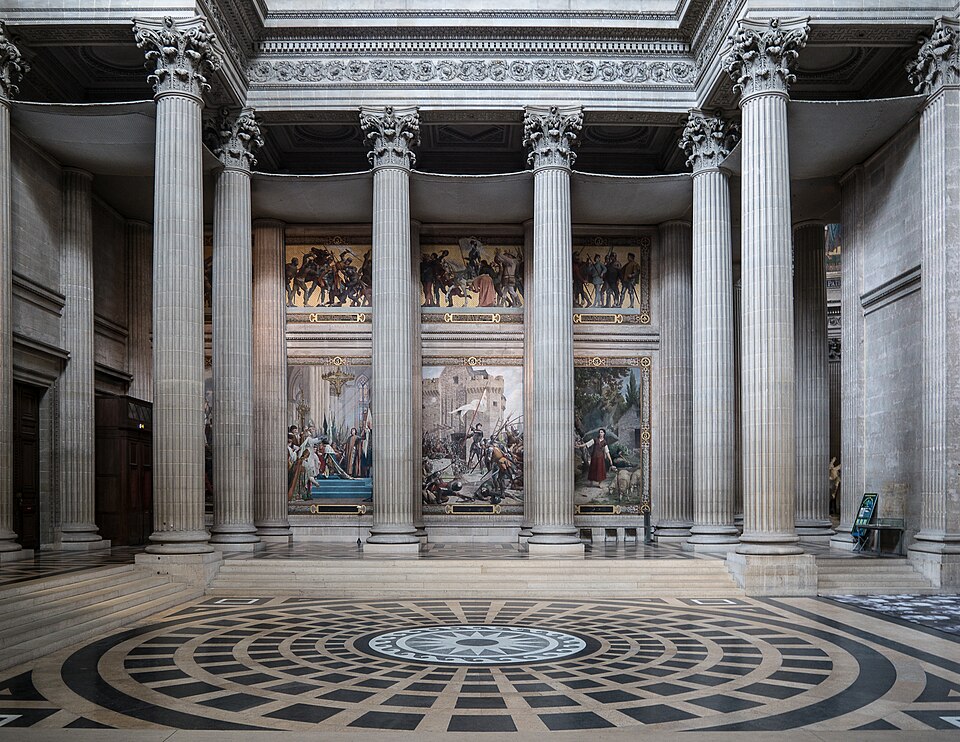 The Nave and Murals of Saint GenevieveThe Great Nave
Entering the interior of the Panthéon, the sheer volume of space is immediately apparent. The floor plan is designed in the shape of a Greek cross—meaning all four arms are of equal length—creating a sense of perfect symmetry and balance. This interior was the heart of Jacques-Germain Soufflot's revolutionary architectural vision. He didn't just want to copy the past; he wanted to synthesize two seemingly opposite styles: the lightness and soaring verticality of Gothic cathedrals and the majesty, order, and classical proportions of ancient Greece and Rome. Notice how the light floods the interior from high above, reflecting off the pale stone surfaces. Soufflot achieved this 'lightness' by using slender pillars and large windows, a technique borrowed from the medieval builders who created the great cathedrals like Notre-Dame. He wanted the structure to feel as though it were defying gravity, moving away from the heavy, thick walls traditional to classical masonry. The result is a space that feels both solid and ethereal. The columns you see lining the nave aren't just decorative; they are part of a sophisticated structural system designed to support the massive weight of the roof and the central dome. As you move through the nave, the shifting perspectives and the play of light emphasize the mathematical precision Soufflot brought to this project, creating a sanctuary for thought and national reflection.
Listen in the appYann Caradec from Paris, France · CC BY-SA 2.0
06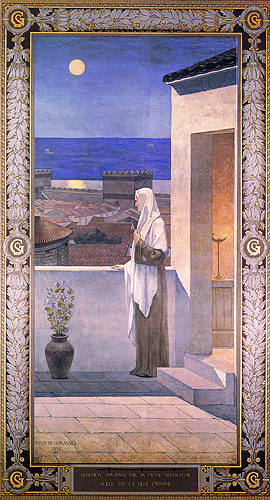 The Nave and Murals of Saint GenevieveSainte Geneviève watching over Paris
This serene mural is part of a large cycle of paintings commissioned in the late 19th century to decorate the interior walls. It depicts Saint Genevieve, the patron saint of Paris, standing on a balcony as she watches over the city during the night. The artist has captured a quiet, atmospheric moment, with the moon casting a cool, blue light over the rooftops of a medieval Paris that is peacefully asleep. The calm of the painting belies the turbulent history of the woman it celebrates. Genevieve became a legendary figure and the symbol of French resilience in the year 451 AD. As the armies of Attila the Hun approached Paris, panic gripped the population, and many residents prepared to flee. It was Genevieve who famously rallied the citizens, urging them to stay, pray, and resist. Tradition holds that her courage and leadership inspired the people so much that Attila diverted his forces, leaving Paris untouched. Later, during a siege by the Franks, she is said to have navigated a boat through blockades to bring food to the starving city. For centuries, the Abbey that stood on this very site held her relics, and she remains a central figure in the identity of Paris. This painting reminds us that before this building was a monument to secular 'great men,' it was intended to be the ultimate shrine to the city’s most beloved female protector.
Listen in the appPierre Puvis de Chavannes · Public domain
07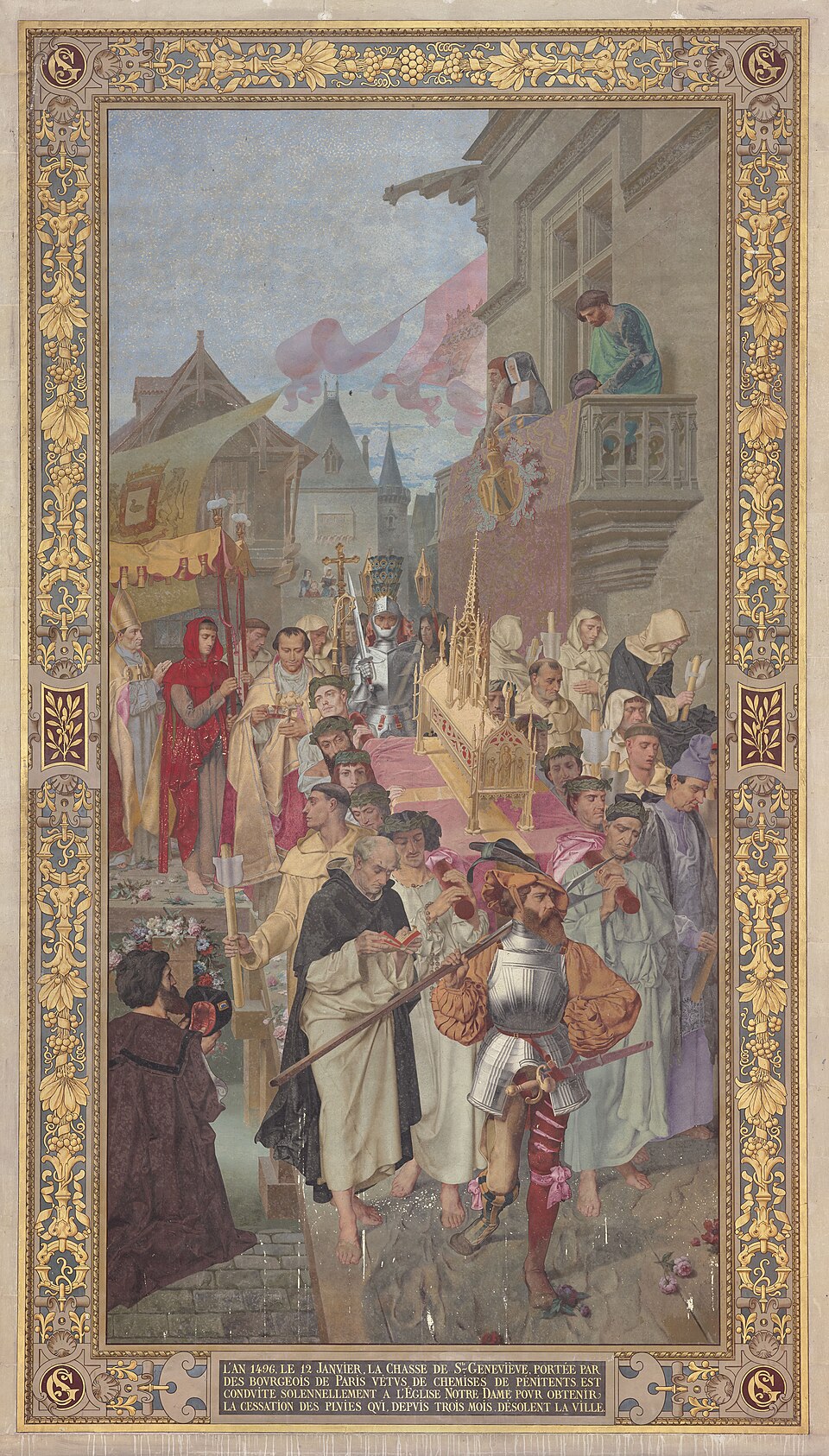 The Nave and Murals of Saint GenevieveMiracles of the Patron Saint
The vibrant murals you see along the walls depict various miracles and processions associated with Saint Genevieve. This particular scene shows a solemn processional, with priests, soldiers, and citizens carrying her golden shrine through the streets of Paris. These artworks are more than just religious illustrations; they are artifacts of a political and cultural 'tug-of-war' that lasted for nearly a hundred years. During the 19th century, the identity of this building changed four different times between a Catholic church and a secular national monument, depending on who was in power. These specific religious cycles were commissioned during periods when the French state was attempting to reclaim the building’s identity as a church. Even though the French Revolution had repurposed the space as a Panthéon for great citizens, subsequent monarchies and conservative governments tried to restore its original function as the Church of Saint Genevieve. By filling the walls with these grand, colorful depictions of the saint’s life and the city's devotion to her, they hoped to reinforce its sacred character in the eyes of the public. Today, the murals remain in place, creating a fascinating contrast. They stand as a silent witness to a time when the building's very purpose was a matter of intense national debate, and they serve as a reminder of the religious foundations upon which this secular temple was built.
Listen in the appUnknown author · Licence Ouverte
08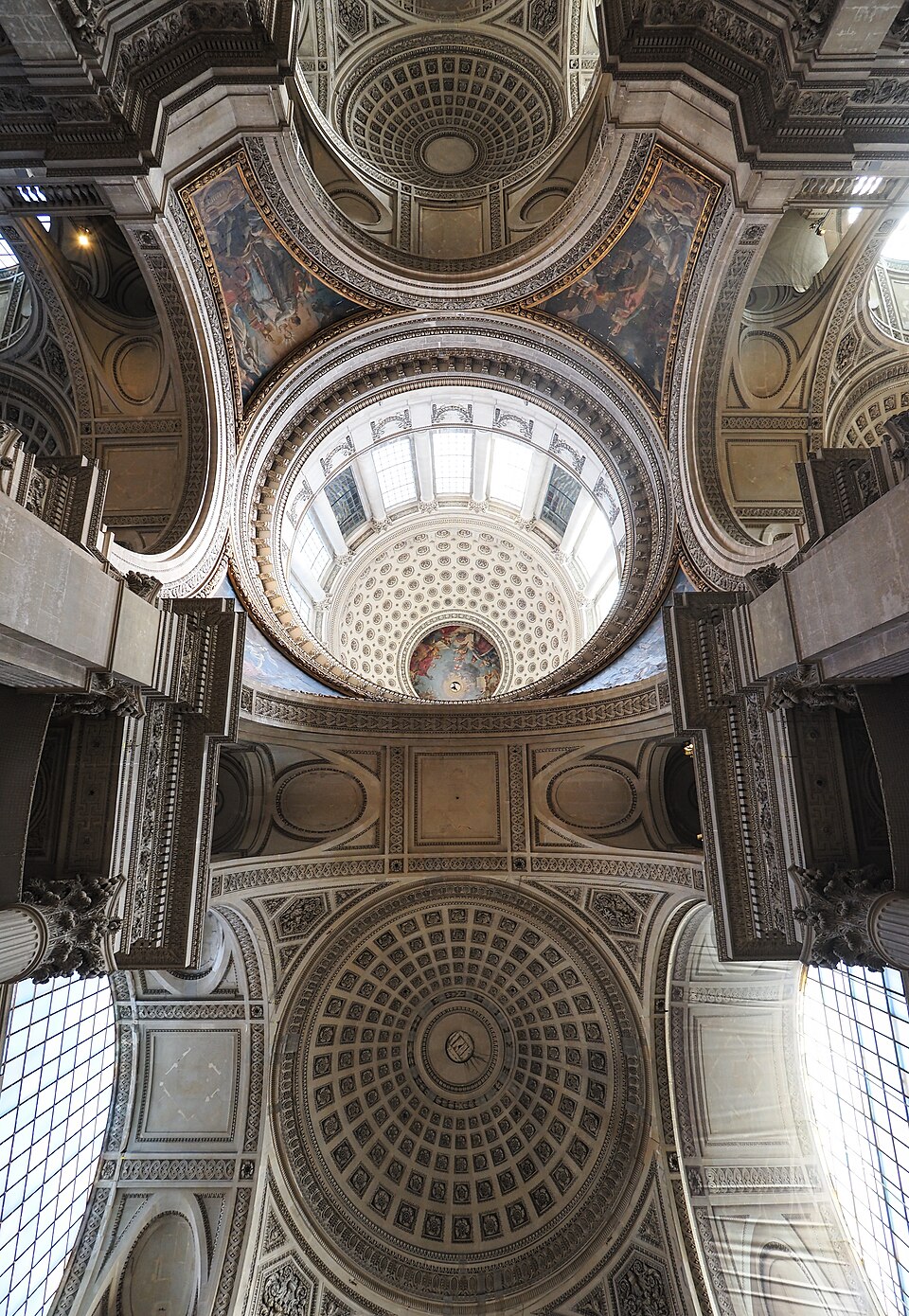 The Dome and Foucault's PendulumThe Triple-Shell Dome
Gazing upward into the central crossing, you are looking at one of the most sophisticated engineering achievements of the 18th century. What looks like a single, massive dome from below is actually a complex structure consisting of three separate stone shells nested inside one another. This ingenious design allowed the architect, Soufflot, to solve several architectural problems simultaneously. The innermost shell, which you see from here, was designed to be perfectly proportioned to the interior space, providing an elegant, rounded ceiling for visitors to admire. The middle shell is a conical structure that provides the actual strength and support for the building. It was built specifically to carry the immense weight of the stone lantern that sits at the very top of the dome outside. Finally, the outermost shell is the one visible from the streets of Paris, designed with a much steeper profile to ensure the building achieved the grand external height required to dominate the city skyline. By separating the dome into three layers, Soufflot could optimize each for its specific purpose—beauty inside, strength in the middle, and height outside. This triple-shell technique was a significant advancement in masonry, and it remains a primary reason why the dome has stood securely for over two hundred years, despite the early fears that the building would crumble under its own weight.
Listen in the appPhoto: Jedesto · CC BY-SA 4.0
09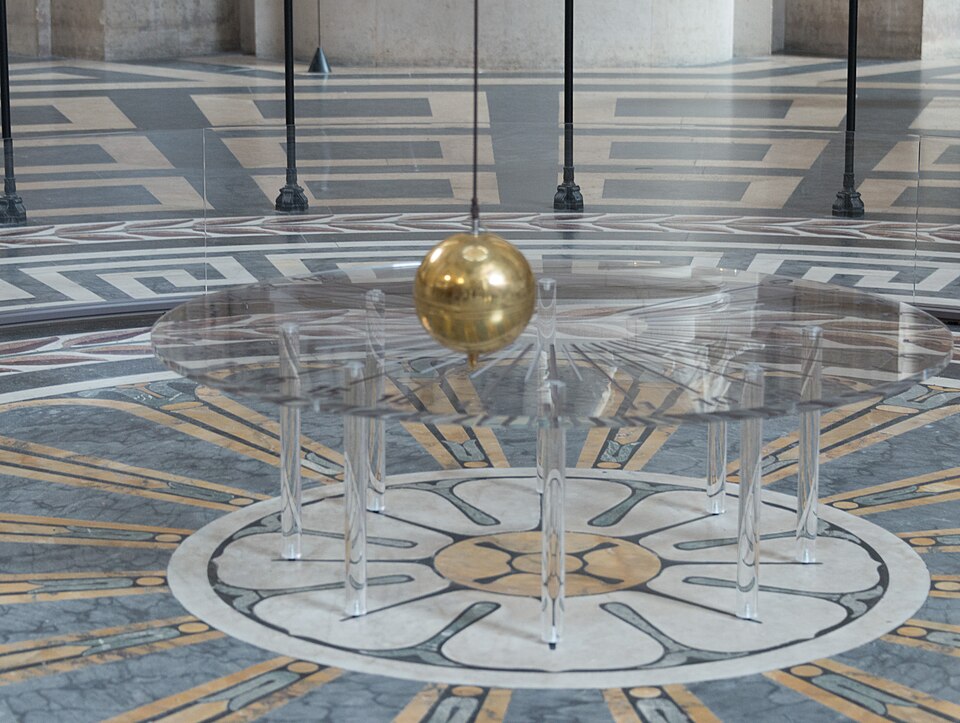 The Dome and Foucault's PendulumFoucault's Pendulum
In the center of the nave, you will find a mesmerizing sight: a heavy golden sphere swinging slowly at the end of a very long, slender wire. This is Foucault's Pendulum, a direct replica of a scientific experiment that changed our understanding of the world. In 1851, the physicist Léon Foucault chose the Panthéon for this demonstration because its massive height was one of the few places in Paris that could accommodate a 67-meter-long wire. The experiment was designed to provide a visual, undeniable proof that the Earth is rotating on its axis. As you watch the pendulum swing, notice the scale on the floor beneath it. Over time, the direction of the pendulum’s swing appears to slowly shift. However, the laws of physics state that the pendulum actually continues to swing in the exact same plane. What is really happening is that the Earth—and the Panthéon with it—is spinning beneath the pendulum. It is a profound and humbling sight, turning the entire building into a giant scientific instrument. The sphere itself is a lead-filled brass ball, and its steady, rhythmic motion brings a sense of cosmic order to the grand interior. This installation perfectly captures the spirit of the Panthéon: a place where the search for national identity and the pursuit of scientific truth exist side by side.
Listen in the appxiquinhosilva from Cacau · CC BY 2.0
10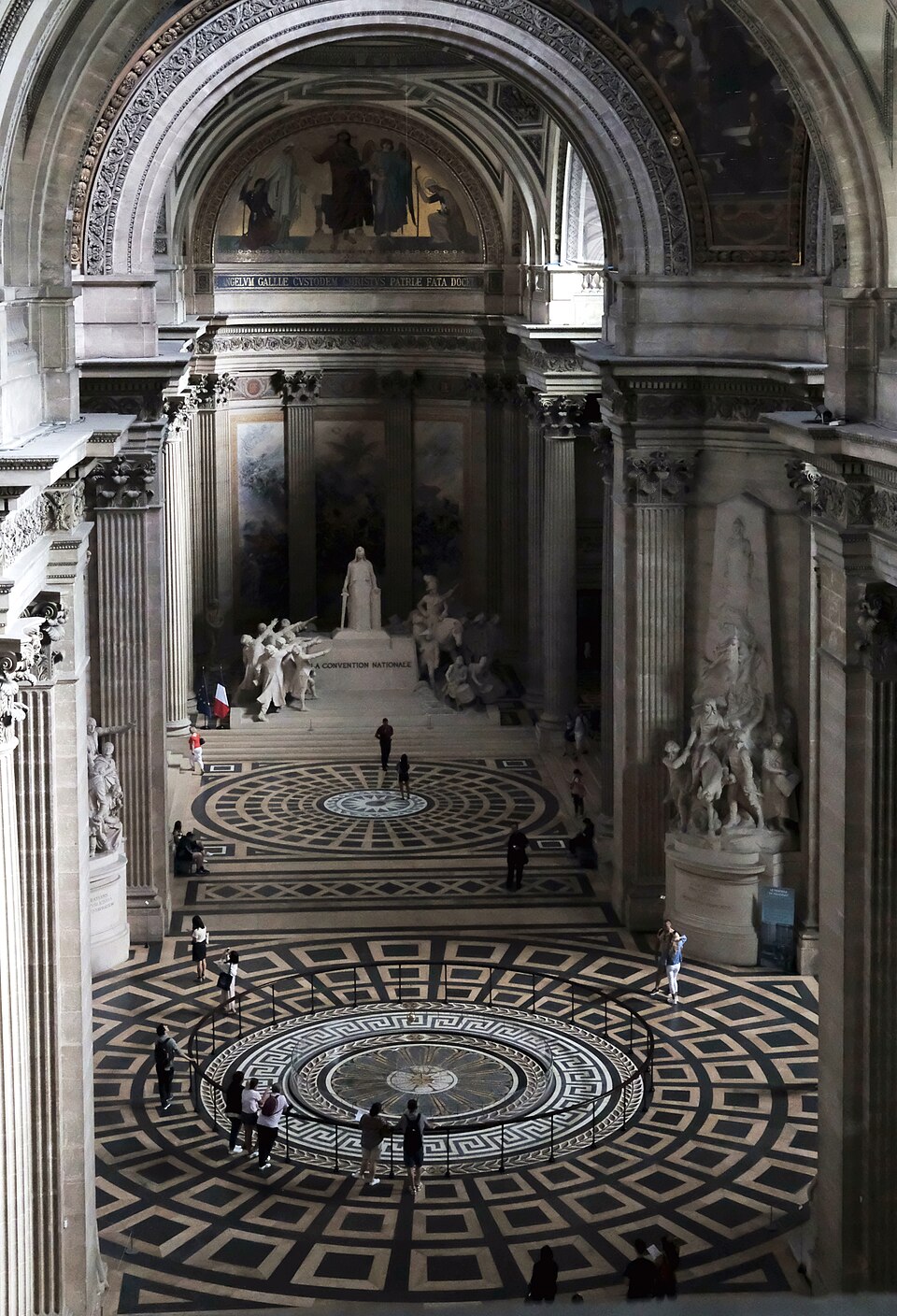 The Dome and Foucault's PendulumThe Central Crossing
The central crossing is the architectural heart of the Panthéon, where the four arms of the Greek cross meet. From this vantage point, you can appreciate the geometric complexity of the floor patterns, which lead the eye toward the center. Surrounding you are the four massive pillars that carry the staggering weight of the triple-shell dome. These pillars were the source of the greatest architectural drama during the building’s construction. Soufflot’s critics were convinced that these supports were far too thin to hold up the dome, and they waged a relentless campaign of public doubt against him. The stress of these constant attacks, combined with the technical difficulties of the project, took a heavy toll on Soufflot. He died in 1780, at the age of 67, without ever seeing the dome completed. He was so devastated by the criticism that many believe the stress contributed to his passing. The task of finishing the monument fell to his devoted student, Jean-Baptiste Rondelet. It was Rondelet who carried out the final calculations and oversaw the completion of the dome, vindicating his master’s vision. Standing here today, you can see that Soufflot’s engineering was sound. These pillars have stood for centuries, supporting one of the largest domes in the world. This crossing is not just a structural intersection; it is a monument to an architect who gave his life to see this vision realized.
Listen in the appPhoto: Mbzt · CC BY-SA 4.0
Panthéon
Frequently asked questions
How much does the guide cost?
Free app download. Listed guide price: $1.99. Guide price shown in the app. Audio guide only. Venue admission is separate.
Can I listen without internet?
Yes. Download the guide’s audio, images, and maps in the app before your visit. Your downloaded content is then available offline.
Can I listen in my language?
Stanza supports 15 languages. Check the app for the languages available for this guide.
Do I need to follow a schedule?
No. This is a self-guided experience. Choose your stops, pause whenever you like, and return to a story at your own pace.
At your own pace
Explore Panthéon.
Download Stanza, then search for “Panthéon”.
Free app download · Guide price shown in the app
Keep exploring
Nearby audio guides
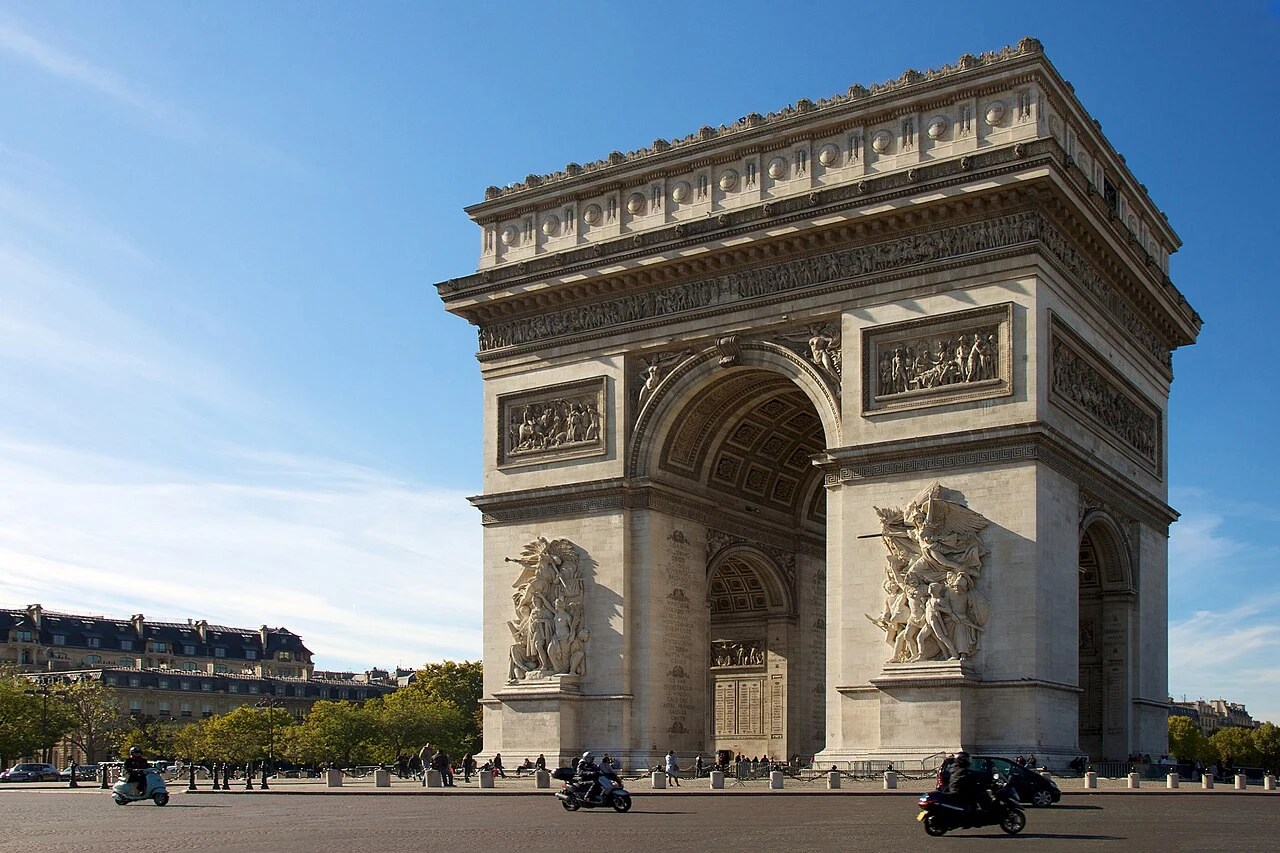
Paris
Arc de Triomphe de l'Étoile
Content & sources
Jiuguang Wang · CC BY-SA 2.0
Paris
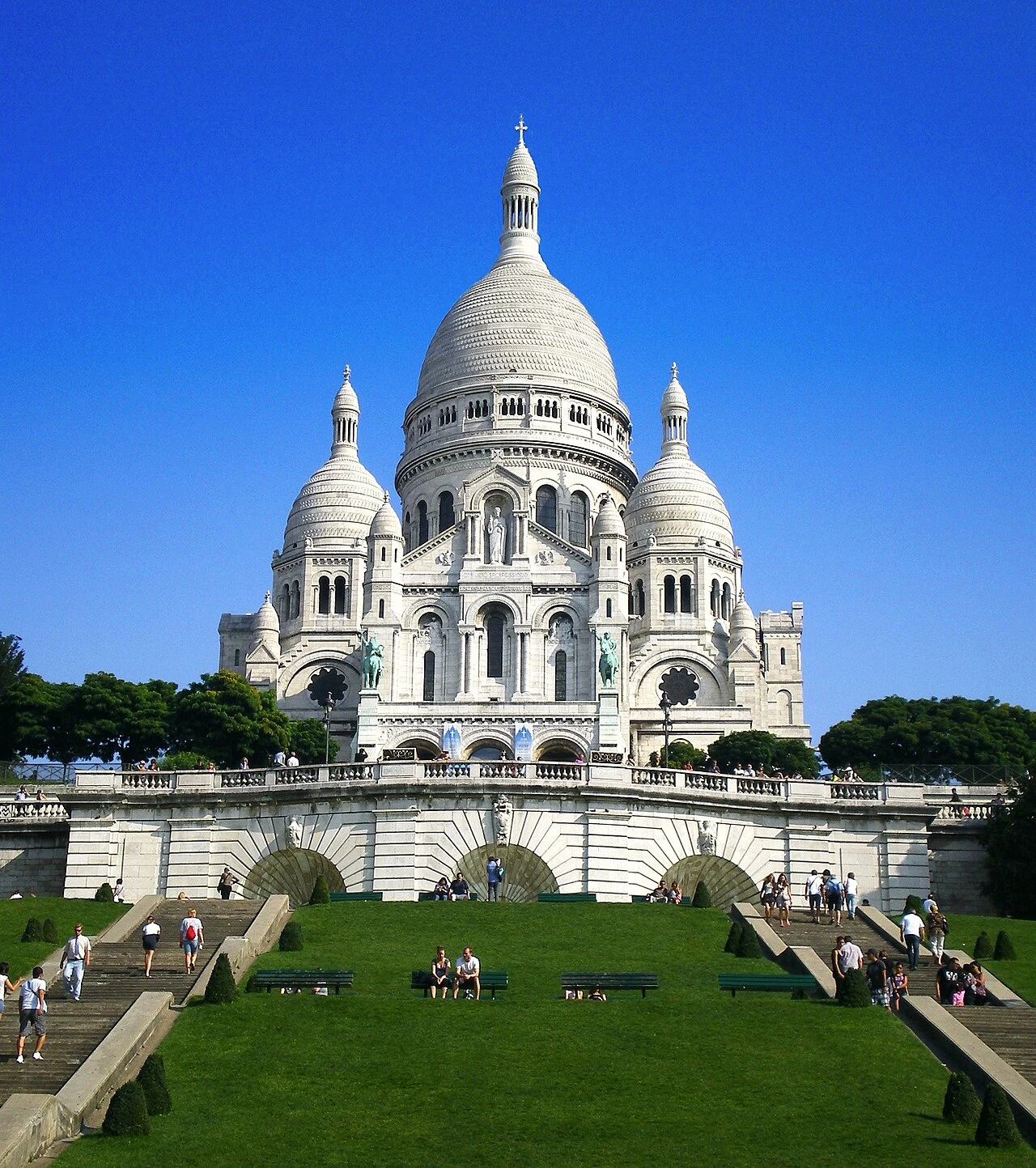
Basilique du Sacré-Cœur de Montmartre
Content & sources
Tonchino · CC BY-SA 3.0
Paris
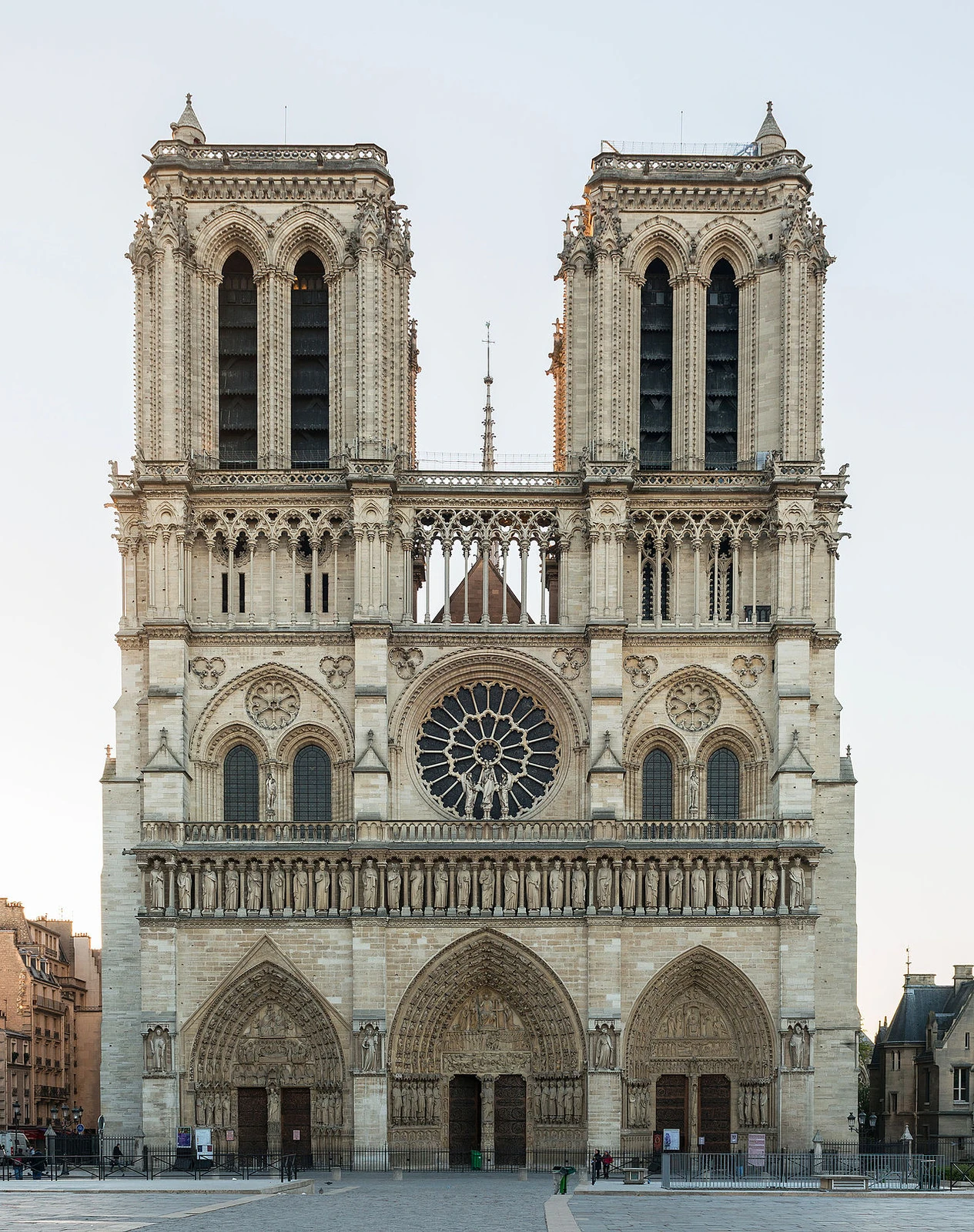
Cathédrale Notre-Dame de Paris
Content & sources
DXR · CC BY-SA 3.0
Paris
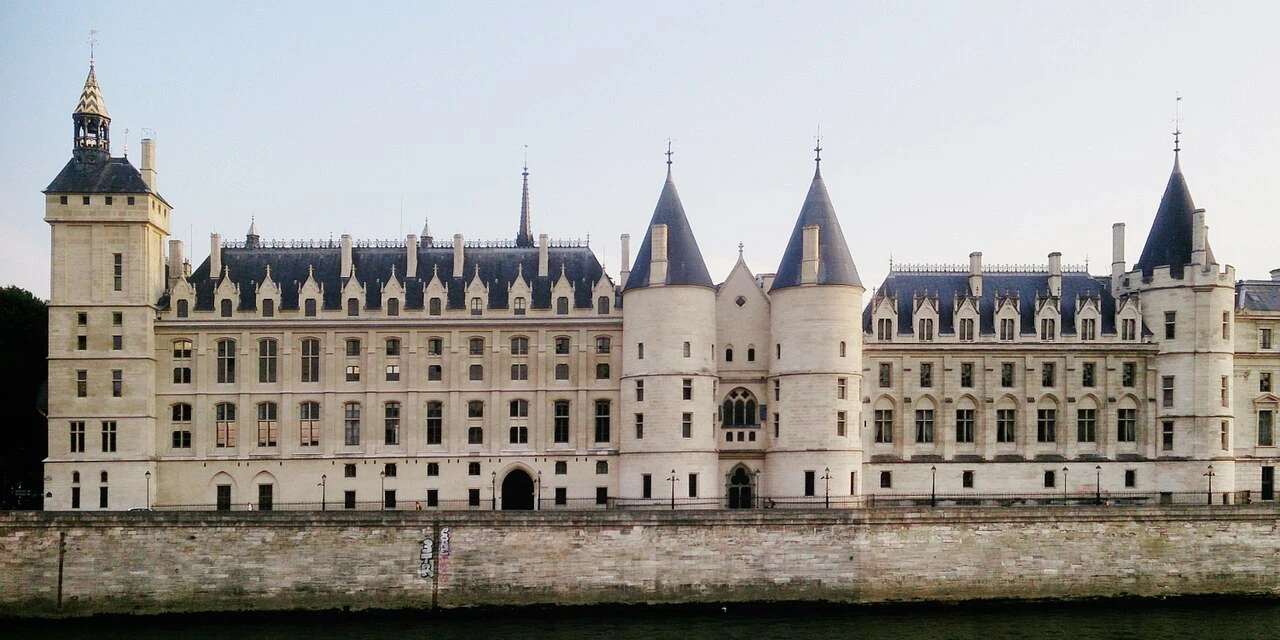
Conciergerie
Content & sources
Photo: Xandru · CC BY-SA 4.0