Stanza · Audio guide
Sacré-Cœur Basilica Audio guide
A place to remember. A story to take with you.
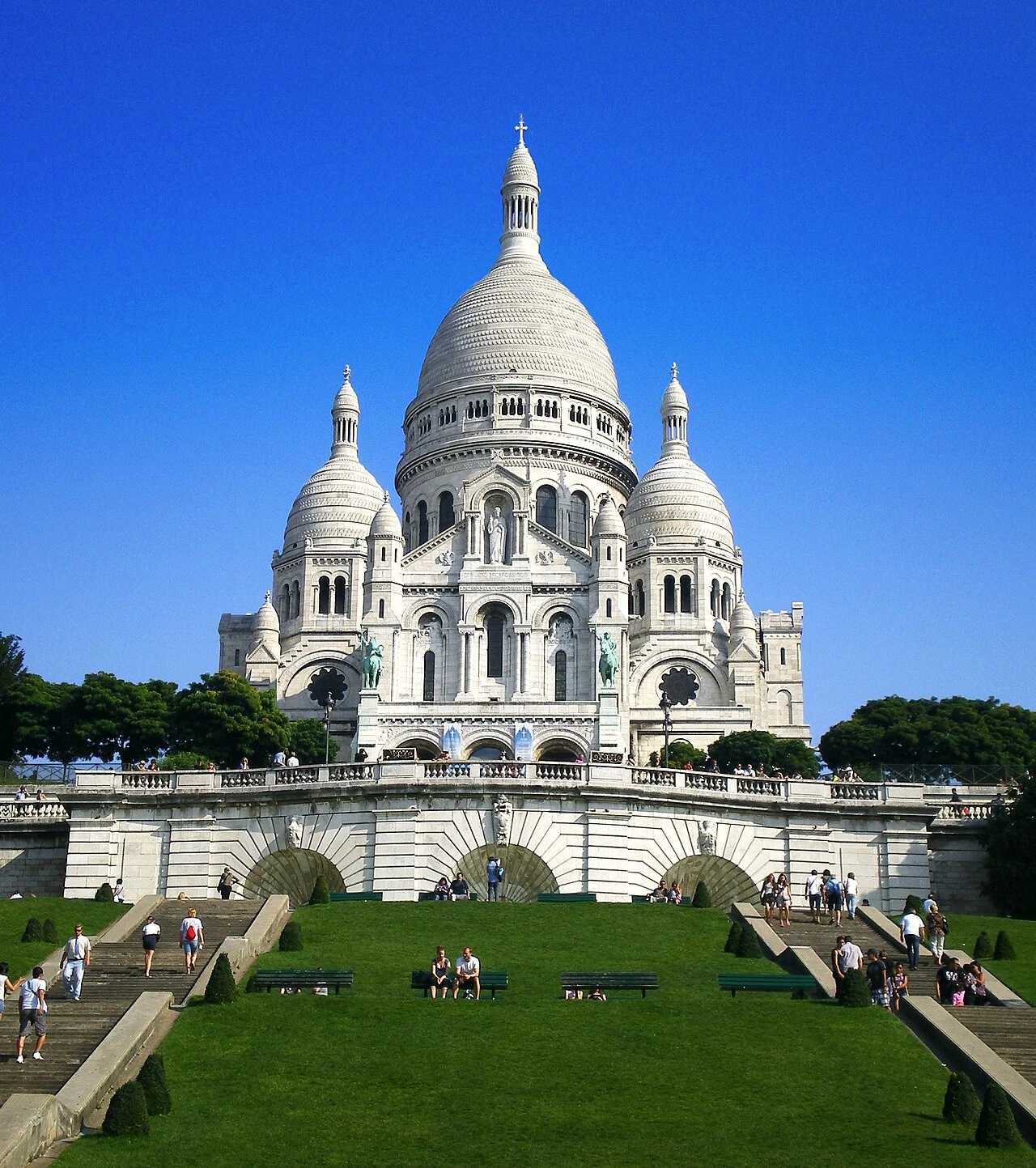
The Sacré-Cœur Basilica is a Roman Catholic church and minor basilica located in Paris, France. It is a prominent landmark and a significant site of pilgrimage.
Download Stanza, then search for “Sacré-Cœur Basilica”.
About the tour
One guide. Your kind of visit.
The Sacré-Cœur Basilica is a Roman Catholic church and minor basilica located in Paris, France. It is a prominent landmark and a significant site of pilgrimage.
Ready when you are.
- 01Get the free Stanza app.
iOS & Android
- 02Find your guide.
“Sacré-Cœur Basilica”
- 03Download before you go.
Works offline
Audio guide / 24 narrated stops
Inside the guide
Get to know a few of the stories before you go. Open a stop to read more.
01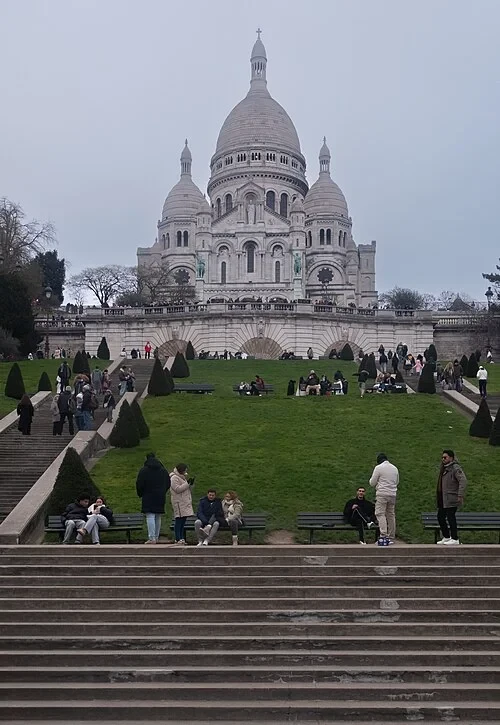 Square Louise-Michel and the Grand StaircaseThe White Silhouette
Welcome to one of the most famous sights in the Parisian skyline. You are standing at the summit of Butte Montmartre, 130 meters above sea level, looking at the Basilique du Sacré-Cœur. This striking white silhouette is the second most visited religious site in the city, trailing only the Notre-Dame Cathedral. The construction of this landmark began on June 16, 1875, marking the start of a project that would take decades to complete. Its location was chosen for its prominence; the hill has a long history of spiritual significance, dating back to ancient times. From this vantage point, the basilica dominates the northern horizon of the capital, serving as a beacon visible from almost every corner of the city. As you approach the entrance, consider the scale of the structure and the massive effort required to build such a heavy monument on the top of this steep, historic hill. This site was intended not just as a place of worship, but as a defining feature of the Parisian landscape, intended to be seen by all who look toward the heights of Montmartre.
Photo: Michielverbeek · CC BY 4.0
02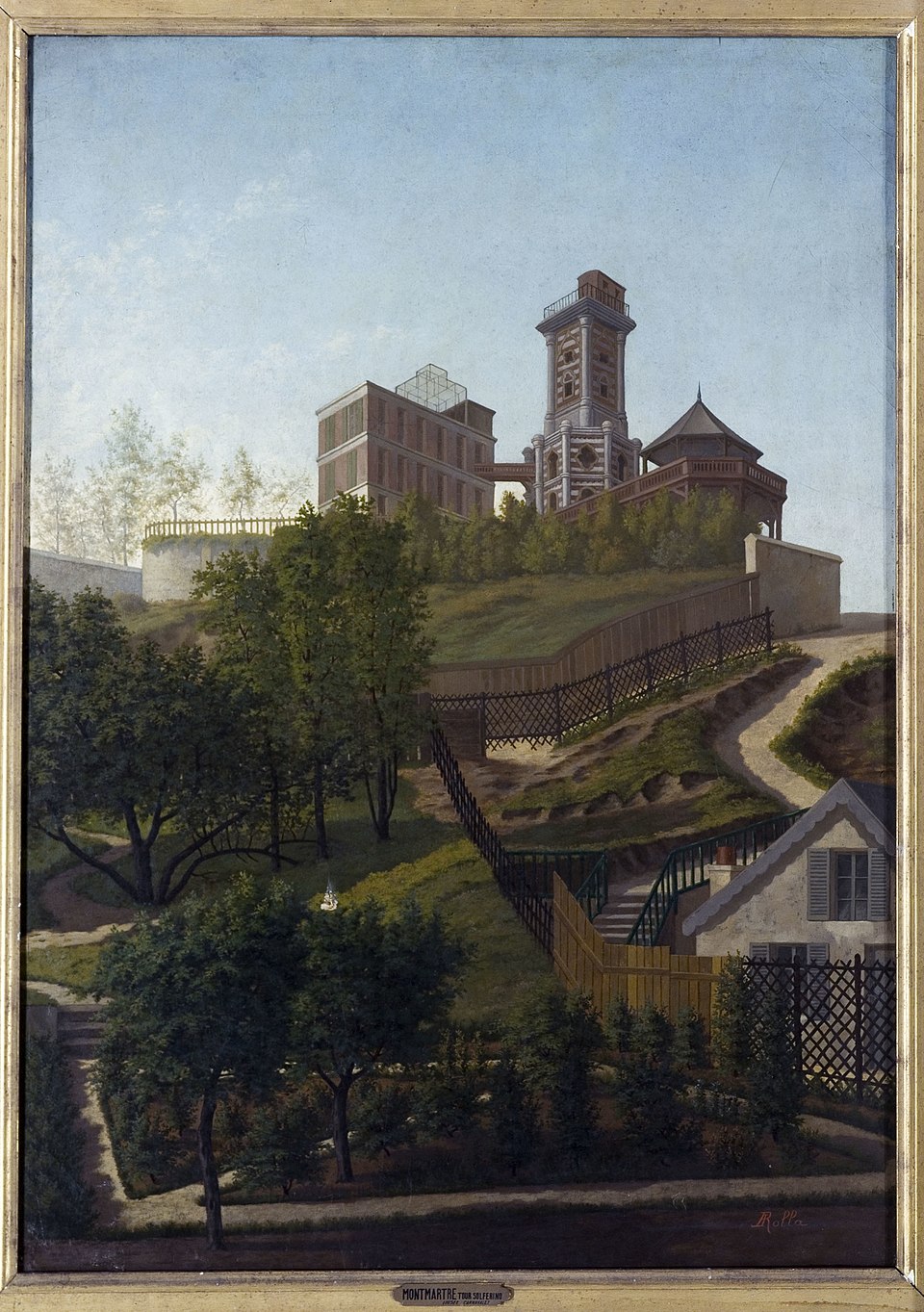 Square Louise-Michel and the Grand StaircaseThe Lost Tower
Long before the white domes of the Sacré-Cœur defined this peak, the summit was occupied by the Solférino Tower, a structure largely forgotten by time. The transformation of this site was born from the 'National Vow' of 1870. During a period of profound national crisis following France's defeat in the Franco-Prussian War, two laymen, Alexandre Legentil and Hubert Rohault de Fleury, spearheaded a movement to build a church dedicated to the Sacred Heart. They viewed the building as a spiritual response to the country's misfortunes and a symbol of hope for a future restoration. This vow gained momentum and eventually received official backing, leading to the selection of Montmartre as the site for the new sanctuary. The transition from a secular tower to a massive religious monument reflected the social and political climate of late 19th-century France. The construction was funded entirely by private donations, with millions of French citizens contributing, from wealthy aristocrats to poor laborers. Their names are often inscribed on the stones themselves, hidden throughout the building you see today.
Leon Rolla · CC0
03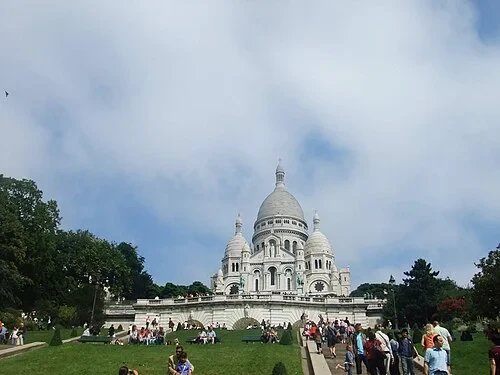 The South Facade and Equestrian StatuesThe Self-Cleaning Stone
One of the most striking features of the Basilica is its persistent, brilliant whiteness, which stands in contrast to the grey tones typical of many Parisian buildings. This is not due to frequent scrubbing, but rather the unique properties of the stone itself. The building is constructed from Château-Landon travertine limestone, quarried in Souppes-sur-Loing. This specific material is known for a fascinating geological phenomenon called the 'calcin' effect. When rainwater hits the limestone, it reacts with the minerals inside, causing the stone to exude a white substance. This process effectively bleaches the exterior, washing away city soot, pollution, and the grime of decades. Instead of darkening with age, the Sacré-Cœur remains bright, particularly after a heavy downpour. This self-cleaning property was a deliberate choice by the architects, ensuring the monument would maintain its symbolic purity and visibility across the skyline without the need for constant maintenance. If you look closely at the walls, you can see the dense, fine-grained texture of the limestone that has protected the building since its stones were first laid.
Listen in the appPhoto: Gzen92 · CC BY-SA 4.0
04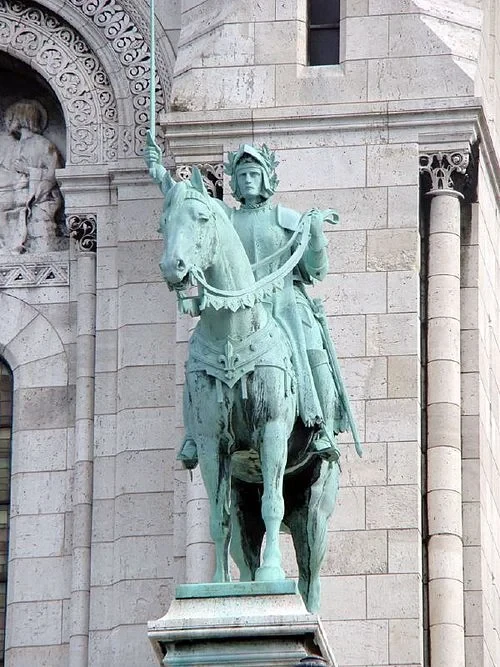 The South Facade and Equestrian StatuesEquestrian Statue of Joan of Arc
As you approach the main entrance, you will find two prominent equestrian statues flanking the central porch. To your left stands the figure of Joan of Arc, a teenage peasant who became a national heroine and a Catholic saint. In this depiction, she is shown in armor, mounted on her horse and raising a sword toward the sky. Joan of Arc is a deeply significant symbol of French national identity and its historical, often intertwined relationship with the Catholic faith. Her presence here serves as a symbolic protector of the entrance, representing the courage and spiritual conviction that defined her life during the Hundred Years' War. The statue captures a sense of dynamic movement, with the horse appearing to step forward as Joan looks upward. This figure was included in the facade to ground the Basilica's spiritual mission in the broader history of the French state. Along with the other equestrian figure nearby, she represents the human face of the 'National Vow' that brought this building into existence. Notice the intricate detail in the armor and the determined expression on her face.
Listen in the appAJ · CC BY 2.0
05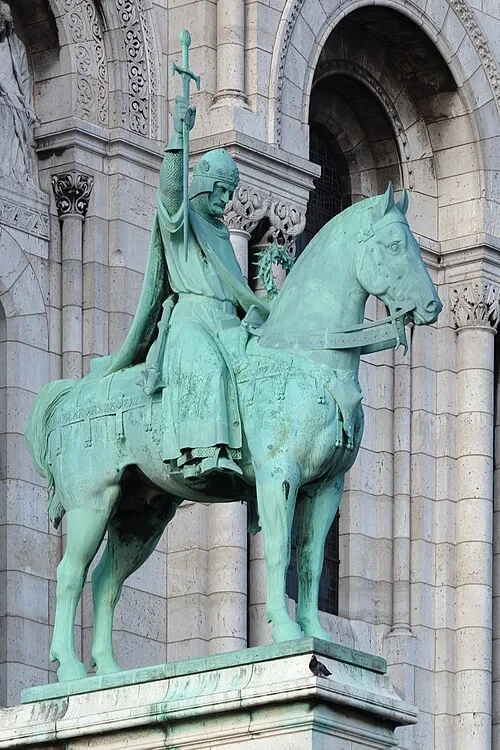 The South Facade and Equestrian StatuesEquestrian Statue of Louis IX
On the opposite side of the porch from Joan of Arc, you will find the equestrian statue of Louis IX, better known as Saint Louis. He is identified by his royal crown and the sword he carries, representing his dual roles as a powerful king and a devout man of faith. Louis IX reigned during the 13th century and remains the only King of France to have been officially canonized. His inclusion on the facade of the Sacré-Cœur is highly intentional; alongside Joan of Arc, he represents the historical union of the French monarchy and the Church. Together, these two figures embody the 'National Vow' in human form, linking the 19th-century construction of the Basilica to centuries of French religious tradition. This statue emphasizes the king's piety and his leadership, standing as a testament to the ideals that the founders of the Basilica wished to promote. Like the statue of Joan, this figure is part of the grand architectural scheme that welcomes pilgrims and visitors alike, reminding them of the long lineage of faith that the building was intended to honor.
Listen in the appLuis Miguel Bugallo Sánchez (Lmbuga) · CC BY-SA 4.0
06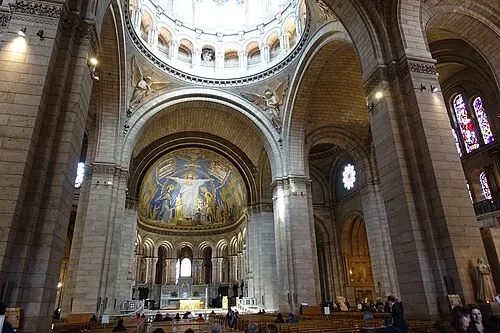 The Nave and Romano-Byzantine ArchitectureThe Romano-Byzantine Nave
The interior of the Sacré-Cœur, designed by architect Paul Abadie, surprises many visitors who expect the tall, pointed arches of the French Gothic style. Instead, Abadie chose a Romano-Byzantine design, drawing inspiration from ancient Eastern and Southern European landmarks like the Hagia Sophia in Istanbul and St. Mark's Basilica in Venice. This was a very deliberate aesthetic and political choice. In the late 19th century, Gothic architecture was often associated with a specific type of traditionalism, while the neo-Baroque style was being used for contemporary secular landmarks like the Palais Garnier opera house. By looking toward the Byzantine east, Abadie created a space that felt even more 'ancient' and universal. The nave is defined by its massive, heavy piers and rounded arches, which create a sense of grounded stability and weight. This style allows for large, open spaces and high domes that draw the eye upward, emphasizing the vastness of the sanctuary. The light filters in through windows set high in the walls, illuminating the stone and creating a quiet, contemplative atmosphere that differs significantly from the light-filled, stained-glass-heavy interiors of typical Parisian cathedrals.
Listen in the appGuilhem Vellut from Paris, France · CC BY 2.0
07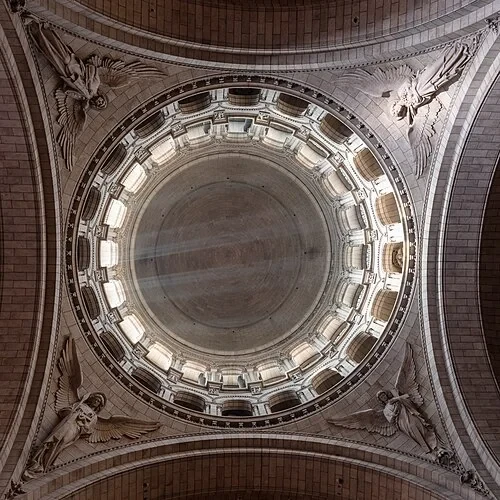 The Nave and Romano-Byzantine ArchitectureThe Great Central Dome
The architectural heart of the Basilica is the great central dome, a feat of 19th-century engineering that rises to a height of 83 meters. From the floor, the interior follows a Greek cross layout, where four arms of equal length intersect beneath this central point. To support the immense weight of the dome above, the architect utilized four massive arches, which distribute the pressure down through thick stone piers. This configuration creates a vast, open space in the center of the building, allowing many people to gather directly under the highest point of the structure. The dome itself is ringed with windows at its base, which flood the interior with natural light and create a sense of airiness despite the heavy stone construction. The sheer scale of this dome was intended to inspire awe in everyone who enters, drawing their focus upward toward the heavens. It serves as the primary structural and symbolic anchor of the building, around which all other chapels and galleries are arranged. The engineering required to place such a heavy dome on the summit of the hill was considerable, involving deep foundations that reach down to solid rock.
Listen in the appDiego Delso · CC BY-SA 4.0
08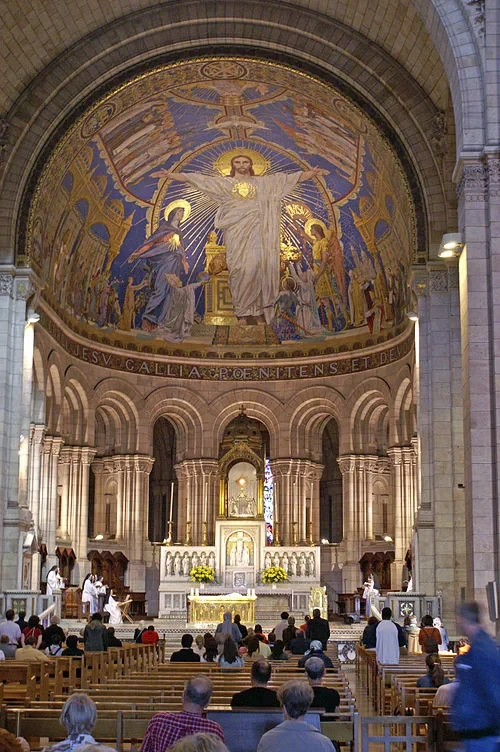 The Great Mosaic of Christ in MajestyChrist in Majesty in Basilique du Sacré-Cœur de Montmartre
Occupying the curved ceiling of the apse is the 'Christ in Majesty' mosaic, a masterpiece of religious art completed in the early 20th century. Spanning 475 square meters, it ranks among the largest mosaics ever created. The entire scene is set against a brilliant golden background, composed of millions of tiny glass tiles that catch and reflect the light from the windows below. At the center of this vast composition is the figure of Christ, but he is surrounded by several other figures significant to French history and Catholic devotion. On one side, you can see the Virgin Mary, and on the other, Joan of Arc is depicted offering the crown of France to Christ. This imagery reinforces the theme of the 'National Vow,' suggesting a spiritual reconciliation between the nation and the divine. The detail is staggering; from the folds of the robes to the expressions on the faces, every element was meticulously placed by hand over the course of several years. The mosaic's golden glow serves to illuminate the sanctuary even on cloudy days, making the apse the visual and spiritual focal point for pilgrims who have traveled to the top of the hill.
Listen in the appDidier B (Sam67fr) · CC BY-SA 2.5
09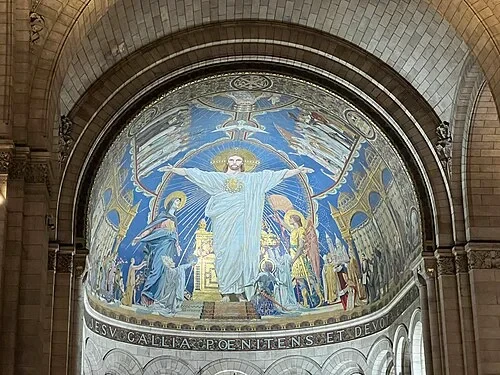 The Great Mosaic of Christ in MajestyChrist in Majesty
Within the massive golden mosaic of the apse, the central figure of Christ is the most important element. He is depicted with his arms wide open in a gesture of welcome and peace, a pose known as 'Christ in Majesty.' The most critical detail of this figure is the golden heart located at the center of his chest, radiating light. This is the 'Sacred Heart' for which the Basilica is named. It serves as the primary focal point for every pilgrim and visitor who enters the building, representing divine love and compassion. The scale of the figure is immense, designed to be clearly visible from the back of the nave, nearly 100 meters away. By placing this image at the very heart of the sanctuary, the architects and artists ensured that the central message of the Basilica's dedication was unmistakable. The use of gold and vibrant colors in the heart distinguishes it from the rest of the figure, drawing the eye directly to the symbol of the institution's spiritual mission. This depiction is intended to convey a sense of both power and approachability, anchoring the vast space of the interior.
Listen in the appPhoto: Chabe01 · CC BY-SA 4.0
10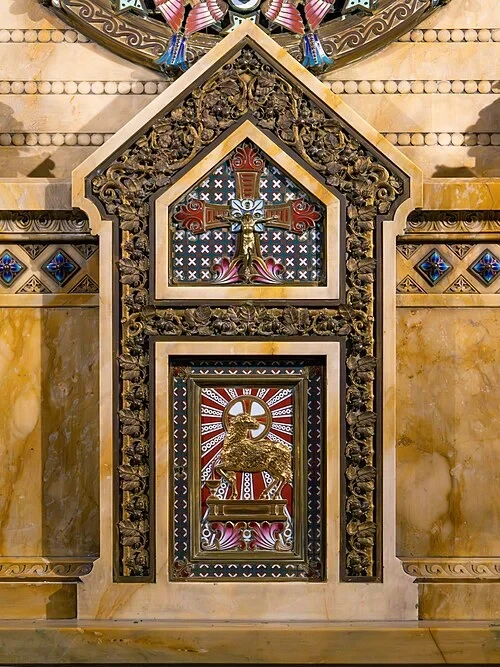 The High Altar and Perpetual AdorationThe Golden Tabernacle
Directly beneath the great mosaic lies the high altar, the most sacred spot within the Basilica. At its center is the golden tabernacle, a finely crafted vessel used for housing the Eucharist. The design of the tabernacle draws heavily on medieval artistic traditions, specifically the goldsmithing and enamel work of the Middle Ages. You can see the 'Agnus Dei,' or Lamb of God, depicted on the front, a traditional symbol of Christ’s sacrifice. The tabernacle is adorned with rich, colorful enamels and intricate metalwork that create a sense of jewel-like detail against the surrounding stone. This level of craftsmanship was intended to honor the importance of the items held within. The use of gold and vibrant colors ensures that the tabernacle stands out, even within the grand scale of the apse. It serves as the physical center for the religious services held here, bridging the gap between the massive architectural elements of the building and the personal, intimate nature of the liturgy. The style of the metalwork is meant to evoke a sense of timelessness, connecting modern worshipers to the long history of the Church’s artistic heritage.
Listen in the appPhoto: ReneeWrites · CC BY 4.0
Sacré-Cœur Basilica
Frequently asked questions
How much does the guide cost?
Free app download. Listed guide price: $2.99. Guide price shown in the app. Audio guide only. Venue admission is separate.
Can I listen without internet?
Yes. Download the guide’s audio, images, and maps in the app before your visit. Your downloaded content is then available offline.
Can I listen in my language?
This audio guide is available in 15 languages, including English.
Do I need to follow a schedule?
No. This is a self-guided experience. Choose your stops, pause whenever you like, and return to a story at your own pace.
At your own pace
Explore Sacré-Cœur Basilica.
Download Stanza, then search for “Sacré-Cœur Basilica”.
Free app download · Guide price shown in the app
Keep exploring
Nearby audio guides
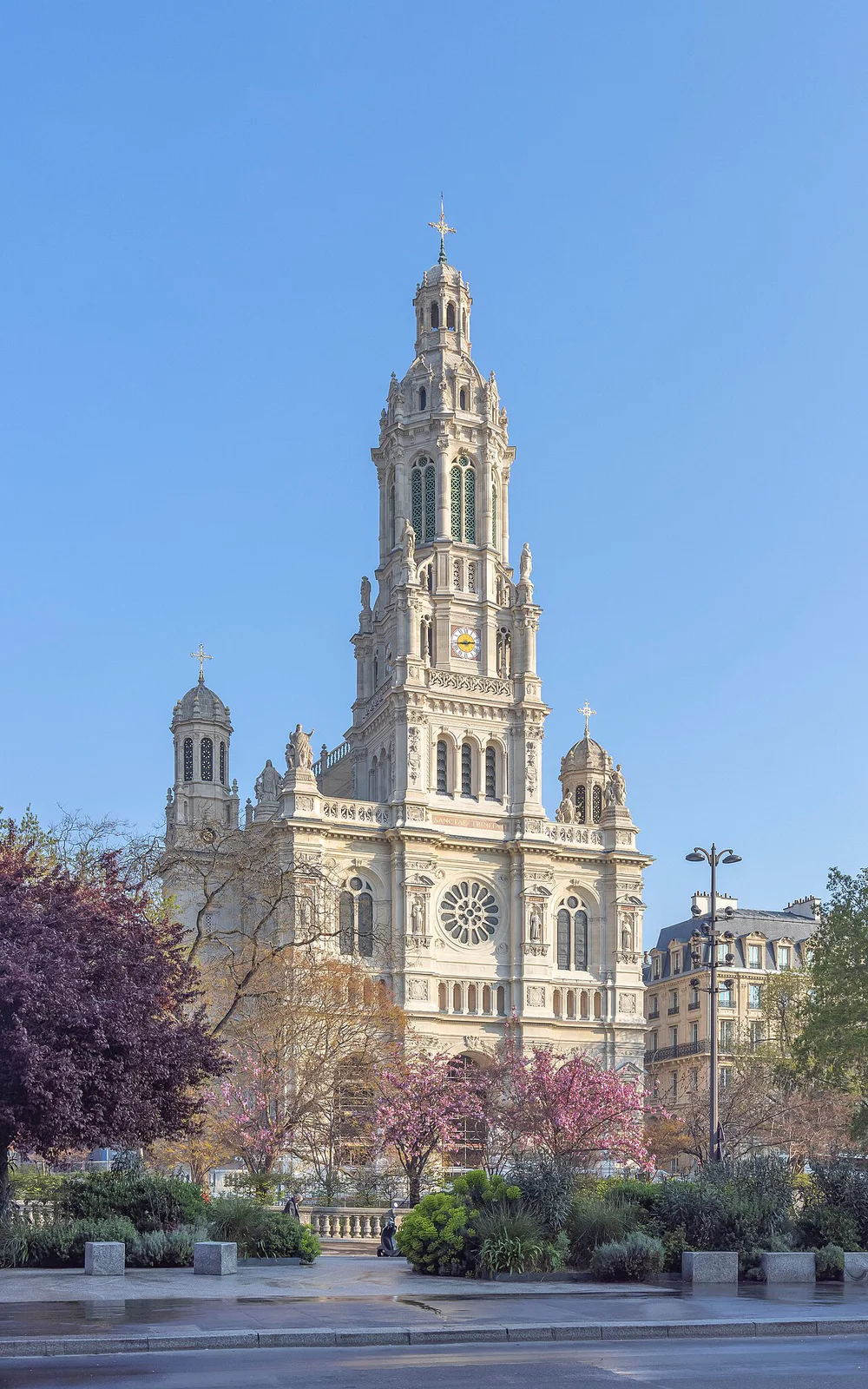
Paris · 1 km
Église de la Sainte-Trinité de Paris
Content & sources
Photo: ZeusUpsistos · CC BY-SA 4.0
Paris · 2 km
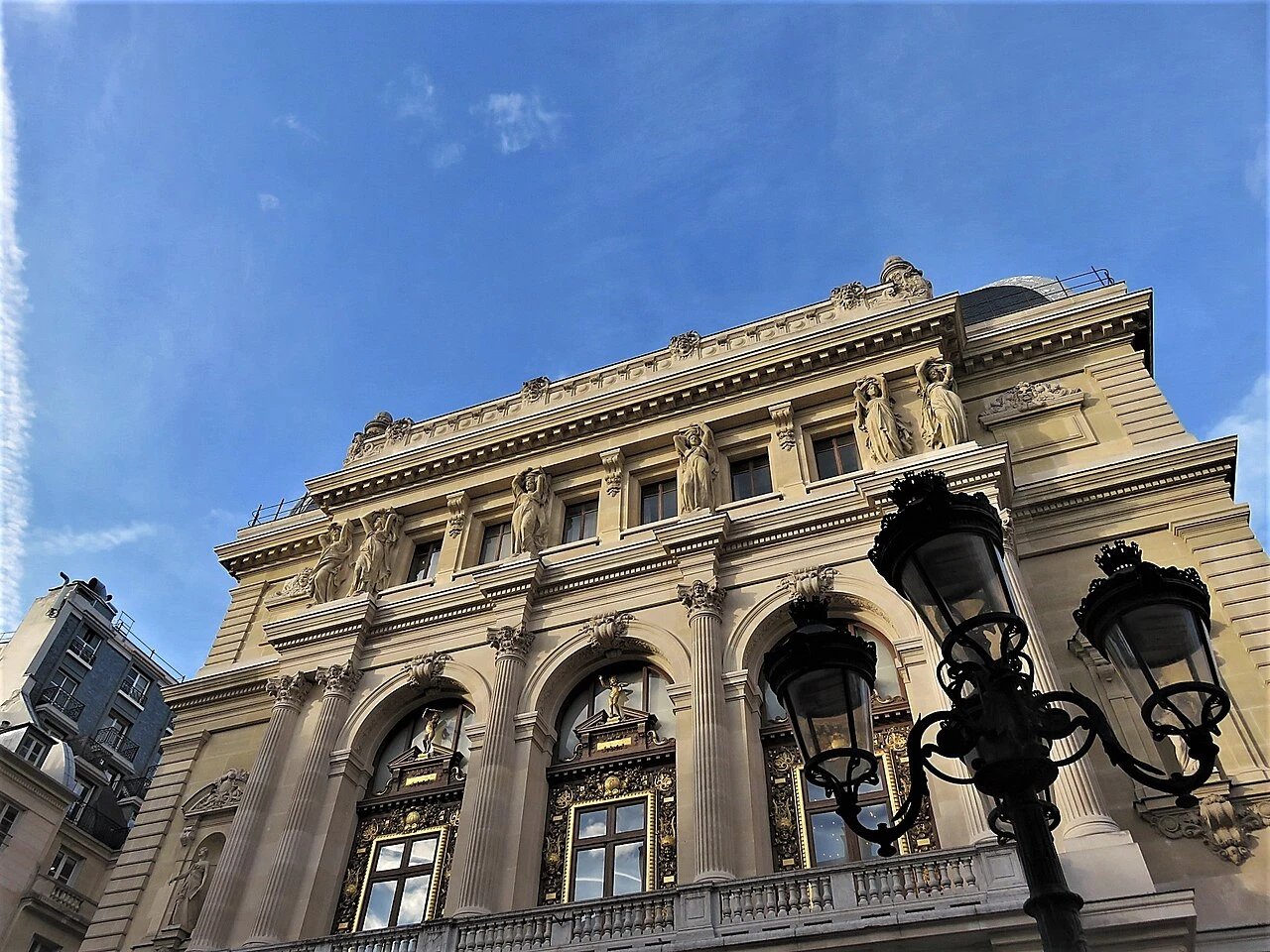
Opéra-Comique
Content & sources
Arthur Weidmann from Paris, France · CC BY-SA 2.0
Paris · 2 km
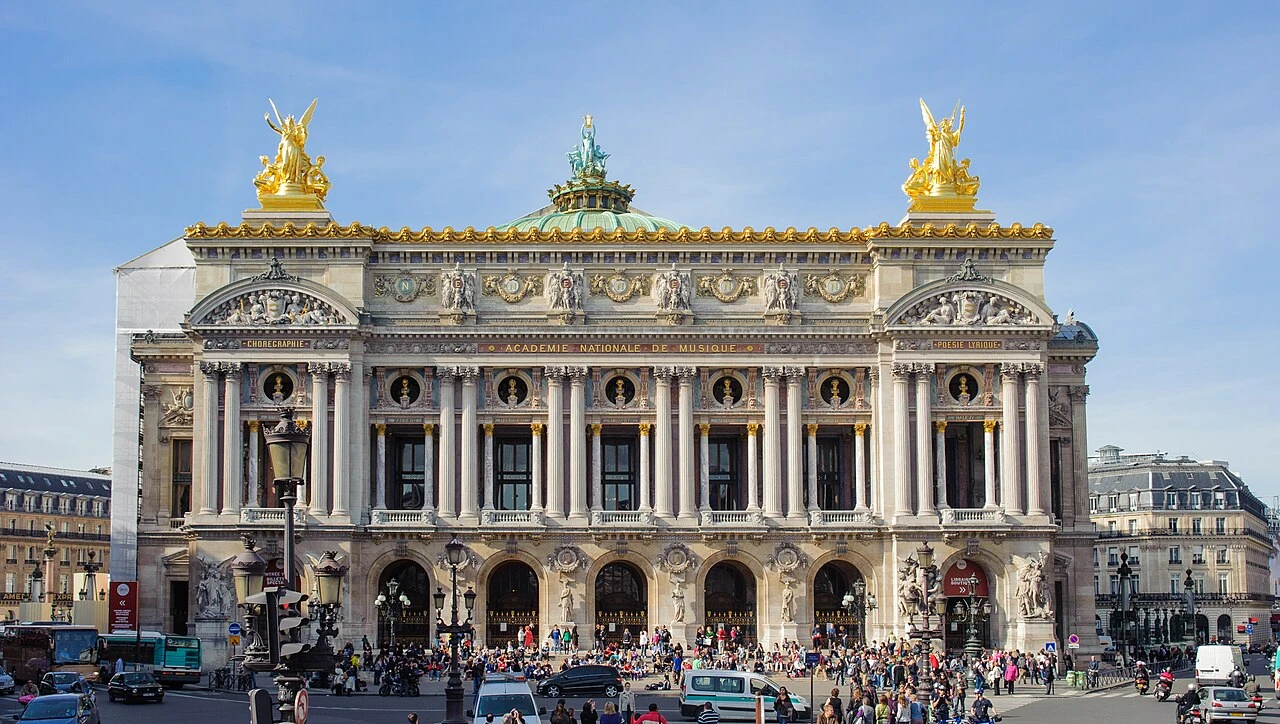
Palais Garnier
Content & sources
Photo: Alexander Hoernigk · CC BY 3.0
Paris · 2 km
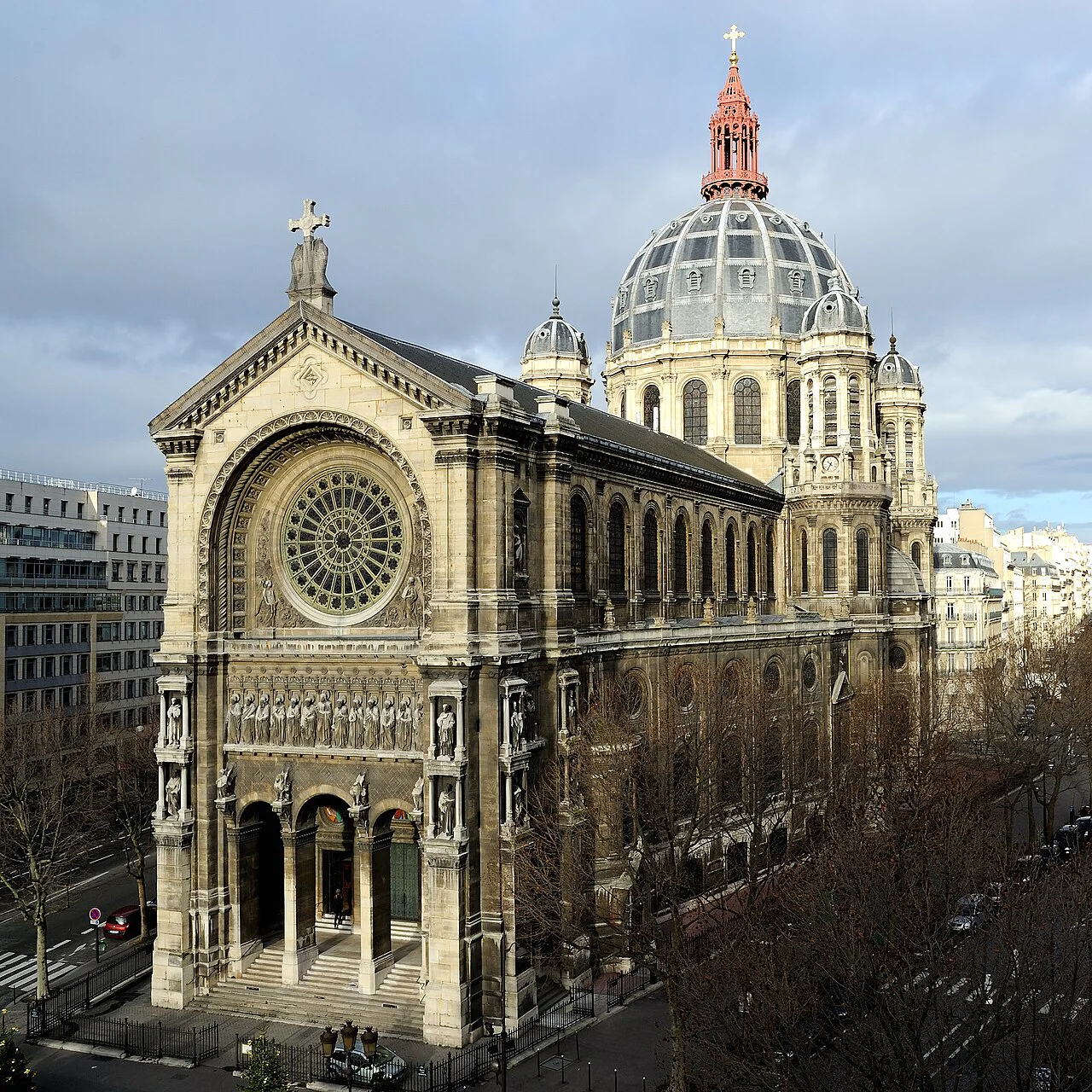
Église Saint-Augustin de Paris
Content & sources
Photo: Saffron Blaze · CC BY-SA 3.0