Stanza · Audio guide
Palais GarnierAudio guide
A place to remember. A story to take with you.
Palais Garnier is a historic 19th-century opera house located in Paris, France. It serves as a performing arts venue and also functions as a museum building, showcasing its opulent architecture.
Download Stanza, then search for “Palais Garnier”.
About the tour
One guide. Your kind of visit.
Palais Garnier is a historic 19th-century opera house located in Paris, France. It serves as a performing arts venue and also functions as a museum building, showcasing its opulent architecture.
Ready when you are.
- 01Get the free Stanza app.
iOS & Android
- 02Find your guide.
“Palais Garnier”
- 03Download before you go.
Works offline
Audio guide / 18 narrated stops
Inside the guide
Get to know a few of the stories before you go. Open a stop to read more.
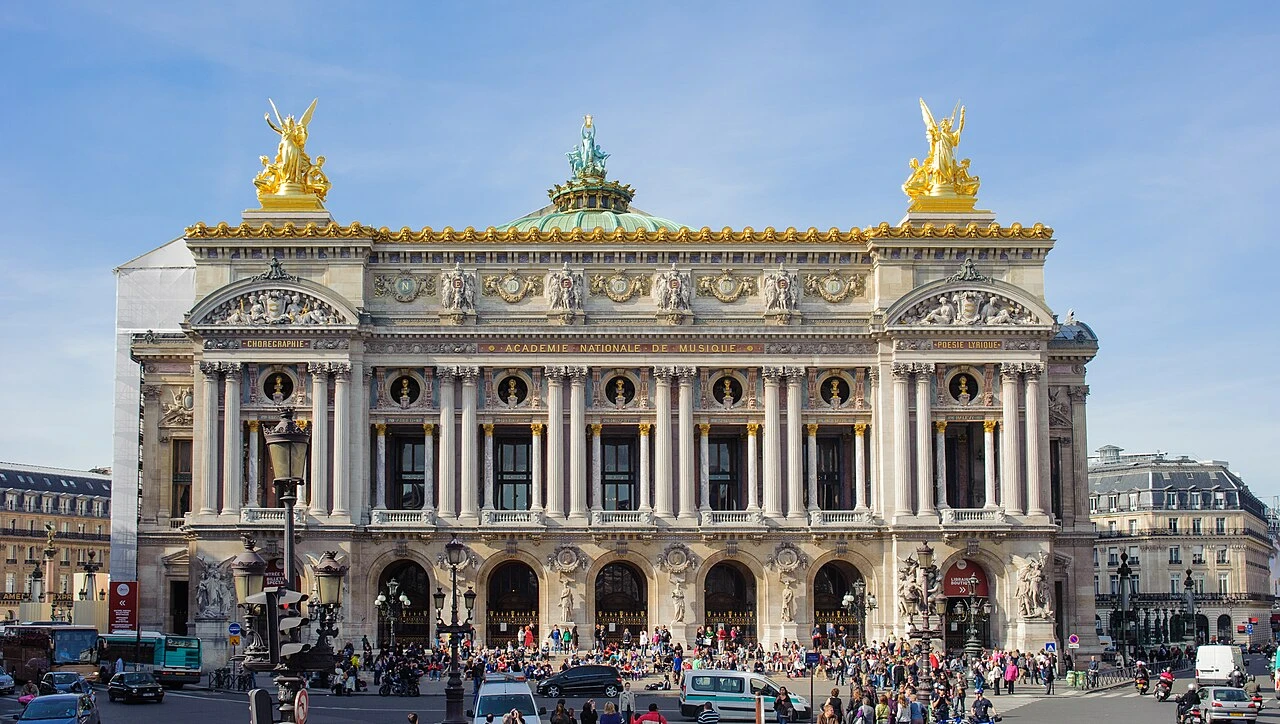
01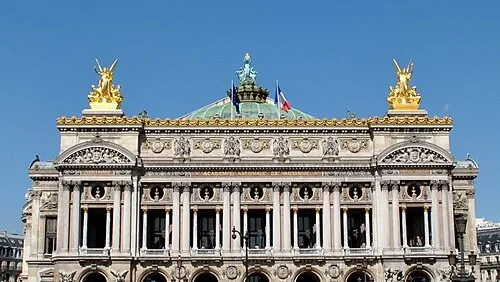 The Monumental FaçadeThe Main Façade
In 1861, Charles Garnier began a fourteen-year construction project that would redefine Parisian architecture. When Empress Eugénie famously asked whether the style was Greek or Roman, Garnier reportedly replied that it was simply 'Napoleon III.' This monumental façade exemplifies that era's eclectic mix, designed to be a permanent theatrical performance even before visitors step inside. It took until 1875 to complete, delayed by war and political shifts. To achieve this level of detail, Garnier employed 73 different sculptors, each contributing to the forest of columns, statues, and ornaments. Look at the rhythmic layers of the design; it is more than a building—it is a massive sculpture in itself. The architect’s vision was to create a space that matched the luxury and ambition of the Second Empire. Every arch and relief tells a part of this story, showcasing the craftsmanship of an era that valued opulence and grand public gestures. The façade functions as a bridge between the street and the fantasy world inside, preparing every guest for the grandeur that awaits beyond the doors.
Photo: Pe-Jo · CC BY-SA 4.0
02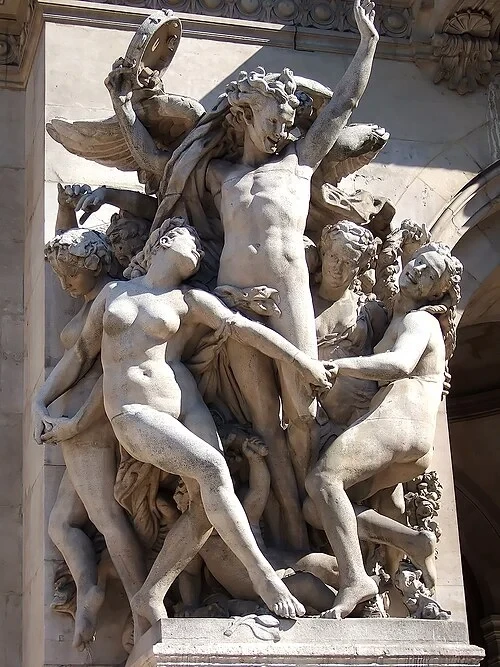 The Monumental FaçadeThe Dance
Unlike the more rigid and traditional figures found elsewhere on the façade, the figures in 'The Dance' possess a startling, fluid realism. When the work was first revealed in 1869, the public was scandalized by the uninhibited joy and nudity of the dancers. Critics deemed the realistic expressions and intertwined bodies obscene for such a prominent public location. The controversy grew so heated that an anonymous protester threw a bottle of black ink at the sculpture in an attempt to deface it. You can still sense the movement in the composition, which seems to breathe compared to the stiff, allegorical statues nearby. While those other figures represent high-minded ideals in a formal manner, these dancers capture a raw, kinetic energy that Garnier believed was essential to the spirit of the opera. Today, the original work by Jean-Baptiste Carpeaux has been moved inside for protection, but this spot remains a reminder of the cultural clash between conservative 19th-century values and the era's emerging artistic realism. The expressions of the figures suggest a carefree abandon that stood in direct opposition to the formal decorum usually required in public monuments.
Jean-Baptiste Carpeaux · CC BY-SA 3.0
03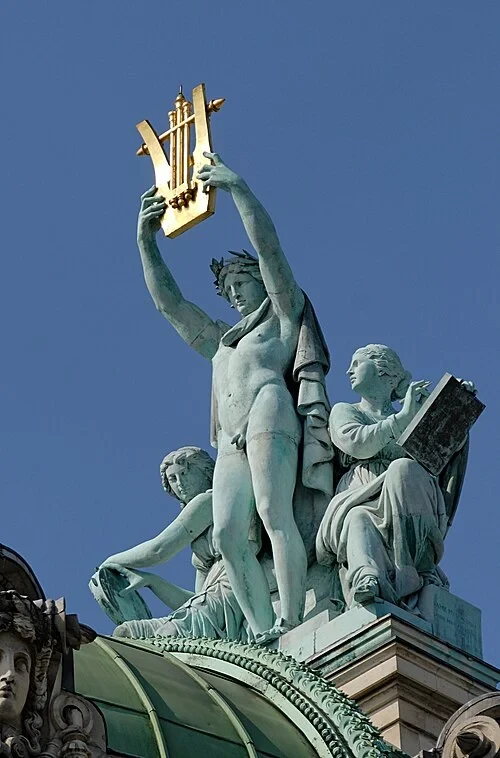 The Monumental FaçadeApollo's Golden Lyre
To find the true summit of the Palais Garnier, look to the very top of the green dome. There stands the figure of Apollo, the Greek god of music and light, raising his lyre high above the city. This position is deeply symbolic. The distance from the bottom of the theater’s massive water cistern, deep beneath the stage, to the very top of this lyre is exactly 73.6 meters. This vertical span was intended by Garnier to represent the theater's reach from the depths of the earth to the heights of the heavens. It suggests that the art performed within connects the most primal human experiences with the divine. The lyre itself is a recurring motif throughout the building's ornamentation, but here it serves as a beacon for all of Paris. Because it sits at the absolute apex, it is exposed to the full force of the elements, yet it remains a steadfast guardian of the artistic genius celebrated below. The height of the statue also ensures that Apollo is visible from many of the surrounding boulevards, anchoring the building within the urban landscape and the wider sky above.
Listen in the appPhoto: Jastrow · Public domain
04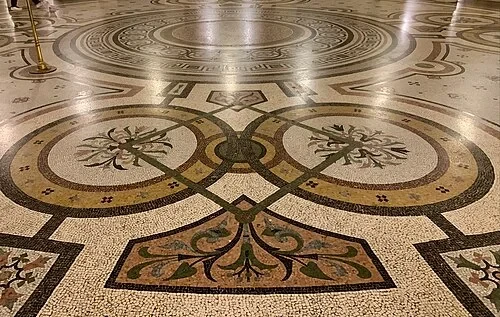 Rotunda of the SubscribersRotunda of the Subscribers
In the 19th century, arriving at the opera was as much about the entrance as the performance. This rotunda was the dedicated doorway for the wealthy subscribers who arrived by private carriage. By providing this separate space, Garnier ensured that the upper classes could enter directly from their vehicles without mixing with the general public. As you look around, you can see the result of Garnier's interest in 'polychrome' architecture. He utilized seventeen different types of marble sourced from across Europe to create a rich, multicolored environment. The floor is particularly notable, featuring intricate mosaics that have survived over a century of footsteps. These patterns were designed to lead the eye through the circular space toward the grand staircase. The use of various stones—varying in hue from deep greens to creamy whites—was a bold choice that departed from the monochrome style common in earlier monuments. This space functioned as a social foyer where the elite would gather to see and be seen before the curtain rose, marking the start of a highly ritualized evening of high society and art.
Listen in the appPhoto: Neoclassicism Enthusiast · CC BY-SA 4.0
05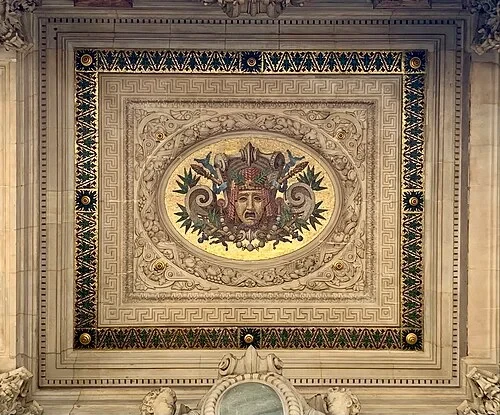 Rotunda of the SubscribersThe Architect's Hidden Signature
Charles Garnier was a relatively unknown 35-year-old when he won the anonymous competition to design the new opera house. To celebrate this triumph and leave his mark on history, he decided to hide his signature within the building's very fabric. Look closely at the ceiling mosaics in this rotunda. Within the swirling arabesque patterns and golden tiles, Garnier cleverly wove his name into the design. It is not an obvious inscription but a subtle integration that requires a keen eye to spot. This act of artistic vanity reflects the immense personal significance the project held for him. The mosaics themselves are a marvel of 19th-century decorative art, intended to reflect the light and create a sense of shimmering luxury. By embedding his signature here, Garnier ensured that he would forever be a part of the permanent spectacle he created. It serves as a quiet reminder of the individual behind the massive construction effort, a man who beat out 170 other entrants to realize his vision of a definitive temple of music. The delicate nature of the script within the ornamentation shows a playful side of an architect usually known for grandiosity.
Listen in the appPhoto: Neoclassicism Enthusiast · CC BY-SA 4.0
06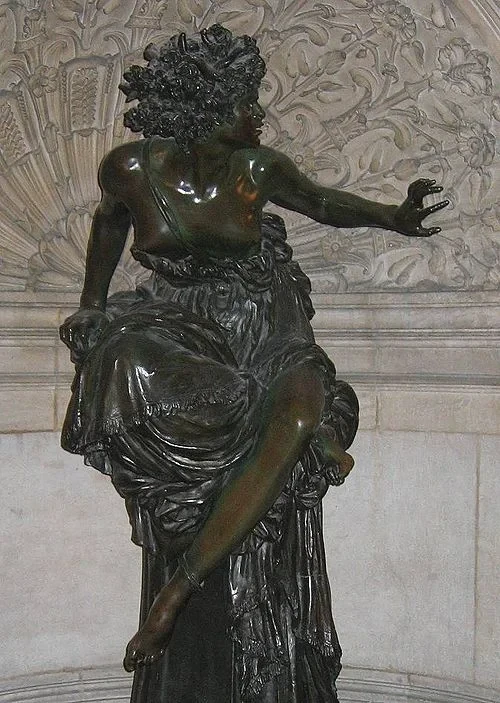 The Basin of PythiaThe Basin of Pythia
The bronze statue here depicts the Pythia, the famous priestess of Apollo at Delphi. She is shown in a moment of trance, seated on her tripod. However, the true drama of this location lies beneath. During construction, Charles Garnier faced a significant engineering hurdle: a high water table that threatened to flood the foundations. To solve this, he constructed a massive concrete cistern to contain the groundwater. This hidden reservoir, often called the 'subterranean lake,' provides the essential weight and stability needed for the structure above. It was this dark, watery space that inspired Gaston Leroux to write the legend of the Phantom of the Opera, who supposedly lived in the depths of the building. While the 'lake' is actually a functional part of the plumbing and fire safety system, its mysterious presence continues to fuel the imagination of visitors. The Pythia stands as a symbolic guardian at this junction, where the visible world of art meets the hidden technical world required to keep the grand theater standing on its swampy Parisian soil. The cool air and echoes here suggest the presence of that vast, hidden volume of water just below.
Listen in the appSculpture: Adèle d'Affry (1836–1879) Photo: Mussklprozz · CC BY-SA 3.0
07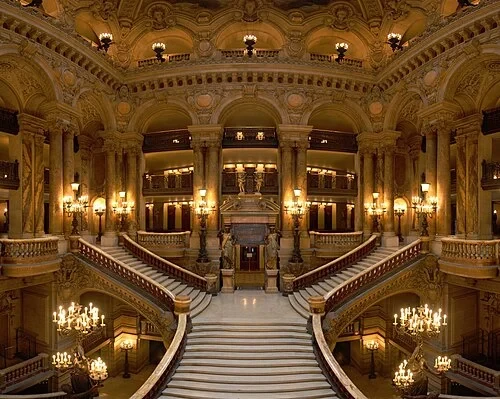 The Grand StaircaseThe Grand Staircase
Charles Garnier referred to this space as a 'theater within the theater.' During the 19th century, the intermission was a vital social ritual. The elite would gather on these steps to display their latest fashions and observe their peers. The architecture was specifically designed to facilitate this spectacle, with wide landings and balconies that provided perfect sightlines for people-watching. To achieve such a lavish effect, Garnier imported stone from all over Europe. The steps are made of white marble from Italy, while the balustrades feature green marble from Sweden and red marble from France. This combination of colors creates a vibrant, luxurious atmosphere that was meant to impress and overwhelm. Every detail, from the height of the steps to the width of the handrails, was calculated to make movement feel graceful and dignified. As visitors ascended, the variety of textures and hues under the gaslight transformed the act of walking into a grand procession, ensuring that for the Parisian high society, the experience outside the auditorium was just as important as the opera itself. The massive scale of the staircase hall was intended to dwarf the individual, emphasizing the grandeur of the state and the arts.
Listen in the appFile:Opera Garnier Grand Escalier.jpg: Benh LIEU SONG derivative work: Fulvio314 · CC BY-SA 3.0
08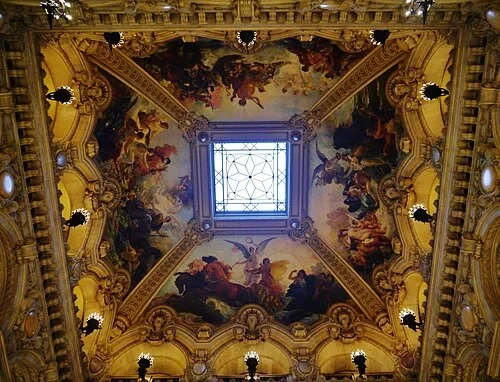 The Grand StaircaseCeiling of the Stairway
As visitors move toward the auditorium, the ceiling paintings above the grand staircase serve a specific psychological purpose. These works, depicting the triumph of Apollo and the varied enchantments of music, were designed by Garnier to mentally prepare the audience for the performance. The transition from the busy streets of Paris to the world of art begins here. The imagery is rich with mythological figures and allegorical scenes that celebrate the emotional and intellectual power of the arts. By looking up, the audience is encouraged to leave their daily worries behind and enter a state of heightened aesthetic awareness. The scale of the murals is intentionally grand, matching the volume of the staircase hall below. This visual storytelling acts as a prologue to the actual opera or ballet, ensuring that the visitor is already immersed in a world of fantasy and beauty before the curtain even rises. The use of vibrant colors and dynamic compositions creates a sense of upward movement, drawing the gaze toward the heavens as people ascend the multi-colored marble steps. It is the final visual fanfare before entering the focused darkness of the theater seats.
Listen in the appPhoto: Zairon · CC BY-SA 4.0
09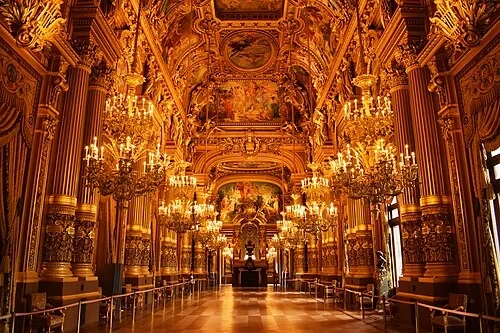 The Grand FoyerThe Grand Foyer
The Grand Foyer is a space of immense scale and luxury, intended to function as a promenade where theatergoers could mingle and socialize. Charles Garnier drew inspiration from the Hall of Mirrors at Versailles, aiming to create a room that felt truly royal. One of the most striking features is the series of massive mirrors, each standing five meters high. These were strategically placed to reflect the light and the movements of the crowd, making the already vast hall feel seemingly infinite. In an era before electricity, the interplay of light on these surfaces created a shimmering, magical environment. The foyer was more than just a hallway; it was the heart of Parisian social life during the opera season. Here, political alliances were formed, marriages were brokered, and reputations were made or broken. The sheer volume of the space was a reflection of the wealth and power of the Second Empire. Even today, the room retains its ability to impress, with its high ceilings and long vistas designed to make every visitor feel like part of a grand, historic event. The gilded details on the ceiling and walls ensure that even a small gathering feels like a monumental occasion.
Listen in the appPhoto: Aymeric-pinel.1985 · CC BY-SA 4.0
10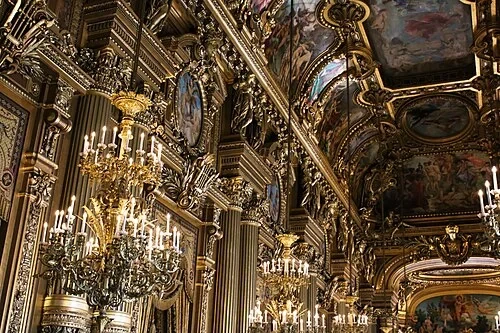 The Grand FoyerGold and Light
The sensory experience of the Palais Garnier is defined by the dazzling interplay of light and gold. Throughout the foyer and halls, you will find lavish gilding that covers nearly every architectural detail. This is not just for show; the use of 19th-century gold leaf was a deliberate choice to maximize the brightness of the space during the era of gaslight. Notice the recurring decorative theme of the lyre, which appears in various forms within the ornamentation—on cornices, door frames, and even the bases of the massive chandeliers. These light fixtures are masterpieces themselves, designed to cast a warm, flickering glow that makes the gold appear to dance. The feeling of overwhelming luxury was essential to Garnier’s vision of a palace for the arts. As you move through the space, the changing angles of light on the textured gold surfaces create a dynamic environment that feels constantly in motion. This level of craftsmanship required an army of artisans, and the result is a space where the architecture itself seems to radiate energy, enveloping the visitor in a world of luxury. The sheer abundance of gold leaf served to reinforce the theater's status as a central pillar of French cultural prestige.
Listen in the appBaptiste Lafontaine from Bordeaux, France · CC BY-SA 2.0
Palais Garnier
Frequently asked questions
How much does the guide cost?
Free app download. Listed guide price: $1.99. Guide price shown in the app. Audio guide only. Venue admission is separate.
Can I listen without internet?
Yes. Download the guide’s audio, images, and maps in the app before your visit. Your downloaded content is then available offline.
Can I listen in my language?
Stanza supports 15 languages. Check the app for the languages available for this guide.
Do I need to follow a schedule?
No. This is a self-guided experience. Choose your stops, pause whenever you like, and return to a story at your own pace.
At your own pace
Explore Palais Garnier.
Download Stanza, then search for “Palais Garnier”.
Free app download · Guide price shown in the app
Keep exploring
Nearby audio guides
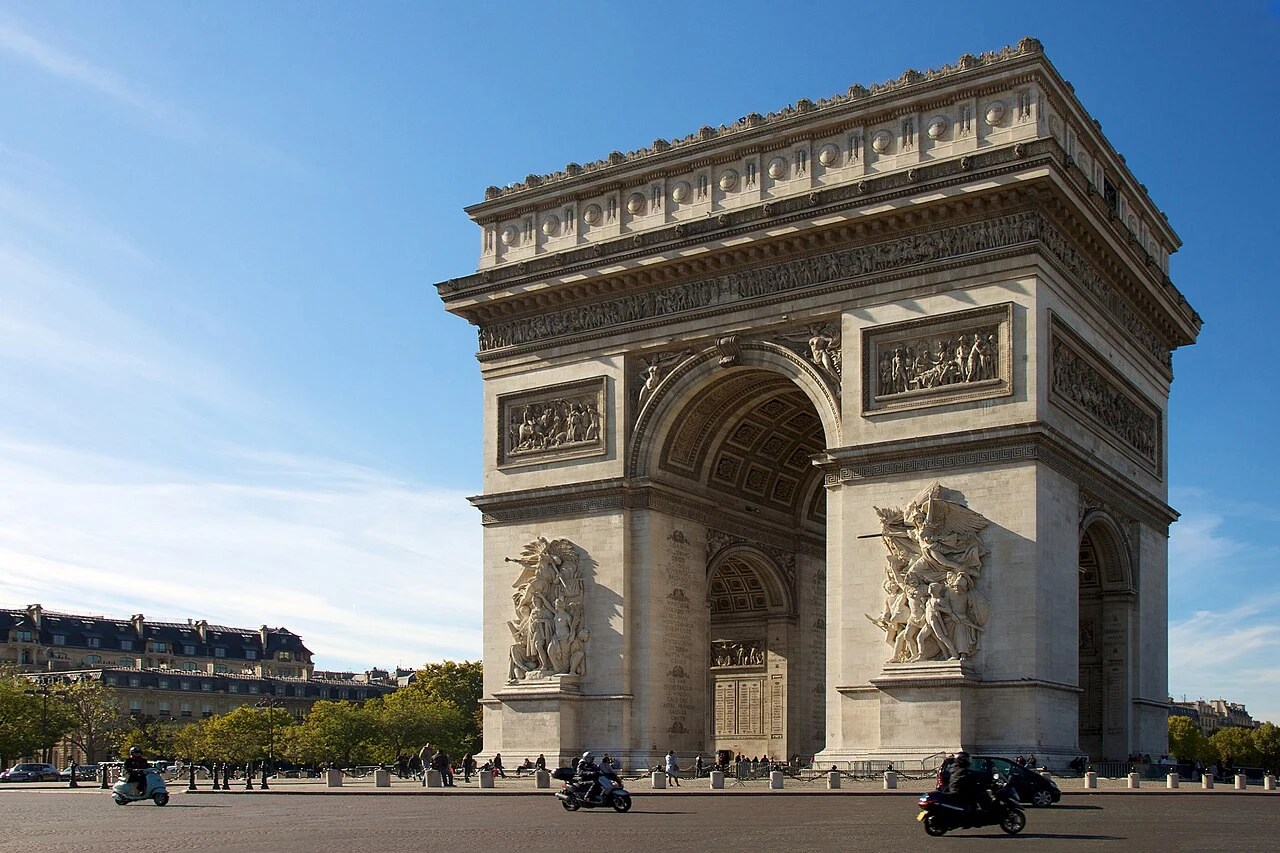
Paris
Arc de Triomphe de l'Étoile
Content & sources
Jiuguang Wang · CC BY-SA 2.0
Paris
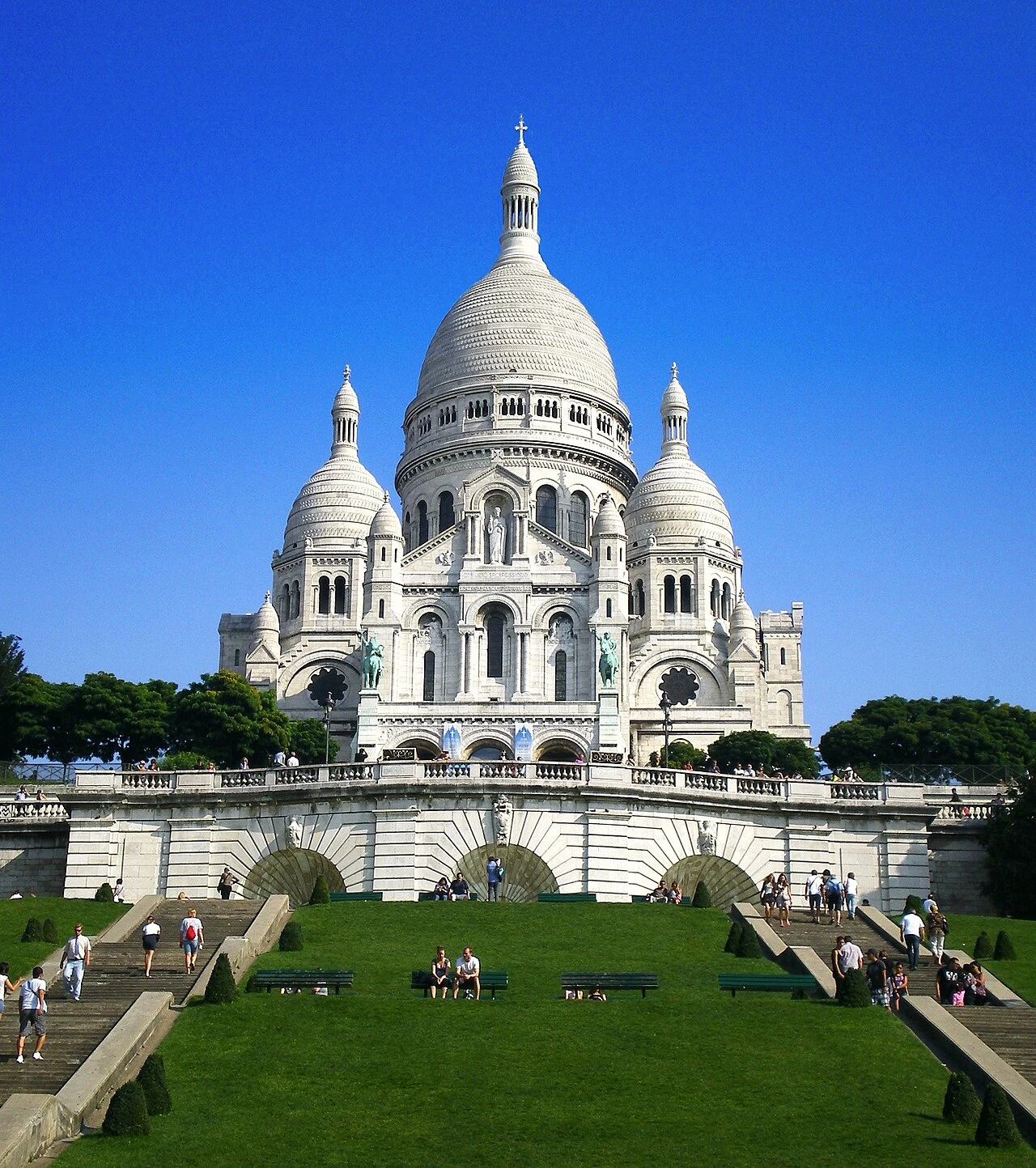
Basilique du Sacré-Cœur de Montmartre
Content & sources
Tonchino · CC BY-SA 3.0
Paris
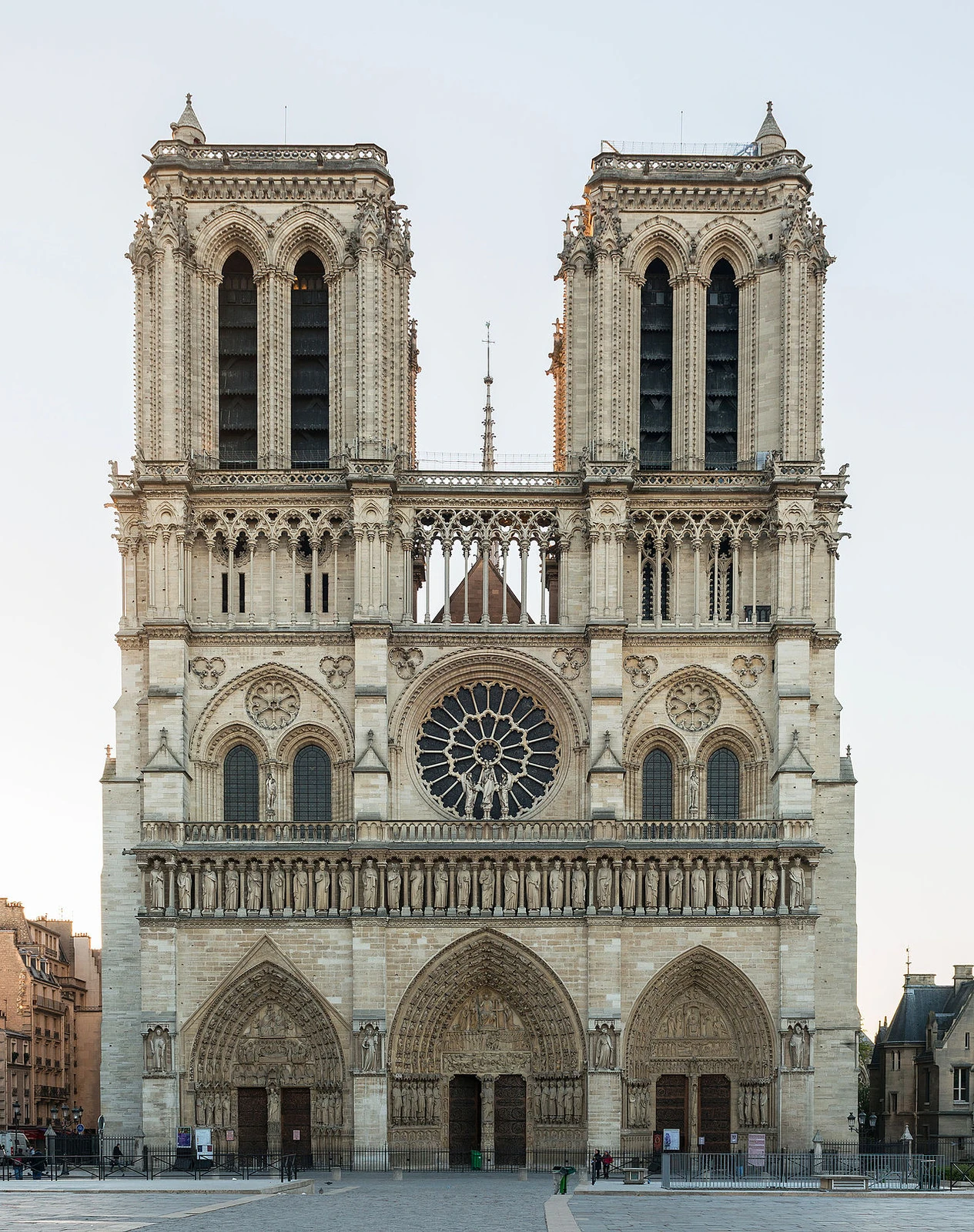
Cathédrale Notre-Dame de Paris
Content & sources
DXR · CC BY-SA 3.0
Paris
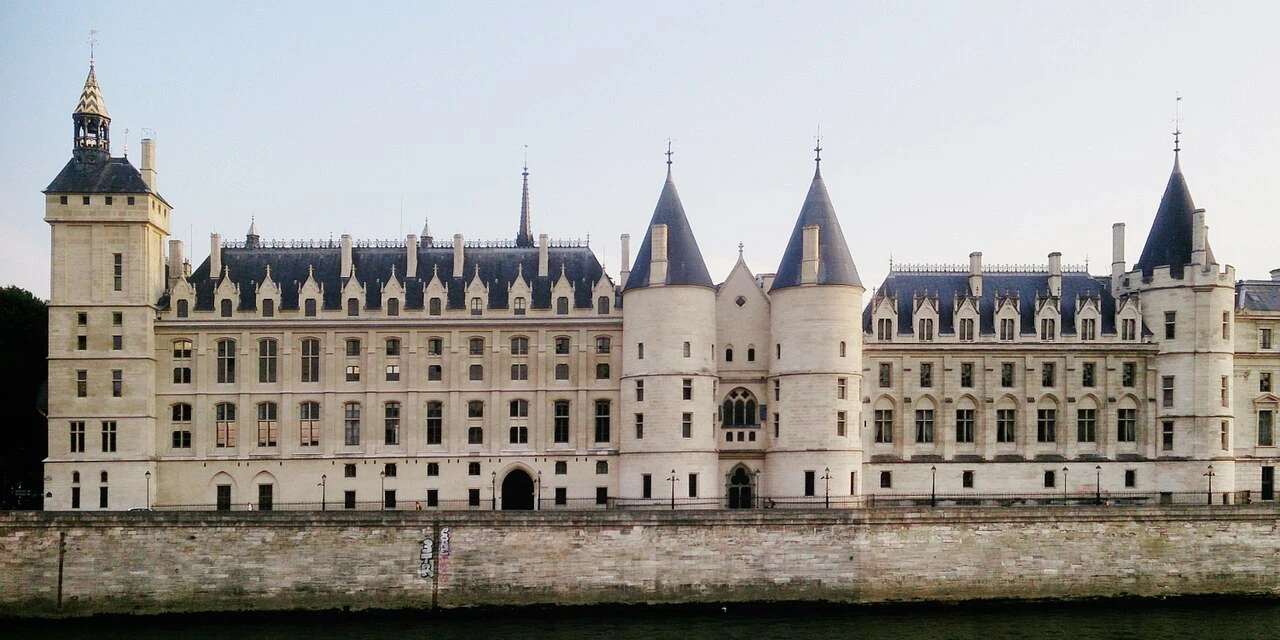
Conciergerie
Content & sources
Photo: Xandru · CC BY-SA 4.0