Stanza · Audio guide
Opéra-ComiqueAudio guide
A place to remember. A story to take with you.
The Opéra-Comique is a historic opera company and a theatre building located in Paris, France.
Download Stanza, then search for “Opéra-Comique”.
About the tour
One guide. Your kind of visit.
The Opéra-Comique is a historic opera company and a theatre building located in Paris, France.
Ready when you are.
- 01Get the free Stanza app.
iOS & Android
- 02Find your guide.
“Opéra-Comique”
- 03Download before you go.
Works offline
Audio guide / 14 narrated stops
Inside the guide
Get to know a few of the stories before you go. Open a stop to read more.
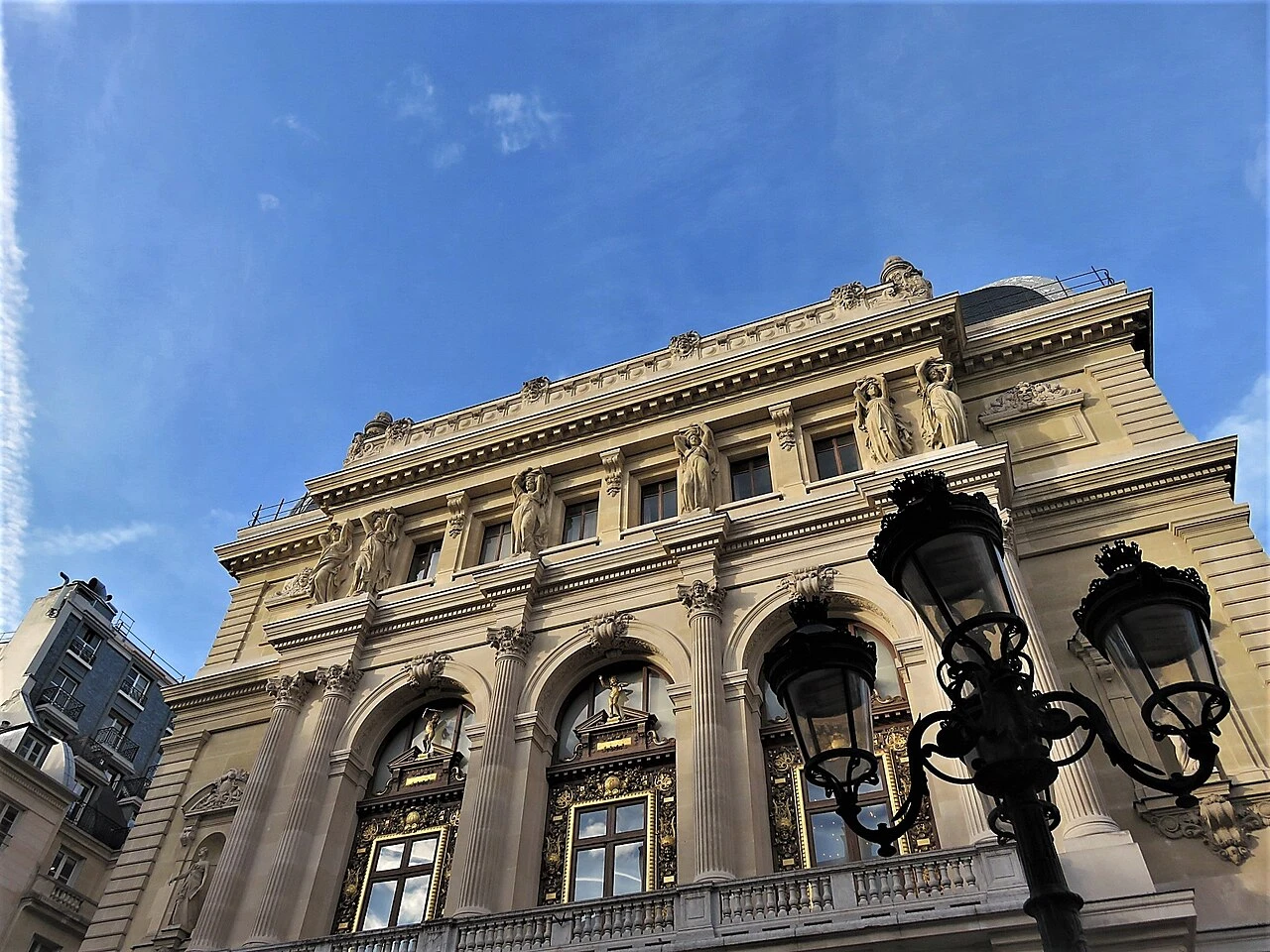
01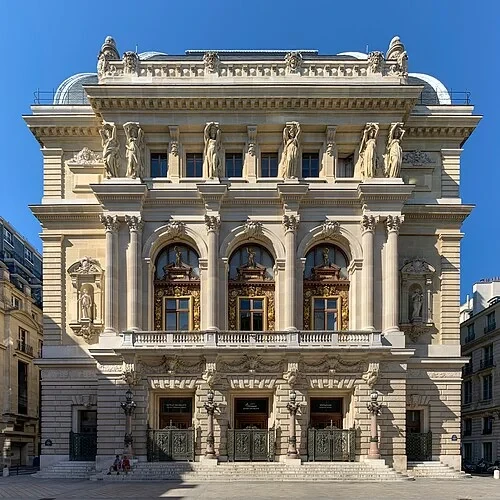 Place Boieldieu and the Belle Époque FacadeThe Belle Époque Facade
Welcome to one of Paris’s most resilient cultural landmarks. Standing here in the Place Boieldieu, you can see the theater’s impressive facade, which was inaugurated on December 7, 1898. Reaching a total height of 36.33 meters, the building dominates the square with its ornate architectural details. Despite its grand appearance, the structure occupies a surprisingly compact footprint of just 58.50 meters in length. Notice the upper attic level, where six cariatides stand watch over the city. These figures contribute to the building's eclectic style, which represented a bold return to artistic form after a period of immense tragedy for the institution. This design was not just about aesthetics; it was a statement of rebirth. The stone facade we see today replaced a previous structure lost to disaster, and its dense, elaborate ornamentation was meant to project a sense of permanence and security for the theater-going public of late 19th-century Paris. The balance of heavy stonework and delicate sculpture serves as a prelude to the artistry found within its walls.
Chabe01 · CC BY-SA 4.0
02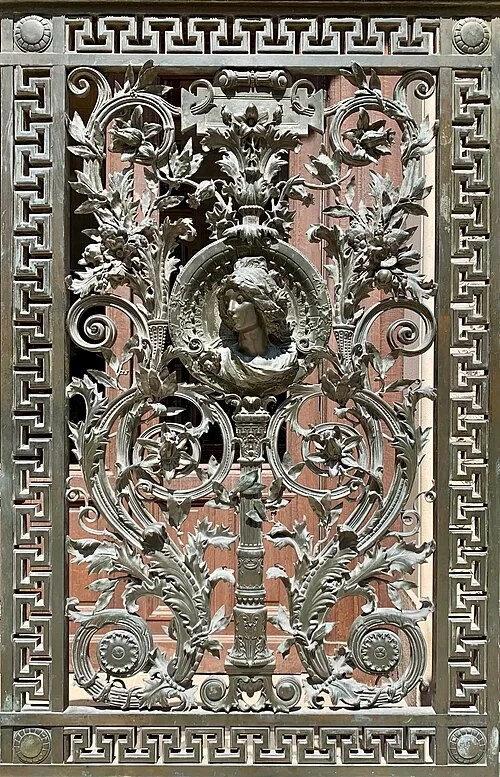 Place Boieldieu and the Belle Époque FacadeThe Ironwork of Favart
The main entrance is guarded by these exceptional iron grilles, which showcase the high level of craftsmanship expected in a National Theater. At the center of each grille is a medallion featuring a woman's face, surrounded by flowing floral motifs and bordered by a classic Greek key pattern. These grilles are more than mere decoration; they represent the dual nature of the building. By law, the theater required sturdy, fireproof security measures, yet as a temple of art, it demanded beauty. This ironwork fulfills both needs simultaneously. The heavy metal provides a physical barrier, while the delicate curves of the flowers and the central figure suggest the lyrical and poetic performances that take place inside. As you observe the details of the metalwork, you are moving from the public square into the semi-private world of the vestibule. The choice of materials and the precision of the casting reflect the theater’s commitment to excellence in every detail, ensuring that even the most functional elements contribute to the overall aesthetic of the Belle Époque.
Photo: Neoclassicism Enthusiast · CC BY-SA 4.0
03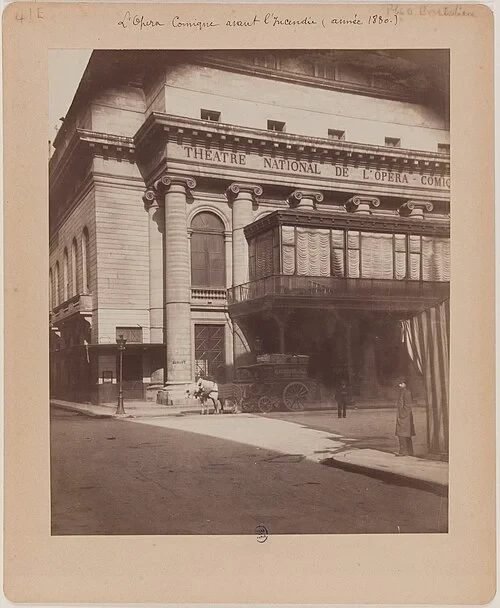 A Site of Three Theaters: The Fire and ReconstructionGhost of the Second Theater
This photograph from 1880 offers a rare look at the predecessor of the current theater. It shows the second building to stand on this historic site, which met a tragic end. On May 25, 1887, during a performance of the opera Mignon, a defect in the gas lighting system sparked a massive fire. The blaze spread with terrifying speed, ultimately claiming the lives of 84 people and gutting the structure. This catastrophe shook the nation and led to a complete revolution in theater safety and public architecture across France. In the wake of the fire, new regulations were drafted to prevent such a tragedy from recurring. When the current building was eventually constructed, it was designed with fire prevention as a primary goal. This is why the Opéra-Comique we visit today became the first theater in France to be equipped with entirely electric lighting, a radical technological leap for the time. The image serves as a somber reminder of why the modern building incorporates so much stone and metal, ensuring that the 'ghost' of the 1887 fire remains a historical lesson rather than a repeated tragedy.
Listen in the appBrichaut, Albert (vers 1901), photographe · CC0
04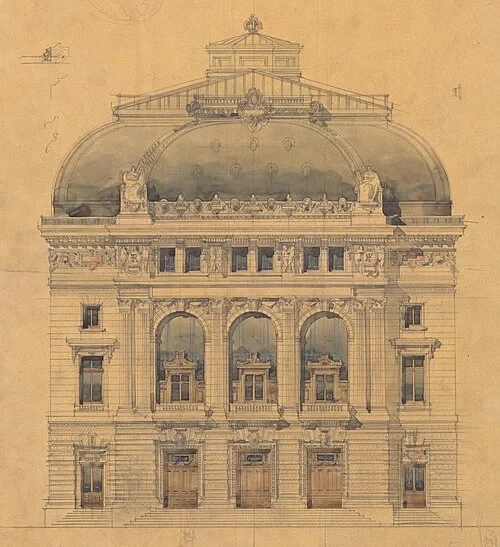 A Site of Three Theaters: The Fire and ReconstructionThe Architect’s Vision
After the devastating fire of 1887, the French government held a major architectural competition to rebuild the Opéra-Comique. The challenge was significant: create a space that honored the theater's traditions while making it the safest in the world. Louis Bernier won the commission with a design that was both classically beautiful and technologically advanced. This drawing illustrates his vision, featuring grand arches and a distinctive roofline that balanced aesthetic grace with modern engineering. The building was literally born from the ashes, with Bernier utilizing stone and steel to create a structure that was far less flammable than its predecessors. Because of the extreme complexity of these new safety features and the high standards of construction required, the project took eleven years to complete. Every element of the roofline and the facade was scrutinized to ensure it met the new national standards. Bernier’s success lay in his ability to hide the heavy engineering and fireproof materials behind a veil of Belle Époque elegance, creating a palace of art that offered peace of mind to the audiences who returned to its halls in 1898.
Listen in the appLouis Bernier · Public domain
05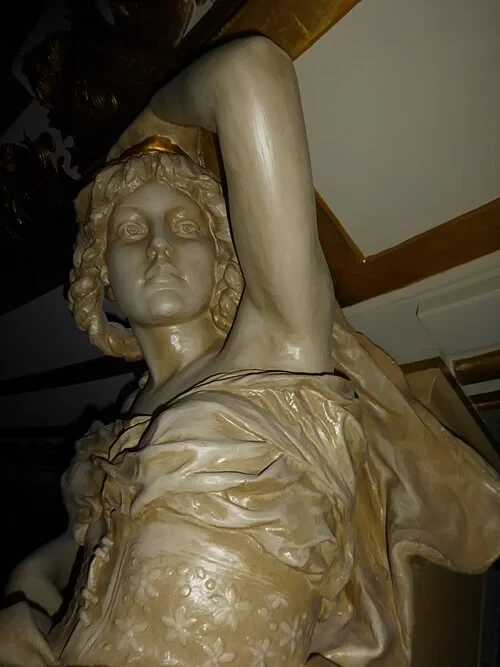 The Vestibule of HeroinesSculpting the Interior
Inside the theater, the functional needs of the architecture are often transformed into works of art. A prime example can be found in the cariatides that support the private boxes. There are ten of these figures in total, each credited to the renowned sculptor Jules Coutan. Notice the posture of the figure: her arms are raised above her head, seemingly bearing the weight of the structure above her with ease. This design choice blends necessary architectural support with the refined elegance of the Belle Époque. The statues feature a white, plaster-like finish that provides a stark and beautiful contrast to the heavily gilded accents of the ceiling and the surrounding decor. Coutan’s work adds a sense of human grace to the heavy masonry, making the structural columns feel alive. These figures were an essential part of the theater's visual identity when it reopened at the end of the 19th century, symbolizing a return to luxury and high art. The physical effort implied by their poses serves as a metaphor for the strength of the institution, standing firm through centuries of history and artistic change.
Listen in the appPhoto: Geoleplubo · CC BY-SA 4.0
06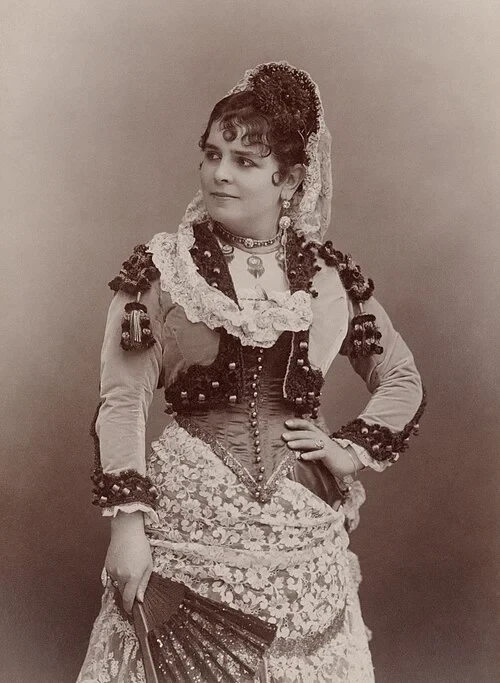 The Vestibule of HeroinesThe Scandal of Carmen
The Opéra-Comique is the birthplace of many legendary works, but none are more famous than Georges Bizet’s Carmen. When it premiered here on March 3, 1875, the audience was horrified. People expected light, moralizing stories, but instead, they were presented with a gritty tale of passion and crime. This photograph captures Célestine Galli-Marié, the singer who first brought the character of Carmen to life. Her performance was considered scandalous because she portrayed a realistic, assertive cigarette-factory worker, which was seen as far too coarse for a respectable family theater. The initial reception was so hostile that Bizet died just three months later, believing his work was a failure. History, however, proved the audience wrong. Carmen eventually became a global sensation, breaking the traditional molds of the genre with its raw emotion and unforgettable melodies. To date, the company here has performed Carmen over 2,500 times, making it the most performed opera in the world. The image of Galli-Marié in her costume stands as a testament to the moment the Opéra-Comique moved from traditional entertainment into the realm of modern, realistic drama.
Listen in the appPhoto: Adam Cuerden · Public domain
07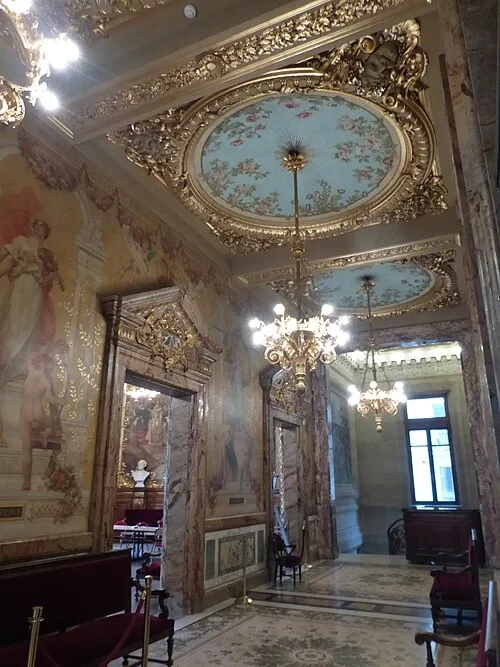 The Grand StaircasesThe Grand Foyer
The Grand Foyer is designed to be as much a stage as the one inside the auditorium. In the late 19th century, intermissions were central to the theater-going experience; they were the time for Parisian high society to gather, talk, and show off their finest attire. This opulent room was created specifically to accommodate this 'social stage.' As you look around, you will see pink marble pilasters, heavily gilded doorframes, and massive crystal chandeliers that flood the room with light. The scale and luxury of the foyer were meant to reflect the prestige of the visitors and the importance of the National Theater itself. On the walls, you will find allegorical paintings that represent various musical genres, reinforcing the building's purpose even during breaks in the performance. Every detail, from the intricate floor patterns to the height of the ceilings, was intended to impress. During the Belle Époque, a successful night at the opera was measured not just by the quality of the music on stage, but by the elegance and vibrancy of the crowd gathered right here in this very room.
Listen in the appPhoto: Geoleplubo · CC BY-SA 4.0
08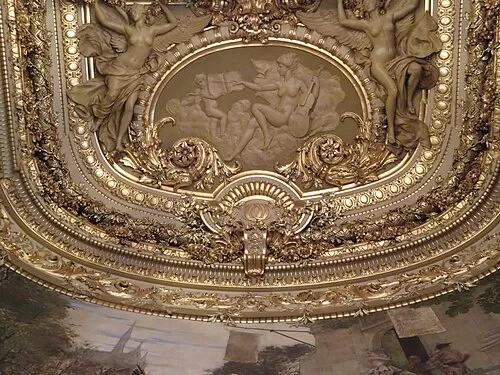 The Grand StaircasesThe Music of the Heavens
If you look up at the ceiling of the foyer, you will see a masterwork of relief sculpture and gilding. The ceiling is decorated with winged figures and various musical instruments, all celebrating the art form that gave this theater its name. The opéra-comique genre is unique in the world of classical music because it alternates sung arias with spoken dialogue. This style was born out of 18th-century fairground theater, where performers had to find creative ways to entertain the public while working around legal restrictions. Over time, it evolved into a sophisticated National art form, as reflected by the elaborate and expensive gilding you see here. The richness of this decoration underscores the theater's status as a 'National Theater' under the French Republic. The figures in the relief seem to float in a sky of gold, representing the higher ideals of music and poetry. By placing these symbols on the ceiling, the architects ensured that the theater's history and its specific musical identity were literally woven into the fabric of the building, reminding every visitor of the centuries of creative evolution that led to this moment.
Listen in the appPhoto: Sukkoria · CC BY-SA 4.0
09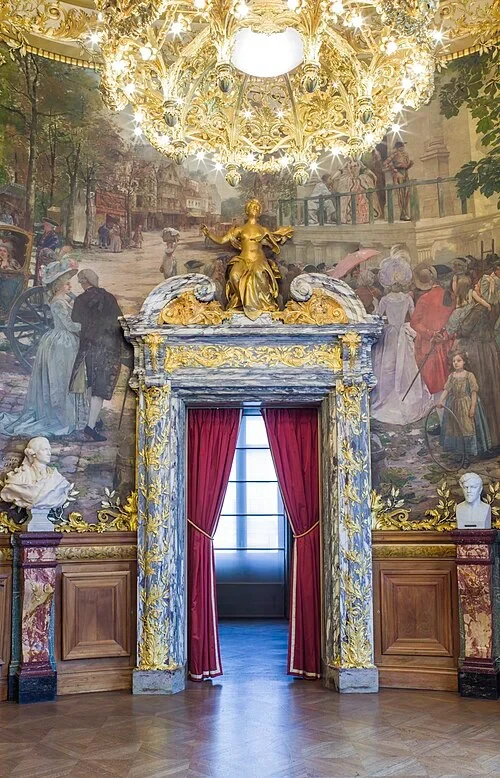 The Grand Foyer and Fairground MuralsThe Saint-Laurent Fair
This vibrant mural, painted by Henry Gervex, takes us back to the roots of the theater's history. It depicts the bustling Saint-Laurent Fair in the 18th century, complete with a lively crowd, a horse-drawn carriage, and performers on a simple wooden stage. The scene explains the 'why' behind the opéra-comique genre. At that time, the Paris Opéra held a strict legal monopoly on 'pure' opera, meaning only their performers were allowed to sing on stage. To bypass this monopoly and avoid being shut down by the authorities, fairground troupes invented a new style that mixed spoken dialogue with short songs. These humble, often rowdy beginnings eventually evolved into the sophisticated genre we know today. Gervex’s painting honors these origins, showing that the high art performed in this grand building today started in the mud and noise of the city's markets. By including this mural in such a prominent space, the theater acknowledges that its legacy is not just one of elite luxury, but of popular ingenuity and the irrepressible human desire to create and entertain against all odds.
Listen in the appPhoto: Operacomique · CC BY-SA 4.0
10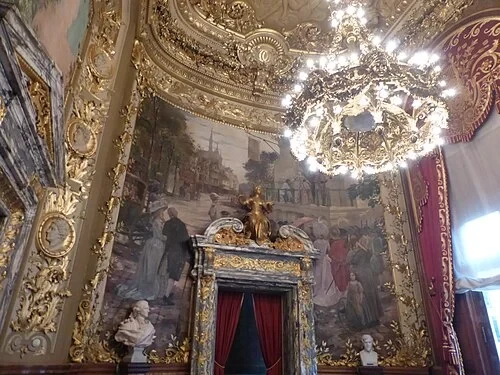 The Grand Foyer and Fairground MuralsA Palace of Light
The chandeliers in this theater represent a major turning point in architectural history. After the horrific fire of 1887, the Opéra-Comique became the first theater in France to switch entirely to electric lighting. Before this, theaters used thousands of gas jets, which produced thick smoke, heat, and a constant risk of fire. Look at the ornate bronze work of the chandeliers; while they appear classical, they were at the cutting edge of 19th-century technology. This transition to electricity had a profound impact on the interior design. Because there was no longer any gas smoke or soot to blacken the surfaces, artists could create much more elaborate and light-colored ceiling paintings. The works you see above, such as those by Albert Maignan, have remained vibrant for over a century because they were never exposed to the damaging effects of gas lighting. This 'Electric Revolution' allowed the theater to be brighter, safer, and more colorful than ever before. It changed the way audiences saw the stage and how they experienced the public spaces, turning the theater into a true palace of light that symbolized a modern, safer Paris.
Listen in the appPhoto: Geoleplubo · CC BY-SA 4.0
Opéra-Comique
Frequently asked questions
How much does the guide cost?
Free app download. Listed guide price: $0.99. Guide price shown in the app. Audio guide only. Venue admission is separate.
Can I listen without internet?
Yes. Download the guide’s audio, images, and maps in the app before your visit. Your downloaded content is then available offline.
Can I listen in my language?
Stanza supports 15 languages. Check the app for the languages available for this guide.
Do I need to follow a schedule?
No. This is a self-guided experience. Choose your stops, pause whenever you like, and return to a story at your own pace.
At your own pace
Explore Opéra-Comique.
Download Stanza, then search for “Opéra-Comique”.
Free app download · Guide price shown in the app
Keep exploring
Nearby audio guides
Paris
Arc de Triomphe de l'Étoile
Content & sources
Jiuguang Wang · CC BY-SA 2.0
Paris
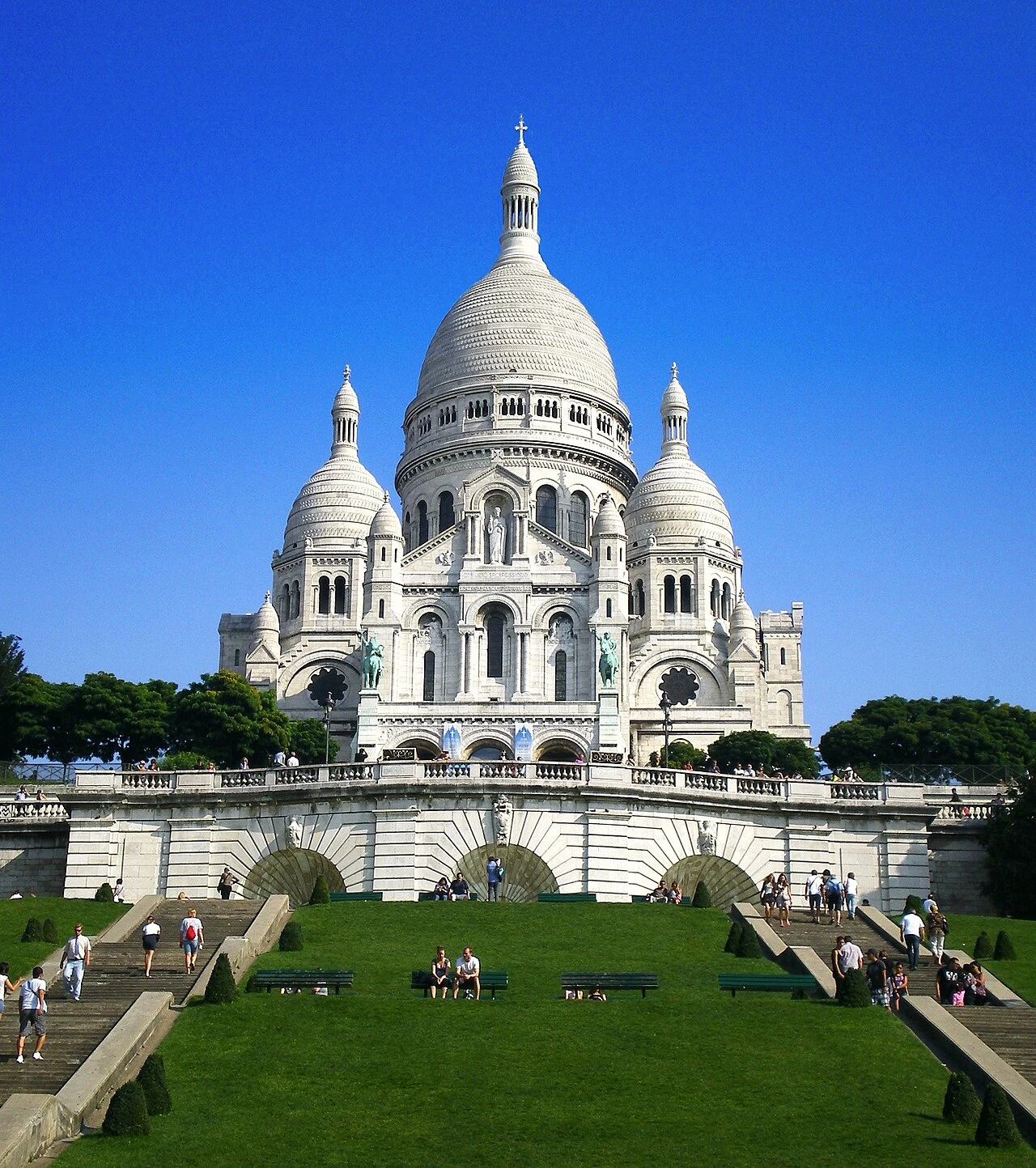
Basilique du Sacré-Cœur de Montmartre
Content & sources
Tonchino · CC BY-SA 3.0
Paris
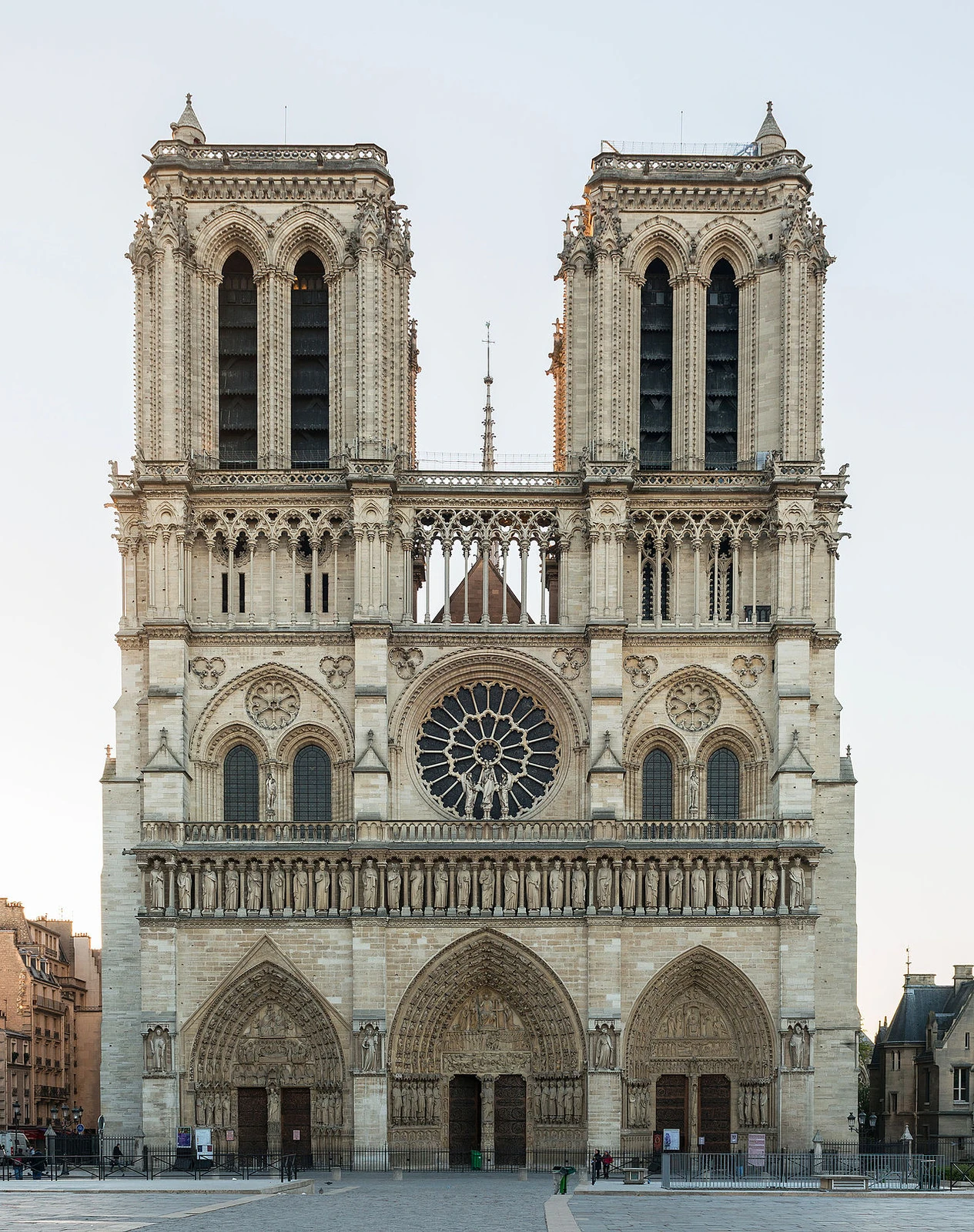
Cathédrale Notre-Dame de Paris
Content & sources
DXR · CC BY-SA 3.0
Paris
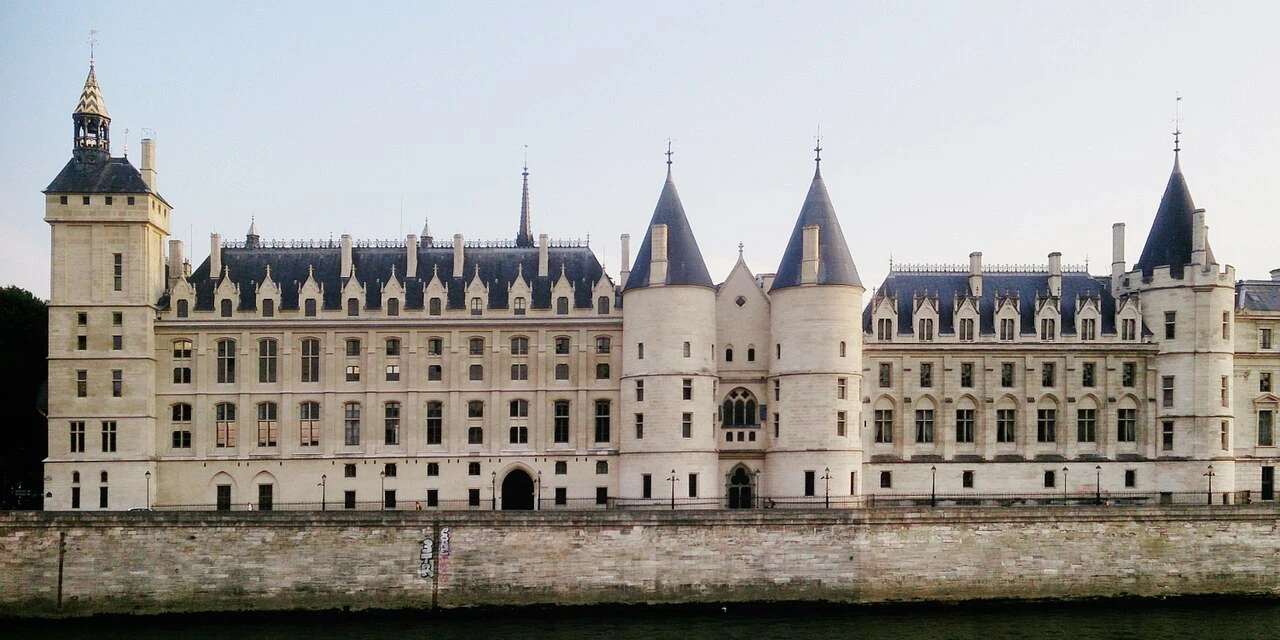
Conciergerie
Content & sources
Photo: Xandru · CC BY-SA 4.0