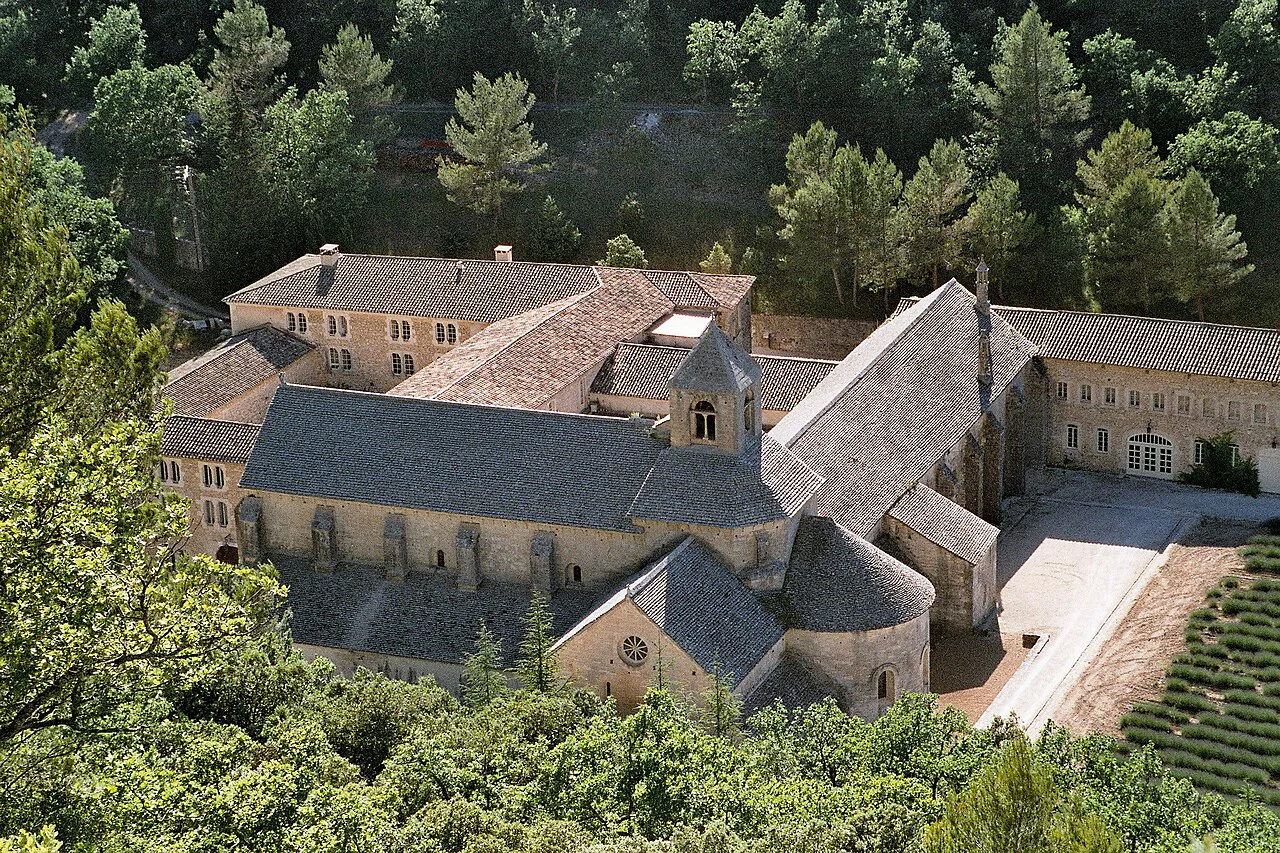
Stanza · Audio guide
Abbaye Notre-Dame de Sénanque Audio Guide
A place to remember. A story to take with you.
Sénanque Abbey is a Cistercian abbey located near the village of Gordes in the Vaucluse department of France. It is a historic religious site known for its Cistercian architecture.
Download Stanza, then search for “Abbaye Notre-Dame de Sénanque”.
About the tour
One guide. Your kind of visit.
Sénanque Abbey is a Cistercian abbey located near the village of Gordes in the Vaucluse department of France. It is a historic religious site known for its Cistercian architecture.
Ready when you are.
- 01Get the free Stanza app.
iOS & Android
- 02Find your guide.
“Abbaye Notre-Dame de Sénanque”
- 03Download before you go.
Works offline
Audio guide / 10 narrated stops
Inside the guide
Get to know a few of the stories before you go. Open a stop to read more.
01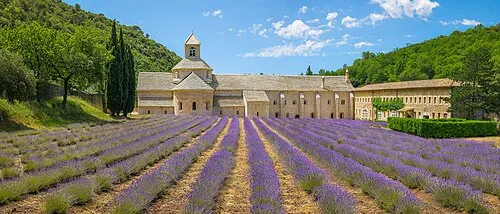 The Sénancole Valley and Lavender Fields
Valley Overlook and Lavender Fields
Notre-Dame de Sénanque is a Cistercian abbey in the Vaucluse area of Provence, near the village of Gordes. Monks from Mazan Abbey founded it in 1148, in the narrow Sénancole valley. The Cistercians wanted isolation, poverty and simplicity, and this secluded valley suited that ideal. Like other Benedictine communities, these monks balanced prayer with manual work. The lay brothers, who did much of the outdoor work, had quarters of their own. In 1544, during the Wars of Religion, those quarters were destroyed. The abbey is still a working monastery. Today the monks grow lavender and keep honey bees to make their living.
Chris Down · CC BY 4.0
02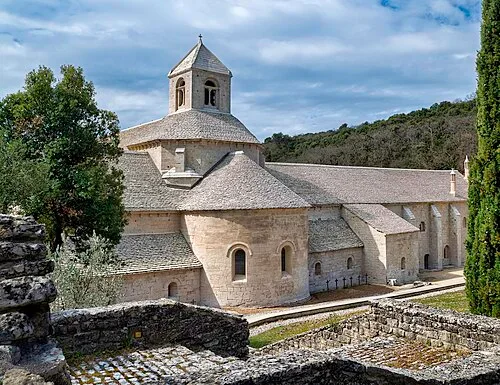 The Exterior Chevet and Bell Tower
Exterior Chevet and Bell Tower
The narrow valley shaped this end of the church. Most churches point the sanctuary to the east, but there was no room for that here. So the apse, the rounded end of the church, turns toward the north side instead. The roofs are covered with lauzes, flat stone slabs. A small square bell tower rises over the crossing, where the transept meets the nave. Sénanque is one of three early Cistercian abbeys in Provence known as the Three Sisters. The other two are Silvacane and Le Thoronet.
Photo: Rolf Kranz · CC BY-SA 4.0
03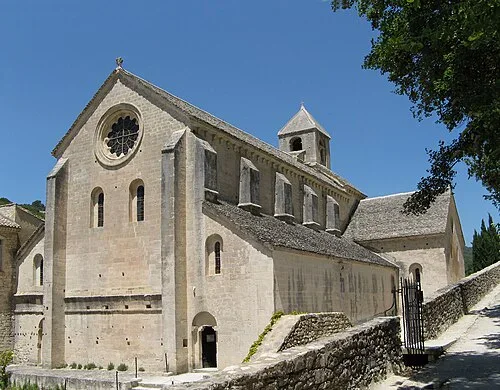 The Abbey Church (Abbatiale)
Southwestern Main Facade and Oculus
The church's style is very plain Romanesque, and the main front shows it clearly. Two strong buttresses, thick stone supports built against the wall, brace the front. The front has two narrow windows, set deep in the stone under round arches. Above them is a large round window, described as having twelve lobes, the rounded sections around its rim. In 1791, during the Revolution, the abbey was sold as national property. By good fortune, its buyer protected it from destruction and had it reinforced.
Listen in the appPhoto: Hubert DENIES · CC BY-SA 3.0
04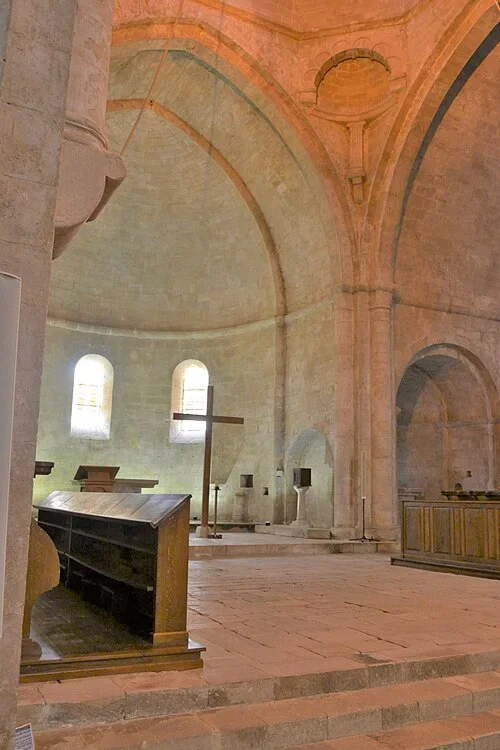 The Abbey Church (Abbatiale)
Abbey Church (Abbatiale) Interior
The lords of Simiane supported the young community, and their help made building this church possible. The church was consecrated in 1178. Its plan is a tau cross, the shape of the Greek letter T. The apse projects beyond the outer walls. Inside, the walls are bare stone, and the apse rises under a half-dome lit by three narrow windows with round arches. The wooden cross and the benches are modern furnishings. The church faced a more recent crisis too. At the end of October 2018, the twelfth-century nave was threatening to collapse, and the side aisle was sinking. The building had to be closed urgently. The repair and renovation work was estimated at two point two million euros. The monks made a public appeal. The state and local authorities could not cover everything. At least eight hundred thousand euros had to come from donations.
Listen in the appPhoto: Marianne Casamance · CC BY-SA 4.0
05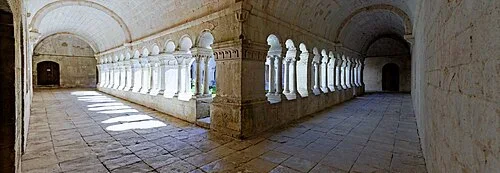 The Romanesque Cloister
Romanesque Cloister Galleries
This cloister gallery is built in a steady rhythm of round arches. Paired columns carry them, and the arches are grouped in threes. Each group sits beneath a larger arch built into the wall above. These are relieving arches, which take some of the weight off the smaller arches below. A cloister was the covered walk of a medieval monastery. This one linked the church with the monks' buildings. Sunlight falls across the stone floor in long bars, and the same grouping repeats all along the walk.
Listen in the appPhoto: François de Dijon · CC BY-SA 3.0
06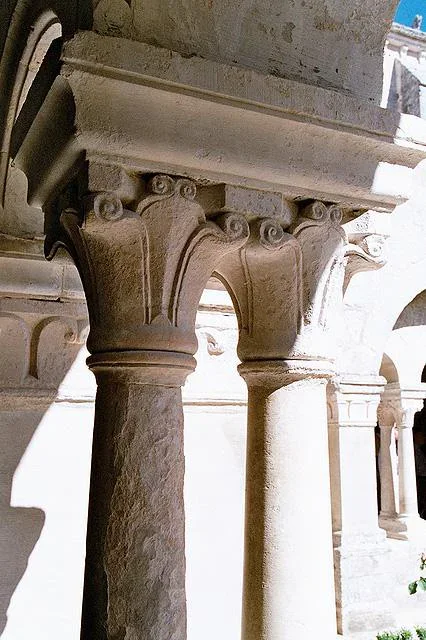 The Romanesque Cloister
Water-Leaf Capitals of the Cloister
Each column here ends in a capital, the carved block where the column meets the arch. Just below the plain block at the top, the leaves curl into small spiral scrolls, called volutes. The French name for this carving is feuilles d'eau, or water leaves. That plainness suits the Cistercian ideal of simplicity. One account says the capitals were reduced to the simplest leaf forms, so they would not offer sensual distraction.
Listen in the appGreudin · Public domain
07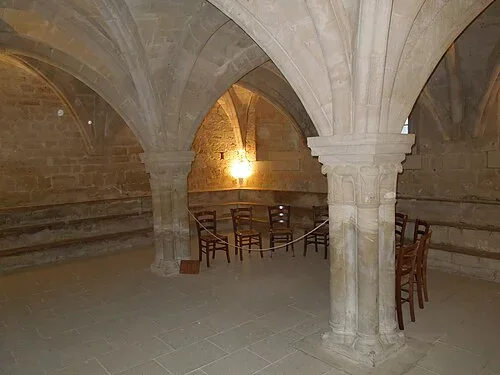 The Chapter House
Monks' Chapter House (Salle Capitulaire)
This room was the community's meeting place. The monks sat on stone seats along the walls to read Scripture and discuss it together. Novices came here to make their vows. The community also kept vigil for its dead in this room, and it made its important decisions here. The pointed vaults spring from central columns. The chairs and the rope barrier are modern arrangements, not medieval furniture.
Listen in the appPhoto: Olivier · CC BY-SA 4.0
08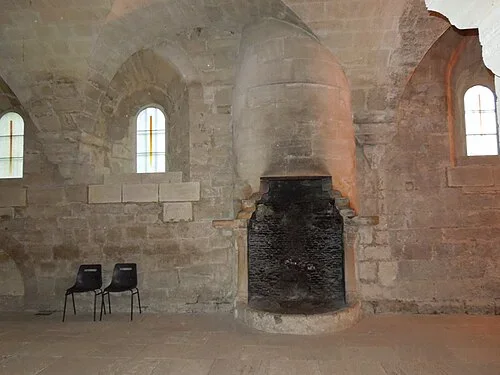 The Calefactory and Scriptorium
The calefactory was the only heated room in an otherwise austere abbey. Calefactory means warming room. Its large stone hood stands over a blackened hearth. The warmth was there so the monks could write, since this room was their scriptorium. Narrow windows with round arches light the room, and the ceiling above is vaulted.
Listen in the appPhoto: Olivier · CC BY-SA 4.0
09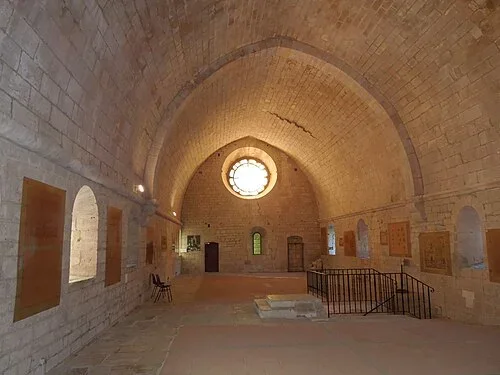 The Monks' Dormitory
The monks' dormitory is a long vaulted hall on the building's first floor. The panels on the walls are modern displays. In the past, the monks slept fully dressed in one shared room with no comforts at all. Today each monk has his own small room, called a cell. Cistercian life is still very hard, and rest is limited to seven hours at most. The first prayer service of the day is at half past four in the morning.
Listen in the appPhoto: Olivier · CC BY-SA 4.0
10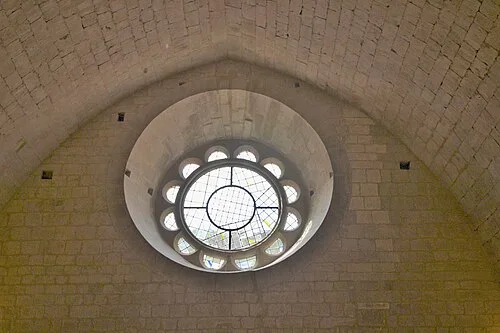 The Monks' Dormitory
Round Window of the Dormitory
The round window in this vault is a single circle of glass set into plain stone. Thin bars run out from its centre and around in rings, dividing the light into a pattern. Almost nothing else in the hall is decorated. The community that used it lived by prayer and work, with very little comfort. One account calls the abbey a survival of rare beauty and severity. This window holds both, a circle of light opening a bare stone vault.
Listen in the appPhoto: Marianne Casamance · CC BY-SA 4.0
Abbaye Notre-Dame de Sénanque
Frequently asked questions
How much does the guide cost?
Free app download. Listed guide price: $0.99. Guide price shown in the app. Audio guide only. Venue admission is separate.
Can I listen without internet?
Yes. Download the guide’s audio, images, and maps in the app before your visit. Your downloaded content is then available offline.
Can I listen in my language?
This audio guide is available in 15 languages, including English.
Do I need to follow a schedule?
No. This is a self-guided experience. Choose your stops, pause whenever you like, and return to a story at your own pace.
At your own pace
Explore Abbaye Notre-Dame de Sénanque.
Download Stanza, then search for “Abbaye Notre-Dame de Sénanque”.
Free app download · Guide price shown in the app
Keep exploring
Nearby audio guides
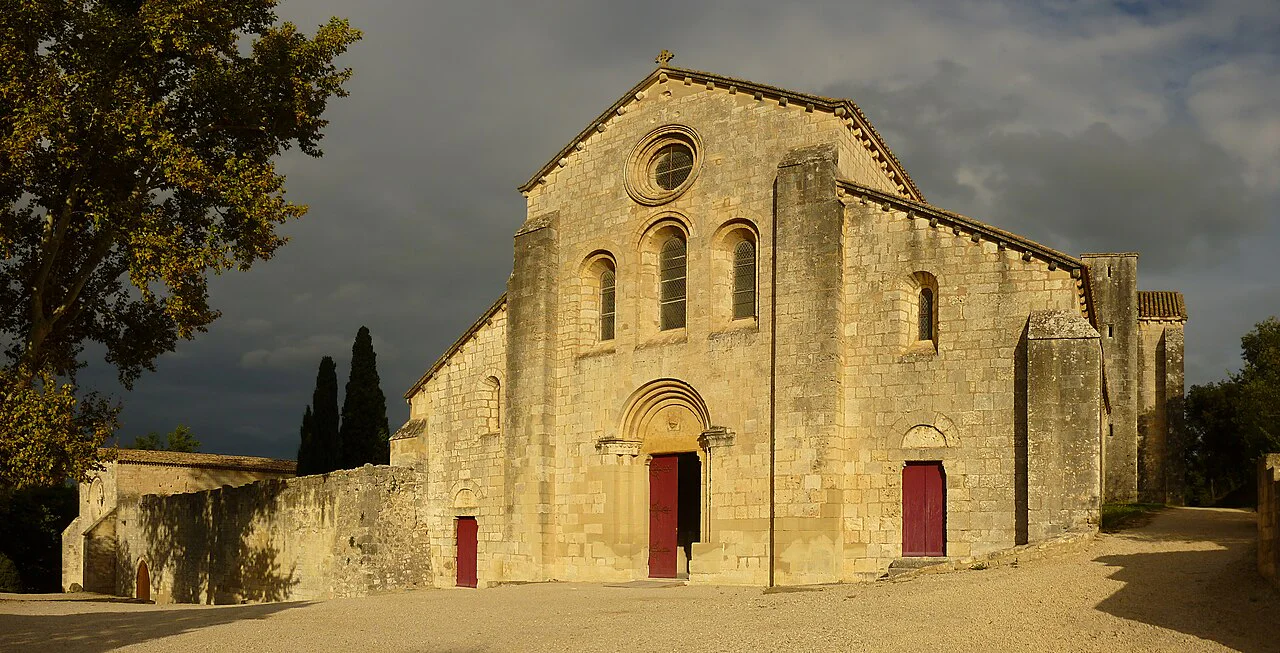
La Roque-d'Anthéron · 26 km
Abbaye de Silvacane
Content & sources
Borvan53 · CC BY-SA 3.0
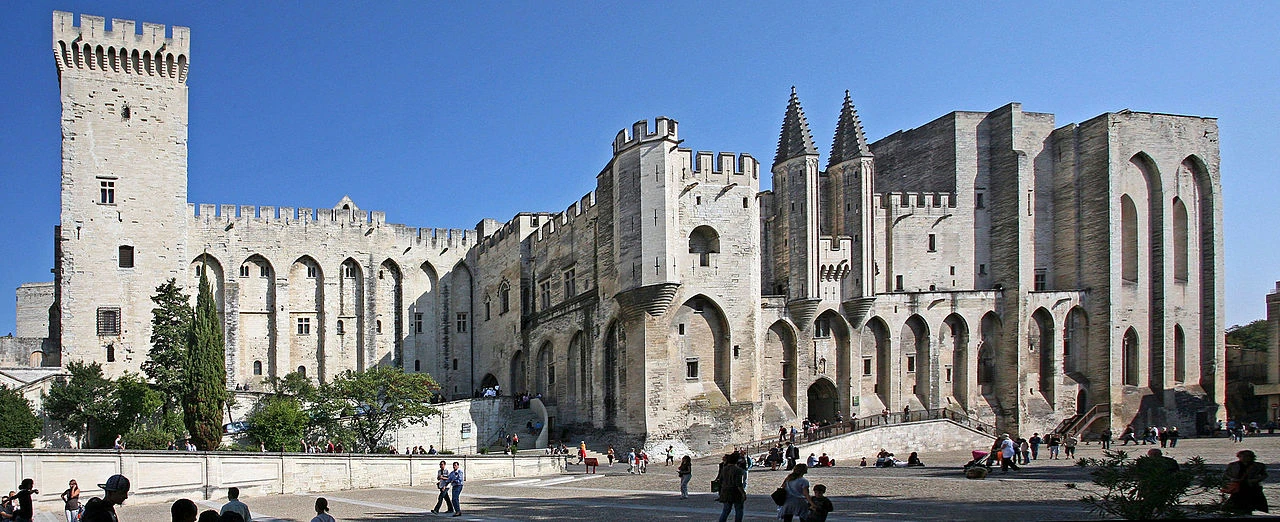
Avignon · 30 km
Palace of the Popes
Content & sources
Jean-Marc Rosier (de/from http://www.cjrosier.com + http://www.gordes-immobilier.com) · CC BY-SA 3.0
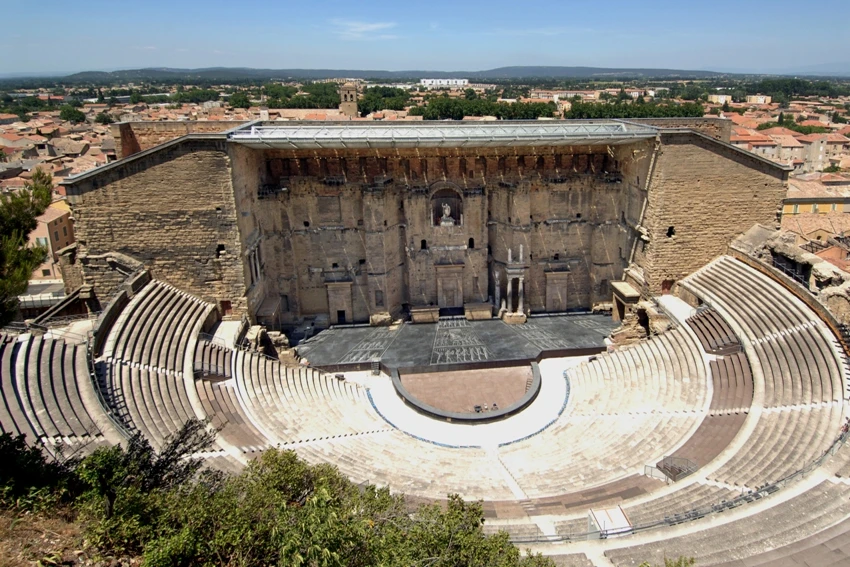
Orange · 38 km
Roman Theatre of Orange
Content & sources
Gromelle Grand Angle · CC BY-SA 3.0
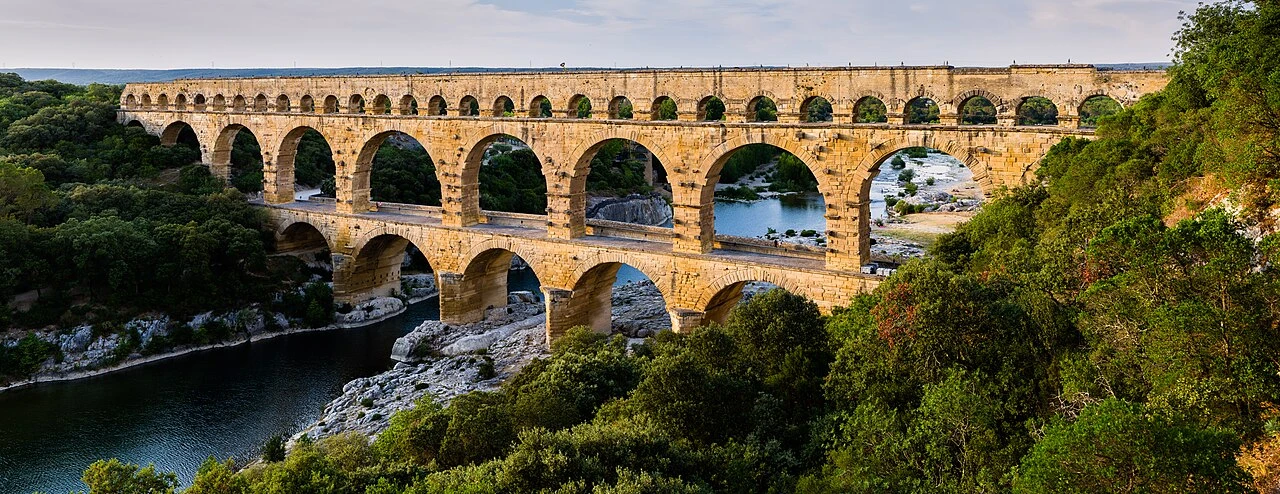
Vers-Pont-du-Gard · 52 km
Pont du Gard
Content & sources
Benh LIEU SONG (Flickr) · CC BY-SA 3.0