Stanza · Audio guide
Jardin des Tuileries Audio Guide
A place to remember. A story to take with you.
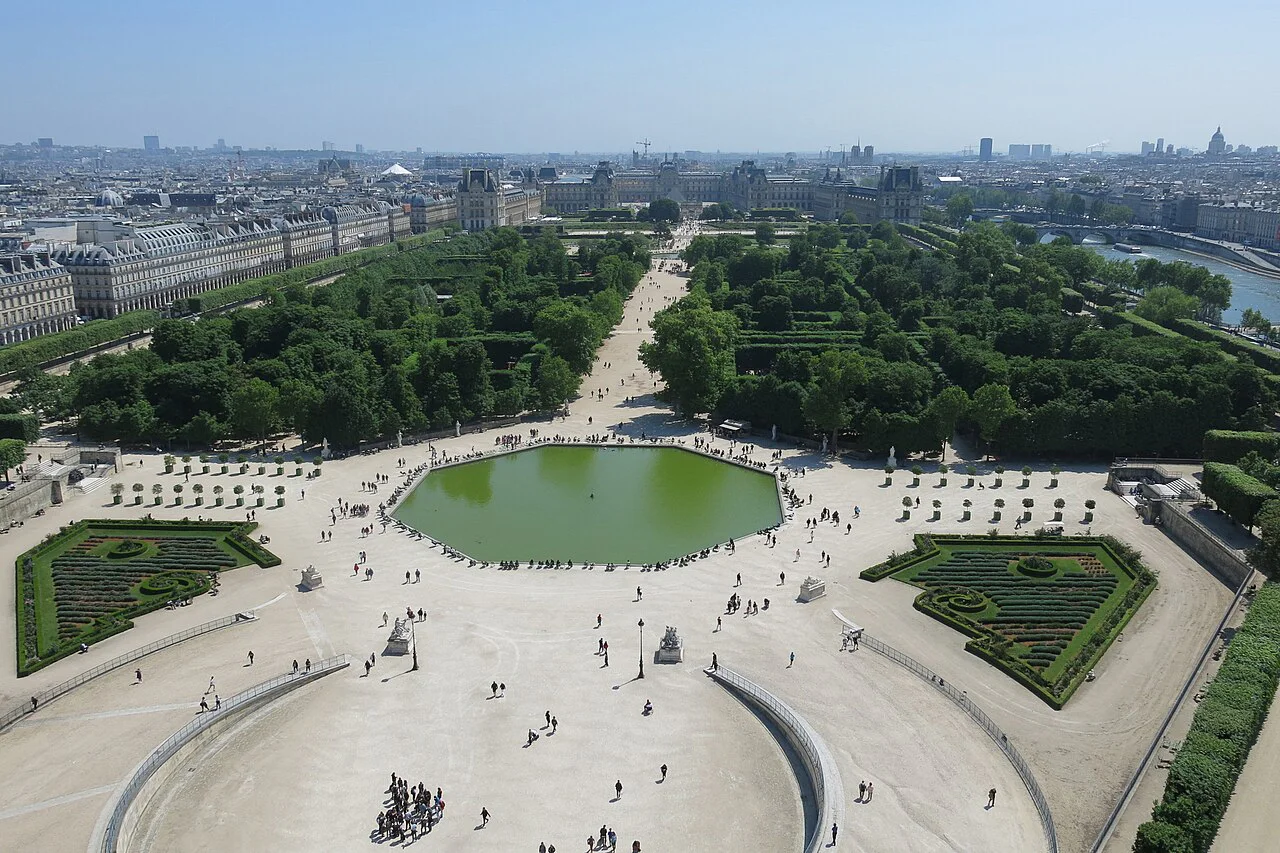
The Tuileries Garden is a public garden located between the Louvre and the Place de la Concorde in Paris. Created in 1564, it has served as a public park for relaxation and celebration since the French…
Download Stanza, then search for “Jardin des Tuileries”.
About the tour
One guide. Your kind of visit.
The Tuileries Garden is a public garden located between the Louvre and the Place de la Concorde in Paris. Created in 1564, it has served as a public park for relaxation and celebration since the French Revolution.
Ready when you are.
- 01Get the free Stanza app.
iOS & Android
- 02Find your guide.
“Jardin des Tuileries”
- 03Download before you go.
Works offline
Audio guide / 31 narrated stops
Inside the guide
Get to know a few of the stories before you go. Open a stop to read more.
01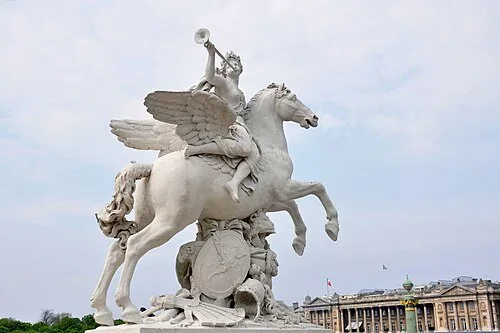 Fame Riding Pegasus
 by Antoine Coysevox
A winged horse rears over the western gate of the Tuileries, and on its back a woman raises a trumpet to her lips. She is Fame, sounding the trumpet that carries a name across the world. The marble group is the work of Antoine Coysevox, sculptor to the court of Louis the Fourteenth. A matching group, Mercury on his own winged horse, stands on the other gate pier. Both were brought to Paris in 1719 from Marly, the king's private retreat, and set at the garden's grand western entrance, where visitors arrive from the Place de la Concorde. The originals now belong to the Louvre; the group at the gate is a copy, placed there in 1986.
Photo: Vassil · Public domain
02 Mercury Riding Pegasus
 by Antoine Coysevox
On the other gate pier rides Mercury, the winged messenger of the gods, carved by the same hand and brought from the same royal set at Marly. Behind him rises the obelisk of the Place de la Concorde, the great square onto which the garden's west gate opens.
Michael Gaylard from Horsham, UK · CC BY 2.0
03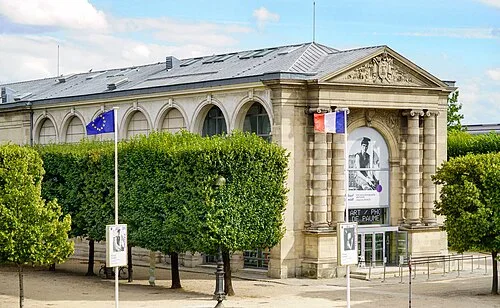 National Gallery of the Jeu de Paume
Galerie nationale du Jeu de Paume
The long stone building at the garden's northwest corner began life as a sports hall. It was built in 1861 under Napoleon the Third as a court for jeu de paume, an indoor ancestor of tennis, and enlarged in 1878. The game's name stayed with the building long after the play moved out. It became an annex of the Musée du Luxembourg, given over to contemporary art from outside France. From 1947 it housed a large collection of Impressionist painting, and kept it until 1986, when the pictures moved to the new Musée d'Orsay. Today it stages changing exhibitions of modern and contemporary art, and the upper gallery is lit by daylight.
Listen in the appJean-Pierre Dalbéra · CC BY 2.0
04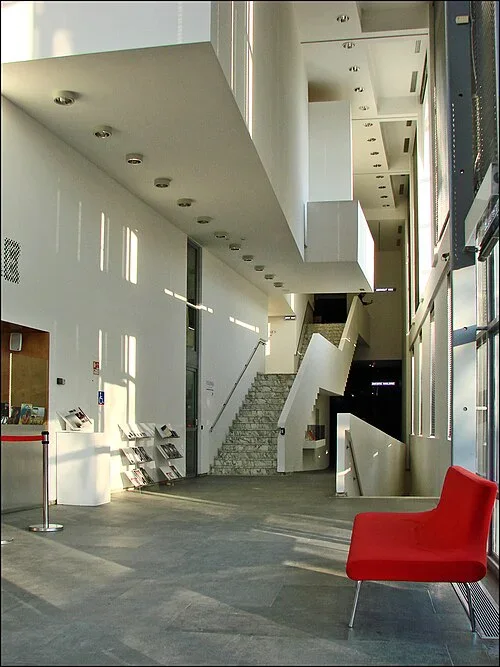 National Gallery of the Jeu de Paume
Inside the Jeu de Paume
During the Second World War this gallery served the German occupiers as a warehouse for artworks stolen or seized from private owners. Crates of looted pictures passed through here to be inventoried and sorted. The gallery's curator, Rose Valland, is credited with secretly recording where the shipments went, work that helped recover many masterpieces after the war. In 1946 works recovered in Germany were brought back to the Orangerie across the garden, where a program set about returning them to their owners or surviving families. The bright white exhibition rooms of today keep no trace of any of it.
Listen in the appJean-Pierre Dalbéra from Paris, France · CC BY 2.0
05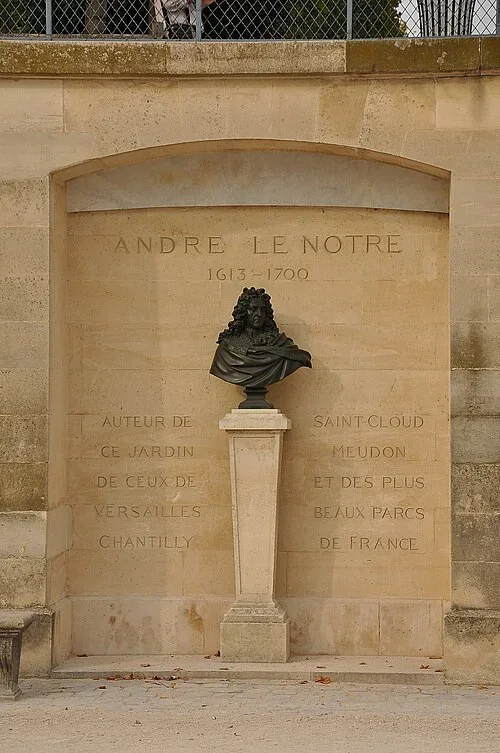 André Le Nôtre Memorial
Bust of André Le Nôtre
The bronze head set into this stone niche belongs to André Le Nôtre, and the inscription calls him the author of this garden. Gardening ran in the family. His grandfather Pierre had been one of Catherine de' Medici's gardeners here, and his father Jean also worked as a gardener at the Tuileries. In 1664 Colbert, the king's superintendent of buildings, commissioned Le Nôtre to redesign the entire garden. He had already made his name at Vaux-le-Vicomte and would perfect his style at Versailles: symmetry, order, and long perspectives, the formal French garden at its purest. With hundreds of masons, gardeners and earth-movers, he worked on the Tuileries from 1666 to 1672.
Listen in the appPhoto: Moonik · CC BY-SA 3.0
06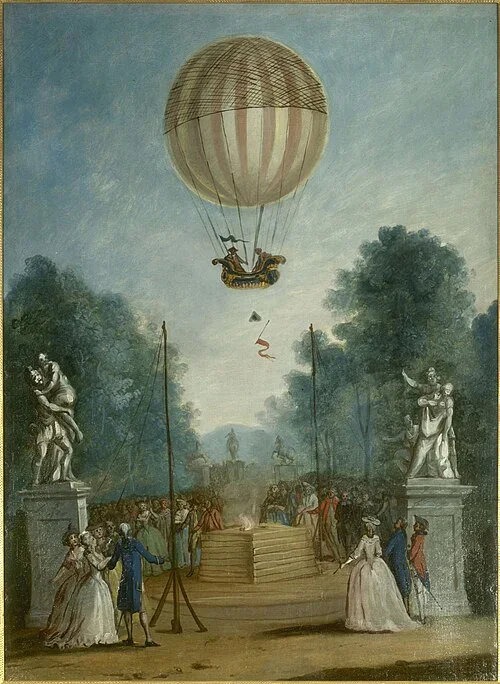 First Manned Hydrogen Balloon Flight Monument
The First Manned Hydrogen Balloon Flight, 1783
On the first of December 1783, a balloon rose from this garden carrying two men aloft on hydrogen gas. It was the first free flight of a manned hydrogen balloon anywhere. Jacques Alexandre César Charles and Nicolas Louis Robert were the aeronauts. The King watched the ascent from the tower of the Tuileries Palace, and Benjamin Franklin, America's ambassador in Paris, attended the early trials. The balloon drifted out of the city and came down safely at Nesles-la-Vallée, thirty-one miles away. A plaque of the Aéro-club de France, just inside the garden entrance, marks the event.
Listen in the appanonymous · Public domain
07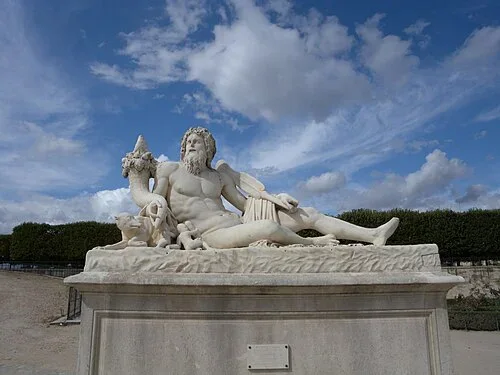 The Tiber
Since the first garden here under Catherine de' Medici, the Tuileries has doubled as an open-air sculpture gallery. This reclining river god is the Tiber, cornucopia at his side, watched over by the she-wolf of Rome nursing the twins Romulus and Remus. He was carved by Pierre Bourdict in the late seventeenth century, and set in 1719 at the foot of the ramp with three companion rivers, the Nile among them, all in the classical manner French royal sculptors imitated.
Listen in the appMarko Kudjerski from Toronto, Canada · CC BY 2.0
08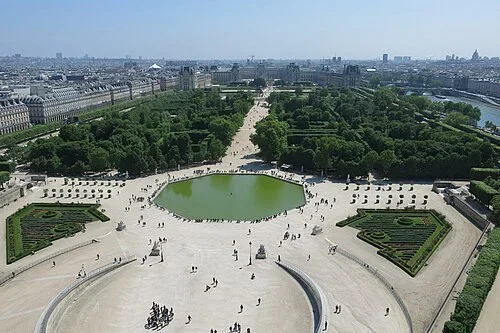 Octagonal Basin
André Le Nôtre meant his gardens to be seen from above, from a building or a terrace. So he removed the street that separated the Tuileries Palace from its garden, and put a terrace in its place, looking down on flowerbeds edged with low boxwood. Three ornamental lakes carried the design along the main axis, and this octagonal basin closes the western end, about sixty metres across, with a fountain at its center. Two horseshoe-shaped ramps climb to the terraces above the Place de la Concorde. The pool still earns its keep. Office workers lunch along the rim, and children sail miniature boats on the water. In the early nineteenth century pensioned soldiers sunned themselves here so faithfully that the spot was nicknamed Petite Provence.
Listen in the appTangopaso · Public domain
09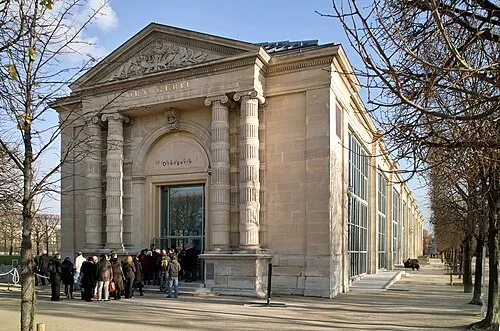 Musée de l'Orangerie
An orangery is a greenhouse for winter, built to keep orange and lemon trees alive through the frost. This one went up in 1852 under Napoleon the Third, to the design of the architect Firmin Bourgeois, on the terrace beside the Seine. Its long walls of stone and glass caught the winter sun for the garden's citrus trees. Between the two world wars the building changed trades and became a picture gallery, working alongside the Jeu de Paume at the garden's other corner.
Listen in the appPhoto: Traktorminze · CC BY-SA 3.0
10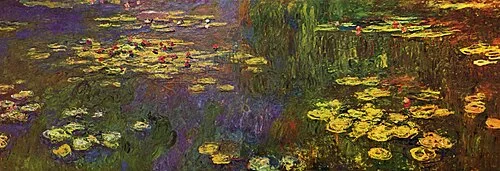 Musée de l'Orangerie
Monet's Water Lilies at the Orangerie
Eight great panels of Claude Monet's Water Lilies were installed in the Orangerie in 1927, shortly after the painter's death. Monet painted the motif at his own garden at Giverny: water, reflections, and floating lilies, with no shore and no horizon in sight. Nearly a century later, the cycle remains the museum's principal attraction.
Listen in the appClaude Monet · Public domain
- 11
The Walter-Guillaume Collection Room
The Orangerie's second treasure: the Walter-Guillaume collection of Impressionist painting, hung in panelled rooms.
- 12
Portrait of Paul Guillaume by Modigliani
The bowler-hatted art dealer whose name the Orangerie still carries, painted by Modigliani.
- 13
The Kiss by Auguste Rodin
How a garden of kings became an open-air museum of modern sculpture, with Rodin's lovers at its heart.
- 14
Riverside Terrace (Terrasse du Bord-de-l'Eau)
A sealed royal pleasure ground above the Seine, with a lost city gate and a famous cabaret at its corner.
- 15
Salvaged Arcades of the Tuileries Palace
The widowed queen who built a palace on tile-makers' ground, and the fire that ended it.
- 16
Arcades of the Tuileries Palace (detail)
What happened to the burned palace: demolition in 1883, and the stones saved into the garden.
- 17
L'Arbre des voyelles by Giuseppe Penone
A bronze tree, torn up by its roots, planted in a garden of clipped and ordered trees.
- 18
Grande Allée des Tuileries
The central walk where Paris's grand westward axis was born.
- 19
The Tuileries Garden photographed before 1871
The garden as it looked when the Tuileries Palace still rose behind the trees.
- 20
Monument to Charles Perrault
The fairy-tale author who persuaded the king's court to open a royal garden to everyone.
- 21
Puss in Boots on the Perrault Monument
The storybook cat in plumed hat and boots who guards the monument's base.
- 22
Feuillants Terrace
Convents, a revolutionary faction, and the festival Robespierre staged in the garden, at the round basin.
- 23
Salle du Manège: Riding School of the Revolution
How a royal riding school became the parliament of the Revolution, and the hall where Louis XVI pleaded for his life.
- 24
Postern of the Former Riding School
A rough stone arch among later buildings, said to be the last trace of the hall where the King was tried.
- 25
Hippomenes by Guillaume Coustou
A marble sprinter frozen at the decisive moment of the race against Atalanta.
- 26
Large Round Basin
The garden's open-air parlour for centuries, and the curving walls that survive from David's grand revolutionary plan.
- 27
The 2024 Olympic Cauldron
The Olympic cauldron of 2024, a helium balloon with a ring of fire that rose over the garden each evening, and now returns every summer.
- 28
Theseus Fighting the Minotaur by Jules Ramey
Jules Ramey's heroic marble of Theseus and the Minotaur, the academic style that ruled the garden until the twentieth century.
- 29
Tiger Pinning Down a Crocodile by Auguste Caïn
Auguste Caïn's bronze tiger overpowering a crocodile, wilderness staged against palace stone.
- 30
L'Hommage à Cézanne by Aristide Maillol
Maillol's reclining tribute to Cézanne, and the 1964 campaign that turned the Carrousel toward modern sculpture.
- 31
The Carrousel: Courtyard of the Lost Palace
From the playground of La Grande Mademoiselle to the royal Carrousel, the ground where the palace courtyard became garden.
Jardin des Tuileries
Frequently asked questions
How much does the guide cost?
Free app download. Listed guide price: $2.99. Guide price shown in the app. Audio guide only. Venue admission is separate.
Can I listen without internet?
Yes. Download the guide’s audio, images, and maps in the app before your visit. Your downloaded content is then available offline.
Can I listen in my language?
This audio guide is available in 15 languages, including English.
Do I need to follow a schedule?
No. This is a self-guided experience. Choose your stops, pause whenever you like, and return to a story at your own pace.
At your own pace
Explore Jardin des Tuileries.
Download Stanza, then search for “Jardin des Tuileries”.
Free app download · Guide price shown in the app
Keep exploring
Nearby audio guides
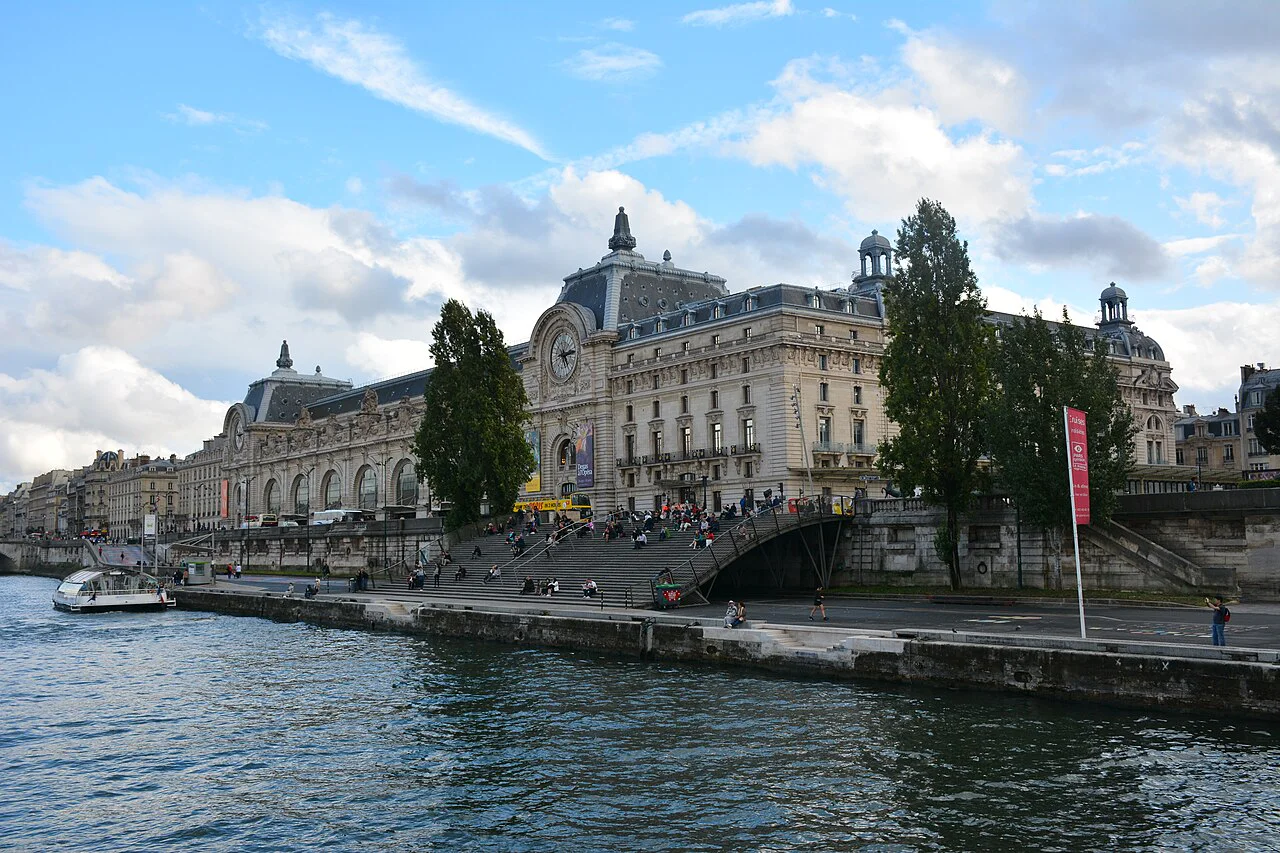
Paris · 1 km
Musée d'Orsay
Content & sources
Cheng-en Cheng from Taichung City, Taiwan · CC BY-SA 2.0
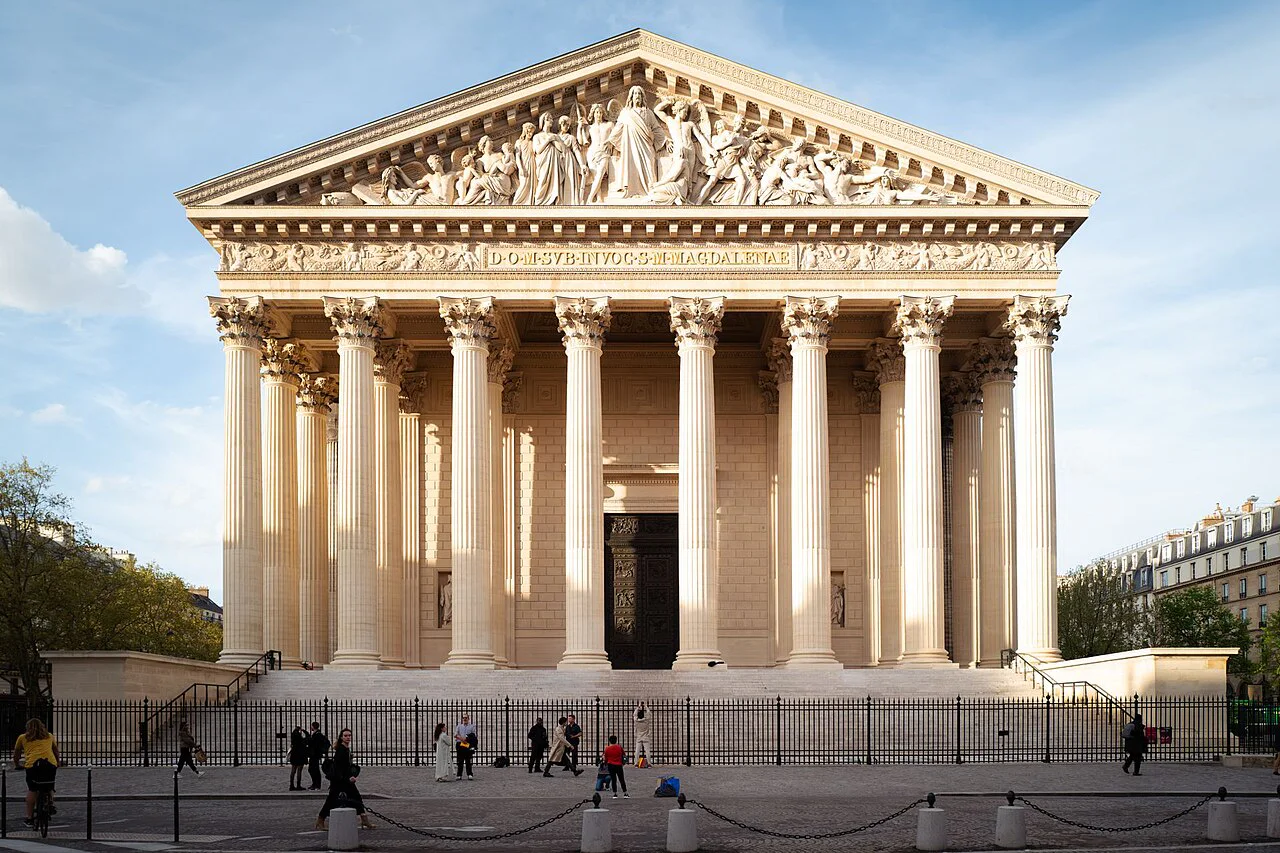
Paris · 1 km
Église de la Madeleine
Content & sources
Callaway Kosine – de Suzannet · CC BY 3.0
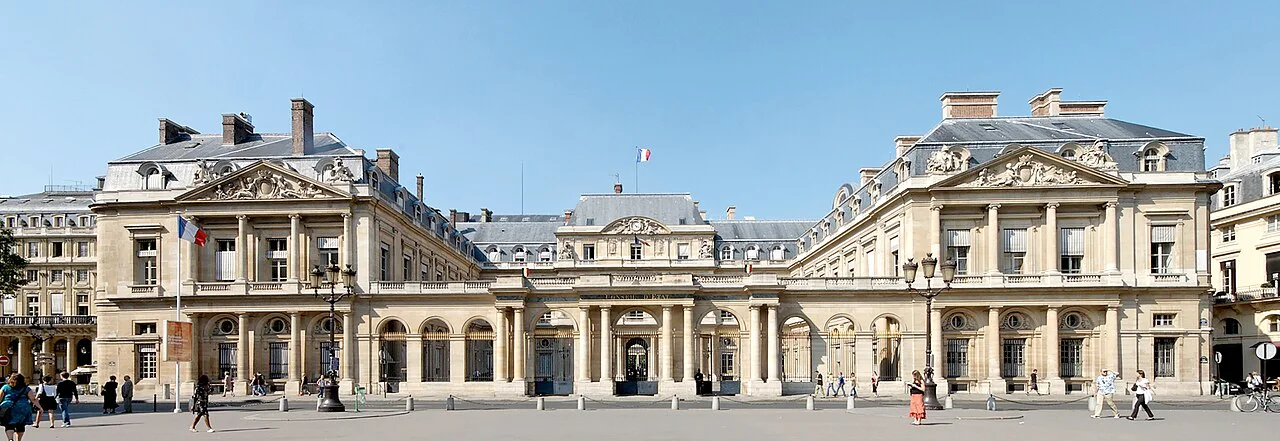
Paris · 1 km
Palais-Royal
Content & sources
Marie-Lan Nguyen · Public domain
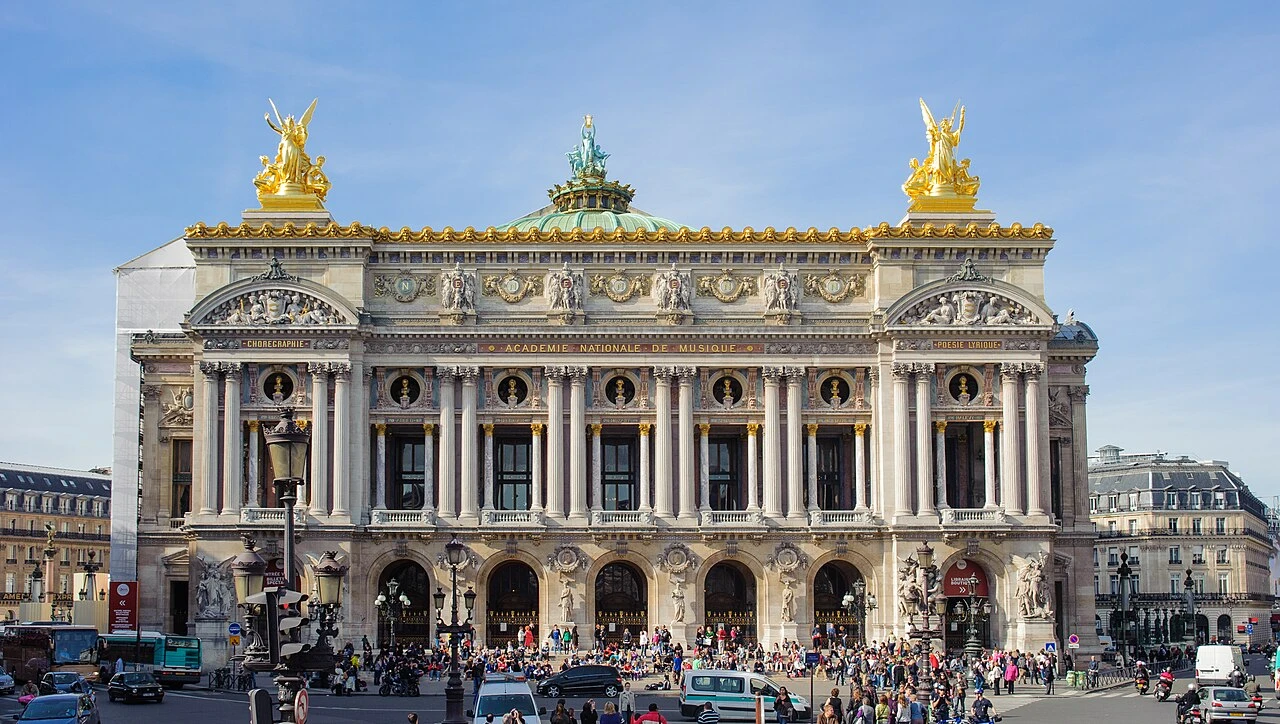
Paris · 1 km
Palais Garnier
Content & sources
Photo: Alexander Hoernigk · CC BY 3.0