Stanza · Audio guide
Musée de l'Armée Audio Guide
A place to remember. A story to take with you.
The Musée de l'Armée is France's national military museum, located within Les Invalides in Paris. It houses one of the world's largest collections of military artifacts and is the burial site of Napoleon…
Download Stanza, then search for “Musée de l'Armée”.
About the tour
One guide. Your kind of visit.
The Musée de l'Armée is France's national military museum, located within Les Invalides in Paris. It houses one of the world's largest collections of military artifacts and is the burial site of Napoleon Bonaparte.
Ready when you are.
- 01Get the free Stanza app.
iOS & Android
- 02Find your guide.
“Musée de l'Armée”
- 03Download before you go.
Works offline
Audio guide / 21 narrated stops
Inside the guide
Get to know a few of the stories before you go. Open a stop to read more.
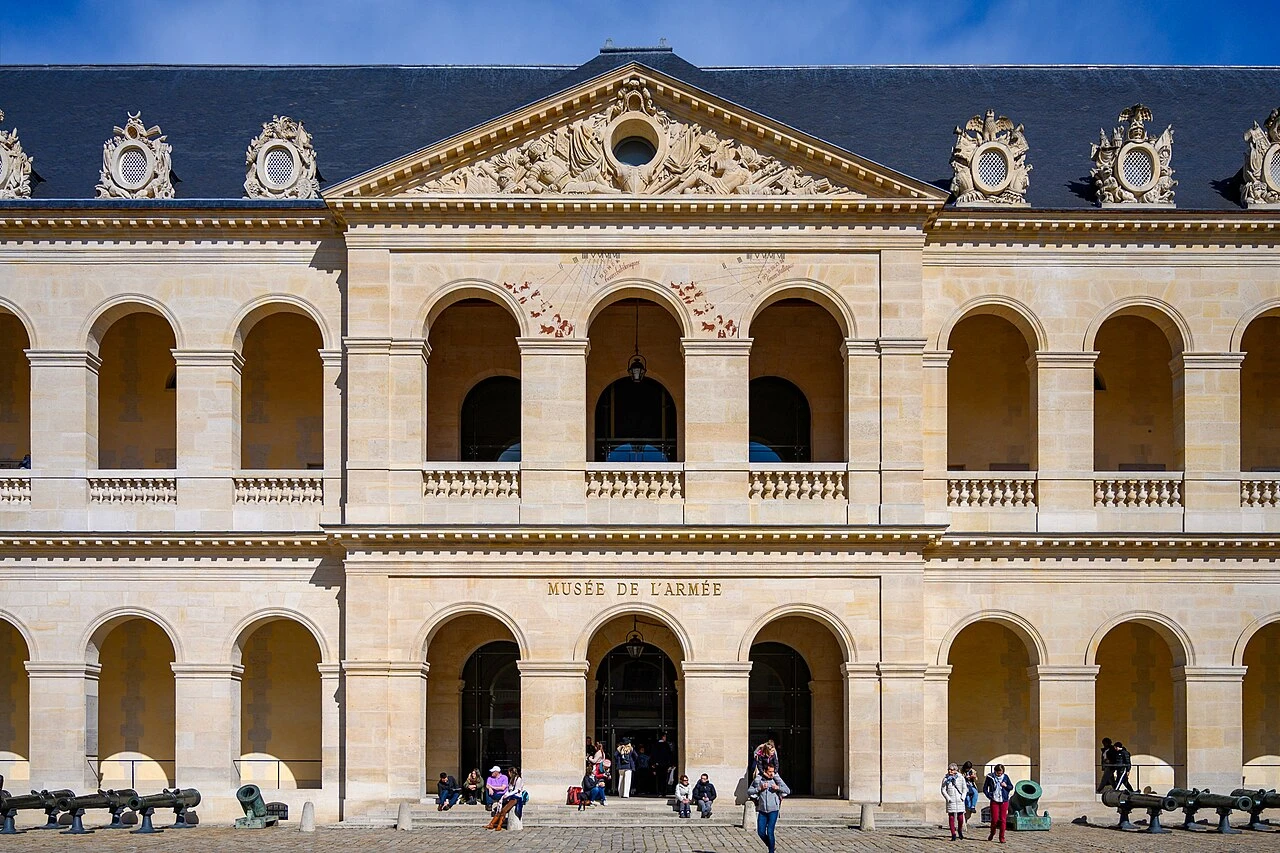
01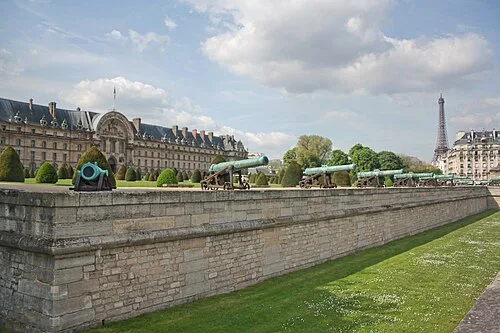 North Entrance and Grand Esplanade
North Facade of the Hôtel national des Invalides
Welcome to the Army Museum, which occupies part of the Hôtel national des Invalides in the Seventh arrondissement of Paris. The collection runs from ancient times to the end of the Second World War. The museum was formed in 1905, when two institutions were merged. One was the Artillery Museum, founded in 1795 in the aftermath of the French Revolution. The other was the Historical Museum of the Army, created in 1896 after the Paris World Fair. The two came together in the space of the old Artillery Museum. Today the Army Museum holds about half a million objects, including weapons, armour, artillery, uniforms, emblems and paintings. That makes it one of the three largest arms museums in the world. Many people come for the dome, for Napoleon's tomb inside it, and for the arms galleries. Beyond the trees, the Eiffel Tower rises above the rooftops.
Juanedc from Zaragoza, España · CC BY 2.0
02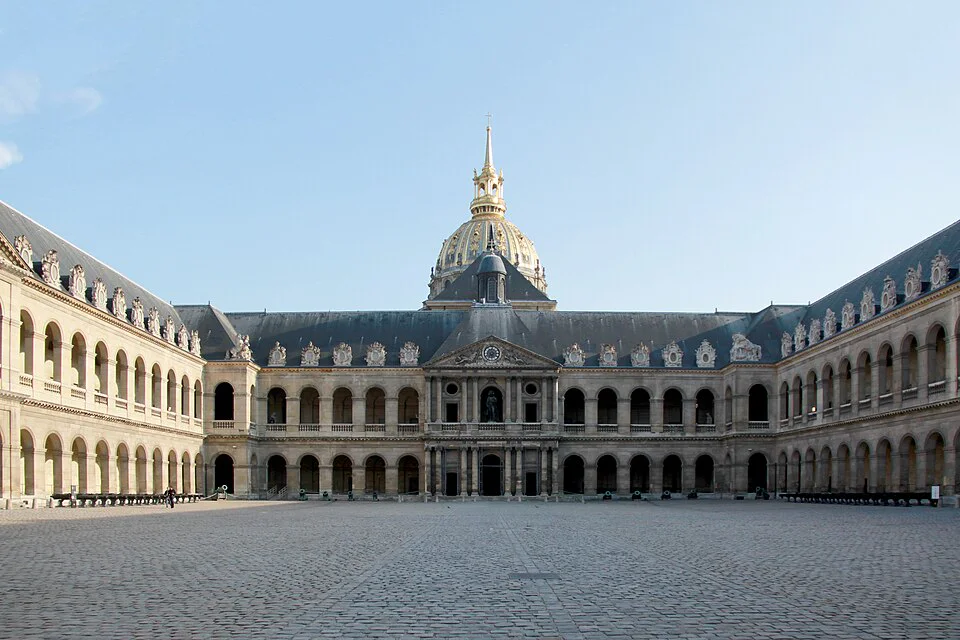 The Cour d'Honneur and Royal Artillery
Cour d'honneur, the Main Courtyard
The Main Courtyard is the centre of the Invalides, a wide court paved with cobbles. Arcades run along the wings on either side, with two levels of arches, one above the other. The Army Museum occupies the east and west wings around this court. At the centre, a pavilion has a round clock set high on its front, and sculpted figures line the roofline. The courtyard has also hosted a festival of Saint Barbara, the patron saint of artillery. Behind the pavilion, a dome rises above the roof.
Cristian Bortes from Cluj-Napoca, Romania · CC BY 2.0
03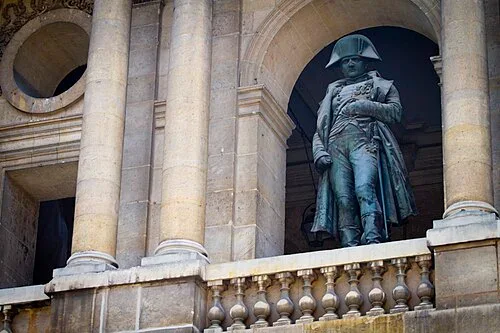 The Cour d'Honneur and Royal Artillery
Statue of Napoleon I by Émile Seurre
Napoleon the First stands in a stone niche between two tall columns. The statue's title calls him the little corporal. He wears his bicorne hat and a long military coat, and one hand is tucked inside the coat. The metal figure is credited to the sculptor Émile Seurre. Below the niche runs a stone balustrade, its rounded posts set close together. A round window sits in the wall above the arch.
Listen in the appNick Loyless from Dallas, TX, United States · CC BY 2.0
04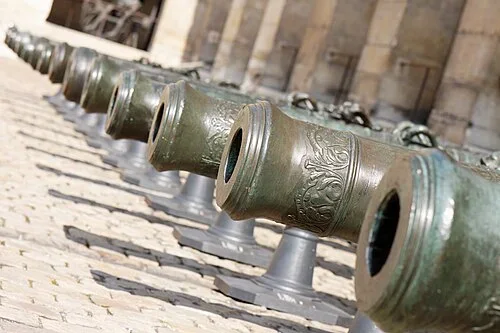 The Cour d'Honneur and Royal Artillery
Bronze Cannons of the Main Courtyard
These guns are bronze, and the metal has turned green with age. Carved ornament runs along the barrels, and the muzzles are open and dark. The collection they belong to was gathered during the French Revolution. That museum moved into the Invalides in the early 1870s. Field artillery means the guns that travelled with armies on campaign. The courtyard displays a large part of the collection, which includes sixty classical French bronze cannons. Together, the displays trace about two centuries of French field artillery, and explain how the equipment was made and what role it played.
Listen in the appPhoto: Thesupermat · CC BY-SA 3.0
05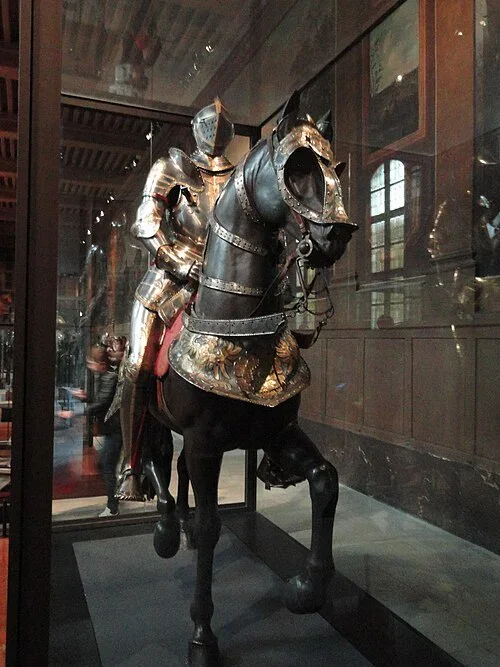 Old Department: Royal Suits of Armour
Equestrian Armour of François I
A rider and his horse are armoured as a pair, both in plate armour. The rider's armour is polished and bright. The horse's armour is dark, with bands of gold across its chest and sides. The title credits this armour to King François the First and dates it to around 1540 to 1545. The Army Museum's old armour galleries span the thirteenth century to the seventeenth. The horse's head is covered by a metal guard shaped to the animal's own head.
Listen in the appDamien · CC BY-SA 2.0
06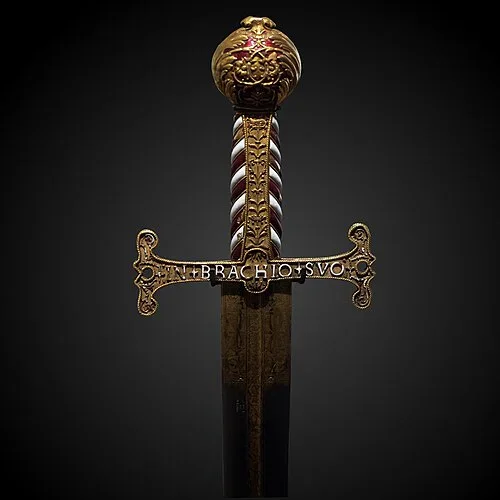 Old Department: Royal Suits of Armour
Sword Made for François I
At the battle of Pavia, in 1525, this sword changed hands. The chronicles say a Spanish officer, Juan Aldana, took it as war booty after the French army was defeated. The sword had belonged to François the First, king of France. Its round pommel is red enamel, and the grip is banded in red and white. The cross-guard carries a Latin phrase, in brachio suo, meaning in his arm. In 1585 Aldana's son sold it to the king of Spain. In 1808, French armies were occupying Spain. Napoleon the First asked for the sword to be brought to Paris, for his office in the Tuileries palace. Under the Second Empire it was shown at the Museum of the Sovereigns, and in 1872 it passed to the Artillery Museum. Its gold and enamel are often read as a sign of status rather than a weapon for battle. The hilt dates from about 1510. The blade is older still, from about 1480.
Listen in the appPhoto: Rama · CC BY-SA 3.0 fr
07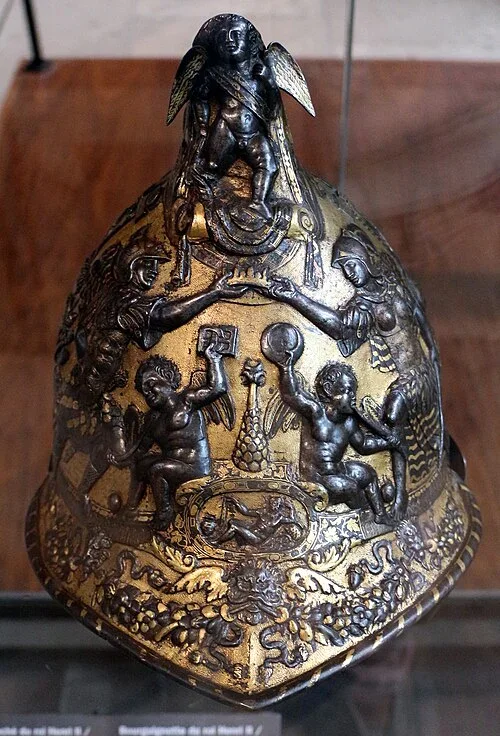 Old Department: Royal Suits of Armour
Burgonet of Henry II, Milanese Workshop
The helmet is known as King Henry the Second's burgonet, a light helmet that leaves the face open. It dates from around 1550. Its bowl is covered in relief, with winged children, scrollwork and foliage running across the gilded panels. A figure stands on the crest at the top. The helmet is credited to a workshop in Milan. The decoration is so dense that it shows how far royal taste could run, even on a helmet. It is not clear whether the helmet was made for battle or for ceremony. At the lower front, a medallion shows a reclining figure.
Listen in the appPhoto: Sailko · CC BY 3.0
08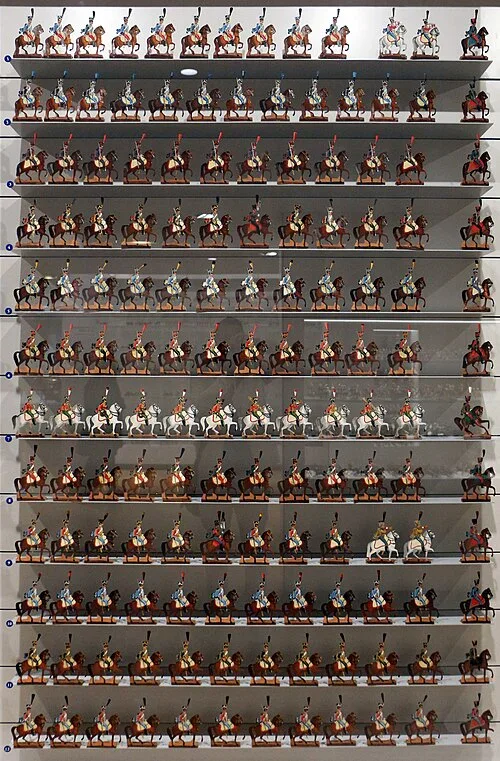 Cabinets Insolites: Curiosities, Miniatures, and Music
Miniature Cavalry Figures, Cabinets Insolites
The Cabinets Insolites, whose name means unusual cabinets, opened in the Army Museum on the seventeenth of December, 2015. Its first part is given over to military figures, and five thousand are on show. The whole collection holds about a hundred and forty thousand figures. The figures on display are made of card, lead, tin and plastic. Rows of mounted soldiers stand on the shelves, each row marked by a small numbered tag. Figures like these record uniforms and formations, so the rows show many different looks. Many of the riders have tall red plumes, and a few sit on white horses.
Listen in the appPhoto: Sailko · CC BY 3.0
09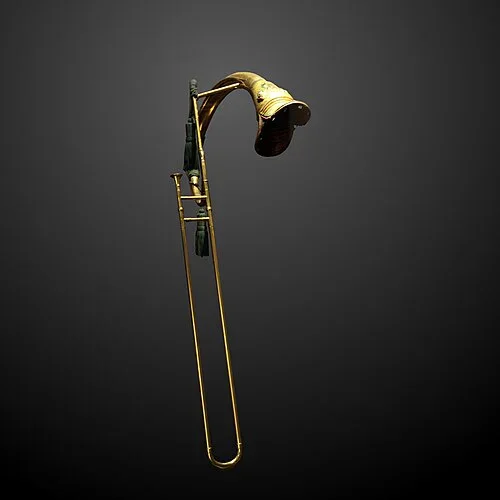 Cabinets Insolites: Curiosities, Miniatures, and Music
Buccin, Military Brass Instrument
A military brass instrument called a buccin is shown against a dark background, with its bell flaring at the top. Its long sliding section runs straight down to a U-shaped bend at the bottom. The instrument is dated to about 1825. The Cabinets Insolites include a military music section, with instruments chosen from about three hundred and fifty in the collection. The section presents army music as part of military life, alongside the weapons and uniforms. Thirty of the instruments on show are on deposit from the Music Museum.
Listen in the appPhoto: Rama · CC BY-SA 3.0 fr
10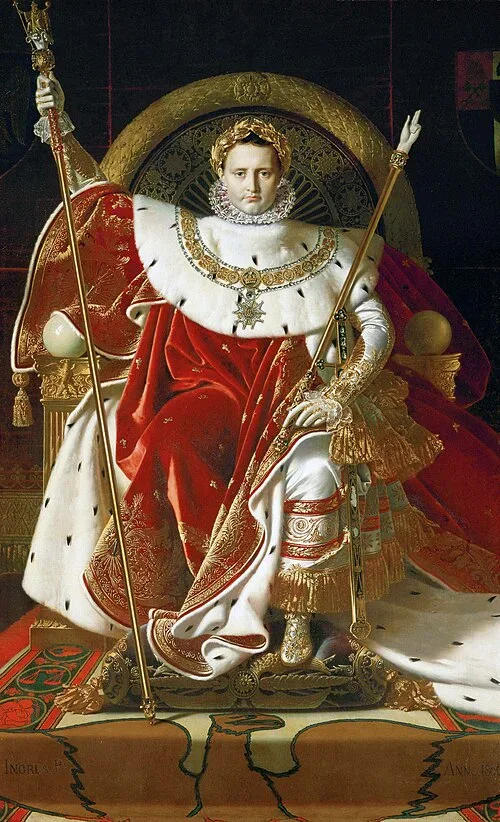 Modern Department: Napoleon and the Grande Armée
Napoleon I on His Imperial Throne by Ingres (1806)
Ingres painted Napoleon the First in 1806, in the costume he had worn at his coronation. He sits on an imperial throne, and a gold laurel wreath rests on his head. A great collar of the Legion of Honour, set with jewels, hangs across his chest. Ermine lines the cloak around his shoulders, and the velvet is decorated with gold bees. In his hands he holds two staffs. One is a sceptre, and the other ends in a hand, the hand of justice. When the painting was shown at the Salon, it unsettled the public, and critics were hostile. The painter David passed a harsh judgement on it. The critics complained of strange colours, flat modelling and an old-fashioned style. In the lower corners the painter signed his name, and the year is written beside it.
Listen in the appJean-Auguste-Dominique Ingres · Public domain
- 11
Napoleon's Uniform and Bicorne Hat
A grey-blue coat and bicorne hat attributed to Napoleon the First, kept like a relic in a glass case.
- 12
Vizir, Napoleon's Preserved Horse
Napoleon's grey stallion Vizir, preserved after his death and restored after a public appeal in 2016.
- 13
Cuirass Holed by a Cannonball at Waterloo
A breastplate pierced by a cannonball at Waterloo, said to have belonged to a young carabinier named Fauveau.
- 14
Taxi de la Marne (Renault AG-1)
A red Renault cab that bears the name of the Paris taxis said to have carried troops to the Marne in 1914.
- 15
Verdun by Félix Vallotton (1917)
A Nabi painter's wartime canvas of Verdun, painted in his studio without ever visiting the battlefield.
- 16
Enigma Cipher Machine (DEP 4509)
A German cipher machine from the Second World War, with keys and lamps that turned plain letters into code.
- 17
Appeal Proclamation and BBC Microphone
The June 1940 convoy that carried the museum's treasures out of Paris, and the German occupation that followed.
- 18
Liberator Pistol
A cheap, plain single-shot pistol of the kind made in quantity for resistance fighters in occupied Europe.
- 19
The Historial Charles de Gaulle
An underground memorial to Charles de Gaulle, with an archive film that opens its main room.
- 20
Gilded Cherubs at the Altar under the Dôme
A building that held a royal chapel and a veterans' chapel under one roof, so the king and his soldiers could hear mass at once.
- 21
Funeral Procession of Napoleon on the Champs-Élysées (1840)
A print of Napoleon's funeral car on the Champs-Élysées, and the tomb it led to in the Dôme.
Musée de l'Armée
Frequently asked questions
How much does the guide cost?
Free app download. Listed guide price: $1.99. Guide price shown in the app. Audio guide only. Venue admission is separate.
Can I listen without internet?
Yes. Download the guide’s audio, images, and maps in the app before your visit. Your downloaded content is then available offline.
Can I listen in my language?
This audio guide is available in 15 languages, including English.
Do I need to follow a schedule?
No. This is a self-guided experience. Choose your stops, pause whenever you like, and return to a story at your own pace.
At your own pace
Explore Musée de l'Armée.
Download Stanza, then search for “Musée de l'Armée”.
Free app download · Guide price shown in the app
Keep exploring
Nearby audio guides
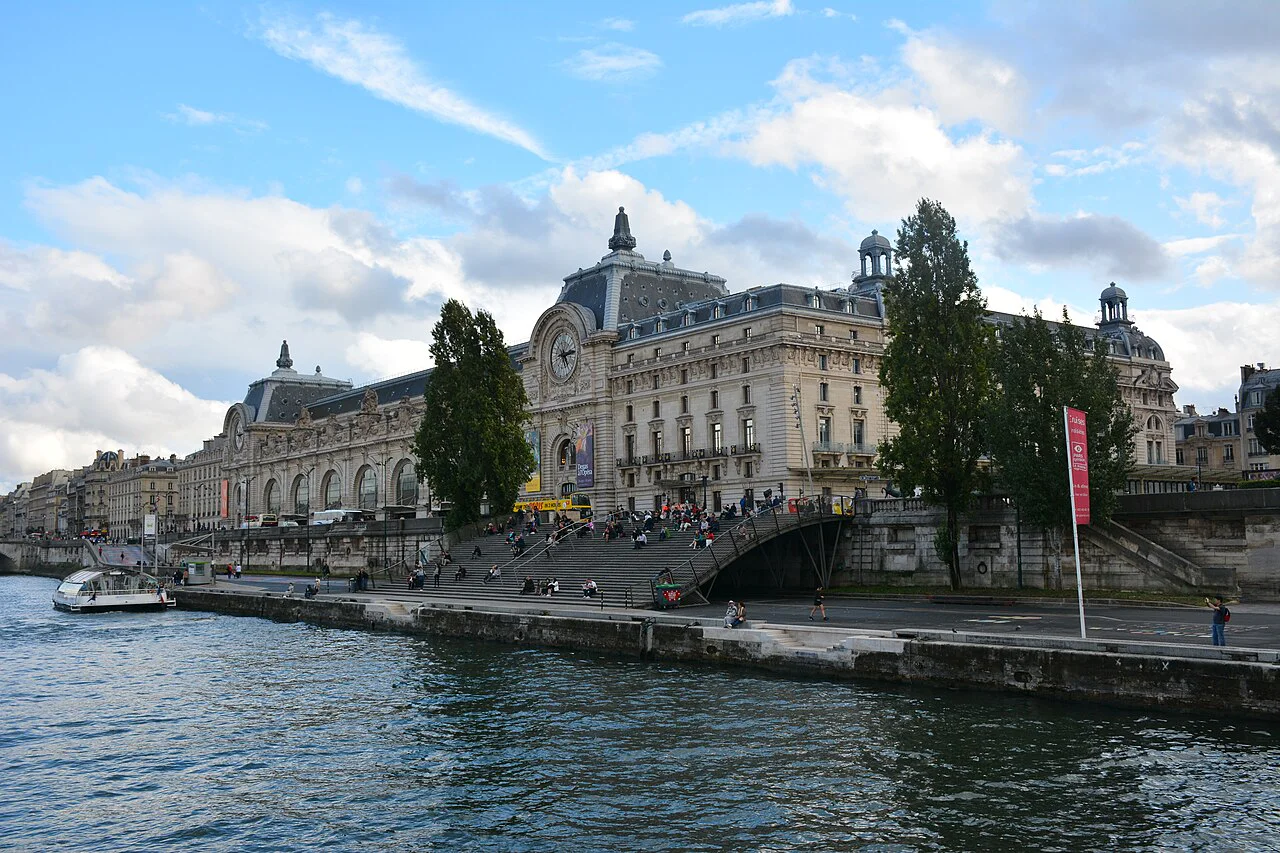
Paris · 1 km
Musée d'Orsay
Content & sources
Cheng-en Cheng from Taichung City, Taiwan · CC BY-SA 2.0
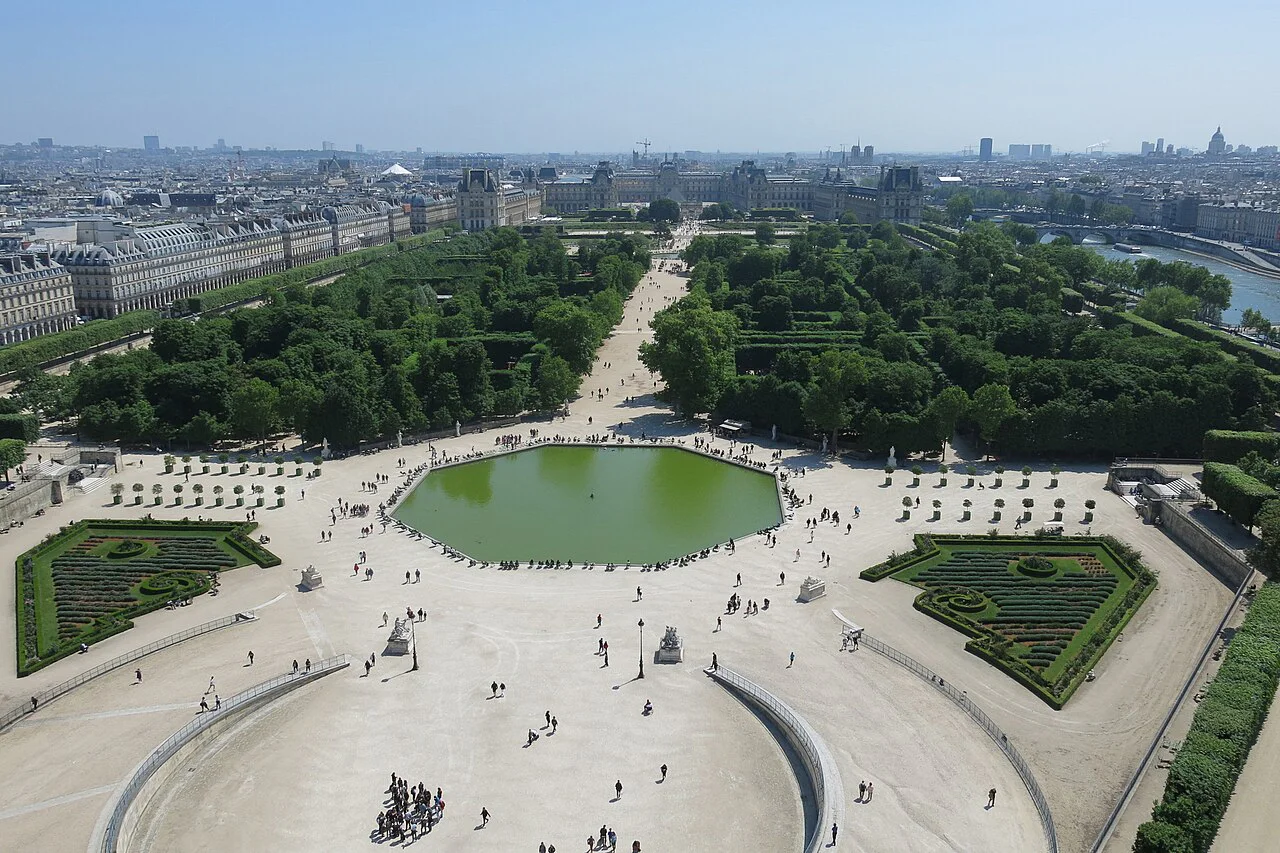
Paris · 1 km
Jardin des Tuileries
Content & sources
Tangopaso · Public domain
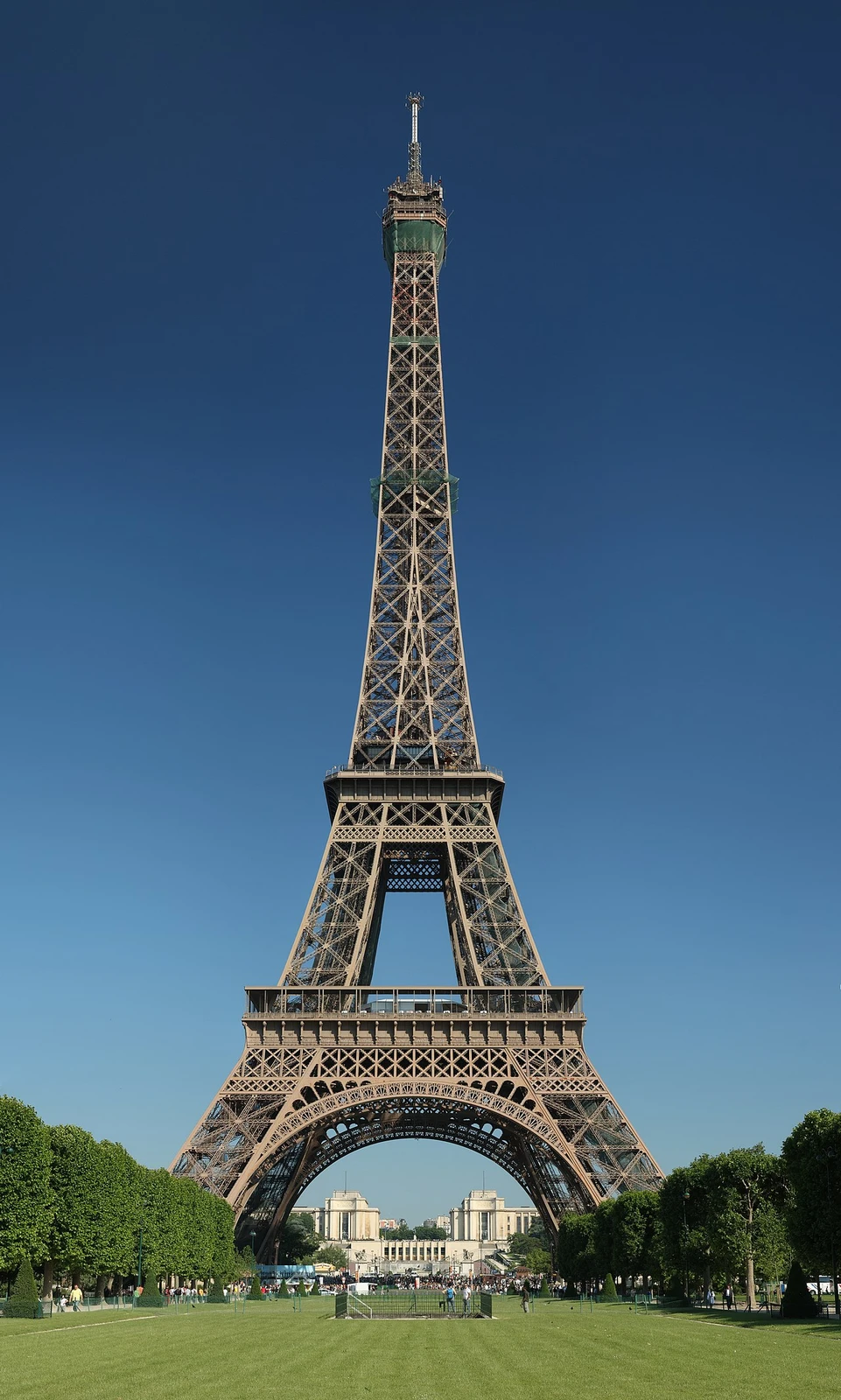
Paris · 1 km
Eiffel Tower
Content & sources
Benh LIEU SONG · Public domain
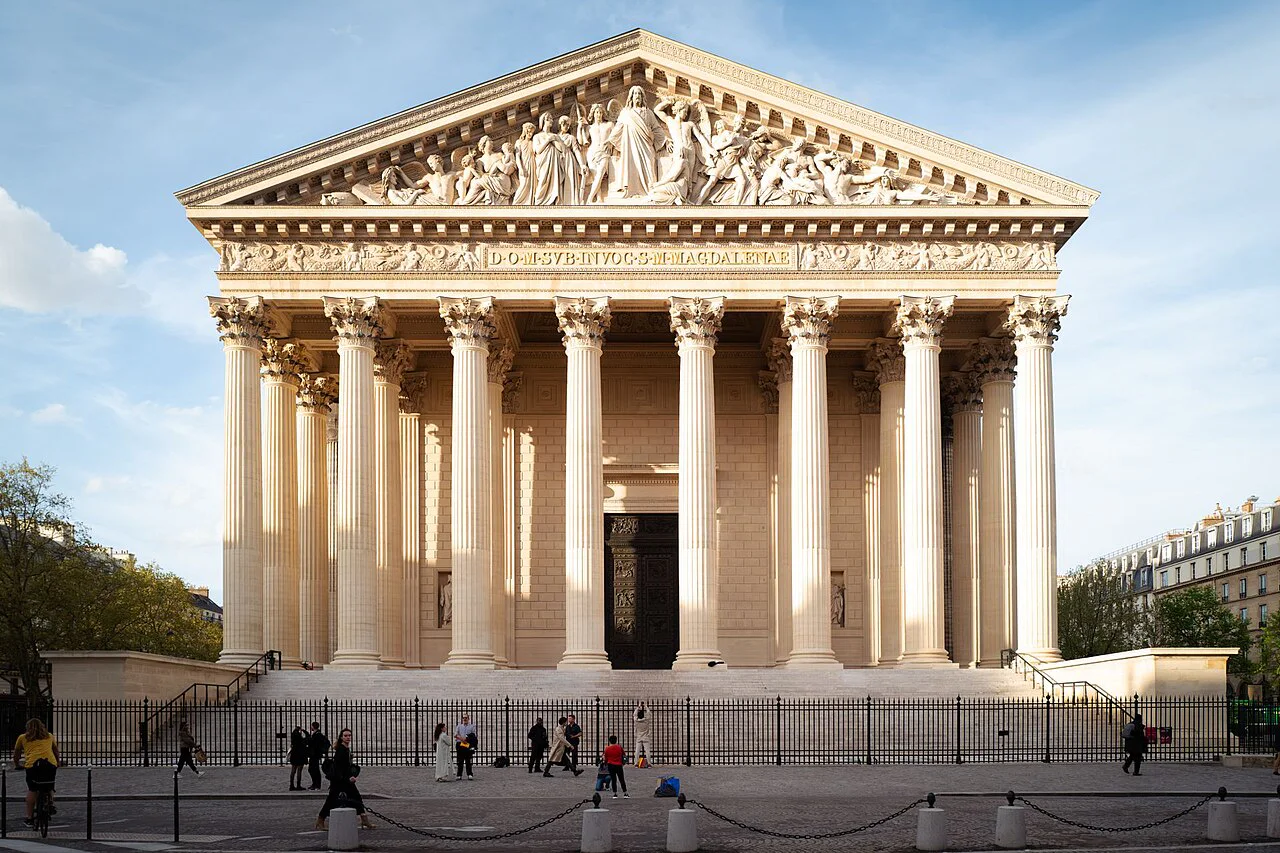
Paris · 2 km
Église de la Madeleine
Content & sources
Callaway Kosine – de Suzannet · CC BY 3.0