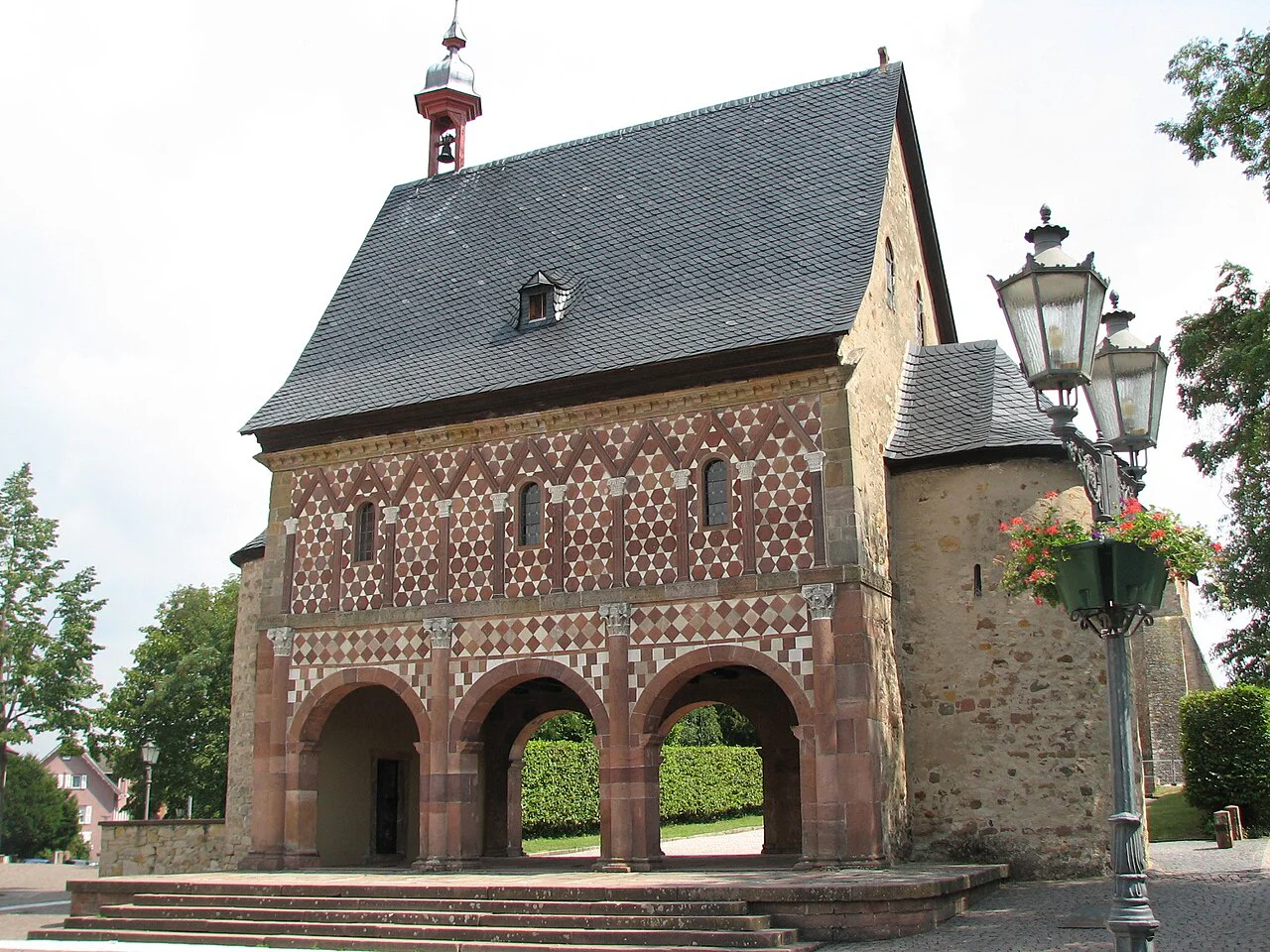
 Stanza / Audio guide
Content & sources
Stanza · Audio guide
Kloster Lorsch Audio Guide
A place to remember. A story to take with you.
Lorsch Abbey is a former Imperial abbey located in Lorsch, Germany. It was one of the most important monasteries of the Carolingian Empire and its remains are significant examples of…
Download Stanza, then search for “Kloster Lorsch”.
About the tour
One guide. Your kind of visit.
Lorsch Abbey is a former Imperial abbey located in Lorsch, Germany. It was one of the most important monasteries of the Carolingian Empire and its remains are significant examples of pre-Romanesque–Carolingian architecture.
Ready when you are.
- 01Get the free Stanza app.
iOS & Android
- 02Find your guide.
“Kloster Lorsch”
- 03Download before you go.
Works offline
Audio guide / 9 narrated stops
Inside the guide
Get to know a few of the stories before you go. Open a stop to read more.
01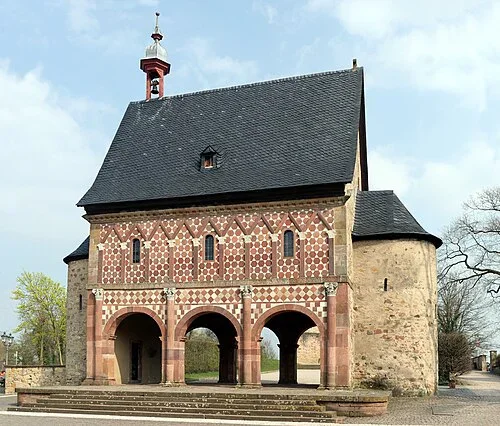 The King's Hall and Gateway
The Torhalle (King's Hall) - West Front
Welcome to Lorsch. The building in front of you is the Torhalle, the old gatehouse of a Benedictine abbey, and it has become the symbol of this whole place. The abbey was founded in 764 by the Frankish Count Cancor and his widowed mother, Williswinda, as a private church and monastery on their estate called Laurissa. Its leadership soon passed to Cancor's cousin, Chrodegang, the Archbishop of Metz, who brought Benedictine monks here from Gorze Abbey near Metz. From those beginnings, Lorsch grew into one of the most important monasteries of the Carolingian Empire, and in 1991 the site was listed as a UNESCO World Heritage Site. Now look closely at the facade. The three arched passageways and the half-columns above them borrow from the Roman triumphal arch, the architecture of emperors. But the patterned stonework in red and white, and the blind arcades whose little arches sit without bases, come from a local Germanic building tradition. Roman grandeur and local craft, side by side on one wall. That blend makes this gatehouse one of the most remarkable surviving buildings of its age. Step through the archway with me, and let's go inside.
Kuebi - Armin Kübelbeck · CC BY-SA 3.0
02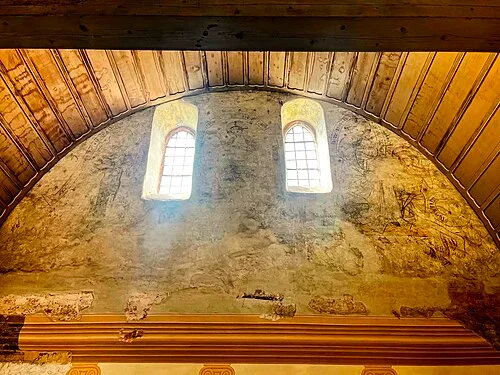 The King's Hall and Gateway
Inside the King's Hall - South Wall
This hall has a grand name: the Königshalle, in Latin aula regia, the king's hall. It was built in the ninth century by King Louis the Second, and it is considered the oldest largely intact monument of Carolingian architecture anywhere. Think about what that means. Stone buildings from the age of Charlemagne have almost all vanished. This one still stands, walls and roof, more than a thousand years later. Look at the south wall here. Two arched windows light the space, and around them you can make out faint traces of an older coating on the plaster, hints of how the interior once looked. What exactly the hall was built for, though, is an open question. Some think it served ceremonial purposes when kings came to visit, but that remains a hypothesis. What we do know is that it survived. The rest of the abbey around it was destroyed over the centuries, and you'll hear that full story later at the abbey wall. This gatehouse outlived it all. When you're ready, we'll walk out toward the remains of the great abbey church.
Photo: Gregor Karl · CC BY-SA 4.0
03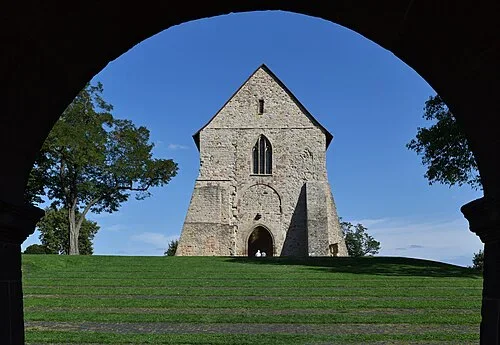 The Nazarius Basilica and Abbey Ruins
The Nazarius Basilica Fragment
This imposing stone end is what remains of the great abbey church. In 767, the monastery received land on this Ice Age dune, a few hundred metres from its cramped first home, and here they built a large three-aisled basilica dedicated to Saints Peter, Paul and Nazarius. In September 774, the Archbishop of Mainz consecrated that church, and Charlemagne himself was present. It is the only documented visit he made to Lorsch, and the abbey had already become a royal abbey under the king's protection two years earlier, in 772. The grassy ground you're standing on was once the nave of that church, and its full length gives you a sense of the scale that has vanished. This place also became a burial ground for royalty. In 876, Louis the German, the first king called a German king, was laid to rest in a burial chapel east of the church, known as the ecclesia varia. His son Louis the Younger and his grandson Hugo followed, and later Kunigunde, wife of King Conrad the First. So while you walk this lawn, remember: kings sleep beneath your feet here.
Listen in the appPhoto: Heinz-Vale · CC BY-SA 4.0
04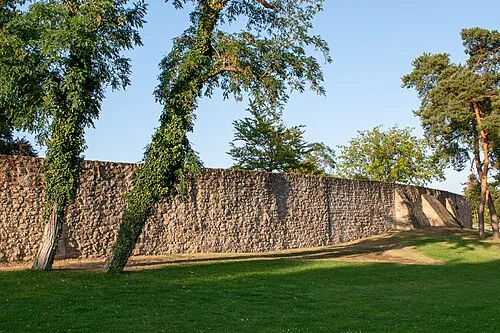 The Nazarius Basilica and Abbey Ruins
The Abbey Wall - Power and Ruin
This long wall once encircled one of the most powerful institutions in the empire. In the eleventh century, Lorsch was declared a reichsabtei, an imperial abbey: a sovereign principality, answerable directly and solely to the emperor. Popes and emperors showered it with privileges, and its estates stretched from the Alps all the way to the North Sea. It was immensely rich, and a seat of political influence. Over 468 years of independence, 47 abbots governed here. And they were not men to be pushed around. When a dispute arose with the king over building the castle of Starkenburg, within sight of the abbey, Abbot Udalrich rode to the king's assembly at Trebur with 1,200 armed riders behind him. An abbot arriving with a small army, to argue with his king. That tells you the weight this monastery carried. But power invites violence. In 1621, during the Thirty Years' War, Spanish troops pillaged the abbey, and most of the buildings were pulled down. What the soldiers left, the region took: for generations, the ruin served as a quarry, its stones carried off to build houses and walls all around. What you see today is what remained after that slow dismantling.
Listen in the appPhoto: Heinz-Vale · CC BY-SA 4.0
05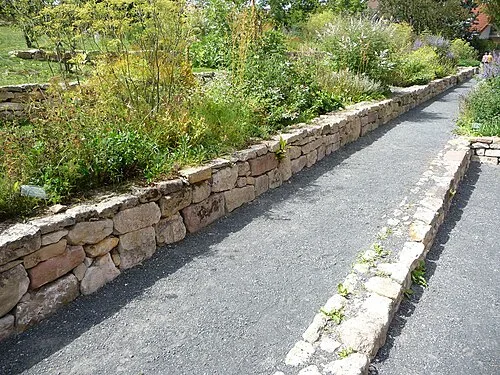 Monastic Life and Medicine
The Herb Garden - Monastic Medicine
These raised stone beds hold something remarkable. This is the herb garden of the Lorsch Pharmacopoeia, and every plant growing here appears in a manuscript written at this monastery around the year 800. That book is recognised as the oldest surviving medical book of the early medieval North. What made it a landmark was its approach. Here the medical knowledge of antiquity was made usable in the Christian world. The manuscript names its healing plants explicitly as aids that God intended for people. Ancient learning and Christian faith, joined together in the service of healing, right here. That combination became the foundation of monastic medicine across Europe. The book itself was honoured in 2013, when it was inscribed in the UNESCO Memory of the World register. So as you look at these beds, you're seeing a manuscript made tangible: the plants the monks wrote about, growing in the soil where they studied them.
Listen in the appPhoto: Immanuel Giel · CC BY-SA 4.0
06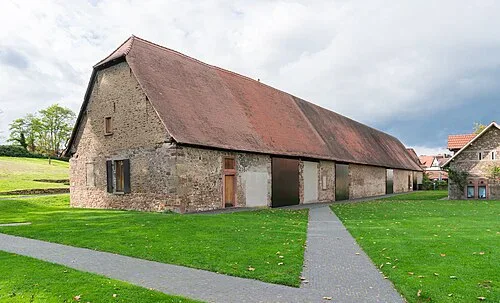 Monastic Life and Medicine
The Tithe Barn (Zehntscheune)
Here's the practical side of all that power you heard about. This great building is the tithe barn, the Zehntscheune. An abbey this rich didn't just collect prayers. It collected grain and produce, the tithes owed by farmers across its far-flung lands. All of that had to be stored, counted and administered somewhere, and buildings like this barn were the engine room of the whole enterprise. Walls, workshops, warehouses: a monastery as rich as Lorsch ran like a large business, and this is where the goods came in. Today the barn has a second life as the Schaudepot, the show depot, where finds from the abbey hill are displayed, shedding light on the monastery's history, its trade, its crafts and its medicine. A building that once held the abbey's wealth now holds its memory.
Listen in the appPhoto: Tournasol7 · CC BY-SA 4.0
07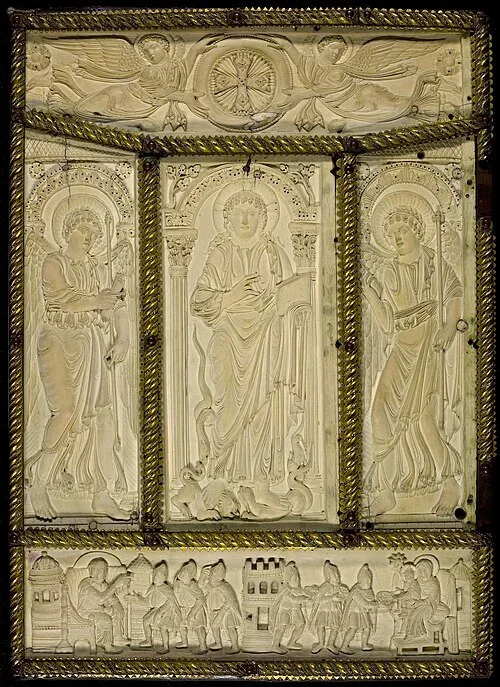 The Scriptorium and Legendary Sarcophagi
The Codex Aureus - The Lost Library
This carved ivory panel is the back cover of one of the most famous books of the early Middle Ages: the Codex Aureus of Lorsch, the abbey's golden gospels, made around the year 810. Look at the craftsmanship. The figures of Christ flanked by angels stand within colonnades, and at the bottom runs a lively scene of small figures and buildings. These ivories were not carved for this book. They were carved in the year 517 as folding panels honouring the consul Anastasius, and were later reused as the book's binding. That is the classical tradition of Byzantium arriving, physically, at Lorsch in the age of Charlemagne. The book came from a scriptorium and library that, in the ninth century, made Lorsch one of the cultural centres of Germany. Four surviving ninth-century catalogues show the collection was rich in both classical and Christian texts. Then came the scattering. Before the abbey's dissolution, the library's contents were moved to Heidelberg to form the famous Bibliotheca Palatina. In 1623, after the destruction you heard about at the abbey wall, 196 cases of manuscripts were presented to Pope Gregory the Fifteenth and carried to Rome. Today, 309 surviving Lorsch manuscripts are spread across seventy-two institutions in twelve countries, and the Codex Aureus itself is divided between the Vatican and Alba Iulia in Romania. A library written by one hand and scattered by many.
Listen in the appSchool of Carolingian Court School · Public domain
08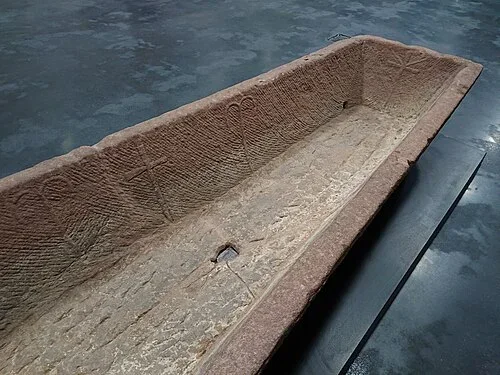 The Scriptorium and Legendary Sarcophagi
The Stone Sarcophagus - Legend and Memory
This hollowed stone sarcophagus, on show in the museum, carries a famous name: the Siegfried sarcophagus. But let me be clear from the start, this is legend, not history. According to the Nibelungenlied, Queen Ute of Burgundy founded a monastery at Lorsch after the death of her husband, King Dankrat. And in that tale, both she herself and the hero Siegfried were said to be buried here. That story is the source of the sarcophagus's popular name, nothing more. Medieval Lorsch collected such stories the way it collected manuscripts. There's another one worth knowing. Duke Tassilo the Third of Bavaria, the last duke of his line and a cousin of Charlemagne, was deposed by him, and a tradition holds that he spent his final years here at Lorsch as a simple monk. Scholars debate whether that actually happened. The earliest evidence for it is a chronicle written by Otto of Freising only in 1146 or 1147, centuries after the fact. True or not, these stories stuck to Lorsch for good reason. A place this famous drew the great names of heroic song to itself, and kept them.
Listen in the appPhoto: Skaringa · CC BY-SA 4.0
09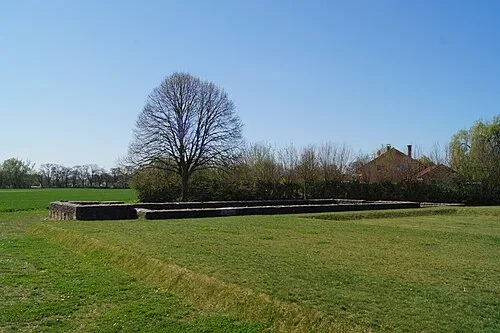 Altenmünster: The Cradle of Lorsch
Altenmünster - The Cradle of Lorsch
We've come back to the beginning. The low outlines in this meadow are traces of the first monastery, founded in 764 on an island in the Weschnitz. Everything you've seen today grew out of this modest spot. The change came quickly. In 765, Chrodegang obtained the relics of Saint Nazarius, a martyr put to death in Rome under Diocletian, from Pope Paul the First. The relics arrived on the eleventh of July that year and were deposited with great solemnity. Many miracles were said to follow, and pilgrims came from all over Europe to pray at the saint's resting place. The gifts of the faithful made the monastery rich, and the little island soon proved far too small for the crowds. After a property dispute that Charlemagne settled in 772, the abbey moved to the dune nearby, to the great church whose fragment you stood before earlier. This first home became known as the Altenmünster, the old monastery. And that's a fitting place to end. A small family monastery on a river island became an imperial powerhouse, whose manuscripts, medicine and legends still reach across Europe. What survives here is fragments: wall lines in the grass, a gatehouse, scattered books. But the story they carry is immense. Thank you for walking it with me.
Listen in the appPhoto: Lumpeseggl · CC BY-SA 3.0
Kloster Lorsch
Frequently asked questions
How much does the guide cost?
Free app download. Listed guide price: $0.99. Guide price shown in the app. Audio guide only. Venue admission is separate.
Can I listen without internet?
Yes. Download the guide’s audio, images, and maps in the app before your visit. Your downloaded content is then available offline.
Can I listen in my language?
This audio guide is available in 15 languages, including English.
Do I need to follow a schedule?
No. This is a self-guided experience. Choose your stops, pause whenever you like, and return to a story at your own pace.
At your own pace
Explore Kloster Lorsch.
Download Stanza, then search for “Kloster Lorsch”.
Free app download · Guide price shown in the app
Keep exploring
Nearby audio guides
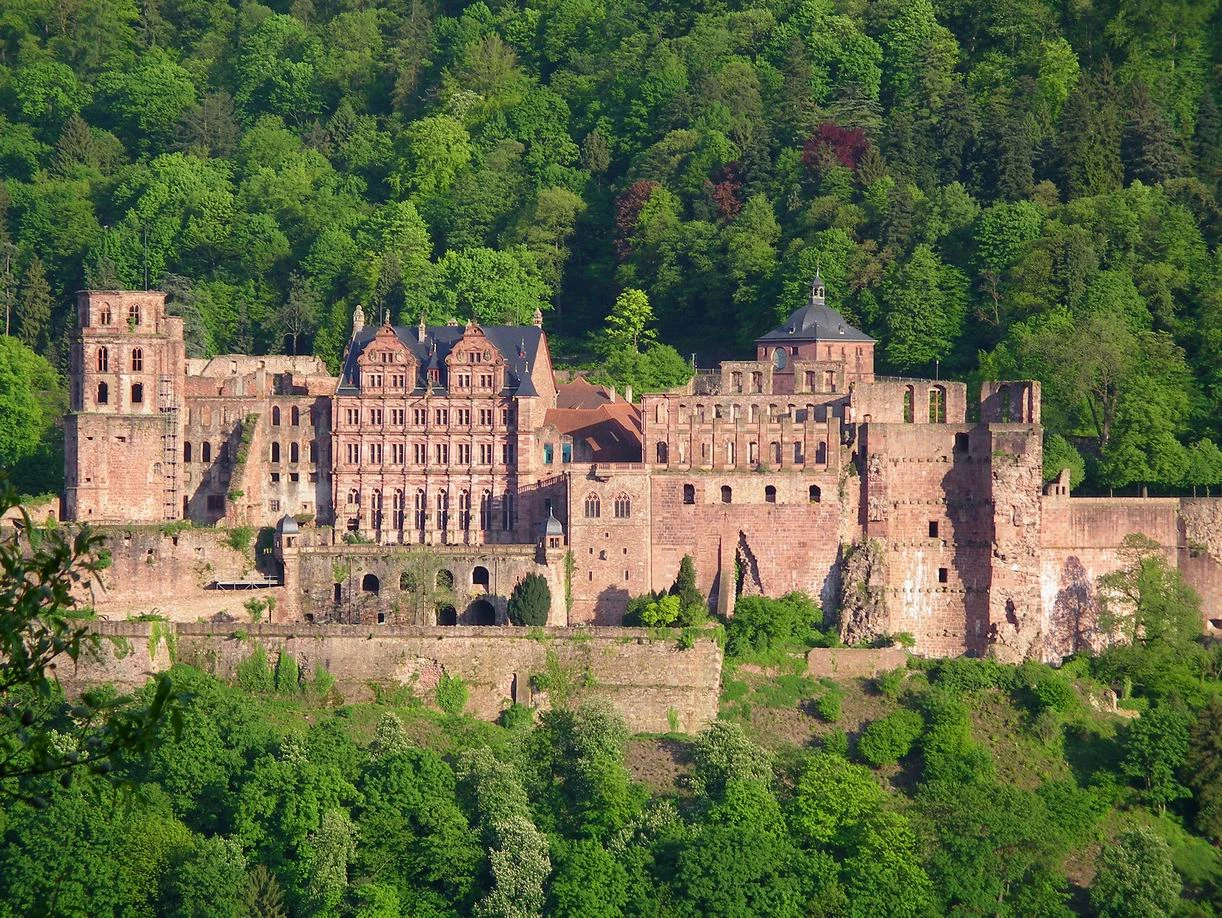
Heidelberg · 29 km
Heidelberg Castle
Content & sources
Pumuckel42 (Reinhard Wolf) at de:Wikipedia · CC BY-SA 3.0
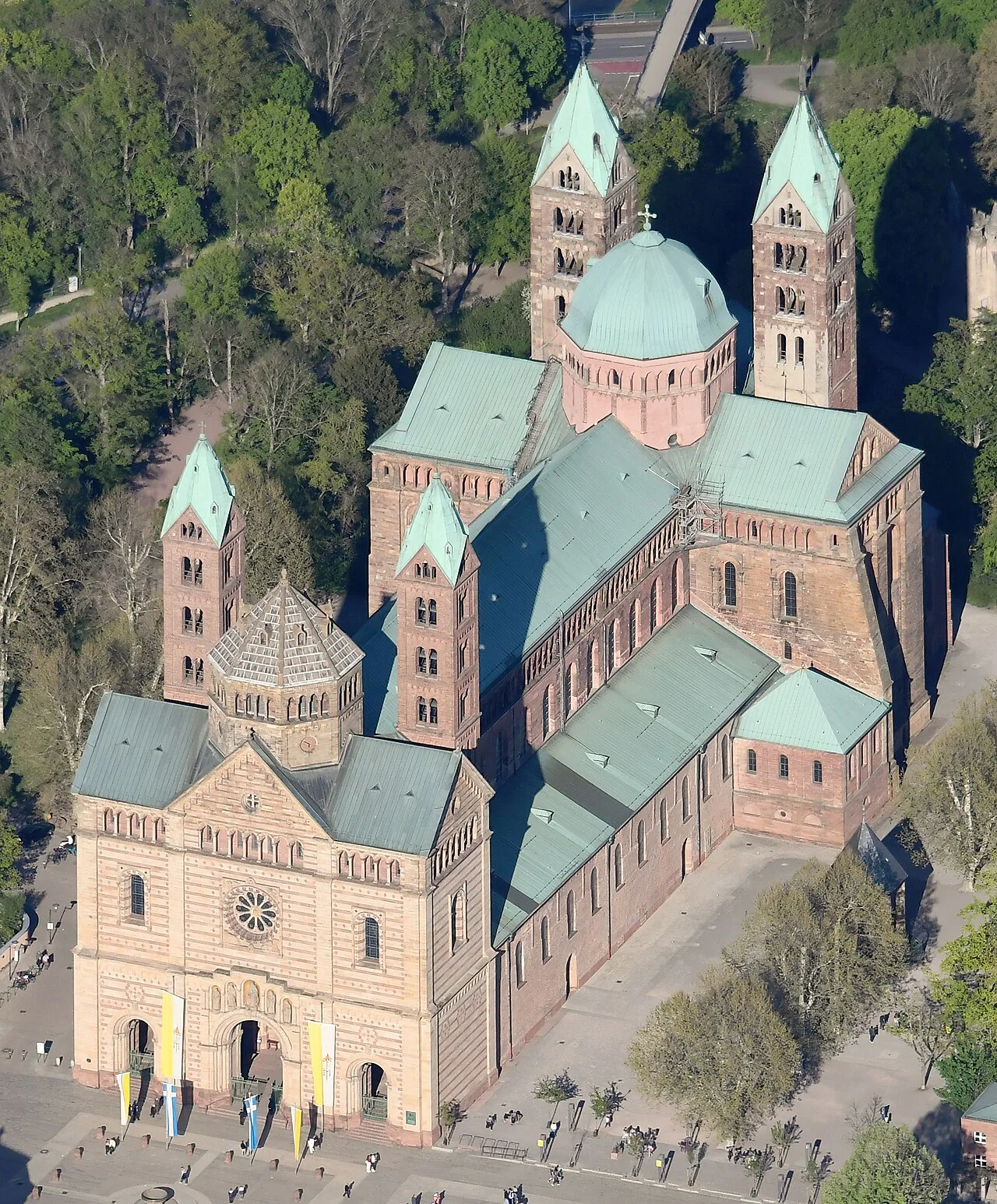
Speyer · 39 km
Speyerer Dom
Content & sources
Carsten Steger · CC BY-SA 4.0
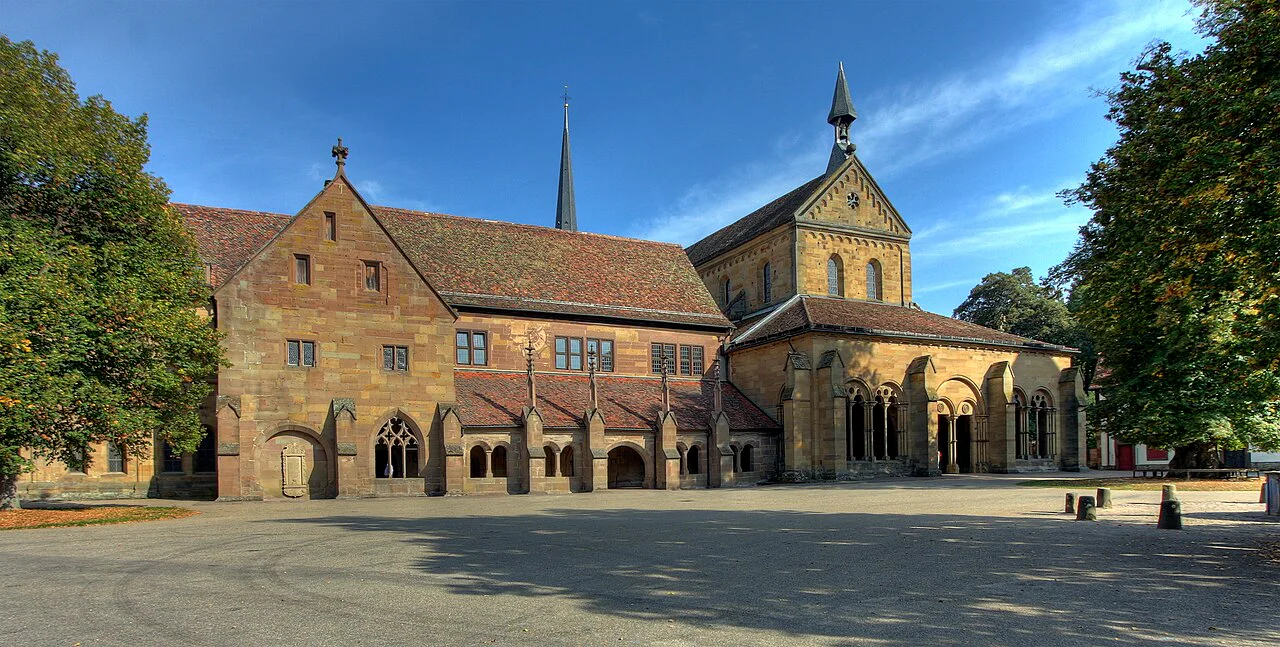
Maulbronn · 75 km
Kloster Maulbronn
Content & sources
Elke Wetzig (Elya) · CC BY-SA 3.0
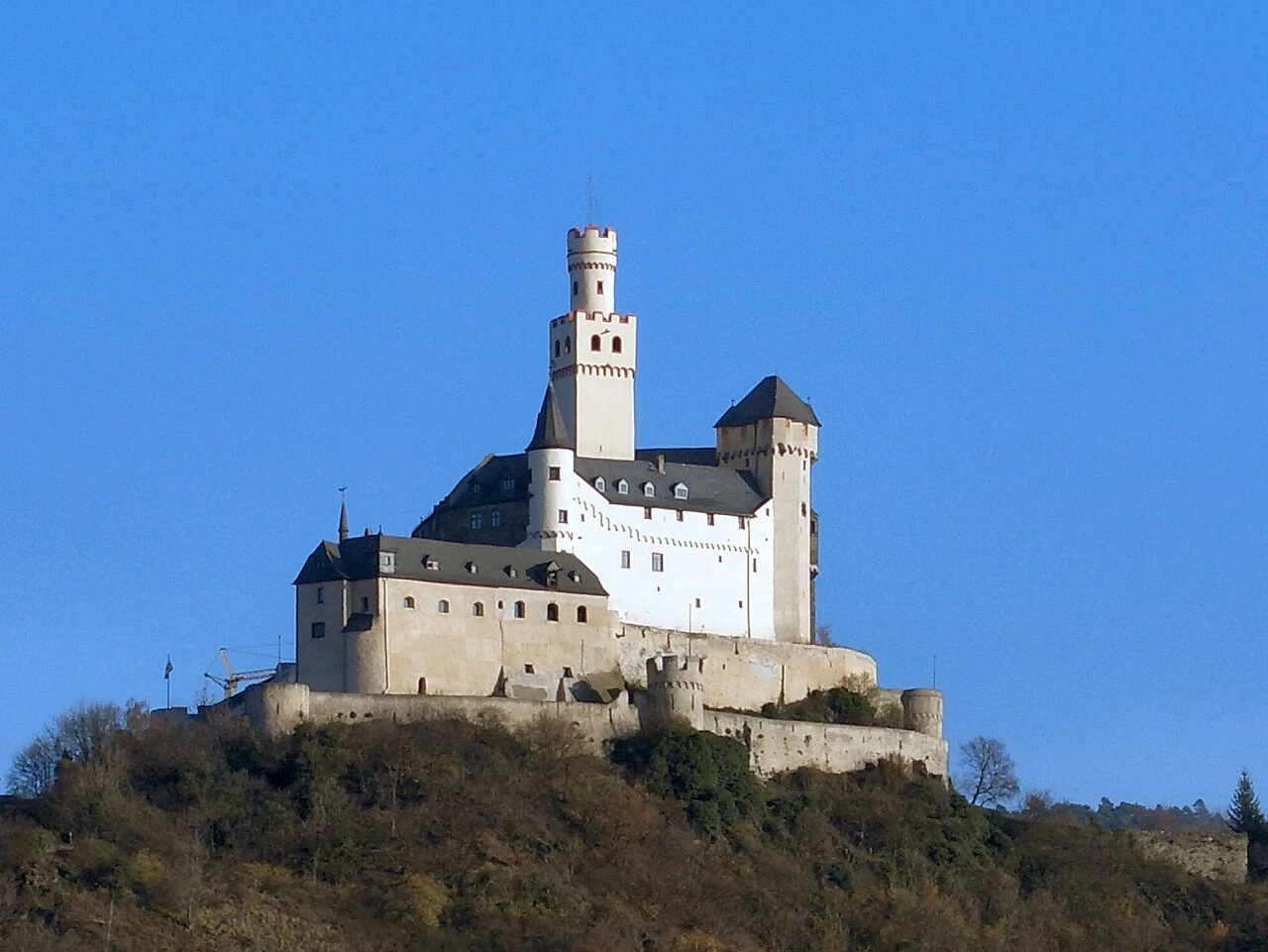
Braubach · 95 km
Marksburg
Content & sources
Holger Weinandt · CC BY-SA 3.0