Stanza · Audio guide
Kloster Maulbronn Audio Guide
A place to remember. A story to take with you.
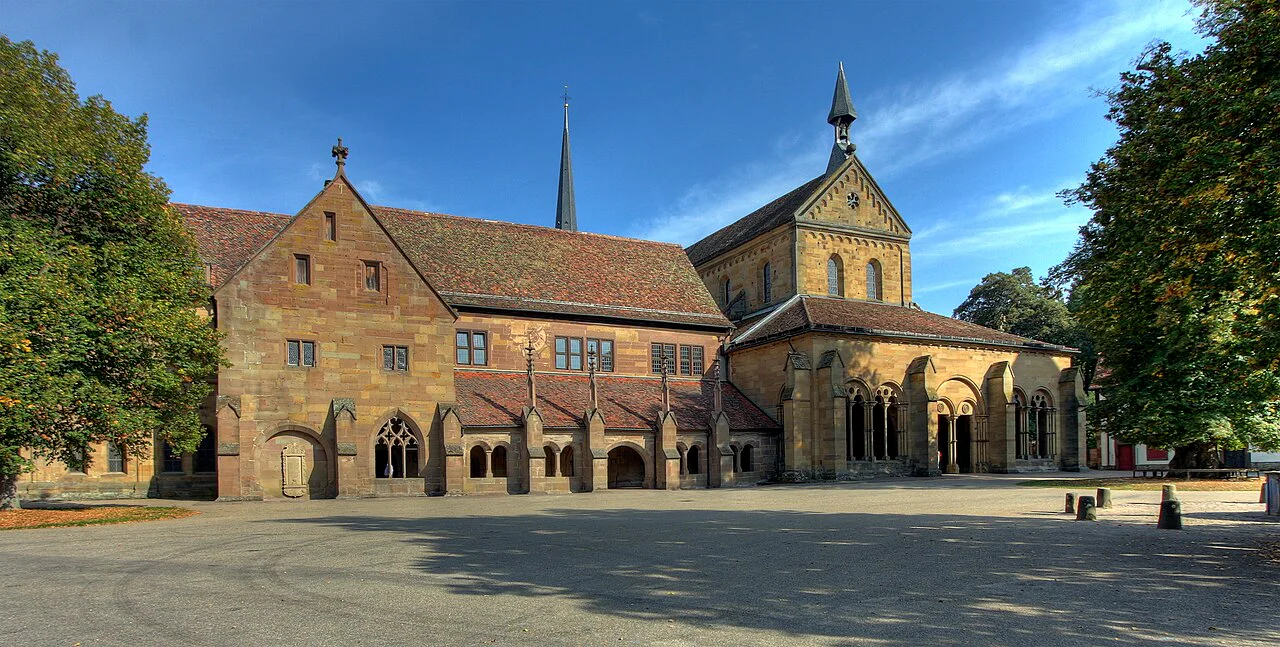
Maulbronn Monastery is a former Cistercian abbey located in Maulbronn, Baden-Württemberg. The complex is one of the best-preserved in Europe and was named a UNESCO World Heritage Site in 1993.
Download Stanza, then search for “Kloster Maulbronn”.
About the tour
One guide. Your kind of visit.
Maulbronn Monastery is a former Cistercian abbey located in Maulbronn, Baden-Württemberg. The complex is one of the best-preserved in Europe and was named a UNESCO World Heritage Site in 1993.
Ready when you are.
- 01Get the free Stanza app.
iOS & Android
- 02Find your guide.
“Kloster Maulbronn”
- 03Download before you go.
Works offline
Audio guide / 15 narrated stops
Inside the guide
Get to know a few of the stories before you go. Open a stop to read more.
01 Main Gatehouse & Fortified Courtyard
The Western Courtyard - Welcome to Maulbronn
Welcome to Maulbronn, a Cistercian abbey founded in 1147 and often called the best-preserved medieval monastery north of the Alps. The story begins with a knight named Walter von Lomersheim, who in 1138 gave his estate at Eckenweiher to the Cistercian Order. Monks came, but found the site short of water and pasture. So in 1147 the Bishop of Speyer moved them to a new spot by the Salzach river, a place called Mulenbrunnen. It had everything the order wanted: water in plenty, and isolation, yet a Roman road nearby. Building began soon after and was largely finished by 1200. The abbey grew rich, passed through hard centuries, and in the sixteenth century became a Protestant school. Since 1993 the entire complex has been a UNESCO World Heritage Site. The church with its slender spire stands ahead, with the cloister range beside it. Everything a monastic community needed is enclosed within these walls, and the tour moves through it room by room.
Elke Wetzig (Elya) · CC BY-SA 3.0
02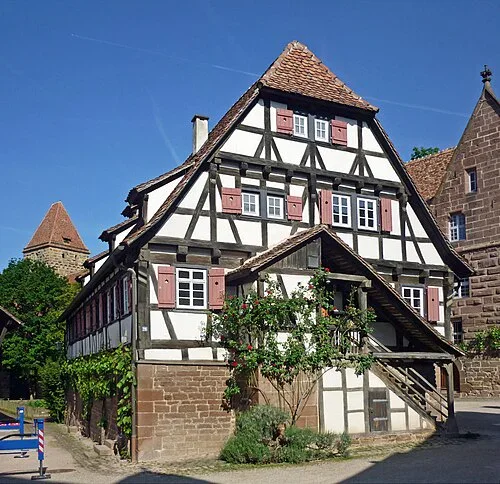 Monastery Bakery & Economic Buildings (Klosterhof 28)
The Monastery Bakery - A Self-Sufficient World
A monastery like this ran as a town, and this half-timbered house was its bakery, the workplace and residence of the monastery's chief baker. Beside it stands the Haberkasten, the granary where the grain was stored. Along the western wall of the complex once worked the blacksmithy and the wheelwright, keeping carts and tools in order. East of the smithy lay the mews, a building that has served as Maulbronn's town hall since the early nineteenth century. There were storehouses for wine-making gear, a cooperage for barrels, and a mill. The Cistercian rule expected a community to live from its own labor, with the monastery's lands worked by its own lay brothers. That ideal of prayer and manual labor shaped every building in this yard. Feeding the community took an architecture of its own, and the bakery still anchors it.
Photo: SchiDD · CC BY-SA 4.0
03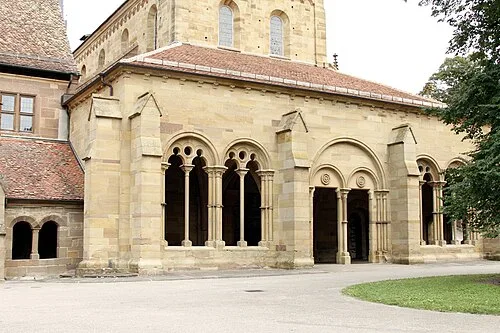 The Paradies (Early Gothic Church Narthex)
The Paradies - Germany's First Gothic
The arcaded porch in front of the church is called the Paradies, and it marks a turning point in German building. Around 1210 to 1220 an anonymous architect trained in Paris raised it, and with it the first example of Gothic architecture in Germany. His workshop also built the southern part of the cloister and the monks' refectory. The style arrived through the Cistercians, who carried the new Gothic from northeastern France across the order's lands. The porch shows the change in stone: sturdy round Romanesque arches below, tall windows and wide vaults above, old and new sharing one facade. The porch takes its name, the Paradise, from an old custom of painting the story of the Fall of Man in a church's entrance hall. Since 2013 it has even figured on the back of a German two-euro coin, paired with the monastery's fountain.
Listen in the appJosé Luiz · CC BY-SA 4.0
04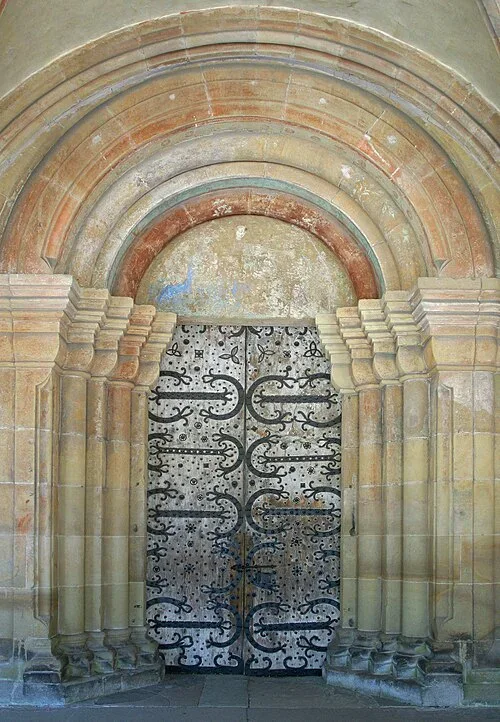 The Paradies (Early Gothic Church Narthex)
The Portal Doors of 1178
These doors are the oldest datable wooden doors in Germany, made of fir around 1178. The wrought-iron fittings spread over them in curling patterns were hammered by smiths of the founding generation. When new, the wood was covered with parchment glued on and painted red, so the doors would have glowed rather than shown bare timber. Little twelfth-century work has survived at Maulbronn apart from this portal and its doors. Nearly everything else from the founding years was rebuilt or replaced over the centuries. These planks are the oldest witness still on duty from the first church.
Listen in the appPhoto: Bastian Gläßer · CC BY-SA 3.0
05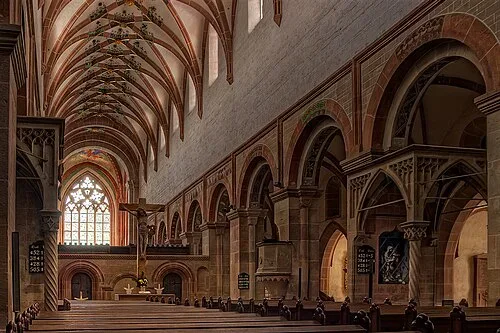 Lay Church (Laienkirche) & Sandstone Crucifix
The Monastery Church - One Nave, Two Communities
The abbey church was consecrated in 1178 by Arnold, Archbishop of Trier, after decades of building. It follows the early Cistercian manner: a three-naved basilica raised to strict proportions, plain and undecorated where other orders piled on ornament. Later centuries kept adding, and the vaulted Gothic roof eventually replaced the original flat timber ceiling. The key to reading this interior is the stone choir wall across the nave. The monastery held two communities, choir monks and lay brothers, and the rule kept them strictly apart. Each group had its own side of this wall, praying in the same church but never mixing. The wall also carried altars, so both communities could celebrate the liturgy at once. The crucifix and the carved choir stalls beyond it each have their own stop.
Listen in the appAndreas Zschorsch · CC BY-SA 3.0
06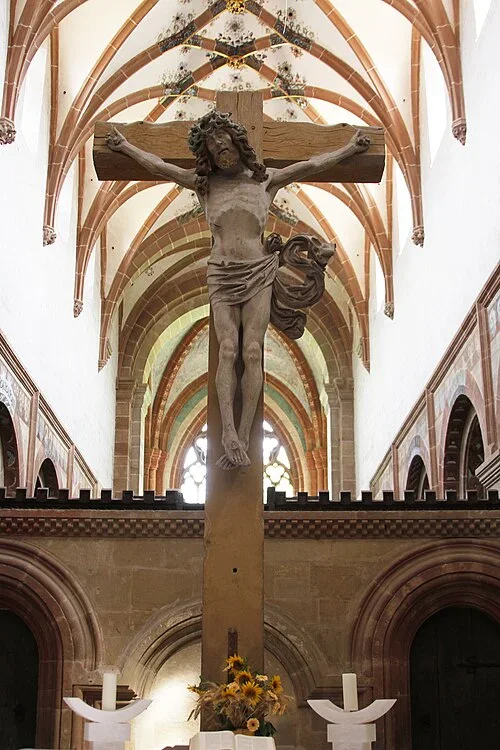 Lay Church (Laienkirche) & Sandstone Crucifix
The Stone Crucifix of 1473
The large figure of Christ before the choir wall was carved around 1473 from a single block of stone. It stands on the lay brothers' side of the church, the image those working brothers faced as they prayed. Christ's head sinks forward, the body hanging with its weight plainly shown, carved with an honesty that later Gothic loved. On both sides of the choir wall stand two ciboriums, the canopied structures near the altars. They are decorated with toads, lizards and skulls, images of death and corruption set at the very threshold between the two communities. The message was meant for anyone passing: life ends here, and prayer begins. One carved block, and a whole theology of mortality.
Listen in the appJosé Luiz · CC BY-SA 4.0
07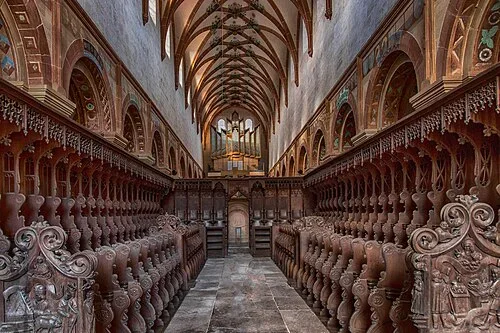 Monks' Choir (Herrenchor) & Carved Stalls
The Monks' Choir - 92 Carved Stalls
Beyond the choir wall sits the monks' own territory, with stalls for ninety-two monks carved around 1450. An unknown master covered them in biblical scenes and mythical creatures, and some attribute the work to the sculptor Hans Multscher, though the hand has never been pinned down. The stalls were the monks' workplace: seven times a day they gathered here to sing the hours. In the choir stands the Maulbronner Madonna, carved sometime between 1307 and 1317, the abbey's treasured image of Mary with the child. The church walls carry frescoes and the coats of arms of nobles who paid for the building. One fresco shows Maulbronn's founder, Walter von Lomersheim, entering the monastery as a lay brother. The community kept the memory of its own beginning on its walls, close to where it prayed.
Listen in the appPhoto: Rotoliv · CC BY-SA 4.0
08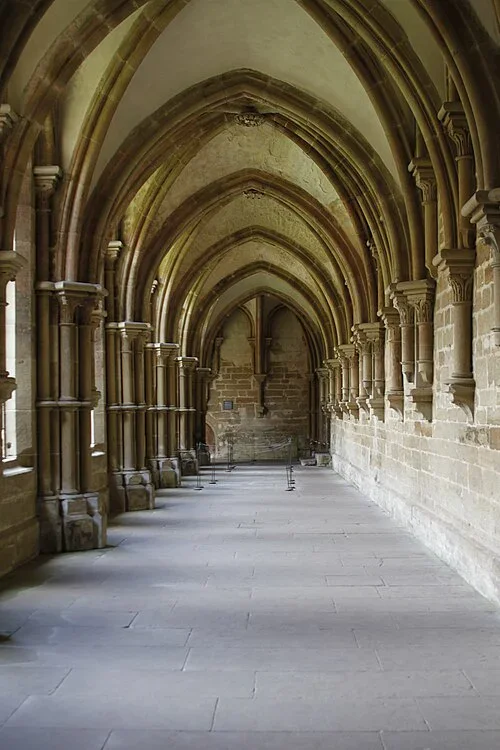 The Cloister Arcades (Kreuzgang)
The Cloister - Heart of the Day
The cloister was the circulation system of the monastery, the vaulted passage from which the whole day was reached. From these arcades the monks passed to the church, the chapter house, the refectories and the dormitory. Prayer, meals and gatherings were timed by the hours, and the cloister carried them from one to the next. The groin vaults overhead rest on seven slender double-column pillars, and those were installed in 1869, a restorer's hand inside medieval fabric. Lay brothers had their own entrance on the west side, with stairs to their dormitory above their refectory. One walkway, and an entire timetable hung upon it.
Listen in the appJosé Luiz · CC BY-SA 4.0
09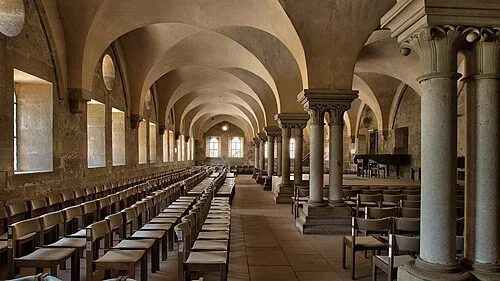 Lay Brothers' Refectory (Laienrefektorium)
The Lay Brothers' Refectory
This hall, with its heavy Romanesque columns and plain stone vaults, was the dining room of the lay brothers. They were the men who did the manual work of the abbey. They ate here, apart from the choir monks, in a room built to their own scale. Over the thirteenth century their numbers dwindled, worn down by conflict between them and the monks. The monastery increasingly turned to hired laborers to work its fields instead. The system that had built the abbey's economy slowly dissolved. The hall itself adapted with the times: it now holds rows of chairs, and a piano stands at the far end.
Listen in the appPhoto: Harro52 · CC BY-SA 3.0
10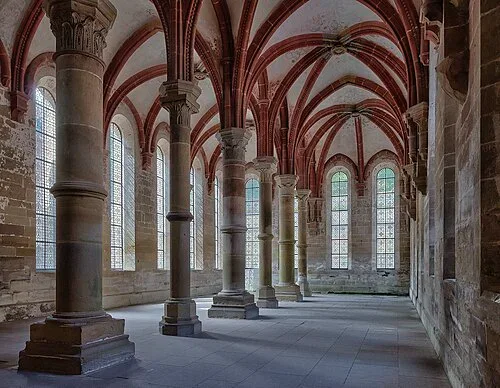 Monks' Refectory (Herrenrefektorium)
The Monks' Refectory - Dining in Silence
This elegant hall with its ribbed vaults was the monks' refectory, and its Early Gothic interior suggests it may also have come from the workshop of the Master of the Paradise. Here the full brothers ate their meals in silence while a reading of the Bible was delivered to them. The ribbing of the vaults was painted red in the sixteenth century, and it still runs overhead in that color. The kitchen that supplied this hall and the lay brothers' one sits between them, arranged so that smoke and smells stayed away from the rest of the monastery. And this room owns a famous tale. The story goes that a clever monk here once hid meat inside pasta during Lent, so the Lord would not see it, which earned the Swabian Maultasche its nickname, Herrgottsbscheißerle, the little deceivers of the Lord. It is folklore, and young folklore at that: the tale became current only in the late twentieth century, popularized by the writer Elke Knittel. The dumpling, at least, is real.
Listen in the appPhoto: Harro52 · CC BY-SA 3.0
- 11
The Fountain House - Water as Engineering
The Fountain House, front door of a water network of twenty ponds that still partly works.
- 12
The Lavatorium Fountain and the Mule Legend
The washing fountain of the monks, and the mule legend painted on the vaults above it.
- 13
The Chapter House - Rule and Council
The chapter house, the one room where silence broke, under star vaults painted red in 1517.
- 14
The Parlatorium - From Abbey to Seminary
The speech room of the monks, reborn in 1556 as a Protestant school that taught Kepler, Hölderlin and Hesse.
- 15
The Faust Tower - Legends and Legacy
The tower where Dr. Faust is said to have lodged in 1516, and the walls that saved the whole abbey.
Kloster Maulbronn
Frequently asked questions
How much does the guide cost?
Free app download. Listed guide price: $1.99. Guide price shown in the app. Audio guide only. Venue admission is separate.
Can I listen without internet?
Yes. Download the guide’s audio, images, and maps in the app before your visit. Your downloaded content is then available offline.
Can I listen in my language?
This audio guide is available in 15 languages, including English.
Do I need to follow a schedule?
No. This is a self-guided experience. Choose your stops, pause whenever you like, and return to a story at your own pace.
At your own pace
Explore Kloster Maulbronn.
Download Stanza, then search for “Kloster Maulbronn”.
Free app download · Guide price shown in the app
Keep exploring
Nearby audio guides
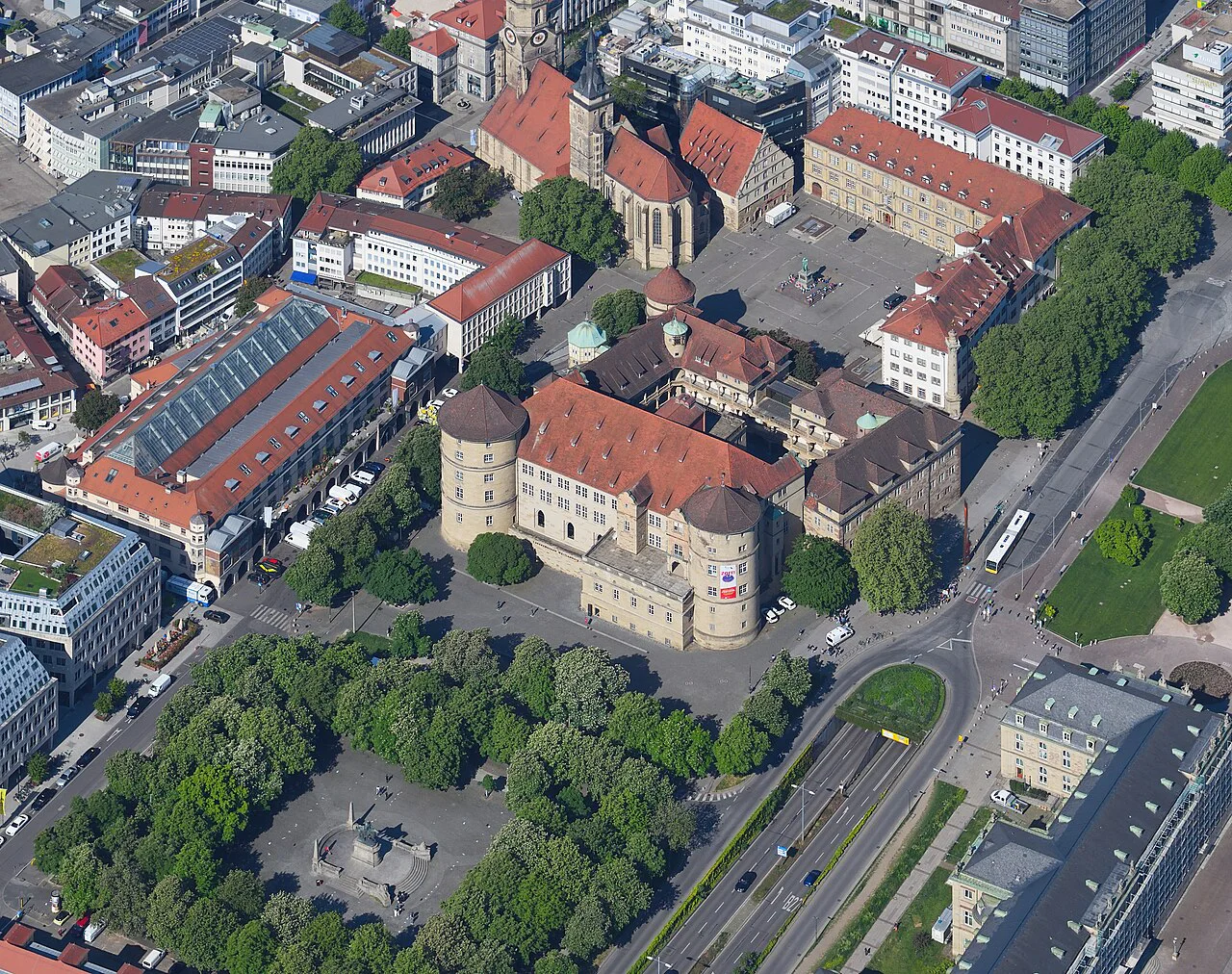
Stuttgart · 37 km
Altes Schloss Stuttgart
Content & sources
Photo: Carsten Steger · CC BY-SA 4.0
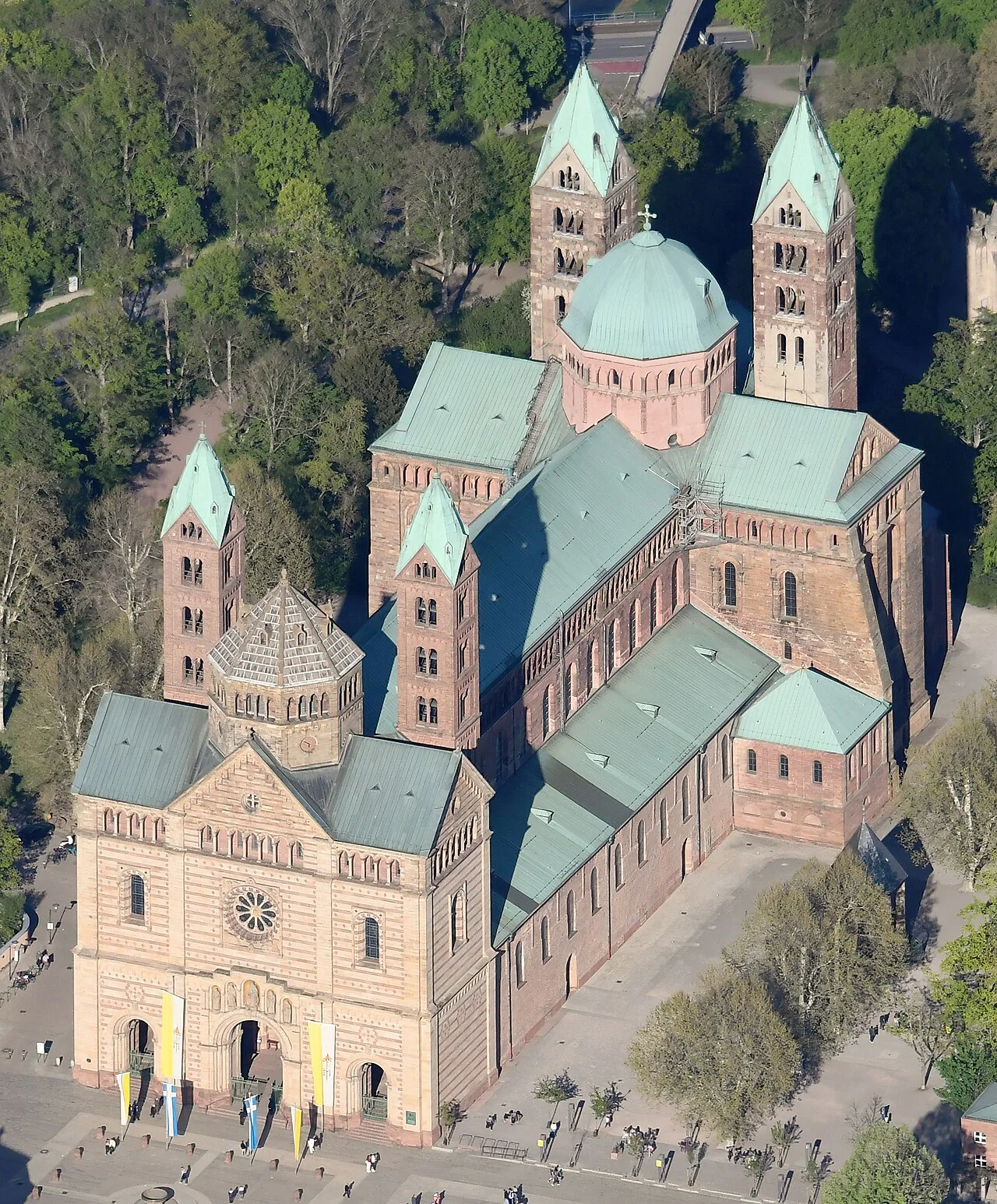
Speyer · 44 km
Speyerer Dom
Content & sources
Carsten Steger · CC BY-SA 4.0
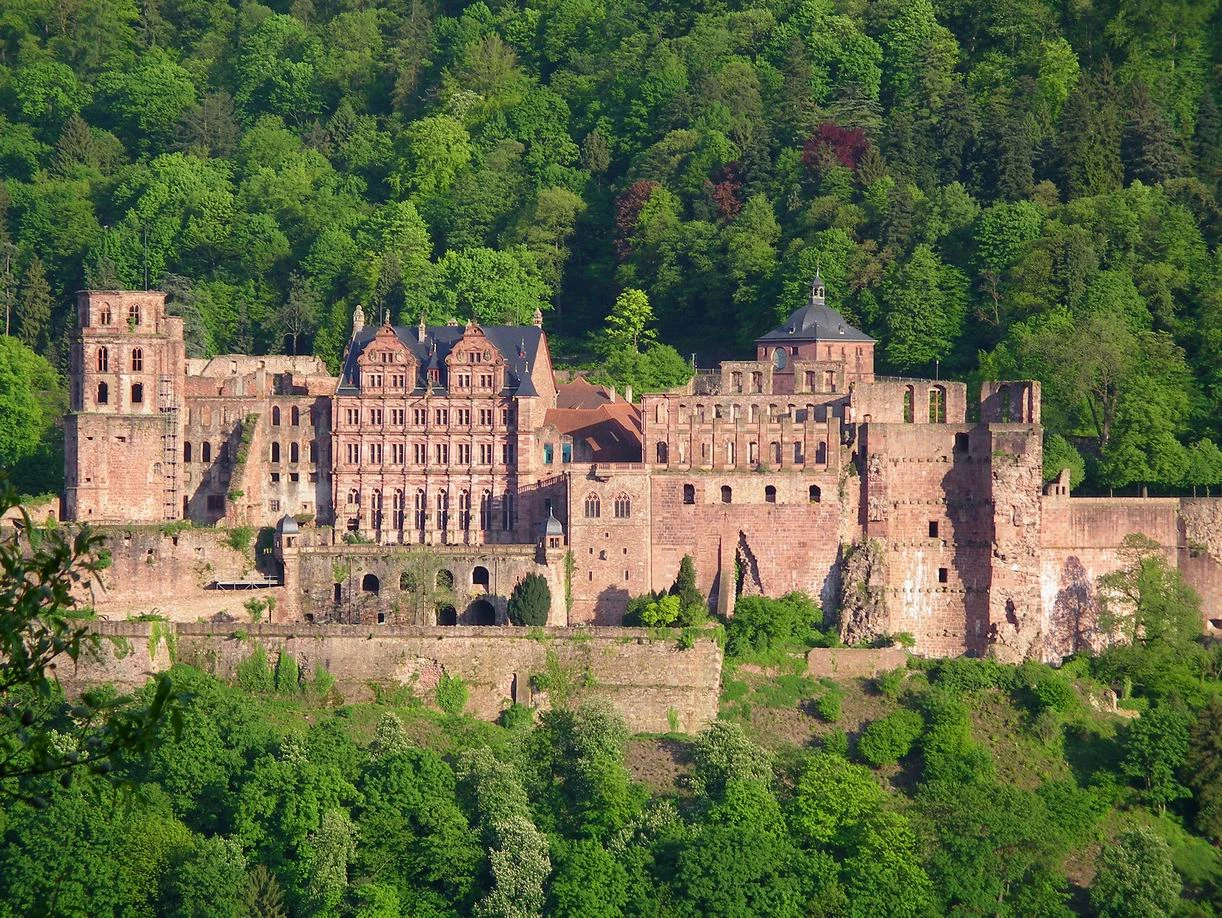
Heidelberg · 46 km
Heidelberg Castle
Content & sources
Pumuckel42 (Reinhard Wolf) at de:Wikipedia · CC BY-SA 3.0
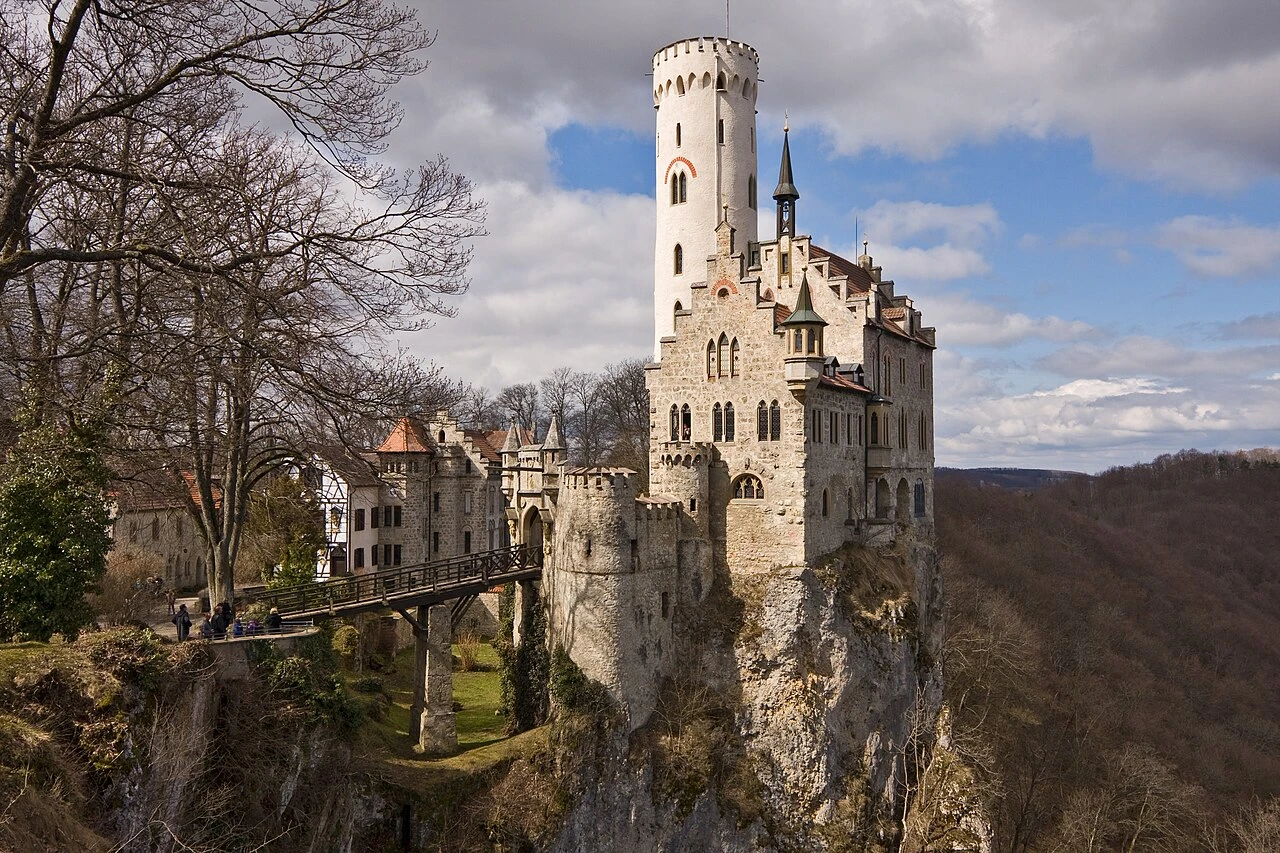
Honau · 74 km
Lichtenstein Castle
Content & sources
Photo: -donald- · CC BY-SA 3.0
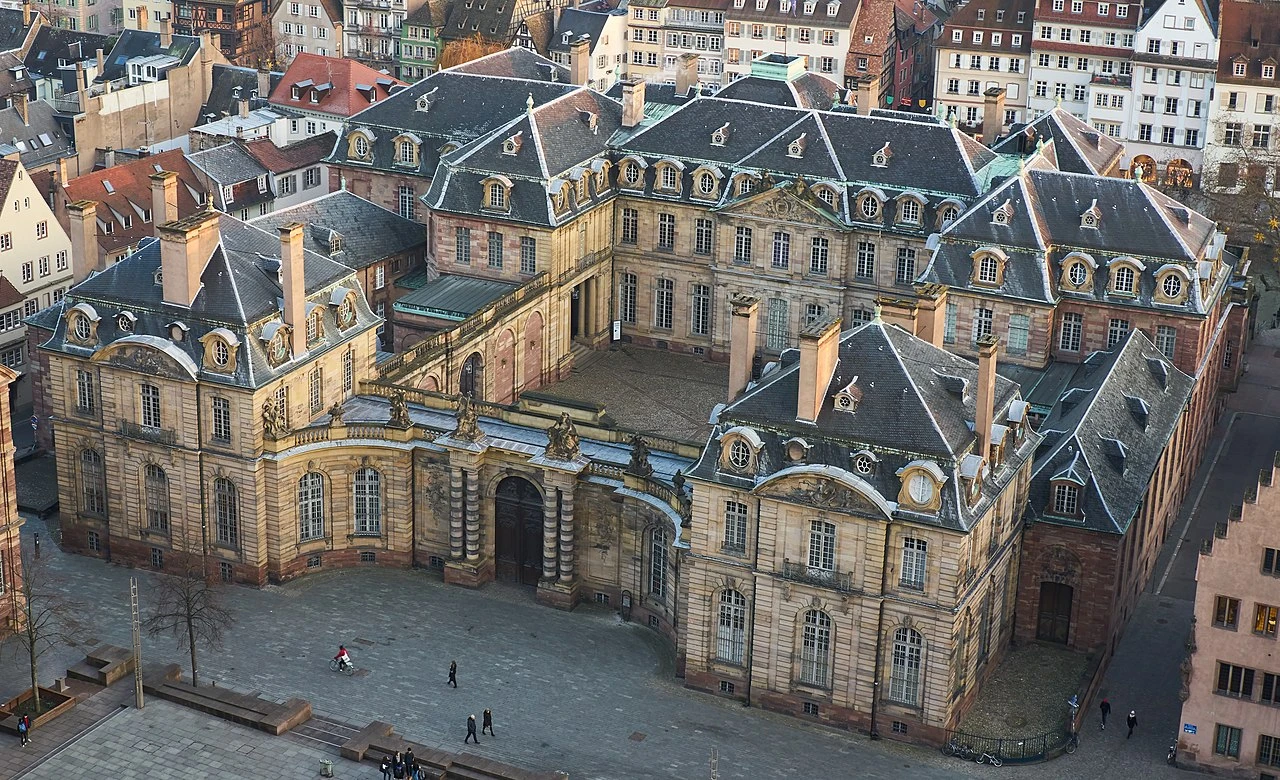
Strasbourg · 91 km
Palais Rohan
Content & sources
Radek Kucharski · CC BY 2.0