Stanza · Audio guide
Altes Schloss Stuttgart Audio Guide
A place to remember. A story to take with you.
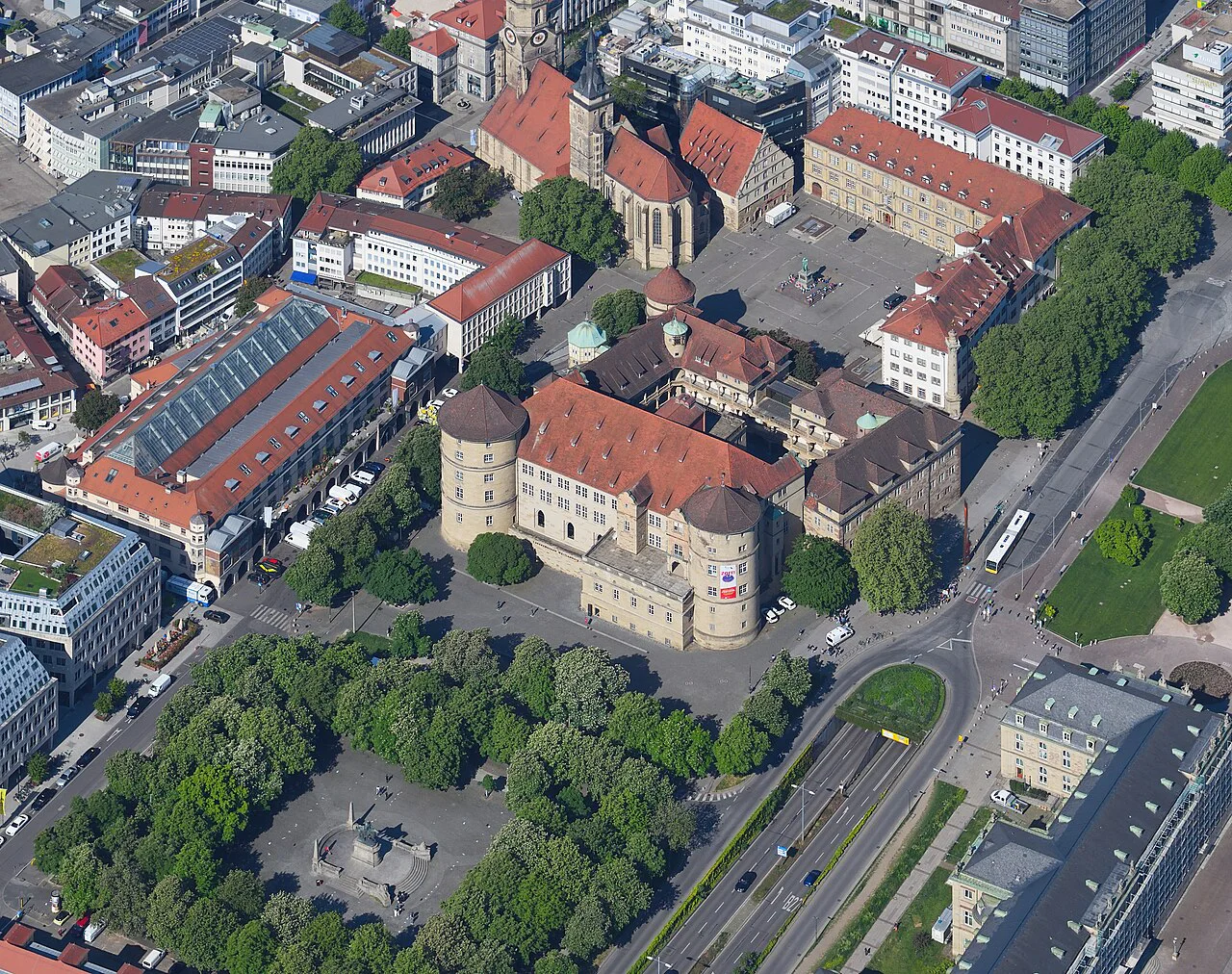
The Old Palace is a former castle located on the Schillerplatz in Stuttgart, Germany. It served as the residence of the Counts and Dukes of Württemberg and currently houses the Landesmuseum Württemberg.
Download Stanza, then search for “Altes Schloss Stuttgart”.
About the tour
One guide. Your kind of visit.
The Old Palace is a former castle located on the Schillerplatz in Stuttgart, Germany. It served as the residence of the Counts and Dukes of Württemberg and currently houses the Landesmuseum Württemberg.
Ready when you are.
- 01Get the free Stanza app.
iOS & Android
- 02Find your guide.
“Altes Schloss Stuttgart”
- 03Download before you go.
Works offline
Audio guide / 13 narrated stops
Inside the guide
Get to know a few of the stories before you go. Open a stop to read more.
01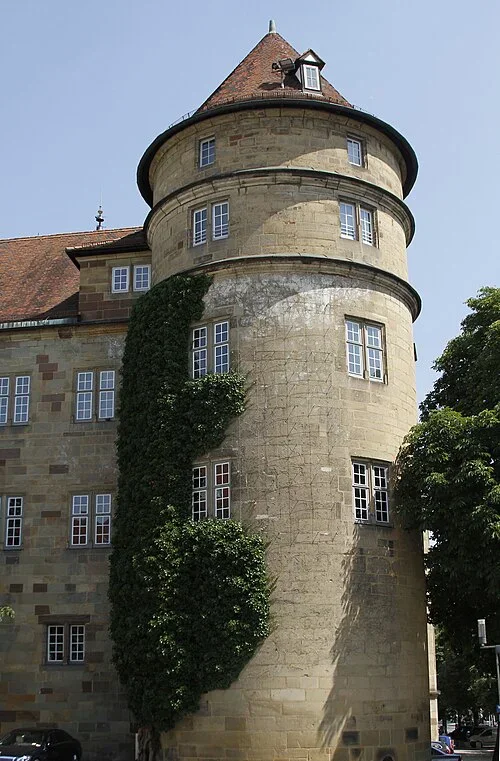 Schillerplatz Exterior and Entrance Portal
Round Tower at Schillerplatz
Welcome to the Old Castle, the Altes Schloss, on Schillerplatz in central Stuttgart. For centuries it was the residence of the Counts and later some Dukes of Württemberg. Ivy climbs one side of a round tower with a pointed roof. Today the building houses the Landesmuseum Württemberg, and its castle church still holds services. Local tradition starts the story around the year 950, with Duke Liudolf of Swabia. He is said to have founded a stud garden, the Stuotgarten, and built a castle to guard it. Some tellers say the garden gave Stuttgart its name. That part is legend, not proven fact. From about 1200 the castle was a water castle, surrounded by moats. The moats were filled in during the eighteenth century. Digging has not yet turned up proof of a fort from the tenth century. Excavations under the southern wing, called the Dürnitz, did find settlement traces going back to the eighth century. They also found the remains of an earlier castle. Its double outer wall and two ditches probably date from the era of the Staufer kings. That makes them more than two centuries younger than the year the legend gives.
José Luiz · CC BY-SA 4.0
02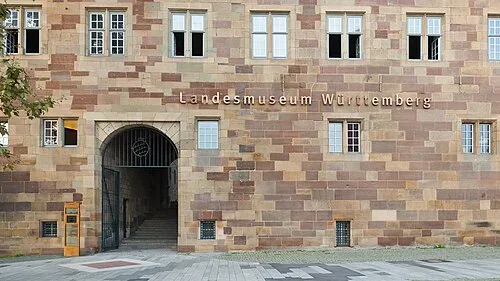 Schillerplatz Exterior and Entrance Portal
Landesmuseum Württemberg Entrance Arch
The words Landesmuseum Württemberg are set into the stone wall above a tall arch. The name means the state museum of Württemberg. A dark iron gate closes the arch, and a flight of steps lies just beyond it. Rows of small windows sit above and beside it, set into blocks of stone of mixed sizes.
Julian Herzog (Website) · CC BY 4.0
03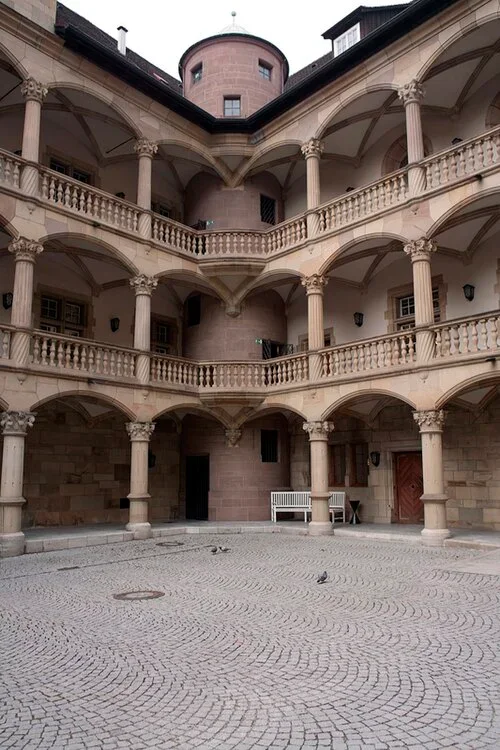 The Renaissance Arcaded Courtyard
Renaissance Arcaded Courtyard
Dukes Christoph and Ludwig began turning the medieval castle into a Renaissance palace in 1553. The architect was Aberlin Tretsch, assisted by the younger Blasius Berwart as master builder. To make room for a new courtyard, the builders pulled down the northwest part of the old castle. That was more than half of its old fabric. Work on the vaulted arcades began in 1557. Today they run along three sides of the court. Their columns, balustrades and round arches, stacked in tiers, borrow motifs from the early Italian Renaissance. The arcades were first planned to run around the whole court, which was laid out as a square for tournaments. That never happened, because the castle was politically downgraded. Work on the remodel ran until 1578. The last side of the court never got its arcades.
Listen in the appPhoto: FDV · CC BY-SA 3.0
04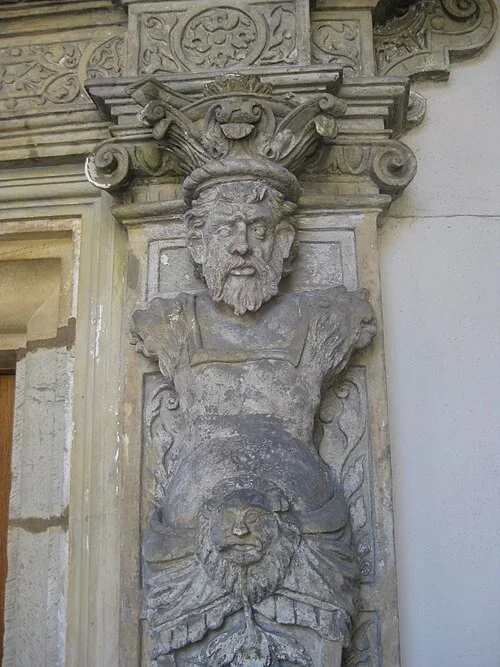 The Renaissance Arcaded Courtyard
Carved Herm on the Hermen Portal
Pillars that end in human figures are called herms, and they were a common decoration in Renaissance architecture across Europe. This one rises from a column-like support. A bearded man's head and shoulders emerge from its top, beneath carved scrolls. Lower down, a mask-like face with a heavy beard sits at the base. The carving has weathered, so its finer details are hard to make out.
Listen in the appPhoto: Gerd Leibrock · CC BY-SA 3.0
05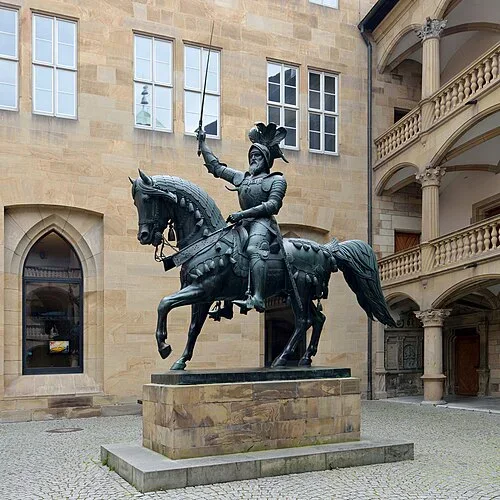 Equestrian Monument of Duke Eberhard
Herzog-Eberhard-Denkmal: Equestrian Monument to Eberhard im Bart
Count Eberhard im Bart is the man honoured by the bronze rider in the courtyard. In 1495, at the imperial diet in Worms, Emperor Maximilian made him the first Duke of Württemberg. Until then he had been a count, and he had made Stuttgart the ducal residence. He is shown in full armour, sword raised in his right hand and reins in his left. Over his shoulders he wears the chain of the Order of the Golden Fleece. Ludwig von Hofer designed the statue in the classical style, and it was made in the nineteenth century. It was later moved into the Old Castle from the New Castle.
Listen in the appPhoto: Nightflyer · CC BY-SA 4.0
06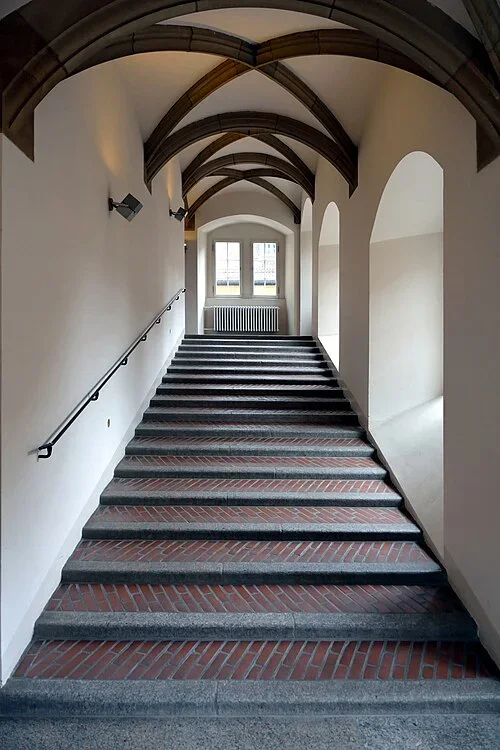 The Spiral Equestrian Ramp
Vaulted Staircase Passage
The Reittreppe, the riding staircase, takes its name from its purpose. It led up into the new ducal rooms on the upper floors of the renovated residence. It was built during the remodel in the late 1550s. Some give 1560 as the date instead. This flight runs straight, not in a spiral, under a ribbed vault. Its steps alternate grey stone with red brick.
Listen in the app--Nightflyer (talk) 18:47, 17 June 2016 (UTC) · CC BY 4.0
07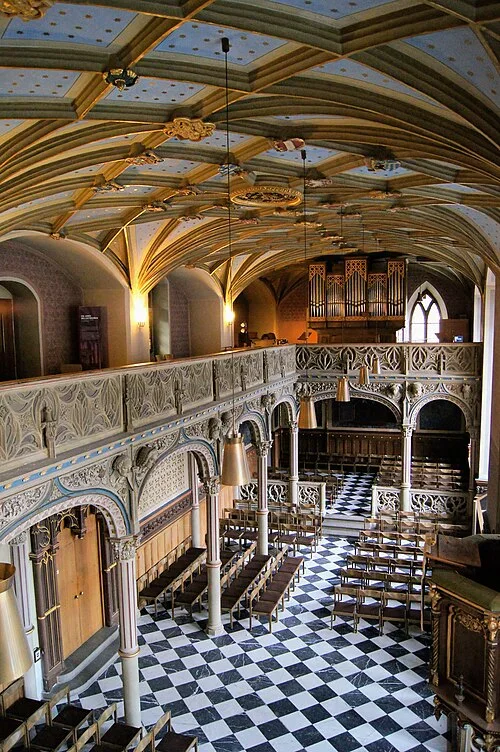 The Protestant Castle Church
Protestant Castle Church (Schlosskirche) Nave
The castle church was consecrated in 1562, as part of the new court wings. For a long time it was regarded as the first new Protestant church built in Württemberg, though recent research on the Tübingen castle church has put that view in question. Its plan is transverse, so the main space is crossed by a second one, forming a cross. After the castle chapel at Torgau, it was the second church planned this way. The altar and pulpit stand at the centre, as equal fittings designed by Sem Schlör. From every seat, both were meant to be easy to see. The church has two routes in. The congregation entered at ground level from the arcaded courtyard. The duke came from his own rooms, along the gallery that runs round the church. A floor of black and white squares runs beneath the pews, and a carved gallery lines the upper walls. A Protestant parish still preaches there.
Listen in the appFile:Schlosskapelle Stuttgart 05.JPG: Dr. Bernd Gross derivative work: Subbass1 · CC BY-SA 3.0
08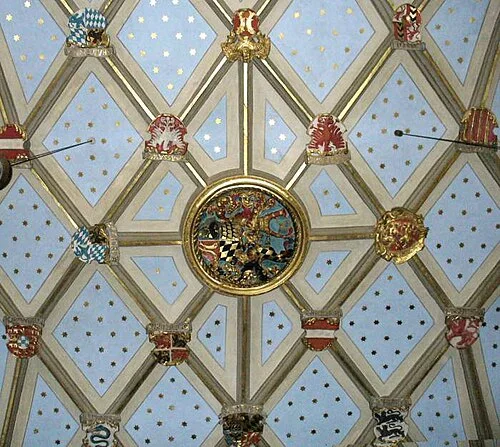 The Protestant Castle Church
Painted Vault with Coats of Arms, Schlosskirche
The first ceiling of the castle church was a plain barrel vault, a smooth curved roof with no ribs. Its windows had no tracery either. Around 1580, ribs and window tracery were added. Today the ribs form star shapes across the ceiling, enclosing blue panels dotted with gold stars. Coats of arms are fixed along the ribs. The church was remodelled again in the nineteenth century, so this painted ceiling could date from either period.
Listen in the appUser:Enslin · CC BY 2.5
09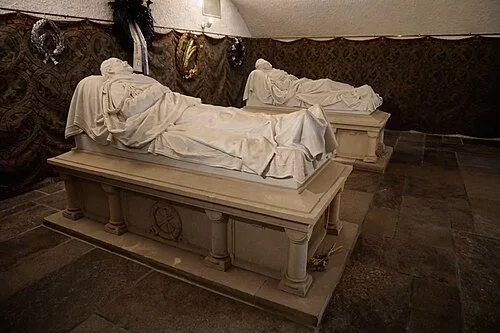 The Royal Crypt
Royal Vault (Königsgruft) of the House of Württemberg
Royal burials lie beneath the castle church, in the Königsgruft, the royal vault. King Karl and Queen Olga are among five members of the royal house buried there. The vault came much later than the church above it. In 1806, after church property was taken over, the church was remodelled in neo-Gothic style, and the royal vault was created. Two draped figures lie stretched out on raised bases, with dark hangings and wreaths behind them. From 1812 the church was used at times as a library, and later as a court pharmacy. The reason was that court services had moved to the academy church in the New Castle.
Listen in the appPhoto: Wuselig · CC BY-SA 4.0
10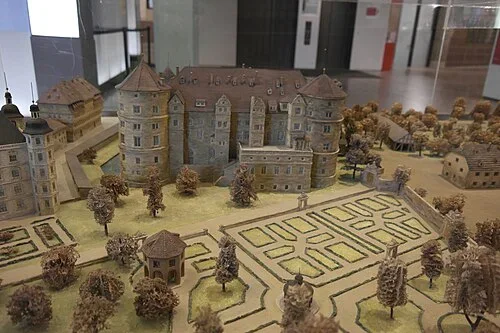 Palace Evolution and Medieval Foundations
Model of the Old Castle and Its Gardens
Around the year 1300, the castle was rebuilt on a new plan. This scale model shows the layout as a whole. Its builders turned the whole layout by just under forty-five degrees. The earlier building had a corner facing the Nesenbach, a stream prone to flooding. The new one ended in a massive wall running parallel to the stream instead. A flood had probably badly damaged the earlier castle in the later thirteenth century. The new walls went far deeper than the old ones, and they are about three point six metres thick. No excavation has reached the bottom of their foundations. An oak beam found near the foot of the wall was dated by tree rings to the same years. When Renaissance builders remodelled the castle about two and a half centuries later, they kept the southeastern walls, which survive in the building today.
Listen in the appBybbisch94, Christian Gebhardt · CC BY-SA 4.0
- 11
Württembergische Kunstkammer
Princely cabinets of art and wonder, and the Württemberg collection plundered in the Thirty Years' War.
- 12
Crown in the Landesmuseum Württemberg Collection
A gold crown topped by a cross and orb, and the open question of whose head it was made for.
- 13
Stauffenberg Memorial Entrance on the Karlsplatz Side
A memorial to a former Stuttgart resident who tried to kill Hitler, set within a castle rebuilt after fire and war.
Altes Schloss Stuttgart
Frequently asked questions
How much does the guide cost?
Free app download. Listed guide price: $0.99. Guide price shown in the app. Audio guide only. Venue admission is separate.
Can I listen without internet?
Yes. Download the guide’s audio, images, and maps in the app before your visit. Your downloaded content is then available offline.
Can I listen in my language?
This audio guide is available in 15 languages, including English.
Do I need to follow a schedule?
No. This is a self-guided experience. Choose your stops, pause whenever you like, and return to a story at your own pace.
At your own pace
Explore Altes Schloss Stuttgart.
Download Stanza, then search for “Altes Schloss Stuttgart”.
Free app download · Guide price shown in the app
Keep exploring
Nearby audio guides
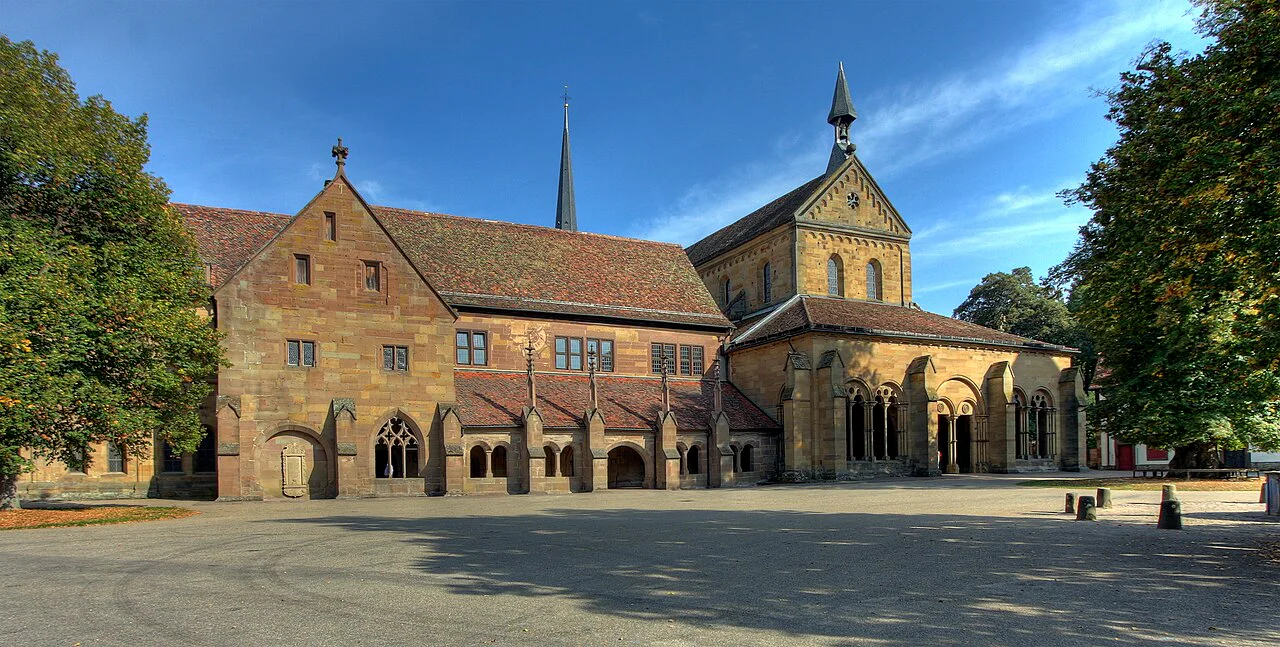
Maulbronn · 37 km
Kloster Maulbronn
Content & sources
Elke Wetzig (Elya) · CC BY-SA 3.0
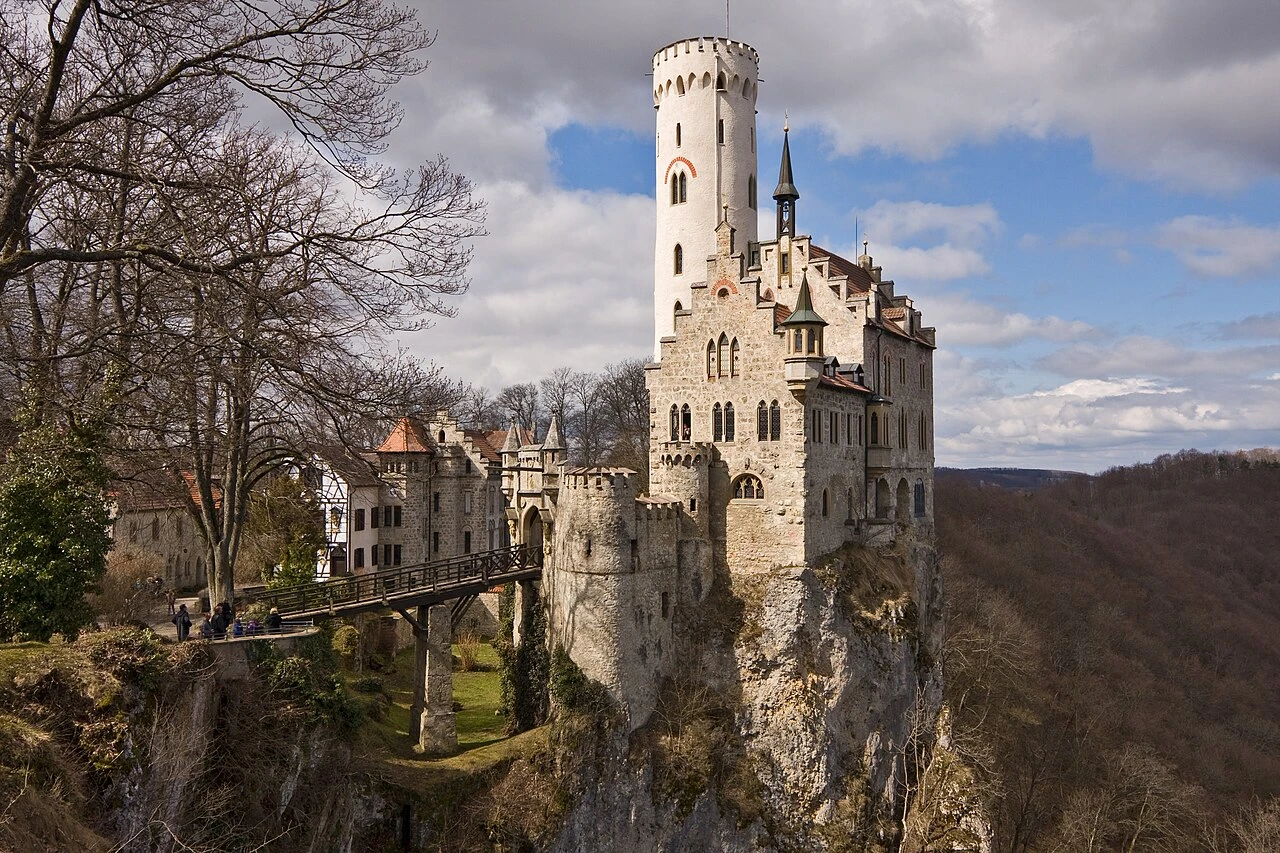
Honau · 42 km
Lichtenstein Castle
Content & sources
Photo: -donald- · CC BY-SA 3.0
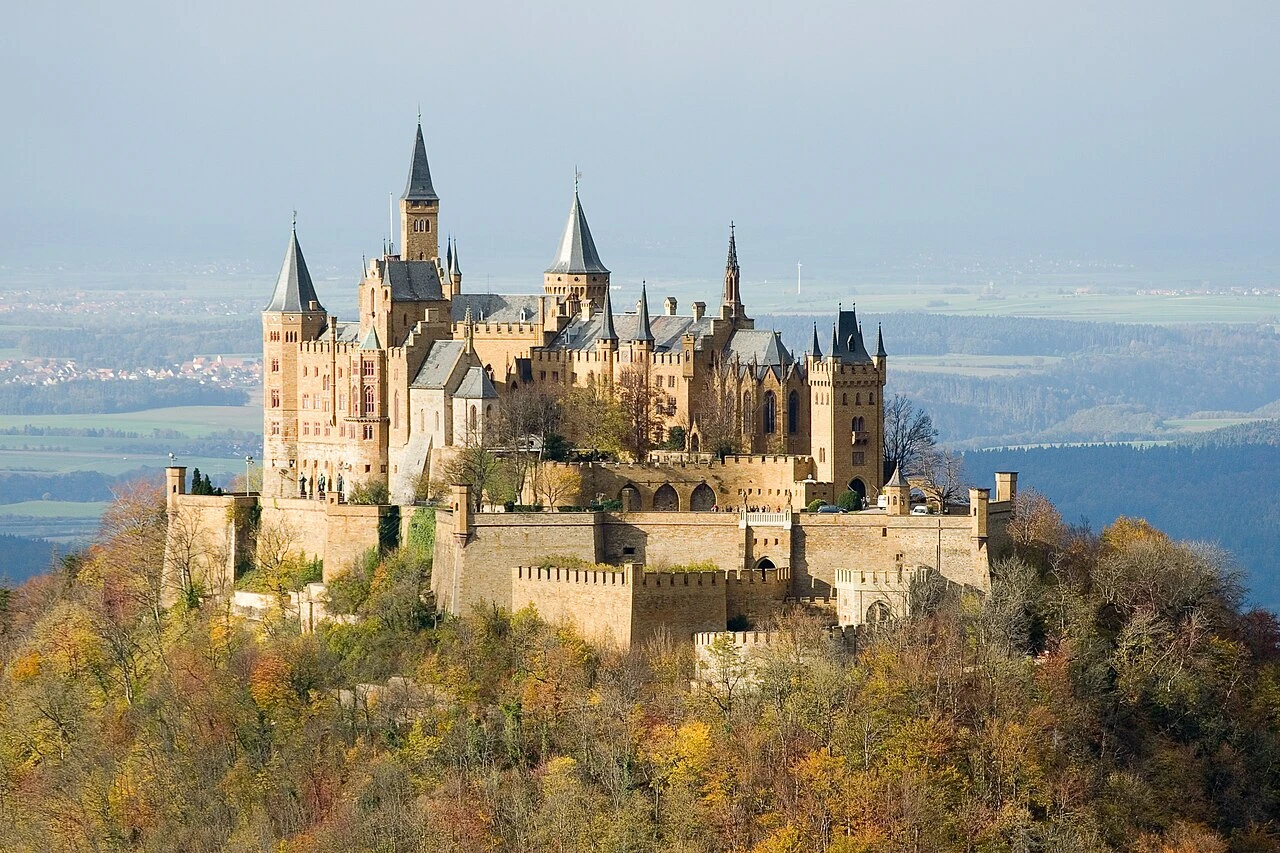
Bisingen · 53 km
Hohenzollern Castle
Content & sources
A. Kniesel (= User:-donald-), Lauffen · CC BY-SA 3.0
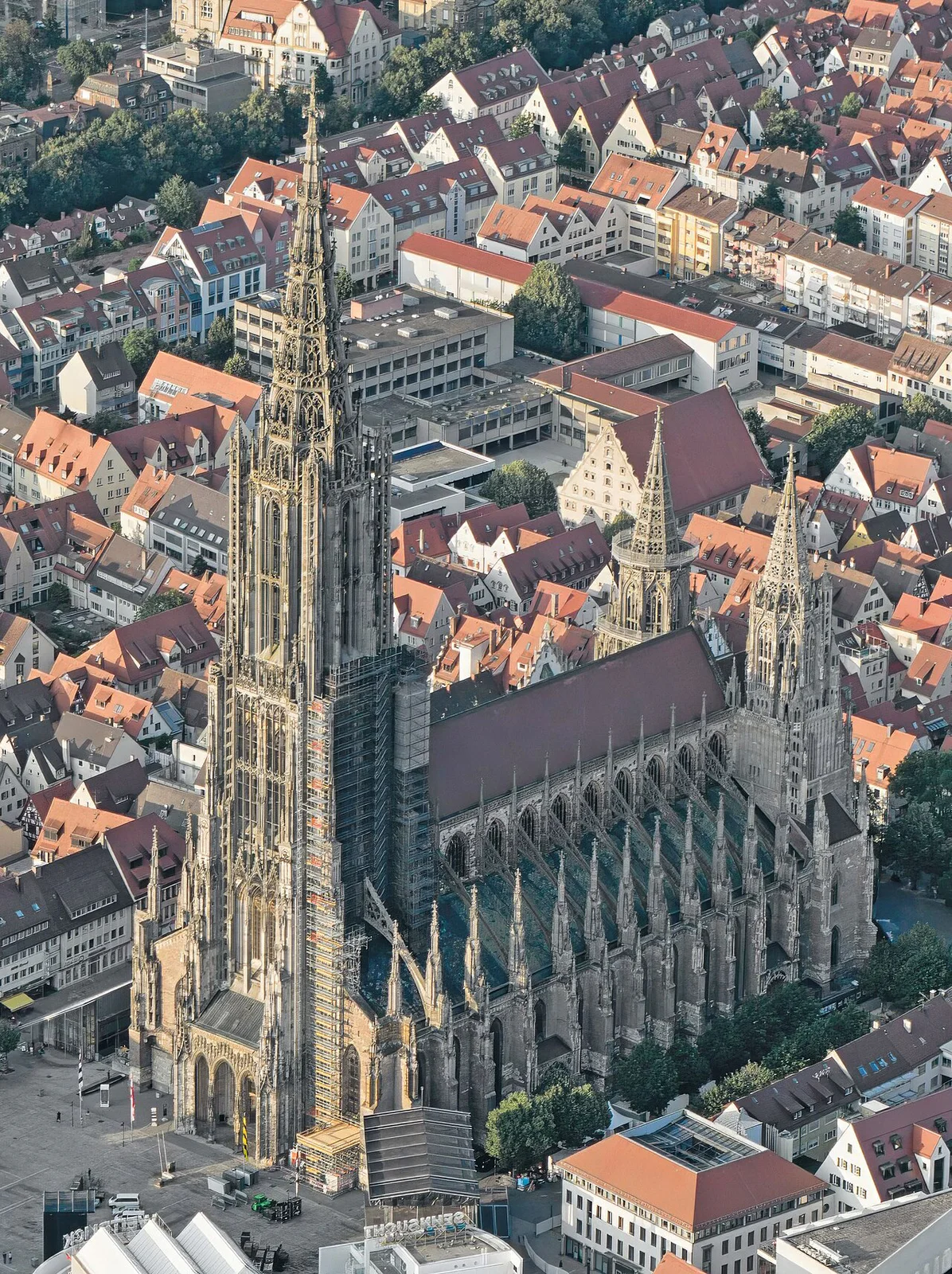
Ulm · 73 km
Ulmer Münster
Content & sources
Armin Appel · CC0