Stanza · Audio guide
Palais Rohan Audio Guide
A place to remember. A story to take with you.
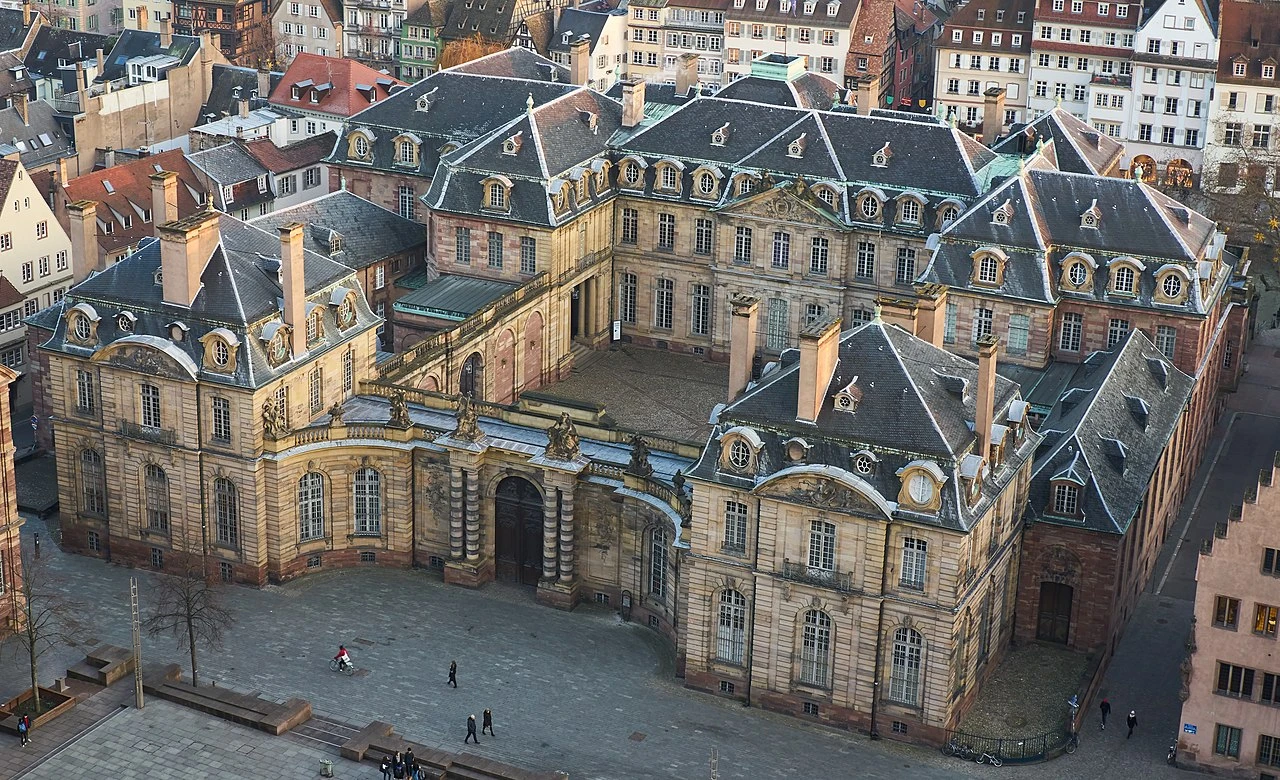
An 18th-century former episcopal palace in Strasbourg, France. It now houses three distinct museums: the Museum of Fine Arts, the Museum of Decorative Arts, and the Archaeological Museum.
Download Stanza, then search for “Palais Rohan”.
About the tour
One guide. Your kind of visit.
An 18th-century former episcopal palace in Strasbourg, France. It now houses three distinct museums: the Museum of Fine Arts, the Museum of Decorative Arts, and the Archaeological Museum.
Ready when you are.
- 01Get the free Stanza app.
iOS & Android
- 02Find your guide.
“Palais Rohan”
- 03Download before you go.
Works offline
Audio guide / 22 narrated stops
Inside the guide
Get to know a few of the stories before you go. Open a stop to read more.
01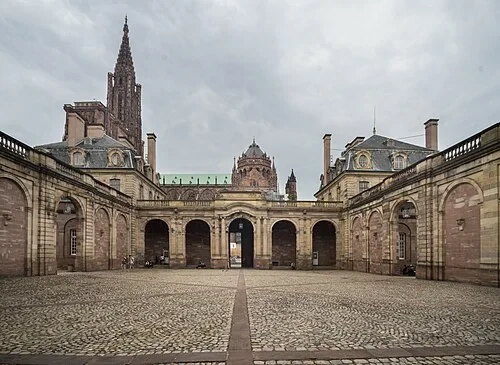 The Monumental Portal and Place du Château
The Monumental Portal
Construction of this architectural masterpiece began in 1732 and took exactly a decade to finish. As you look at these massive curved wooden doors, you are crossing a threshold designed for symbolic impact. The architect, Robert de Cotte, conceived this portal in the style of a Roman triumphal arch. In the eighteenth century, such a design served as a powerful political and religious statement, signaling the firm return of Roman Catholicism and French royal authority to Strasbourg. Moving from the dense shadow of the nearby cathedral into this open, regal space, visitors were meant to feel an immediate shift in atmosphere. The sheer scale and classical proportions of the entrance set the stage for the opulence within. It was here that the Prince-Bishops of the House of Rohan demonstrated their immense status, acting as both high-ranking church leaders and secular princes. The portal effectively separated the medieval bustle of the city from the refined, disciplined world of the French court that waited inside, establishing a sense of elite exclusion that remains palpable today.
Photo: Pedro J Pacheco · CC BY-SA 4.0
02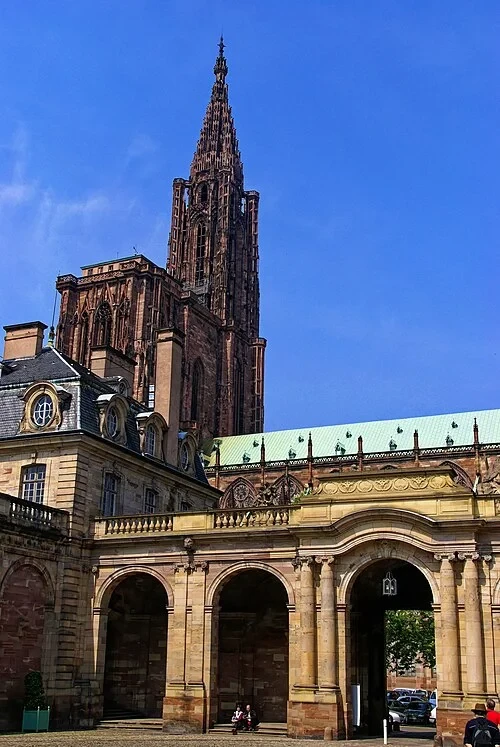 The Monumental Portal and Place du Château
View of the Cathedral Spire
This specific vantage point highlights a calculated visual dialogue between two very different eras. Robert de Cotte, the First Architect to the King, intentionally designed the Palais Rohan to stand in sharp contrast to the neighboring Strasbourg Cathedral. While the cathedral’s famous spire is a masterwork of medieval Gothic engineering, the palace represents the height of French Baroque and Classical taste. One of the most striking differences is the choice of material. The palace is constructed from a warm, yellow sandstone quarried in nearby Wasselonne. On a clear day, this stone catches the light with a soft glow that sits in marked opposition to the deep, moody red sandstone of the cathedral. This contrast was about more than just color; it represented a fundamental shift in cultural values. The cathedral points toward the heavens with intricate, lace-like stonework, while the palace emphasizes horizontal stability, symmetry, and rational order. By placing such a distinctively French building in the heart of the city, the Rohan family and the French crown were making their presence felt in the urban skyline, offering a modern counterpoint to the ancient religious authority next door.
Photo: Txllxt TxllxT · CC BY-SA 4.0
03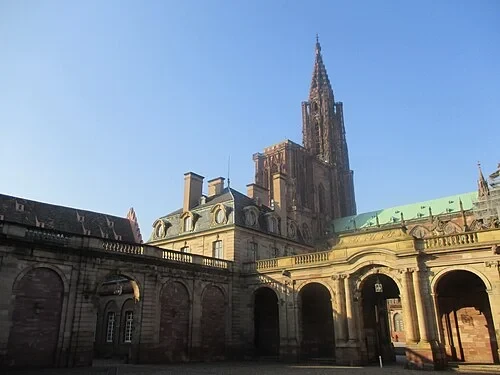 The Cour d'Honneur (The Main Courtyard)
The Main Courtyard
Entering the main courtyard, or Cour d’Honneur, you find yourself in a space defined by symmetry and prestige. This area functioned as the grand stage for the arrival of high-ranking guests. During the eighteenth century, every movement within a palace was dictated by the rigid rules of French court etiquette, and the architecture here reflects that discipline. Along the walls, you can see the exedras, which are large, curved recesses. These were originally designed to hold busts of Roman emperors, a choice that aligned the House of Rohan with the authority and dignity of the classical past. The layout ensured that anyone arriving by carriage would be immediately impressed by the scale and order of the surroundings. The courtyard is bounded by wings that once housed administrative functions and guest quarters, creating an enclosed world separated from the city outside. The rhythmic placement of windows and columns guides the eye toward the main entrance, reinforcing the hierarchical nature of the space. Every stone was laid to remind visitors that they were entering the residence of a Prince of the Church who lived with the splendor of a king.
Listen in the app© Ralph Hammann - Wikimedia Commons · CC BY-SA 4.0
04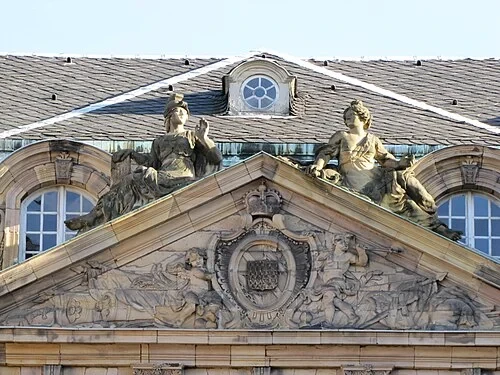 The Cour d'Honneur (The Main Courtyard)
The Princely Pediment
The triangular pediment crowning the central entrance is a masterclass in symbolic sculpture. If you look closely at the figures flanking the central crest, you can see two distinct allegorical statues representing Religion and Mercy. Their presence is far from accidental; they serve as a visual manifesto for the men who commissioned this building. The inhabitants of the Palais Rohan were Prince-Bishops, a unique title that carried immense dual responsibility. As high-ranking leaders of the Catholic Church, they were spiritual guides, represented here by the figure of Religion. However, they were also secular princes of the Holy Roman Empire, wielding significant political and judicial power over their lands, a role reflected in the figure of Mercy. This balance of power was central to the Rohan family's influence in Strasbourg. The intricate carvings demonstrate the height of eighteenth-century craftsmanship, with deep relief work that creates dramatic shadows in the sunlight. These figures were intended to be read by everyone who passed under the portal, serving as a reminder that the authority within these walls was both divine and earthly.
Listen in the app© Ralph Hammann - Wikimedia Commons · CC BY-SA 4.0
05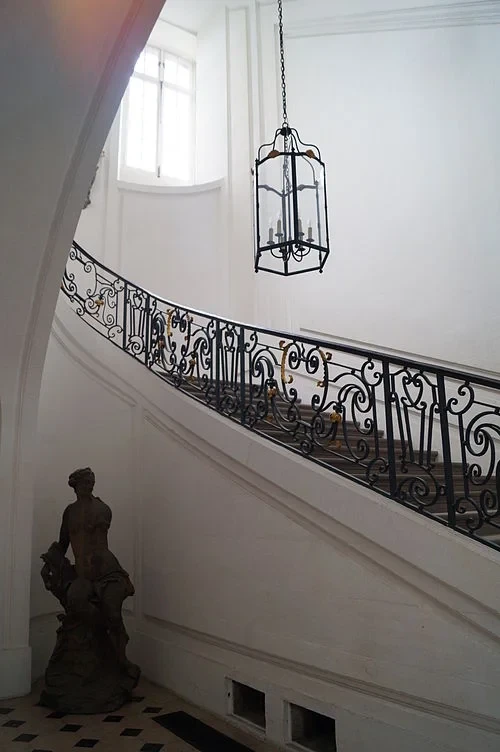 The Monumental Staircase
The Grand Staircase
The Grand Staircase is much more than a way to reach the upper floors; it was the ceremonial heart of the palace's interior. Observe the fluid, rhythmic patterns of the wrought-iron balustrade, accented with gold highlights. At the base, classical statuary stands as a silent guard, reinforcing the palace's dignified atmosphere. In the eighteenth century, the staircase was the primary site for the carefully choreographed processions of the court. When a distinguished guest arrived, their rank determined exactly how far down the stairs the host would descend to meet them. This space acted as a crucial transition point, moving visitors from the public, outdoor world of the Cour d’Honneur into the increasingly private and opulent rooms of the state apartments and museum collections. The wide, shallow steps were designed to allow guests to ascend with grace and dignity, maintaining the poise required by royal etiquette. The surrounding walls are kept relatively simple to ensure that the focus remains on the movement of the people and the decorative elegance of the ironwork itself. This was the threshold where the power of the Rohan family was most physically felt by their visiting guests.
Listen in the appFamilie Streefkerk · CC BY-SA 2.0
06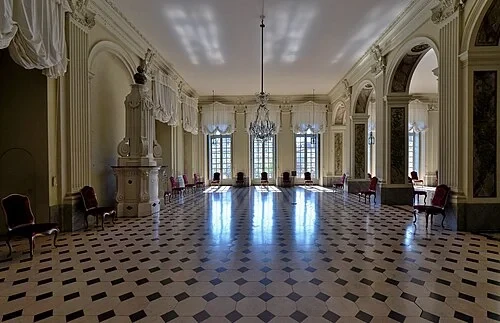 The Synod Hall (The Guard Room)
The Synod Hall
The Synod Hall is the largest and most imposing room within the palace's state apartments. Its size is a direct reflection of the immense wealth and ambition of the Prince-Bishops. This massive double room served a dual purpose in the life of the palace. Part of the space functioned as a guard room, where the Prince-Bishop's personal security would be stationed, emphasizing his status as a secular ruler. The other portion was used as a formal dining hall, where grand banquets were held for the most important visitors to Strasbourg. The construction of the palace was an enormous undertaking, with costs estimated at approximately one million French livres, a staggering sum for the time. Every inch of this hall, from the checkerboard floor to the tall, arched windows, was designed to impress. The height of the ceiling and the rhythmic placement of the columns create a sense of boundless space. When filled with the candlelight of the eighteenth century and a crowd of courtiers, the hall would have been a dazzling display of the Rohans' global influence and local power, making it clear to every guest that they were in the presence of one of Europe’s most elite families.
Listen in the appMorio60 · CC BY-SA 2.0
07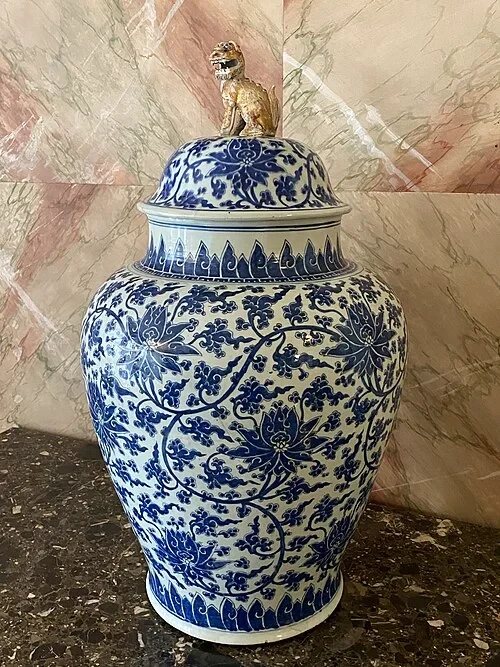 The Synod Hall (The Guard Room)
Chinese Blue-and-White Jar
This large porcelain jar, decorated in classic blue and white patterns, represents the eighteenth-century European fascination with Chinoiserie. During this period, the elite classes were deeply interested in art and objects from East Asia, which were seen as symbols of exotic mystery and extreme luxury. The intricate Ming-style designs across the body of the jar were highly sought after by collectors. On the lid, you can see a small figure of a guardian lion, often called a Foo Dog in the West. For the Prince-Bishops of Strasbourg, owning such a collection was about more than just decoration; it was a visible sign of their prestige and their connections to a global network of trade and culture. At a time when travel to the East was rare and dangerous, these porcelain pieces brought a sense of the distant world into the heart of the palace. They were often displayed prominently on ornate console tables or in specialized cabinets to be admired by guests. The crisp contrast of the cobalt blue against the white porcelain was a hallmark of quality that signaled the owner’s refined aesthetic and significant financial means.
Listen in the appDCHNwam · Public domain
08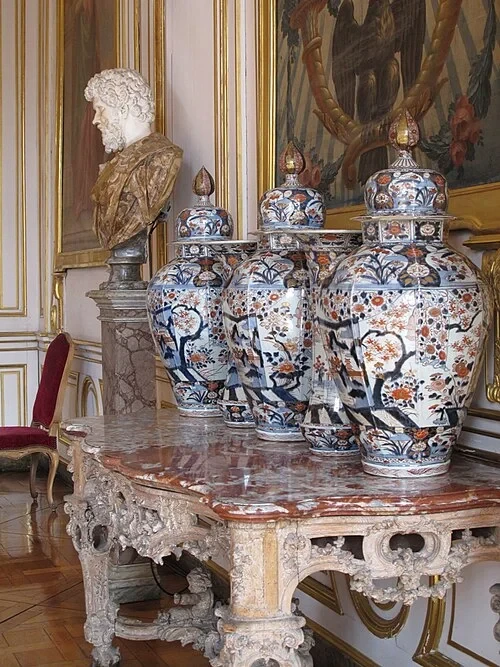 The Salon des Évêques (The Bishops' Salon)
The Bishops' Salon
This room in the Museum of Decorative Arts offers a glimpse into the dynastic ambitions of the House of Rohan. For nearly a century, four successive members of this noble family served as the Prince-Bishops of Strasbourg. This continuity allowed them to shape the city’s culture and architecture on a grand scale. The space you see here functioned as a portrait gallery, a traditional way for European noble families to visually document their power and lineage. Look for the ornate console table, likely carved with the same attention to detail as the palace's own architectural features. Around it, busts of Roman emperors and painted portraits of the prince-bishops once watched over the proceedings of the court. Each element, from the furniture to the art on the walls, was chosen to reinforce the idea that the Rohans were a permanent and indispensable part of both the French and Holy Roman Empires. By surrounding themselves with these images and high-quality decorative objects, the Prince-Bishops ensured that every visitor understood the weight of their family history. It was not just a home; it was a monument to a family that sat at the intersection of church and state for generations.
Listen in the appAnca Pandrea · CC BY 2.0
09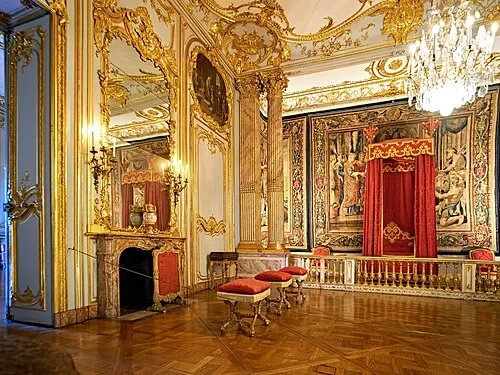 The King's Bedchamber
This room represents the pinnacle of palace luxury. The central feature is the magnificent bed with its deep red canopy and rich textiles, surrounded by intricate gold woodcarvings that catch the light from the tall windows. Although called the King's Bedchamber, it was used by a succession of high-profile historical figures. Perhaps the most famous guest was a young Marie Antoinette. In 1770, she spent her very first night on French soil right here, while traveling from Vienna to marry the future Louis the Sixteenth. The room witnessed the beginning of her transition from an Austrian archduchess to a French queen. Decades later, the palace entered a new era when the city of Strasbourg gifted it to Napoleon the First in 1806. The Emperor and his wife, Empress Josephine, also stayed in these apartments during their visits to the region. The gold-leafed details and the lush red fabrics were designed to meet the exacting standards of such imperial and royal guests. Standing in this space, one can feel the presence of the figures who shaped European history, resting here amidst the splendor created for the Prince-Bishops but ultimately claimed by those who ruled the continent.
Listen in the appPhoto: Kameister · CC BY-SA 4.0
10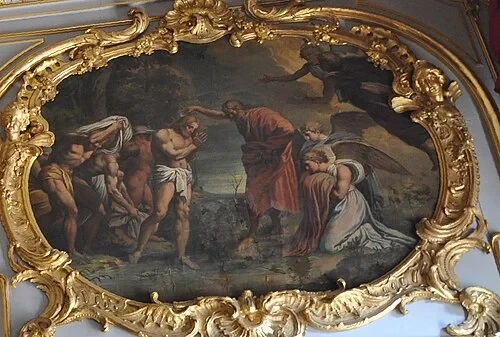 The King's Bedchamber
The Baptism of Christ
Set within a heavily gilded oval frame on the ceiling, this painting of the Baptism of Christ provides an important insight into the minds of the men who lived here. The style is fluid and dramatic, characteristic of the religious art of the mid-eighteenth century. While the Palais Rohan often feels like a secular royal residence with its grand courtyards and velvet-draped beds, artworks like this were strategically placed to ensure visitors never forgot the primary occupation of the Rohan family. They were, first and foremost, Bishops of the Catholic Church. This religious theme acts as a spiritual anchor amidst the overwhelming worldly wealth. The scene depicted, where John the Baptist pours water over Christ, is one of the most foundational in Christian theology, symbolizing purification and the start of a divine mission. By placing such an image high above in a space used for reception or transition, the Prince-Bishops were visually reinforcing their own divine mandate to lead their flock. The golden frame surrounding the work ties it into the overall decorative scheme of the room, blending the sacred and the opulent into a single, cohesive statement of authority.
Listen in the appPhilippe Alès · CC BY-SA 3.0
- 11
The Prince-Bishop's Library
This impressive gallery served a dual purpose as both a vast library and the nave for the palace's private chapel, hosting both scholars and high-ranking church officials.
- 12
The History of Constantine
This magnificent tapestry depicts the triumphant entry of Constantine into Rome, a scene chosen to mirror the religious and political triumphs of the Prince-Bishops themselves.
- 13
The Palace Chapel
Tucked away from the public gaze, this intimate, marble-clad chapel was the Cardinal’s private sanctuary for daily prayer and quiet contemplation.
- 14
Portrait of a Young Woman
Raphael’s 'Portrait of a Young Woman' is a highlight of the Museum of Fine Arts, famed for its remarkable psychological depth and the subject's direct, engaging gaze.
- 15
Virgin and Child with Two Angels
This painting by Botticelli showcases the delicate, melancholic beauty and emotional tenderness that define the Early Renaissance shift toward more humanized religious art.
- 16
Vanity
Unlike the idealized Italian masters seen earlier, this Northern Renaissance painting offers a starker, more symbolic look at the human condition and the inevitable passage of time.
- 17
The Beautiful Woman of Strasbourg
This iconic portrait captures the unique spirit of Strasbourg, blending local fashion with high aristocratic style to create a lasting symbol of the city's complex cultural identity.
- 18
Archaeological Museum of Strasbourg
Beneath the grand state apartments lies a different world where vaulted stone corridors house the remnants of the ancient Roman military camp that once stood here.
- 19
Stela of the Soldier Lepontius
This weathered stone tombstone honors a Roman soldier, providing a rare and direct glimpse into the life and personal symbols of a man who guarded this frontier.
- 20
The Mithraic Relief
Vivid colors bring this ancient religious scene to life, revealing the secretive rituals of a sun-worshipping cult that once rivaled early Christianity among Roman troops.
- 21
The Riverside Facade
Designed to resemble a royal temple rising directly from the river, the palace’s southern facade reveals a hidden fourth floor necessitated by the sloping landscape.
- 22
Detail of the River Terrace
Intricate ironwork and stone carvings adorn the riverside terrace, marking the final chapter of a journey from elite episcopal residence to a public museum.
Palais Rohan
Frequently asked questions
How much does the guide cost?
Free app download. Listed guide price: $1.99. Guide price shown in the app. Audio guide only. Venue admission is separate.
Can I listen without internet?
Yes. Download the guide’s audio, images, and maps in the app before your visit. Your downloaded content is then available offline.
Can I listen in my language?
This audio guide is available in 15 languages, including English.
Do I need to follow a schedule?
No. This is a self-guided experience. Choose your stops, pause whenever you like, and return to a story at your own pace.
At your own pace
Explore Palais Rohan.
Download Stanza, then search for “Palais Rohan”.
Free app download · Guide price shown in the app
Keep exploring
Nearby audio guides
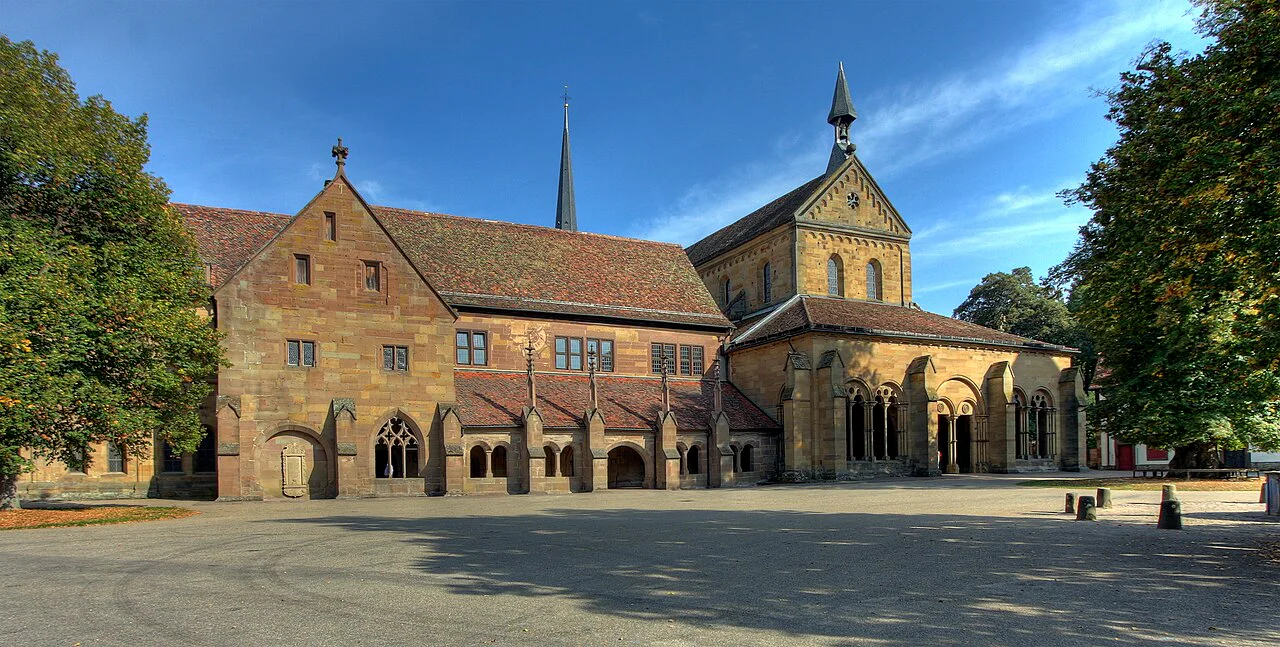
Maulbronn · 91 km
Kloster Maulbronn
Content & sources
Elke Wetzig (Elya) · CC BY-SA 3.0
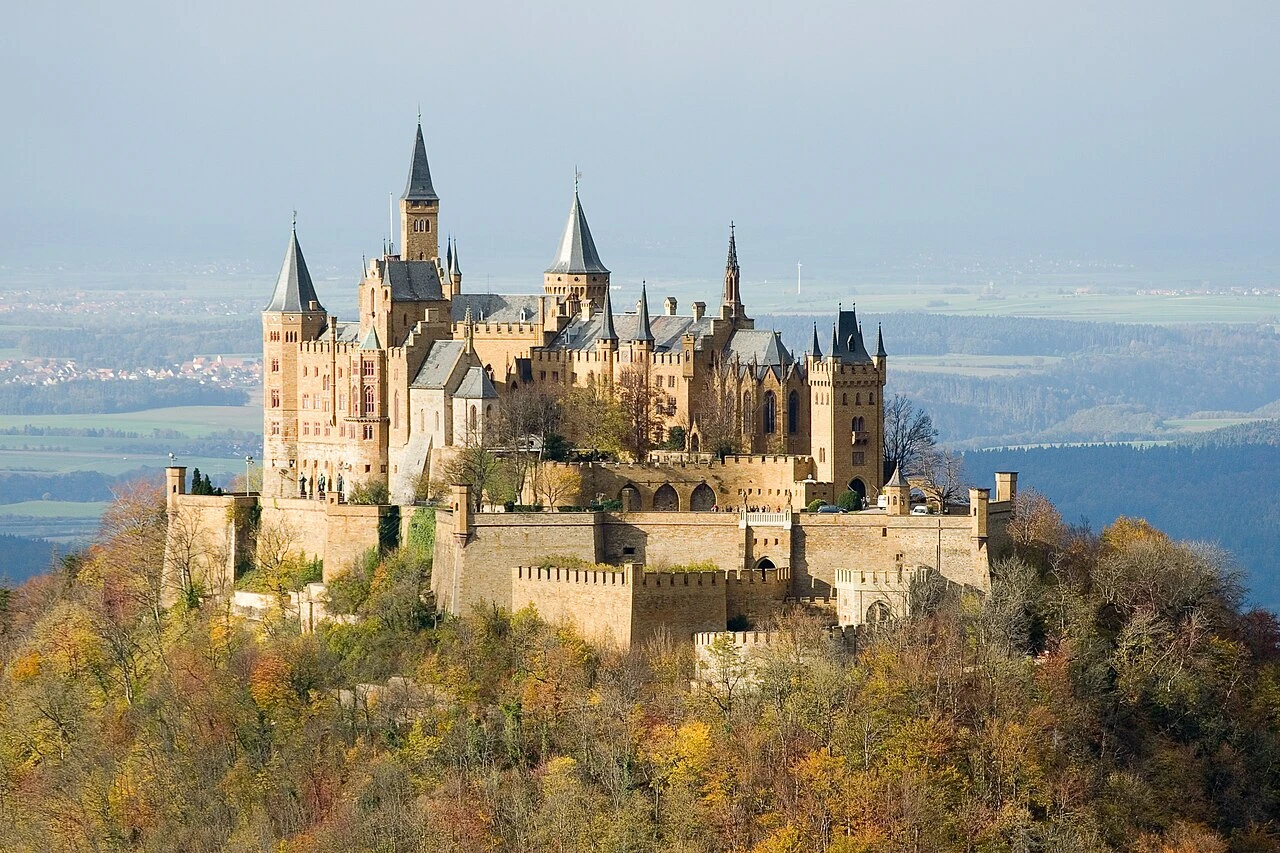
Bisingen · 94 km
Hohenzollern Castle
Content & sources
A. Kniesel (= User:-donald-), Lauffen · CC BY-SA 3.0
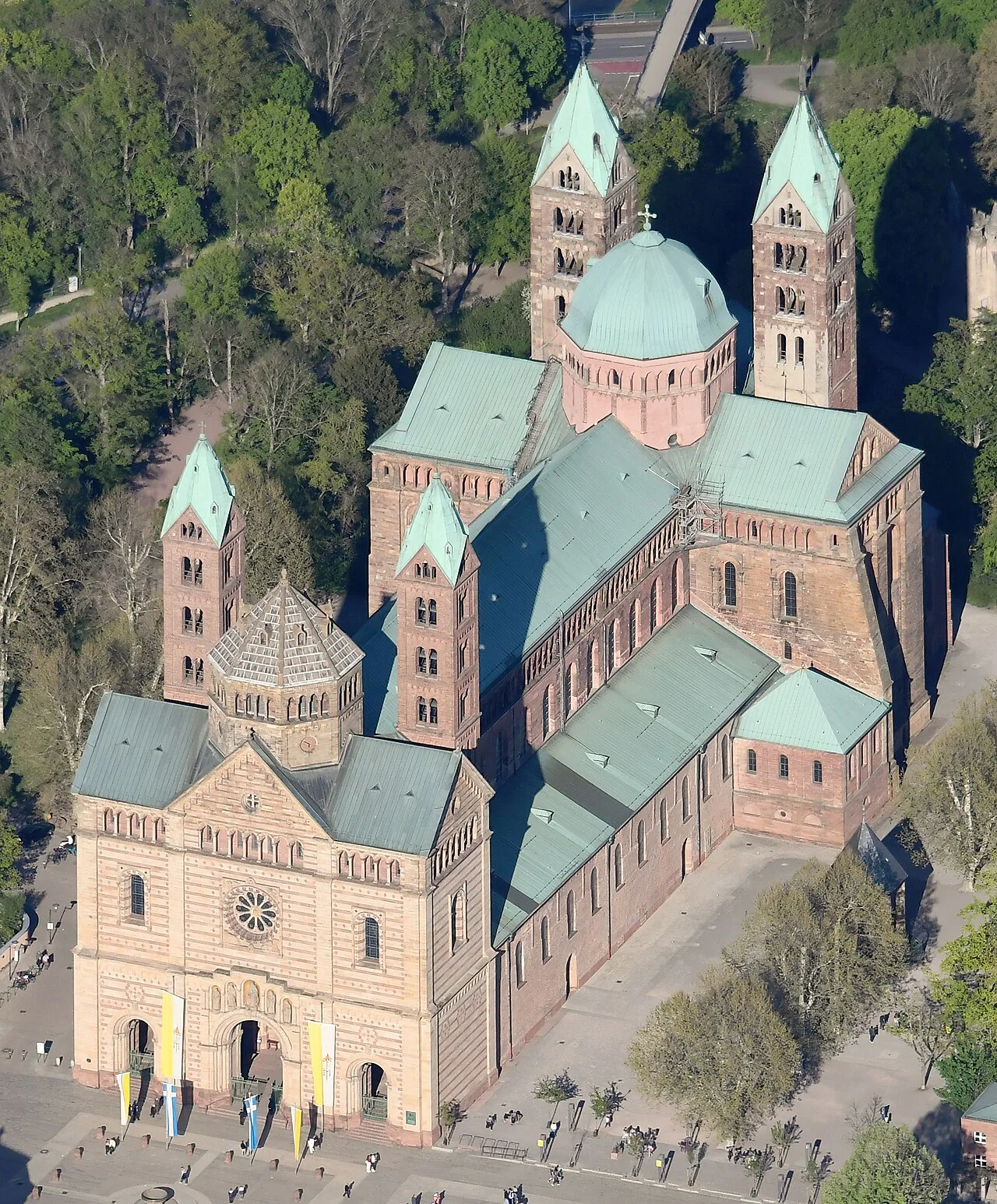
Speyer · 96 km
Speyerer Dom
Content & sources
Carsten Steger · CC BY-SA 4.0
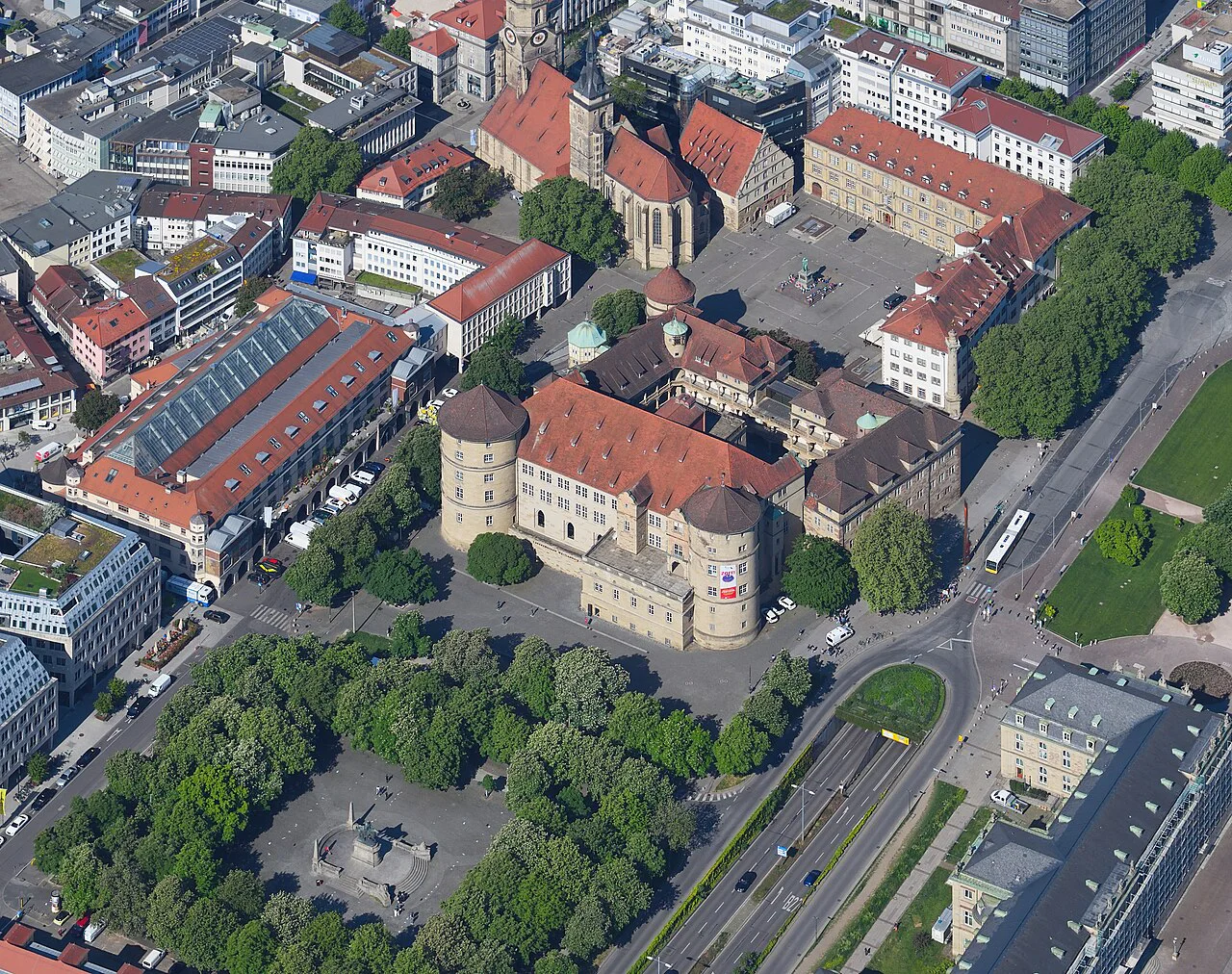
Stuttgart · 107 km
Altes Schloss Stuttgart
Content & sources
Photo: Carsten Steger · CC BY-SA 4.0