Languages
15Budavári Palota Audio Guide
Budavári Palota is a landmark in Budapest, Hungary. Explore it with Stanza's GPS-triggered offline audio guide — available in 15 languages.
Quick Facts
26
Stops
15
Languages
100%
Offline
📍 Budapest, Hungary · 47.4961°N, 19.0397°E
About Budavári Palota
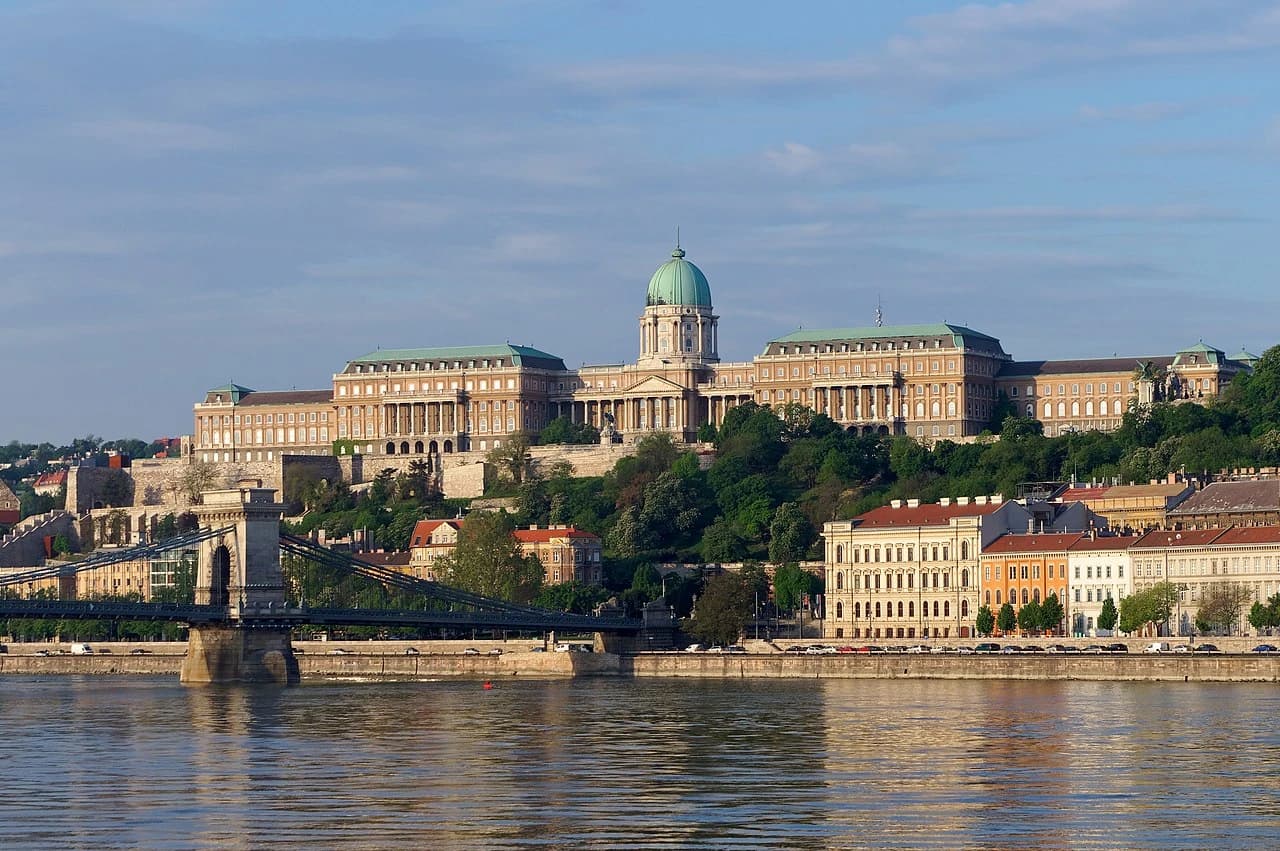
Buda Castle is a historic castle and palace complex in Budapest, Hungary, formerly home to Hungarian kings. This UNESCO World Heritage site now houses the Hungarian National Gallery, the National Széchényi Library, and the Budapest History Museum.
Budavári Palota is also known as budai vár, Budavári Palota.
This self-guided audio tour features 26 narrated stops organized across 6 sections, including Savoyai Terrace and The Grand Panorama, Hunyadi Court and the Matthias Fountain, National Széchényi Library and the Renaissance Legacy, Budapest Historical Museum and Medieval Foundations, Castle Walls and Defense Towers, The Phoenix of Palaces. As a castle, Budavári Palota offers a unique cultural experience in the heart of Budapest, Hungary.
The Stanza audio guide is available in 15 languages and works entirely offline — download the complete tour including audio narration, maps, and images before your visit. As you walk through Budavári Palota, GPS-triggered narration plays automatically at each point of interest.
Last updated:
What you will hear
Savoyai Terrace and The Grand Panorama
The most famous viewpoint of the complex, featuring the monument to the liberator of Buda and sweeping views of the Danube and Pest.
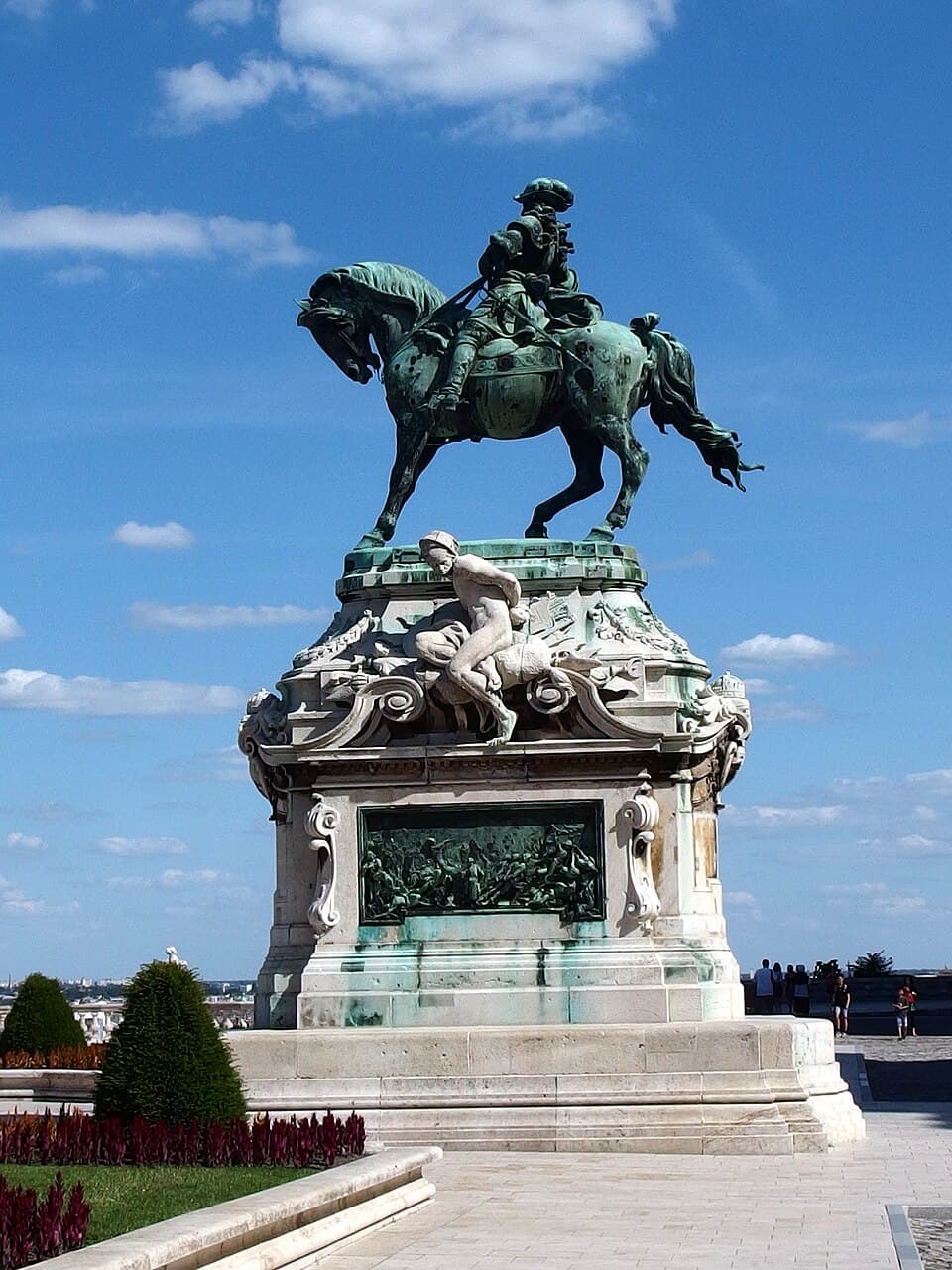
Monument to Prince Eugene of Savoy
Standing proudly before the palace is the equestrian monument to Prince Eugene of Savoy. He was a military leader of legendary skill, and to Hungarians, he is a primary hero of national liberation. It was Eugene who led the forces that finally freed Buda in 1686, ending a 145-year period of Ottoman occupation. This victory was a turning point for Central Europe, marking the beginning of a new era for the Hungarian capital. Take a moment to examine the pedestal beneath the horse. You can see bronze reliefs depicting scenes from the Battle of Zenta, another of Eugene’s decisive victories. Look closely at the base of the pedestal, and you will find figures representing captured Ottoman soldiers. Their inclusion serves as a dramatic historical record of the conflict that defined this site for over a century. The monument itself was not originally intended for this spot; it was commissioned by the town of Zenta but was ultimately purchased by the court and placed here to grace the palace terraces, where it continues to overlook the city that Eugene fought to reclaim.
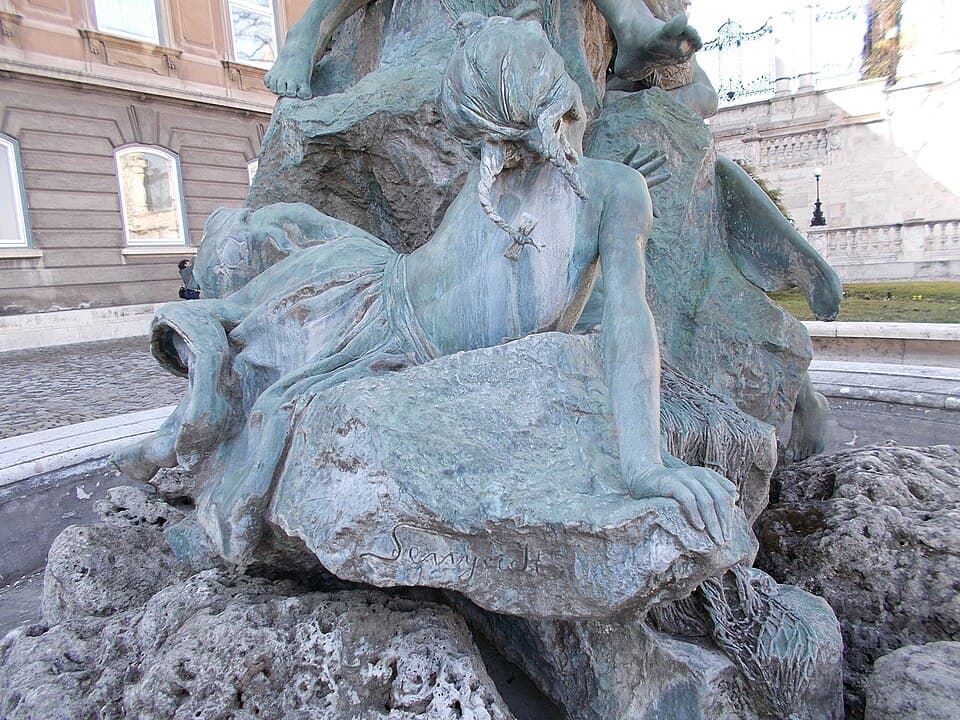
The Fishing Kids Fountain
Notice the playful scene captured here in this bronze group. Known as the Fishing Kids Fountain, it depicts two young boys struggling to manage a very large, slippery fish. This fountain represents a deliberate choice by the 19th-century designers to introduce a more human, approachable scale to the castle grounds. While much of the palace architecture is intended to be formal and perhaps even a bit intimidating, features like this fountain were added to bring life, charm, and a sense of movement to the royal terraces. The figures are full of energy and realism, showing the effort and excitement of the young fishermen. It serves as a reminder that the palace was once more than just a seat of government; it was a home and a place of leisure. This fountain became a favorite spot for visitors and court members alike, providing a whimsical contrast to the heavy stone walls and ceremonial gates nearby. It reflects the romanticized view of nature and childhood that was popular in art during the height of the palace's late 19th-century expansion.
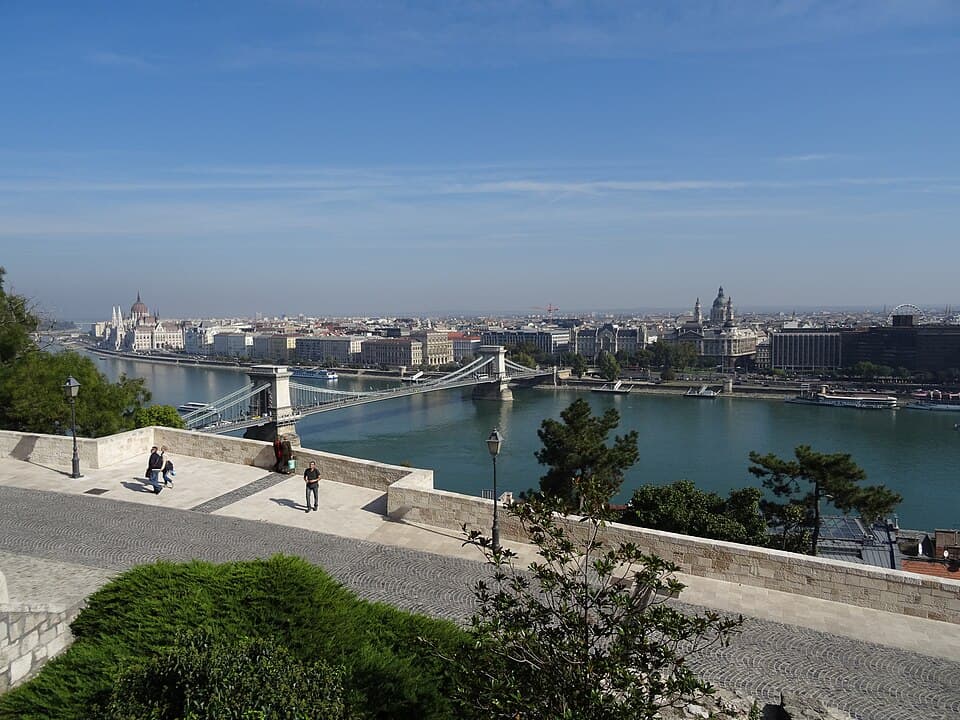
The Danube Panorama
The view from these terraces is nothing short of legendary. Looking out across the river, the scale of the palace becomes even more apparent. The facade facing the Danube stretches for 304 meters—a staggering length that actually makes it longer than the famous Parliament building you see across the water. This monumental presence was designed to communicate power and stability to everyone looking up from the Pest side of the city. This entire panorama, including the castle itself and the banks of the Danube, was designated a UNESCO World Heritage site in 1987. It is recognized not just for its beauty, but for its historical and architectural significance. From this vantage point, you can see how the city has grown around the river over centuries. The castle sits as the crown of the Buda hills, a silent observer of the evolution of Budapest from separate towns into a unified, modern metropolis. Whether under the bright sun or the glow of evening lights, this scene encapsulates the historical grandeur and the enduring appeal of the Hungarian capital.
Hunyadi Court and the Matthias Fountain
A lively courtyard containing the 'Trevi of Budapest' and symbols of the Renaissance King Matthias Corvinus.
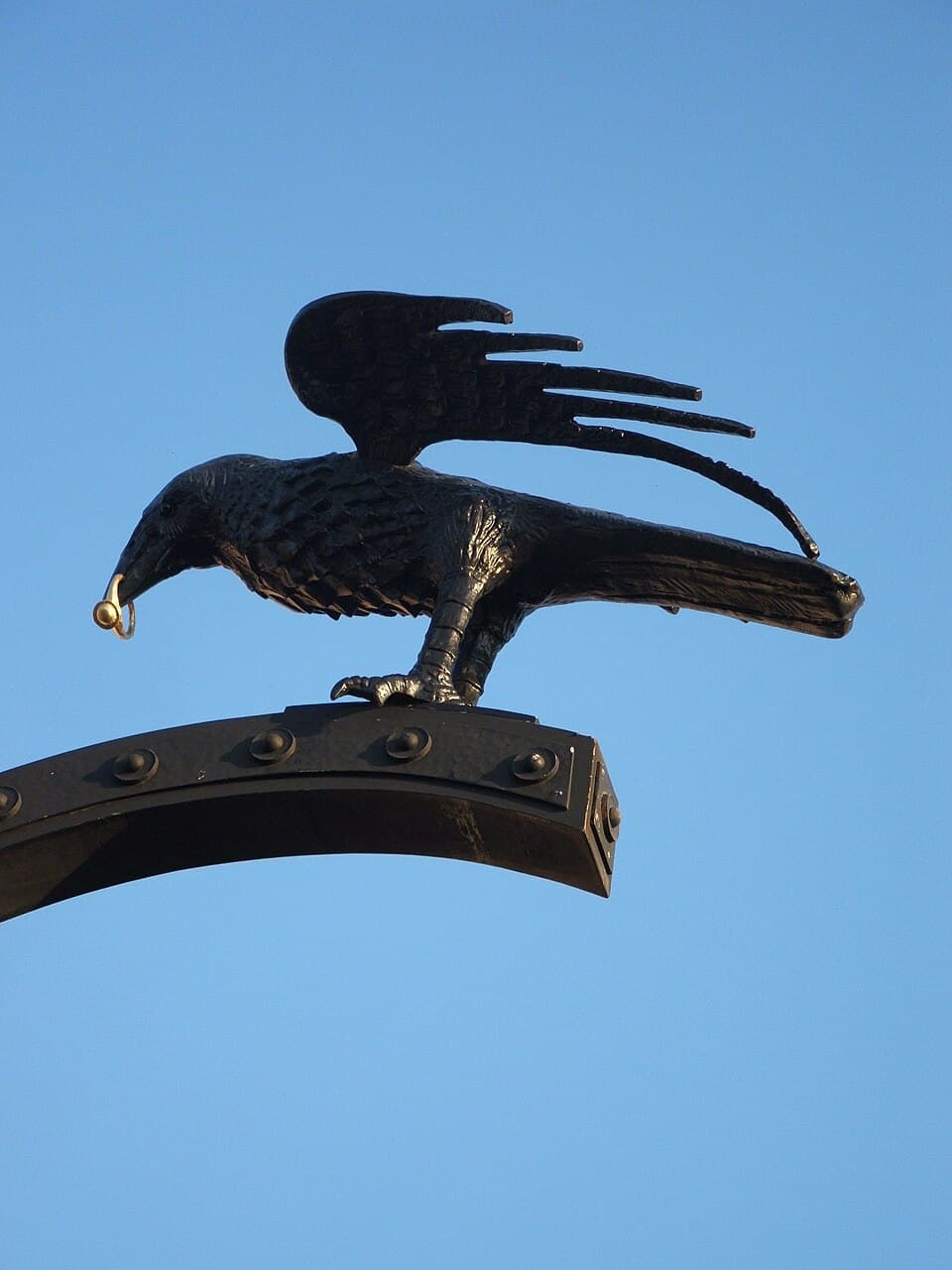
The Raven with the Ring
Look for the black raven holding a gold ring in its beak. This image is the crest of the Hunyadi family, and it explains where King Matthias got his famous name, 'Corvinus.' The word comes from the Latin 'Corvus,' which means raven. This bird is a central figure in Hungarian royal folklore, and its presence throughout the palace is a nod to the king's enduring legacy. According to legend, while Matthias was still a young man, a raven stole a gold ring from him. He pursued the bird, eventually tracking it down and reclaiming his property. He took this as a sign of his destiny and adopted the raven with the ring as his heraldic symbol. Others say the bird brought the ring to him as a sign of his right to rule. Regardless of which version you believe, the raven became a symbol of wisdom and royal authority. By placing this symbol in the palace, later architects were making a clear connection between the modern Hungarian state and the prestigious, powerful reign of Matthias Corvinus, the 'Raven King.'
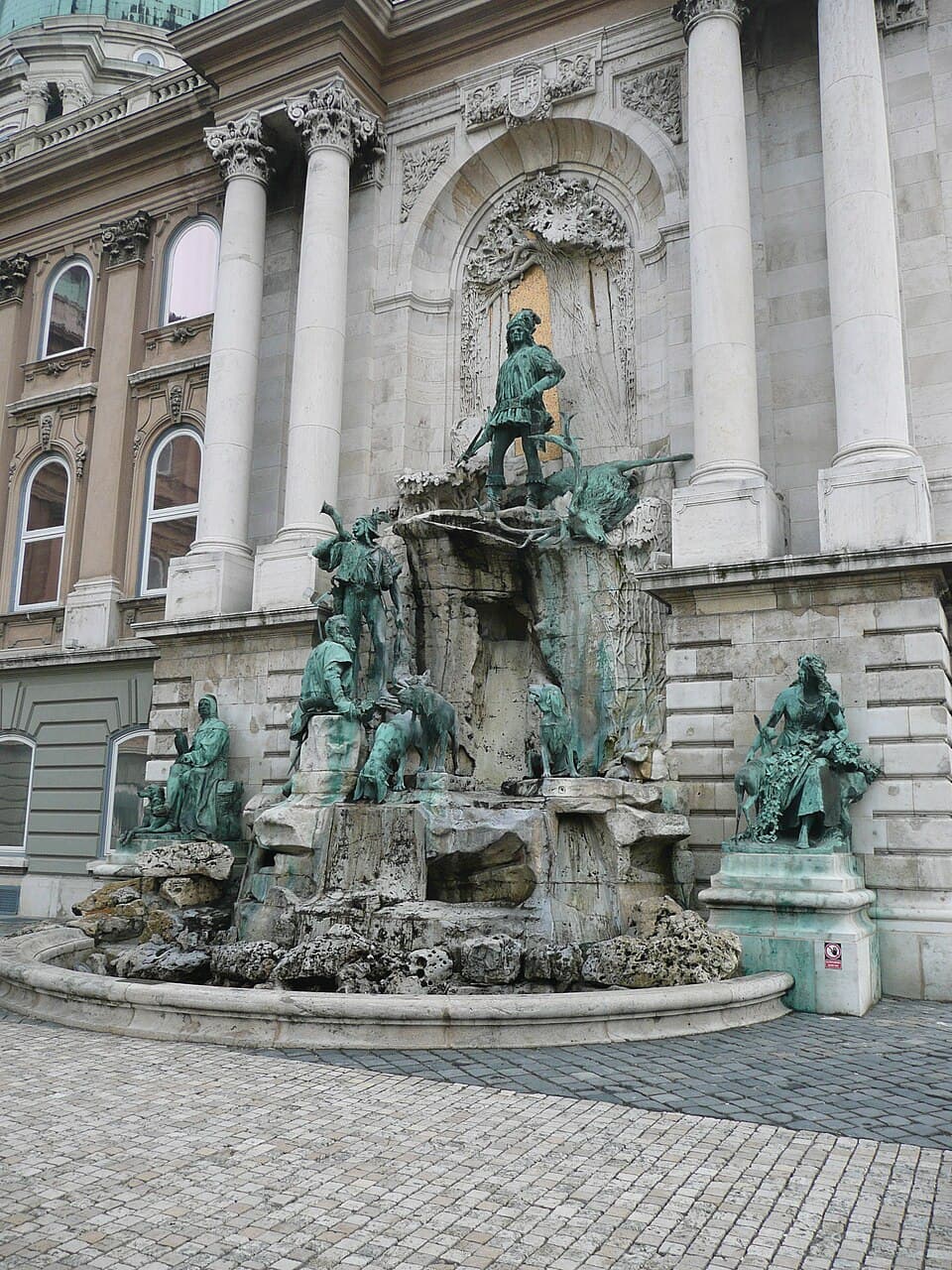
The Matthias Fountain
Often called the 'Trevi Fountain of Budapest,' this magnificent structure depicts a hunting party led by King Matthias Corvinus. Matthias, who ruled in the late 15th century, is one of Hungary’s most beloved kings, credited with bringing the Renaissance spirit to Buda and turning it into a major center of European culture. The fountain captures a romanticized moment from a famous Hungarian poem, showing the king during a pause in the hunt. Notice how the bronze figures are arranged over artificial rockwork, with water cascading down into a pool below. This design creates a sense of dynamic movement and natural beauty right in the heart of the palace architecture. At the center stands the king, youthful and noble, surrounded by his hunters and his hounds. The fountain was meant to celebrate the 'Golden Age' of Hungary under Matthias’s rule, a time of prosperity and artistic growth. It remains one of the most photographed spots in the castle, not just for its beauty, but for the way it connects the 19th-century palace to the legendary Renaissance history of the site.
National Széchényi Library and the Renaissance Legacy
The palace's western wing houses the national library and preserves the surviving treasures of King Matthias's Renaissance library.
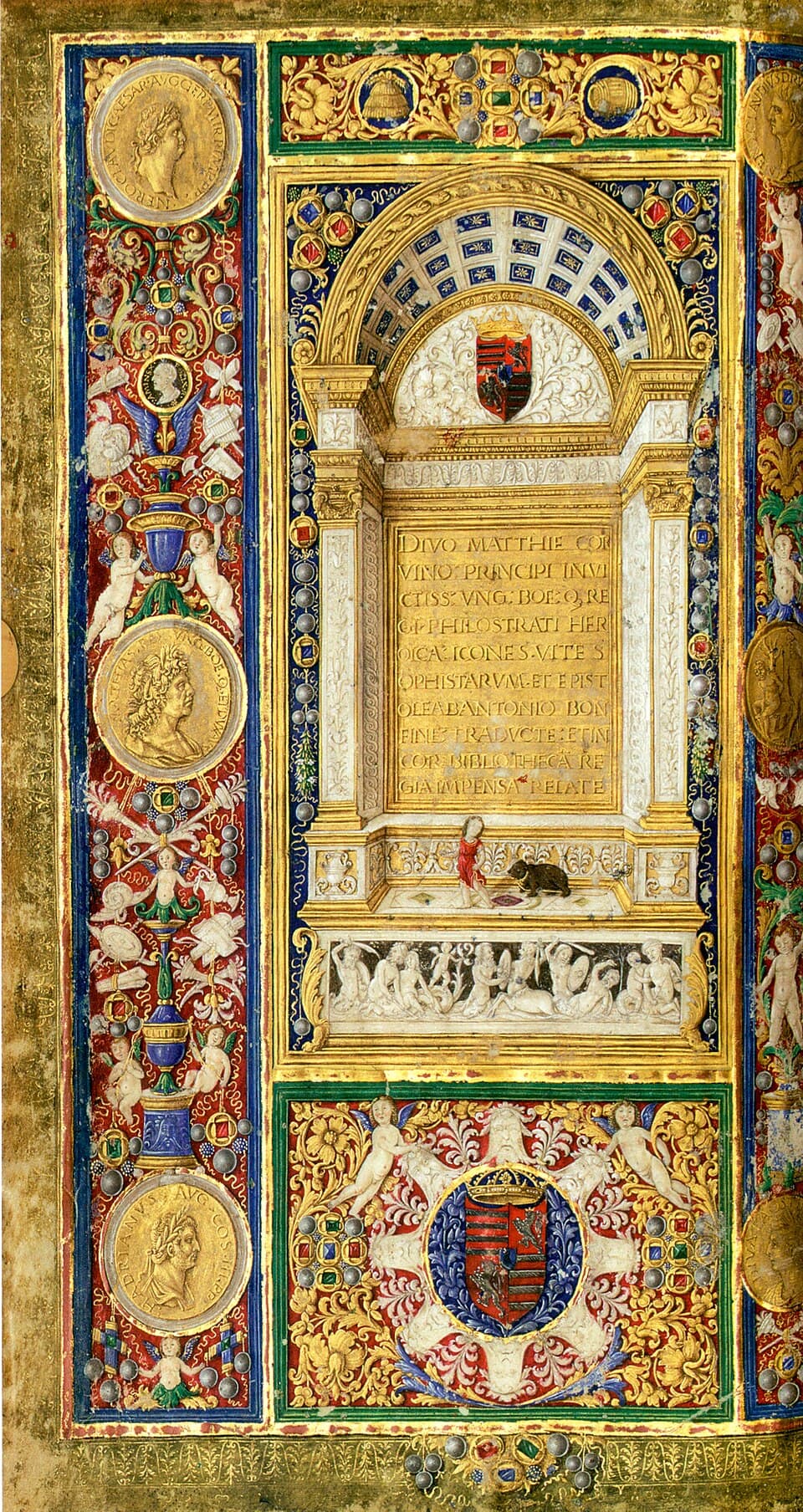
The Corviniana Codex
Before you is an example of a Corviniana Codex, a masterpiece of Renaissance book art. Notice the vibrant blue and gold illuminations, which were a signature of the manuscripts created for King Matthias Corvinus. These books were not just collections of text; they were works of art, often featuring the king’s coat of arms and intricate floral and geometric borders. Each one was hand-copied and painted by master artisans, making them some of the most valuable objects in the 15th-century world. The history of these volumes is as dramatic as their appearance. When the Ottoman Empire captured Buda Castle in 1541, the legendary library was broken up. Many of these priceless books were taken as loot back to Constantinople. For centuries, the 'Corvinas' were scattered across the globe, becoming legendary treasures for collectors and historians. Out of the original collection of roughly 2,500 volumes, only a small fraction—about 216—are known to exist today. Each surviving codex is a precious link to the Golden Age of Buda, representing a time when the Hungarian court was at the absolute forefront of European intellectual life.
Budapest Historical Museum and Medieval Foundations
Located in the southern wing, this museum provides access to the excavated Gothic halls that survived the 1686 explosion.
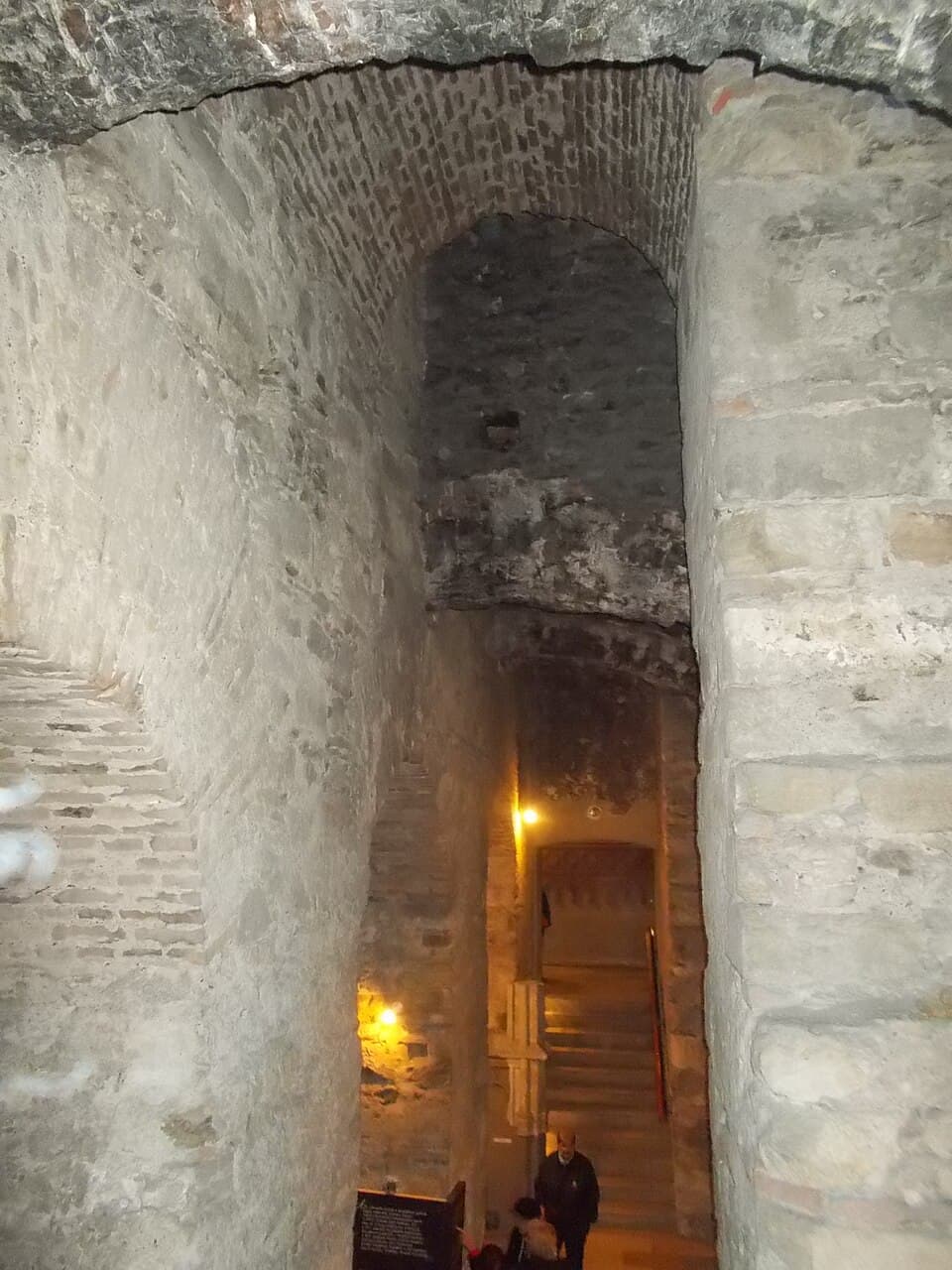
The Medieval Vaults
To find the oldest parts of the palace, you must head down into the lower levels of the Budapest Historical Museum. Here, the atmosphere changes completely. The grand, light-filled halls above are replaced by these cool, damp, vaulted stone passages. These 600-year-old rooms are the rare survivors of the original Gothic palace that once stood on this hill. Most of that medieval structure was obliterated during the reconquest of Buda. Walking through these vaults, you are standing in the very same spaces used by the kings of the Anjou and Luxembourg dynasties in the 14th and 15th centuries. The thick stone walls and simple, sturdy arches tell a story of a palace that was as much a fortress as it was a residence. These rooms have witnessed sieges, explosions, and centuries of neglect, yet they remain intact, offering a tangible link to the medieval foundations of Buda. It is in these quiet, underground spaces that you can best feel the weight of the centuries and the many layers of history that make up the castle hill today.
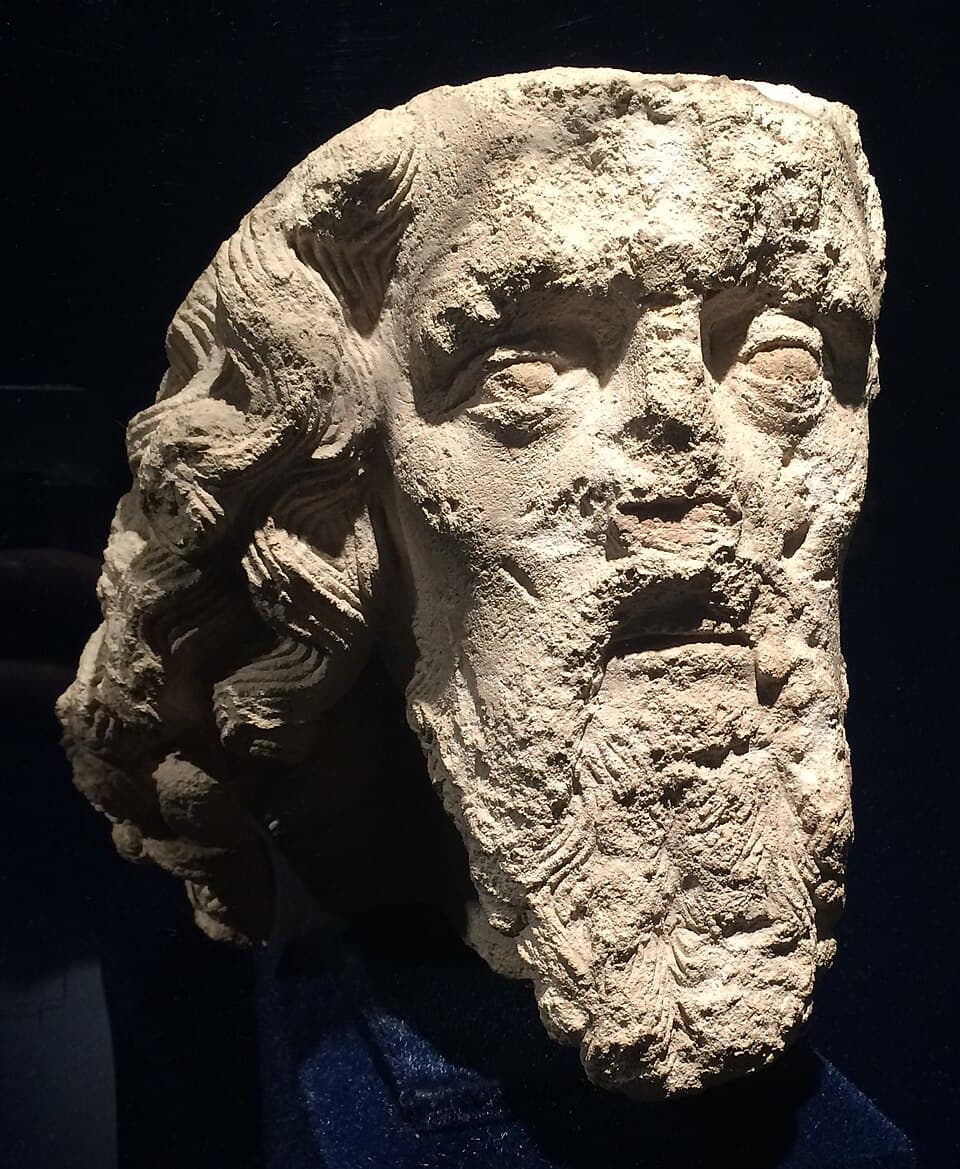
The Gothic King’s Head
This figure is a rare example of the Gothic art that once decorated the medieval palace. Its discovery is often referred to as the 'Archaeological Miracle of 1974.' During routine excavations on the castle grounds, workers uncovered a cache of dozens of high-quality Gothic statues buried deep in the mud. For centuries, these masterpieces had been forgotten, hidden away from the many sieges and fires that leveled the buildings above. Historians believe these statues were likely discarded or buried during the transition to the Renaissance in the late 15th century, perhaps to make room for newer, more fashionable styles. Ironically, being thrown away is exactly what saved them. By being buried, they were protected from the reconquest of Buda and the heavy bombing of World War II. This head, with its serene expression and detailed features, offers a glimpse into the sophisticated artistic culture of the medieval Hungarian court. It is part of one of the most important Gothic sculpture finds in all of Europe, revealing a world of beauty that was nearly lost to history forever.
Castle Walls and Defense Towers
The formidable fortifications that protected the residence through centuries of sieges, including Ottoman and medieval remnants.
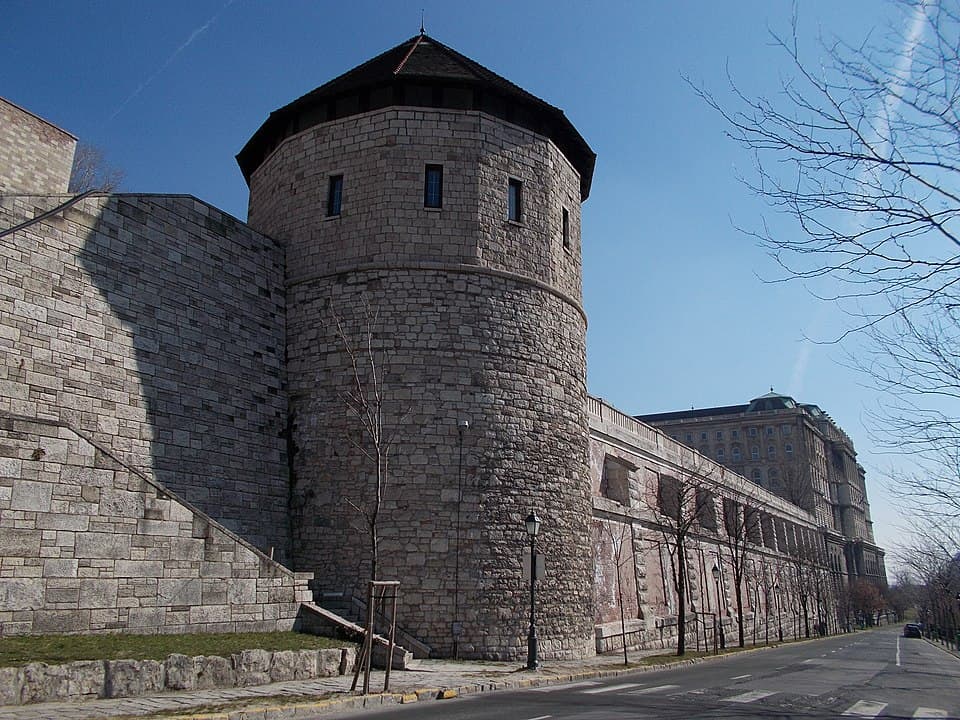
Karakas Pasha Tower
As you look at the Karakas Pasha Tower, you are seeing a piece of history that predates much of the surrounding palace facade. This twelve-sided tower was built in the 1620s during the 150-year period of Ottoman rule in Buda. At that time, the landscape of the Castle Quarter was drastically different, filled with the domes of bathhouses and the minarets of converted churches, reflecting the Islamic culture of the occupiers. Most of these structures were lost during the fierce battles for the reconquest of the city, an event we discussed earlier. This tower is one of the few significant architectural remnants from that era to have survived. It was built for defense, intended to protect the western walls of the castle. While it has been restored over the years, its basic form remains a rare architectural link to the Ottoman presence on this hill. It stands as a reminder of the complex, layered history of Budapest, where different empires and cultures have left their mark over nearly eight centuries. Its simple, sturdy design contrasts sharply with the ornate Baroque and Neoclassical buildings that surround it today.
The Phoenix of Palaces
A concluding view of the entire complex, reflecting on its 750-year journey of destruction and rebirth.
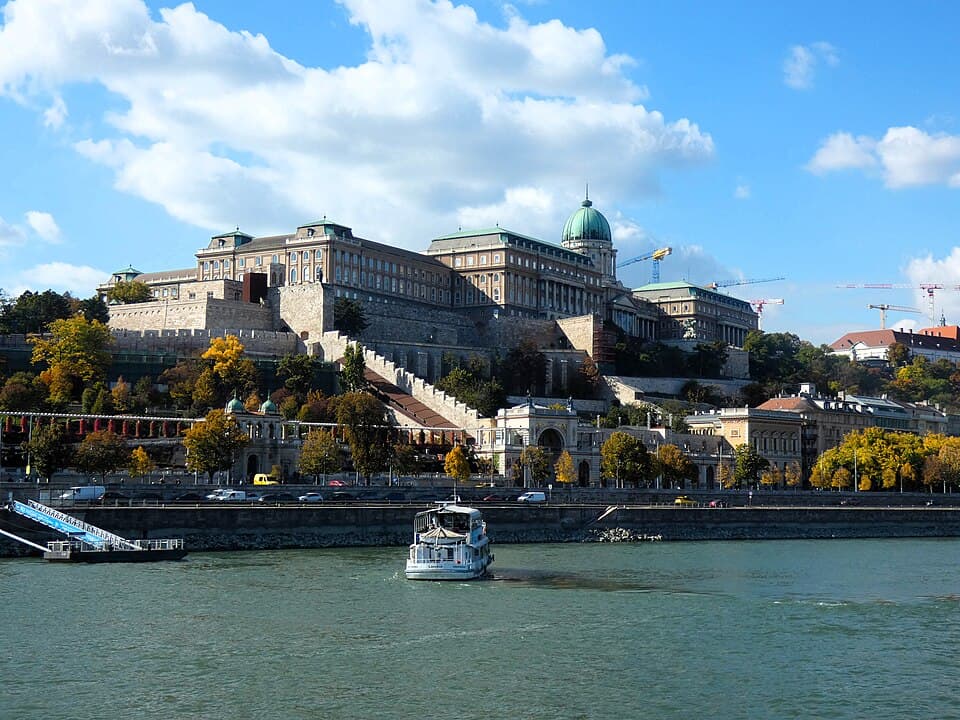
The Reborn Palace
We conclude our tour with this final view of the palace from across the river. From here, you can see the results of the site's long history, marked by constant destruction and determined rebirth. What you see is more than just a collection of buildings; it is a symbol of Hungarian resilience. Each time the palace was leveled by fire, explosion, or war, the nation found the will to rebuild it, adapting it to reflect the needs and values of each new era. As you may recall from the Danube Panorama, the site's UNESCO World Heritage status recognizes this extraordinary historical continuity. Today, a new chapter is being written through the program we discussed at the Royal Riding Hall, which is working to restore many of the pre-war features that were lost in 1945. As we heard earlier, the 'Phoenix of Palaces' is once again being returned to its full glory, bridging the gap between its medieval foundations, its imperial peak, and its modern role as a cultural heart for the people. As you look at the castle standing proudly over the Danube, consider the centuries of history contained within its walls and the spirit of a city that refuses to let its heritage be forgotten.
Want to hear the rest?
Download the Stanza app to unlock all 26 stops and full GPS-guided navigation.
Frequently Asked Questions
How long does the Budavári Palota audio tour take?
The Budavári Palota audio guide includes 26 narrated stops. Most visitors spend 45 minutes to 1.5 hours exploring the complete tour, though you can listen at your own pace and skip or revisit any stop.
Is the Budavári Palota audio guide available in my language?
Stanza supports 15 languages: English, Spanish, French, German, Italian, Portuguese, Russian, Japanese, Chinese, Korean, Arabic, Hindi, Polish, Dutch, Hebrew. Check the guide in the app to confirm the languages currently available for this tour.
Can I use the audio guide offline at Budavári Palota?
Yes! Download the complete Budavári Palota tour — including all audio, maps, and images — before your visit. The Stanza app works completely offline, so you don't need WiFi or mobile data at the venue.
How much does the Budavári Palota audio guide cost?
The Stanza app is free to download. The current listed price for the Budavári Palota audio guide is $3.99; app-store region and currency may affect the final price.
How do I use the Stanza audio guide at Budavári Palota?
Download the free Stanza app, search for "Budavári Palota", and download the tour. When you arrive at the venue, the app uses GPS to detect your location and automatically plays the relevant narration as you move between points of interest — completely hands-free.
What makes the Stanza audio guide different from other Budavári Palota tours?
Stanza offers GPS-triggered narration that plays automatically as you walk through Budavári Palota — no need to manually select stops. The tour is available in 15 languages, works fully offline, and includes 26 expertly narrated stops with images and historical context.
What other audio guides are available near Budavári Palota?
Stanza offers multiple audio guides in Budapest, Hungary and nearby areas. After downloading the app, browse the map to discover all available tours near Budavári Palota. Each guide can be downloaded for offline use.