Stanza · Audio guide
Millenniumi emlékműAudio guide
A place to remember. A story to take with you.
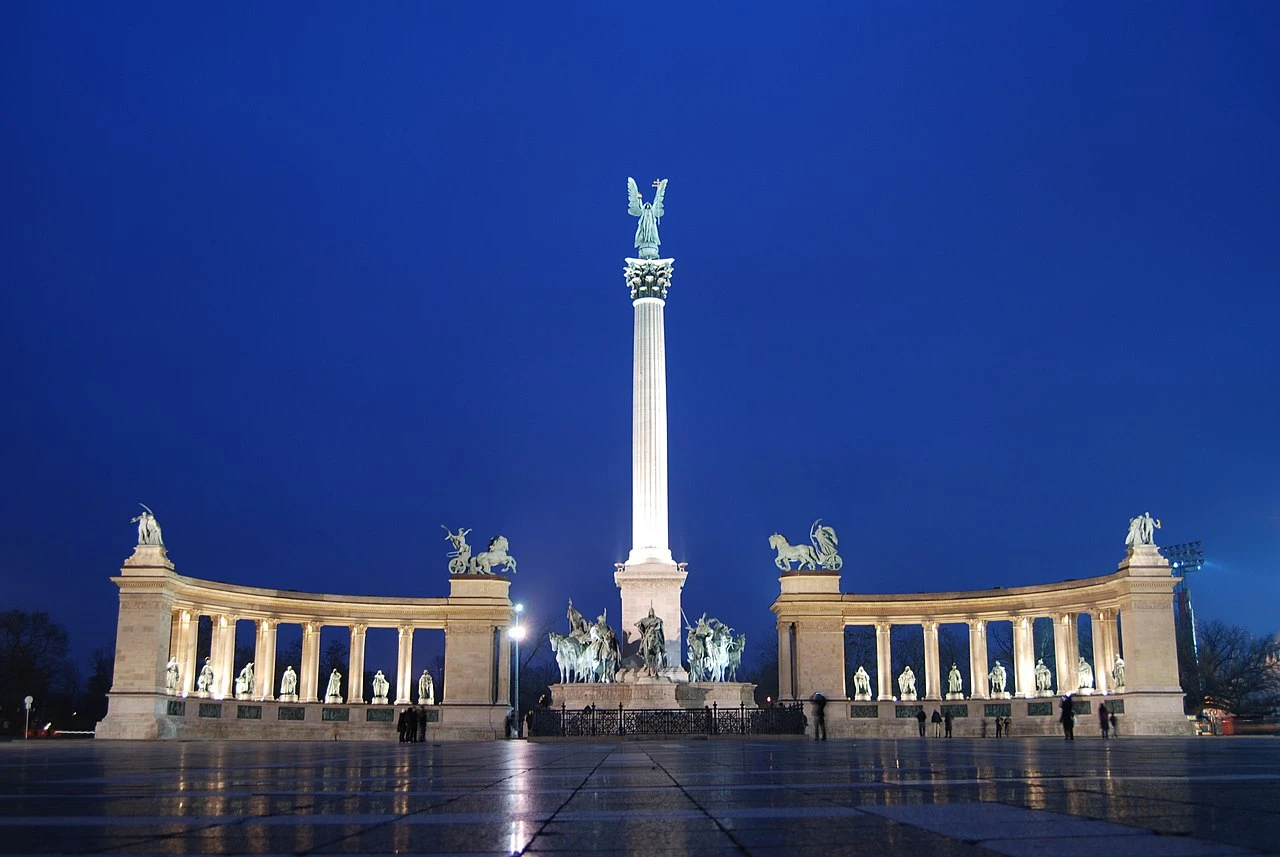
The Millennium Monument is a prominent monument located in Heroes' Square, Budapest. It commemorates the 1000th anniversary of the Magyar conquest of the Carpathian Basin.
Download Stanza, then search for “Millenniumi emlékmű”.
About the tour
One guide. Your kind of visit.
The Millennium Monument is a prominent monument located in Heroes' Square, Budapest. It commemorates the 1000th anniversary of the Magyar conquest of the Carpathian Basin.
Ready when you are.
- 01Get the free Stanza app.
iOS & Android
- 02Find your guide.
“Millenniumi emlékmű”
- 03Download before you go.
Works offline
Audio guide / 17 narrated stops
Inside the guide
Get to know a few of the stories before you go. Open a stop to read more.
01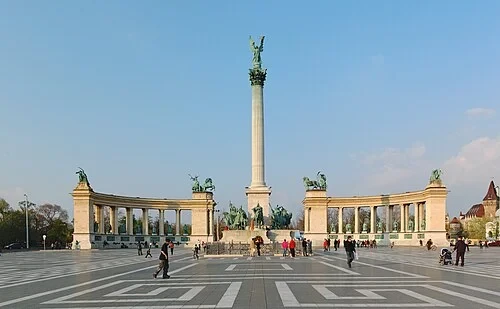 Arrival at Heroes' SquareHeroes' Square Overview
Welcome to Heroes' Square, the grandest and most symbolic public space in Budapest. As you look around, you are witnessing a monument that was designed to define the Hungarian national identity. Construction on this site began in 1896, a pivotal year known as the Millennium, marking the 1,000th anniversary of the Hungarian conquest of the Carpathian Basin. The architect behind this ambitious project was Albert Schickedanz, who envisioned a space that would serve as a magnificent gateway to City Park. The scale here is intentionally vast, intended to evoke a sense of awe and national pride. The monument itself consists of three primary architectural components: the towering central column, which rises as a vertical anchor, and the two symmetrical semi-circular colonnades flanking it. Beyond these, you can see the imposing facades of the Museum of Fine Arts and the Kunsthalle, which frame the square and create a unified neoclassical ensemble. This entire area was conceived as a cohesive project to celebrate the past while looking toward the future of the nation at the turn of the 20th century.
User:Sveter (Please credit as "Petr Šmerkl, Wikipedia" in case you use this outside WMF projects.) · CC BY-SA 3.0
02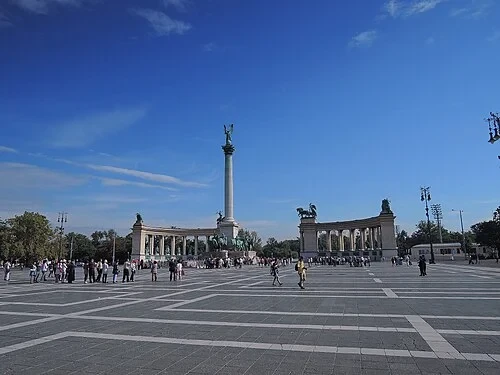 Arrival at Heroes' SquareThe Gateway to City Park
Standing in the middle of this vast expanse, you can truly appreciate the immense proportions of the square. Notice the geometric pavement beneath your feet; the patterns of gray and light-colored stone are designed to lead the eye toward the central monument, reinforcing the square's role as a formal urban stage. This space serves as the grand termination of Andrássy Avenue, the elegant boulevard that is recognized as a UNESCO World Heritage site for its architectural and cultural significance. While the Millennium Monument was largely completed by 1906, the square itself has a more complex history of naming and evolution. It was not officially designated as 'Heroes' Square' until 1929, reflecting a shift toward commemorating the sacrifices of the nation's soldiers. Today, it remains a primary venue for major national holidays, political rallies, and cultural festivals. The openness of the square offers a unique sensory experience, often filled with the sounds of city life, the wind sweeping across the pavement, and the rhythmic movement of people passing through what remains the city's most important ceremonial gateway.
IIya Kuzhekin · CC BY 3.0
03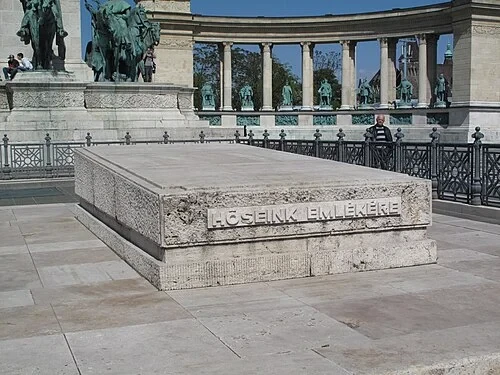 The Memorial Stone of HeroesMemorial Stone of Heroes
Positioned directly in front of the central column is a low, flat stone cenotaph that serves as a focal point for national remembrance. It is important to note that this is a symbolic monument rather than a traditional tomb; there is no body interred beneath the stone. Instead, it functions as an honorary grave, dedicated to the memory of all those who sacrificed their lives throughout history for the cause of Hungary's sovereignty and freedom. The inscription carved into the front of the stone in Hungarian reads 'Hőseink Emlékére,' which translates simply to 'To the memory of our heroes.' The tone here is intentionally somber and respectful, providing a quiet space for reflection amidst the grandeur of the surrounding statuary. Over the decades, this site has been the location of numerous historic speeches and solemn commemorations. It serves as a reminder that the nation's history is written not just by kings and leaders, but by the countless individuals who fought to defend their homeland. Take a moment to observe the simplicity of the design, which stands in stark contrast to the elaborate sculptures towering above it.
Listen in the appPhoto: Dezidor · CC BY 3.0
04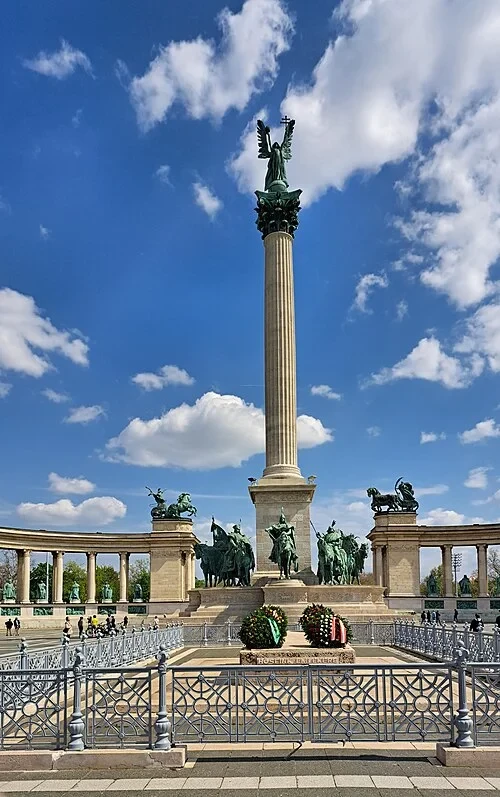 The Memorial Stone of HeroesThe Sacred Centerpiece
Observe how the Memorial Stone of Heroes sits in direct alignment with the towering central column. This spatial relationship is no accident; it designates this specific area as the most sacred and significant spot within Heroes' Square. It is here that the symbolic weight of the monument is most concentrated, linking the memory of the fallen with the glorious figures of the nation's past that rise behind it. This area is frequently the starting point for major state ceremonies. If you visit during a national holiday, you will likely see wreaths of flowers laid upon the stone by high-ranking officials and international dignitaries. The metal fence that surrounds the cenotaph serves a practical purpose, but it also creates a clear boundary for a space of special reverence, separating the busy public thoroughfare from the site of national mourning. Standing here, you are at the heart of Hungarian ceremony, where the past is actively honored in the present. The configuration of the stone, the column, and the surrounding horses creates a powerful visual narrative of sacrifice leading to the establishment of the state.
Listen in the appBybbisch94, Christian Gebhardt · CC BY-SA 4.0
05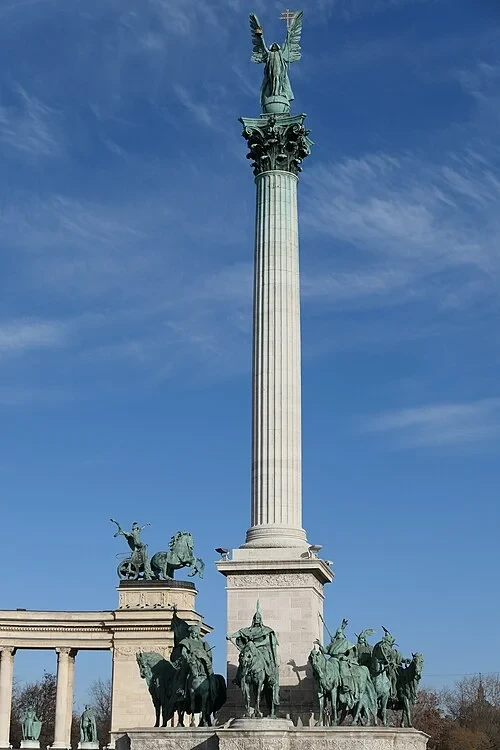 The Column of Archangel GabrielThe Millennium Column
Dominating the center of the square is the Millennium Column, a massive stone structure rising approximately 36 meters high. Designed in the Corinthian style, the column features a fluted shaft and an elaborate capital decorated with stylized acanthus leaves. Its impressive height was intended to make it a landmark visible from far down Andrássy Avenue, dominating the skyline of northern Budapest as a symbol of the city's late 19th-century prosperity. Architecturally, the column acts as the vertical anchor for the entire semi-circular composition of the square. It draws the eye upward, providing a dramatic contrast to the horizontal lines of the colonnades. At its base, you can see a series of large figures, which we will explore in detail shortly. These figures, representing the founding fathers of the nation, seem to guard the column and the sacred memorial stone. The choice of the Corinthian order connects the monument to the classical traditions of European architecture, suggesting that the young Hungarian state was a rightful successor to the great civilizations of the past. Its height and grandeur reflect the era's optimism and the desire to create a lasting architectural legacy for the millennium.
Listen in the appPhoto: MartinThoma · CC0
06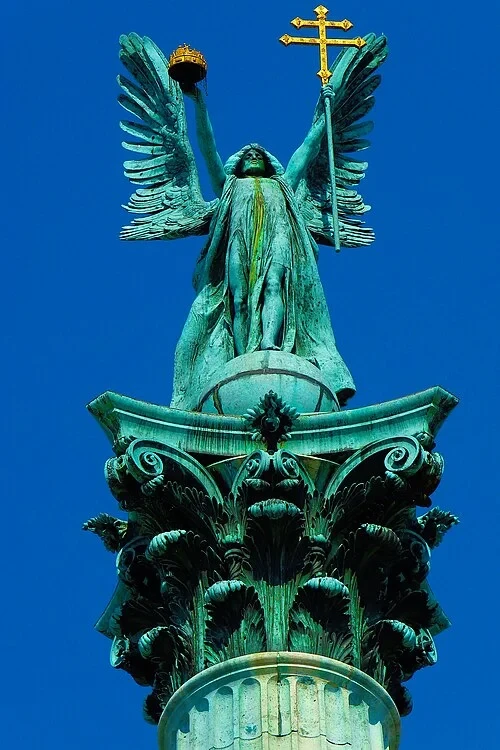 The Column of Archangel GabrielArchangel Gabriel's Vision
Perched at the very summit of the Millennium Column is a bronze statue of the Archangel Gabriel. He is depicted in mid-motion, with his wings partially spread, symbolizing a divine messenger descending from above. In his hands, he holds two of the most significant symbols of the Hungarian state: the Holy Crown of Hungary in his right hand and the apostolic double-piked cross in his left. This imagery refers to a foundational legend in Hungarian history. According to tradition, Gabriel appeared to Saint Stephen, the first King of Hungary, in a dream. In this vision, the archangel instructed Stephen to convert the Hungarian tribes to Christianity and presented him with the crown, signifying divine approval for the new kingdom. This moment is considered the spiritual birth of the nation, marking the transition from a nomadic tribal confederation to a settled, Christian monarchy. The placement of Gabriel at the highest point of the monument reinforces the idea that the nation's foundation was guided by divine providence. As you look up, imagine the impact this towering figure had on visitors over a century ago, standing as a beacon of faith and national continuity.
Listen in the appAwOiSoAk KaOsIoWa · CC BY-SA 3.0
07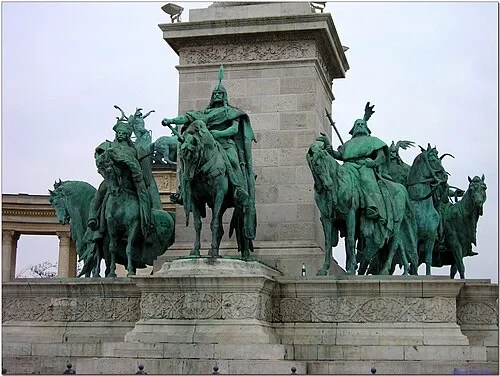 The Seven Chieftains of the MagyarsThe Seven Chieftains
Surrounding the base of the Millennium Column is a group of seven bronze equestrian statues. These figures represent the legendary chieftains of the seven Magyar tribes who led their people into the Carpathian Basin in 896 AD. The statues are notable for their fierce, nomadic appearance, reflecting the warriors' Central Asian origins before they settled in Europe. Take a close look at the riders. They are depicted wearing traditional armor and furs, carrying the weapons of a nomadic horse-culture, such as bows and sabers. Their horses are also shown in dynamic, powerful poses, capturing the spirit of a migratory people on the move. The sculptor intentionally avoided a clean, Western European knightly appearance, choosing instead to emphasize the unique and rugged heritage of the Magyars. This arrival, known as the 'Honfoglalás' or the Conquest, is the event that the entire Millennium project was built to celebrate. By placing these chieftains at the foundation of the column, the monument visually grounds the high-minded religious and political symbols above in the gritty, warrior reality of the nation's earliest ancestors. Each figure embodies the strength and determination required to secure a new homeland.
Listen in the appJános Korom Dr. >17 Million views from Wien, Austria · CC BY-SA 2.0
08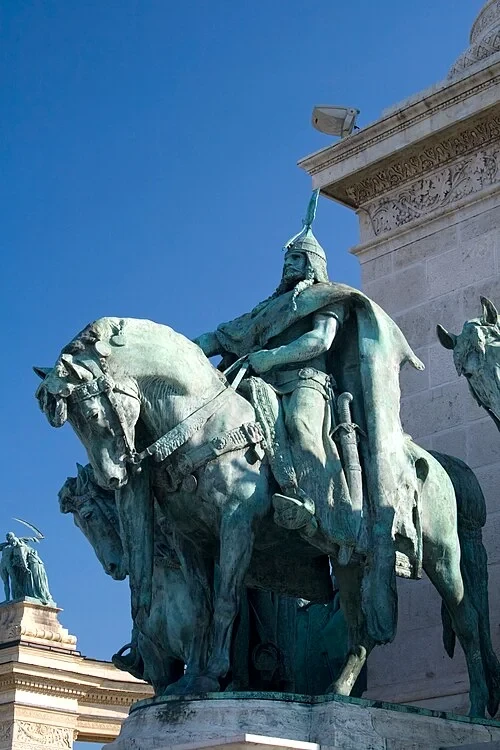 The Seven Chieftains of the MagyarsPrince Árpád
At the very front of the group of chieftains stands the central figure of Prince Árpád, the most powerful leader of the Hungarian conquest. He is positioned slightly ahead of the others, his posture commanding and his horse alert. Árpád was the founder of the Árpád dynasty, which ruled Hungary for over 300 years and oversaw the nation’s transition into a major European power. To create these figures, the sculptor György Zala spent years conducting meticulous historical research. He studied archaeological finds and historical descriptions of Central Asian nomadic tribes to ensure that the costumes, weapons, and even the tack on the horses felt authentic to the period. Notice the intricate details on Árpád’s armor and the determined expression on his face. He is not just a warrior, but a visionary leader. His placement here, directly under the Archangel Gabriel, creates a vertical timeline of the nation's birth: from the warrior who secured the land to the king who established the state under a divine mandate. Árpád remains a central hero in the Hungarian consciousness, representing the foundational strength and leadership that allowed the Magyar people to survive and flourish in their new European home.
Listen in the appPhoto: Ealdgyth · CC BY 3.0
09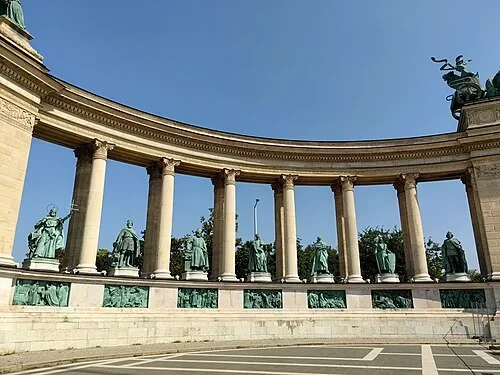 The Left Colonnade: The Royal FoundationsThe Left Colonnade
To the left of the central column is the first of two matching semi-circular colonnades. Each of these structures measures 85 meters in length and features a series of elegant pillars. The design of these colonnades creates a 'Pantheon' effect, providing a grand architectural gallery for the nation's most important historical figures. The left colonnade is dedicated to the early centuries of Hungarian history, beginning with the founding of the kingdom. As you walk along this curve, you are walking through time. Between the pillars, fourteen statues of kings and national leaders are displayed, creating a visual narrative of the country's development. This architectural arrangement was designed to educate the public, turning the square into an outdoor history book. The neoclassical style, with its clean lines and repeating columns, provides a sense of order and stability, suggesting that the history of Hungary is one of continuous progress and strength. The space between the pillars allows for an intimate look at each figure, while the overall curve of the colonnade seems to embrace the square, drawing the visitor into the story of the nation. It is a space designed for both grand public gatherings and individual contemplation of the past.
Listen in the appRandom photos 1989 · CC0
10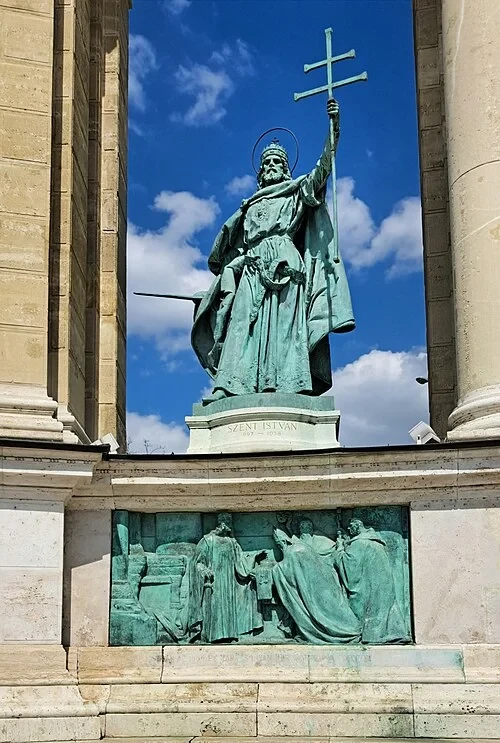 The Left Colonnade: The Royal FoundationsStatue of Saint Stephen
Standing in the first niche of the left colonnade is the statue of King Saint Stephen I, one of the most revered figures in Hungarian history. Stephen reigned from 997 to 1038 and is celebrated as the founder of the Hungarian state. In his hand, he holds the apostolic double-piked cross, a direct visual link to the cross held by Archangel Gabriel high above on the central column. This repetition emphasizes the divine legitimacy of his rule. Beneath the statue, you can see a detailed relief carving. This scene depicts one of the most important events in the nation's history: Stephen receiving the crown sent by the Pope, an event that formalized Hungary's entry into the community of Christian European nations. This religious foundation was crucial for the country's survival and integration into the West. The statue itself depicts Stephen as a dignified and wise monarch, reflecting his legacy as a lawgiver and saint. By starting the gallery with Stephen, the monument establishes the Christian monarchy as the true beginning of the civilized Hungarian state. His presence here sets the tone for the rest of the historical gallery, representing the bridge between the nomadic tribes of the past and the established kingdom that would endure for a millennium.
Listen in the appBybbisch94, Christian Gebhardt · CC BY-SA 4.0
Millenniumi emlékmű
Frequently asked questions
How much does the guide cost?
Free app download. Listed guide price: $0.99. Guide price shown in the app. Audio guide only. Venue admission is separate.
Can I listen without internet?
Yes. Download the guide’s audio, images, and maps in the app before your visit. Your downloaded content is then available offline.
Can I listen in my language?
Stanza supports 15 languages. Check the app for the languages available for this guide.
Do I need to follow a schedule?
No. This is a self-guided experience. Choose your stops, pause whenever you like, and return to a story at your own pace.
At your own pace
Explore Millenniumi emlékmű.
Download Stanza, then search for “Millenniumi emlékmű”.
Free app download · Guide price shown in the app
Keep exploring
Nearby audio guides
Budapest
Budavári Palota
Content & sources
Jakub Hałun · CC BY-SA 4.0
Budapest
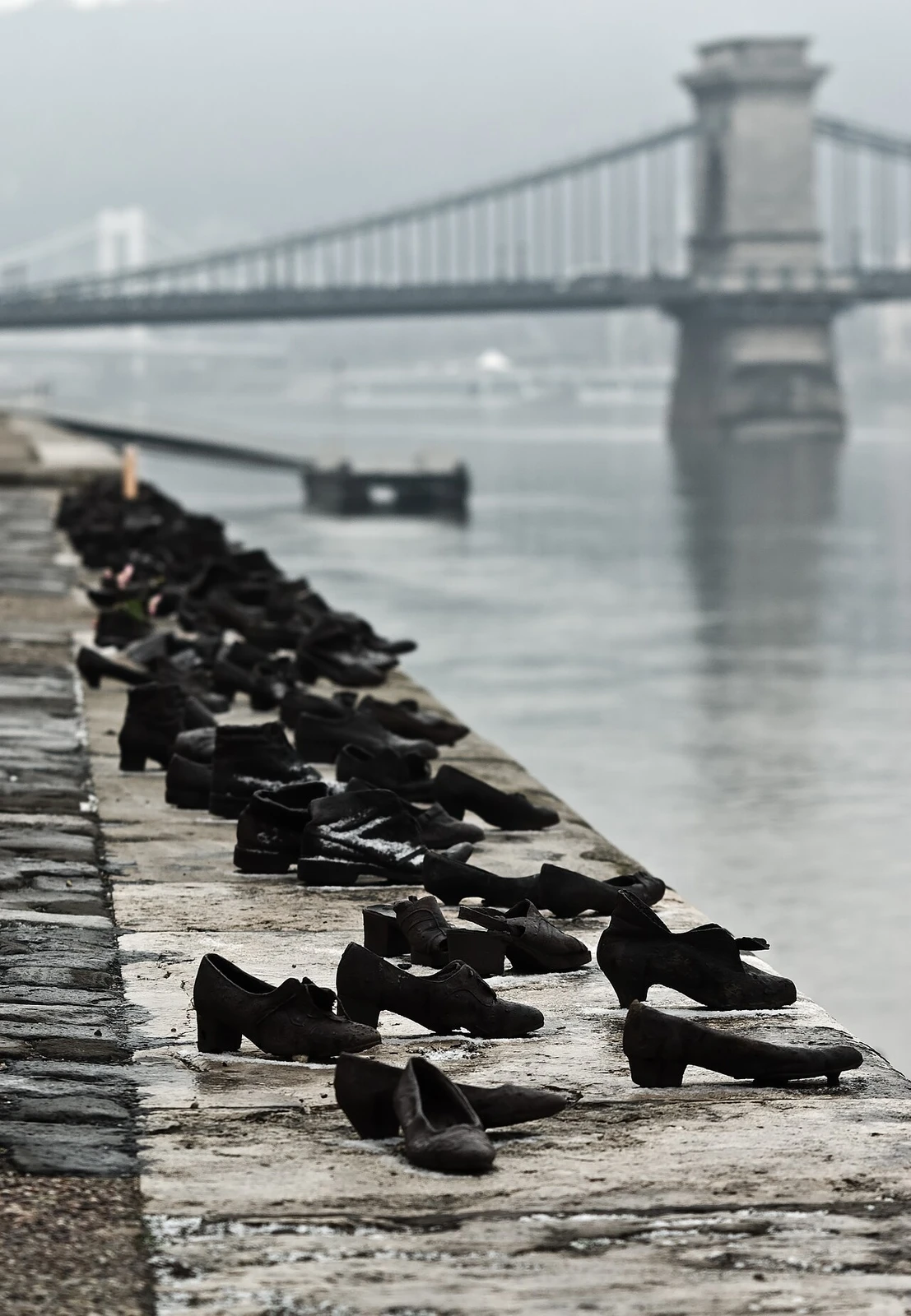
Cipők a Duna-parton
Content & sources
Photo: Nikodem Nijaki · CC BY-SA 3.0
Budapest
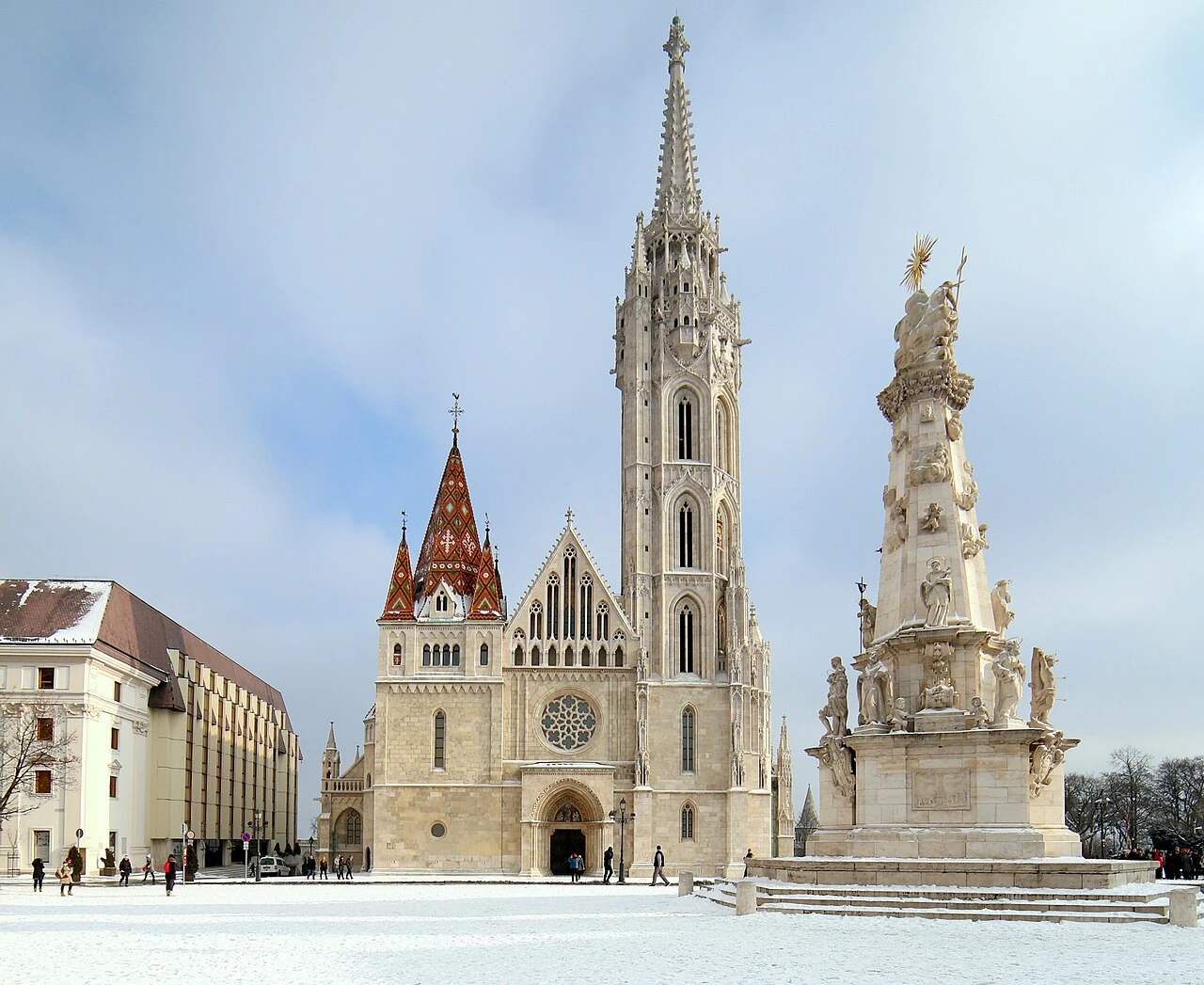
Mátyás-templom
Content & sources
Photo: Thaler Tamas · CC BY-SA 4.0