 Stanza / Audio guide
Content & sources
Stanza · Audio guide
Dohány Street Synagogue Audio Guide
A place to remember. A story to take with you.
The Dohány Street Synagogue is a Neolog Jewish congregation and synagogue located in Budapest, Hungary. It is the largest synagogue in Europe and serves as a centre of Neolog Judaism.
Download Stanza, then search for “Dohány Street Synagogue”.
About the tour
One guide. Your kind of visit.
The Dohány Street Synagogue is a Neolog Jewish congregation and synagogue located in Budapest, Hungary. It is the largest synagogue in Europe and serves as a centre of Neolog Judaism.
Ready when you are.
- 01Get the free Stanza app.
iOS & Android
- 02Find your guide.
“Dohány Street Synagogue”
- 03Download before you go.
Works offline
Audio guide / 13 narrated stops
Inside the guide
Get to know a few of the stories before you go. Open a stop to read more.
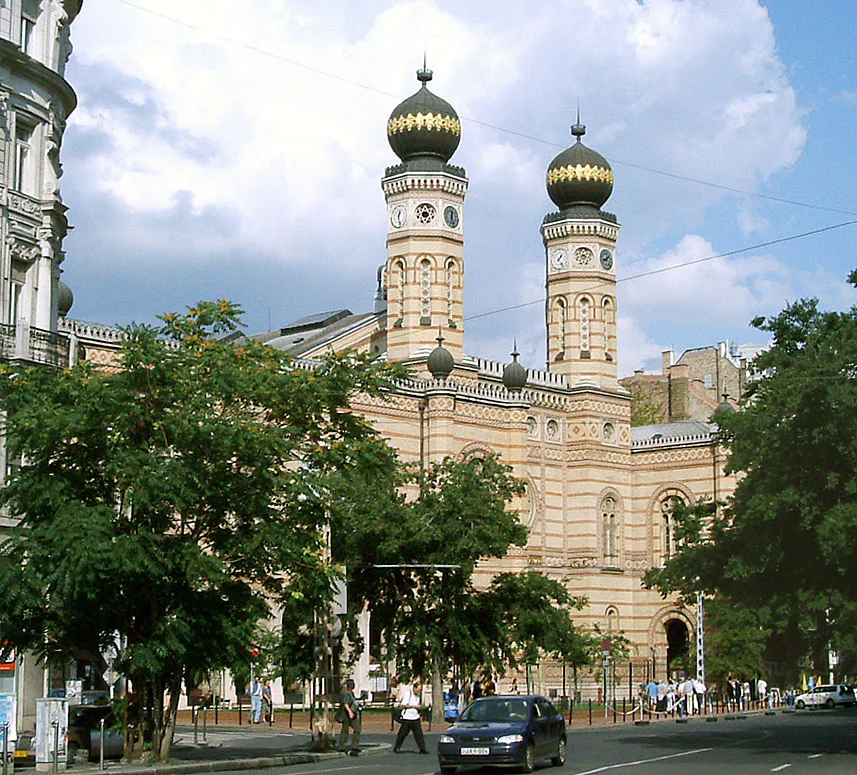
01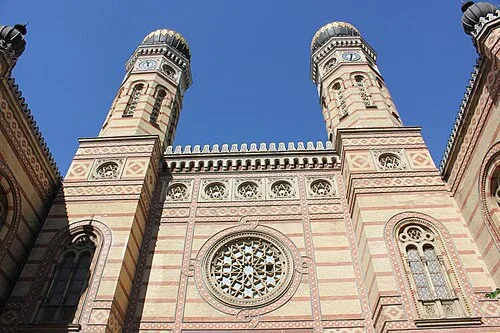 Dohány Street Façade and Moorish Towers
The Moorish Façade and Twin Towers
Welcome to the Dohány Street Synagogue, the largest synagogue in Europe and a centre of Neolog Judaism in Hungary. The red and yellow stripes on its walls are the first thing to notice. They come from Islamic models, chiefly the Alhambra in medieval Spain and buildings of North Africa. The Viennese architect Ludwig Förster made that choice deliberately. He believed no distinctively Jewish architecture had survived, so he turned to forms used by oriental peoples he considered related to the Israelites. Two octagonal towers rise at each end of the façade, crowned with onion domes about forty-three metres high. Between them runs a stone cornice with oriental-style crenellations, and stars and tablets of the Law appear among the ornaments. Work began in 1854, commissioned by the Jewish community of Pest as the first monumental declaration of its presence in the city. From here the tour moves through the entrance, into the great nave, up to the ark, and out to the courtyard, the memorial park and the museum. Each of them carries one strand of the story.
Andrzej Otrębski · CC BY-SA 4.0
02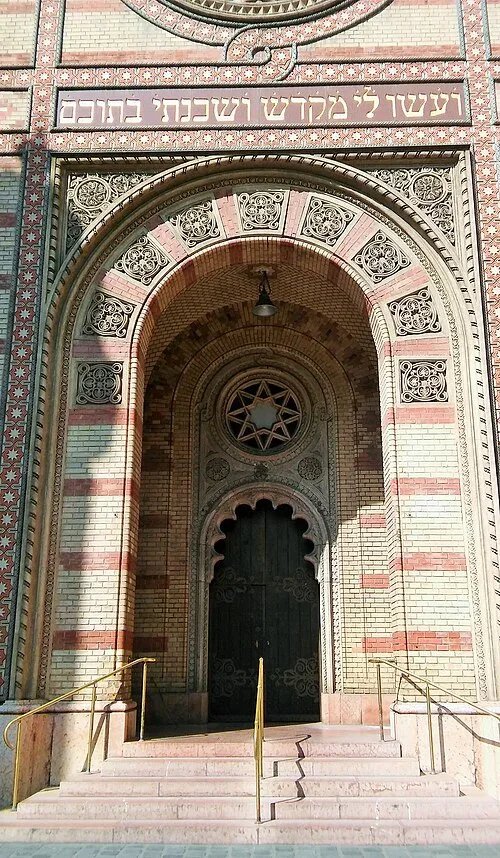 Dohány Street Façade and Moorish Towers
Main Entrance Portal
A horseshoe arch frames the main doorway, with a star set in the arch. Above the door runs a band of Hebrew lettering, and above that hangs the great rose window. This is the door the congregation crossed on the sixth of September 1859, the day the synagogue was consecrated. Only five years separated the first building work from that ceremony. For a project of this size in the nineteenth century, that was remarkable speed. Crossing this threshold meant entering the community's public monument, built to be seen by the whole city.
Photo: 12akd · CC0
03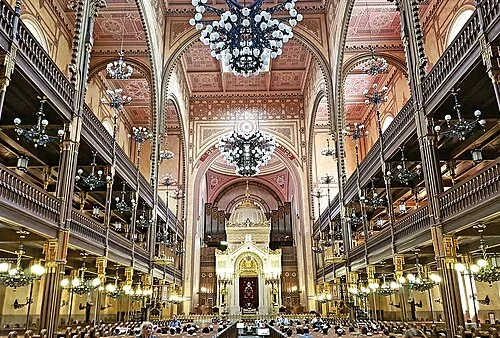 The Great Sanctuary Nave
The nave opens down a long central hall, wide enough to feel like a cathedral. It is twelve metres across, carried on a single-span structure of cast iron, an engineering feat for its day. The whole building measures seventy-five metres long and twenty-seven wide, with three spacious aisles like a Christian basilica, two balconies, and an organ. Seats on the ground floor number nearly fifteen hundred, set aside for men. Above them, galleries on ornamented steel poles hold the women's seats, about the same number again. In all, close to three thousand people can worship here, which made it the largest Jewish place of worship built before the twentieth century. The church-like arrangement is no accident. The Neolog movement embraced cultural integration into Hungarian society, and its worship took on forms borrowed from the surrounding culture, with the Torah read from the ark at the far end rather than from a platform in the middle.
Listen in the appPhoto: Elona28 · CC BY-SA 4.0
04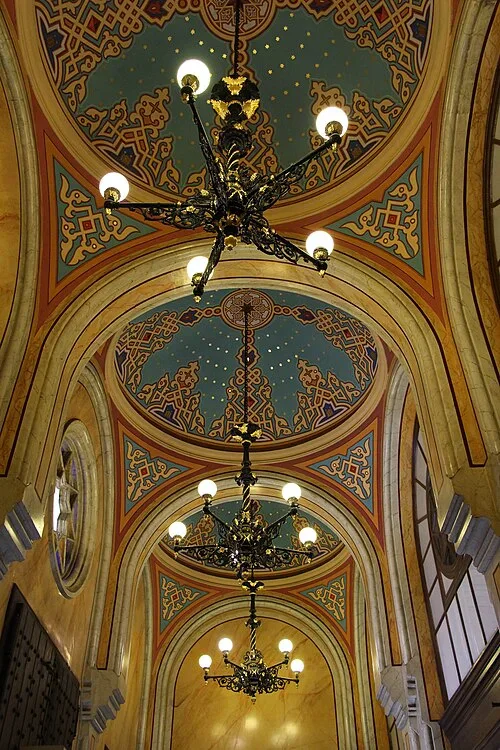 The Great Sanctuary Nave
The Painted Interior and Restoration
The cupolas overhead are covered in painted ornament: coloured and golden geometric shapes on Islamic models, the work of the Hungarian romantic architect Frigyes Feszl. Chandeliers hang beneath them in tiers, matching the pattern of the vaults. This brilliance hides a violent recent past. On the third of February 1939 the synagogue was bombed by the Hungarian pro-Nazi Arrow Cross Party. During the war the Germans used the building as a base for their radio, and as a stable for animals. Air raids during the siege of Budapest caused severe damage. Under Communism the battered structure served again as a prayer house for a much-diminished community. Restoration began in 1991, paid for by the state and by private donations, and finished in 1998. Much of what glitters now is the work of that campaign.
Listen in the appFred Romero from Paris, France · CC BY 2.0
05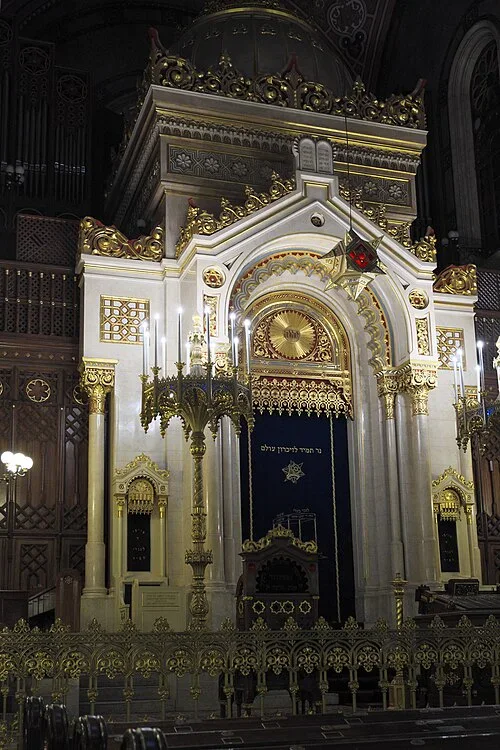 Aron Kodesh and the Bimah
The Torah Ark (Aron Kodesh)
At the far end of the hall stands the spiritual heart of the synagogue, the Torah ark, the Aron Kodesh. It is Frigyes Feszl's masterpiece, a domed and gilded aedicule flanked by columns, rising like a small temple against the eastern wall. Before it hangs the eternal lamp, kept burning as Jewish tradition requires. In this reformed arrangement the ark stands at the altar end, much as a chancel does in a church, and during the service the scroll is carried from it toward the congregation. The ark holds the scrolls at the centre of the liturgy, and their own story is worth a moment of its own.
Listen in the appPhoto: GFreihalter · CC BY-SA 3.0
06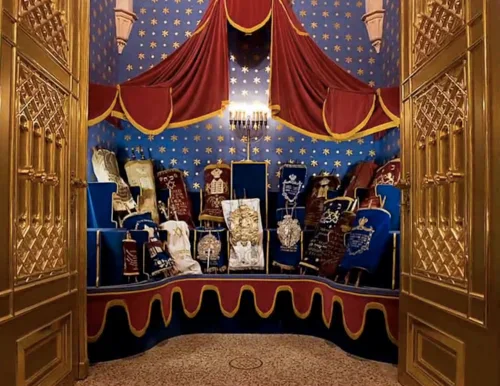 Aron Kodesh and the Bimah
The Torah Scrolls
With the ark doors open, the dressed Torah scrolls stand ranged in the niche, mantled in velvet and silver. Some of them came from other synagogues, communities destroyed during the Holocaust. Their own houses of prayer are gone. Here their scrolls are still taken out and read, so the congregations that vanished live on in this ark. It is a quiet fact, and one of the most moving in the building.
Listen in the appM3peti at Hungarian Wikipedia · CC BY-SA 3.0
07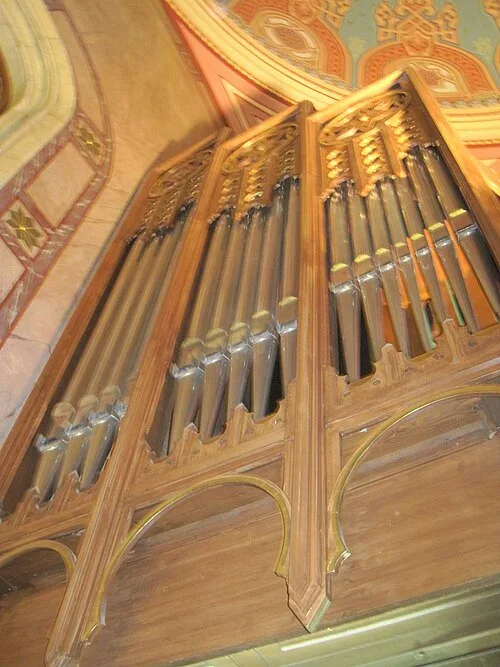 The Organ Loft and Musical Heritage
The Great Organ
Above the ark, in its elevated gallery, sits a pipe organ, an instrument few synagogues have. The original organ of 1859 had about five thousand pipes, and two famous names played it: Franz Liszt and Camille Saint-Saëns. The present instrument is a mechanical organ built in 1996 by the German firm Jehmlich Orgelbau Dresden, with sixty-three voices and four manuals. Its place in the gallery is also a legal solution. Jewish law restricts music and the operating of equipment on the Sabbath, so the organist and the lights are handled by non-Jewish staff, and the music reaches the sanctuary, as it were, from outside. It is a Neolog accommodation as characteristic as the basilica plan itself.
Listen in the appBence Damokos · CC BY-SA 3.0
08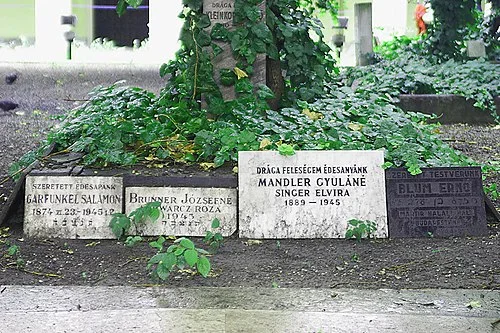 Courtyard Mass Graves
The Courtyard Cemetery
Few synagogues in the world have a cemetery in their own courtyard, and this one exists only because of desperate circumstances. In 1944 the synagogue stood inside the closed ghetto of Pest and sheltered many hundreds of people. Over the winter of 1944 to 1945, people died there in thousands, from hunger and cold. By the time the Soviet army liberated the ghetto on the eighteenth of January 1945, somewhere between eight and ten thousand had died. Most Jewish law forbids burial beside a synagogue, since the dead are to be buried outside city limits, and it forbids moving remains once buried. So the victims stayed here. Around two thousand of them lie in the courtyard, in twenty-four mass graves, marked by simple name-stones like the ones in the garden. Among them is the mathematician Dániel Arany, remembered today through an annual school competition that carries his name.
Listen in the appMwinog2777 (talk) · CC BY-SA 3.0
09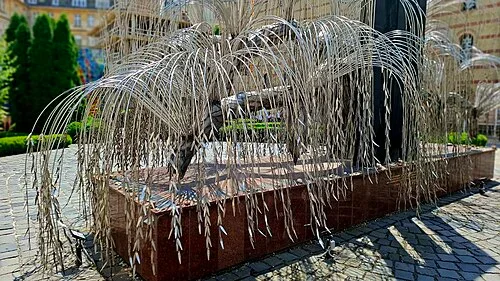 Raoul Wallenberg Memorial Park and the Tree of Life
The Tree of Life Memorial
Behind the synagogue, in the Raoul Wallenberg Memorial Park, stands a weeping willow made of chrome steel. The sculptor Imre Varga created it as the Memorial of the Hungarian Jewish Martyrs. Its branches droop like a real willow, and its leaves are inscribed with the names and tattoo numbers of the dead and the disappeared. The scale behind the sculpture is hard to take in: at least four hundred thousand Hungarian Jews were murdered in the Holocaust. Each leaf carries one name from that number, which is why the close view of the leaves says more than any summary could. The losses the courtyard graves embody are given their names here.
Listen in the appPhoto: Cookroach · CC BY-SA 4.0
10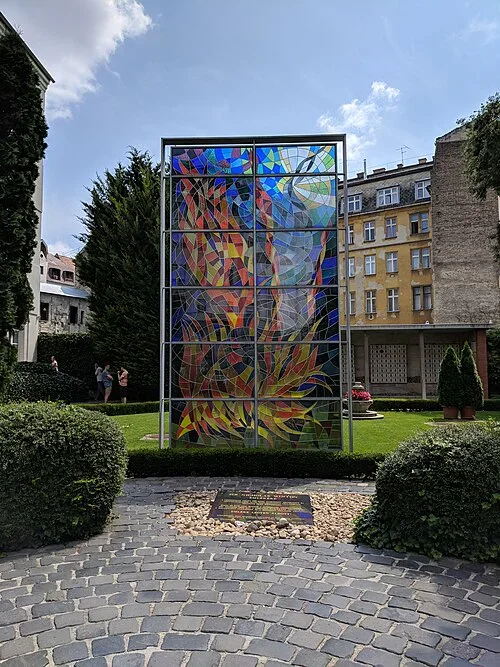 Raoul Wallenberg Memorial Park and the Tree of Life
Memento and the Righteous
The memorial park takes its name from Raoul Wallenberg, the Swedish diplomat who saved thousands of Jews in Budapest. It also honours other rescuers remembered among the Righteous Among the Nations. Carl Lutz, the Swiss vice-consul, issued protective papers from his embassy. Giorgio Perlasca, an Italian, posed as the Spanish consul and handed out documents and passports to Jews without distinction, saving about five thousand people. Angelo Rotta, the papal nuncio, issued protective passes and Vatican passports, and with his secretary Gennaro Verolino helped save tens of thousands; Portuguese diplomats did the same for hundreds of families. A stained-glass memorial work by Klára Szilárd stands in this courtyard, a blaze of coloured glass raised among the graves and the willow. The complex remembers both the murdered and those who resisted.
Listen in the appPhoto: Makeip · CC BY-SA 4.0
- 11
The Heroes' Temple
A smaller temple of 1931 for the fallen of the First World War, and for winter mornings.
- 12
The Hungarian Jewish Museum
The museum stands on Herzl's birthplace, and keeps the trowel that laid the ark's keystone.
- 13
Hanukkah Menorah
A Hanukkah menorah in bronze, and a festival about lighting again.
Dohány Street Synagogue
Frequently asked questions
How much does the guide cost?
Free app download. Listed guide price: $0.99. Guide price shown in the app. Audio guide only. Venue admission is separate.
Can I listen without internet?
Yes. Download the guide’s audio, images, and maps in the app before your visit. Your downloaded content is then available offline.
Can I listen in my language?
This audio guide is available in 15 languages, including English.
Do I need to follow a schedule?
No. This is a self-guided experience. Choose your stops, pause whenever you like, and return to a story at your own pace.
At your own pace
Explore Dohány Street Synagogue.
Download Stanza, then search for “Dohány Street Synagogue”.
Free app download · Guide price shown in the app
Keep exploring
Nearby audio guides
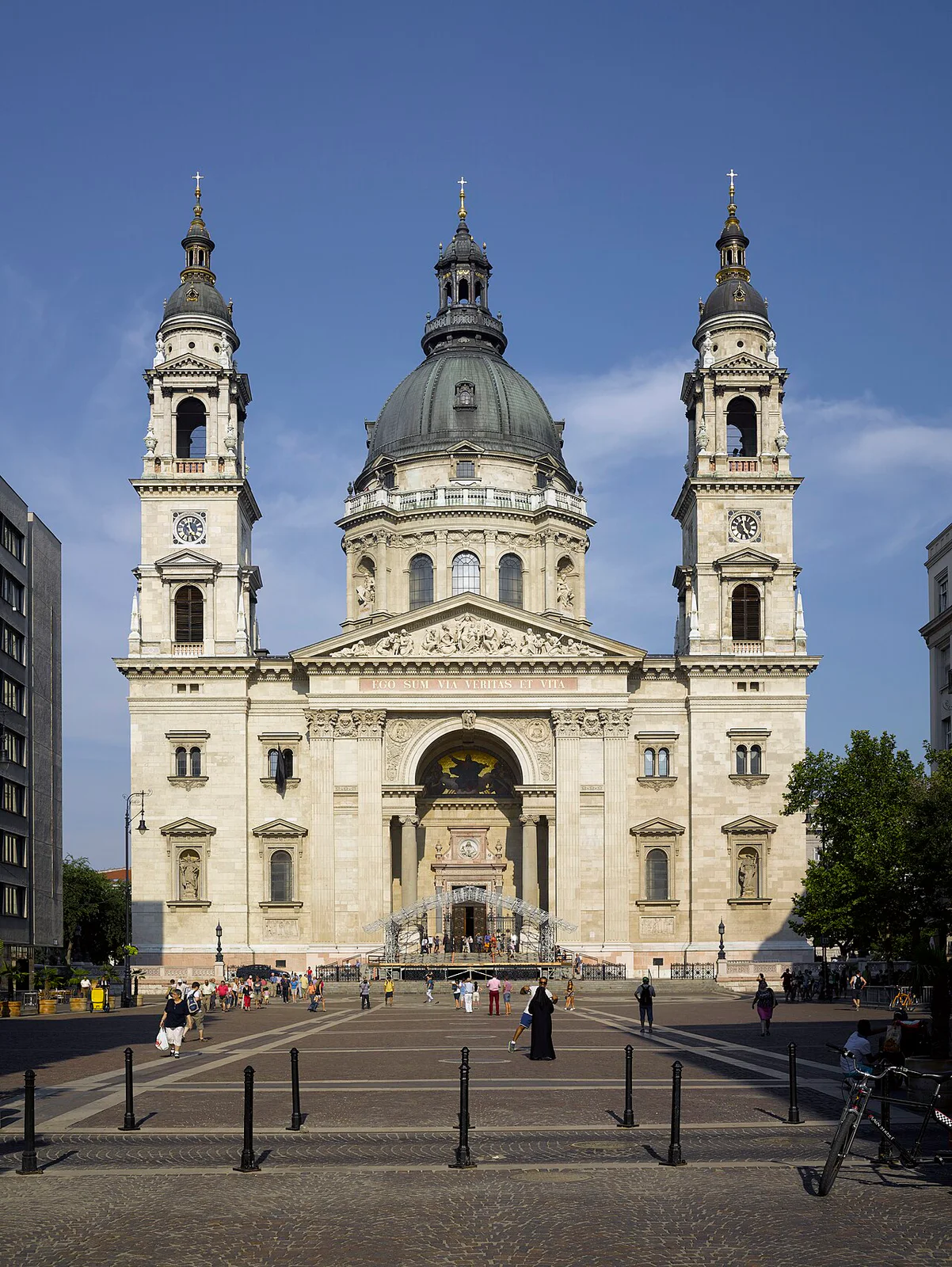
Budapest · 1 km
St. Stephen's Basilica
Content & sources
Photo: Godot13 · Attribution
Budapest · 1 km
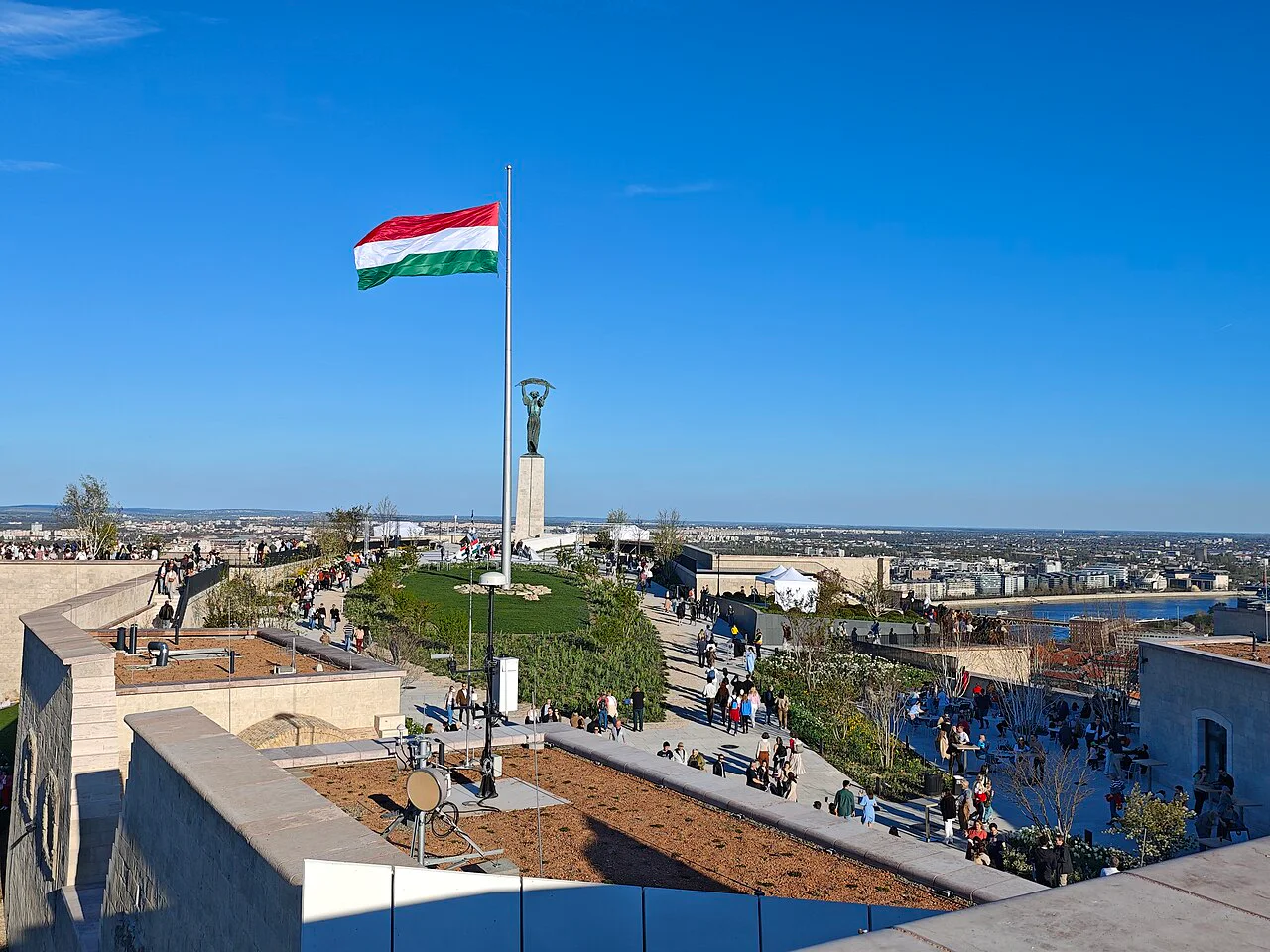
Citadella
Content & sources
Photo: Elekes Andor · CC BY 4.0
Budapest · 1 km
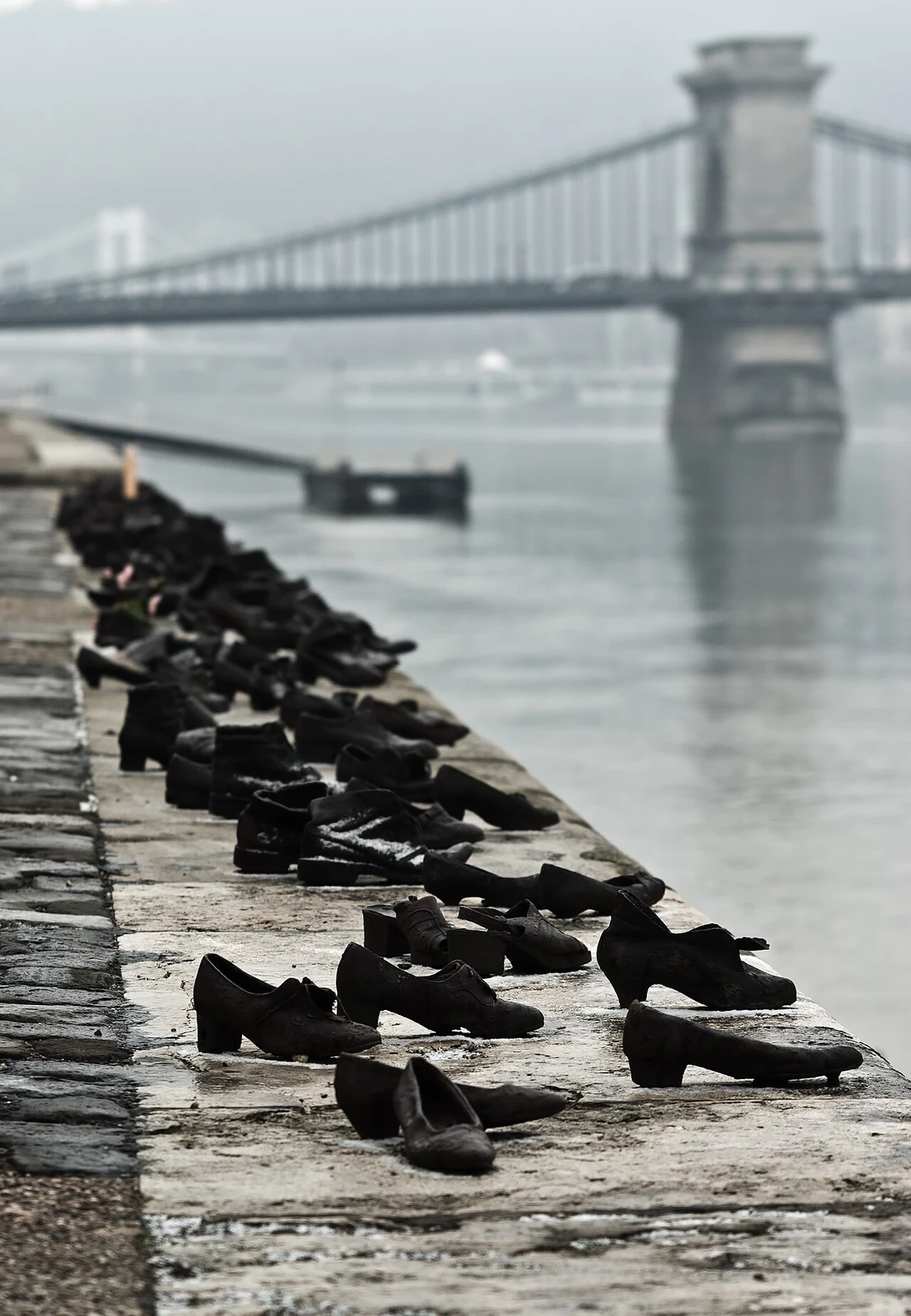
Shoes on the Danube Bank
Content & sources
Photo: Nikodem Nijaki · CC BY-SA 3.0
Budapest · 2 km
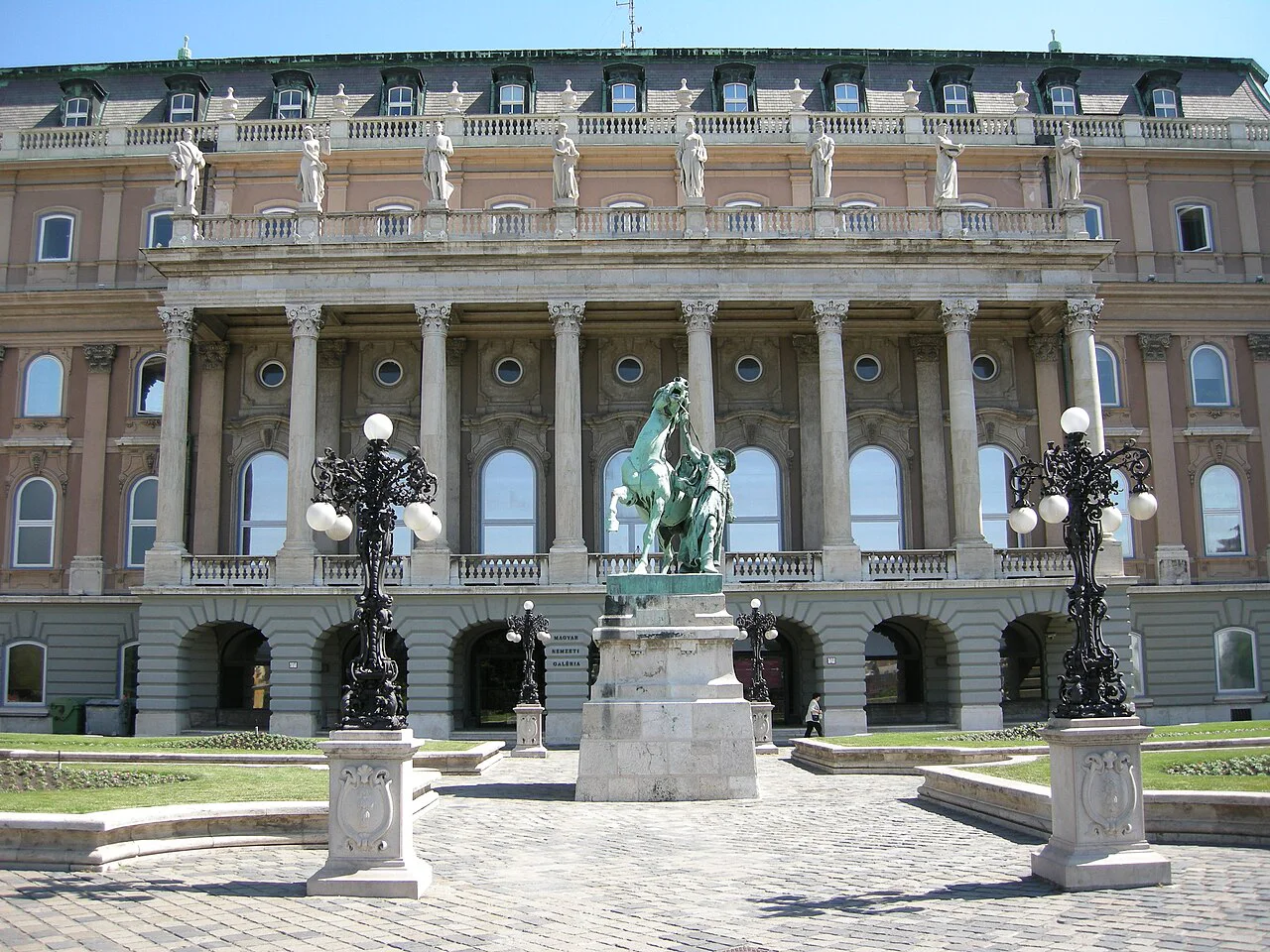
Hungarian National Gallery
Content & sources
Yoav Dothan · Public domain