Stanza · Audio guide
Citadella Audio Guide
A place to remember. A story to take with you.
The Citadella is a fortification located on top of Gellért Hill in Budapest, Hungary. It occupies a site that held strategic importance in the military history of the city.
Download Stanza, then search for “Citadella”.
About the tour
One guide. Your kind of visit.
The Citadella is a fortification located on top of Gellért Hill in Budapest, Hungary. It occupies a site that held strategic importance in the military history of the city.
Ready when you are.
- 01Get the free Stanza app.
iOS & Android
- 02Find your guide.
“Citadella”
- 03Download before you go.
Works offline
Audio guide / 12 narrated stops
Inside the guide
Get to know a few of the stories before you go. Open a stop to read more.
01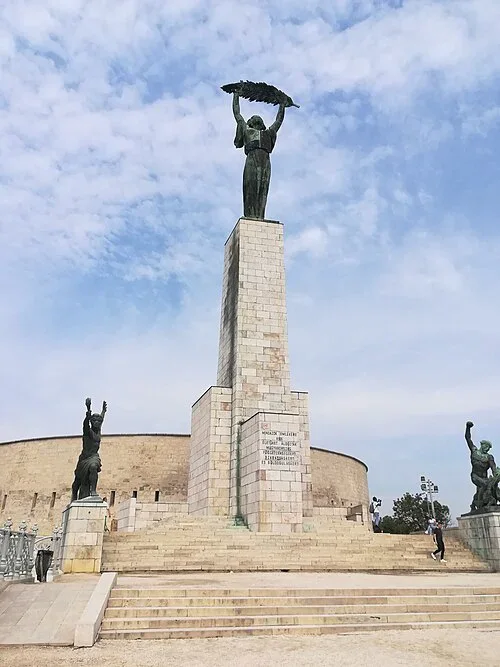 Liberty Statue Plaza
The Liberty Statue at the Eastern Tip
Welcome to the Citadella, the fortress crowning Gellért Hill in Budapest. The bronze figure at the eastern tip of the fortress is the Liberty Statue, a woman holding a palm leaf high overhead. She stands about fourteen metres tall on her stone pedestal. The sculptor was Zsigmond Kisfaludi Strobl, and the statue was raised in 1947 to mark the liberation at the end of the Second World War. It has become one of the most recognized symbols of Hungary. The statue has not always looked the same. A figure of a Soviet soldier once stood at the pedestal. In 1992 it was removed and carried off to Memento Park, on the far edge of the city. The fortress around the statue has meant very different things to different generations of Hungarians. This tour follows that turn, from a place built for control to a place crowned by freedom.
Pressburg10 · CC0
02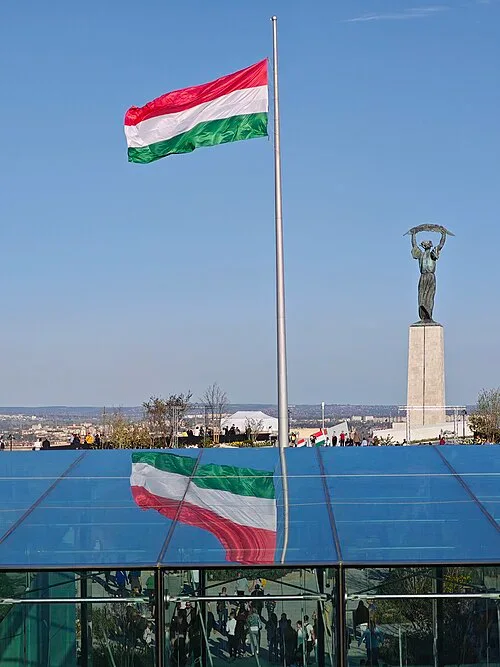 Liberty Statue Plaza
The Fortress Reborn: Flag and Pavilion
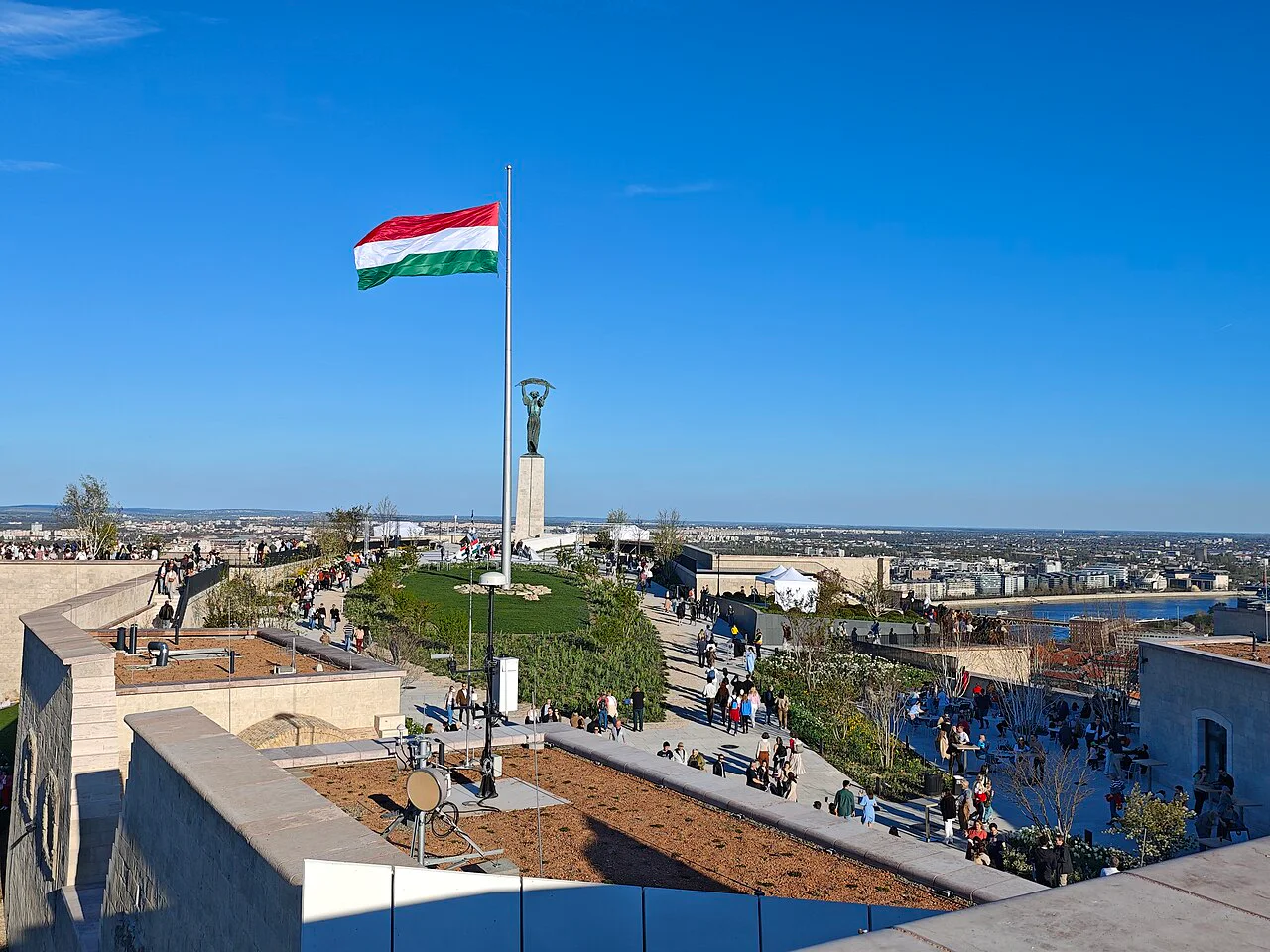
A tall flagpole carries the Hungarian flag, and a glass pavilion sits on the old fortress ground. Both belong to the Citadella's newest transformation. From 2014 the fortress stood abandoned and closed. In 2021 the company that manages the Buda Castle quarter took it over from the capital and fenced off the paths around it. The flagpole went up in the spring of 2022, though the rebuilding itself only started in 2024, a year later than first planned. A broad stairway was cut into the eastern bastion behind the Liberty Statue, and the western bastion received a short exhibition on Hungarian history. Heritage defenders criticised the work, saying the builders had shaped the monument into a kind of false ruin, a stage set, dismantling original stonework beyond repair. Some historians called the new exhibition striking but marred by factual errors. The Citadella reopened on 5 April 2026, and the park inside its walls is free to visit by day and in the evening.
Photo: Elekes Andor · CC BY 4.0
03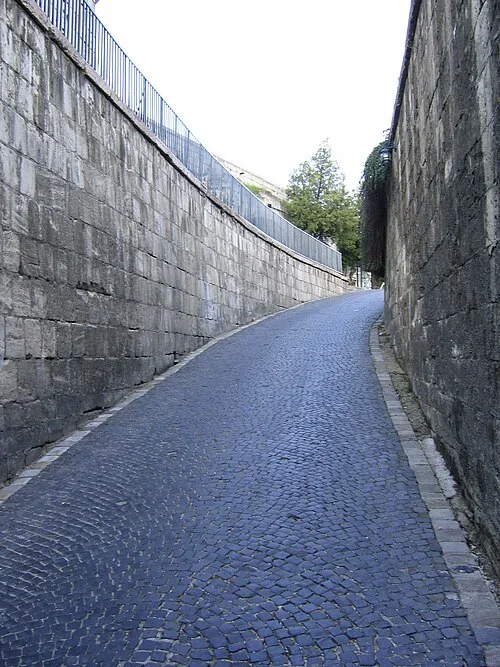 Eastern Fortress Wall and Passageway
The Entrance Rampart: Why This Fortress Was Built
This walled passage leads into a fortress that was never meant to defend Budapest. After the Hungarian Revolution of 1848 and 1849 was crushed, the war council in Vienna resolved to ring Pest and Buda with a modern system of forts. Its stated purpose was twofold, to repel an enemy from outside and to curb a population the court considered prone to revolution. Work on the first of these forts began on Gellért Hill in 1850, to the plans of Emmanuel Zitta, an Austrian lieutenant general and military engineer. The stone walls rising on either side were raised largely by Hungarian forced labour. And the guns of this place were meant to point not at the horizon but inward, at the two cities it overlooked.
Listen in the appAndrew Bossi · CC BY-SA 2.5
04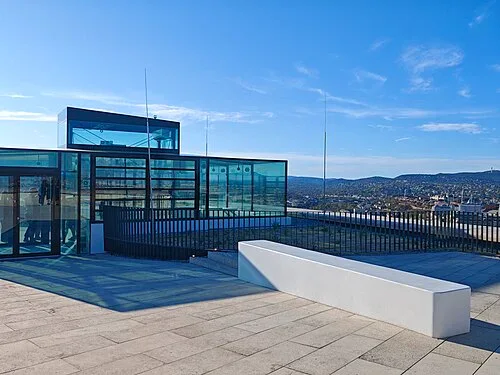 Eastern Fortress Wall and Passageway
The Eastern Wall: A Machine for Intimidation
The scale of the place is its message. The fortress forms a U around a central courtyard, stretching some 220 metres along the hilltop. It is 60 metres wide. The outer walls are about four metres thick. Pierced into that stone are embrasures for sixty modern cannons. The foundations were laid by the workshop of Mátyás Zitterbarth, a master builder of Pest. The construction itself was run by Ferenc Kasselik, one of the busiest architects of classical-era Pest, who also directed the works on site. After four years of building, Austrian troops could march into the casemates. The whole fortress was complete by 1856.
Listen in the appPhoto: Elekes Andor · CC BY 4.0
05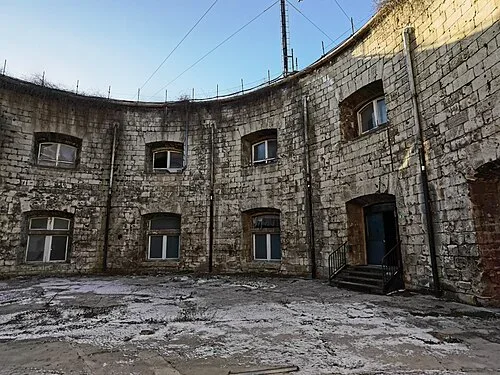 Inner Courtyard and Casemates
The Inner Courtyard: The Hated Fortress
After the Austro-Hungarian Compromise of 1867, this fortress lost its military purpose, yet the Austrian garrison stayed on for decades. Hungarians demanded its demolition again and again. In the late 1890s the demilitarized fortress finally passed to the young capital, which gave up outlying properties to the Viennese war ministry in exchange. The soldiers marched out around the same time. Jubilant citizens then took hammers to the wall above the main entrance, a symbolic demolition of the fortress they had come to hate. Tearing the whole thing down proved too expensive. So the walls stayed where they were.
Listen in the appRandom photos 1989 · CC BY-SA 4.0
06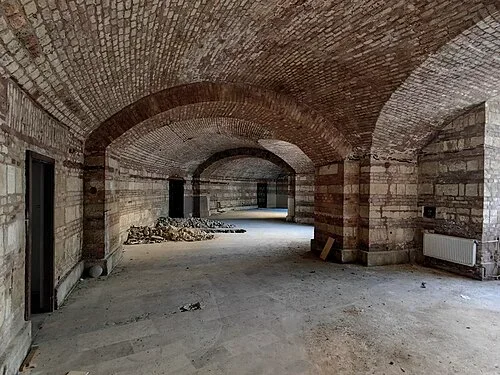 Inner Courtyard and Casemates
Inside the Casemates: Hospital, Depot, Attraction
These vaulted brick halls have served very different masters. Built as garrison casemates, they became a lifeline during the Siege of Budapest, when the defending side used them as a field hospital and an ammunition depot. Peace brought a stranger kind of use. From 1961 the fortress was turned over to tourism. A hotel and a restaurant opened inside, a new road was built up the hill, and walkways were laid around the walls. The casemates themselves housed a war panopticon recalling the 1944 siege, alongside a photo exhibition showing Budapest as it grew into a modern capital. The battle those vaults once sheltered has its own stop at the southern wall.
Listen in the appRandom photos 1989 · CC BY-SA 4.0
07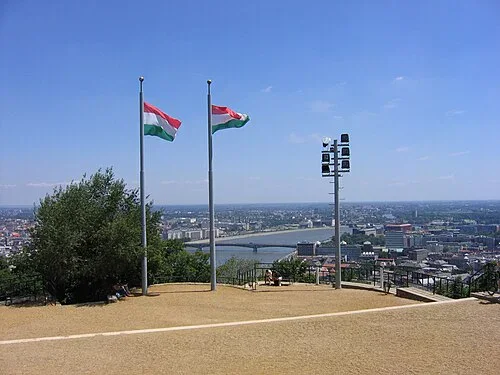 Northern Wall Danube Panorama
The Panorama Terrace: A World Heritage View
From the northern wall the view runs across the whole city, the Danube and both banks of the river. In 1987 UNESCO declared Gellért Hill part of a World Heritage site, together with the Buda Castle quarter and the panorama of the Danube's two banks. The view that once spread beneath the fortress's guns is now the very reason most people climb the hill. A vantage point designed for artillery has become the city's most protected sight.
Listen in the appNorbert Aepli, Switzerland (User:Noebu) · CC BY 2.5
08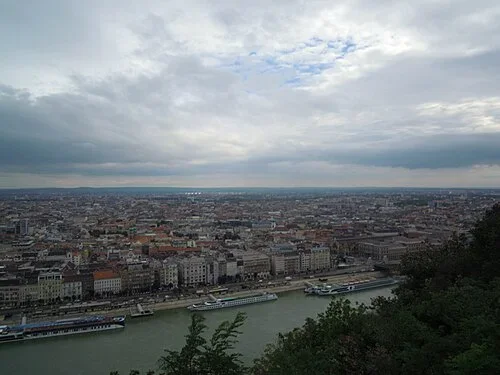 Northern Wall Danube Panorama
Reading the City from Above
The sightline from the hilltop takes in the whole sweep of the Danube and its eight bridges, the riverfront of Pest and the skyline beyond. When the fortress was sited here, it was positioned precisely to command this cityscape, so its guns could reach both cities at once.
Listen in the appPhoto: Prolete · CC0
09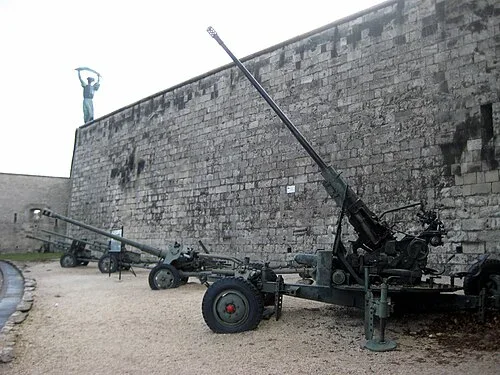 Outdoor Soviet Artillery Display
The Soviet Guns
Along the wall that faces the Danube stands an open-air display of Red Army weaponry, most of it from the Second World War. Among the pieces are an 85-millimetre D-44 divisional gun, introduced in 1944, and a 57-millimetre AZP S-60 anti-aircraft autocannon, a design from 1950. They are set out as an exhibition. But the hill itself carries a harder story from that era. In the Hungarian Revolution of 1956, Soviet troops occupied the Citadella and fired down into the city during the assault that overthrew the government led by Imre Nagy. The fortress built to overawe Budapest had its heights aimed at Budapest once more.
Listen in the appArianit Dobroshi · CC BY-SA 3.0
10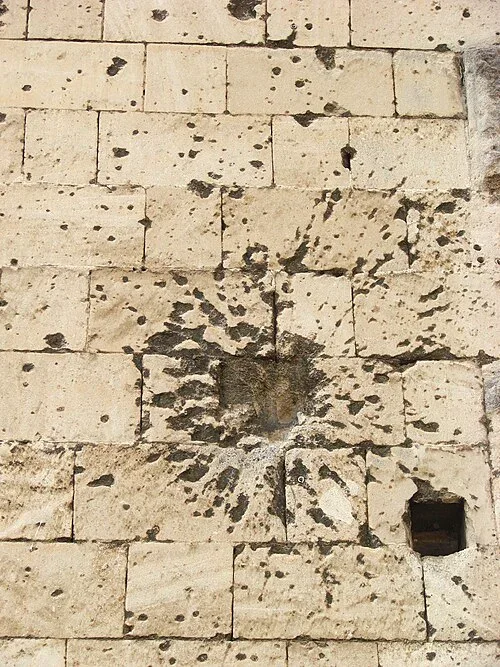 Southern Wall WWII Battle Scars
The Southern Wall's Battle Scars
The pocked stone of the southern wall records the winter of 1944 and 1945, when Budapest was under siege. German and Hungarian troops pressed the old fortress back into active military service. Anti-aircraft batteries fired from its open decks, and Soviet gunfire answered, leaving shell scars in the masonry. The Citadella, raised in the 1850s as a garrison post, spent that winter as a battleground on the city's own skyline.
Listen in the appAdam Jones, Ph.D. · CC BY-SA 3.0
- 11
What the Stones Remember
Damage left unrestored in the masonry, a record written straight into the stone.
- 12
Looking Back at the Hill: The Observatory and the Meaning of the Citadella
The observatory that stood here first, and the meaning of the hill from science to freedom.
Citadella
Frequently asked questions
How much does the guide cost?
Free app download. Listed guide price: $0.99. Guide price shown in the app. Audio guide only. Venue admission is separate.
Can I listen without internet?
Yes. Download the guide’s audio, images, and maps in the app before your visit. Your downloaded content is then available offline.
Can I listen in my language?
This audio guide is available in 15 languages, including English.
Do I need to follow a schedule?
No. This is a self-guided experience. Choose your stops, pause whenever you like, and return to a story at your own pace.
At your own pace
Explore Citadella.
Download Stanza, then search for “Citadella”.
Free app download · Guide price shown in the app
Keep exploring
Nearby audio guides
Budapest · 1 km
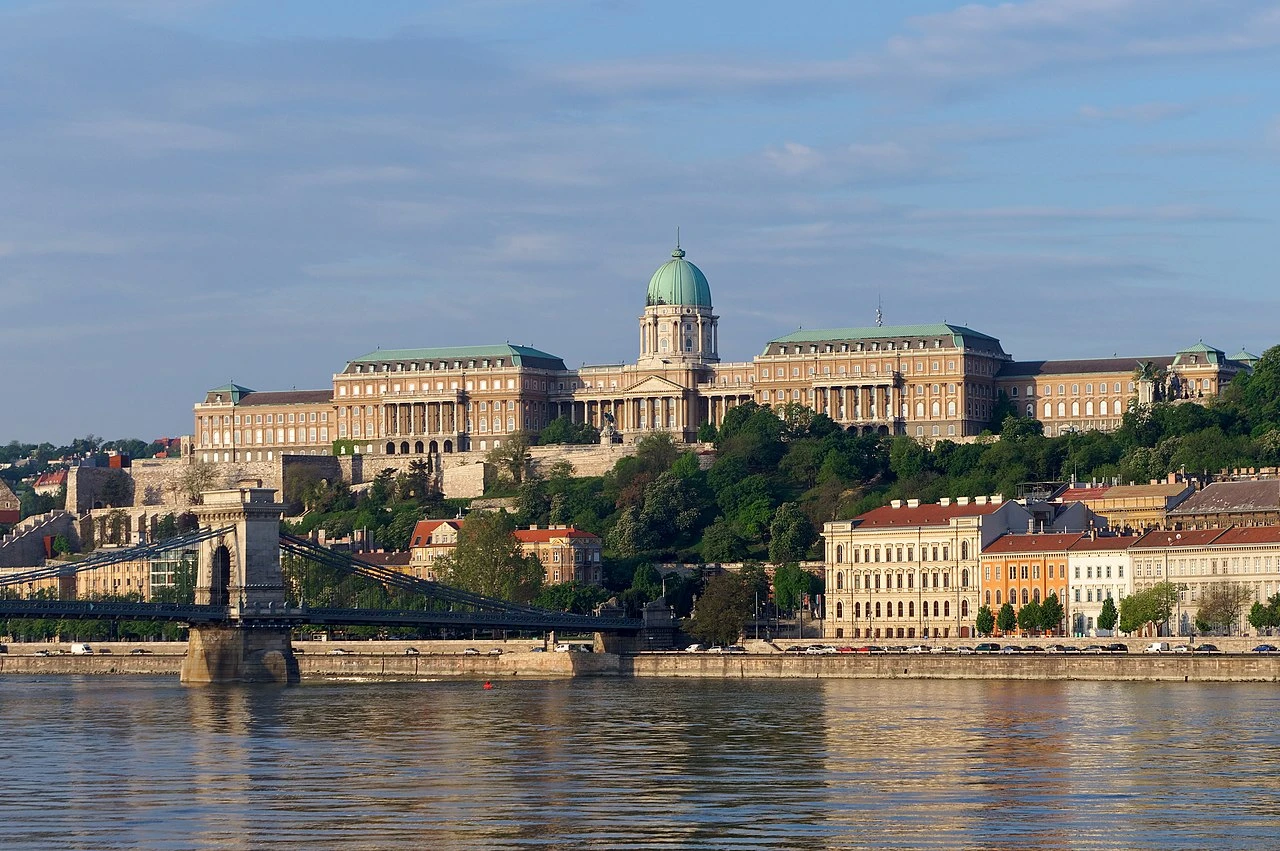
Buda Castle
Content & sources
Jakub Hałun · CC BY-SA 4.0
Budapest · 1 km
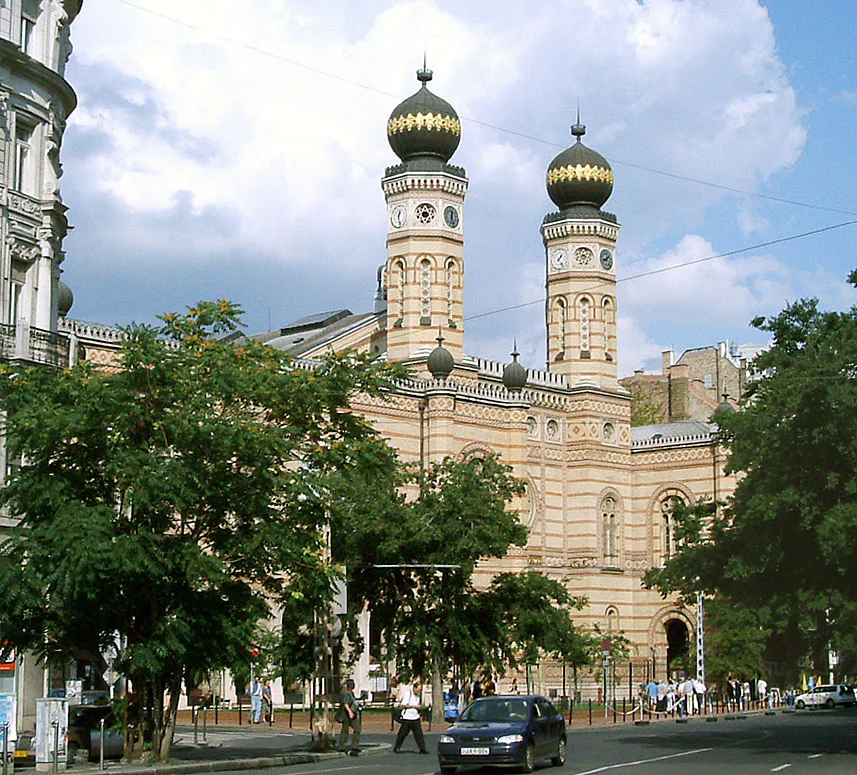
Dohány Street Synagogue
Content & sources
The original uploader was OsvátA at Hungarian Wikipedia. · CC BY-SA 3.0
Budapest · 2 km
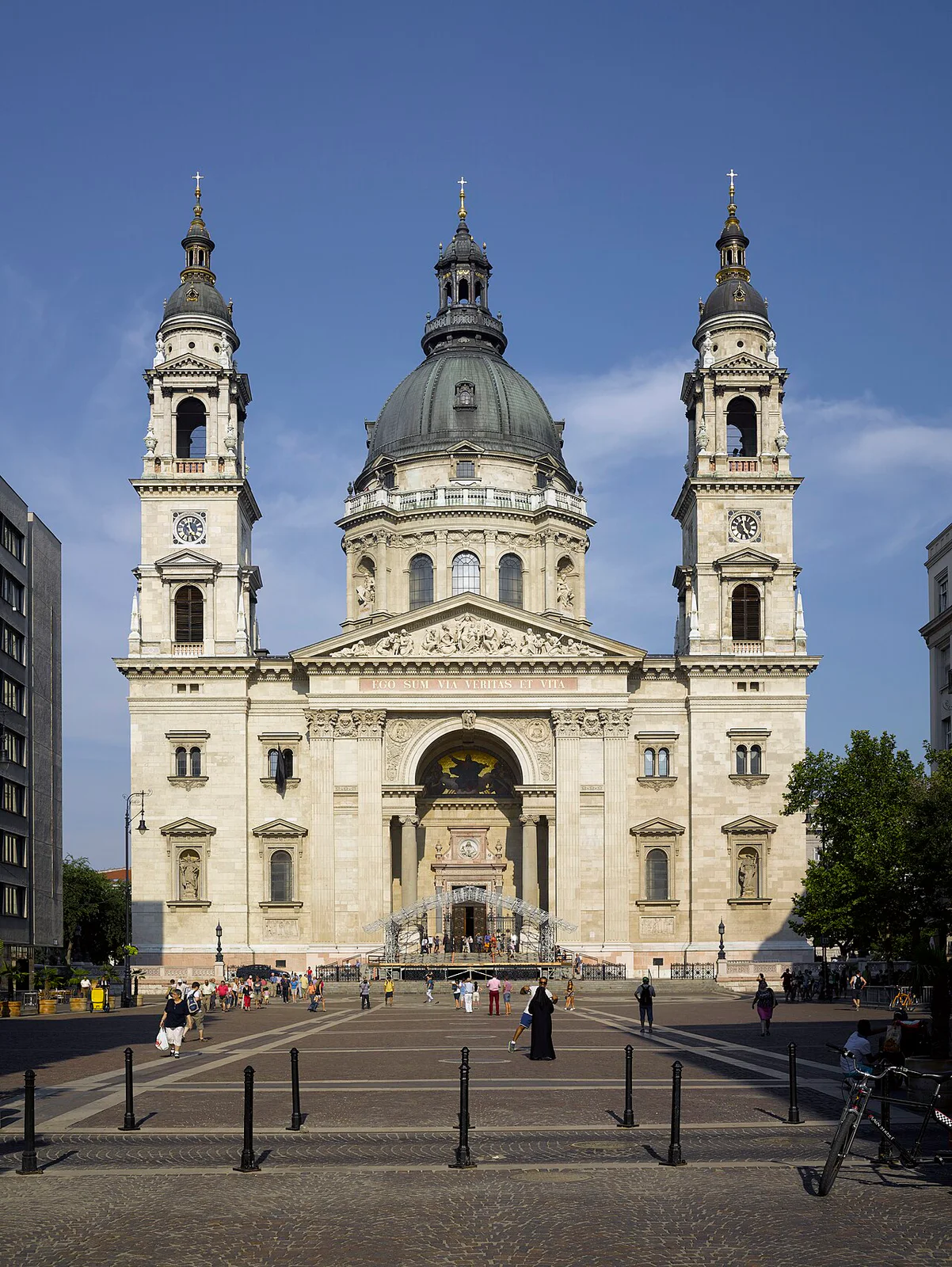
St. Stephen's Basilica
Content & sources
Photo: Godot13 · Attribution
Budapest · 2 km
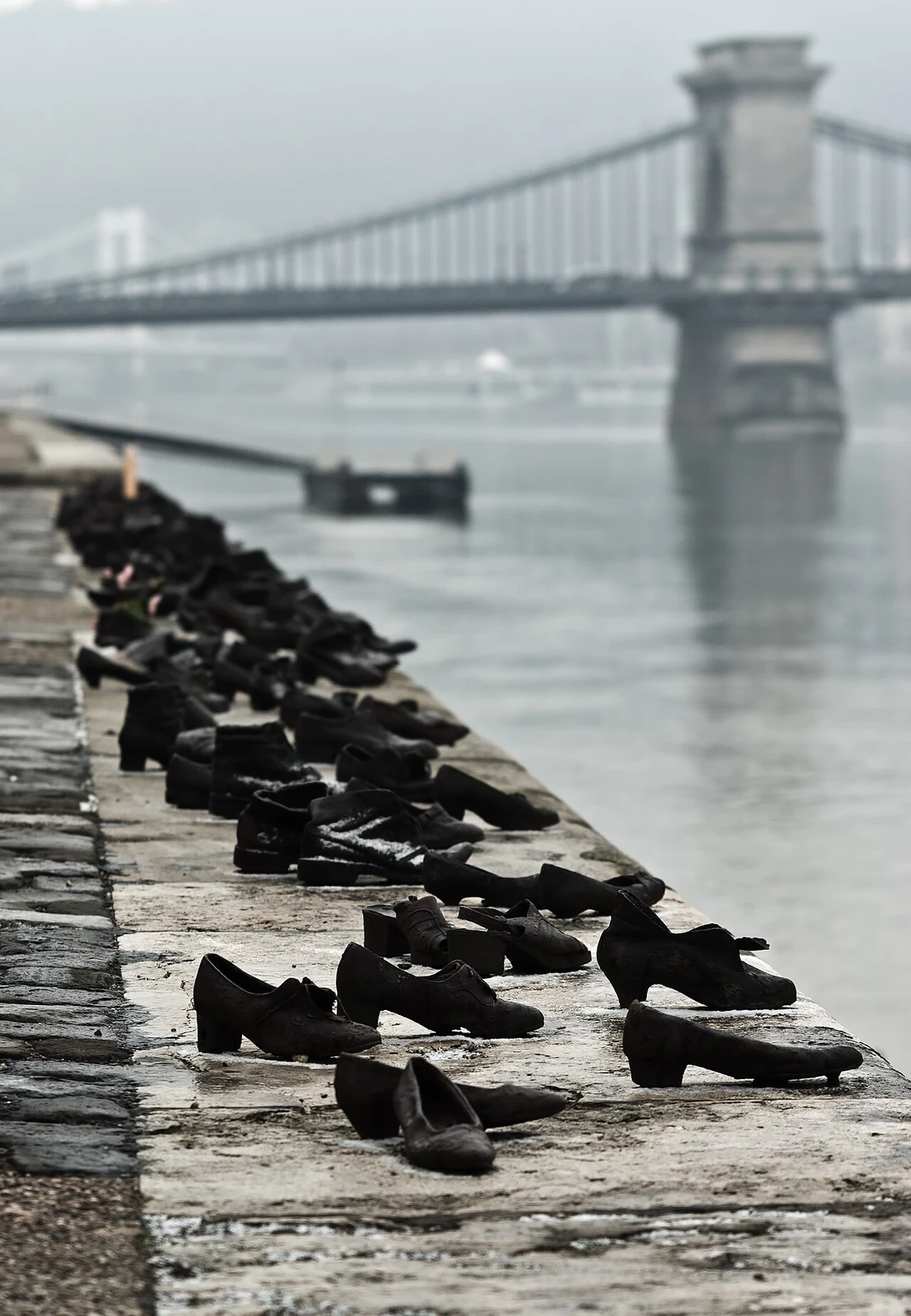
Shoes on the Danube Bank
Content & sources
Photo: Nikodem Nijaki · CC BY-SA 3.0