Stanza · Audio guide
St. Stephen's Basilica Audio Guide
A place to remember. A story to take with you.
St. Stephen's Basilica is a Roman Catholic basilica in Budapest, Hungary. It is named in honour of Stephen, the first King of Hungary, whose right hand is housed in the reliquary.
Download Stanza, then search for “St. Stephen's Basilica”.
About the tour
One guide. Your kind of visit.
St. Stephen's Basilica is a Roman Catholic basilica in Budapest, Hungary. It is named in honour of Stephen, the first King of Hungary, whose right hand is housed in the reliquary.
Ready when you are.
- 01Get the free Stanza app.
iOS & Android
- 02Find your guide.
“St. Stephen's Basilica”
- 03Download before you go.
Works offline
Audio guide / 12 narrated stops
Inside the guide
Get to know a few of the stories before you go. Open a stop to read more.
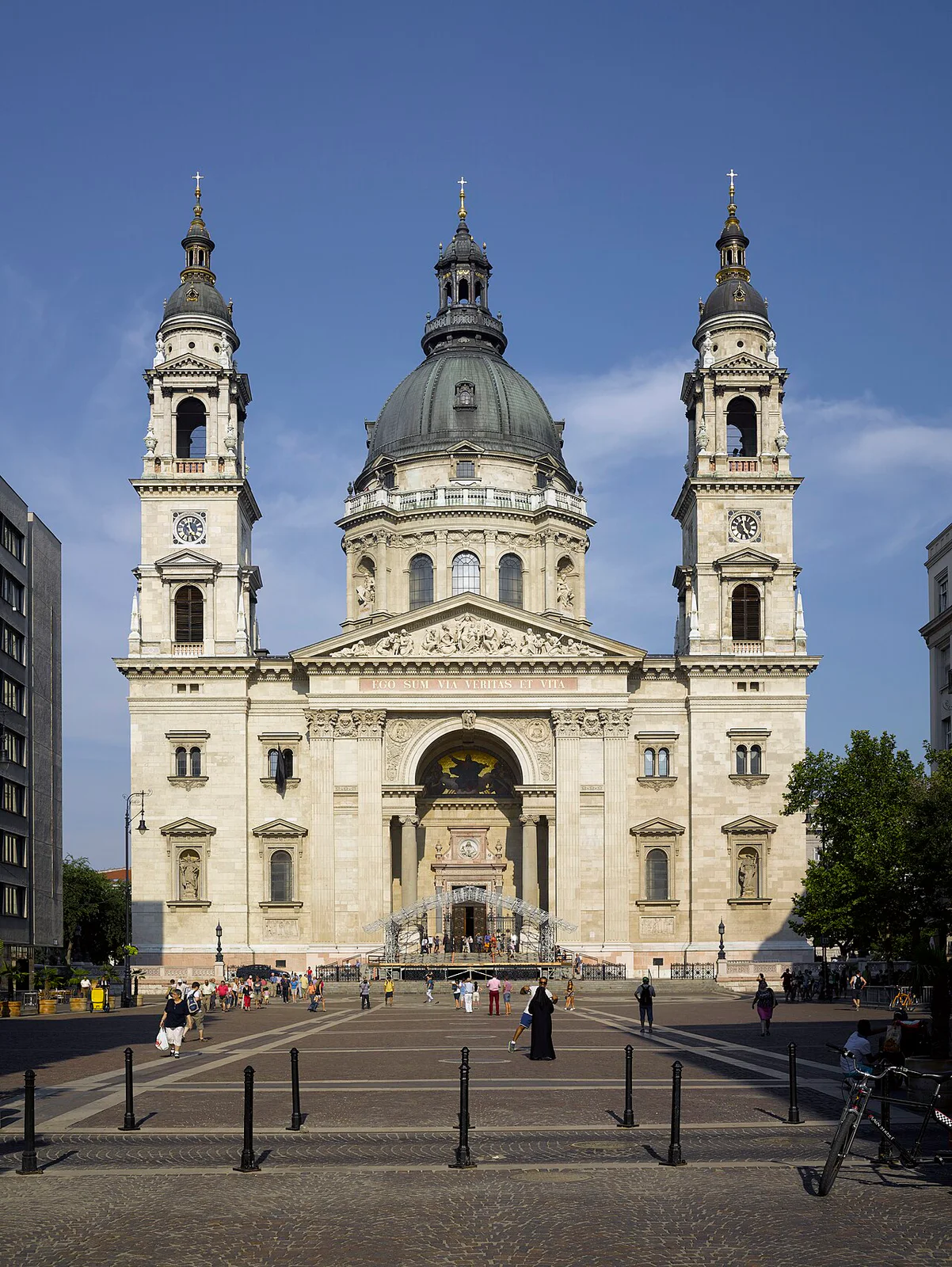
01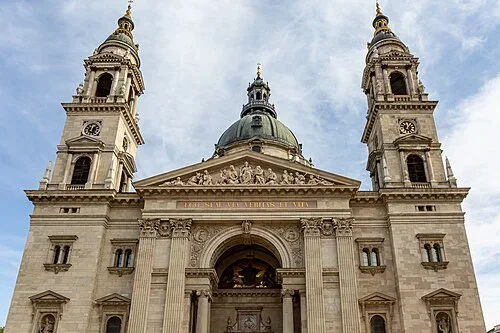 Szent István Square and Western Façade
St. Stephen's Basilica from Szent István Square
Where this great church now stands, there was once a theatre that hosted animal fights, the Hetz-Theater. The new district of Lipótváros was taking shape then. A wealthy citizen, János Zitterbarth, had a small temporary church built here. In 1817, about a thousand worshippers formed the Lipótváros parish. They began raising money and drawing up plans for a proper church. Then came the great flood of 1838. Several hundred residents found shelter on this small natural rise, on the flat Pest plain. Boats eventually brought them to safety. As a vow of thanks, the survivors gave donations for a church on the very spot where they had been saved. Today it is one of Hungary's most important churches, and it serves as a co-cathedral for the Archdiocese of Esztergom-Budapest. It is named for Stephen the First, Hungary's first king.
Photo: Balon Greyjoy · CC0
02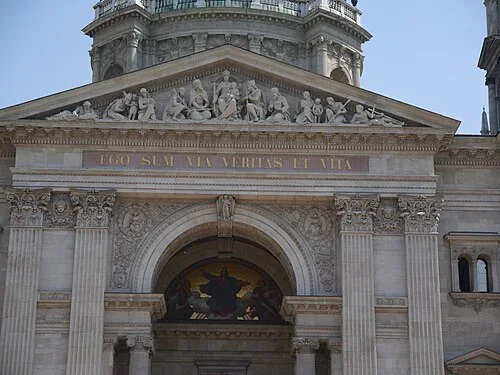 Szent István Square and Western Façade
Western Pediment and the Dedication to Saint Stephen
The church was first meant to bear the name of a different saint. Leopold, the patron saint of Austria, was the original choice. In the triangle above the entrance, a carved group by the sculptor Leó Fessler shows saints in homage before the Virgin and Child. After the millennium celebrations of 1896, the dedication changed to Saint Stephen. Church authorities placed the building under his protection in 1897. Carved on the band beneath the pediment are words from the New Testament. Ego sum via, veritas et vita. In English, I am the way, the truth and the life.
Photo: Zairon · CC BY-SA 3.0
03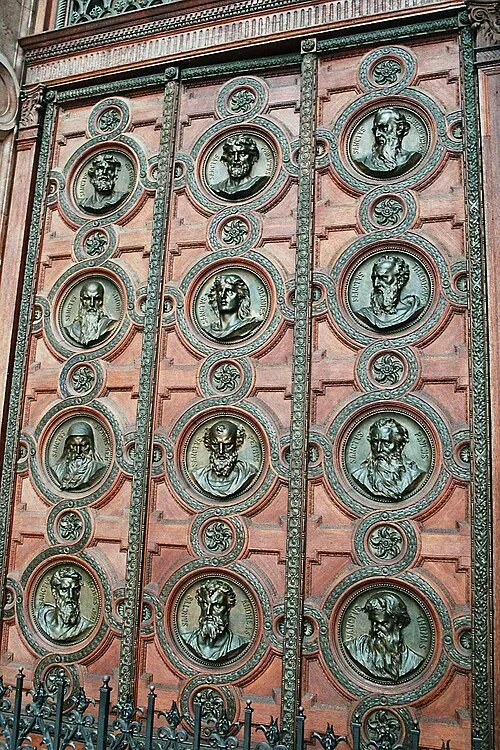 The Main Portal and Vestibule
The Bronze Portal and the Long Build
Building began on the fourteenth of August, 1851, to a neoclassical design by József Hild. The foundation stone was laid that October. Hild led the work until he died in 1867. Then Miklós Ybl took over the project. After a serious setback in 1868, Ybl reworked the design in a neo-Renaissance style. The building took fifty-five years. Three chief architects led it. József Kauser finished the decoration and the interior by 1905. The keystone, the final stone, was set in 1906, in the presence of the emperor. The bronze doors at the entrance have round medallions of carved heads. Inside, a relief of Saint Stephen and several mosaics fill the entrance hall.
Listen in the appPhoto: Dguendel · CC BY 3.0
04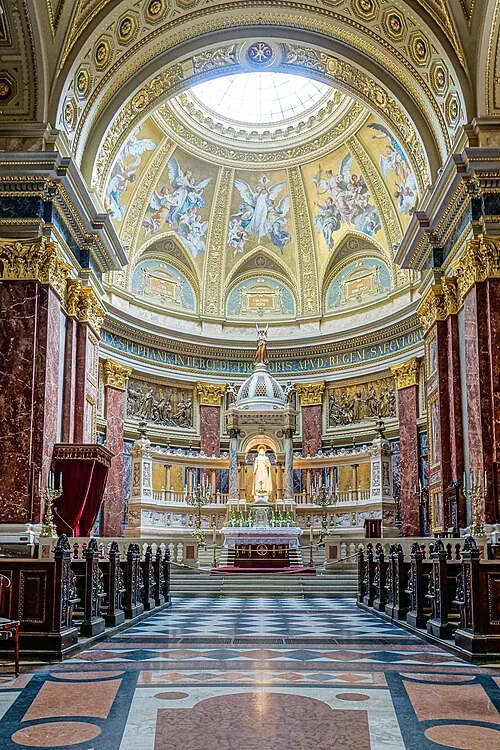 The Nave and 96-Meter Central Cupola
The Nave and the Greek Cross
Four arms of equal length meet under the dome in this church. The layout is called a Greek cross, and the basilica's ground plan follows it. The whole building is about eighty-seven metres long. It is fifty-five metres across. Reddish columns rise along the sides, and gold trims the arches above them. Under the dome, where the four arms meet, the floor is laid in black and white squares.
Listen in the appWhen reusing, please credit me as author: Adam Kliczek, http://memoriesstay.com (CC-BY-SA-3.0) If you use my image on your website, please send me an email with webpage adress. Contact me at: adam.kliczekgmail.com pl en +/− pl en +/− · CC BY-SA 3.0
05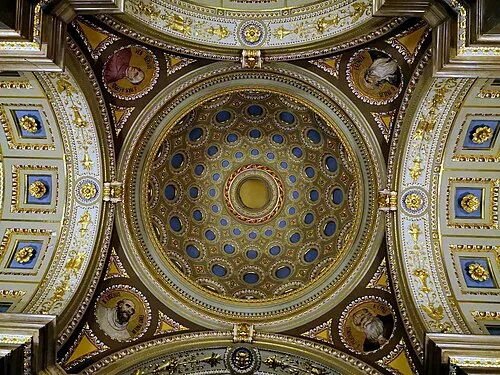 The Nave and 96-Meter Central Cupola
The Cupola: Collapse and Rebirth
On the twenty-second of January, 1868, the dome of this church collapsed. Hild had died the year before. Only then did it come out that the building materials and the workmanship were not up to standard. The pillars holding the dome had also sunk unevenly, and the weight pressed heavily to one side. Clearing the rubble and taking down the faulty work took until 1871. The rebuilding followed Ybl's reworked plans. Today, blue panels set in gold fill the dome around its centre. Károly Lotz made the frescoes. The Lord God appears in the central field of the dome. On the drum below, the prophets and the evangelists are shown.
Listen in the appPhoto: Thaler Tamas · CC BY-SA 4.0
06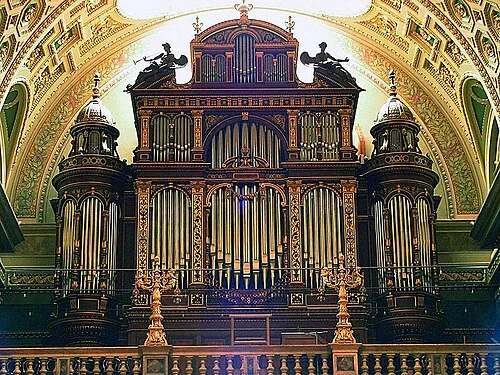 The Nave and 96-Meter Central Cupola
The Angster Organ and the Basilica's Music
József Angster, an organ builder from Pécs, made the instrument that fills this gallery. His workshop was well respected in its day. The case is dark carved wood, with gilded trim and two winged figures at the top. Róbert Scholtz painted much of the interior and, above all, gilded its decoration. Over the past century, the basilica has hosted choral, classical and contemporary music. Distinguished organists from Hungary and abroad play here in the summer months, and the basilica choir sings every Sunday during that time.
Listen in the appAttila Terbócs · CC BY 2.5
07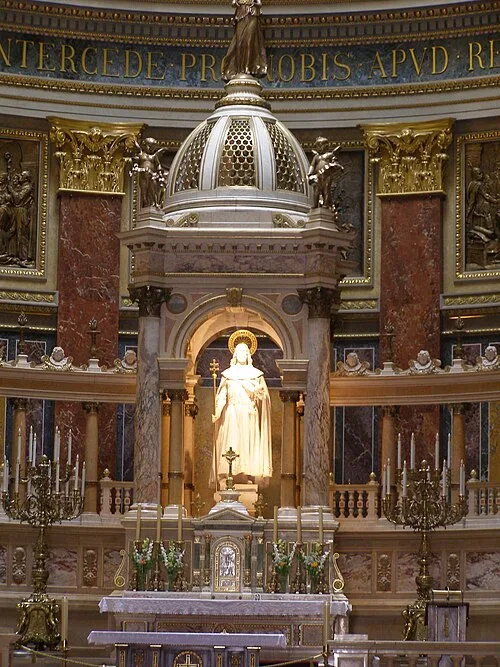 The Sanctuary and High Altar
The High Altar and the Marble King
The statue at the centre of this high altar shows Saint Stephen, the founder of the Hungarian state. Alajos Stróbl carved the figure. József Kauser designed the canopy that rises above it, an ornate frame for the king. Since the church was consecrated, this has been the main place of devotion to Saint Stephen.
Listen in the appAndrzej Otrębski · CC BY-SA 3.0
08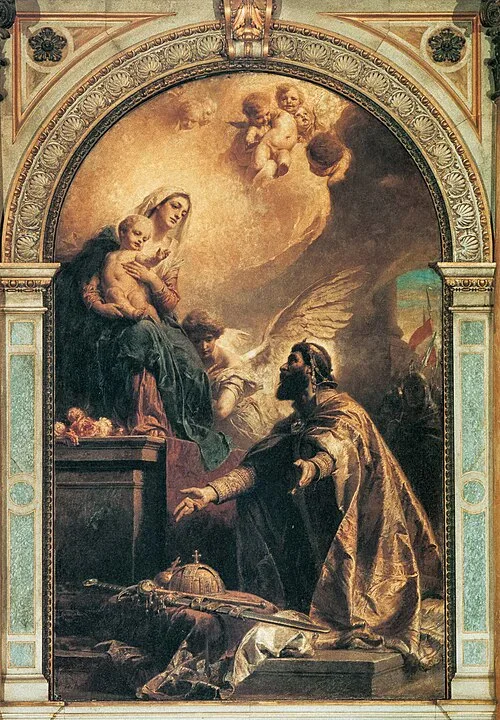 The Sanctuary and High Altar
Benczúr's Altarpiece: The Crown Offered to Mary
King Stephen kneels in a golden cloak, offering his crown to the Virgin and Child. Gyula Benczúr painted this altarpiece. An angel stands beside them, and a crown and a sword lie on the steps at the king's feet. The scene comes from devotional tradition, not from a moment anyone saw. Above the sanctuary, Benczúr's mosaics on the vault show allegories of the Holy Mass. Around the sanctuary, bronze reliefs by Ede Mayer follow the main stages of Saint Stephen's life.
Listen in the appGyula Benczúr · Public domain
09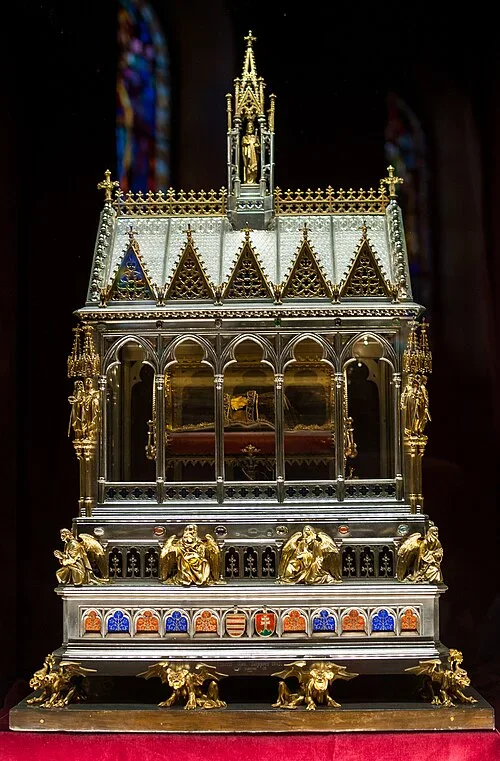 The Chapel of the Holy Right (Szent Jobb)
The Holy Right Reliquary
Since 1971, the right hand of Stephen the First has had a permanent home in this basilica. The hand is mummified, and it has survived intact. It is known as the Holy Right, or Szent Jobb in Hungarian. The reliquary that holds it is gilded, with pointed arches and small pinnacles in the Gothic style. The chapel behind the sanctuary was once dedicated to Saint Leopold, and today it is the Holy Right chapel. Each year on the August twentieth feast, the relic is carried around in procession.
Listen in the appPhoto: Wilfredor · CC0
10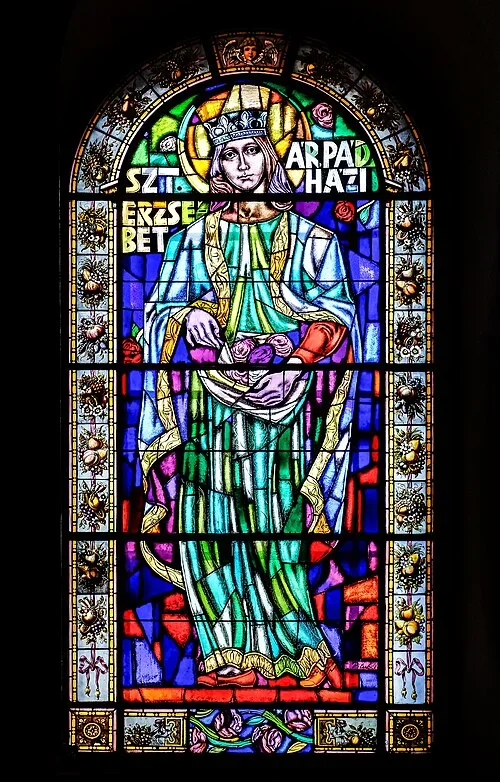 The Chapel of the Holy Right (Szent Jobb)
Miksa Róth's Stained Glass: Saint Elizabeth of the Árpád House
A crowned woman holds roses in this stained glass window. The lettering across the top reads Saint Elizabeth of the House of Árpád. Miksa Róth made the basilica's glass paintings. Borders of fruit and flowers frame the figure, with more panels running down each side. Another window in the church shows Saint Margaret.
Listen in the appWhen reusing, please credit me as author: Adam Kliczek, http://memoriesstay.com (CC-BY-SA-3.0) If you use my image on your website, please send me an email with webpage adress. Contact me at: adam.kliczekgmail.com pl en +/− pl en +/− · CC BY-SA 3.0
- 11
The Great Saint Stephen Bell
Hungary's largest bell, cast in Passau and rung on New Year's Eve and on August twentieth.
- 12
The Dome Terrace: Equal with the Parliament
Why the basilica is as tall as Parliament, and what the view from the dome takes in.
St. Stephen's Basilica
Frequently asked questions
How much does the guide cost?
Free app download. Listed guide price: $0.99. Guide price shown in the app. Audio guide only. Venue admission is separate.
Can I listen without internet?
Yes. Download the guide’s audio, images, and maps in the app before your visit. Your downloaded content is then available offline.
Can I listen in my language?
This audio guide is available in 15 languages, including English.
Do I need to follow a schedule?
No. This is a self-guided experience. Choose your stops, pause whenever you like, and return to a story at your own pace.
At your own pace
Explore St. Stephen's Basilica.
Download Stanza, then search for “St. Stephen's Basilica”.
Free app download · Guide price shown in the app
Keep exploring
Nearby audio guides
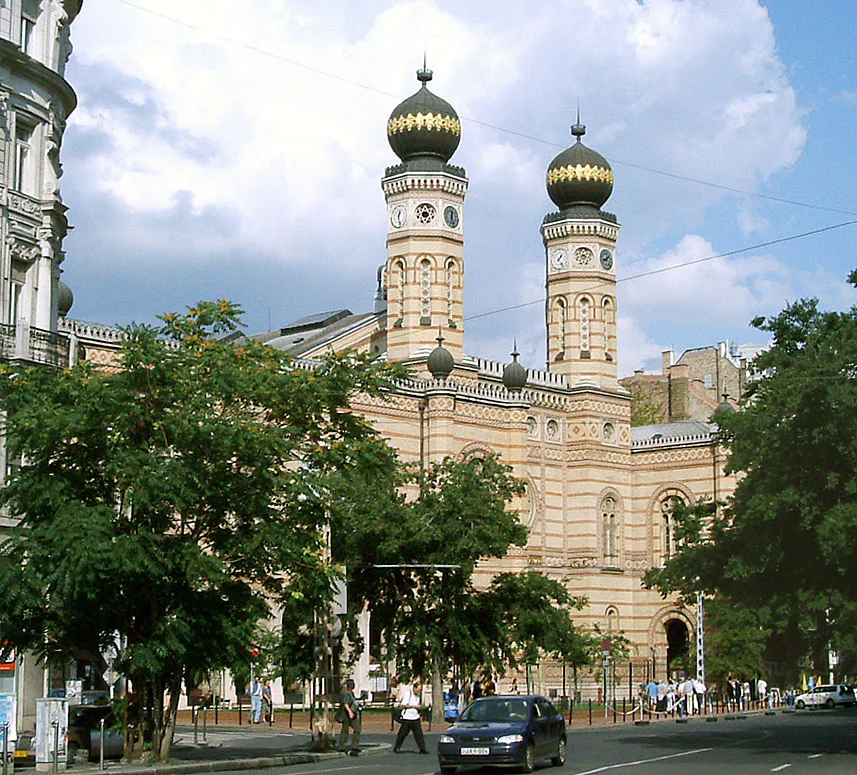
Budapest · 1 km
Dohány Street Synagogue
Content & sources
The original uploader was OsvátA at Hungarian Wikipedia. · CC BY-SA 3.0
Budapest · 1 km
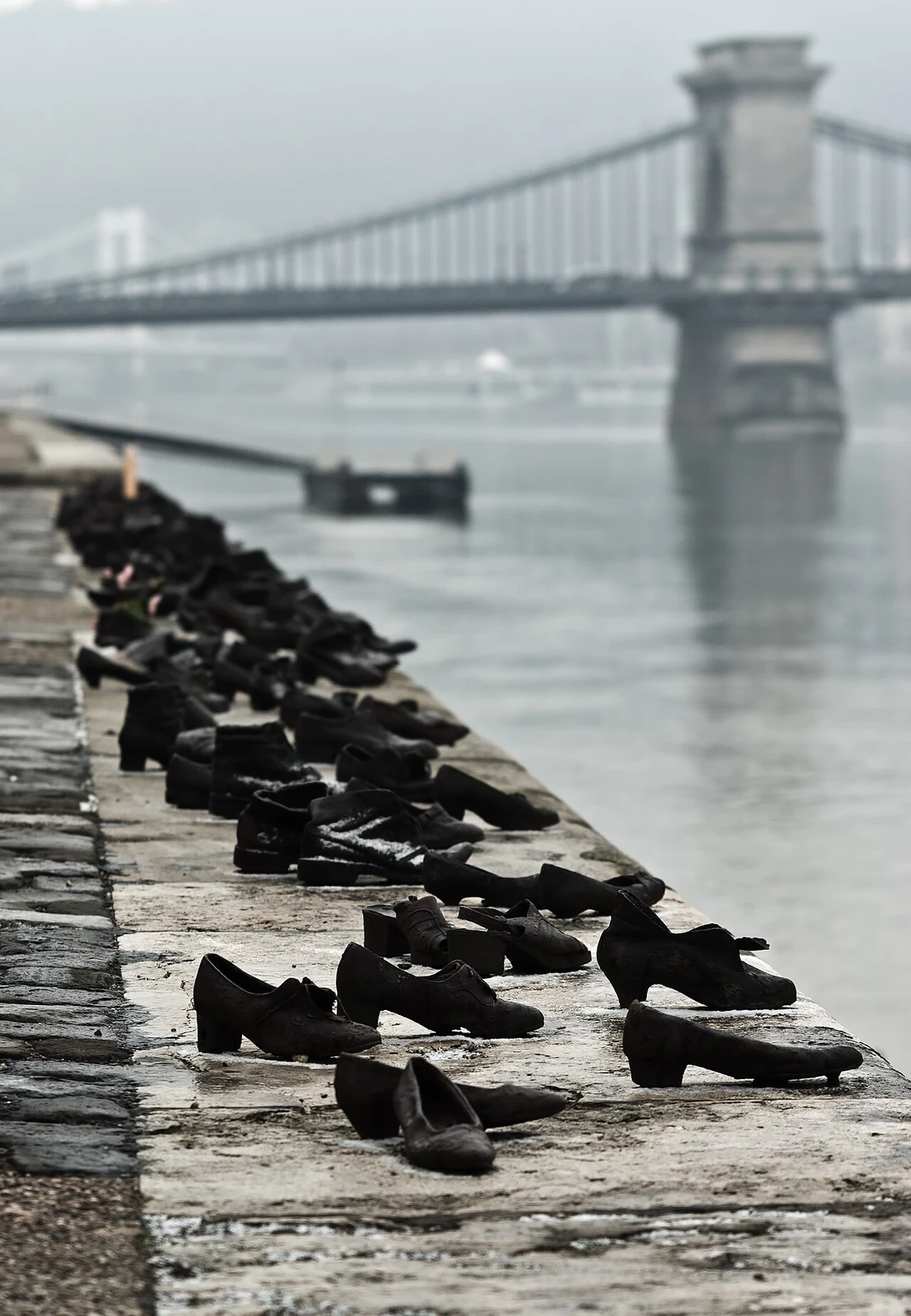
Shoes on the Danube Bank
Content & sources
Photo: Nikodem Nijaki · CC BY-SA 3.0
Budapest · 1 km
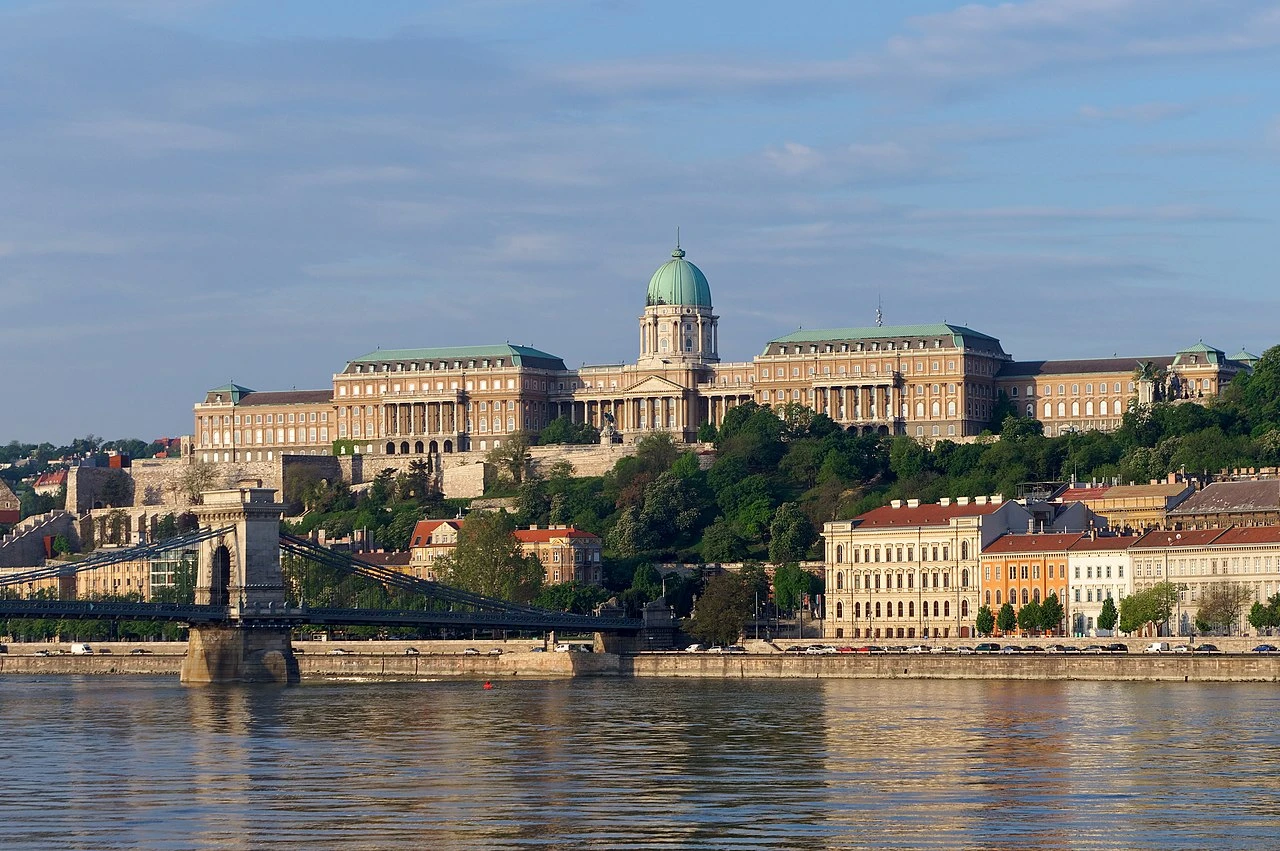
Buda Castle
Content & sources
Jakub Hałun · CC BY-SA 4.0
Budapest · 1 km
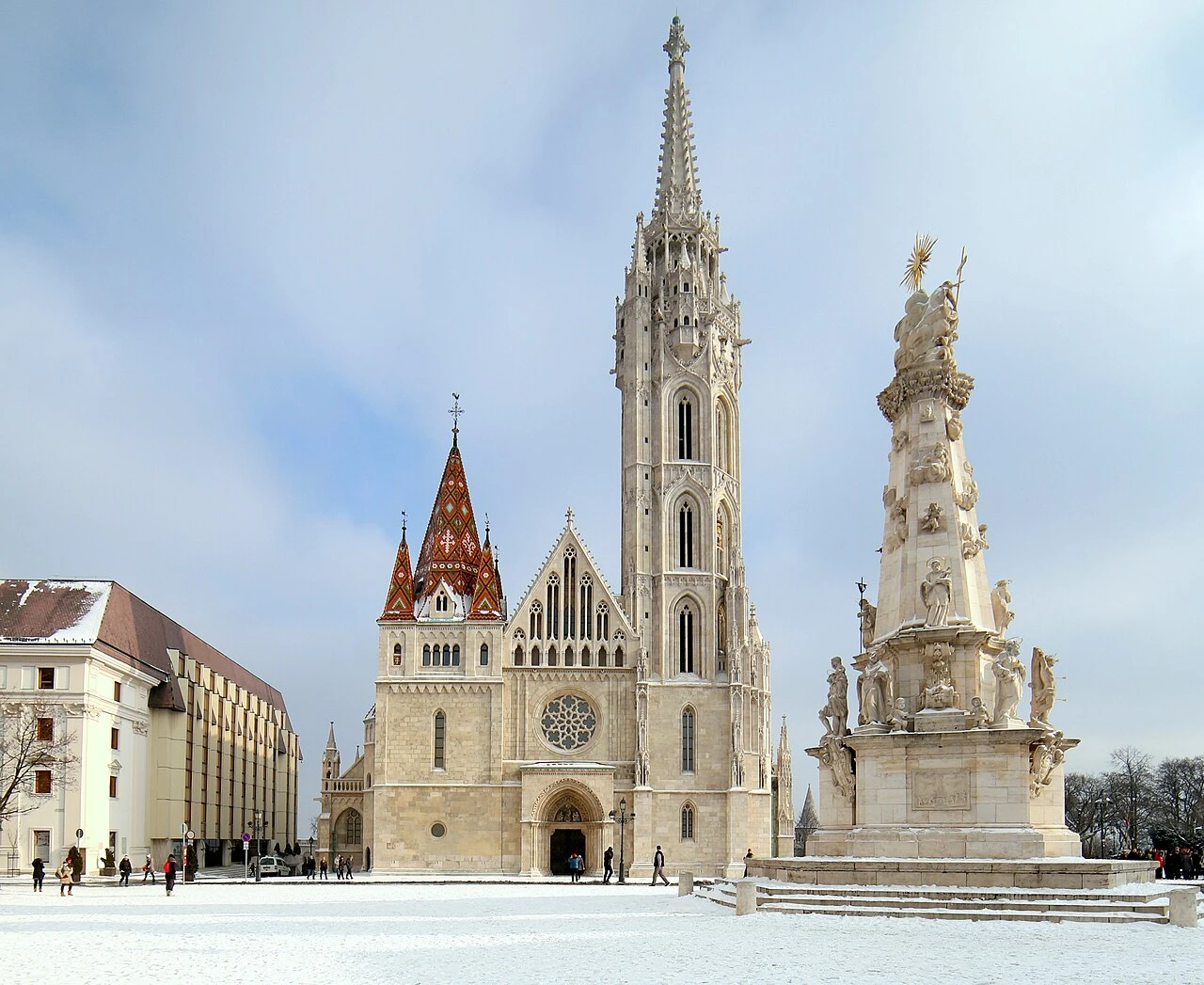
Matthias Church
Content & sources
Photo: Thaler Tamas · CC BY-SA 4.0