Stanza · Audio guide
Mátyás-templomAudio guide
A place to remember. A story to take with you.
Matthias Church is a historic Roman Catholic church located in the heart of Budapest, Hungary, within the Buda Castle District.
Download Stanza, then search for “Mátyás-templom”.
About the tour
One guide. Your kind of visit.
Matthias Church is a historic Roman Catholic church located in the heart of Budapest, Hungary, within the Buda Castle District.
Ready when you are.
- 01Get the free Stanza app.
iOS & Android
- 02Find your guide.
“Mátyás-templom”
- 03Download before you go.
Works offline
Audio guide / 35 narrated stops
Inside the guide
Get to know a few of the stories before you go. Open a stop to read more.
01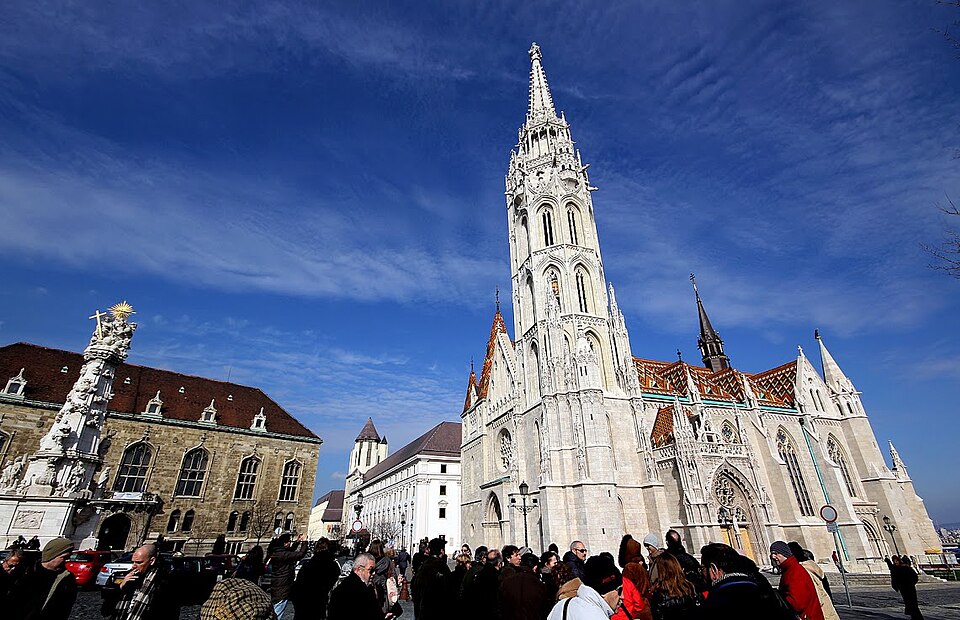 Holy Trinity SquareThe Coronation Church
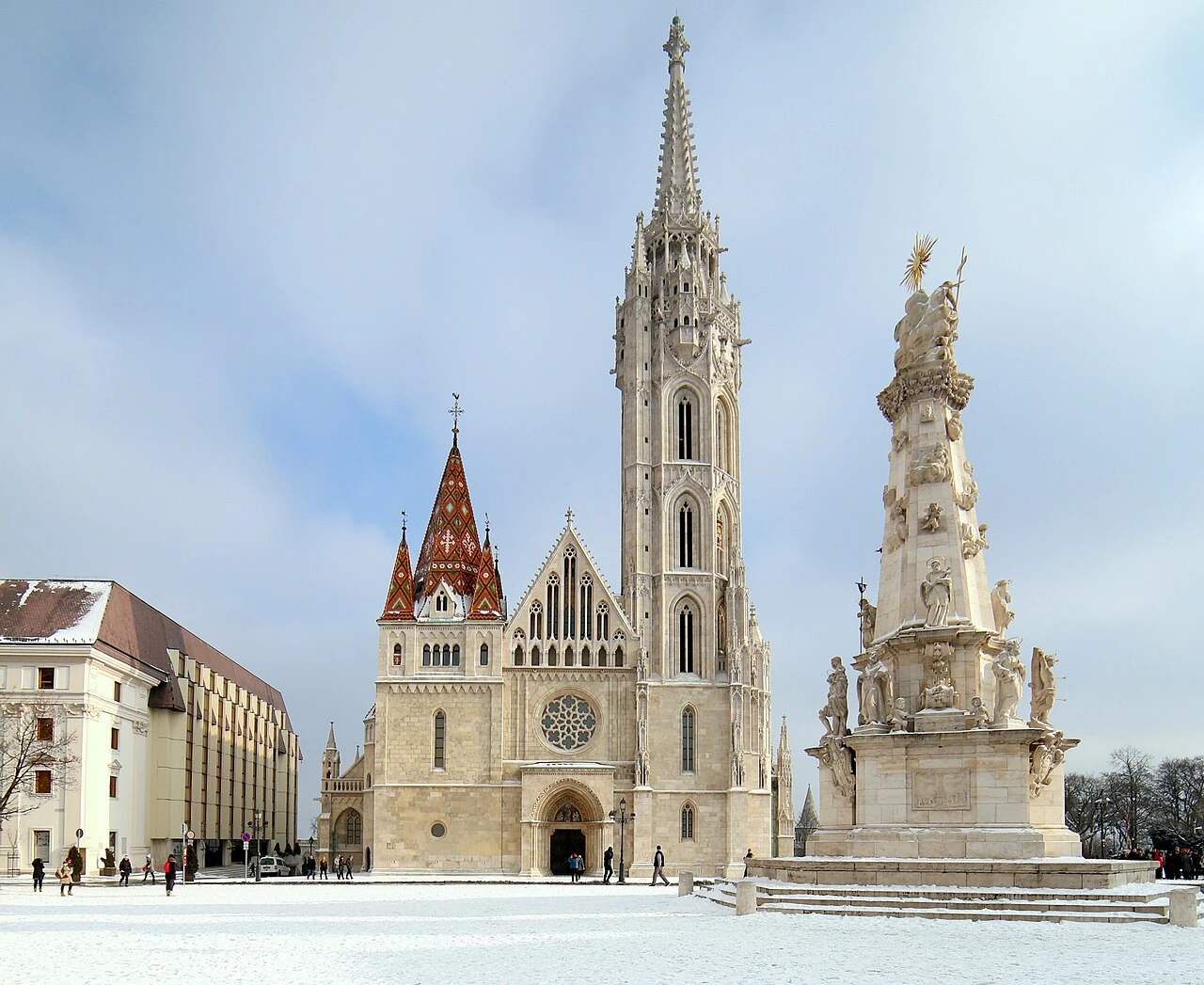
Welcome to one of the most significant landmarks in Hungary, a grand structure with over eight centuries of history woven into its walls. While its official name is the Church of the Assumption of the Buda Castle, it is known throughout the world as Matthias Church. This nickname honors King Matthias Corvinus, the beloved 15th-century monarch who was married here twice and who significantly expanded and beautified the building during his reign. The church’s history is a mirror of Hungary’s own story. Tradition holds that the very first church on this site was founded in 1015 by Saint Stephen, the first king of Hungary. However, that early building was lost to history. The Gothic structure you see today began to take shape in 1255, commissioned by King Béla IV after the devastating Mongol invasion. He intended it to be a spiritual center for the newly established city of Buda. Over the centuries, it became the site of royal weddings and, most significantly, the coronations of Hungarian kings. As you stand here, you are looking at a building that has been transformed from a Romanesque basilica to a Gothic masterpiece, and even served as a mosque for over a century during the Ottoman occupation. Today, it stands as a resilient symbol of national identity, beautifully restored to reflect its medieval peak while incorporating the artistic flourishes of the 19th century.
Photo: Thaler Tamas · CC BY-SA 3.0
02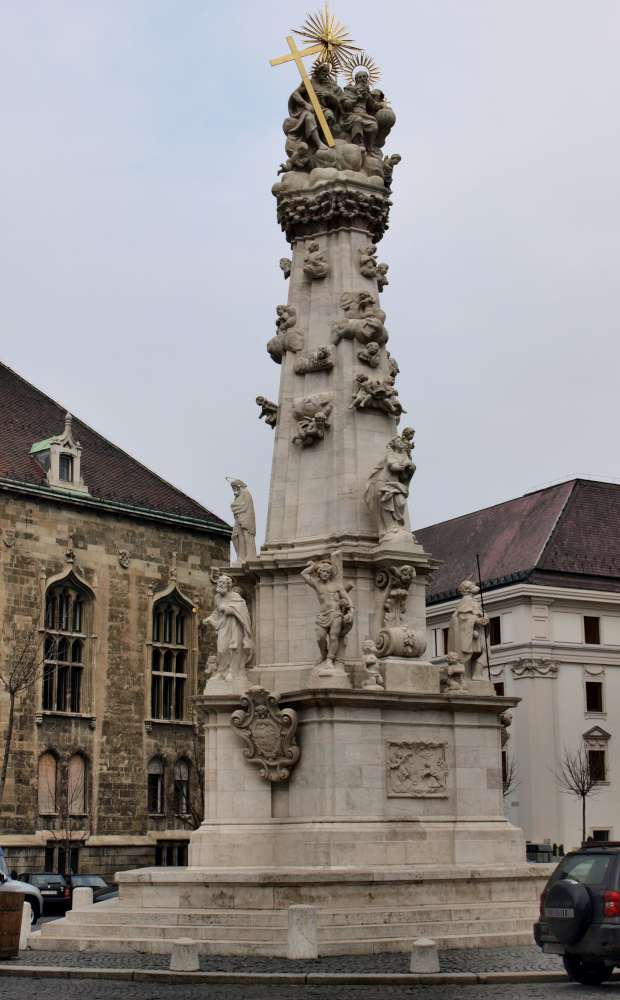 Holy Trinity SquareHoly Trinity Column
Standing in the center of the square is a towering monument known as a 'Plague Column.' This landmark was erected in the early 18th century by the survivors of a devastating epidemic that swept through the city. In an age when medicine could do little against such a disease, the people of Buda turned to their faith. Once the epidemic finally subsided, this column was built as a grand gesture of thanks to God for the end of the suffering. Take a moment to observe the intricate carvings that decorate the monument from its base to its peak. It is a masterpiece of Baroque art, characterized by a sense of dynamic movement and dramatic detail. You can see various figures of saints and angels appearing to climb through a series of clouds and decorative scrolls, all moving toward the top. At the very summit, the monument is crowned with a representation of the Holy Trinity. This type of monument became common in Central Europe during the Baroque period, but this specific column is one of the most elaborate examples you will find. It serves not just as a religious icon, but as a historical record of a community that found the strength to rebuild after a great tragedy.
Misibacsi at Hungarian Wikipedia · CC BY-SA 3.0
03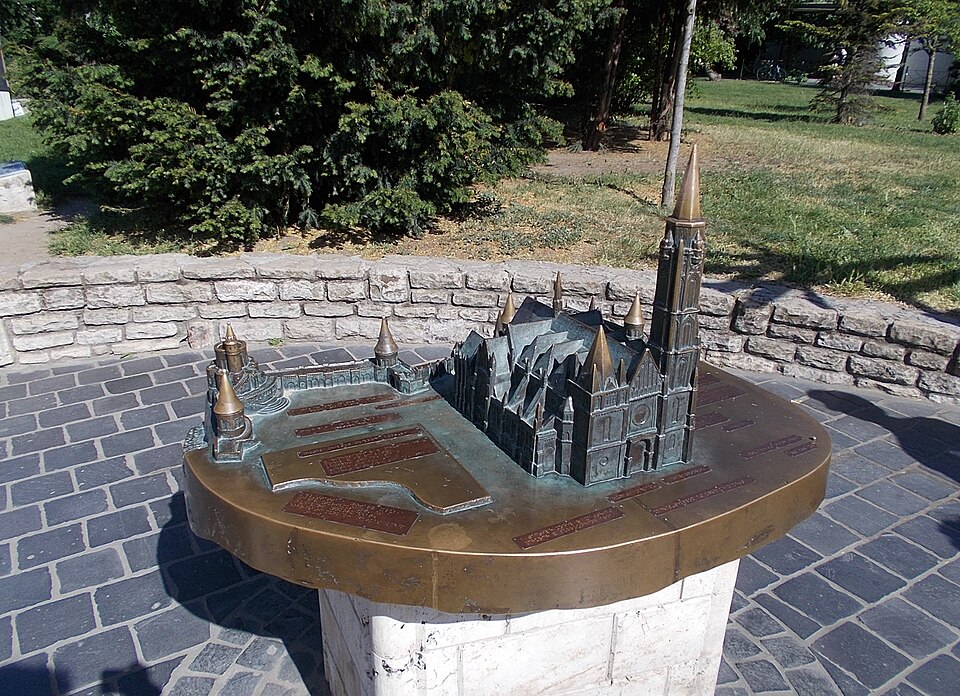 Holy Trinity SquareThe Bronze Miniature
As you explore the area around the church, you will find a small, detailed model of the entire complex. This bronze-colored miniature provides a perfect bird's-eye view that is impossible to get from the ground. It is an excellent tool for orienting yourself and understanding the relationship between the church and the neighboring Fisherman's Bastion, which wraps around the eastern side of the building. By looking at the model, you can appreciate the complex layout of the church, from its various side chapels to the towering southern spire. It clearly shows how the Neo-Gothic fortifications of the bastion were designed to frame the church, creating a unified architectural ensemble that defines the skyline of the Castle District. Notice how the model captures the different roof levels and the distinctive shape of the towers. It allows you to see the 'lace-like' details of the architecture on a manageable scale. This overview is particularly helpful before you move toward the main tower, as it gives you a sense of the sheer size and historical layers that make up this site. It’s a tactile way to connect with the architecture before you dive deeper into the specific stories of the individual structures.
Listen in the appPhoto: Globetrotter19 · CC BY-SA 3.0
04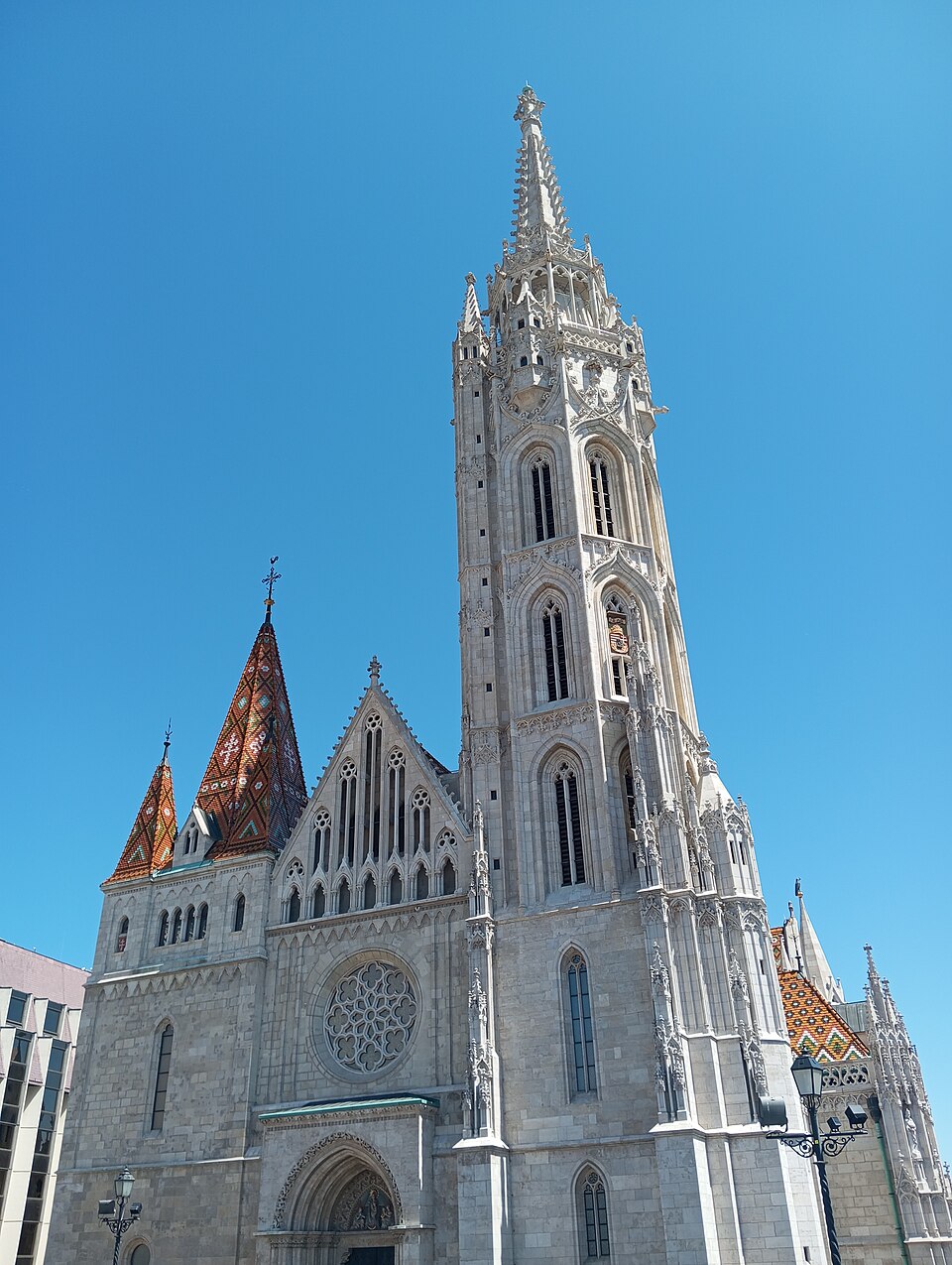 The Matthias Bell TowerMatthias Bell Tower
Dominating the skyline of the Castle District is the southern bell tower, the tallest point of Matthias Church, reaching a height of 78.16 meters. This tower is named after King Matthias Corvinus, and it remains one of the most recognizable landmarks in Budapest. As you look at its design, notice the progression from the sturdy, square base to the delicate, octagonal spire at the top. The lower sections of the tower are particularly significant as they retain much of their original 15th-century form, surviving the various sieges and occupations the city has endured. The tower is not just a visual landmark; it is also functional. If you are feeling energetic, the tower is open to those who wish to see the city from a different perspective. A climb of 197 narrow spiral steps leads to the lower observation balcony. From that height, you are rewarded with one of the most breathtaking views in the city, looking out over the Danube River toward the Parliament building and the sprawl of Pest. The tower also houses several massive bells that still ring out over the city today, continuing a tradition that has lasted for centuries. Whether you view it from the ground or the top, the tower stands as a testament to the engineering and artistic skill of the medieval period.
Listen in the appPhoto: A.Donaire2005 · CC BY 4.0
05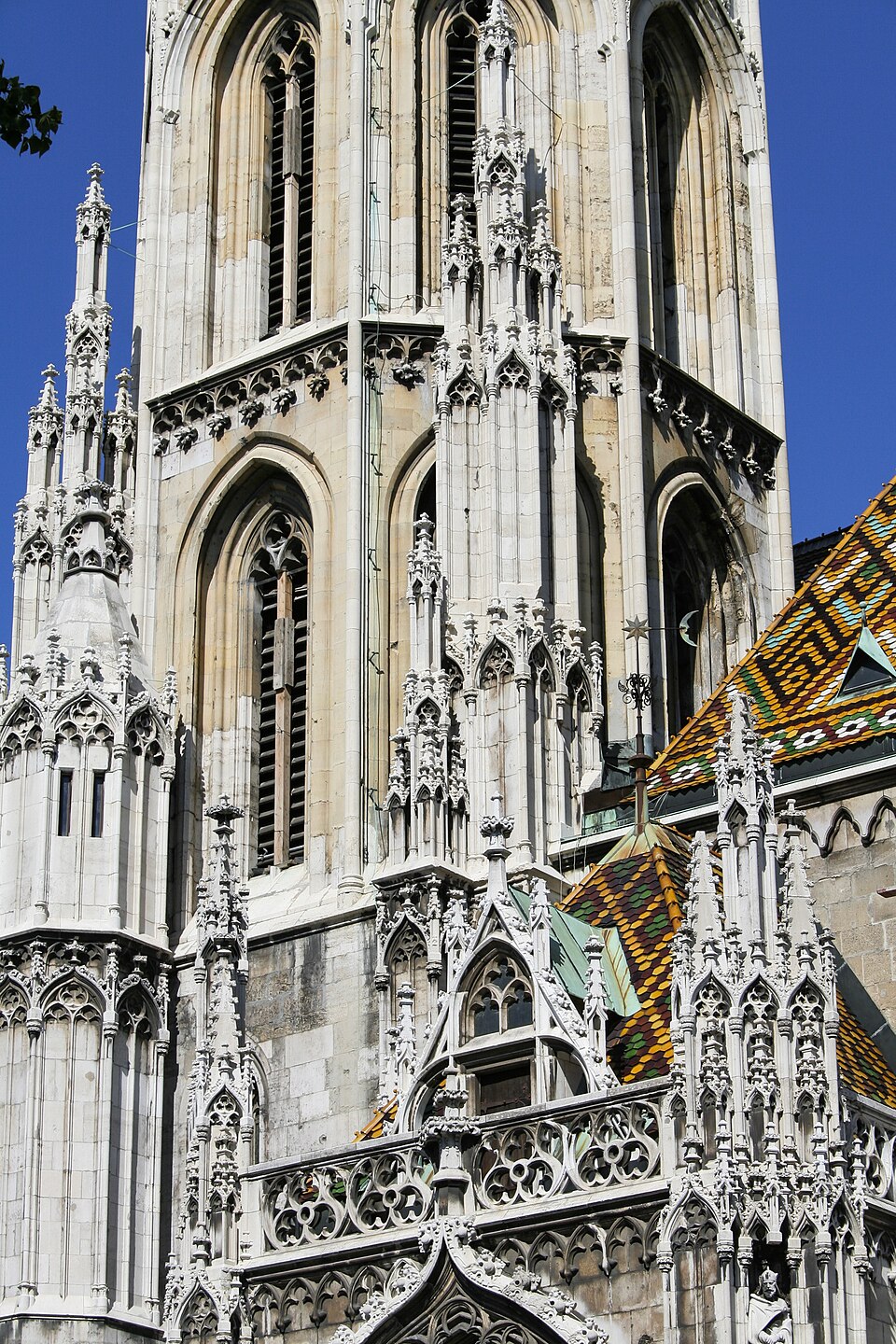 The Matthias Bell TowerSchulek’s Gothic Vision
If you look closely at the upper sections of the tower, you will see what looks like delicate stone 'lace.' This intricate detail is a hallmark of the Gothic style, but most of what we see today is the work of a much later era. Between 1874 and 1896, the church underwent a massive 22-year restoration led by the visionary architect Frigyes Schulek. When he began his work, the church was a confusing mix of styles, including many Baroque additions made after the Ottoman occupation. Schulek’s goal was not just to repair the building, but to recreate a 'pure' Gothic vision that reflected the church's medieval peak. He stripped away the later Baroque features and replaced them with the intricate limestone carvings you see now. This was a controversial approach at the time, as it prioritized an idealized historical style over the actual layers of history the building had accumulated. However, his work was carried out with incredible precision and artistry. The result is the stunning, unified appearance that has made the church famous. Schulek’s vision transformed the building from a weathered historical site into a national monument, ensuring that the 'Coronation Church' would look its best for the millennial celebrations of the Hungarian state in 1896.
Listen in the appmandoft from El Campello (Alicante), Spain · CC BY-SA 2.0
06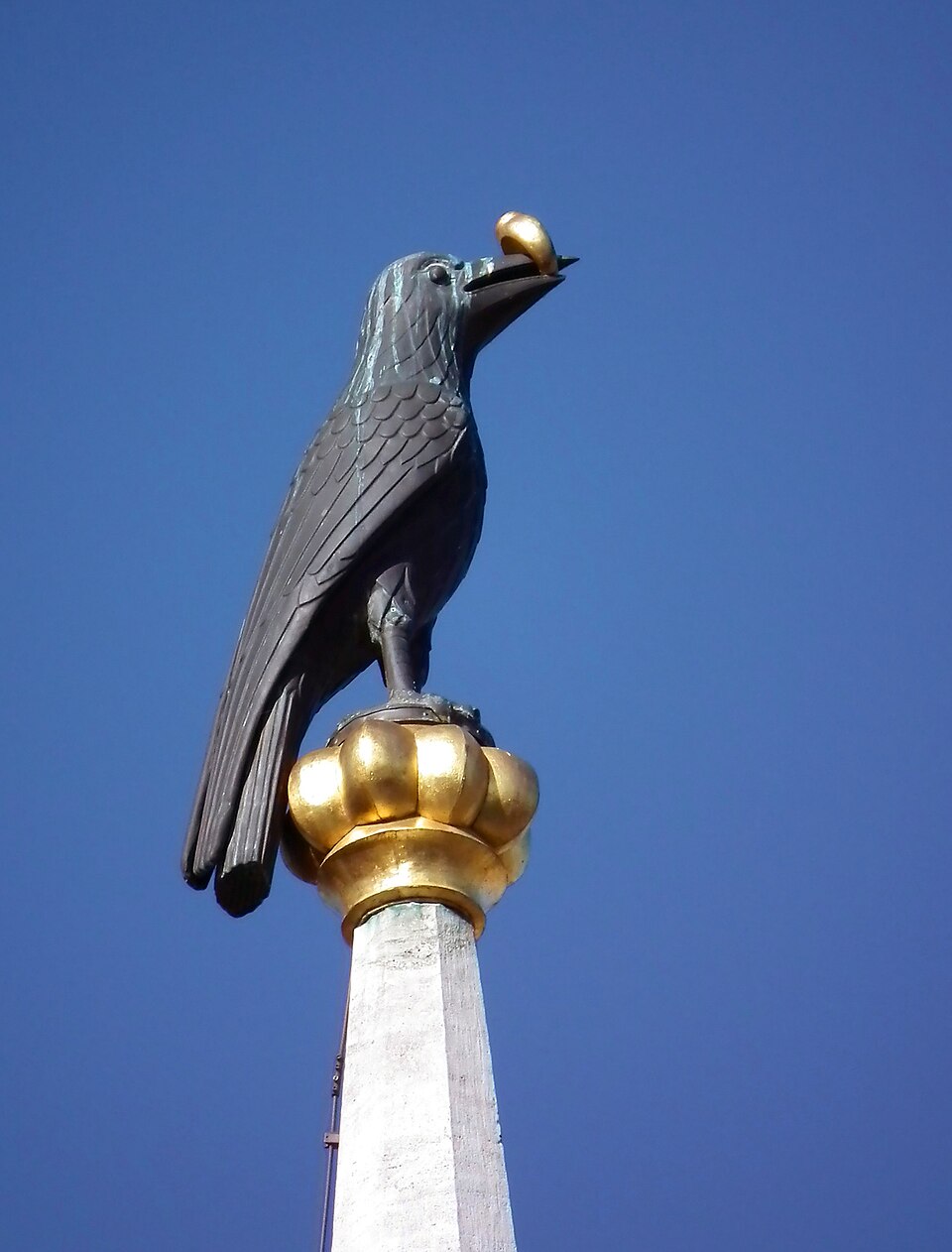 The Matthias Bell TowerThe Raven of Corvinus
Notice the figure of a bird clutching a gold ring in its beak, perched prominently on the tower. This is the raven of the Hunyadi family, the coat of arms of King Matthias. The presence of this symbol is why the king is commonly known as Matthias Corvinus—'Corvus' being the Latin word for raven. This specific carving dates back to 1470 and is one of the original historical elements preserved on the exterior. The raven is tied to a popular legend from the king's life. It is said that while his mother, Erzsébet Szilágyi, was sending him a letter with a ring, a raven snatched the jewelry away. The bird supposedly carried it back to her, an event seen as a powerful omen. Another version tells of a raven carrying a ring to the king to signal his ascent to the throne. Regardless of which version you believe, the raven became the defining symbol of his reign, representing both wisdom and royal authority. King Matthias was a great patron of the arts and a defender of the realm, and he used this symbol throughout his kingdom to mark his presence. Finding this small raven amidst the grand architecture is like finding the king’s personal signature on the church he loved so much.
Listen in the appredoctober · CC BY-SA 2.5 hu
07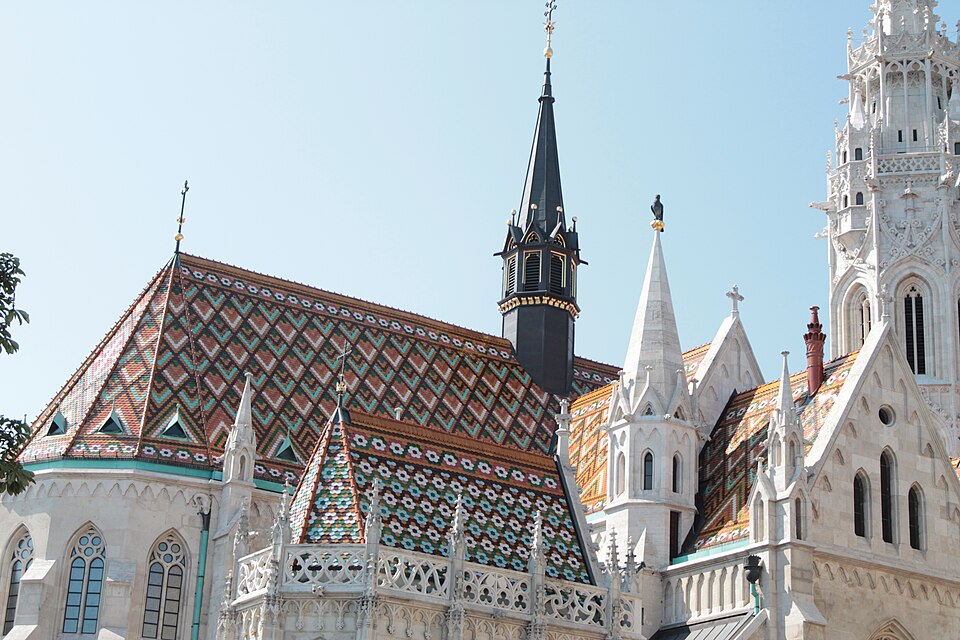 The Zsolnay Ceramic RoofThe Zsolnay Roof
One of the most eye-catching features of the church is its vibrant, multi-colored roof. Arranged in a striking diamond pattern, these tiles give the building a unique character that sets it apart from typical Gothic cathedrals. These tiles are made of 'pyrogranite,' a weather-resistant ceramic material developed at the Zsolnay factory in Pécs. This material was a revolutionary innovation in the late 19th century, designed to withstand the harsh elements while retaining its brilliant color for generations. During the great restoration led by Frigyes Schulek, these tiles were chosen to replace the older, plainer roof. The use of Zsolnay ceramics became a hallmark of Hungarian architecture during the Art Nouveau and Neo-Gothic periods, appearing on major buildings across the country. The colors—ranging from deep greens and oranges to yellows and browns—were inspired by medieval patterns found in historical manuscripts. Beyond their beauty, the tiles serve a practical purpose; their smooth, glazed surface is essentially self-cleaning, as rainwater washes away dust and pollutants. This is why the roof looks just as vivid today as it did when it was first installed over a century ago. It is a perfect example of how 19th-century technology was used to celebrate and preserve Hungarian cultural heritage.
Listen in the appJohn Samuel · CC BY-SA 4.0
08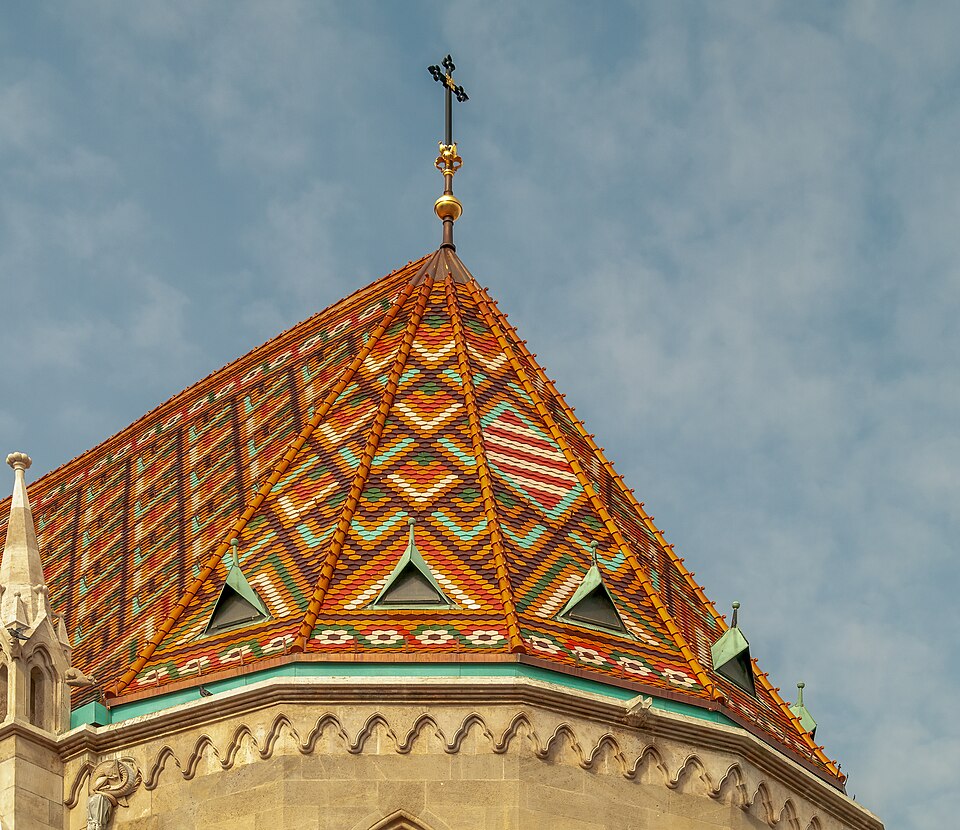 The Zsolnay Ceramic RoofA Tapestry of Tiles
The precision of the roof is even more impressive when you consider the sheer number of individual tiles required to create these seamless geometric patterns. Each tile was carefully placed to form a giant mosaic that wraps around the church's steep slopes. This design choice was revolutionary at the time of the 19th-century restoration. While most medieval churches in the region had simple clay tiles, Schulek wanted something that would make the Coronation Church truly stand out on the city’s skyline. These patterns weren't chosen at random; they were designed to mimic the appearance of medieval textiles and tapestries, bringing a sense of warmth and decoration to the exterior of the building. The durability of the pyrogranite material has been proven over time. Despite the soot of the industrial era and the damage of World War II, the tiles have remained remarkably well-preserved. When you look up, you aren't just seeing a roof; you are seeing a 'tapestry of tiles' that serves as a protective skin for the church. It is this combination of artistic flair and industrial innovation that helped define the 'Hungarian style' of the late 1800s. The roof remains one of the most photographed features in Budapest, acting as a colorful crown for the Castle District.
Listen in the appPhoto: Ermell · CC BY-SA 4.0
09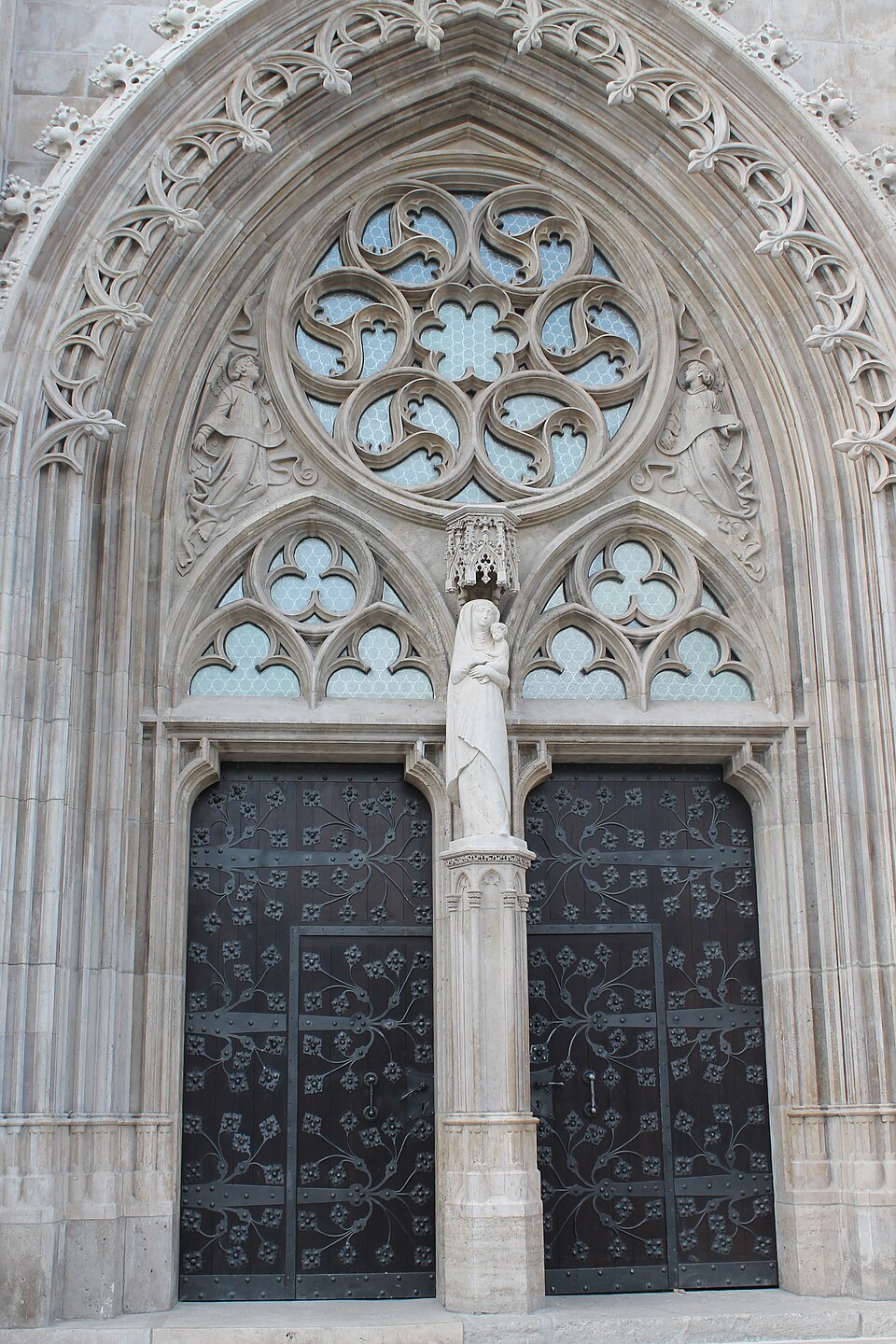 The Main Western Portal (Mary Gate)The Main Entrance
As you approach the western facade, you find the 'Mary Gate,' the primary ceremonial entrance to the church. This portal is the threshold through which kings once passed for their coronations and weddings. Notice the contrast between the relatively stark, light-colored limestone of the exterior and the hint of the decorative world that awaits inside. The gateway is a piece of storytelling in itself, inviting visitors to leave the city behind and enter a sacred space. The entrance was significantly redesigned during the 19th-century restoration to reflect a 'pure' Gothic style, yet it incorporates elements that pay homage to the church's long history. The stone arches are deeply recessed, drawing your eye toward the doorway and the artwork above it. This design is typical of grand medieval portals, intended to symbolize the transition from the earthly realm to the spiritual one. As you stand here, imagine the grand processions of the past, accompanied by organ music and the ringing of bells. This entrance doesn't just provide access to a building; it introduces you to a 'total work of art' where architecture, sculpture, and painting are seamlessly combined. Once you step through these doors, the monochromatic world of the exterior will give way to an interior covered in vibrant frescoes and intricate patterns.
Listen in the apphakan kozan · CC BY 3.0
10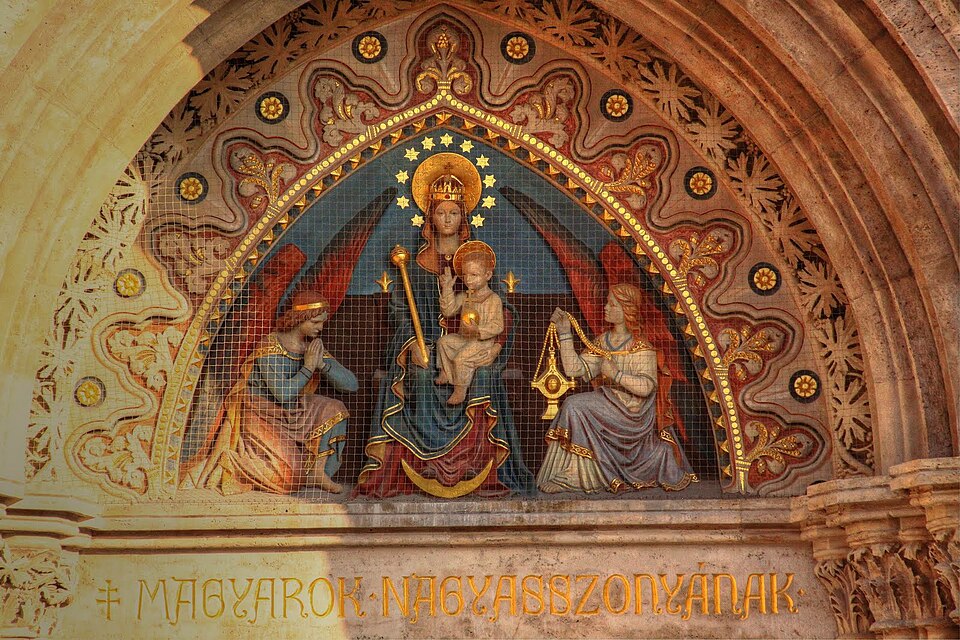 The Main Western Portal (Mary Gate)Great Lady of Hungary
Above the main entrance, a shimmering relief depicts 'Our Lady of the Hungarians,' known in Latin as Patrona Hungariae. This image of the Virgin Mary holds a very special place in the hearts of the Hungarian people. According to tradition, King Saint Stephen, facing the end of his life without an heir, dedicated the entire nation to Mary, placing Hungary under her protection. Since that time, she has been regarded as the holy protector of the country. Notice the background of the relief, which is finished with a gold mosaic that catches and reflects the sunlight. This choice of materials is intentional; it serves as a visual bridge to the 'total work of art' you are about to experience inside the nave. The gold and vibrant colors signal that this is no ordinary building, but a space of high ceremony and deep national significance. The depiction shows Mary in a regal light, often shown with the Hungarian crown, emphasizing the union of religious faith and national identity. This relief was a key part of the 19th-century redesign, ensuring that every visitor would understand the sacred and patriotic nature of the church before they even set foot inside. It remains a powerful symbol of resilience and protection for the city.
Listen in the appNaturesFan1226 · CC BY 3.0
Mátyás-templom
Frequently asked questions
How much does the guide cost?
Free app download. Listed guide price: $0.99. Guide price shown in the app. Audio guide only. Venue admission is separate.
Can I listen without internet?
Yes. Download the guide’s audio, images, and maps in the app before your visit. Your downloaded content is then available offline.
Can I listen in my language?
Stanza supports 15 languages. Check the app for the languages available for this guide.
Do I need to follow a schedule?
No. This is a self-guided experience. Choose your stops, pause whenever you like, and return to a story at your own pace.
At your own pace
Explore Mátyás-templom.
Download Stanza, then search for “Mátyás-templom”.
Free app download · Guide price shown in the app
Keep exploring
Nearby audio guides
Budapest
Budavári Palota
Content & sources
Jakub Hałun · CC BY-SA 4.0

Budapest
Cipők a Duna-parton
Content & sources
Photo: Nikodem Nijaki · CC BY-SA 3.0
Budapest
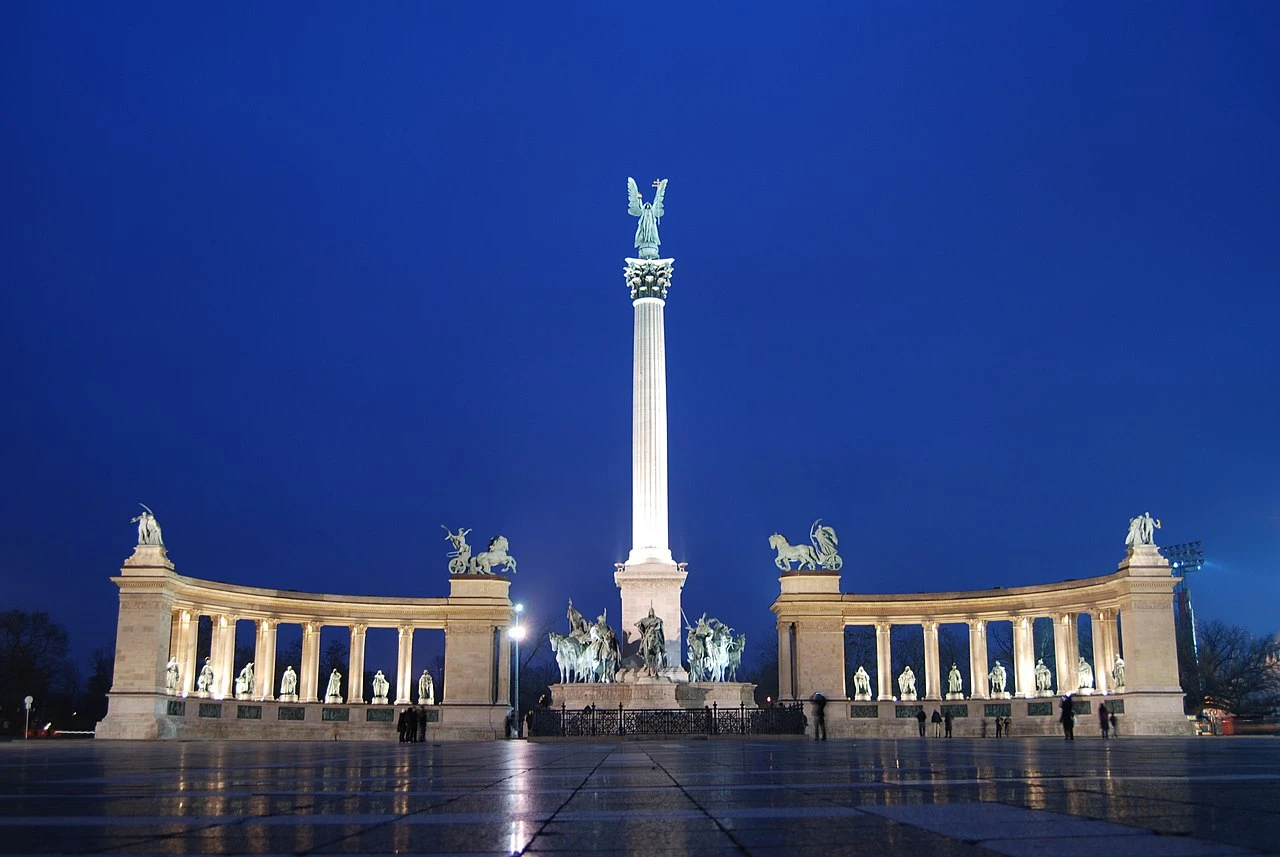
Millenniumi emlékmű
Content & sources
Paul Mannix · CC BY 2.0