Stanza · Audio guide
Pannonhalma Archabbey Audio Guide
A place to remember. A story to take with you.
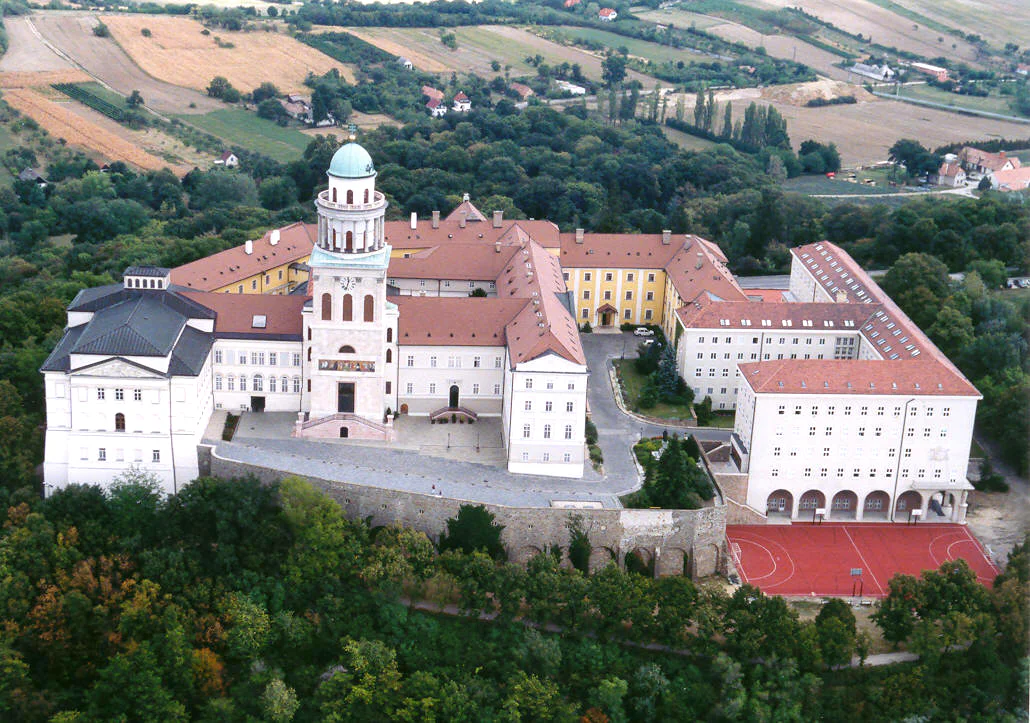
The Pannonhalma Archabbey is a medieval building founded in 996. It is one of the oldest historical monuments in Hungary and the second largest territorial abbey in the world.
Download Stanza, then search for “Pannonhalma Archabbey”.
About the tour
One guide. Your kind of visit.
The Pannonhalma Archabbey is a medieval building founded in 996. It is one of the oldest historical monuments in Hungary and the second largest territorial abbey in the world.
Ready when you are.
- 01Get the free Stanza app.
iOS & Android
- 02Find your guide.
“Pannonhalma Archabbey”
- 03Download before you go.
Works offline
Audio guide / 14 narrated stops
Inside the guide
Get to know a few of the stories before you go. Open a stop to read more.
01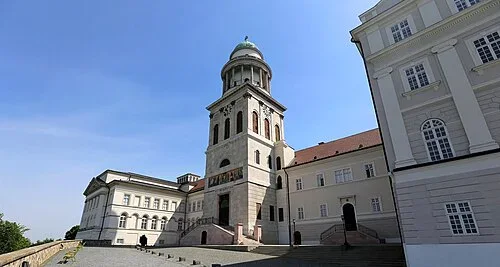 The Fortified Stronghold & Outer Courtyard
Bell Tower and Main Courtyard
Welcome to Pannonhalma. You're standing at the foot of a hill about two hundred and eighty metres high, and everything around you belongs to one community of Benedictine monks. Their order lives by a vow of prayer and work, and they have kept both going here for over a thousand years. The monastery was founded in 996 by Prince Géza, the ruler who set his people on the path to Christianity. It was the first Benedictine house in Hungary, and it soon became the centre of the whole order in this country. Look up at the tower above you. It rises fifty-five metres and is counted among the best-known works of Hungarian classicist architecture. But notice how the buildings around it don't match each other. That's the point. Each generation added its own layer: Romanesque walls, a Gothic church, Baroque facades, and finally the classicist tower and library, which gave the complex its present form in 1832. So as we move through the abbey, you're not walking through one building. You're walking through a thousand years, one layer at a time. Let's go in.
Photo: Thaler Tamas · CC BY-SA 4.0
02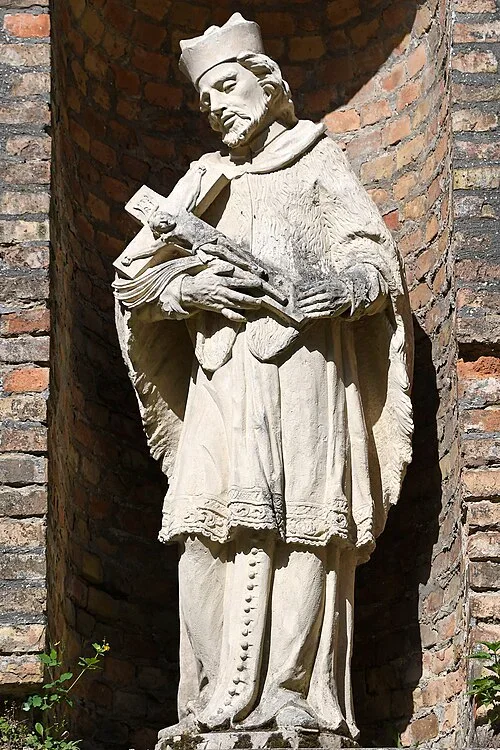 The Fortified Stronghold & Outer Courtyard
Statue of Saint John of Nepomuk
Here's a quiet figure in a brick niche: Saint John of Nepomuk, carved in stone, holding a cross. He's a Baroque saint, and that matters, because this statue belongs to the abbey's age of rebirth. Behind it lies a hard century and a half. In 1541 the monastery was raised to the rank of an archabbey, but those were the years when the Ottoman Empire was pushing into Hungary. The monks fortified the whole hilltop to defend themselves. Even so, through the long occupation they had to abandon the abbey again and again, sometimes for years at a time. When they finally returned for good, much of the complex was damaged. What you see now is largely what they built back. Through the 17th and 18th centuries they added rich Baroque decoration and whole new wings, and much of the facade around you dates from that time. The driving force was Archabbot Benedek Sajghó, who led a major Baroque building campaign from 1722 until his death in 1768. This carved saint, serene against rough brick, is the face of that recovery: a community that had lost nearly everything, and chose to build beautifully.
Pasztilla aka Attila Terbócs · CC BY-SA 4.0
03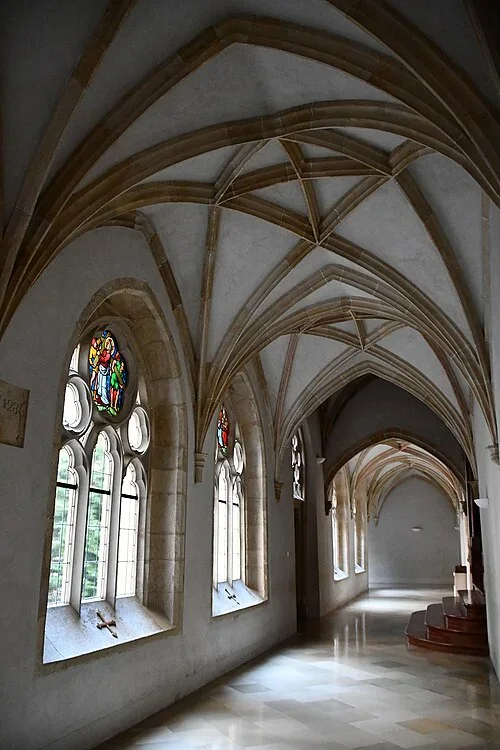 The Gothic Cloister & Porta Speciosa
The Gothic Cloister
Now you're in the quiet centre of the monastery. This walkway is the cloister, and in a Benedictine house everything is arranged around it. The church stands on one side, the chapter house where the monks held their meetings on another, the dining hall on a third, and the workshops and writing room on the fourth. The monks walked these arcades daily, moving between prayer, meals and work. The form you're looking at is Gothic, and it has a royal connection. In 1472, under King Matthias, today's cloister was created, and the work was probably finished by 1486. There's a date carved in Gothic numerals on one of the cornerstones that says so. The craftsmen most likely came from the royal building workshop at Visegrád, the king's own seat. Now look toward the middle. The small garden enclosed by the walkways had a name of its own: the Paradisum, Paradise. In medieval times the monks grew herbs there, so that the sick could recover their health in a garden meant to imitate the wholeness of Biblical Paradise, here on earth.
Listen in the appPasztilla aka Attila Terbócs · CC BY-SA 4.0
04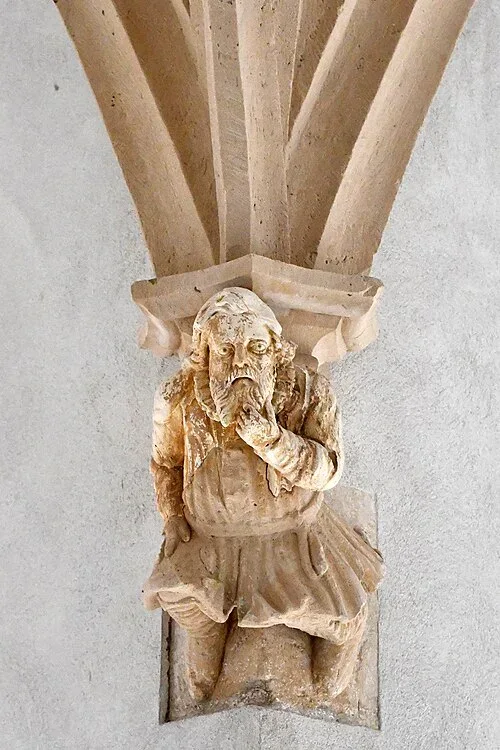 The Gothic Cloister & Porta Speciosa
Carved Corbel in the Cloister
Look up at this little figure for a moment. A bearded man, carved in stone, carrying the ribs of the vault on his shoulders. The masons who built this cloister didn't have to make the supports beautiful. They chose to. And that fits what happened in this walkway. The cloister wasn't only a corridor. The monks read as they walked here, working through the writings of the Church Fathers, the great teachers of early Christianity. And part of the monastery's books was kept close by, in a wall niche beside the ornate church entrance you'll see shortly. So the books were within arm's reach of the very stones you're touching with your eyes. A monastery like this was a place of learning as much as of prayer, and this small carved man, quietly holding up the ceiling, is that idea made visible.
Listen in the appPasztilla aka Attila Terbócs · CC BY-SA 4.0
05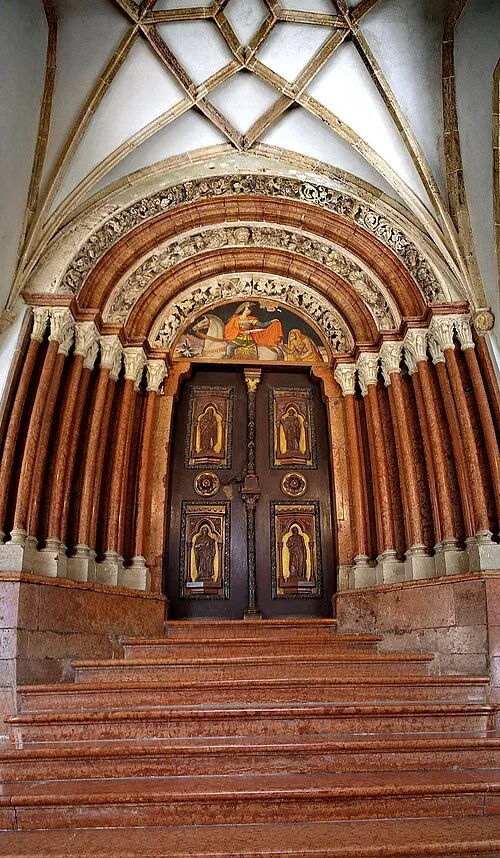 The Gothic Cloister & Porta Speciosa
The Porta Speciosa
This is the Porta Speciosa, the 'ornate entrance', and it was one of the main doorways into the church in the Middle Ages. It leads from the cloister up into the basilica, framed by carved red marble columns and a sculpted arch above the doors. It was crafted in the 13th century, and passing through it was meant to feel like a ceremony, a threshold between the monks' everyday world and the sacred space beyond. A portal like this also tells you something about the abbey's standing, and there's a story that shows it well. In 1096, Duke Godfrey of Bouillon passed through Hungary on his way to the Holy Land, leading one of the three armies of the First Crusade. Before he could cross the country, he needed the king's permission. And where did those negotiations happen? Here. Godfrey spent a whole week at this abbey, working out safe passage with King Coloman. A duke leading a crusade, sitting down for seven days at a Benedictine monastery on a Hungarian hill. That's the company this doorway kept.
Listen in the appKontiki · CC BY-SA 2.5 hu
06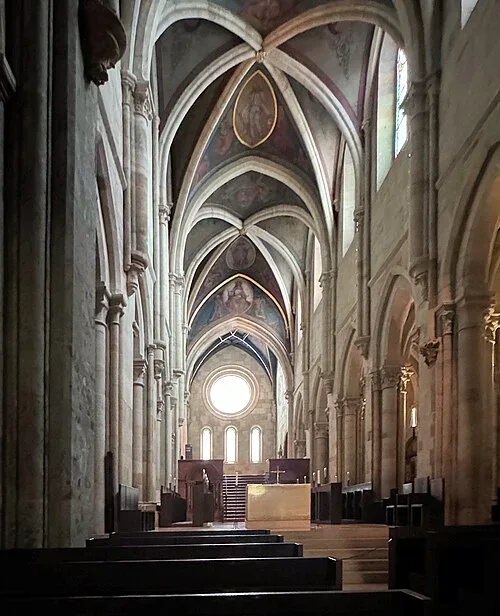 The Basilica of Saint Martin
Basilica Nave
Stand here and look down the nave. The pillars beside you and the early Gothic vault above were raised in the early 13th century, built against the walls of the church that stood here before. The basilica was consecrated most likely in 1224, under Abbot Uros, and it's counted among the crowning achievements of early Gothic architecture in this region. Now hold that image, because within twenty years this church faced its hardest test. In 1241 the Mongols invaded Hungary, and across much of the country settlements and monasteries were laid waste. But this monastery was fortified, and Abbot Uros defended it. Behind the monastery-fortress walls, his resistance held, and the Mongols were repulsed from these walls. While much of Hungary suffered, the community and its treasures survived here. That's what this space was built for, and tested for: a church that served as a place of prayer, and when it had to be, a refuge. Uros never left, in a sense. Excavators found a grave under the floor between the altar and the sanctuary steps, most likely his.
Listen in the appPhoto: Dguendel · CC BY 4.0
07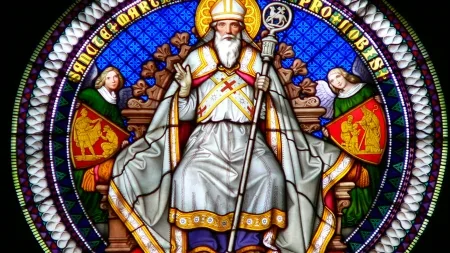 The Basilica of Saint Martin
Saint Martin Rose Window
Look up at this great stained-glass window. The figure in it gives the whole abbey its name: Saint Martin of Tours, the Roman soldier who became a bishop, famous for cutting his cloak in half to share it with a beggar. Why him, here? According to local tradition, Martin was born at the foot of this very hill. That's why the hill was long called the Mount of Saint Martin, and the monastery took him as its patron from the beginning. I'll be honest with you: the birth story is a cherished legend rather than a documented fact, but it shaped the identity of this place for a thousand years. The window itself is younger than it looks. Between 1870 and 1876 the church was rebuilt under the architect Ferenc Storno, in the neo-Gothic style of the 19th century. That campaign gave the church its large Saint Martin window, along with the coloured glass, the painted ceiling and the carved pews. So when you look at this light, you're seeing a 13th-century devotion filtered through 19th-century craftsmanship.
Listen in the appMarcusses at Hungarian Wikipedia · CC BY-SA 3.0
08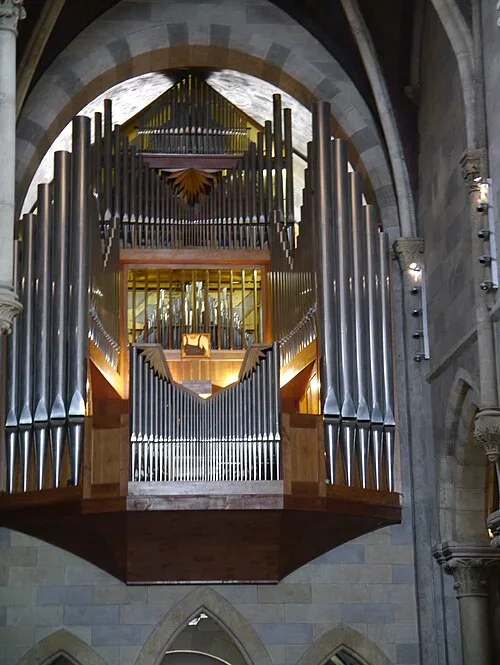 The Basilica of Saint Martin
Basilica Organ and Modern Renewal
This organ reminds you of something easy to forget in an old building: the church is not a museum. Monks still sing the liturgy here every day, prayer and work, as their rule requires, sustained by a community of roughly fifty Benedictines. And the space around you has just been through its boldest change in centuries. Preparations began in 1996, and in 2007 the monks contracted the British architect John Pawson, known for radical minimalism. Working together with heritage authorities, his design removed the pulpit, the statues, the carved pews and the old rose window, which were then put on display elsewhere. The stained-glass Saint Martin window you have just seen was left in place. In came clean walnut furnishings, and a new axis of white onyx running through the space: a new pulpit to replace the old one, a new rose window, the altar and the baptismal font, all in the same pale stone. The 19th-century stone floor was replaced, though the side windows, the canopy altar and the ceiling frescoes were kept in compromise. The works ran through 2011 and 2012, and the basilica was re-consecrated on the 27th of August, 2012. I'll say it plainly: the redesign sharply divided public opinion. Some welcomed the simplicity as closer to the original Gothic spirit. Others felt the church's 19th-century face had been stripped away. Both sides had a point, and the debate is part of this building's story too.
Listen in the appPhoto: Zairon · CC BY-SA 3.0
09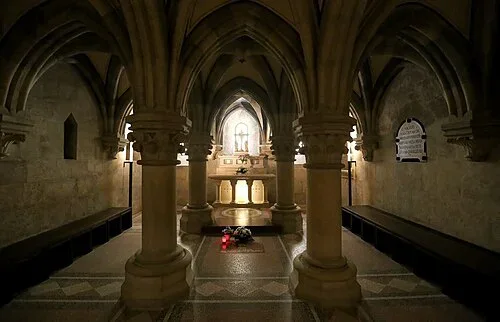 The Romanesque Crypt
Come down here, into the crypt beneath the basilica. The light is low, the vaults are close, and the columns stand on wide octagonal bases. For centuries this has been the burial place of the monastery's monks. Generation after generation of the community lies here, in the space under the church where they prayed. And its most recent burial carries a royal echo. In July 2011, the heart of Otto von Habsburg, the former Crown Prince of Austria and Hungary, was placed in this crypt. It followed a Habsburg family tradition of burying the heart separately from the body, and it followed his own wishes: he had been educated by Benedictines, and he chose Pannonhalma as the sign of his bond with Hungary. So the newest grave in this medieval room belongs to a man born in 1912, the last crown prince of an empire. The old custom and the old community, meeting in the same stone vault.
Listen in the appPhoto: Thaler Tamas · CC BY-SA 4.0
10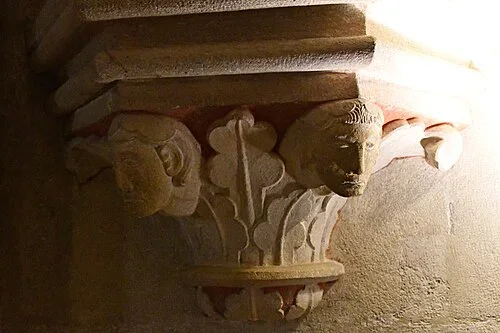 The Romanesque Crypt
Crypt Column Capital
Look closely at this capital, the carved top of the column. Thick leafy buds cover it, and then, tucked into the foliage, human faces look back at you. Masons cut these nearly eight hundred years ago, and they're part of the oldest intact sacred space in the whole abbey. Here's why that matters. The community's very first buildings were destroyed in 1137. They rebuilt at once, and that second church was consecrated that same year under Abbot Dávid. Its successor, the Gothic basilica above you, rose in the 13th century using the walls of what came before. So this crypt is the survivor, the piece of fabric where you can put your hand, so to speak, closest to the beginnings. The faces in the carving are the masons' own touch, a reminder that real people shaped this stone. Everything else on this hill has been rebuilt, extended or re-styled at some point. This low Romanesque room simply endured.
Listen in the appPasztilla aka Attila Terbócs · CC BY-SA 4.0
- 11
The Monumental Library
The classicist library of 400,000 volumes, home of the 1055 Tihany Charter, the oldest document with written Hungarian words.
- 12
Library Ceiling Fresco
Beneath the painted ceiling: the 2025 beetle infestation, and 100,000 books sealed in oxygen-free bags to save them.
- 13
Lavender Garden by the Abbey Walls
Lavender by the abbey arches: the visible sign of monastic work suppressed in 1786, confiscated under Communism, and revived after 2000.
- 14
View from the Mount of Saint Martin
The panorama from the hilltop: a closing reflection on a community that has kept one vow unbroken for over a thousand years.
Pannonhalma Archabbey
Frequently asked questions
How much does the guide cost?
Free app download. Listed guide price: $0.99. Guide price shown in the app. Audio guide only. Venue admission is separate.
Can I listen without internet?
Yes. Download the guide’s audio, images, and maps in the app before your visit. Your downloaded content is then available offline.
Can I listen in my language?
This audio guide is available in 15 languages, including English.
Do I need to follow a schedule?
No. This is a self-guided experience. Choose your stops, pause whenever you like, and return to a story at your own pace.
At your own pace
Explore Pannonhalma Archabbey.
Download Stanza, then search for “Pannonhalma Archabbey”.
Free app download · Guide price shown in the app
Keep exploring
Nearby audio guides
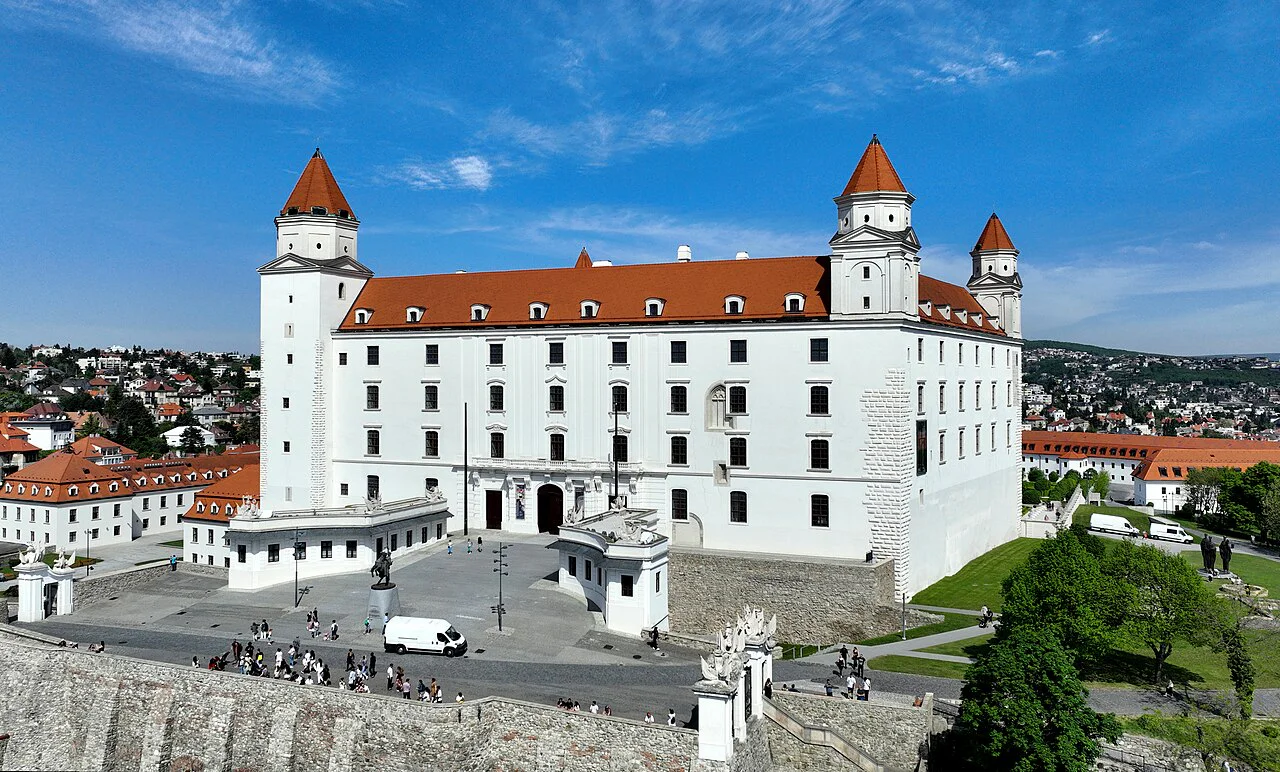
Bratislava · 82 km
Bratislava Castle
Content & sources
C.Stadler/Bwag · CC BY-SA 4.0
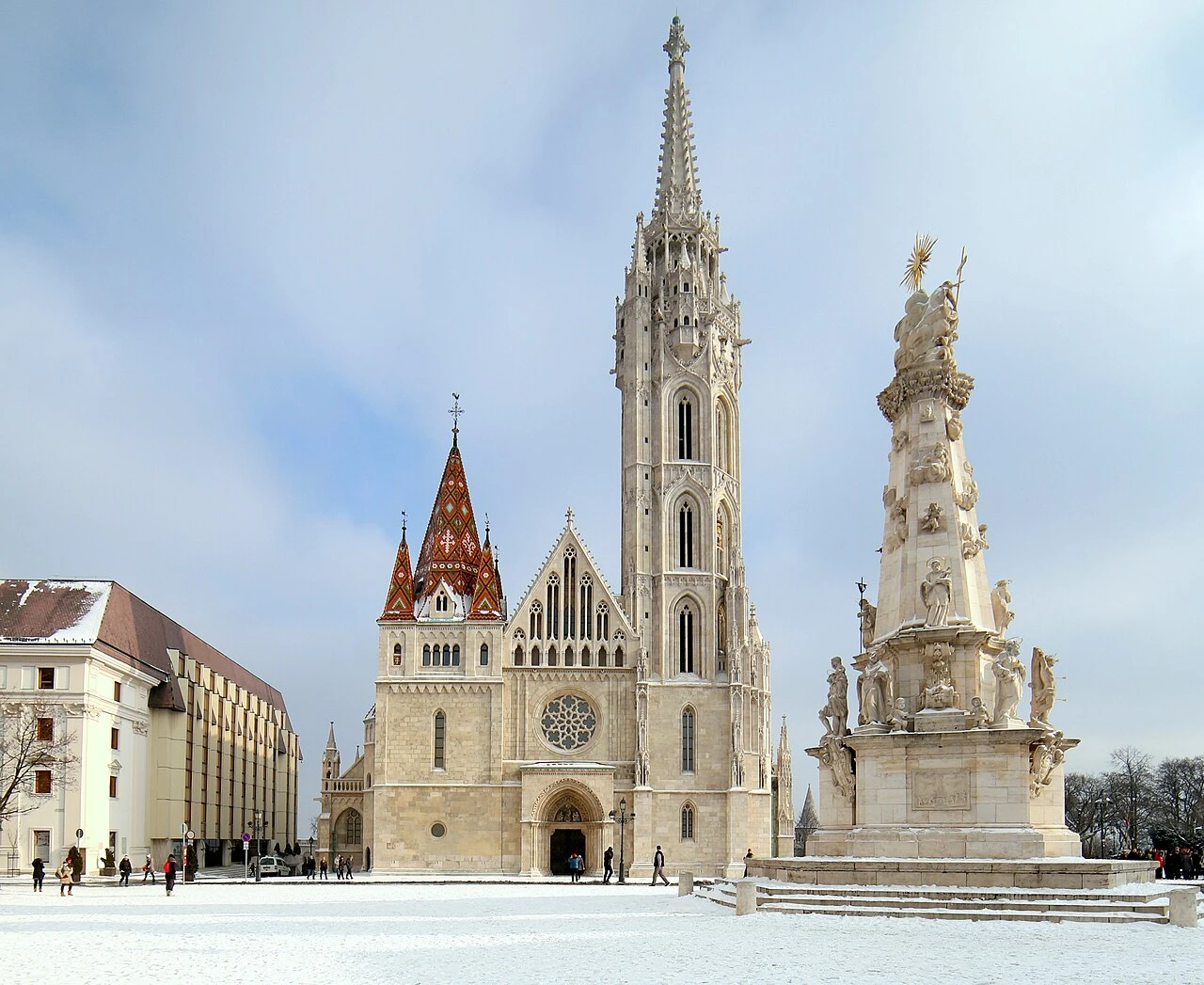
Budapest · 96 km
Matthias Church
Content & sources
Photo: Thaler Tamas · CC BY-SA 4.0
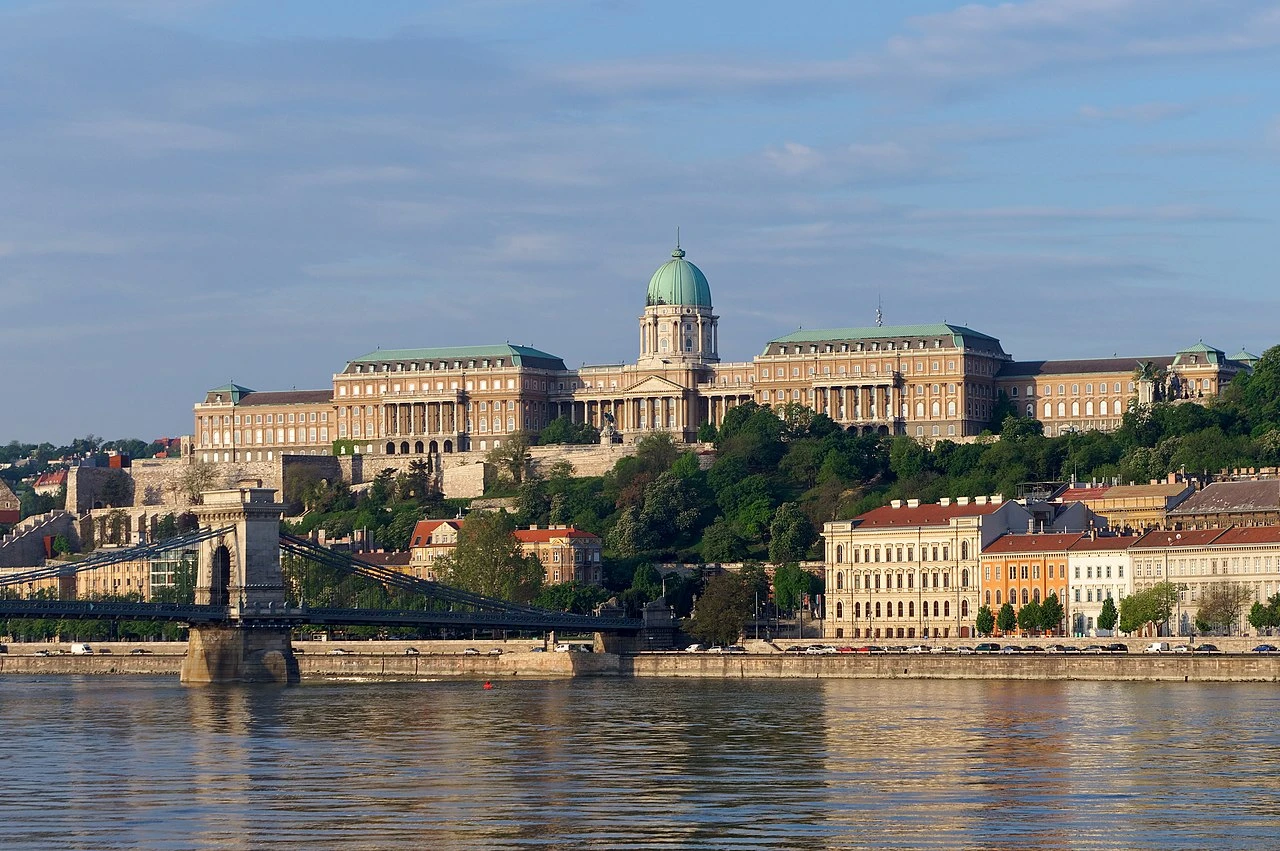
Budapest · 96 km
Buda Castle
Content & sources
Jakub Hałun · CC BY-SA 4.0
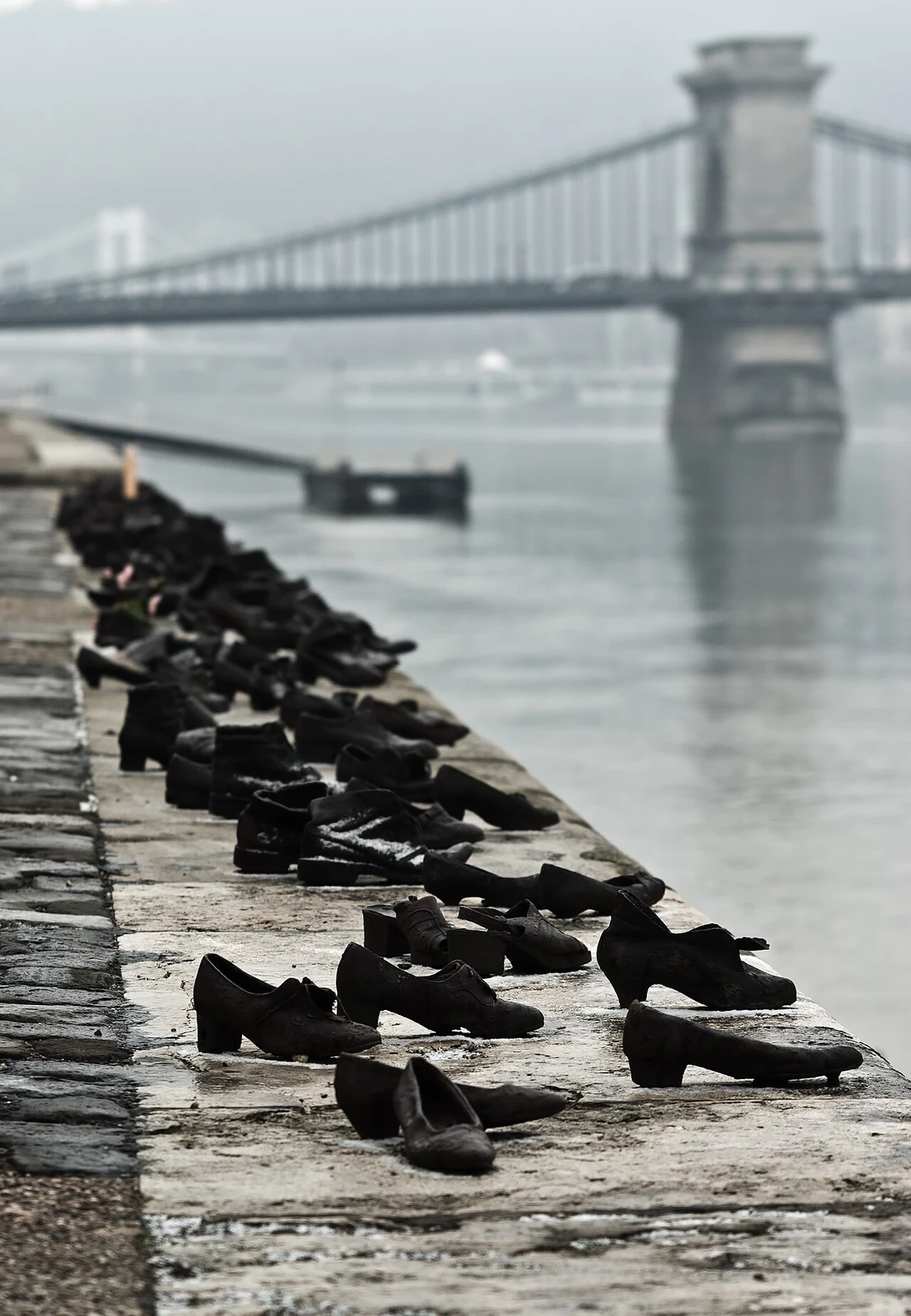
Budapest · 97 km
Shoes on the Danube Bank
Content & sources
Photo: Nikodem Nijaki · CC BY-SA 3.0