 Stanza / Audio guide
Stanza · Audio guide
Ajanta Caves Audio Guide
A place to remember. A story to take with you.
The Ajanta Caves are 30 rock-cut Buddhist cave monuments dating from the second century BCE to about 480 CE. They are considered masterpieces of Buddhist religious art and include some of the finest surviving…
Download Stanza, then search for “Ajanta Caves”.
About the tour
One guide. Your kind of visit.
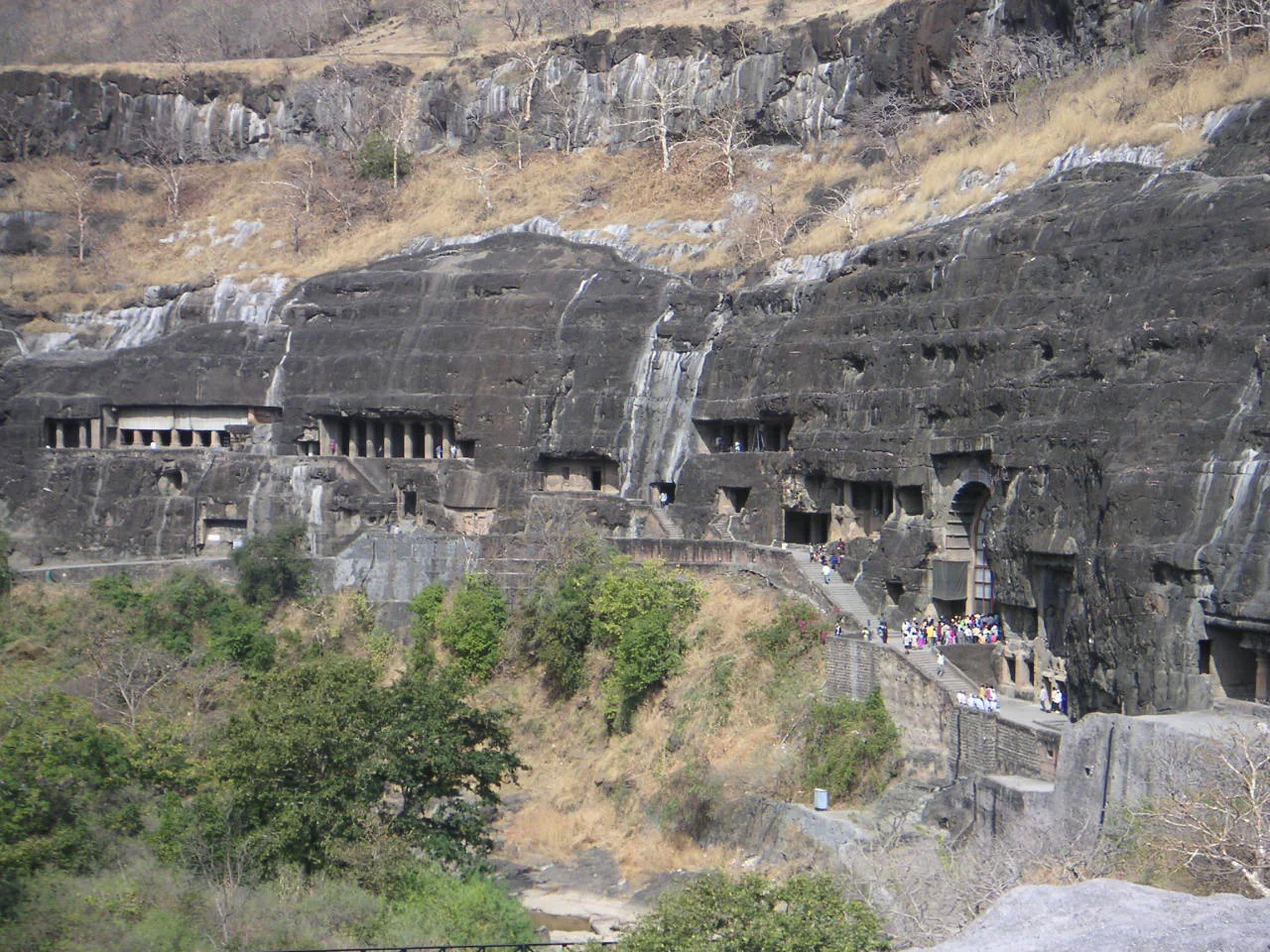
The Ajanta Caves are 30 rock-cut Buddhist cave monuments dating from the second century BCE to about 480 CE. They are considered masterpieces of Buddhist religious art and include some of the finest surviving examples of ancient Indian paintings and sculptures.
Ready when you are.
- 01Get the free Stanza app.
iOS & Android
- 02Find your guide.
“Ajanta Caves”
- 03Download before you go.
Works offline
Audio guide / 18 narrated stops
Inside the guide
Get to know a few of the stories before you go. Open a stop to read more.
01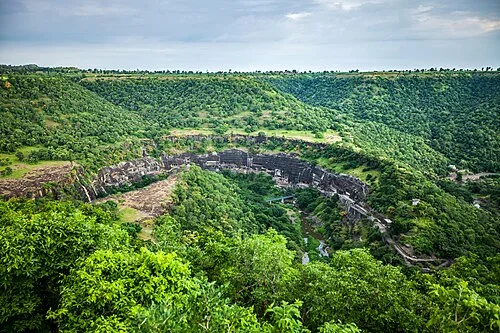 The Waghur River Gorge & Horseshoe Escarpment
The Horseshoe Gorge of the Waghur River
Welcome to Ajanta, where some thirty Buddhist caves are cut into a horseshoe-shaped cliff above the Waghur River, on the Deccan plateau in Maharashtra. Work began here under the Satavahana dynasty in the second century BCE, paused, and resumed under the Vakatakas in the fifth century CE. That is two great phases of building, spread across roughly seven centuries. The caves are monasteries and worship halls of different Buddhist traditions. Monks used them as a retreat during the rains, and merchants and pilgrims on the trade routes below rested here too. This tour follows the site's arc: early caves where worshippers honoured the Buddha through symbols, then the figure-filled painting and sculpture of the Vakataka age. The gorge itself holds waterfalls, audible from the cave mouths when the river runs high.
Photo: Shivajidesai29 · CC BY-SA 4.0
02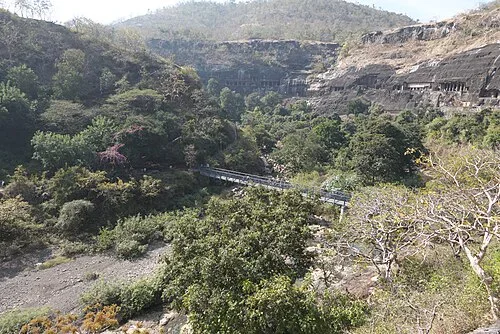 The Waghur River Gorge & Horseshoe Escarpment
Carving a Monastery from the Basalt
Everything at Ajanta was cut out of the cliff, never built. The rock is flood basalt, laid down by volcanic eruptions at the end of the Cretaceous period, long before anyone stood here. The cliff rises about seventy-five metres above the river. Masons began each cave by cutting a narrow tunnel at roof level, then worked downwards and outwards from there. Several caves stop partway through, and those abandoned chambers show the method plainly. The rock is layered and uneven in quality, so the carvers had to amend their plans as they went. Those weak layers have caused cracks and collapses in the centuries since.
Dinesh Valke from Thane, India · CC BY-SA 2.0
03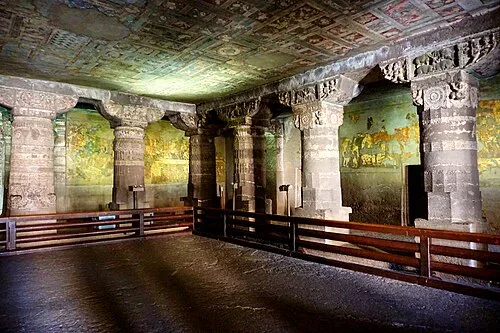 Cave 1: The Royal Monastery & Bodhisattva Murals
Cave 1: The Emperor's Monastery
Cave 1 sits at the eastern end of the horseshoe, and today it is the first cave visitors meet. When it was begun, that position was a drawback: the best sites in the cliff had already been taken. The scholar Walter Spink attributed the cave to Emperor Harishena himself, ruler of the Vakataka dynasty. Harishena was certainly a Hindu, like the Vakataka kings before him, yet he sponsored this Buddhist monastery. The art inside reflects his court, with a strong emphasis on royalty. There are signs the cave was never formally dedicated for worship. The base of the shrine Buddha bears no soot from butter lamps, and the garland-hooks around the shrine left no wear on the paintings beside them. A columned portico once stood before the facade, still half-intact in the 1880s; it then fell, and its fine carvings were pushed down the slope into the river and lost.
Listen in the appPhoto Dharma from Sadao, Thailand · CC BY 2.0
04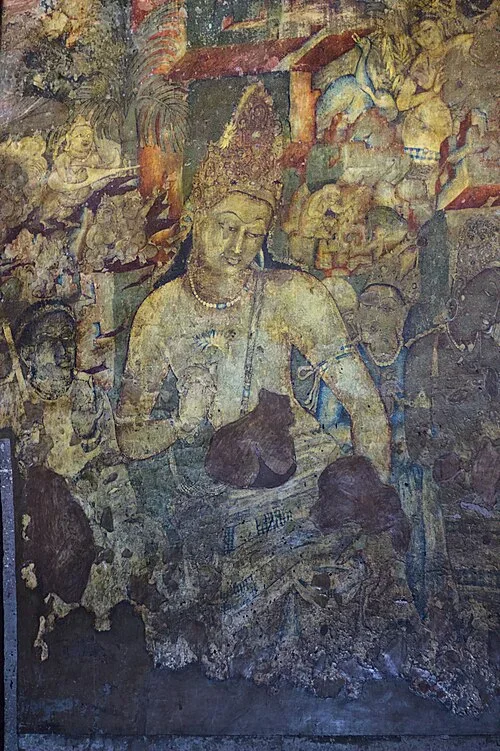 Cave 1: The Royal Monastery & Bodhisattva Murals
The Bodhisattva Padmapani
On either side of the entrance to the Buddha shrine in Cave 1 stand two over-lifesize painted figures. One is Padmapani, the bodhisattva of compassion, holding a lotus in his hand. He stands calm amid a crowded courtly scene, his eyes lowered, his bearing gentle. His counterpart is Vajrapani, the other celebrated bodhisattva of this cave. Together they are the most famous individual painted images at Ajanta. The art here is prized for expressing emotion through gesture, pose and form. A downcast gaze, a tilt of the head, a hand raised with a flower: these small means carry the whole devotional weight of the figure.
Listen in the appPhoto: Shishirdasika · CC BY-SA 4.0
05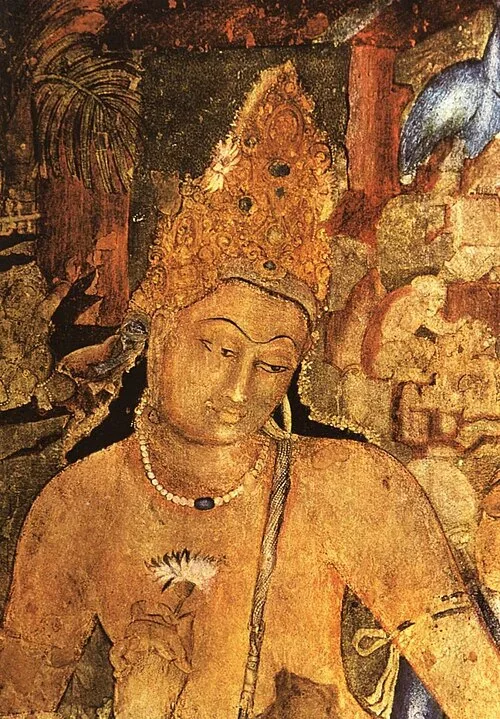 Cave 1: The Royal Monastery & Bodhisattva Murals
The Bodhisattva of the Blue Lotus
The painters of Ajanta worked in what is called dry fresco. They painted onto plaster that had already dried, rather than into wet plaster, which gave them time to work carefully. This bodhisattva was painted in the second half of the fifth century. The detail shows how confident the artists were: a tall jewelled crown, strings of pearls, a lotus held in painted fingers. Caves 1, 2, 16 and 17 together hold the largest surviving corpus of ancient Indian wall painting. Historical records describe mural painting as once abundant across India, yet almost all of it has vanished. Here, and essentially here alone, it survives in quantity.
Listen in the appanonymous · Public domain
06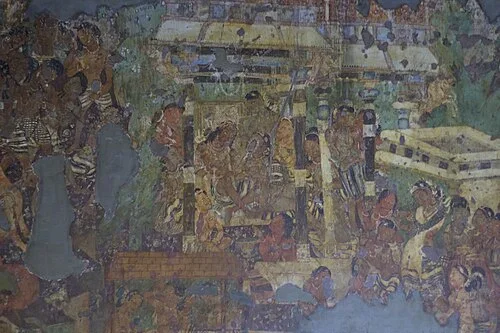 Cave 1: The Royal Monastery & Bodhisattva Murals
The Mahajanaka Jataka: A Prince Renounces His Throne
A Jataka is a story of a previous life of the Buddha, from the time before his enlightenment. Cave 1 paints several of them, and the tales chosen here nearly all show him as a king. The Mahajanaka Jataka is one of these. In a former life, the Buddha was a prince who turned his back on palace life and gave up his throne to become an ascetic. One panel shows the king announcing his abdication. The scenes dwell on the eve of that renunciation, the royal life about to be left behind. The choice of royal stories suits the cave's patron, an emperor whose own world of thrones and courts the painters knew well.
Listen in the appPhoto: Shishirdasika · CC BY-SA 4.0
07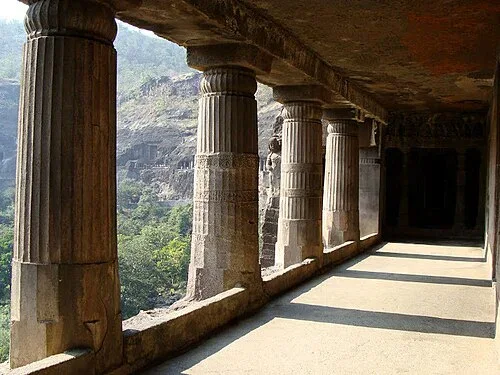 Cave 6: The Double-Storeyed Monastery
A Monastery Balcony over the Gorge
Most caves at Ajanta are monasteries, called viharas, over eighty percent of the site. A vihara is a square hall ringed with small dormitory cells cut into its walls, one for each monk. The designers and artisans added practical facilities as well: recesses cut into the floor to store grain and food, and places to collect donations from travelers. The largest storage recesses were cut in Lower Cave 6 and Cave 11, both chosen for the security of their higher level. From a veranda like this one, its carved pillars opening onto the gorge, the river lay just below.
Listen in the appPhoto: Pebble101 · CC BY-SA 4.0
08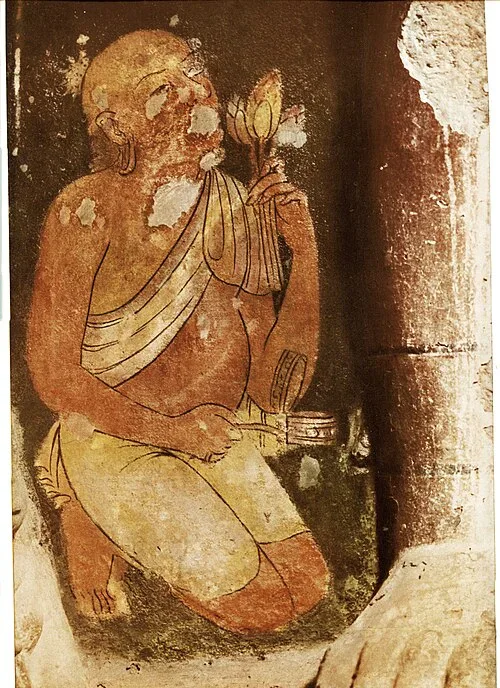 Cave 6: The Double-Storeyed Monastery
Portrait of a Devotee
The murals read as the work of confident artists serving sophisticated patrons from an urban world. Ajanta's compositions break from the horizontal frieze bands common in Indian murals. Instead, large scenes spread in all directions from a single figure or group at the centre. The ceilings carry elaborate decorative motifs, many of them derived from sculpture. On this kneeling figure, paint has fallen away in patches, leaving bare plaster behind. The loss is part of the story too: what survives of these walls is a fragile survival, thinning a little with every age.
Listen in the appPhoto: Ibits · CC BY 3.0
09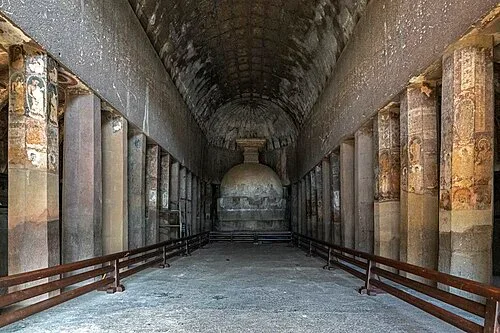 Cave 10: The Early Hinayana Chaitya & Discovery Hall
Cave 10: Where the Modern World Found Ajanta
The jungle covered Ajanta until a tiger hunt brought the caves back to light. On 28 April 1819, a British officer was out hunting tigers in the gorge. His name was John Smith, of the 28th Cavalry. A local shepherd boy showed him a hidden opening in the cliff, the door to this very cave. Locals knew the caves well already. Smith went to a nearby village and returned with men carrying axes, spears, torches and drums, to cut back the tangled growth blocking the entrance. Inside, he found beautifully drawn faces on the ceilings and halls he could identify as Buddhist. Then he scratched his name and the date into the painting of a bodhisattva. He had climbed up on a pile of rubble about a metre and a half high, so his mark sits well above the eye level of anyone standing there today. Three years later, a paper on the caves by William Erskine was read to the Bombay Literary Society.
Listen in the appPhoto: Biswas Dibyendu · CC0
10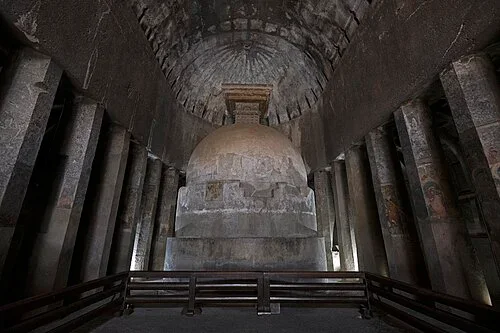 Cave 10: The Early Hinayana Chaitya & Discovery Hall
The Plain Stupa of Cave 10
Before any Buddha image stood at Ajanta, worshippers walked. Cave 10 is a vast prayer hall, one of the earliest caves here, carved about the first century BCE. A row of thirty-nine octagonal pillars divides the space into a central nave and side aisles. At the far end, in the apse, rises a plain hemispherical stupa cut whole from the rock. A path rings it, the pradakshina patha, for circumambulation. Devotion here meant walking that path, not facing an idol. The earliest caves, this one and Cave 9 among them, had no figurative sculpture at all. The stupa itself was the sacred centre. Scholars date these early halls differently: some place them under Satavahana patronage around the turn of the era, others earlier still. The vault overhead reflects an older wooden construction, its stone ribs now worn smooth, and paint once covered the pillars.
Listen in the appPhoto: Biswas Dibyendu · CC0
- 11
Buddhas Painted on an Older Pillar
Painted Buddhas on a pillar of one of Ajanta's oldest halls, evidence that later generations redecorated the early caves.
- 12
The Coming of Sinhala: Cave 17's Epic Mural
Cave 17's crowded royal panorama, part of the largest surviving corpus of ancient Indian wall-painting.
- 13
The Musician with the Alapini Vina
A painted musician with his vina, and the story of how early Western visitors were startled by Ajanta's sensuous art.
- 14
Cave 19: The Buddha Enters the Stupa
The moment Buddhism's art changed: a standing Buddha carved onto the stupa itself in Cave 19.
- 15
Cave 19: Sculpted Facade
The sculpted entrance of Cave 19, where the facade itself became a canvas for Buddhist storytelling.
- 16
Cave 26: The Last Great Hall
Cave 26, one of the last halls begun at Ajanta, and the end of its great building age.
- 17
The Great Reclining Buddha
The great reclining figure of Cave 26, carved at the moment of the Buddha's final release.
- 18
The Temptation by Mara
The demon Mara's assault on the meditating Buddha, carved at the close of Ajanta's story.
Ajanta Caves
Frequently asked questions
How much does the guide cost?
Free app download. Listed guide price: $1.99. Guide price shown in the app. Audio guide only. Venue admission is separate.
Can I listen without internet?
Yes. Download the guide’s audio, images, and maps in the app before your visit. Your downloaded content is then available offline.
Can I listen in my language?
This audio guide is available in 15 languages, including English.
Do I need to follow a schedule?
No. This is a self-guided experience. Choose your stops, pause whenever you like, and return to a story at your own pace.
At your own pace
Explore Ajanta Caves.
Download Stanza, then search for “Ajanta Caves”.
Free app download · Guide price shown in the app
Keep exploring
Audio guides — India
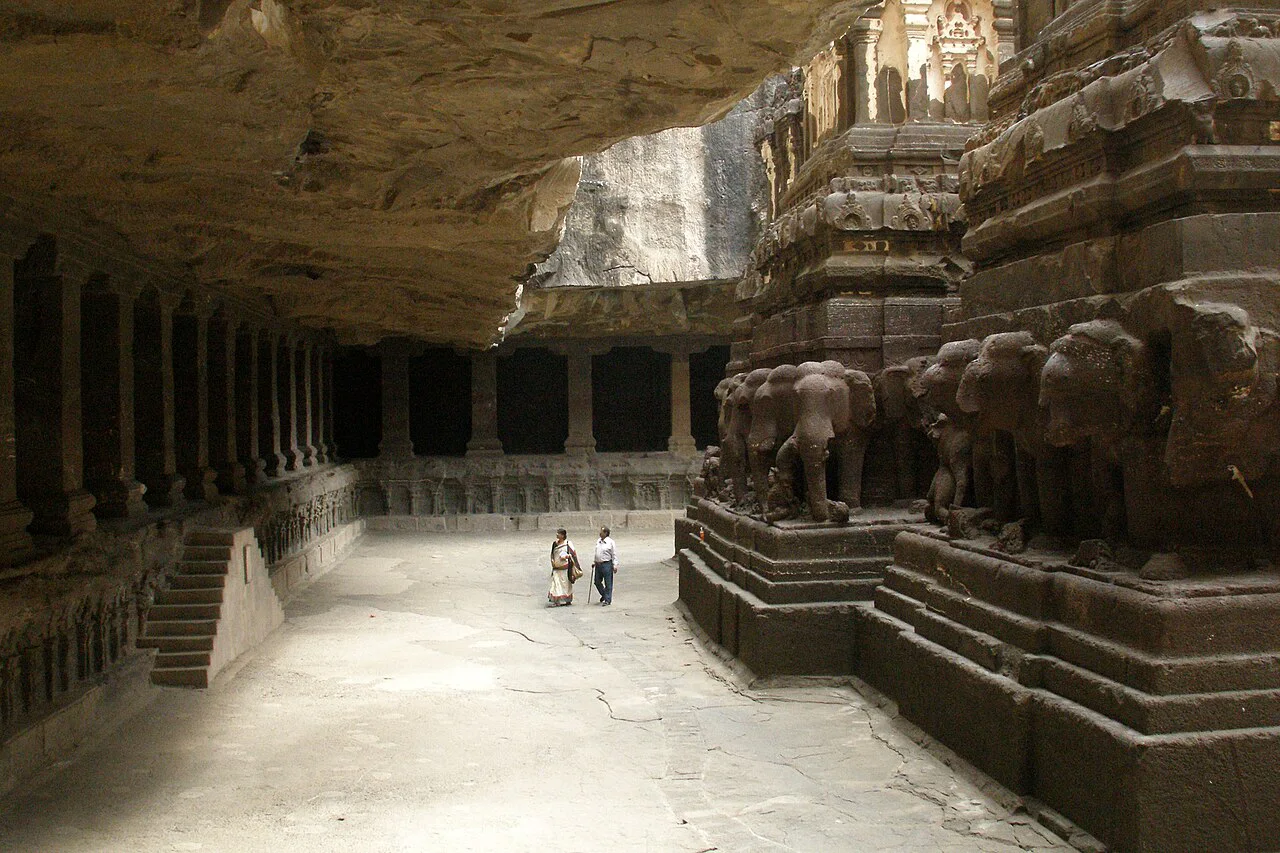
Aurangabad district · 80 km
Ellora Caves
Content & sources
Vyacheslav Argenberg · CC BY 4.0
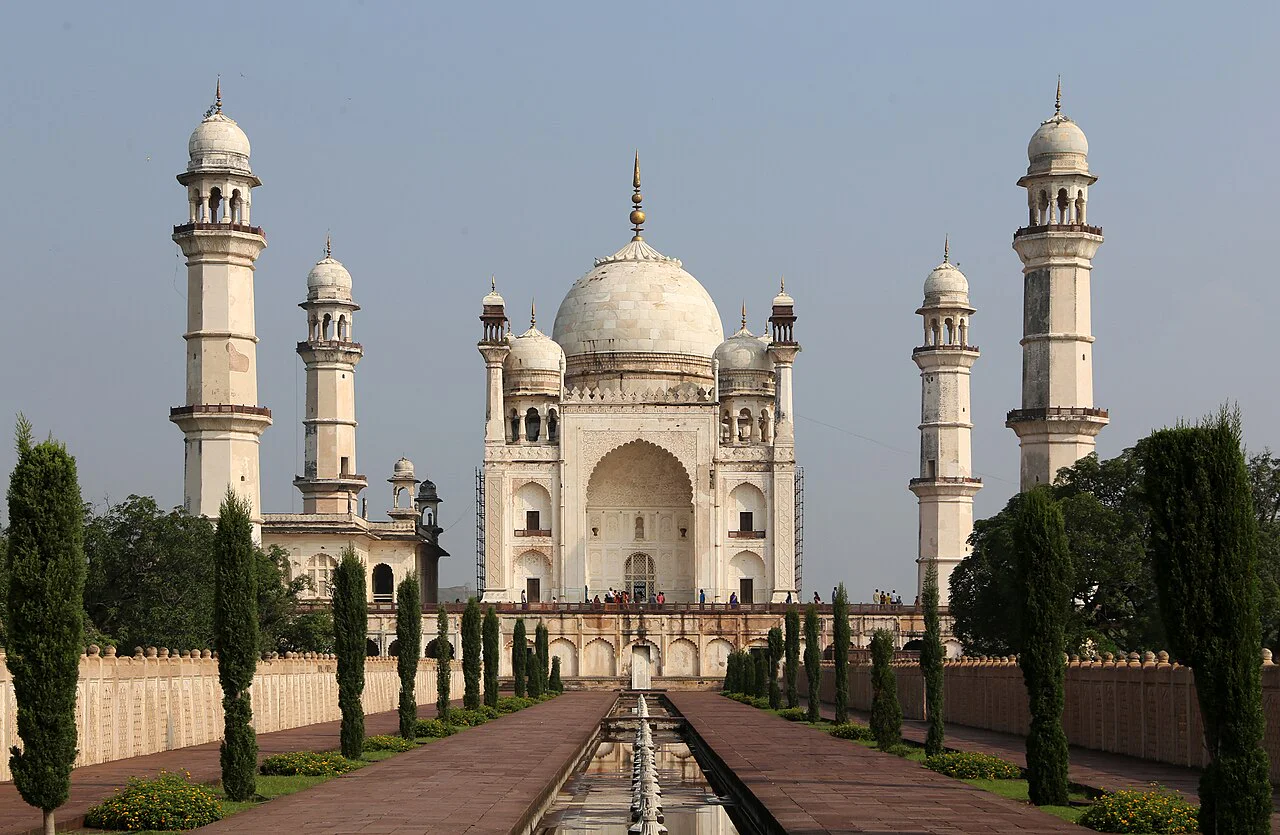
Chhatrapati Sambhajinagar · 83 km
Bibi Ka Maqbara
Content & sources
Photo: Sailko · CC BY 3.0
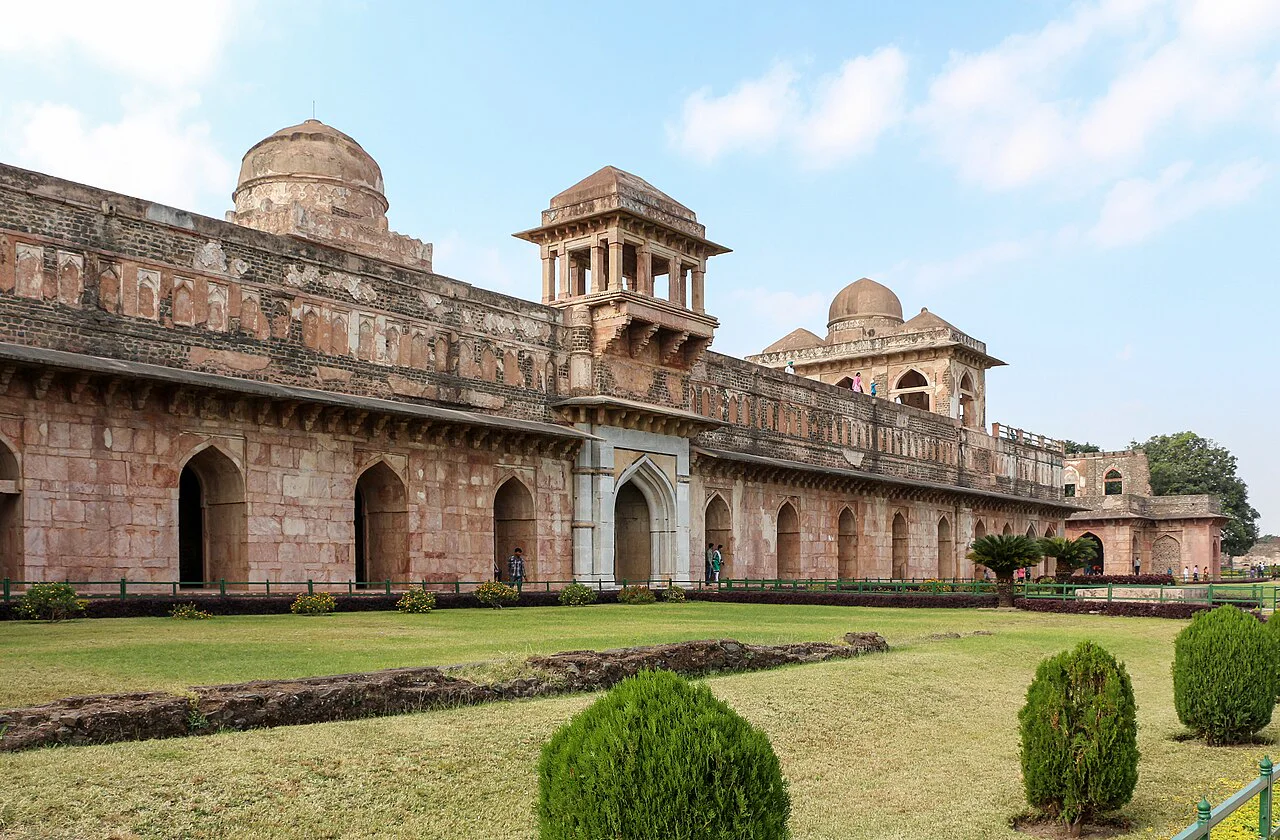
Pithampur Tahsil
Mandu, Madhya Pradesh
Content & sources
Bernard Gagnon · CC BY-SA 3.0
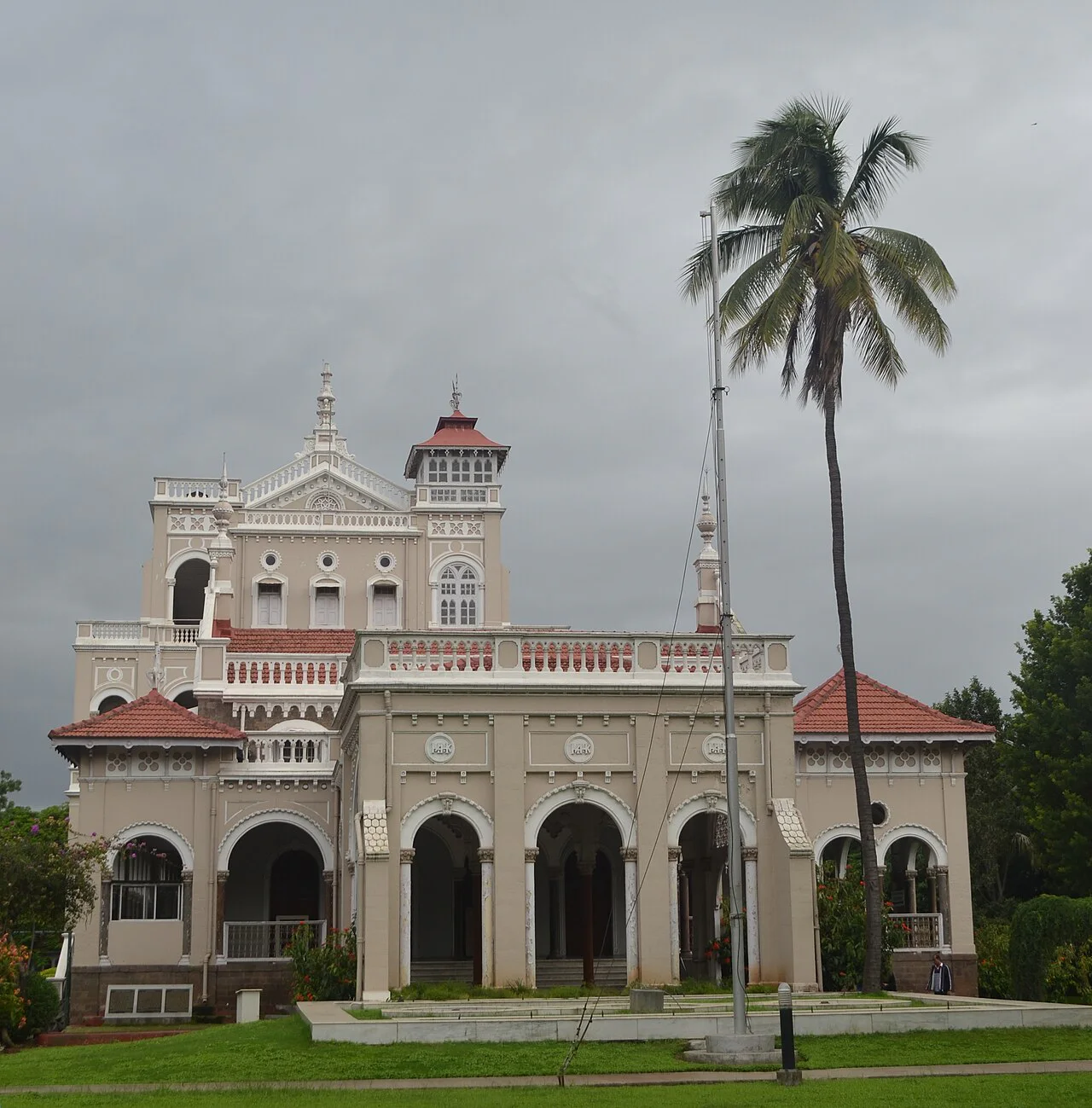
Pune
Aga Khan Palace
Content & sources
Aakash.gautam · CC BY-SA 3.0