Stanza · Audio guide
Mandu, Madhya Pradesh Audio Guide
A place to remember. A story to take with you.
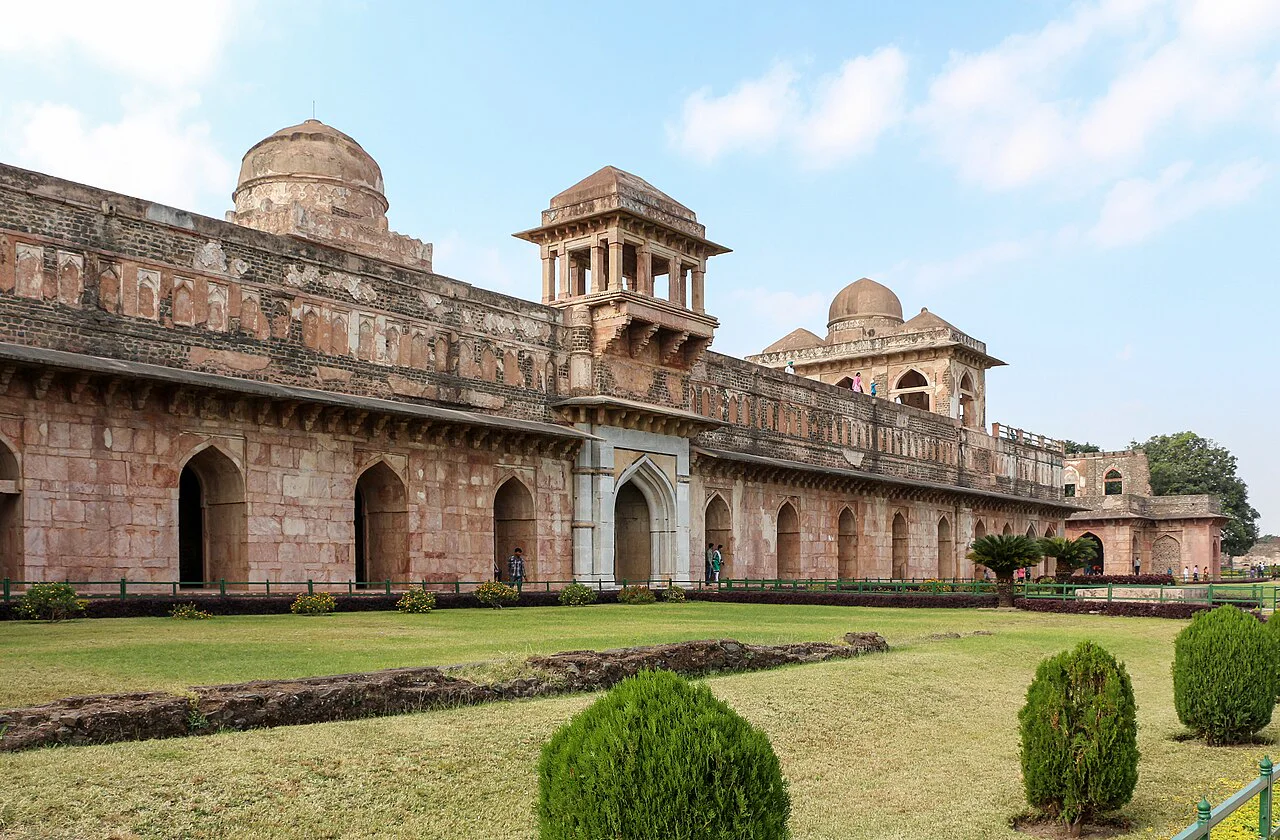
Mandu is an ancient city located in the Dhar district of Madhya Pradesh, India. This fortress town is situated on a rocky outcrop and is celebrated for its architecture.
Download Stanza, then search for “Mandu, Madhya Pradesh”.
About the tour
One guide. Your kind of visit.
Mandu is an ancient city located in the Dhar district of Madhya Pradesh, India. This fortress town is situated on a rocky outcrop and is celebrated for its architecture.
Ready when you are.
- 01Get the free Stanza app.
iOS & Android
- 02Find your guide.
“Mandu, Madhya Pradesh”
- 03Download before you go.
Works offline
Audio guide / 33 narrated stops
Inside the guide
Get to know a few of the stories before you go. Open a stop to read more.
01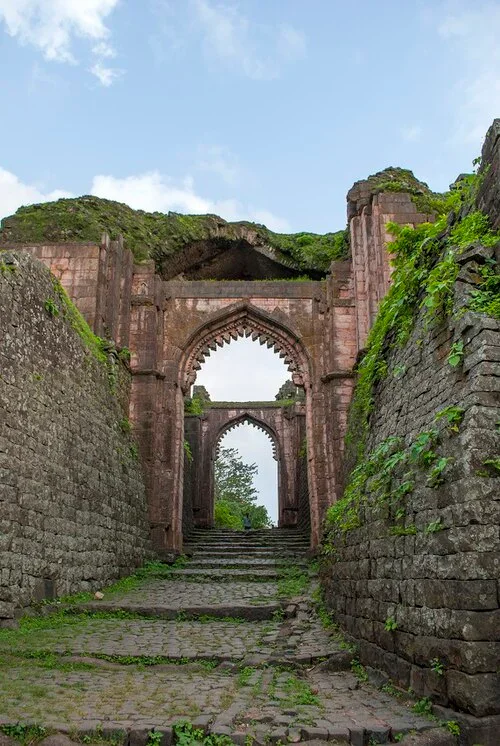 Delhi Gate
A pointed archway of dressed stone opens onto a stepped path climbing between high walls. This is one of the great gateways of Mandu, a fortified town set on a broad plateau of the Vindhya hills. The plateau overlooks the Malwa plain to the north and the valley of the Narmada river to the south, and those cliffs made it a natural fortress. An inscription dated 555 CE records the place under the name Mandapa Durga, the fort of the hall. Paramara kings held it as a royal residence by the tenth and eleventh centuries. Later sultanate dynasties made it their capital, and Mughal and Maratha rule followed. The battlemented wall around the plateau runs nearly thirty-seven kilometres, and twelve major gateways punctuate it, with smaller gateways built to shield them. The road into Mandu still passes through several of these gates.
Photo: Itsmalay~commonswiki · CC BY-SA 4.0
02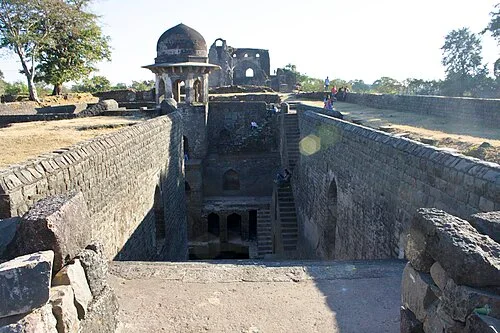 Ujali Baoli (Bright Stepwell)
Ujali Baoli
A long stair runs down between massive stone walls, dropping towards a sunken court where water once gathered. At the upper edge stands a small domed kiosk, and steps and ramparts ring the open shaft. Builders across western India cut wells like this into the ground, so that people could reach the water whatever its level through the year. When the water ran high, the lower steps disappeared beneath it; when it dropped, the stair simply led further down. The name baoli means just that, a stepped well. This one is left open to the sky, so light reaches the bottom of the descent instead of ending in darkness. The deep walls around it do more than hold the earth back. They shade the water and slow its evaporation.
Indrajit Das · CC BY-SA 4.0
03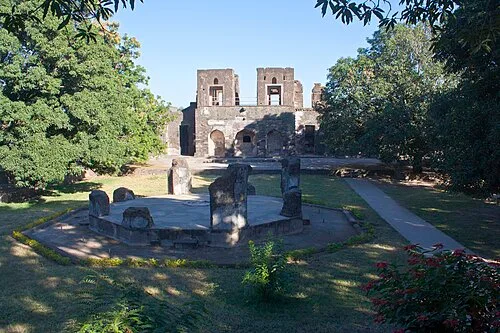 Gada Shah Palace
A broken two-storey facade stands at the head of a green lawn, its upper and lower openings still legible in the bare wall. The building is known as Gada Shah's Palace, though who Gada Shah actually was has faded from the record; he is remembered as a man of wealth and standing in the city. Whatever its owner's story, the building reads as a private residence rather than a fort or a mosque. In front of it lies a raised circular platform of stone, with broken blocks still standing on its rim. Its purpose is now anyone's guess. Trees close around the lawn on every side, so the ruin sits in a pocket of shade and grass. The roof is gone, but the walls keep the shape of the rooms they once enclosed.
Listen in the appIndrajit Das · CC BY-SA 4.0
04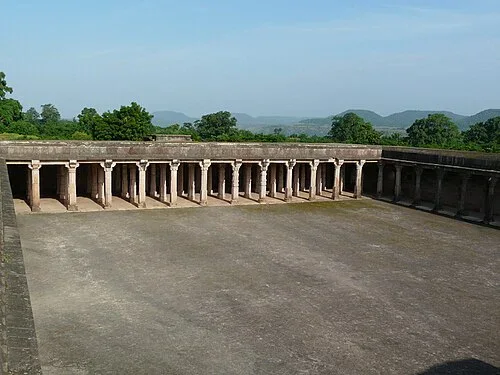 Dilawar Khan's Mosque
A long pillared arcade runs along one side of a vast open court, its flat roof throwing a band of shade across the columns. In 1401 the conqueror Timur swept down on Delhi, and the Afghan governor of Malwa, Dilawar Khan, saw his moment. He set up his own little kingdom, and the Ghuri dynasty was born. Four years later, in 1405, this mosque went up, and it is the oldest dated mosque in Mandu. Its plan is plain almost to severity: an open court for worshippers, a covered arcade for prayer, and little else. The columns carry simple capitals, and the hills and plains stretch away behind the roofline. Within a generation, under his son Hoshang Shah, Mandu itself would become the capital.
Listen in the appVarun Shiv Kapur from New Delhi, India · CC BY 2.0
05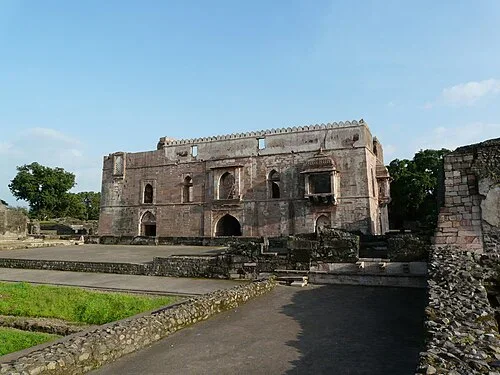 Hindola Mahal (Swinging Palace)
Hindola Mahal
Hindola Mahal means Swing Palace, and the name comes from the building's sloping side walls, which lean inward as they rise. The date of the hall is uncertain. It may have been raised under Hoshang Shah around 1425, or it may belong to the end of the fifteenth century under Ghiyas al-Din. Its walls hold recessed arches, and projecting window bays break the long facade. A raised platform with steps leads up to the entrance. The hall belongs to a royal palace group that includes the Jahaz Mahal, the Tavali Mahal and the Nahar Jharokha. Within that group, the Hindola Mahal may have served as an audience chamber, where the sultan received petitioners and held court. Even in ruin, the great leaning walls keep the building's strange, tilted character.
Listen in the appVarun Shiv Kapur from New Delhi, India · CC BY 2.0
06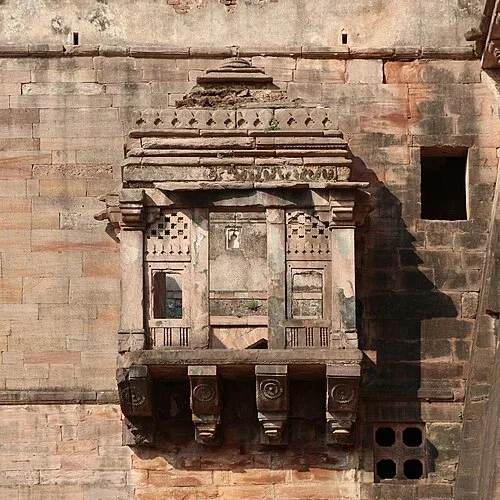 Hindola Mahal (Swinging Palace)
Hindola Mahal Jharokha
A jharokha is a window that refuses to stay inside the wall. This one projects out from the stone face on a row of carved brackets, each bracket blooming into a rosette at its base. Above the window a sloping canopy throws shade across the opening, and the sides are filled with open-work panels cut in geometric patterns. Below it all hangs a small balcony, closed by a carved railing. Windows like this let air and light into the rooms behind while keeping the occupants out of sight, and they gave the facade its richest ornament. The carving survives in remarkable detail, down to the little bracket figures supporting the balcony. It is a single concentrated piece of decoration on a building otherwise known for its massive, unadorned walls.
Listen in the appBernard Gagnon · CC BY-SA 4.0
07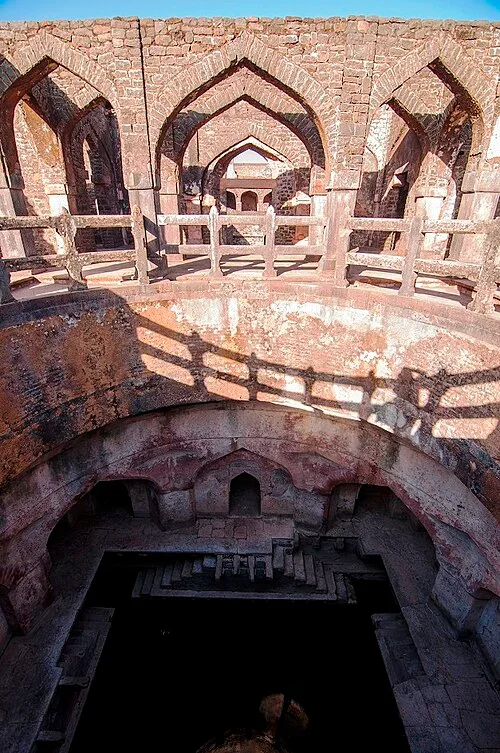 Champa Baoli (Champa Stepwell)
Champa Baoli
From the rim, the eye travels down through layers. An upper ring of pointed arches runs around the well, closed by a stone railing, and beneath it the shaft drops away into shadow. Stairs descend from level to level, so the structure reads like a building turned inside out and sunk into the ground. Stepwells of this kind were planned with shaded lower chambers, where the air stayed cool even at the height of summer. Each landing had its own arcade and its own light. The stonework glows reddish in the sun above and turns black towards the water below. The arches frame one another, level behind level, all the way down.
Listen in the appPhoto: Itsmalay~commonswiki · CC BY-SA 4.0
08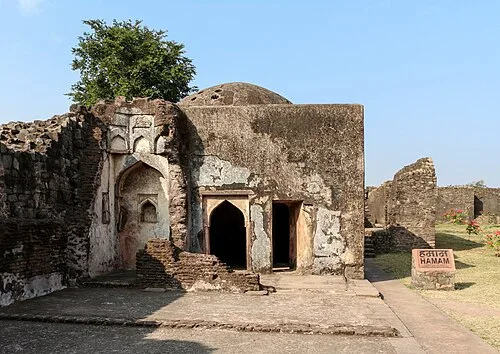 Royal Hammam
Hammam
A low dome rises over a small building of plastered stone, with an arched doorway set into its entrance wall. A sign by the path names it the Hammam, the bath. Ruined walls run out from it on either side, so the bath once belonged to a larger complex. Bath buildings of the Islamic world were planned around graded rooms, moving from warm chambers to cool ones, so a visit moved step by step between temperatures. The dome was the working heart of such a building. Its curved roof shed steam and let the chamber breathe, and its mass kept the heat where it was wanted. What rooms and pipes lay inside this one is hard to say now, but the dome and the doorway still show the shape of the plan.
Listen in the appBernard Gagnon · CC BY-SA 3.0
09 Royal Hammam
Dome of the Hammam: Star and Circle Openings
The inside of the dome is almost black, and across it scatter points of light. Some of the openings are cut as five-pointed stars, others as plain circles, and they run outward from the centre in radiating rows, growing sparser towards the rim. The effect is of a night sky built in stone, with the brightest cluster at the crown of the dome. Each opening is small, so the light arrives as separate gleams rather than a flood. Whether the pattern was cut to admit light, to let air move, or simply for the pleasure of the design is not recorded. What is certain is the contrast: a dark curved ceiling, and a scatter of bright shapes across it.
Listen in the appPhoto: Varada Phadkay · CC BY-SA 4.0
10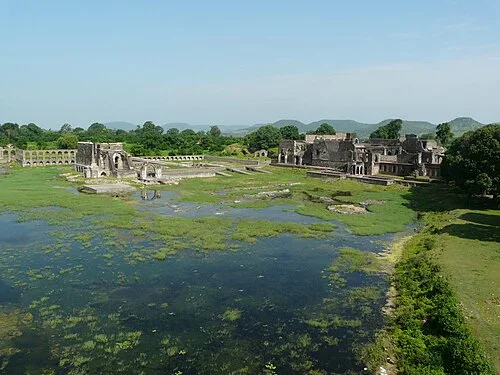 Munja Talao (Munja Lake)
Munja Talao
Green growth spreads across part of the water, and ruined arcaded buildings stand along the far shore under a line of trees. This is Munja Talao, one of the lakes of Mandu. The lakes on the plateau were not natural. They were made, closed off and filled to hold water for the city above the plains. On a hilltop fortress, that mattered more than any wall: an army could survive a siege only if the rainwater of the monsoon could be kept through the dry months. The lakes also changed the look of the plateau, laying sheets of open water between the palaces and the sky. From the bank, the ruins across the water appear doubled in the still surface, green and grey together.
Listen in the appVarun Shiv Kapur from New Delhi, India · CC BY 2.0
- 11
Jahaz Mahal
The Ship Palace of Sultan Ghiyas-ud-din, built between two lakes to house a harem of thousands.
- 12
Courtyard Basin in Jahaz Mahal
The stepped basin at the heart of the Ship Palace's courtyard, where water shaped the whole design.
- 13
Kapoor Talao and the ruins on its bank
A designed lake with a stone pavilion, formal lawns and ruined walls along its bank.
- 14
Tavali Mahal
The pink-and-green facade of a building in Mandu's royal palace group.
- 15
Hoshang's Tomb
India's first marble structure, and the template for the Taj Mahal.
- 16
Hoshang's Tomb: Jali Window
The pierced lattice window that scatters light across Hoshang Shah's tomb chamber.
- 17
Jama Masjid, Mandu
The great mosque of Mandu, modelled on the Great Mosque of Damascus.
- 18
Jama Masjid: Mihrab and Minbar
The prayer niche and marble pulpit at the heart of the Jama Masjid.
- 19
Asharfi Mahal
The ruined Palace of Gold Coins fronting the Jama Masjid.
- 20
Mahmud Khilji's Tomb
A broken tomb and the end of the Khalji sultanate in 1531.
- 21
Tower of Victory
A seven-storey victory memorial, and a Ram temple from 1769 nearby.
- 22
Lohani Caves
Rock-cut caves and temples older than Mandu's sultanate monuments.
- 23
Darya Khan's Tomb
The walled resting place of a minister of the Malwa court, with a mosque, a pond and an inn for company.
- 24
Hathi Mahal
The Elephant Leg Palace, a hall of sturdy arches crowned by a massive dome beside the Darya Khan complex.
- 25
Malik Mughith's Mosque: Pillared Corridor
Carved pillars that may hold stone from the Jain temples that once covered Mandu.
- 26
Dai-ka-Mahal
Two domed blocks and a long external stair, one of Mandu's most striking ruined masses.
- 27
Blue Traces on Dai-ka-Mahal
Surviving traces of blue on carved panels, the last of a lost scheme of colour.
- 28
Neelkantha (Nilkantheswar): Facade
The symmetrical facade of the Neelkantha building, with its shadowed central arch and faded panels.
- 29
Neelkantha: Water Court and Floor Design
A rectangular tank before the entrance, and a dark spiral set into the paving.
- 30
Baz Bahadur Mahal: Court and Tank
The great courtyard of Baz Bahadur's palace, arranged around a still green tank.
- 31
Baz Bahadur Mahal: Terrace and Career
The rise, fall and final surrender of Baz Bahadur, told from his palace terrace.
- 32
Rani Rupmati Pavilion: Exterior
A queen's pavilion that began as an army observation post on the plateau's edge.
- 33
Rani Rupmati Pavilion: Terrace View
The legend of Roopmati's gaze, the Rewa Kund built for her water, and her tragic end.
Mandu, Madhya Pradesh
Frequently asked questions
How much does the guide cost?
Free app download. Listed guide price: $2.99. Guide price shown in the app. Audio guide only. Venue admission is separate.
Can I listen without internet?
Yes. Download the guide’s audio, images, and maps in the app before your visit. Your downloaded content is then available offline.
Can I listen in my language?
This audio guide is available in 15 languages, including English.
Do I need to follow a schedule?
No. This is a self-guided experience. Choose your stops, pause whenever you like, and return to a story at your own pace.
At your own pace
Explore Mandu, Madhya Pradesh.
Download Stanza, then search for “Mandu, Madhya Pradesh”.
Free app download · Guide price shown in the app
Keep exploring
Audio guides — India
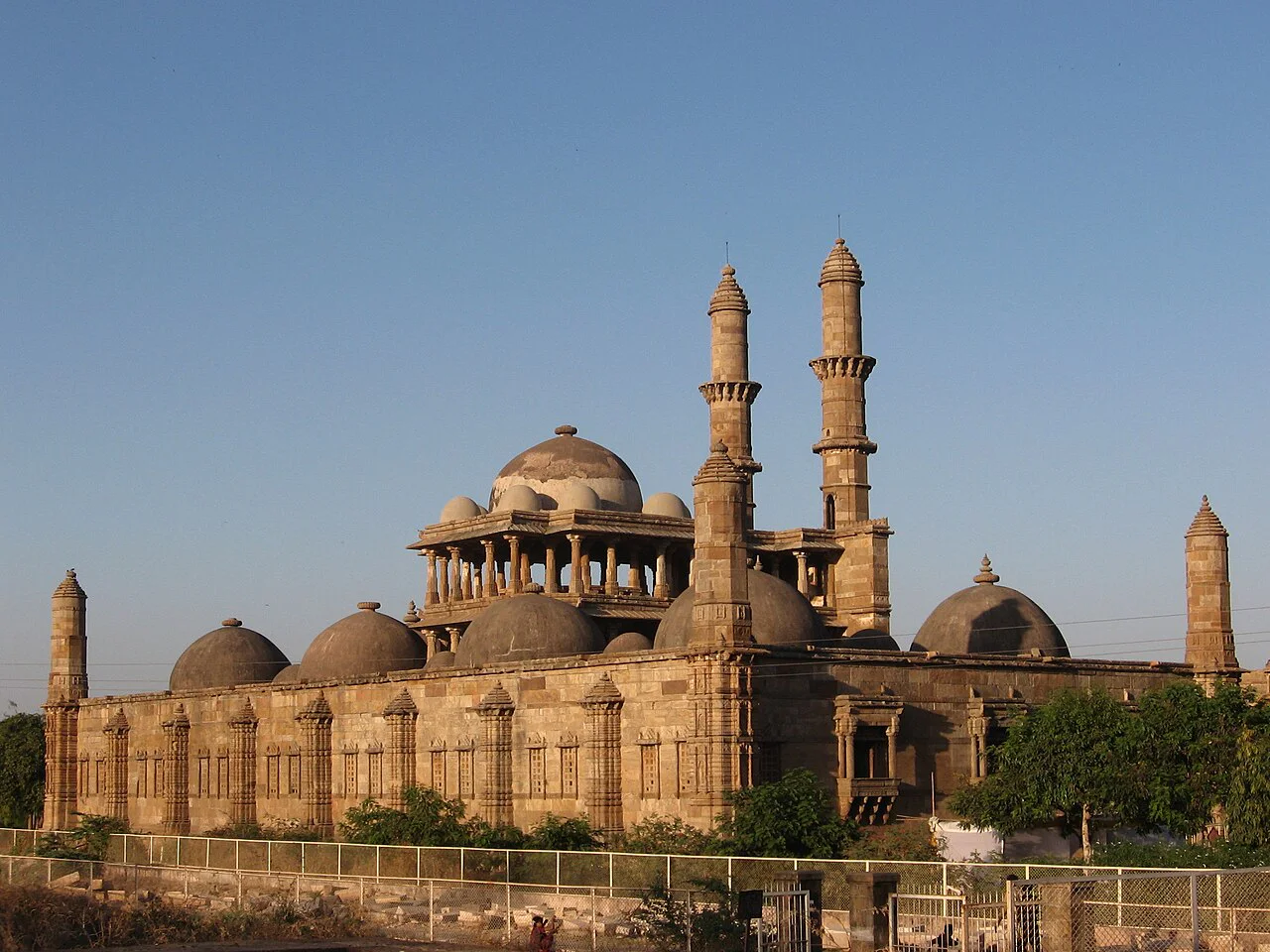
Manchi Haveli, Pavagadh
Champaner-Pavagadh Archaeological Park
Content & sources
Photo: Phso2 · CC BY 3.0
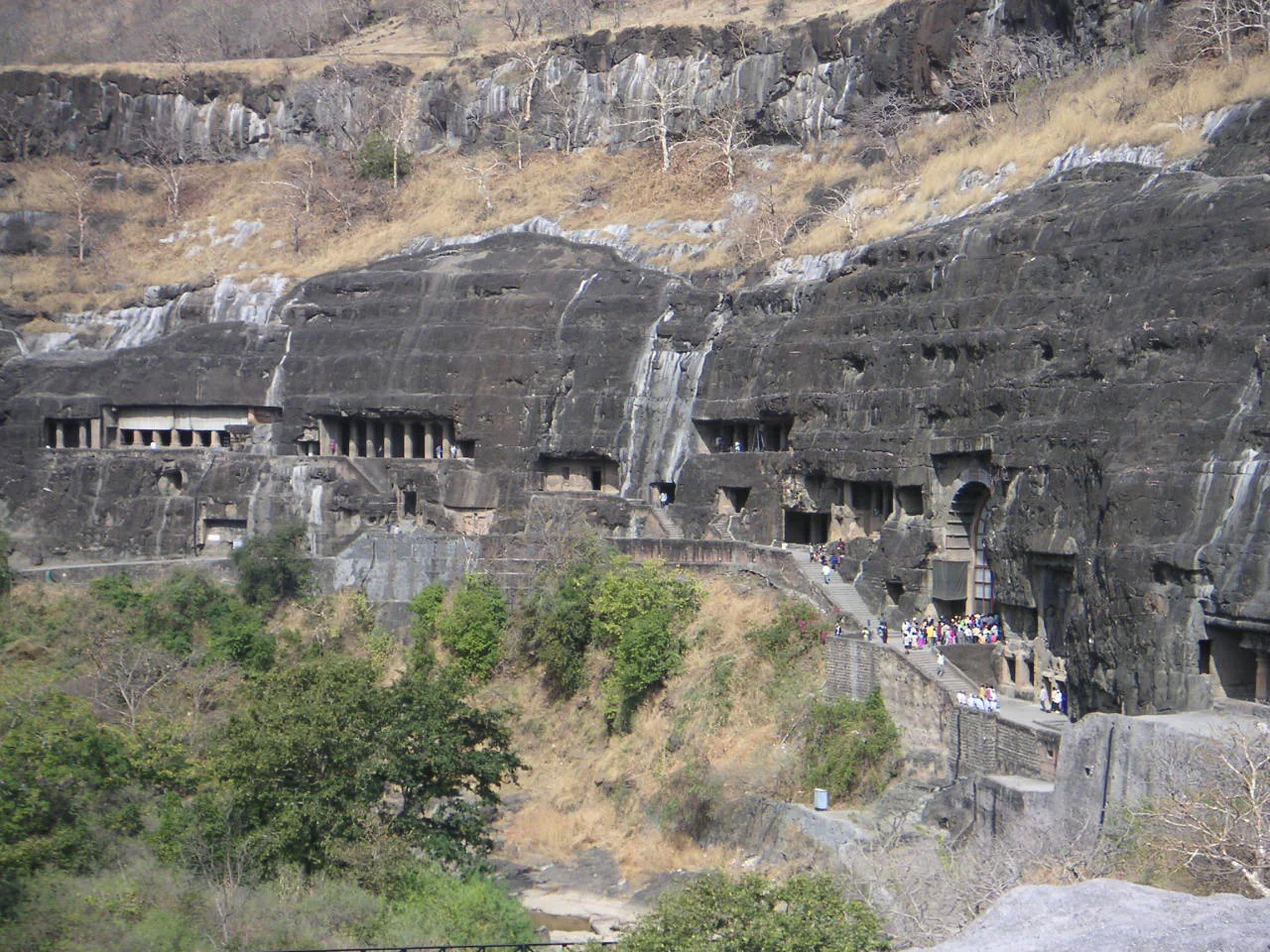
Aurangabad district
Ajanta Caves
Content & sources
No machine-readable author provided. Soman assumed (based on copyright claims). · CC BY 2.5
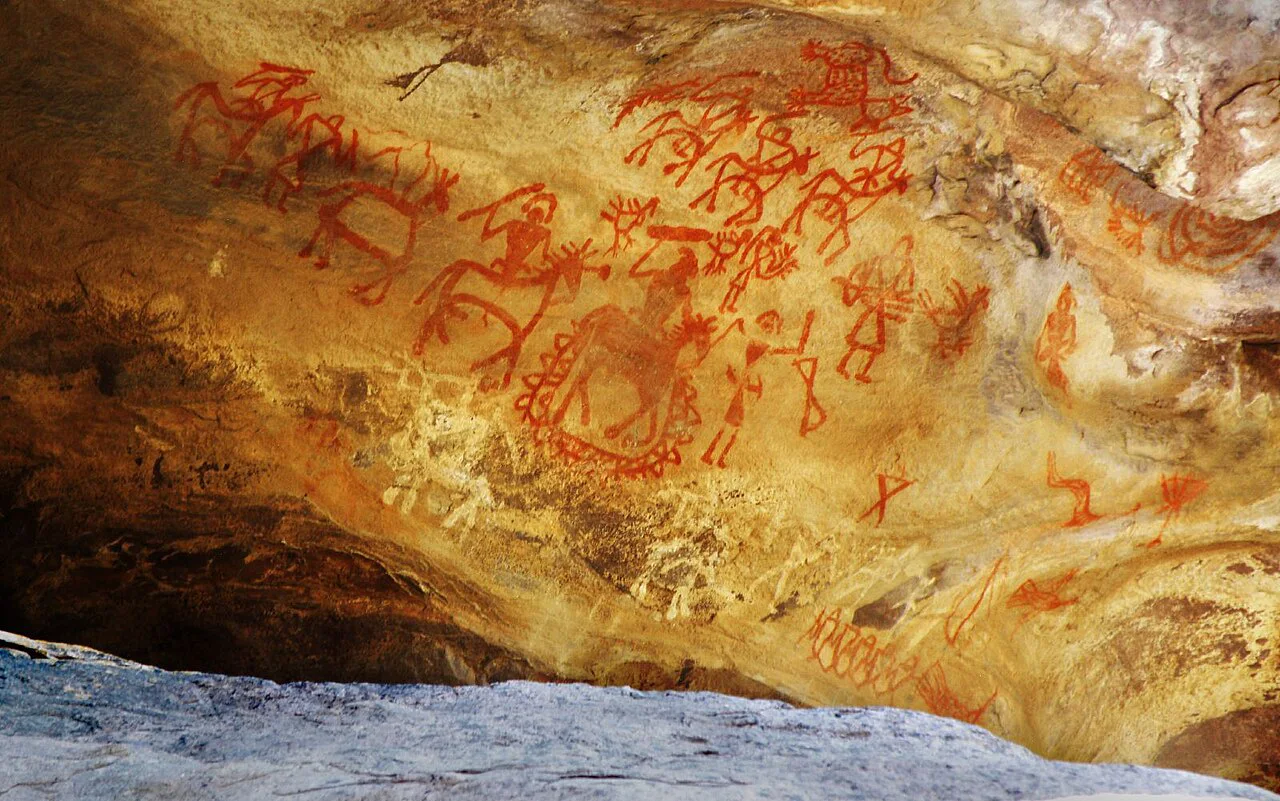
Goharganj Tahsil
Bhimbetka rock shelters
Content & sources
Raveesh Vyas · CC BY-SA 2.0
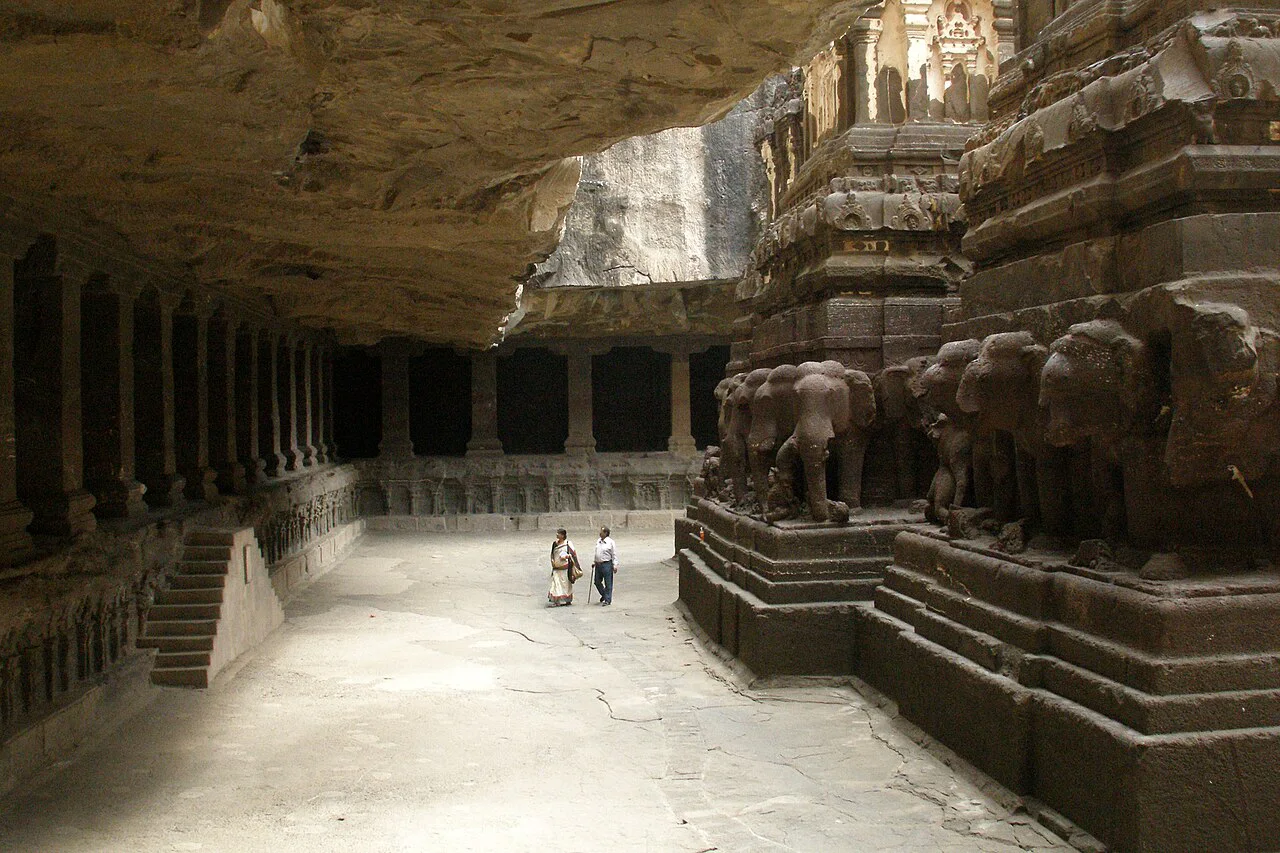
Aurangabad district
Ellora Caves
Content & sources
Vyacheslav Argenberg · CC BY 4.0