Stanza · Audio guide
Aga Khan Palace Audio Guide
A place to remember. A story to take with you.
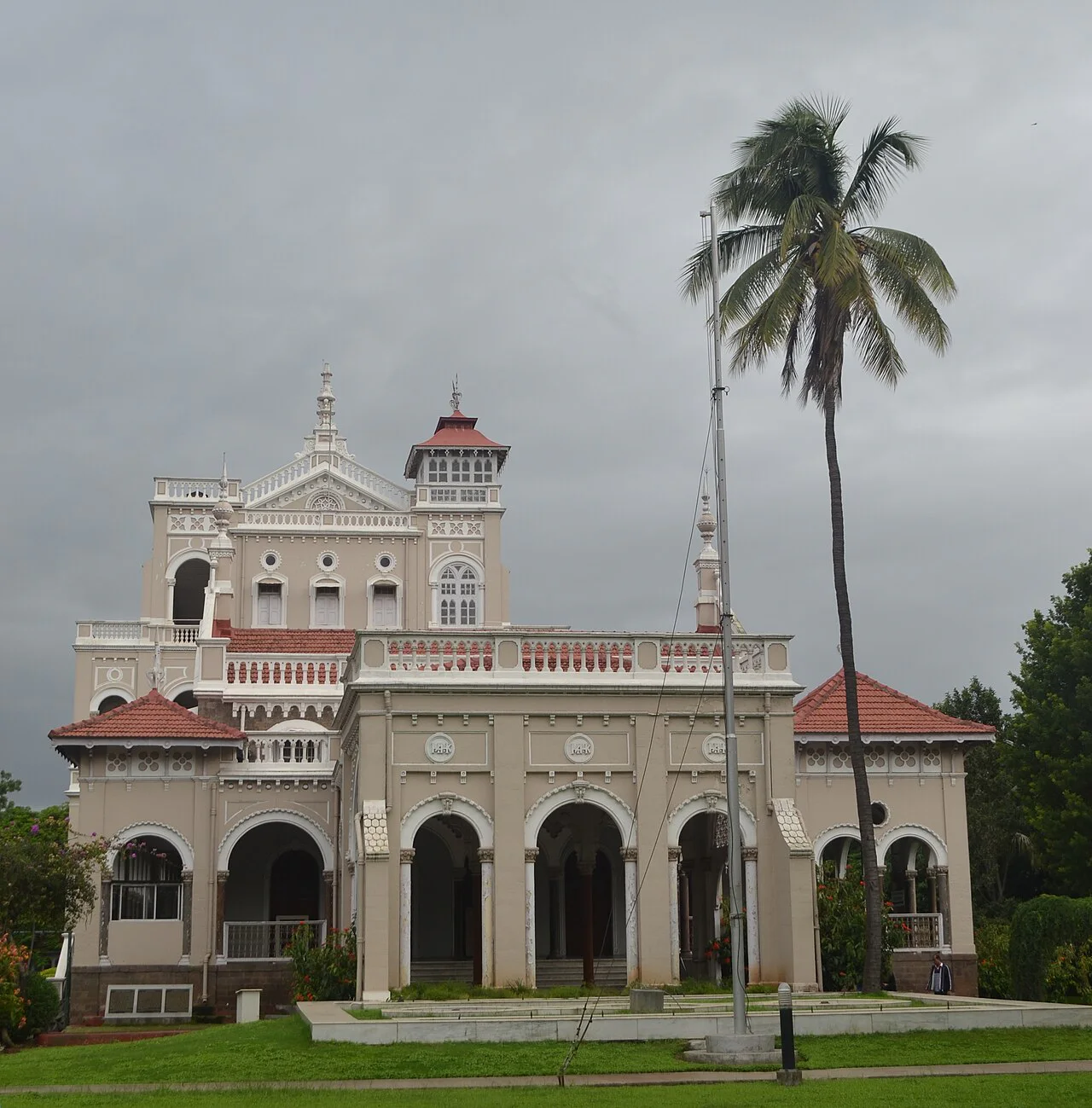
The Aga Khan Palace is a building located in Pune, India. It was built by Sultan Muhammed Shah Aga Khan III in 1892.
Download Stanza, then search for “Aga Khan Palace”.
About the tour
One guide. Your kind of visit.
The Aga Khan Palace is a building located in Pune, India. It was built by Sultan Muhammed Shah Aga Khan III in 1892.
Ready when you are.
- 01Get the free Stanza app.
iOS & Android
- 02Find your guide.
“Aga Khan Palace”
- 03Download before you go.
Works offline
Audio guide / 11 narrated stops
Inside the guide
Get to know a few of the stories before you go. Open a stop to read more.
01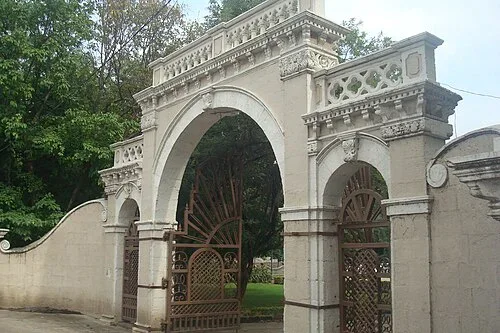 Main Entrance Gate and Estate Grounds
The Entrance Gate of Aga Khan Palace
Welcome to the Aga Khan Palace, in the Yerawada district of Pune. This tour follows the place from an act of charity to a prison, and finally to a memorial. The palace went up in 1892, commissioned by Sultan Muhammed Shah Aga Khan III, spiritual leader of the Nizari Ismaili Muslims. Famine had struck the villages around Pune, and he chose to build rather than simply give. Paid work on a grand residence would feed hungry families with their dignity intact. The carved arches and lattice screens of this gateway announce a home of high rank. Yet the palace's fame rests on something else. During the freedom struggle it became a place of detention, and two of Gandhi's closest companions died within its grounds. Both chapters unfold later in this tour.
Photo: Neha.shrivastav · CC BY-SA 3.0
02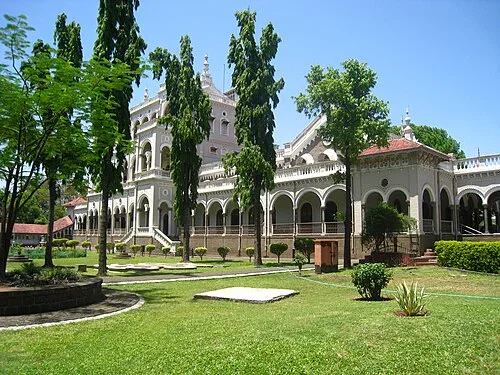 Main Entrance Gate and Estate Grounds
The Nineteen-Acre Estate
Nineteen acres, that is the size of this estate. The palace buildings take up about seven acres of it. The rest is garden, kept green with lawns, tall palms and dark cypresses. A famine-relief project might have produced a plain, utilitarian block. Instead it left behind one of Pune's most spacious private estates, with grounds like a country house. Half a century later, that space and seclusion mattered again. The British chose this remote, comfortable estate as a detention site during the Quit India Movement. Why it suited them so well is a story for a later stop.
Photo: Ioxy-xx · CC BY-SA 4.0
03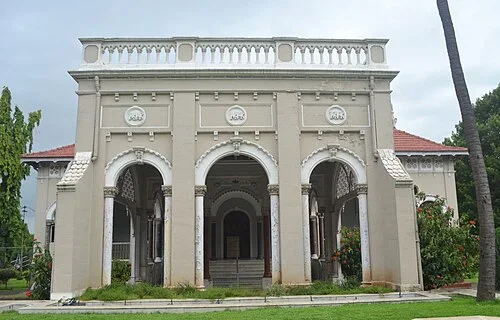 Indo-Saracenic Facade and Famine Relief Colonnades
Indo-Saracenic Facade
The style of this facade has a name that explains itself: Indo-Saracenic. It was a nineteenth-century fusion, joining Indian arches and ornament to European classical forms. Here that means deep arched bays, symmetric pediments, and a balustrade running along the roofline. Turrets and carved medallions complete the picture. The fashion flourished in late nineteenth-century India, when patrons wanted buildings that felt both Indian and modern. No architect is named for the building. The arched openings at ground level lead into the covered walkway that wraps the whole palace. Its width is the next thing worth knowing about this place.
Listen in the appPhoto: Gauravyawalkar.2012 · CC BY-SA 3.0
04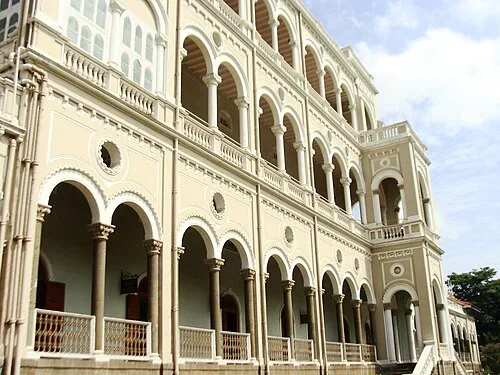 Indo-Saracenic Facade and Famine Relief Colonnades
The Triple Arcades and Encircling Corridor
Three storeys of arches climb the side of the palace, column above column. Its speciality, the feature the building is known for, is a corridor two and a half meters wide that runs around the entire structure. The ground floor covers about 1,756 square meters. By the second floor the footprint has shrunk to 445. Each storey steps back, so the upper arcades catch more light and air. A corridor like this had practical work to do. It kept the sun off the inner rooms and gave cool passage on hot days. It also let anyone stroll clear around the palace without once stepping into the open.
Listen in the appPhoto: Gauravyawalkar.2012 · CC BY-SA 3.0
05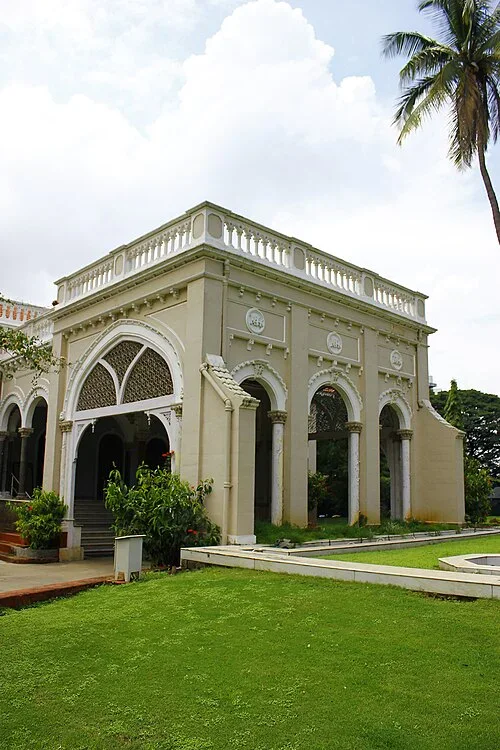 Indo-Saracenic Facade and Famine Relief Colonnades
Five Years of Famine Relief Work
Five years went into building this palace. The cost came to roughly 12 lakh rupees, about 1.2 million. But the money was never the point of the exercise; the wages were. Around a thousand people earned their living on the site across those years. Their hands shaped the lattice screens and arched colonnades of pavilions like this one. What began as an act of charity left behind a palace of real refinement.
Listen in the appPhoto: Annishaikh1990 · CC BY-SA 3.0
06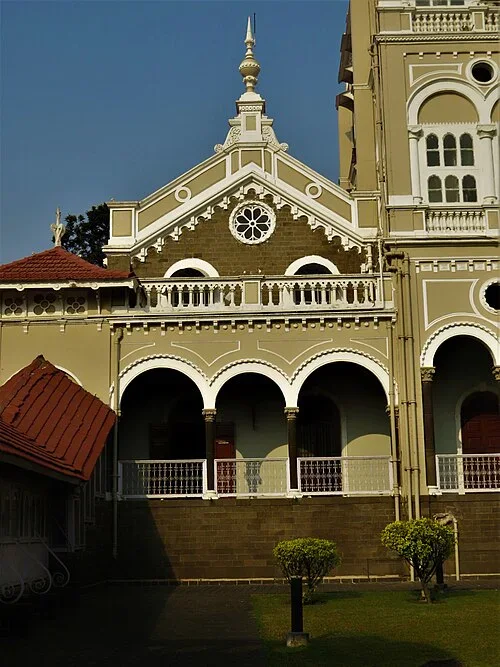 Gandhi Detention Quarters and Interior Staircase
A Palace Becomes a Prison
When the Quit India Movement demanded an end to British rule in August 1942, the arrests came quickly. From the ninth of August, the British held Mahatma Gandhi here, with his wife Kasturba and his secretary Mahadev Desai. Other leaders of the movement were interned in the palace alongside them. The detention stretched on until the sixth of May 1944. This secluded estate, with its gardens and its distance from the city, suited the British as a high-security prison. For the prisoners, it was captivity inside comfort, grand arcades and open lawns with no way out. These years changed what the building meant, from a ruler's private residence to a site of national memory. The deaths that came during this captivity are told at the garden memorials.
Listen in the appRohan Pawar · CC BY-SA 4.0
07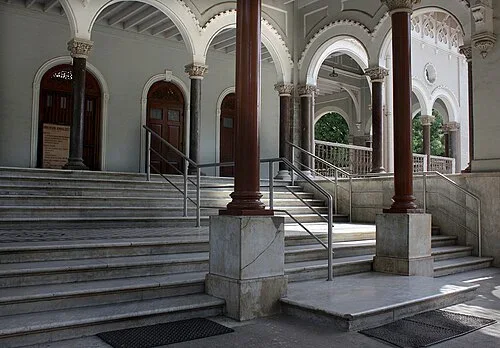 Gandhi Detention Quarters and Interior Staircase
Staircase to the Detention Quarters
Inside, the palace keeps its grand manner. Marble steps rise in wide flights, past dark wooden pillars and arched doorways. Light filters in through the colonnades, and the stair hall stays cool and dim. Upstairs lie the rooms the palace identifies as the quarters where Gandhi, Kasturba and Mahadev Desai were held during the detention. The marble underfoot and the deep shadows of the pillars give the stair hall a hushed quality that suits its history.
Listen in the appHaider Abbas · CC BY-SA 3.0
08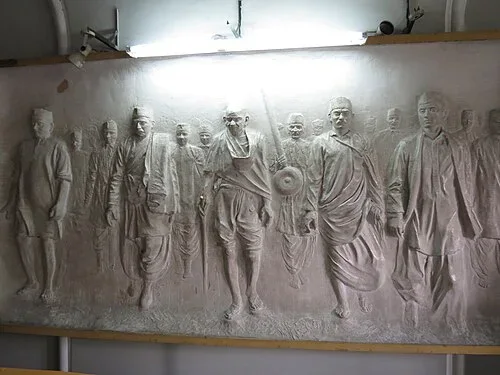 Gandhi Museum Relics and Freedom Movement Galleries
Gandhi Museum: The Freedom Movement in Relief
A sculpted relief shows Gandhi striding forward, stick in hand, companions of the freedom movement marching beside him. It belongs to the Gandhi Museum, which fills six galleries in the palace. Statues, charts and diagrams there trace the history of the Quit India Movement, whose palace chapter was heard earlier. The museum exists because of a gift. In 1969, Aga Khan IV donated the palace to the Indian people as a mark of respect for Gandhi and his philosophy. The Gandhi National Memorial Society now has its headquarters here. A palace built by one Aga Khan, and used as a prison by the Raj, had passed to the nation through another.
Listen in the appPhoto: Preity.133 · CC BY-SA 3.0
09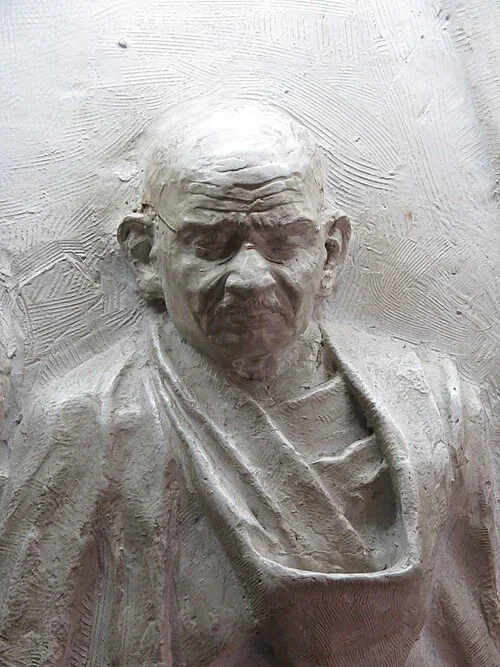 Gandhi Museum Relics and Freedom Movement Galleries
Gandhi Museum: Gandhi's Personal Belongings
Alongside the story of mass marches, the museum keeps things of a much smaller scale. A photo exhibition follows Gandhi through the events of his life. Then come his personal things, the objects of daily use: his slippers, his spectacles. After the reliefs of marching crowds, these humble belongings land with a different weight. A man whose face is recognised across the world owned so little that a pair of slippers and a pair of glasses could stand for a whole life. Preserving them was a way of keeping the man, not only the movement.
Listen in the appPhoto: Preity.133 · CC BY-SA 3.0
10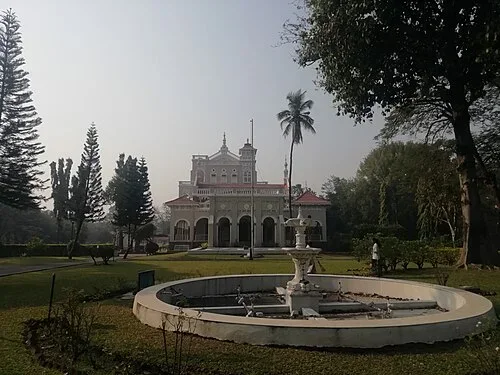 Garden Memorial Path and Marble Samadhis
Garden of Daily Prayers
Every morning, prayers are held at the samadhi in these grounds, and they have been for decades. The Gandhi National Memorial Society keeps the tradition going. The gatherings draw big crowds, and on the second of October, Gandhi's birth anniversary, they swell to three times the usual size. The lawns and the fountain make a fitting setting for that hour of remembrance. The palace in the distance has watched the ritual repeat, morning after morning, for longer than most of its visitors have been alive.
Listen in the appRohan Pawar · CC BY-SA 4.0
- 11
The Samadhis of Kasturba Gandhi and Mahadev Desai
Two deaths in captivity, three octagonal marble samadhis, and Gandhi's ashes brought here in 1992.
Aga Khan Palace
Frequently asked questions
How much does the guide cost?
Free app download. Listed guide price: $0.99. Guide price shown in the app. Audio guide only. Venue admission is separate.
Can I listen without internet?
Yes. Download the guide’s audio, images, and maps in the app before your visit. Your downloaded content is then available offline.
Can I listen in my language?
This audio guide is available in 15 languages, including English.
Do I need to follow a schedule?
No. This is a self-guided experience. Choose your stops, pause whenever you like, and return to a story at your own pace.
At your own pace
Explore Aga Khan Palace.
Download Stanza, then search for “Aga Khan Palace”.
Free app download · Guide price shown in the app
Keep exploring
Nearby audio guides
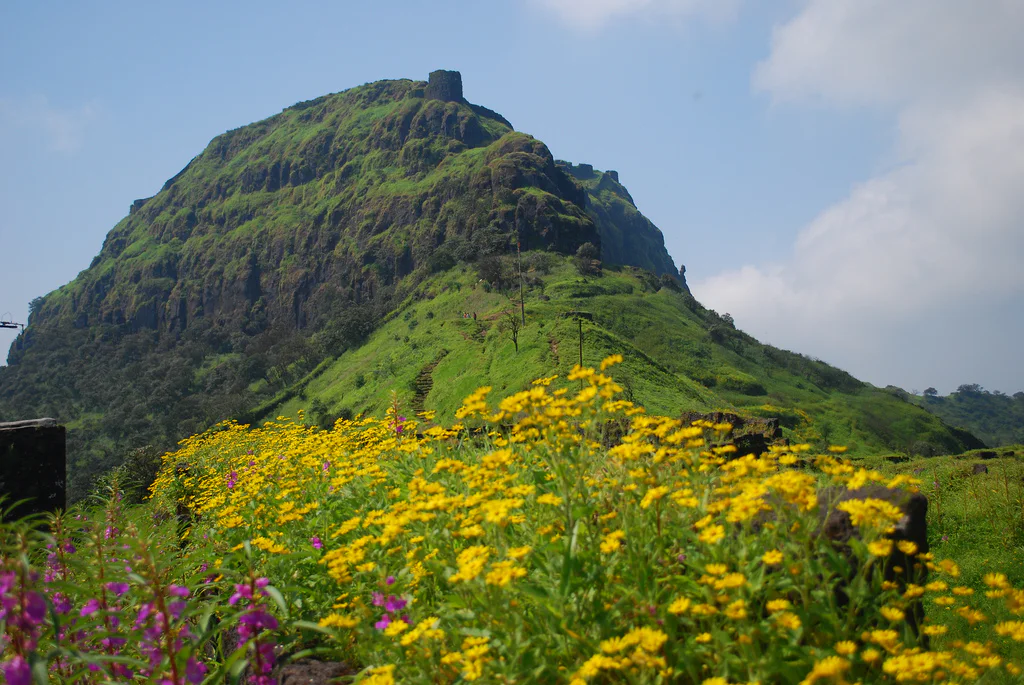
Velhe · 41 km
Rajgad
Content & sources
Photo: Goldengoof · Public domain
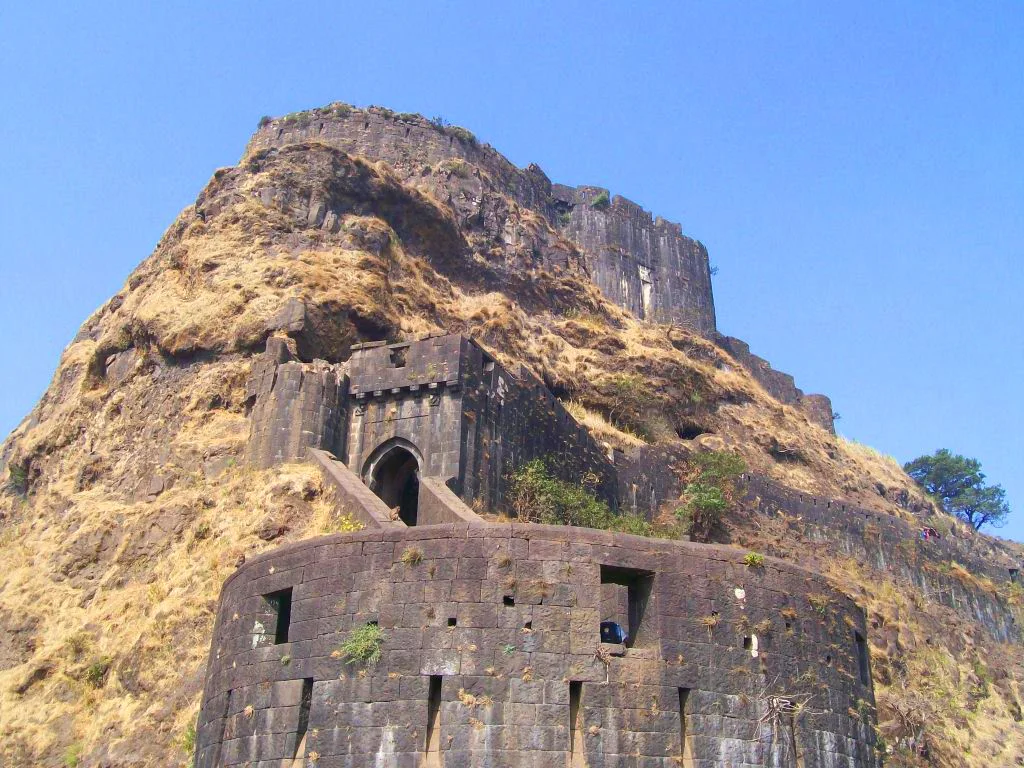
Pune district · 48 km
Lohagad
Content & sources
Photo: Smukherjee6 · CC BY-SA 4.0
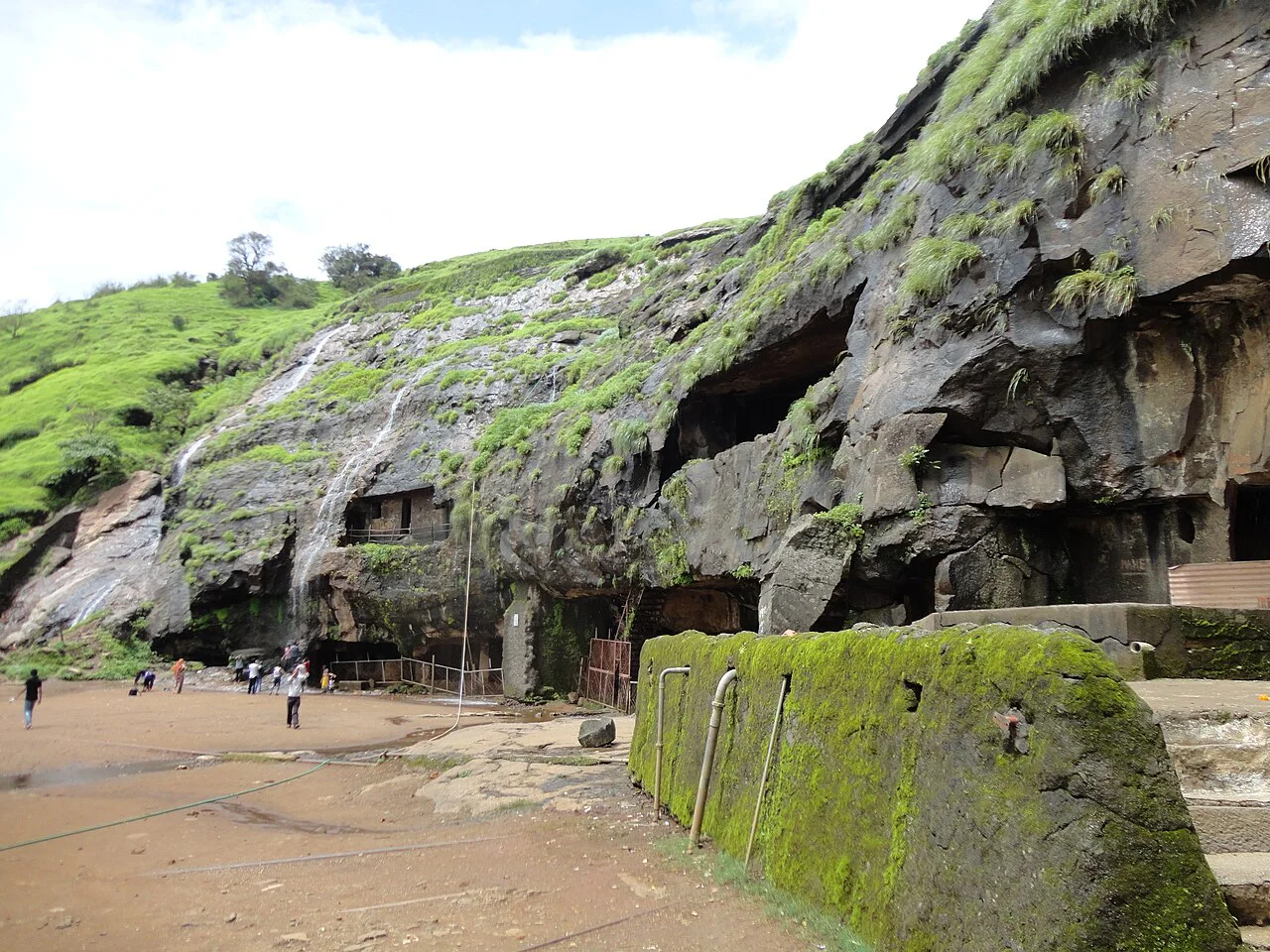
Karla · 52 km
Karla Caves
Content & sources
Photo: Kalpeshzala59 · CC BY-SA 3.0
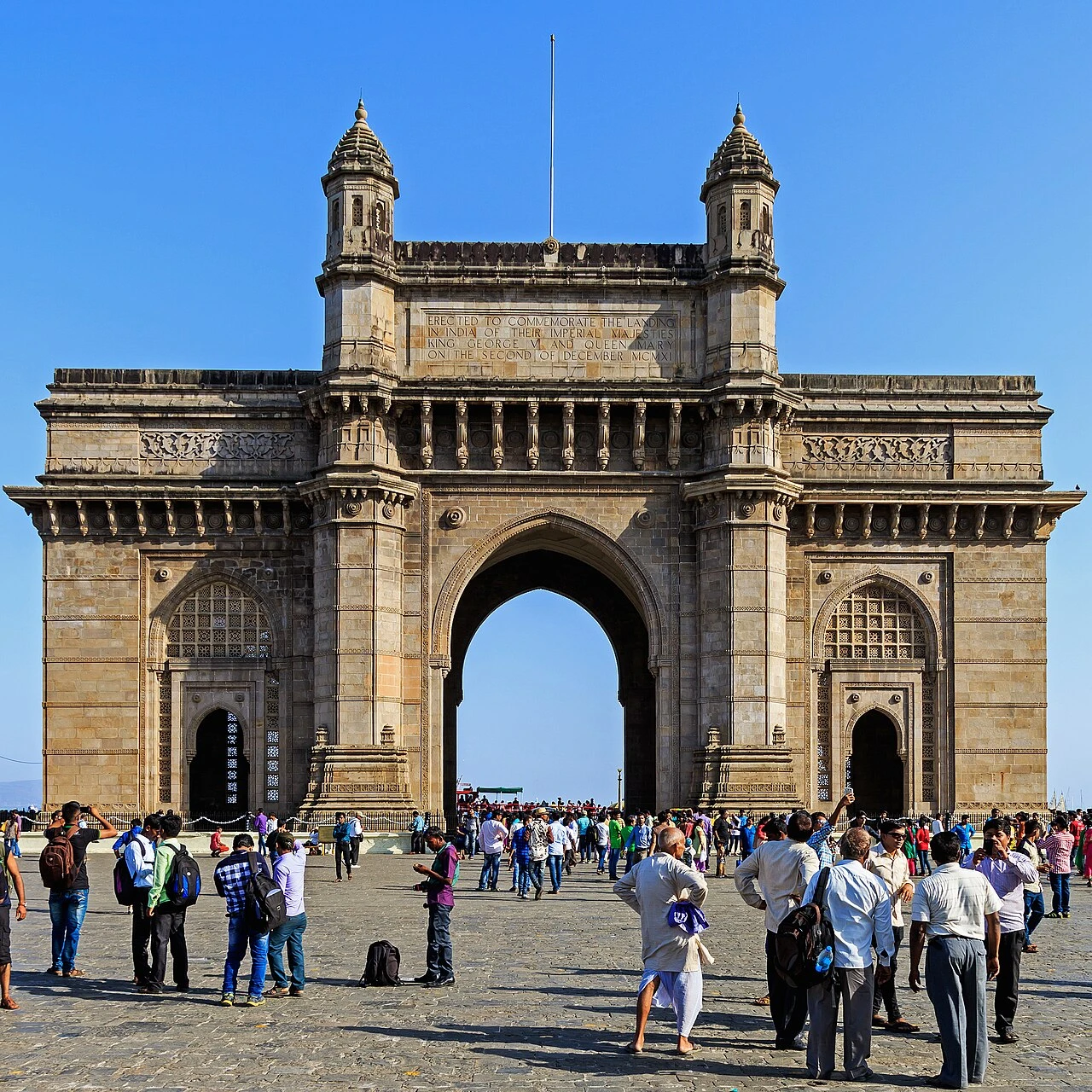
Mumbai · 120 km
Gateway of India
Content & sources
Photo: A.Savin · FAL