Stanza · Audio guide
Karla Caves Audio Guide
A place to remember. A story to take with you.
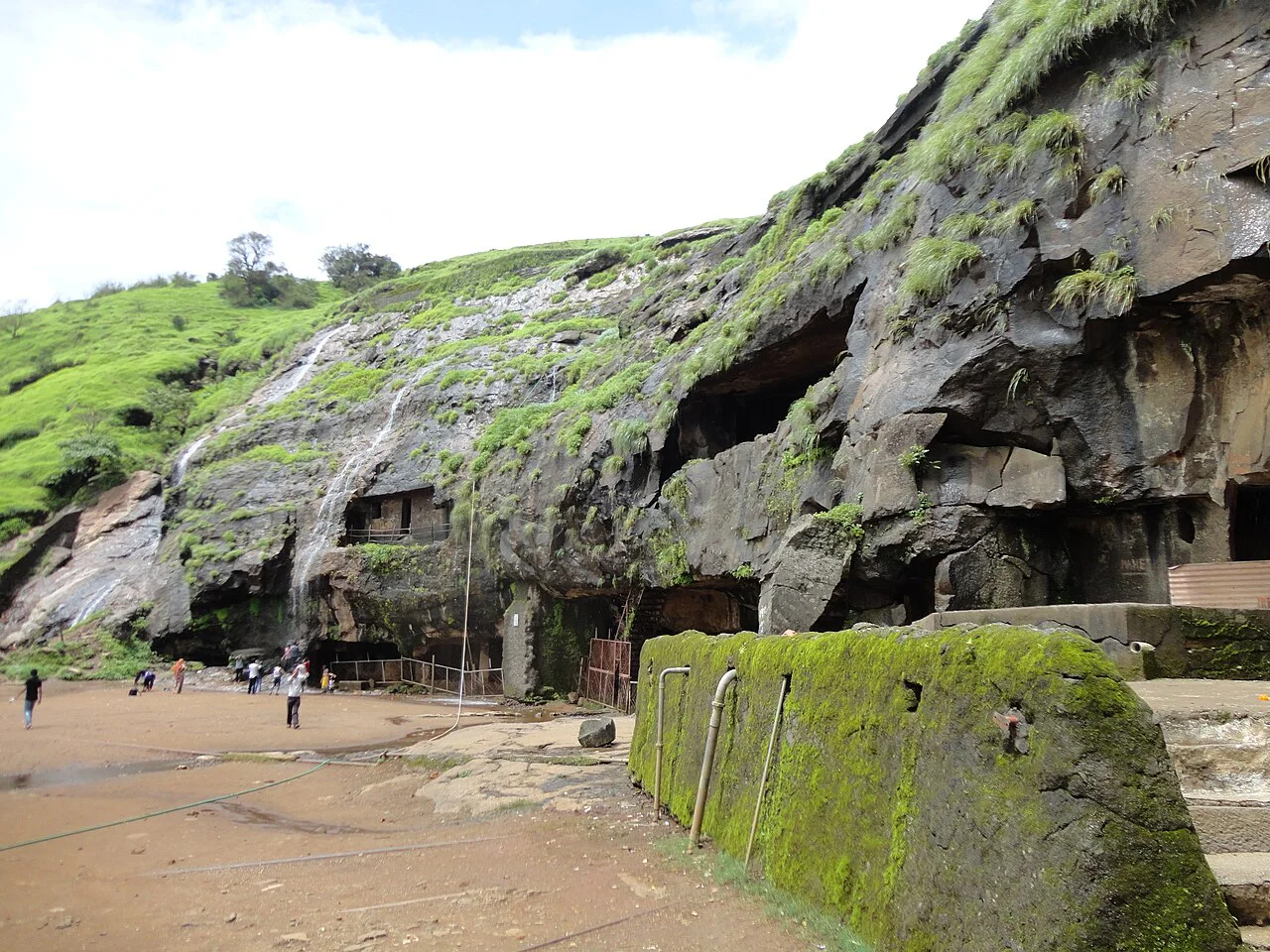
The Karla Caves are a complex of ancient Buddhist rock-cut caves located near Lonavala, India. These shrines were developed between the 2nd century BCE and the 5th century CE near a major ancient trade route.
Download Stanza, then search for “Karla Caves”.
About the tour
One guide. Your kind of visit.
The Karla Caves are a complex of ancient Buddhist rock-cut caves located near Lonavala, India. These shrines were developed between the 2nd century BCE and the 5th century CE near a major ancient trade route.
Ready when you are.
- 01Get the free Stanza app.
iOS & Android
- 02Find your guide.
“Karla Caves”
- 03Download before you go.
Works offline
Audio guide / 11 narrated stops
Inside the guide
Get to know a few of the stories before you go. Open a stop to read more.
01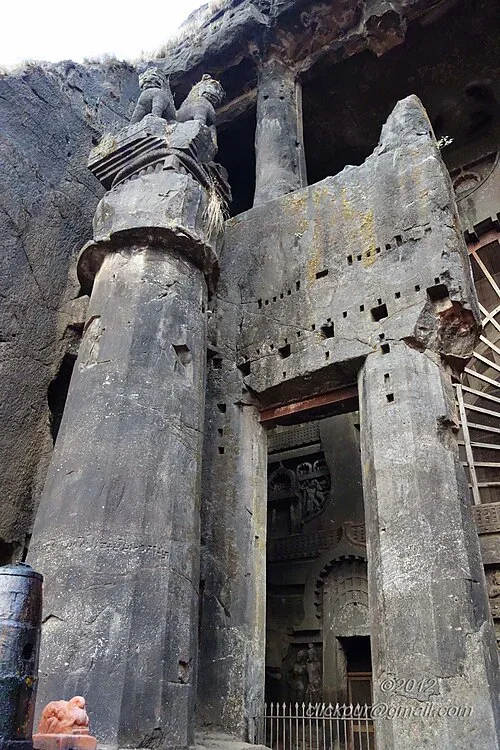 Outer Courtyard and the Monolithic Lion Pillar
Entrance Terrace and the Lion Pillar
Welcome to the Karla Caves, a complex of ancient Buddhist shrines carved straight into a hillside in Maharashtra. The tall fluted pillar rising from this courtyard, crowned with carved lions, has stood at the entrance for close to two thousand years. Behind it opens the Great Chaitya, the largest and best-preserved prayer hall here, known as Cave 8. The shrines took shape over many centuries, from the second century BCE onwards, with the oldest thought to date to about 160 BCE. They grew beside a major trade route that ran east from the Arabian Sea into the Deccan. Buddhist monks settled here and offered travellers shelter, and merchants on that road helped pay for what they found. That partnership between faith and trade shaped almost everything you will hear about at Karla.
Udaykumar PR · CC BY 3.0
02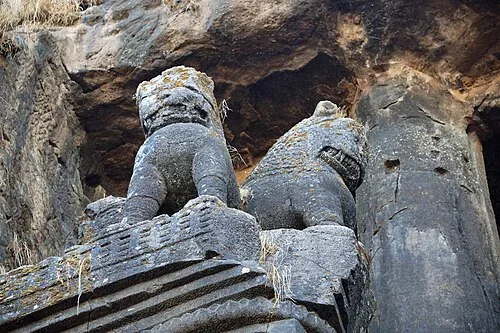 Outer Courtyard and the Monolithic Lion Pillar
The Lion Capital
At the top of that great pillar sit four lions, carved from the same single shaft of stone. In this style of Buddhist monument, lions like these usually carried something above them. Here the missing piece was almost certainly a chakra, the Buddhist wheel. So the pillar once rose from stone lions to a spinning symbol of the Buddha's teaching, high over the entrance. The pillar itself is a plain shaft with sixteen fluted faces. And it was one of a pair. A similar pillar probably stood on the opposite side of the courtyard, but it either fell or was taken down long ago. What occupies that space now is a story of its own.
Photo Dharma from Sadao, Thailand · CC BY 2.0
03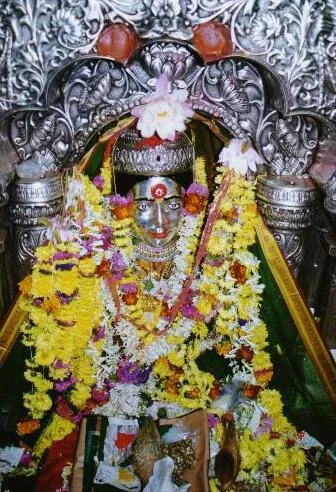 Ekveera Devi Temple
The Goddess of the Courtyard
The goddess Ekveera has her temple right here on the cave terrace, where worshippers come every day. Her bells ring out during daily ceremonies, in a courtyard first carved for Buddhist monks two thousand years ago. She is honoured most of all by the Aagri and Koli communities of the Mumbai region, who travel here for her darshan. The temple stands where the chaitya's second grand pillar once rose, on the spot left empty when that pillar was lost. Local legend tells that the Pandava brothers, heroes of the Mahabharata, built her shrine in a single night during their years of exile. It is a story people love to tell, not a record anyone can check. What is certain is that worship here has simply never stopped; it changed gods and kept going.
Listen in the appMkoli (talk) · Public domain
04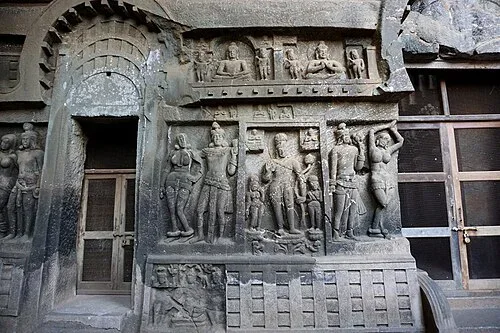 Great Chaitya Facade and Mithuna Reliefs
The Facade of the Stone Mansion
The face of the Great Chaitya is a screen wall of solid rock, held up by two stout octagonal pillars. When the cave was new, that plain mass of rock was crowned by a wooden gallery, the great ornament of the whole facade. Above it ran a low colonnade of four columns, which let light through to the enormous window behind. The woodwork is gone, but the stone still shows where it sat. On the left wall of the veranda, over a row of carved elephants, runs an inscription of a man named Bhutapala. He calls himself a setthi, a merchant-banker, from the city of Vaijayanti. His inscription says he completed this stone mansion. Whether he meant the entire cave or only these veranda sculptures, no one can say for certain.
Listen in the appPhoto Dharma from Sadao, Thailand · CC BY 2.0
05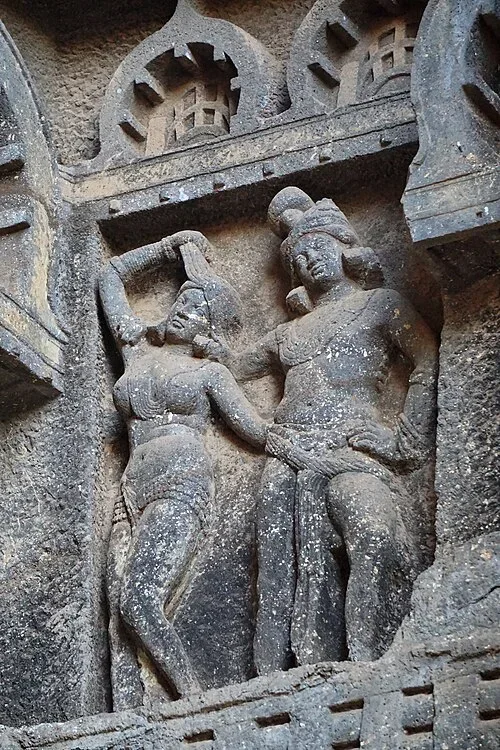 Great Chaitya Facade and Mithuna Reliefs
The Entrance Couples
Beside the doorway stand carved couples, arm in arm, dressed and jewelled in the fashion of their day. These Mithuna pairs are among the older carvings here, and the larger ones may well be original to the cave. The Buddha panels nearby are much younger, added around the sixth century CE by worshippers of the Mahayana school. The walls also carry the marks of two rival dynasties. To the right of the main entrance, Ushavadata, son-in-law of the Western Satrap king Nahapana, recorded giving the village of Karajika to support the ascetics living in the caves at Valuraka, for all who would keep the rainy-season retreat. A generation later, Satavahana ruler Sri Pulumayi left his own dedicatory inscription on the lintel to the left. His family and Nahapana's were enemies. Both chose this doorway to say so.
Listen in the appPhoto Dharma from Sadao, Thailand · CC BY 2.0
06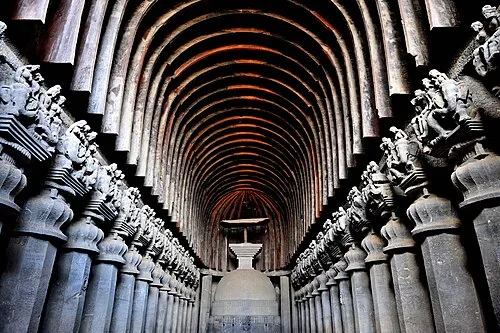 Great Chaitya Nave and Elephant Colonnade
The Great Chaitya Hall
The Great Chaitya is the largest rock-cut prayer hall of its kind in India, about forty-five metres long and reaching fourteen metres high. It was excavated roughly between 50 and 70 CE, at the moment when this style of architecture reached its purest form. Earlier chaitya halls at Bhaja, Kondivite, Ajanta, Pitalkhora, Kondana, Nasik and Bedse led here, and Karla stands as their final perfection, a level never surpassed. Fifteen pillars run along each side, dividing the central nave from the narrow aisles. The whole hall is lit by a single great window over the entrance, and that one undivided volume of light falls directly on the stupa at the far end, leaving everything else in shadow. The thick columns stand so close together that the walls behind them are never really seen. The effect, one early writer said, is solemn and grand.
Listen in the appPhoto: Sharvarism · CC BY-SA 4.0
07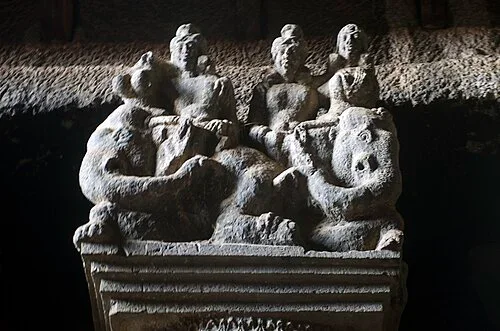 Great Chaitya Nave and Elephant Colonnade
The Elephant Capitals
Most pillars in the nave end in a capital crowded with life. On the inner face kneel two elephants, and each elephant carries two figures on its back, usually a man and a woman, sometimes two women. Behind them come horses and tigers, each bearing a single rider. The old descriptions judge these carvings much better executed than ornaments of this kind usually are. In Greek architecture, a frieze and cornice would occupy the band of stone where these sculptures sit. At Karla, the sculpture itself takes that place. The capitals along the colonnade carry their own little processions of people and animals, riding above the heads of the congregation.
Listen in the appPhoto: Rangan Datta Wiki · CC BY-SA 4.0
08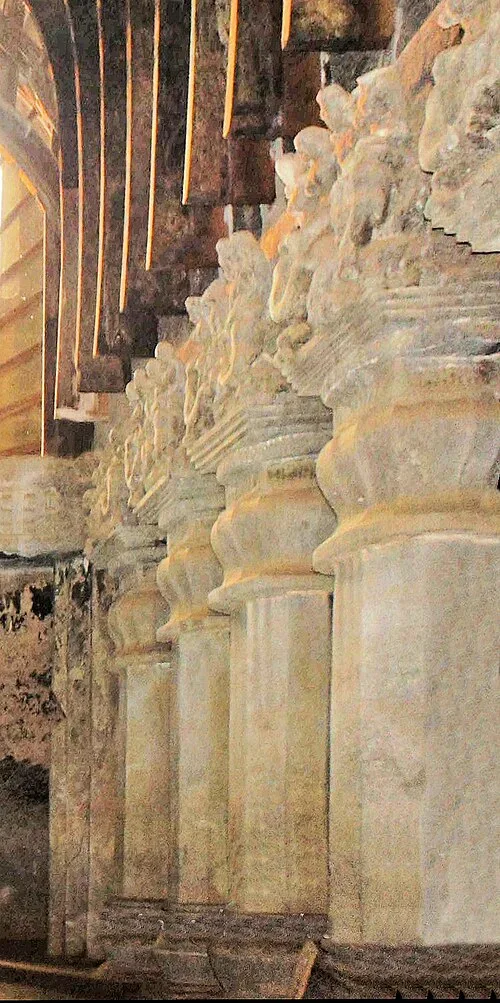 Great Chaitya Nave and Elephant Colonnade
The Donors' Pillars
Several of these pillars carry their donors' names, cut into the stone in Brahmi script. Six of them were given by men who called themselves Yavanas, people of Greek descent living in India, though their names are Buddhist ones. Yasavadhana, Sihadhaya and Chulayakha all gave pillars, and all came from the same town, Dhenukakata, thought to lie near Karli. Another inscription there mentions a community of merchants in that town. These six gifts account for nearly half of the known pillar dedications in the hall. Local merchants gave too, and so did monks and nuns, each recording a pillar, a rail or a carving as their offering. A merchant walking the trade route could buy himself a permanent share in a holy place, and his name would stand in the prayer hall for as long as the stone held.
Listen in the appUdaykumar PR · CC BY 3.0
09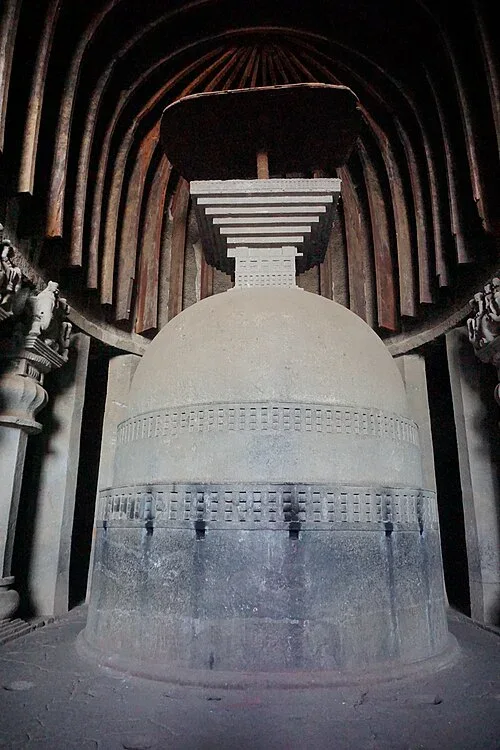 The Sacred Stupa and Ancient Wooden Vault
The Sacred Stupa
At the head of the hall, where an altar stands in a Christian church, rises the stupa. It is a plain dome set on a circular drum of two storeys, with the edges of each level carved into rail ornaments. Just below the lower rail, holes cut into the stone once held woodwork, and those may have carried hangings draped around the dome, as similar carved scenes suggest. Above the stupa's capital rises the most surprising survivor in the hall: a wooden umbrella. It is original, some two thousand years old, and age has left it decayed and distorted. Its circular underside was once carved in fine detail. This canopy still hangs over the sacred centre of the cave, exactly where that single shaft of light from the great window comes to rest.
Listen in the appPhoto Dharma from Sadao, Thailand · CC BY 2.0
10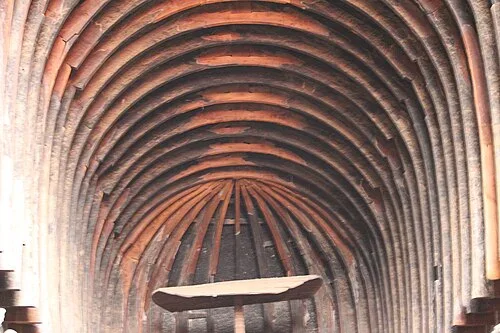 The Sacred Stupa and Ancient Wooden Vault
The Teak Ceiling
Curving overhead, the vaulted roof is lined with wooden ribs, and most of them are original to the cave. They were probably cut at the same time the hall was excavated, which makes them over two millennia old. They also settle an argument about where this architecture came from. The roof is not a copy of a masonry arch; the ribs prove it imitates an older kind of building, one made of timber and thatch. Rock-cut halls like this one reproduce that wooden form in stone. In most other rock-cut chaityas, the real timber has long since rotted away, as at Cave 3 of the Kanheri Caves. Some of Karla's ribs were replaced around 1900 under Lord Curzon, but most are the ancient ones, still doing the work they were cut for.
Listen in the appPhoto: Prajwal 30 · CC BY-SA 4.0
- 11
The Monastic Caves
The monks' dwelling cells, and how Karla's design echoed on through later temples.
Karla Caves
Frequently asked questions
How much does the guide cost?
Free app download. Listed guide price: $0.99. Guide price shown in the app. Audio guide only. Venue admission is separate.
Can I listen without internet?
Yes. Download the guide’s audio, images, and maps in the app before your visit. Your downloaded content is then available offline.
Can I listen in my language?
This audio guide is available in 15 languages, including English.
Do I need to follow a schedule?
No. This is a self-guided experience. Choose your stops, pause whenever you like, and return to a story at your own pace.
At your own pace
Explore Karla Caves.
Download Stanza, then search for “Karla Caves”.
Free app download · Guide price shown in the app
Keep exploring
Nearby audio guides
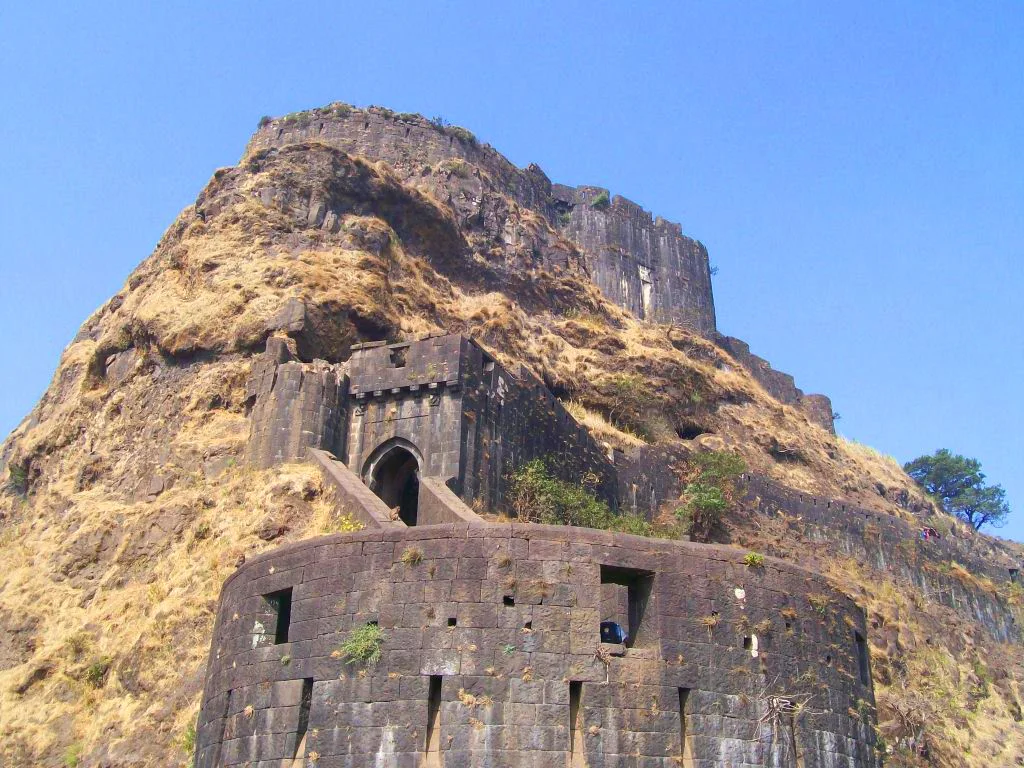
Pune district · 8 km
Lohagad
Content & sources
Photo: Smukherjee6 · CC BY-SA 4.0
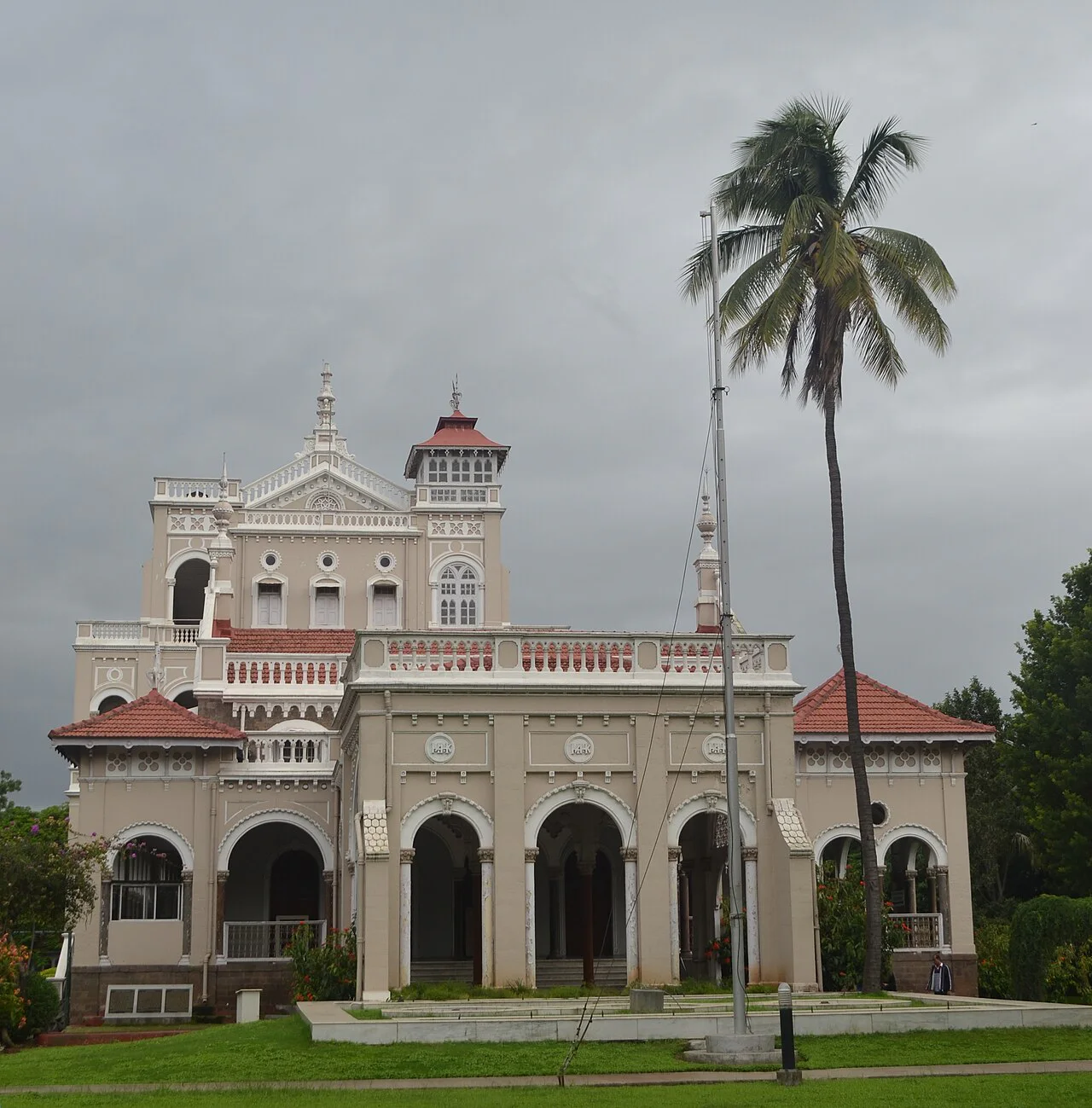
Pune · 52 km
Aga Khan Palace
Content & sources
Aakash.gautam · CC BY-SA 3.0
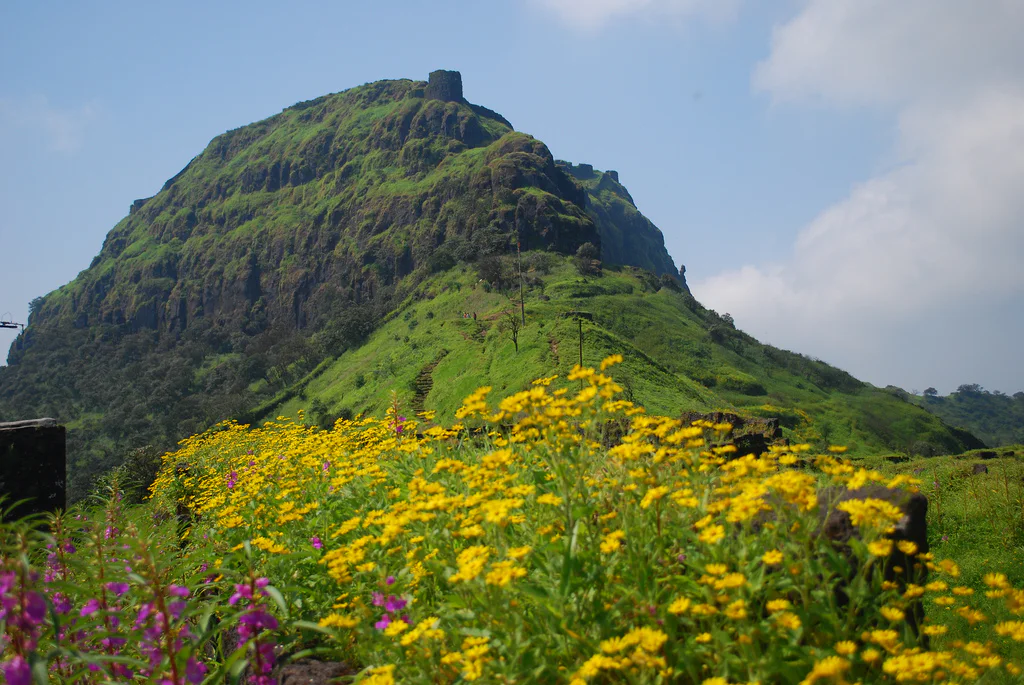
Velhe · 64 km
Rajgad
Content & sources
Photo: Goldengoof · Public domain
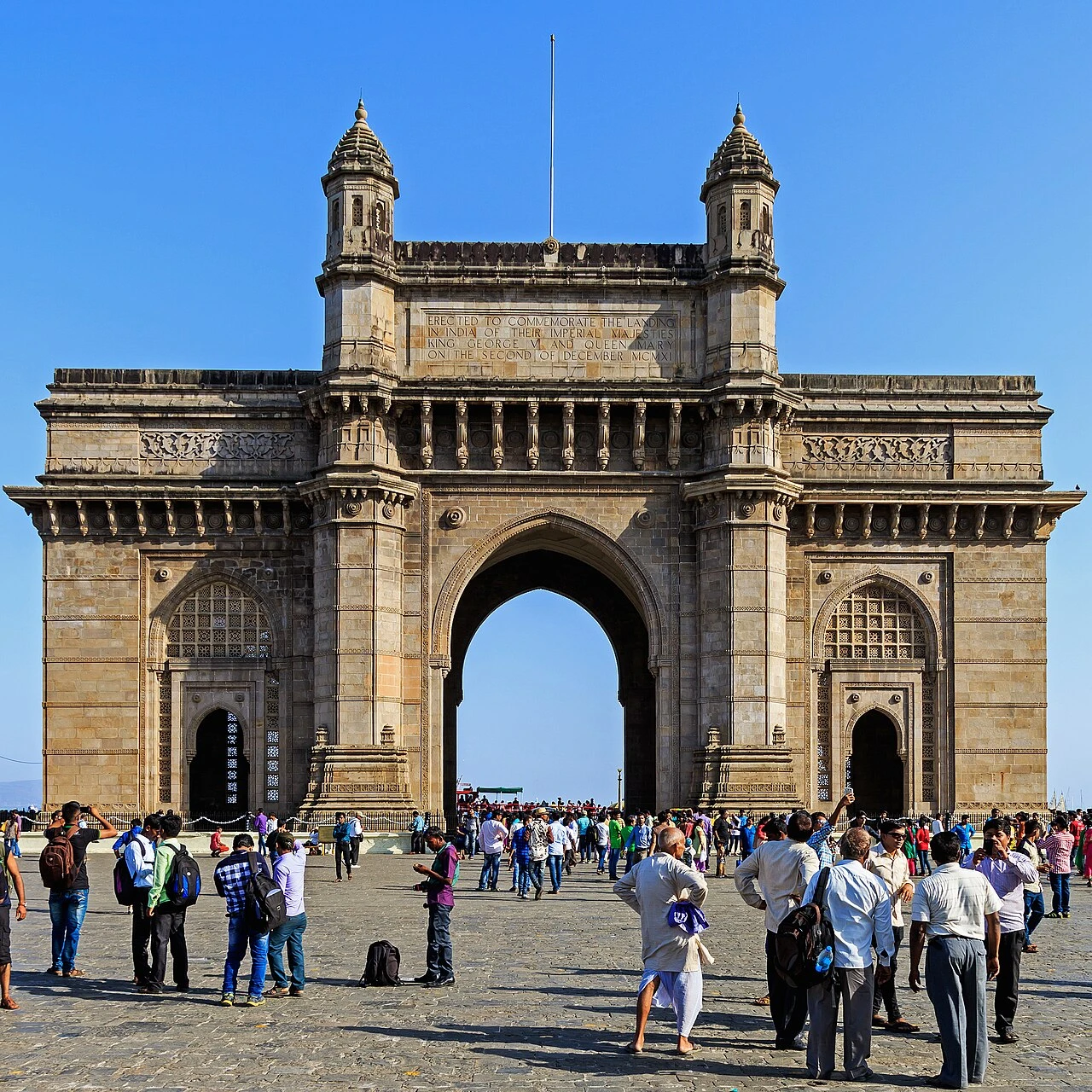
Mumbai · 69 km
Gateway of India
Content & sources
Photo: A.Savin · FAL