Stanza · Audio guide
Badrinath Temple Audio Guide
A place to remember. A story to take with you.
Badrinath Temple is a Hindu temple dedicated to Vishnu located in the town of Badrinath. It is one of the Char Dham pilgrimage sites and one of the 108 Divya Desams sacred to Vaishnavism.
Download Stanza, then search for “Badrinath Temple”.
About the tour
One guide. Your kind of visit.
Badrinath Temple is a Hindu temple dedicated to Vishnu located in the town of Badrinath. It is one of the Char Dham pilgrimage sites and one of the 108 Divya Desams sacred to Vaishnavism.
Ready when you are.
- 01Get the free Stanza app.
iOS & Android
- 02Find your guide.
“Badrinath Temple”
- 03Download before you go.
Works offline
Audio guide / 10 narrated stops
Inside the guide
Get to know a few of the stories before you go. Open a stop to read more.
01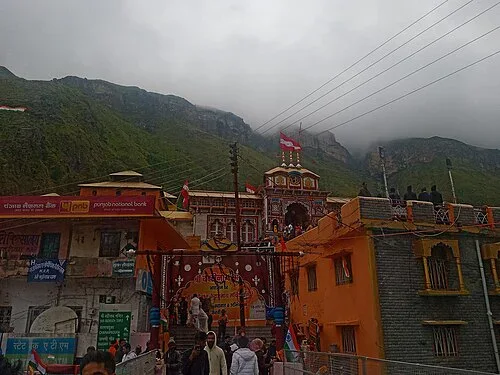 Alaknanda Riverbank and Sacred Himalayan Setting
The Temple Approach Seen From the Bridge
Welcome to Badrinath, a temple of Vishnu high in the Himalayas, and the first stop on a walk through its gates, halls and sanctum. The Vishnu Purana tells how the brothers Nara and Narayana searched the valleys for a place to build a hermitage. They passed four other holy Badris before they found what they wanted. Behind the river Alaknanda they came upon a hot and cold spring, and they named the spot Badri Vishala. The springs still run just below the temple. They are called Tapt Kund, and their water stays at about fifty-five degrees Celsius all year, even when the mountain air is far colder. Many pilgrims consider a bath there a requirement before they enter the temple for darshan. Local tradition adds one more story about the water. It says the image of Badrinarayan was once taken from the temple and thrown into the hot spring, and was later recovered from it and reinstalled. This temple is also counted among the four Char Dham sites, the great abodes of the Hindu pilgrimage map.
Photo: Heavren · CC BY-SA 4.0
02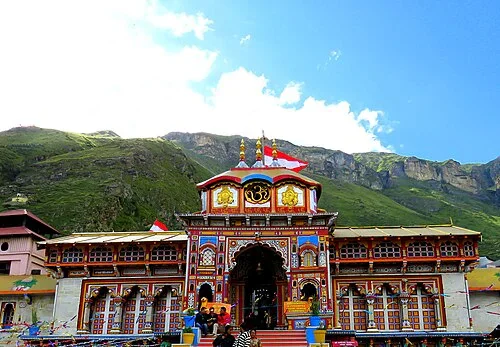 Singh Dwar (The Lion Gate)
 Façade
The Skanda Purana says there are sacred shrines in heaven, on earth and in the underworld, but no shrine like Badrinath. The way into that shrine runs through the gate known as Singh Dwar. Its tiered façade is painted in strong reds, yellows and blues, with gilded ornaments at the top catching the light. Pilgrims climb a stairway to the main entrance, a tall arched gateway. The arch marks the threshold between the crowded approach and the sacred zone inside. Just beyond it lies a mandapa, a pillared hall that leads onward to the sanctum. The walls and pillars of that hall are covered in intricate carving. The gate, in other words, is not a barrier but the first room of the temple itself.
Photo: Shitha Valsan · CC BY-SA 4.0
03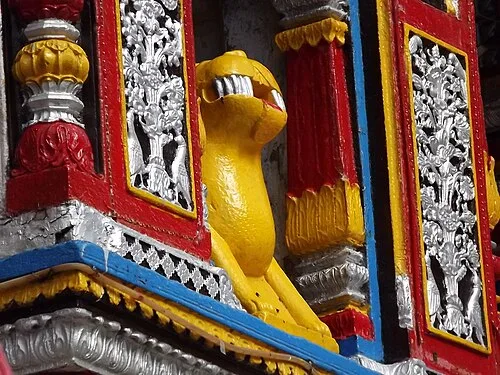 Singh Dwar (The Lion Gate)
Carved Yellow Figure and Painted Panels on the Gate
The gate wears its decoration like jewellery. Beside the doorway crouches a sculpted animal figure, painted a bright yellow, with its head lifted and teeth bared. It may be the lion the gate's name hints at, though its identity is not settled. Around it run red-framed panels filled with silver-coloured floral relief, each flower and leaf raised in patterned scrolls. Bands of blue and yellow paint frame the whole composition. Whatever the figure represents, the effect is deliberate: colour and carving working together to make the threshold shine.
Listen in the appPhoto: Guptaele · CC BY-SA 4.0
04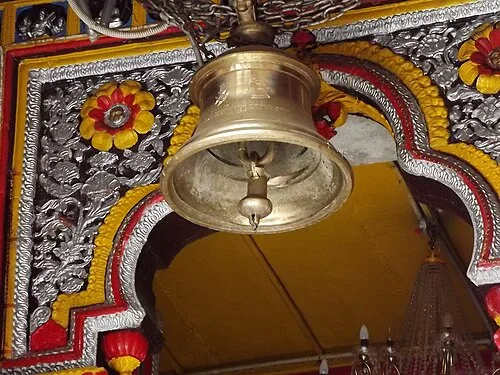 Singh Dwar (The Lion Gate)
The Bell Beneath an Ornamented Arch
A large bell hangs from the middle of the temple's roof here. The arch around it is framed with silver-toned ornament, edged in red and yellow, with painted flowers set into the border. The bell itself is brass-coloured, broad at its mouth, with its clapper resting inside. It hangs still, catching the light of the decorated frame around it.
Listen in the appPhoto: Guptaele · CC BY-SA 4.0
05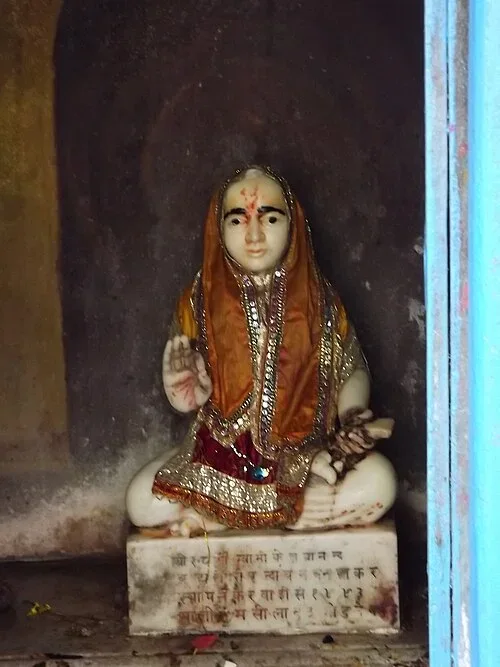 Sabha Mandapa and the Adi Shankara Shrine
Seated Saint Figure in a Wall Niche
A seated figure in a wall niche holds one hand raised, in the pose of a teacher. The temple records connect this place with a teacher indeed: the philosopher Adi Shankara, who established Badrinath as a pilgrimage site in the ninth century. Tradition says he re-established the sanctuary with the help of Kanak Pal, a ruler of the Parmar line. The Advaita school he founded attributes the Char Dham to him as well: four monasteries at the four corners of India, with Badrinath in the north, Puri in the east, Dwarka in the west and Rameswaram in the south. The southern link continues in a striking way. The head priest, the Rawal, is traditionally a Nambudiri Brahmin chosen from Kerala, a tradition believed to have been initiated by Shankara himself. The temple records add a twist. The priests were once Dandi Sanyasi ascetics, and when the last of them died without an heir in 1776, the King of Garhwal invited non-ascetic Nambudiris from Kerala to take over. That practice continues in modern times, with the Rawal serving as a bachelor from April to November.
Listen in the appPhoto: Guptaele · CC BY-SA 4.0
06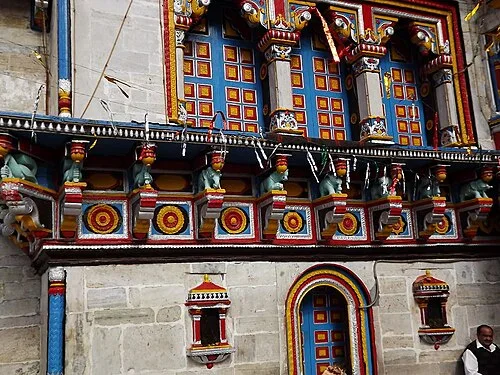 Sabha Mandapa and the Adi Shankara Shrine
Painted Stone Façade with Carved Balcony
The walls here carry more than paint; they carry several centuries of rebuilding. The Kings of Garhwal expanded the temple in the seventeenth century. Then came the great Garhwal earthquake of 1803, which damaged it so badly that an early nineteenth-century gazetteer described the building as unstable, propped up to keep it from collapsing. The King of Jaipur stepped in and largely rebuilt the temple. Renovation work was still going on as late as the 1870s, and it was completed by the time of the First World War. Royal patronage worked through land as well as stone. Successive rulers endowed villages to the temple, and the income from villages along the pilgrimage route went to feed and shelter the pilgrims. At that time the town itself was small, a cluster of some twenty huts for the temple staff, while seven to ten thousand pilgrims arrived each year.
Listen in the appPhoto: Guptaele · CC BY-SA 4.0
07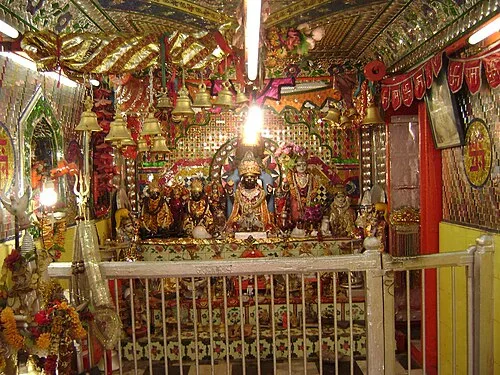 Garbhagriha (The Inner Sanctum)
The Inner Sanctum Altar (Garbhagriha)
Everything in this temple leads to one small image. It is the black stone deity of Vishnu in the form of Badrinarayan, regarded by many Hindus as one of eight svayam vyakta kshetras, places where Vishnu is believed to have manifested himself. The image is seated in padmasana, the crossed lotus posture, beneath a gold canopy and a Badri tree. Two of its hands are raised, holding the conch Panchajanya and the discus Sudarshana. The other two rest in its lap in yogamudra. Accounts of its size differ: the temple's own description gives about a foot, while an early nineteenth-century gazetteer recorded it as about three feet high, dressed in gold and silver brocade with only the head and hands uncovered. Since 2012 a token system has paced the queue, and each devotee is allotted roughly ten to twenty seconds before the deity.
Listen in the appPhoto: எஸ். பி. கிருஷ்ணமூர்த்தி · Public domain
08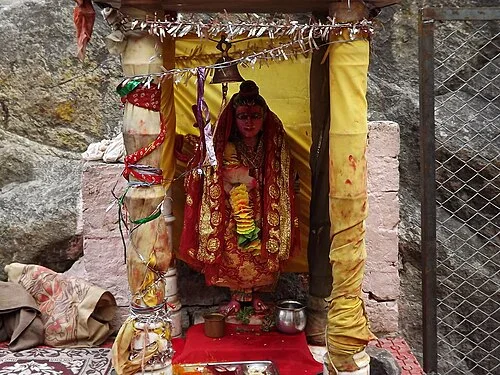 Garbhagriha (The Inner Sanctum)
Small Shrine with a Clothed Figure and Offerings
Badrinarayan does not dwell alone. The sanctum also houses images of Kubera, the god of wealth, the sage Narada, Uddhava, and the pair Nara and Narayana. Beyond it, the temple contains fifteen additional images that are worshipped within its precincts. Among them are Lakshmi, the consort of Vishnu, and Garuda, the great bird who serves as Vishnu's mount. There is Navadurga as well, the manifestation of Durga in her nine forms. Separate shrines honour Lakshmi Narasimhar and a line of teachers, from Adi Shankara to Ramanujacharya, Vedanta Desika and Ghantakarna. All of the temple's deities are carved out of black stone. Small shrines like the one dressed here in red and gold cloth, with metal vessels set out before it, carry that wider community of images through the precincts.
Listen in the appPhoto: Guptaele · CC BY-SA 4.0
09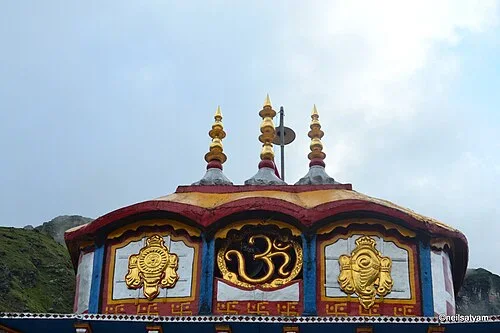 The Gilded Shikhara and Parikrama Courtyard
Gilded Roof with Finials and an Om Emblem
The top of the temple carries its brightest ornament. Golden finials rise above the roof edge, and a golden Om emblem glows in the central panel, framed in red and gold. The sanctum's conical roof is described as about fifteen metres tall, with a small cupola at its top covered in gilt. An early nineteenth-century gazetteer put it another way. It described a conical structure with a small cupola beneath a square shelving roof of copper, surmounted by a gilded ball and spire. Set the two accounts side by side and the gilded crown has clearly kept its place at the summit, whatever else the centuries changed beneath it.
Listen in the appNeil Satyam · CC BY-SA 3.0
10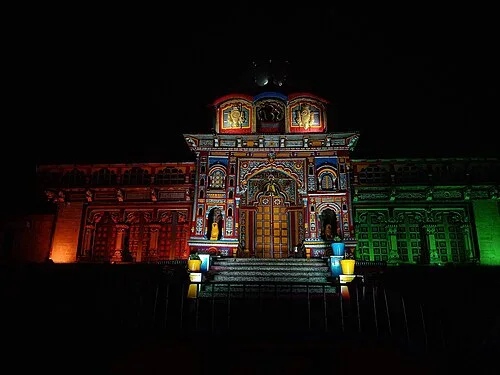 The Gilded Shikhara and Parikrama Courtyard
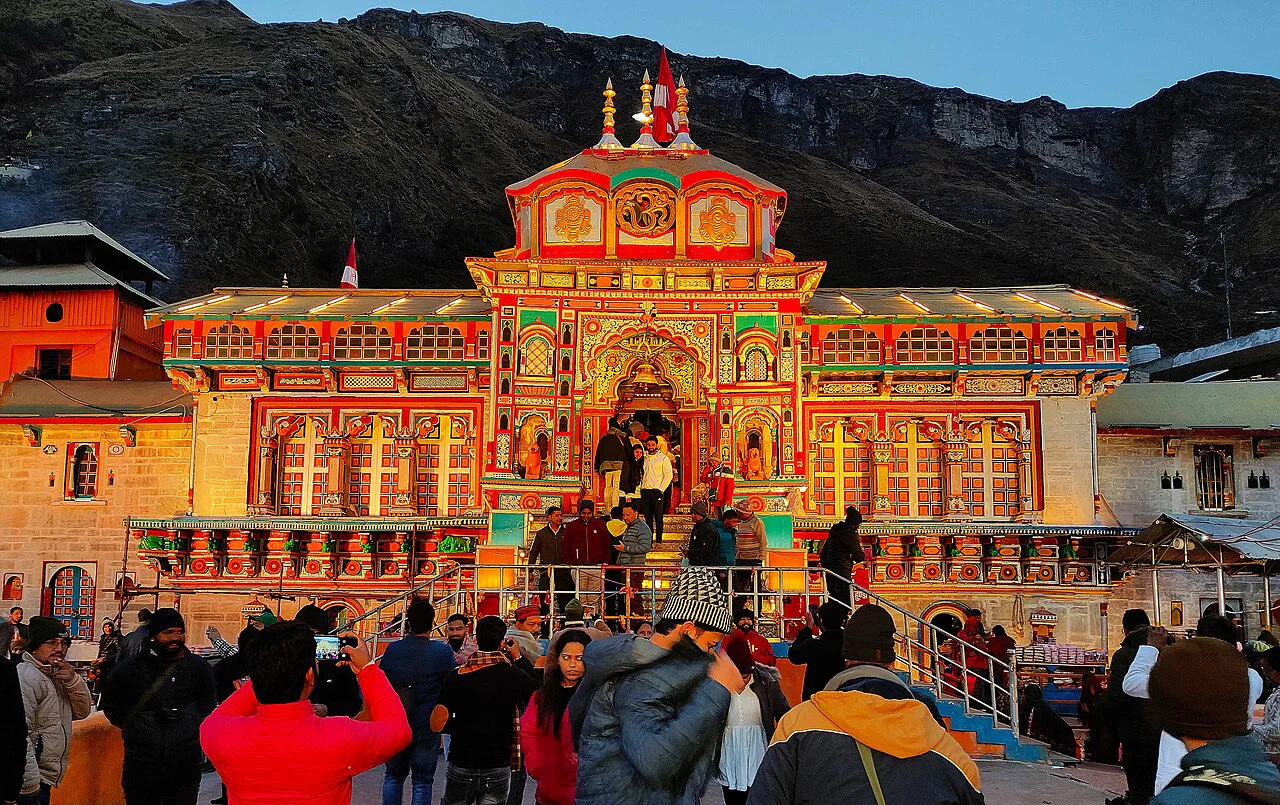
The Temple Premises at Night
Every year the mountain closes this temple down. On an auspicious day in October or early November, special pujas are performed by the chief priest before pilgrims and temple officials, and the doors are shut for the winter. On that day a lamp is lit, filled with ghee, and prepared to burn for six months. It is called the Akhanda Jyoti, the unbroken flame. The image of Badrinath is notionally transferred for those months to the Narasimha temple at Jyotirmath, some forty miles away. When the temple reopens around April or May, on the auspicious day of Akshaya Tritiya, pilgrims gather to witness the Akhanda Jyoti still burning. A shrine abandoned for half the year by everyone who loves it, kept alive by a single flame until they return.
Listen in the appPhoto: Heavren · CC BY-SA 4.0
Badrinath Temple
Frequently asked questions
How much does the guide cost?
Free app download. Listed guide price: $0.99. Guide price shown in the app. Audio guide only. Venue admission is separate.
Can I listen without internet?
Yes. Download the guide’s audio, images, and maps in the app before your visit. Your downloaded content is then available offline.
Can I listen in my language?
This audio guide is available in 15 languages, including English.
Do I need to follow a schedule?
No. This is a self-guided experience. Choose your stops, pause whenever you like, and return to a story at your own pace.
At your own pace
Explore Badrinath Temple.
Download Stanza, then search for “Badrinath Temple”.
Free app download · Guide price shown in the app
Keep exploring
Audio guides — India
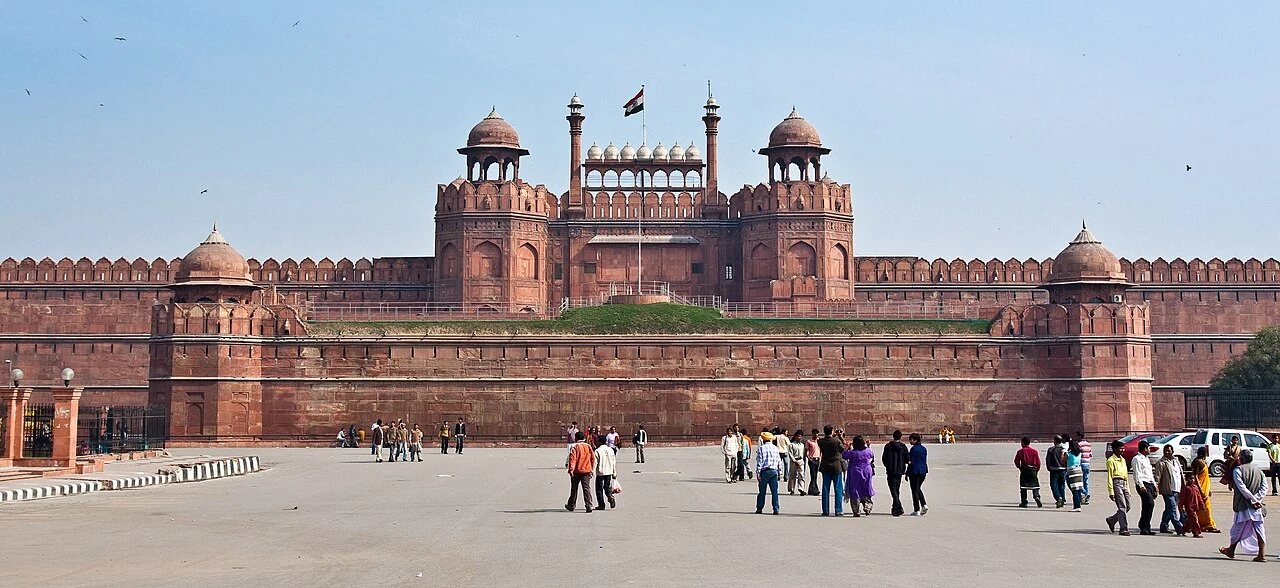
Delhi
Red Fort
Content & sources
Photo: PerSona77 · CC BY-SA 3.0
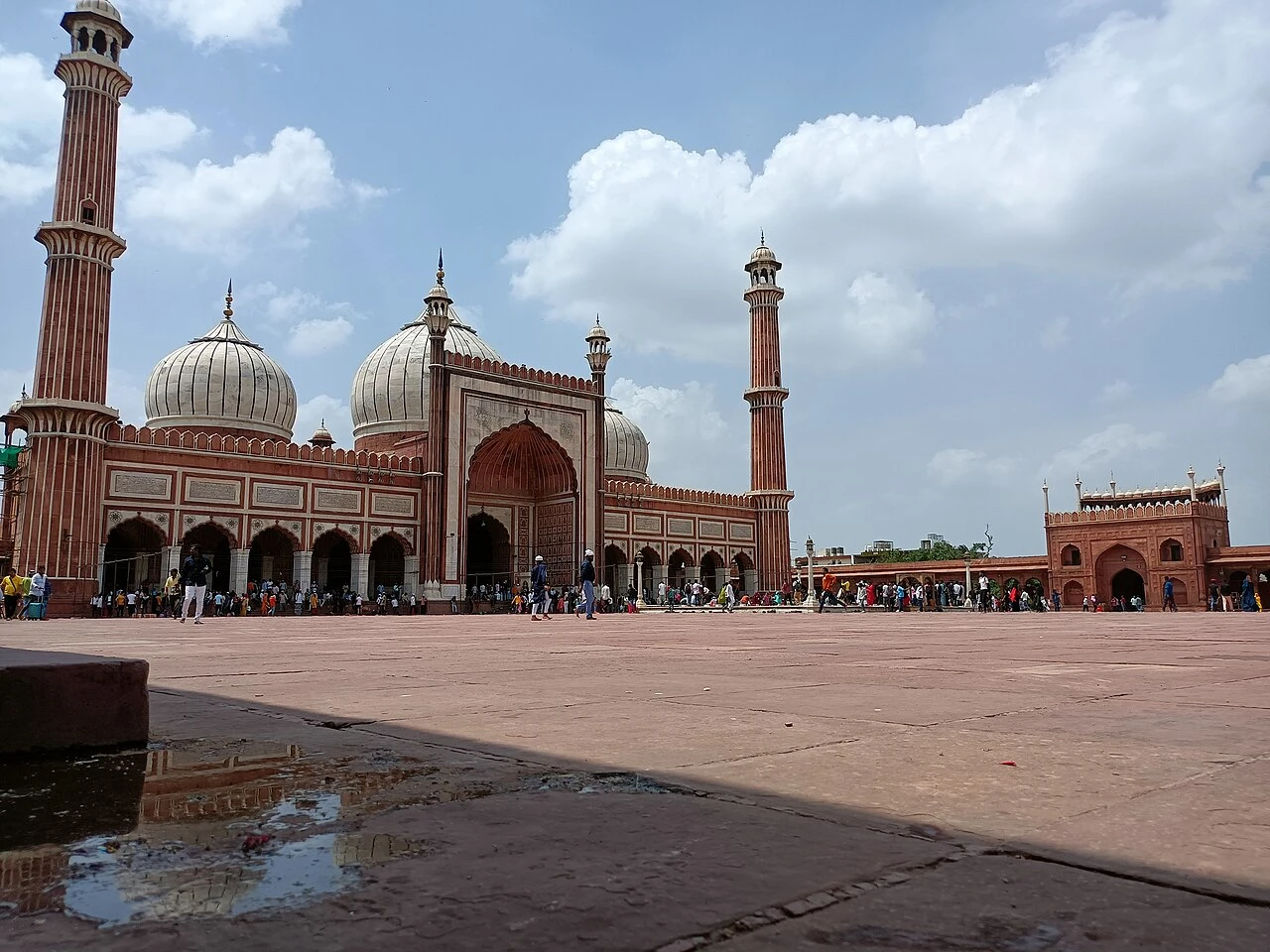
Delhi
Jama Masjid
Content & sources
Photo: Photographic view · CC BY-SA 4.0
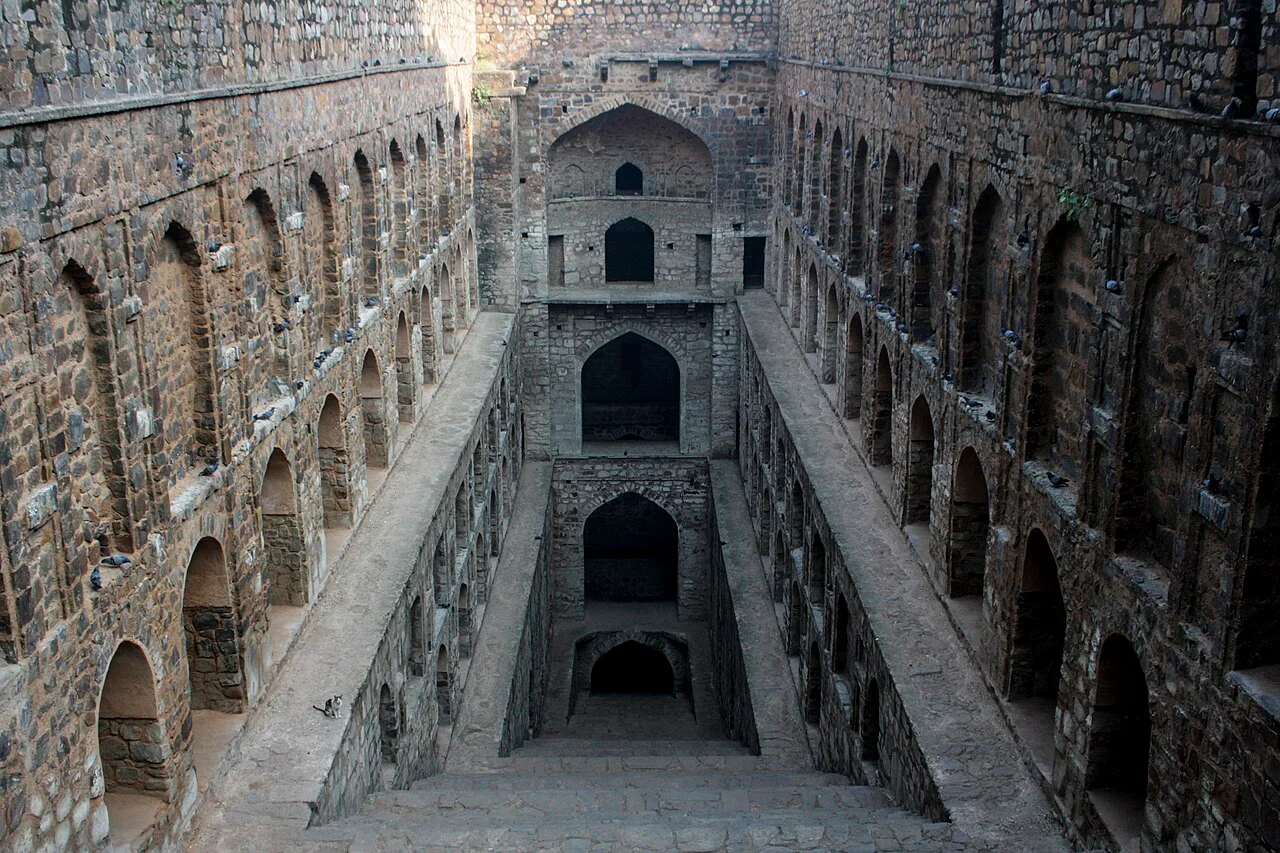
New Delhi
Agrasen Ki Baoli
Content & sources
Indrajit Das · CC BY-SA 4.0
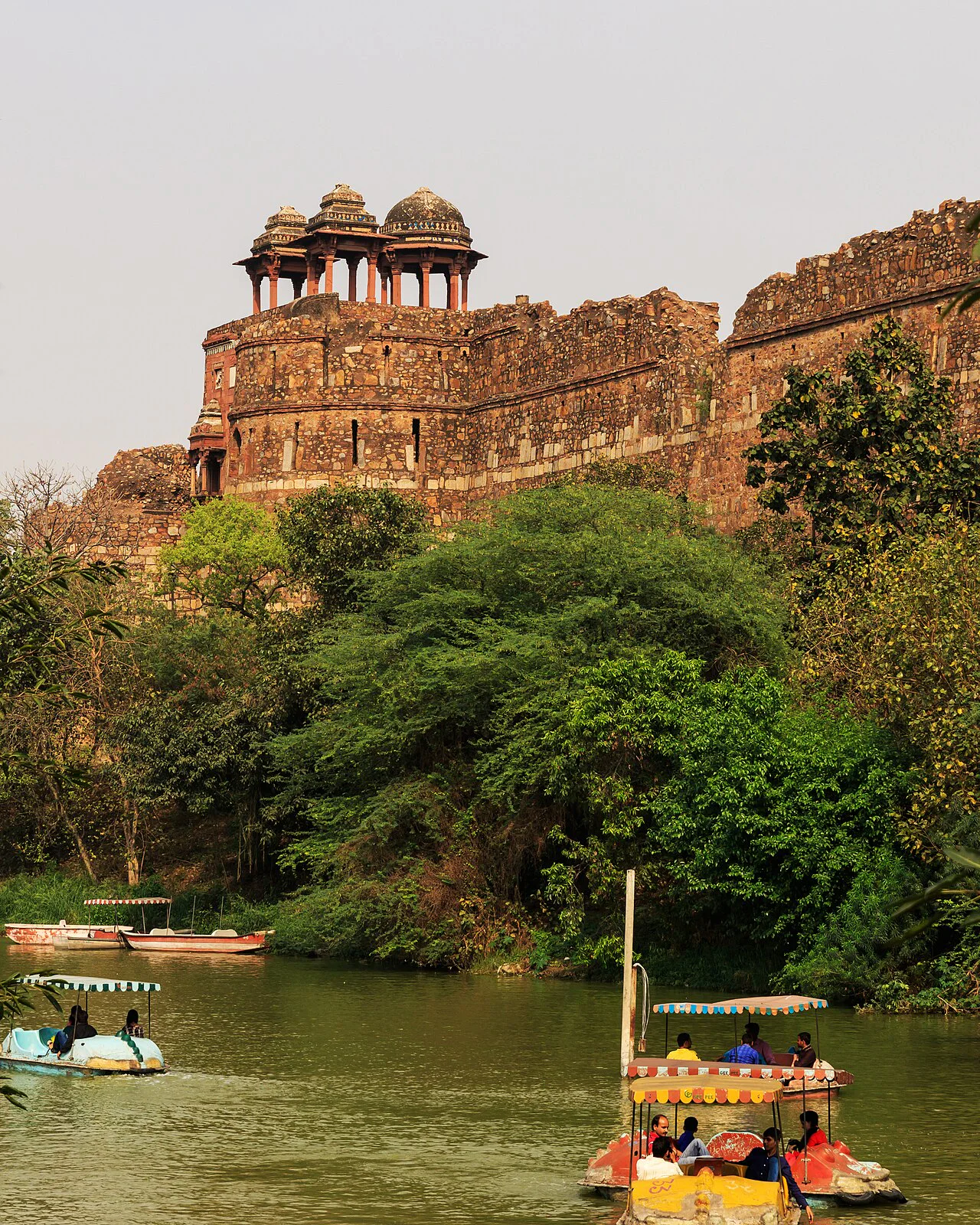
Delhi
Purana Qila
Content & sources
Photo: A.Savin · FAL