Stanza · Audio guide
Red FortAudio guide
A place to remember. A story to take with you.
The Red Fort is a historic fortress located in Old Delhi, India. It served as the main residence of the Mughal emperors for nearly 200 years and is now a UNESCO World Heritage Site.
Download Stanza, then search for “Red Fort”.
About the tour
One guide. Your kind of visit.
The Red Fort is a historic fortress located in Old Delhi, India. It served as the main residence of the Mughal emperors for nearly 200 years and is now a UNESCO World Heritage Site.
Ready when you are.
- 01Get the free Stanza app.
iOS & Android
- 02Find your guide.
“Red Fort”
- 03Download before you go.
Works offline
Audio guide / 40 narrated stops
Inside the guide
Get to know a few of the stories before you go. Open a stop to read more.
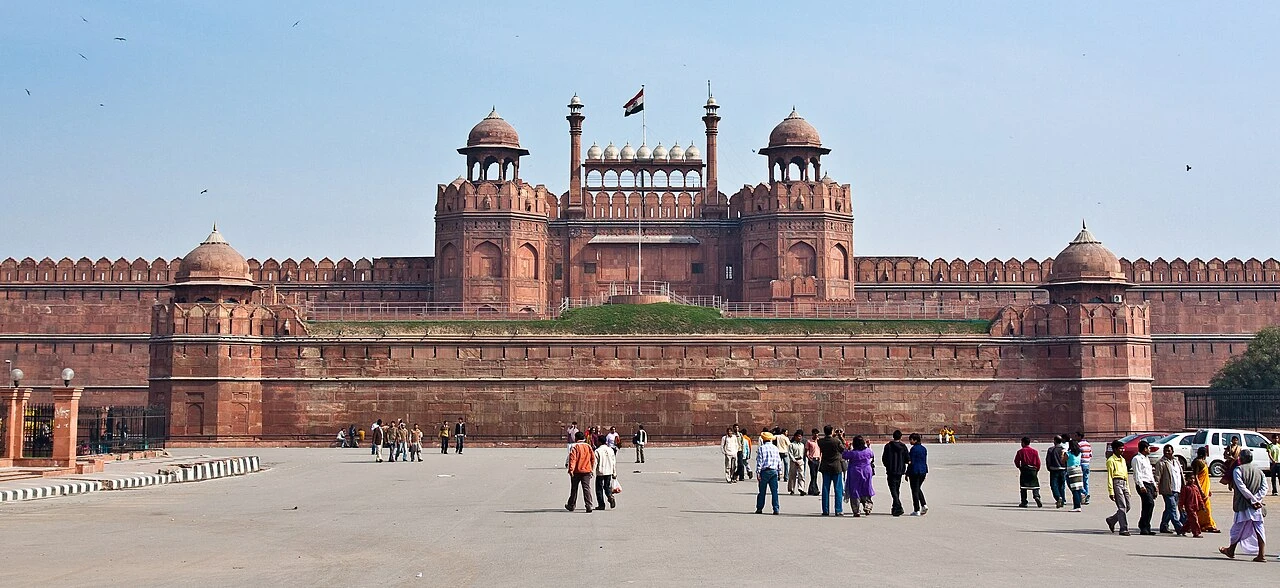
01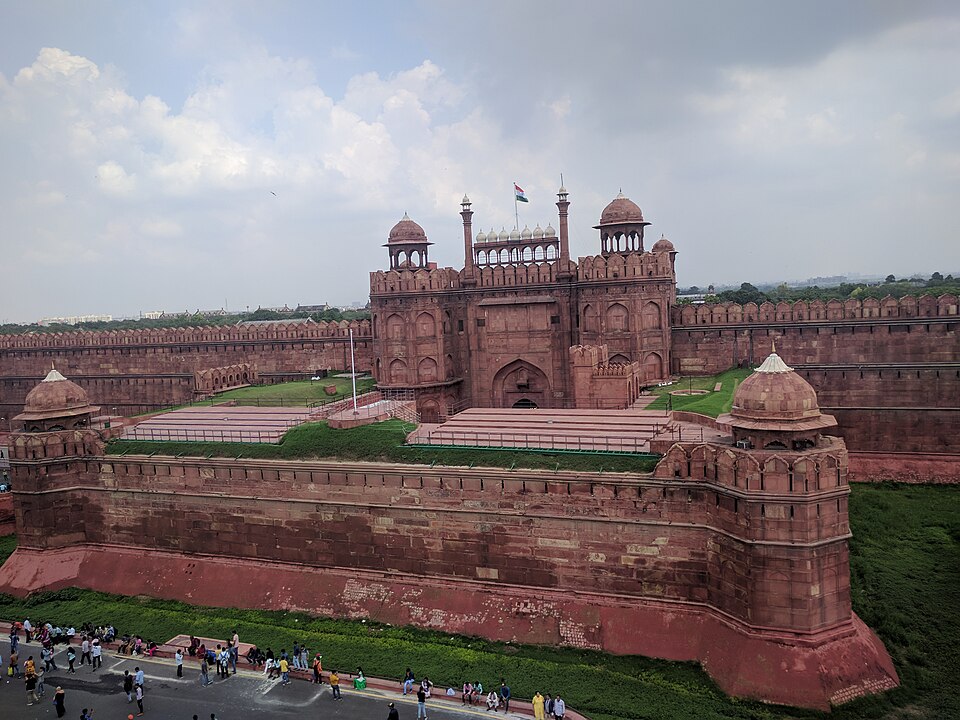 Lahore GateLahore Gate
Welcome to the Red Fort. Emperor Shah Jahan, the great Mughal builder, moved his capital from Agra to the newly founded city of Shahjahanabad here in Delhi. In 1638, he commissioned this massive fortress-palace, which took ten years of meticulous labor to complete. As you look up at the towering red sandstone walls, you are seeing the result of that decade-long effort. In recognition of its architectural and historical significance, the fort was designated a UNESCO World Heritage site in 2007. The Lahore Gate, which we see here, serves as the main entrance and remains a powerful focal point for the modern Indian state. Every August 15th, since India gained independence in 1947, the Prime Minister unfurls the national flag from these ramparts and addresses the nation. This tradition connects the centuries of imperial rule to the vibrant democracy of today, making this gate far more than just a historical monument; it is a living symbol of national identity.
Photo: Lucky181993 · CC BY-SA 4.0
02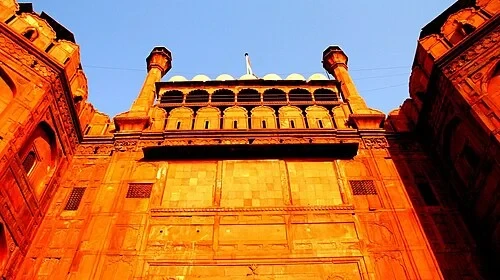 Lahore GateThe Fortified Entrance
Notice the sheer scale of the defensive architecture surrounding you. The massive bastions and high walls were essential for protecting the imperial family residing within. However, the layout you see today changed over time. The 'barbican'—this outer wall—was added later by Shah Jahan’s son, Aurangzeb. Legend says that when Shah Jahan, then imprisoned by his son in Agra, heard about this addition, he complained that Aurangzeb had placed a 'veil on a beautiful face,' obscuring the elegant proportions of the original gateway. As you pass through this threshold, imagine the transition that once occurred here. Outside was the bustling, chaotic commerce of the city. Inside, you were entering a highly controlled, serene imperial enclave. These thick layers of masonry weren't just for physical protection; they created a psychological boundary between the common world and the divinely ordained seat of Mughal power. This gateway served as a literal filter, where the noise of the outside world was left behind for the orderly grandeur of the court.
Ajaymohitayush · CC BY-SA 3.0
03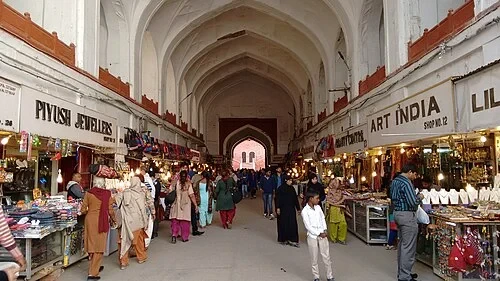 Chhatta ChowkChhatta Chowk
This long, vaulted corridor is the Chhatta Chowk, an extremely rare example of a Mughal covered bazaar. Emperor Shah Jahan was inspired to build this after seeing a similar market in Isfahan, Persia, during his travels. In its prime, this wasn't a place for everyday groceries; it was the high-end luxury mall of the Mughal world. The stalls on either side were once lined with the finest court jewelers, silk weavers, and carpet makers. These master artisans worked exclusively to provide the imperial household and visiting dignitaries with the rarest treasures and most intricate textiles. Imagine the scents of exotic spices and the glimmer of gold as royalty perused the wares. While it now houses souvenirs for modern visitors, the structure remains a testament to the Mughals' love for merging commerce with grand architecture, ensuring that even a marketplace was a space of beauty and order. It represents a sophisticated approach to urban planning within the palace grounds.
Listen in the appPhoto: Shubh2565 · CC BY-SA 4.0
04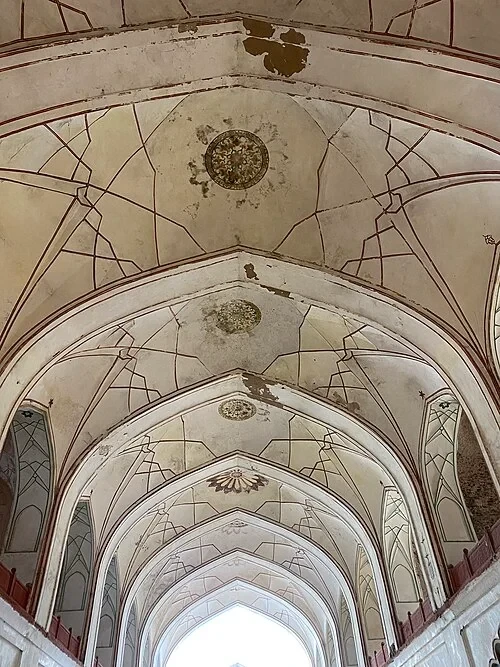 Chhatta ChowkBazaar Vaulted Ceiling
Look up at the rhythmic, arched ceiling stretching above the bazaar. The geometric precision of these vaults is a hallmark of the architectural excellence found throughout the Red Fort. This design wasn't merely decorative; the thick structure and high, vaulted roof served a very practical purpose. By creating a massive thermal buffer, the design kept the market interior significantly cooler than the sweltering streets of Delhi during the peak of summer. It is a brilliant example of traditional climate control. Notice how even in this commercial space, the builders maintained an incredible standard of craftsmanship. Every arch is meticulously crafted, reflecting the same attention to detail you will find in the Emperor’s private chambers. This illustrates the Mughal philosophy that every part of the imperial enclave, whether for business or pleasure, should reflect the harmony and precision of the empire itself. The filtered light from the ends of the corridor would have caught the vibrant colors of the luxury silks displayed below.
Listen in the appPhoto: Tamjeed Ahmed · CC BY-SA 4.0
05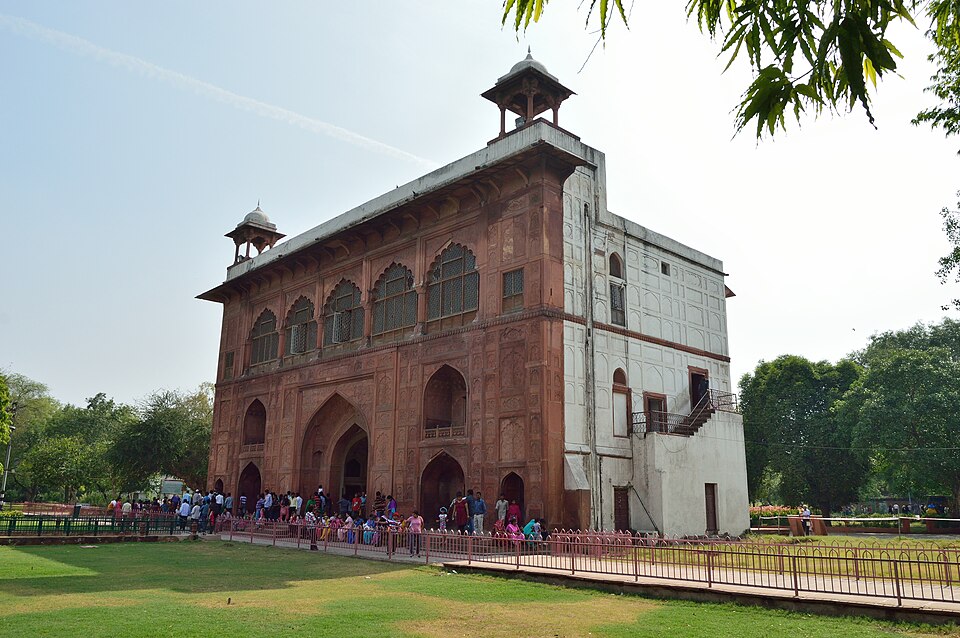 Naubat Khana (Drum House)Naubat Khana
The Naubat Khana, or Drum House, served as the formal gateway to the inner palace complex. High in the galleries above, musicians would play five times a day, or whenever the Emperor entered or left the fort. They also announced the arrival of high-ranking ambassadors and princes with ceremonial music. For visitors, this was a site of profound ritual. Except for royalty, everyone—no matter how powerful—was required to dismount from their horses or elephants here. They had to proceed on foot into the presence of the Emperor as a mandatory mark of deep respect and submission. This transition from the noise of the bazaar to the ceremonial silence beyond the gate reinforced the strict hierarchy of the court. Standing here, you can almost imagine the thunderous sound of the drums echoing off the walls, alerting everyone within the fort that the Emperor was on the move. It served as the final threshold before reaching the halls where the business of the empire was conducted.
Listen in the appBiswarup Ganguly · CC BY 3.0
06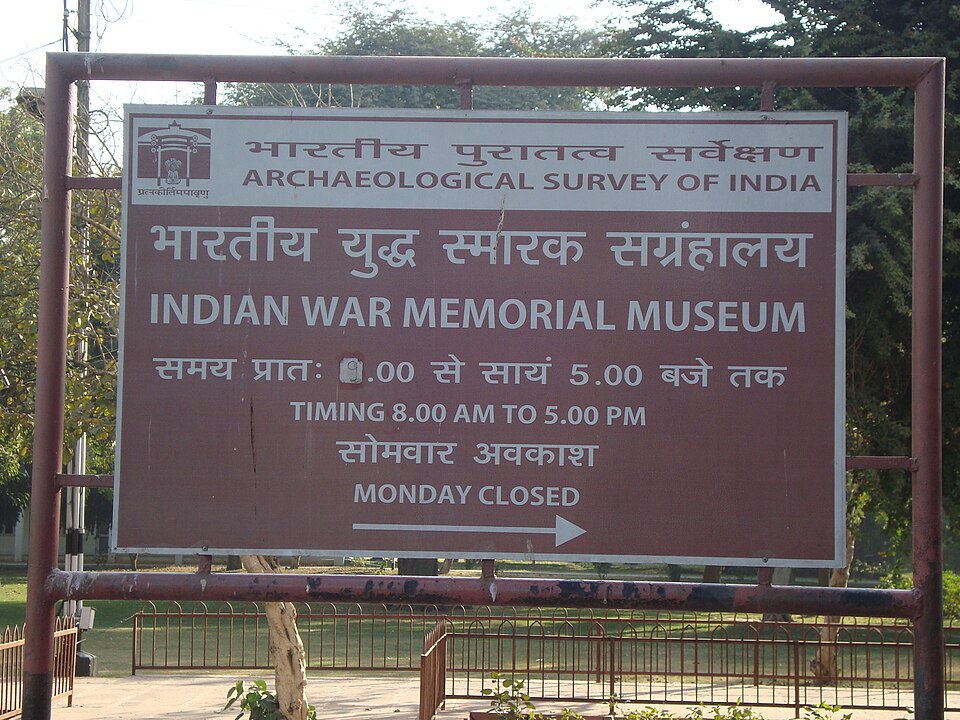 Naubat Khana (Drum House)Indian War Memorial Museum
As we continue, you'll notice signs and buildings that look different from the red sandstone palaces. These represent the more recent chapters of the fort's long history. The Red Fort has seen many masters over the centuries. After the Mughals, it was occupied by Persian invaders, and eventually became a central military barracks for the British Raj following the 1857 uprising. Today, it stands as a monument of independent India. This area now houses the Indian War Memorial Museum, established to commemorate the history of the soldiers who served the country. These structures and the presence of military markers remind us that the fort remained a strategic prize long after the last Mughal Emperor departed. It is a living record of India's transition from a collection of princely states to a unified modern nation, with each layer of history physically visible in the architecture around you. This museum area bridges the gap between the imperial past and the modern military history of the subcontinent.
Listen in the appPhoto: Vssun · CC BY-SA 3.0
07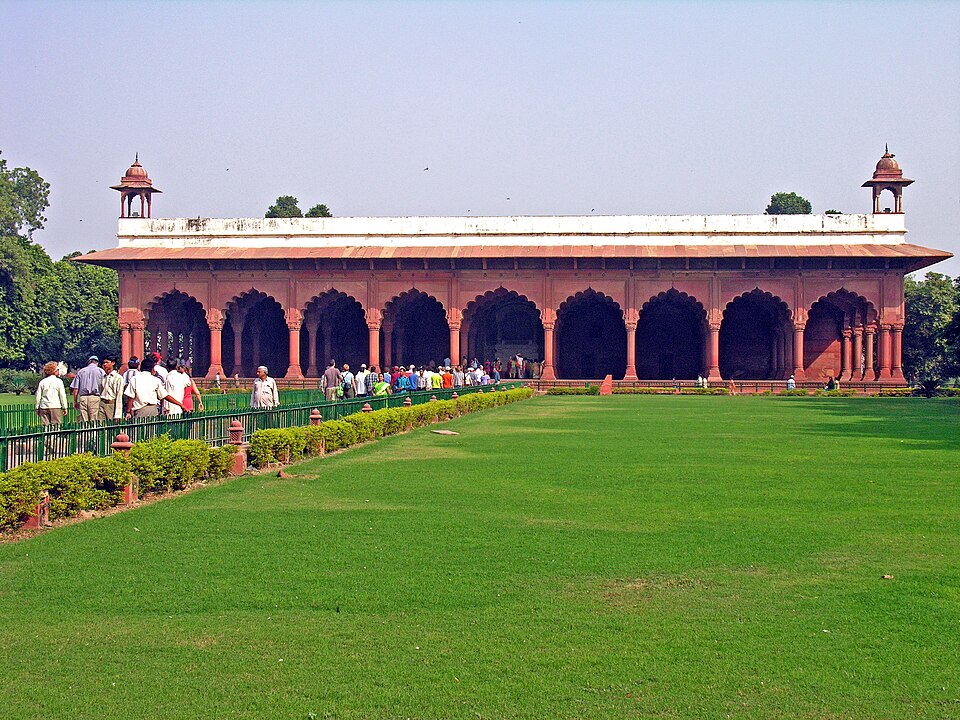 Diwan-i-Am (Hall of Public Audience)Diwan-i-Am
You are standing before the Diwan-i-Am, the 'Hall of Public Audience.' This was known as the 'Court for the People.' The architecture here is striking, featuring a great hall supported by sixty red sandstone pillars that hold up a heavy, flat roof. The design created an open, airy space that could accommodate large crowds of petitioners and officials. Every day, the Emperor would take his seat here to receive formal petitions and hear the grievances of commoners from across his realm. This was a vital part of Mughal governance, carefully managed to project the image of the Emperor as a just and accessible ruler who cared for all his subjects. Whether it was a land dispute or a plea for mercy, the proceedings here were public, emphasizing the perceived transparency of imperial law. The symmetry and strength of the pillars around you were meant to mirror the stability and order of the Emperor's reign, providing a grand stage for the theater of Mughal justice.
Listen in the appDennis G. Jarvis · CC BY-SA 2.0
08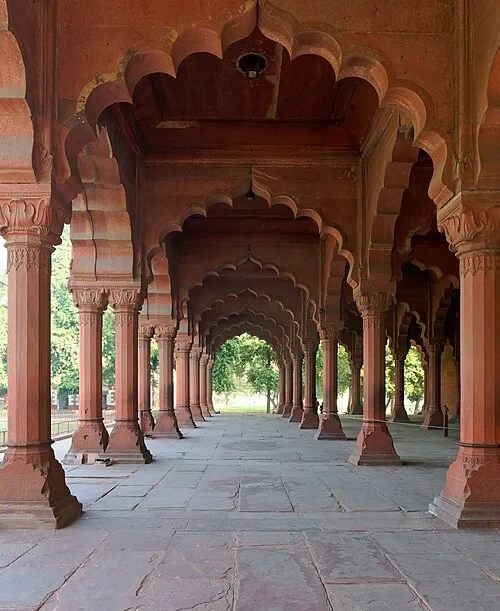 Diwan-i-Am (Hall of Public Audience)The Red Sandstone Arches
Notice the visual rhythm created by these rows of scalloped arches. This specific style—often called 'multifoil' arches—is a signature element of Mughal architecture. It represents a sophisticated blend of Persian, Timurid, and indigenous Indian design traditions. The red sandstone used throughout this part of the fort provides its namesake color and a sense of enduring strength. These arches aren't just decorative; their perfect alignment and symmetry were intentionally designed to project a sense of absolute power and divine order. In the Mughal world, grand architecture was a primary form of political communication. By creating spaces that were perfectly balanced and aesthetically pleasing, the Emperor was demonstrating his ability to bring order to the world around him. As you look through these openings, you see a vista that was carefully composed centuries ago to inspire awe and respect in anyone who approached the imperial throne. The play of light and shadow through these arches changes throughout the day, constantly highlighting different facets of their intricate carving.
Listen in the appJakub HaЕ‚un · CC BY-SA 4.0
09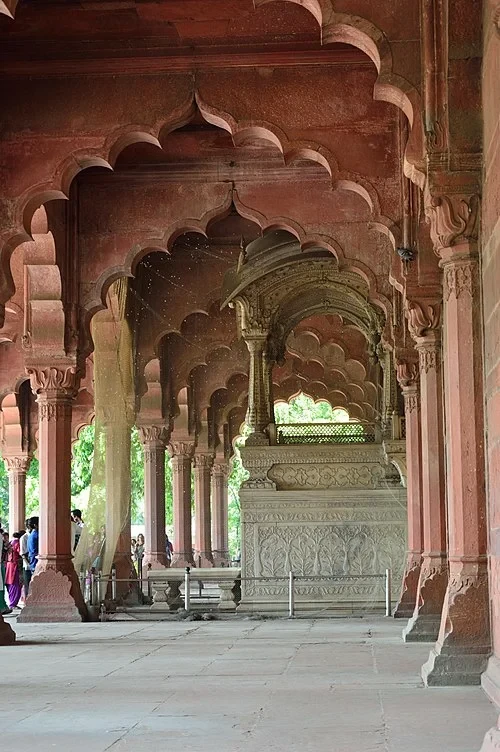 Diwan-i-Am (Hall of Public Audience)The Marble Throne Canopy
High on the back wall of the public hall is the white marble canopy known as the 'jharokha.' This was the imperial balcony where the Emperor appeared, elevated literally and figuratively above the common people. Take a close look at the wall behind the throne. It is decorated with intricate 'pietra dura,' or stone inlay work. These panels are particularly famous because they depict birds, flowers, and even musical figures—some of the few secular and naturalistic depictions allowed in Mughal art. These delicate images were created by carving thin slices of semi-precious stones and fitting them into the marble so tightly that the seams are nearly invisible. Sadly, during the unrest of 1857, many of these beautiful panels were looted. However, early in the 20th century, Lord Curzon, the British Viceroy, went to great lengths to have many of them tracked down and returned to their original home, restoring the splendor of this imperial seat. This canopy served as the focal point for the entire Diwan-i-Am, drawing every eye to the figure of the ruler.
Listen in the appBiswarup Ganguly · CC BY 3.0
10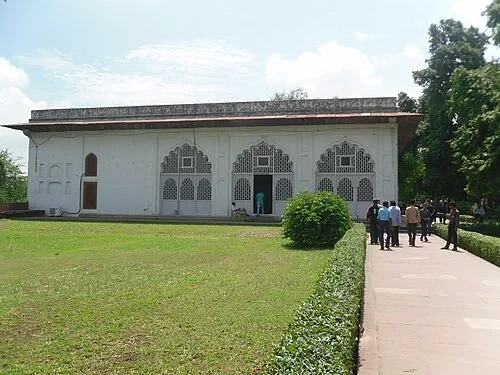 Mumtaz Mahal (Archaeological Museum)Red Fort Archaeological Museum
This building, which now houses the archaeological museum, was originally part of the 'Imperial Zenana,' the secluded women's quarters. It was one of six main palaces built along the riverbank for the royal family. This specific pavilion was named after Mumtaz Mahal, Shah Jahan’s favorite wife—the same woman for whom the Taj Mahal was built as a tomb. In its era of glory, the building would have been unrecognizable from its current state. Historical accounts describe interiors decorated with vibrant, colorful paintings and a ceiling that may have been adorned with sheets of silver. This was a place of high luxury and privacy, designed to provide the ladies of the court with a serene and beautiful environment away from the public gaze. While much of the original finery is gone, the museum inside now preserves artifacts that give us a glimpse into the daily lives, art, and tools of the people who once called this fortress home. It remains a key link to the more private, domestic side of imperial life.
Listen in the appPhoto: Anupamg · CC BY-SA 4.0
Red Fort
Frequently asked questions
How much does the guide cost?
Free app download. Listed guide price: $2.99. Guide price shown in the app. Audio guide only. Venue admission is separate.
Can I listen without internet?
Yes. Download the guide’s audio, images, and maps in the app before your visit. Your downloaded content is then available offline.
Can I listen in my language?
Stanza supports 15 languages. Check the app for the languages available for this guide.
Do I need to follow a schedule?
No. This is a self-guided experience. Choose your stops, pause whenever you like, and return to a story at your own pace.
At your own pace
Explore Red Fort.
Download Stanza, then search for “Red Fort”.
Free app download · Guide price shown in the app
Keep exploring
Nearby audio guides
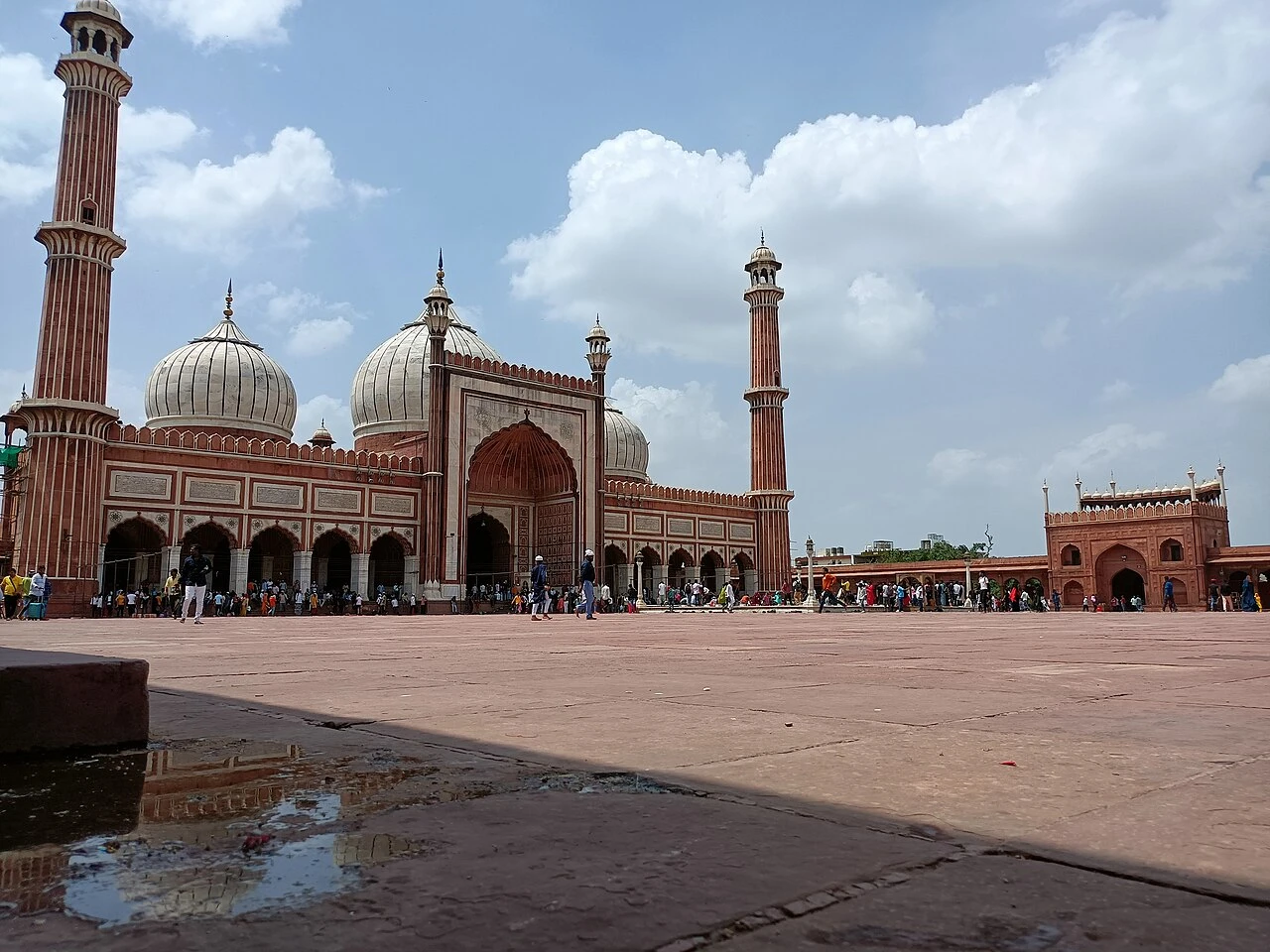
Delhi
Jama Masjid
Content & sources
Photo: Photographic view · CC BY-SA 4.0
Delhi
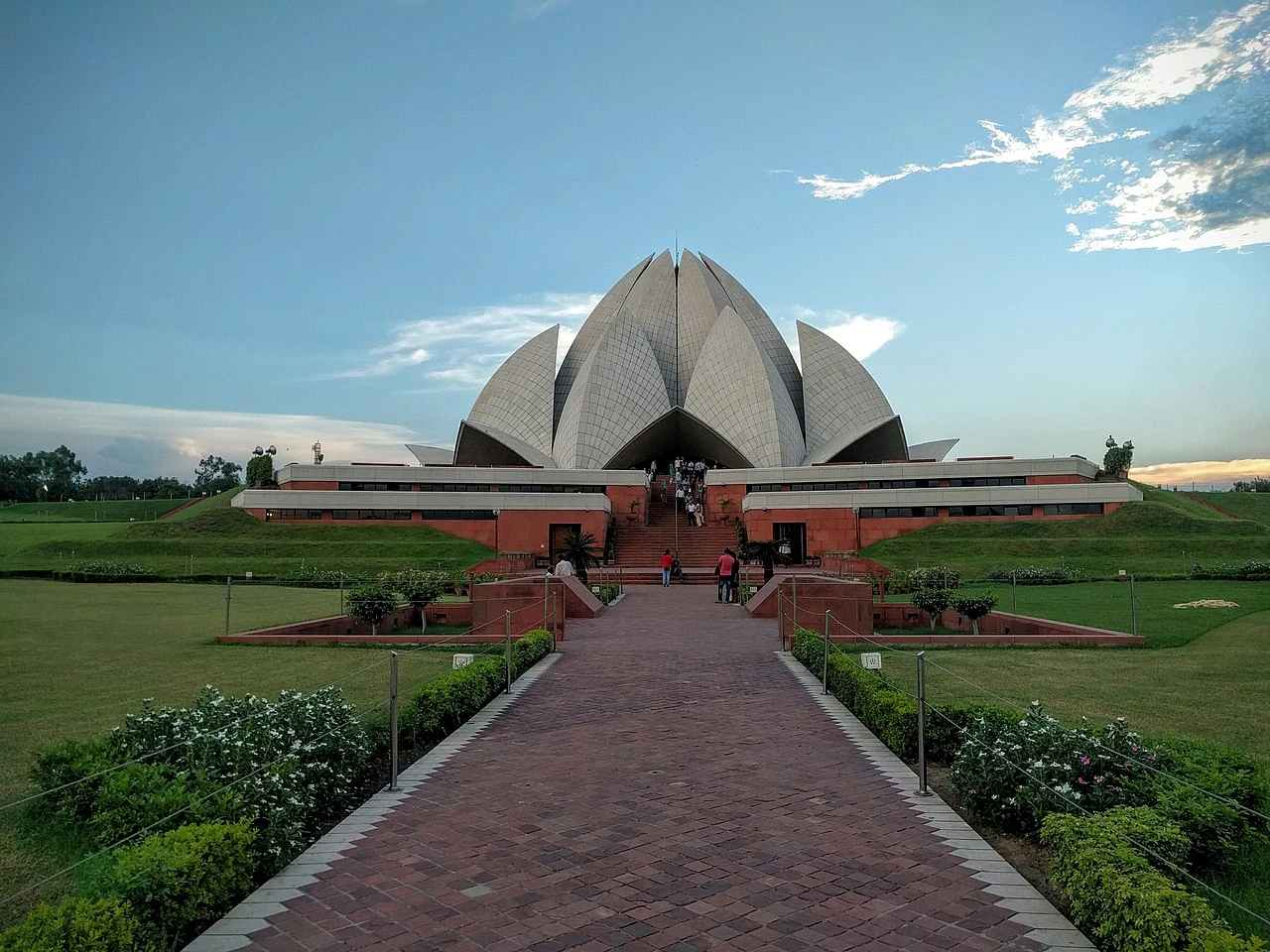
Lotus Temple
Content & sources
C Jaideep · CC BY-SA 4.0
Delhi
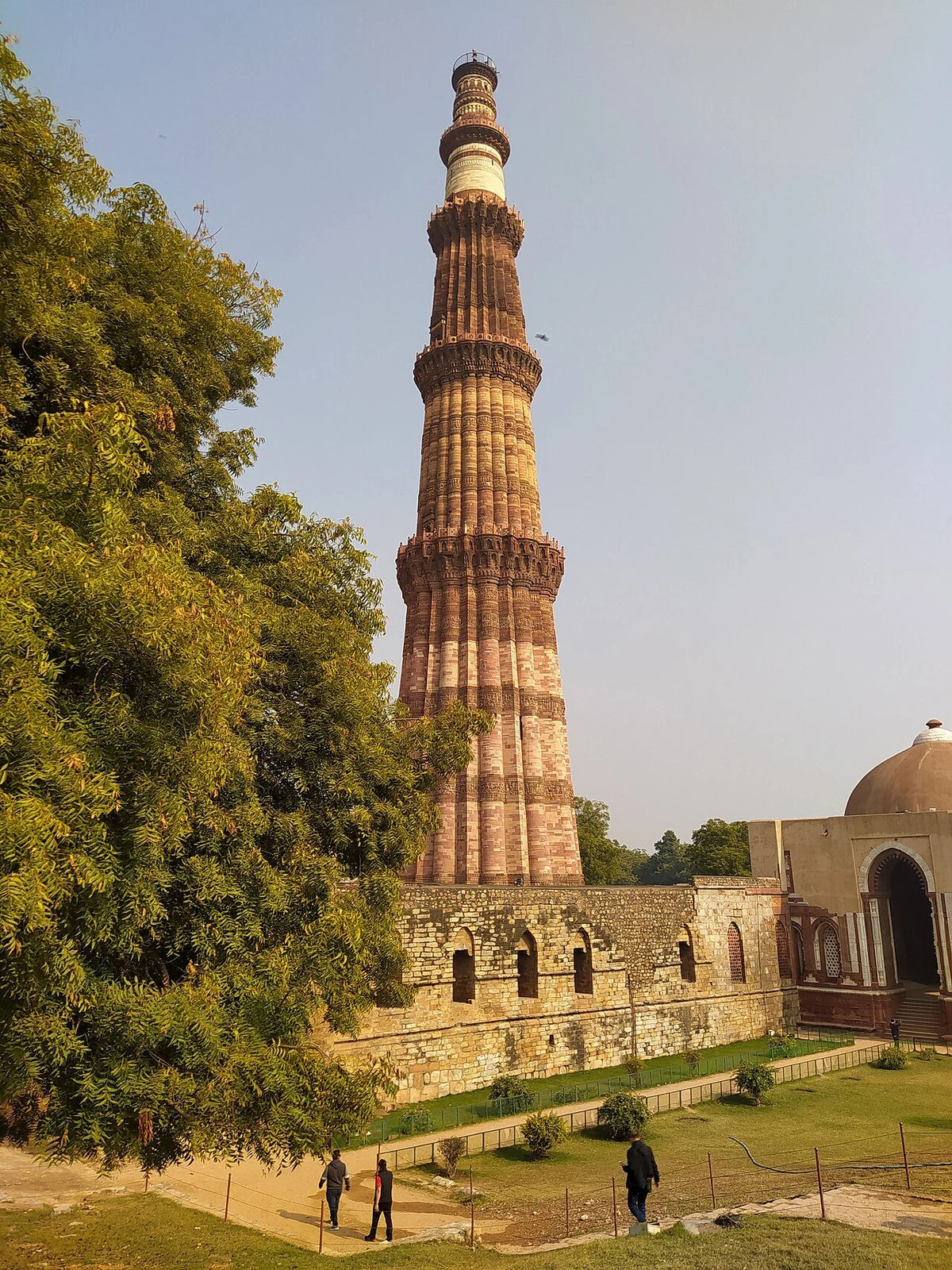
Qutb Minar
Content & sources
Photo: Akbarzoda · CC BY-SA 4.0
Agra
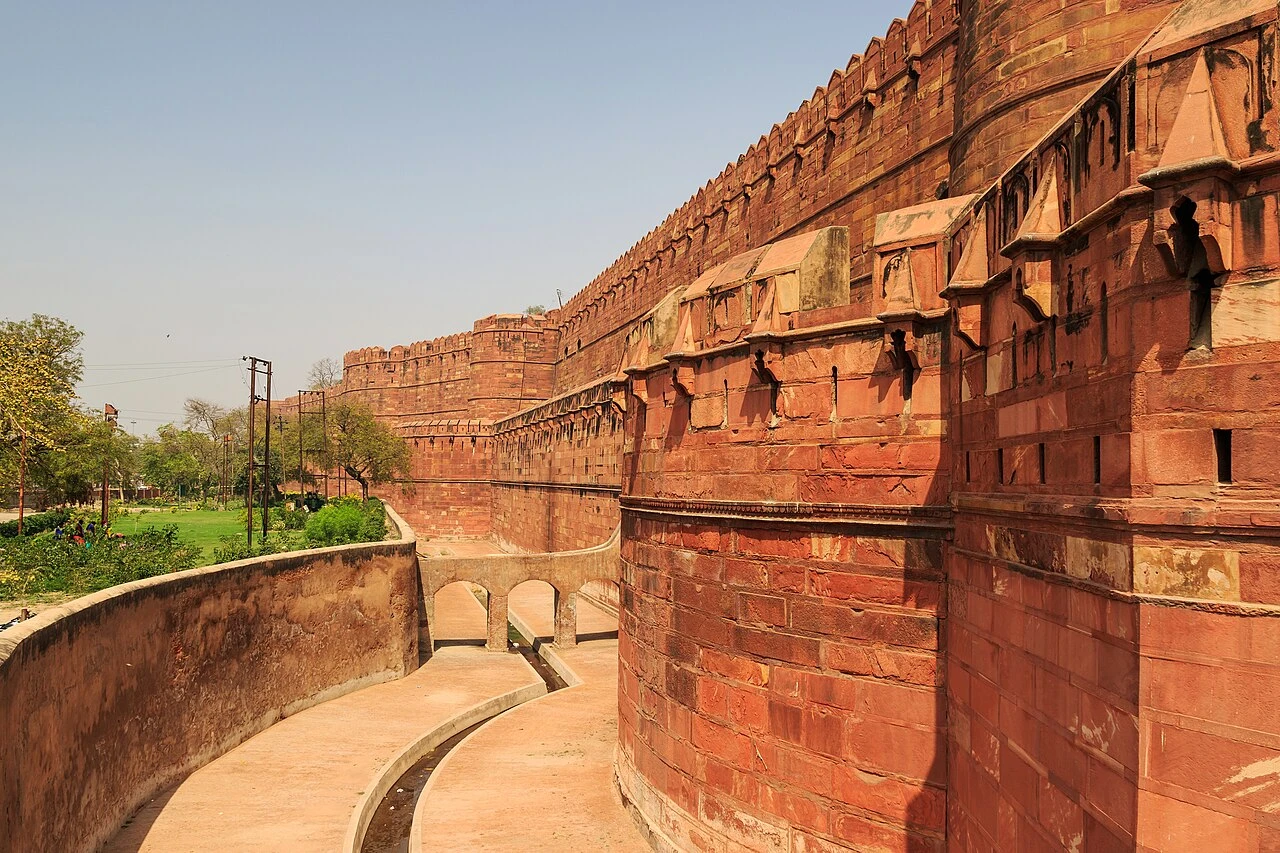
Agra Fort
Content & sources
Photo: A.Savin · FAL