Languages
15Qutb Minar Audio Guide
Qutb Minar is a landmark in Delhi, India. Explore it with Stanza's GPS-triggered offline audio guide — available in 15 languages.
Quick Facts
18
Stops
15
Languages
100%
Offline
📍 Delhi, India · 28.5244°N, 77.1852°E
About Qutb Minar
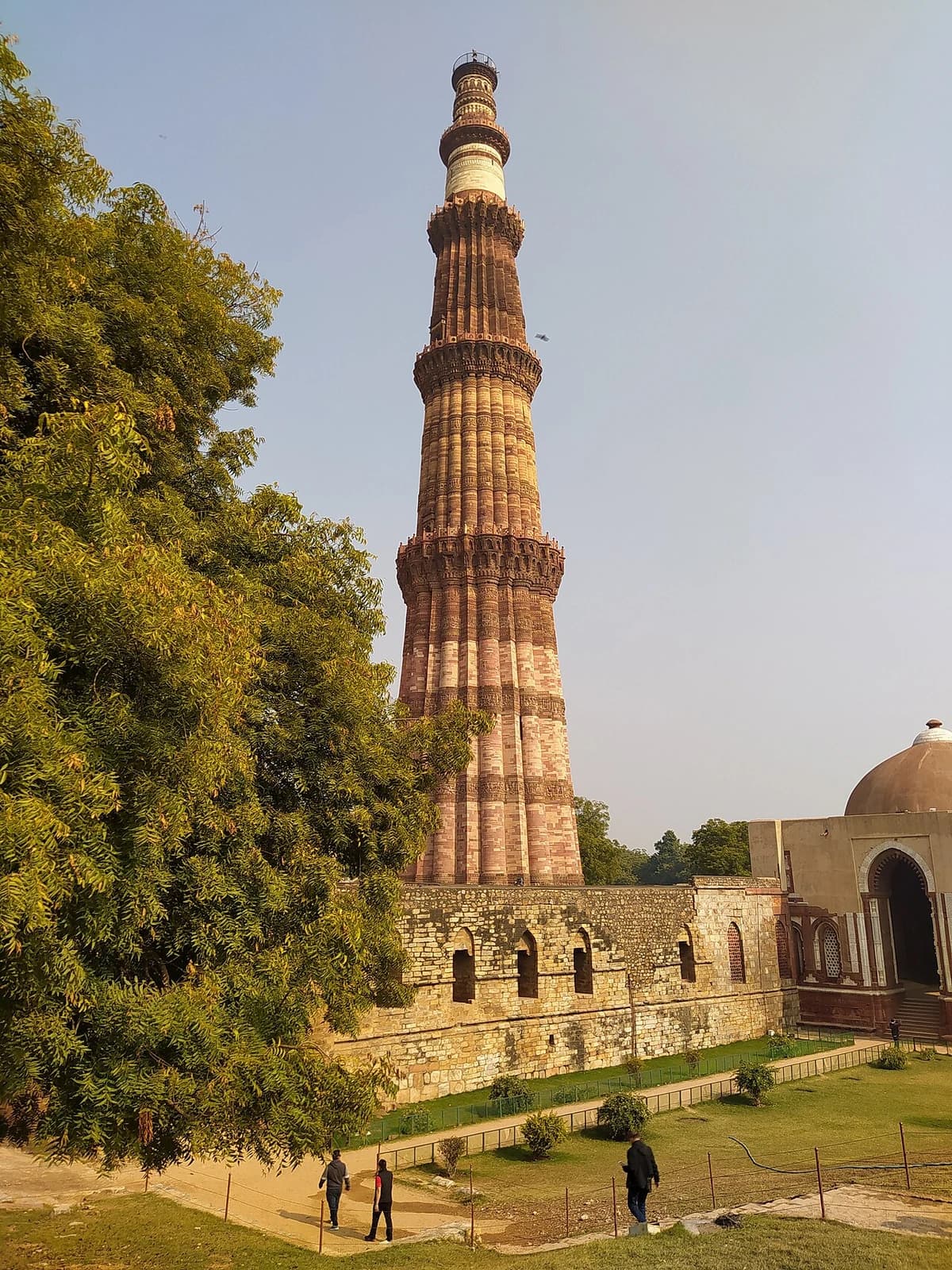
The Qutb Minar is a towering minaret and a UNESCO World Heritage Site located in the Mehrauli area of Delhi, India. Built as a victory tower, it is a significant example of Indo-Islamic architecture.
Qutb Minar is also known as Qutub Minar, Qutab Minar, Dhruv Stambh, Dhurva Stambha, and 8 other names in various languages.
This self-guided audio tour features 18 narrated stops organized across 7 sections. As a monument, Qutb Minar offers a unique cultural experience in the heart of Delhi, India.
The Stanza audio guide is available in 15 languages and works entirely offline — download the complete tour including audio narration, maps, and images before your visit. As you walk through Qutb Minar, GPS-triggered narration plays automatically at each point of interest.
Last updated:
What you will hear
Quwwat-ul-Islam Mosque Courtyard
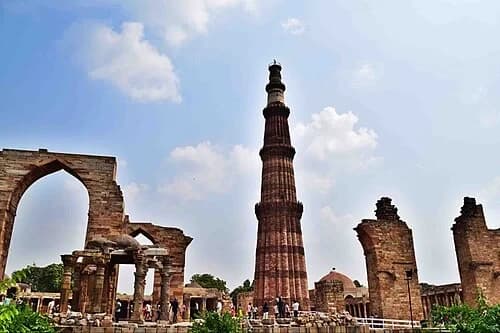
This area focuses on the earliest surviving mosque in India, highlighting the synthesis of Hindu and Islamic styles through the use of repurposed temple pillars.
Might of Islam Mosque Courtyard
Known as the 'Might of Islam' mosque, this structure represents a pivotal moment in the region's architectural history. Completed shortly after the arrival of the Sultanate, it stands as the earliest surviving mosque in Delhi. Look closely at the ruins and the assembled walls surrounding the courtyard. The historical reality of its construction is written in the stones themselves. Historical accounts and physical evidence reveal that the builders repurposed architectural materials from 27 demolished Hindu and Jain temples that previously occupied the area. This wasn't just a matter of religious expression; it was a practical necessity. The new rulers were in a great hurry to establish a visible presence and a place of worship for their community. Rather than quarrying and transporting new stone, they harvested the ready-made pillars, beams, and decorative slabs from local sites. This rapid repurposing allowed the mosque to rise quickly, though the results created a fascinating patchwork of styles. The visible ruins throughout the courtyard serve as a silent record of this abrupt transition between two distinct cultural and religious eras, where ancient carved stones were given new life in a different context.
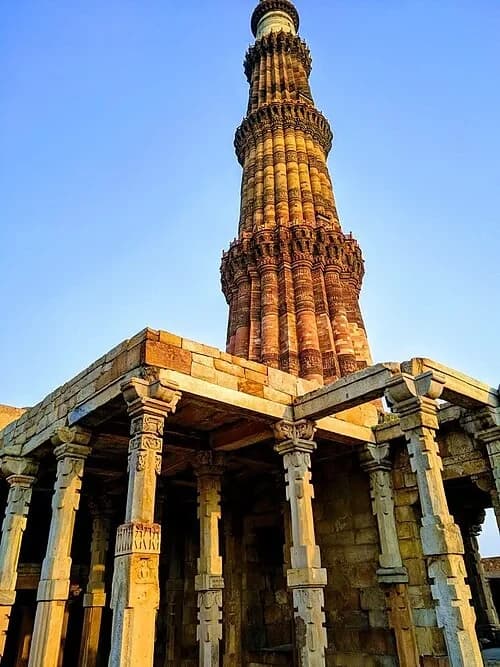
The Cloister Pillars
Examine the intricate carvings on the pillars lining these walkways. While the overall plan follows the traditional layout of a mosque, the fine details tell a story of cultural synthesis. Because the Sultanate builders employed local Hindu stonecarvers, the resulting work is a blend of Islamic geometric forms and indigenous artistic traditions. Look for motifs like bells hanging from chains, garlands of flowers, and ornate floral patterns winding around the columns. These were not typical elements of Islamic art from Central Asia, yet they appear here in abundance. This 'Hindu-Islamic Synthesis' occurred because the local craftsmen used the visual vocabulary they knew best to fulfill the new rulers' commissions. This interaction created a unique architectural language that would define the Sultanate style for centuries. You might notice figures that have been partially obscured, a modification made to align with the Islamic prohibition of human representation in religious spaces. Despite these changes, the original craftsmanship remains vibrant, showing how two different worlds merged into a single, complex artistic heritage. These pillars are some of the most visible examples of how the new and the old were physically combined to create this historic site.
The Iron Pillar
A 4th-century metallurgical wonder that has resisted rust for over 1,600 years, standing as a testament to ancient Indian science in the center of the mosque courtyard.
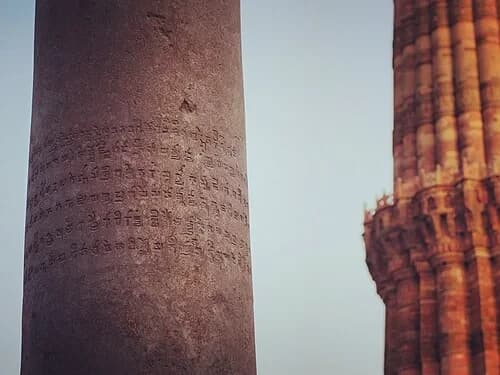
Ancient Sanskrit Inscriptions
Look closely at the surface of the Iron Pillar to find the clear, sharp lines of an ancient inscription. These characters are written in the Brahmi script, the ancestor of many modern Indian alphabets. The text itself is in Sanskrit and provides crucial historical clues about the pillar's origin. It describes the power and military conquests of a monarch named King Chandra, widely believed to be the Gupta Emperor Chandragupta II. The inscription praises his victories over various kingdoms and explains that the pillar was set up as a standard for the god Vishnu. This ancient Sanskrit writing creates a stark contrast with the elaborate Arabic calligraphy found on the walls of the mosque and the minaret. Together, these different scripts represent layers of history stacked on top of each other. While the Arabic text nearby focuses on religious verses and the glory of the Sultans, this older message speaks of an era of imperial power that flourished hundreds of years earlier. The crispness of the lettering, preserved for over a millennium and a half, is a further testament to the pillar's unique composition and the durability of the high-phosphorus iron used in its casting.
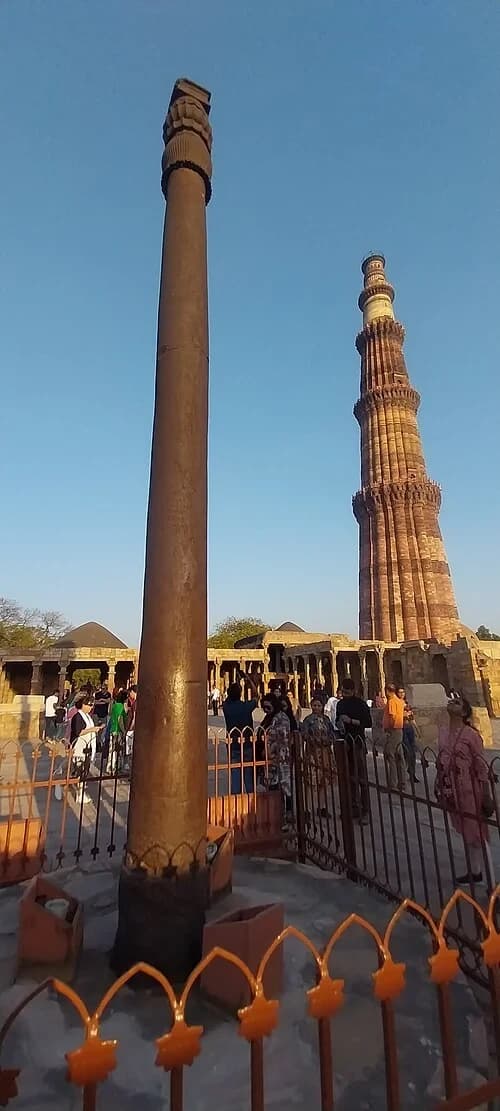
The Iron Pillar
In the center of the mosque courtyard stands a smooth, dark pillar that seems out of place among the surrounding sandstone. This is the famous Iron Pillar, a metallurgical masterpiece dating back to the 4th century. It was originally erected by King Chandra, likely in a temple dedicated to the deity Vishnu, nearly 800 years before the first stone of this mosque was laid. Weighing over six metric tons, the pillar is famous among scientists and historians for its remarkable resistance to rust. Despite being exposed to the tropical rains and sun of Delhi for over sixteen centuries, it shows almost no signs of corrosion. This is due to the advanced skills of ancient Indian smiths, who used iron with a high phosphorus content and formed a protective layer on the surface during the forging process. This pillar was likely moved to this site from its original location at some point before the Sultanate period. Its enduring presence illustrates the sophisticated scientific knowledge possessed by the region's earlier civilizations, long before the massive minaret rose behind it. Today, it remains one of the most studied and admired artifacts on the grounds.
Base of the Qutb Minar
Standing at the foot of the world's tallest brick minaret, this stop explains the symbolism of the victory tower and the start of construction in 1199.
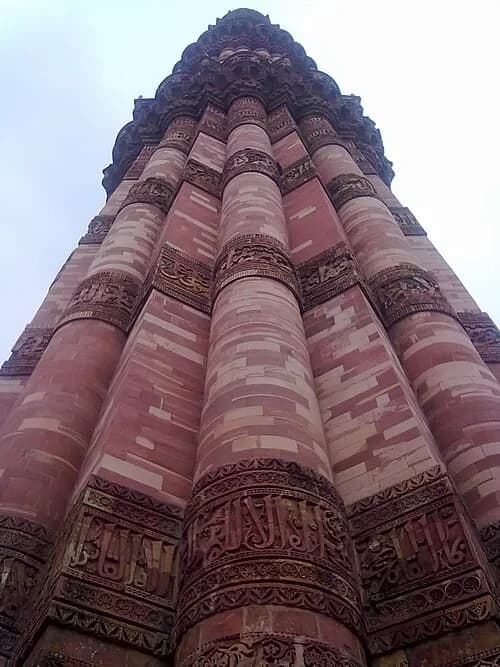
Base of the Minaret
Pay close attention to the unique shape of the minaret’s lowest level. The surface is not smooth but is instead deeply fluted with vertical ridges. If you look at the pattern, you will see it alternates between sharp, angular wedges and soft, circular curves. This story is built primarily from deep red sandstone, a material that gives the entire complex its characteristic warmth. This specific level is the oldest part of the tower, the only portion completed by the first Sultan, Qutb-ud-din Aibak, before his death in 1210. The different architectural styles you see as you look higher up reflect the work of his successor, Iltutmish, and later rulers who added their own layers. The precision of the stonework at this base level is remarkable; each ridge had to be perfectly aligned to ensure the tower remained balanced as it grew taller. These alternating shapes do more than provide decoration; they create a play of light and shadow that changes throughout the day, emphasizing the verticality of the structure. The craftsmanship here set the standard for the grand construction projects that would follow over the next century.
Sacred Calligraphy & Artistry
This stop explores the horizontal bands of Arabic script and floral motifs, representing the fusion of Islamic theology and local craftsmanship.
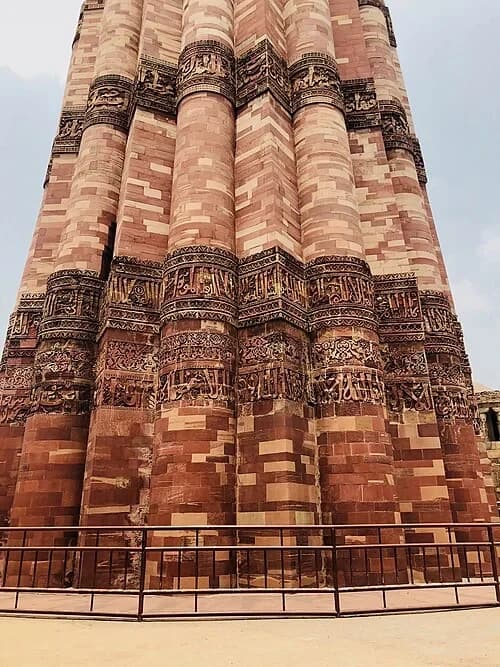
The Calligrapher's Art
Encircling the massive base of the tower are several horizontal bands of intricate carving. These are not just decorative patterns; they are lines of Arabic script known as Naskh calligraphy. The inscriptions contain verses from the Quran along with praises and titles for the Sultans who oversaw the tower's construction. Imagine the immense skill and patience required for the stonecutters to carve these flowing, intertwined letters into the hard sandstone. By wrapping the minaret in these bands, the architects essentially turned the building into a giant religious scroll visible to everyone on the ground. This marriage of text and architecture is a hallmark of Islamic design. The calligraphy was meticulously planned to ensure that the letters remained legible despite the curvature and height of the tower. These bands serve to break up the vertical mass of the red sandstone, providing a texture that balances the tower's sheer scale with delicate, meaningful detail. It was a way for the Sultan to weave his authority and faith into the very fabric of his greatest monument. If you look closely at the lettering, you can see how deep and crisp the carvings remain after centuries.
Evolution of Materials & The Upper Stories
As the tower rises, the materials change. This area highlights the transition from red sandstone to white marble added by later rulers like Firuz Shah Tughlaq.
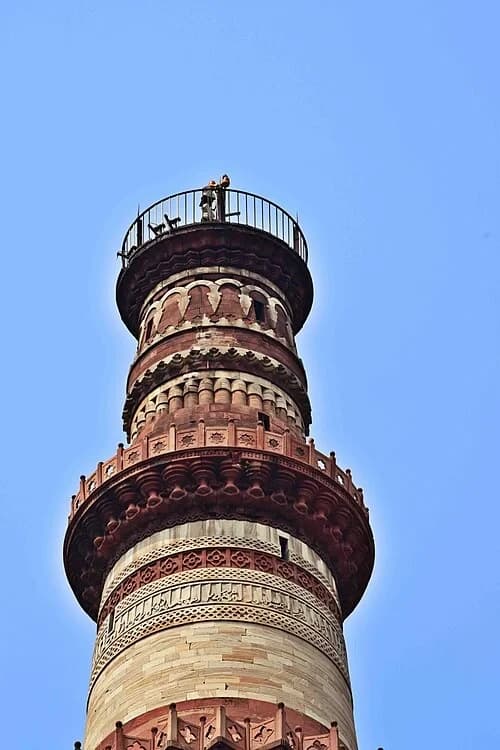
The Marble Stories
In this detailed view of the stonework, you can see how the script serves as the primary ornament of the building. Because Islamic tradition generally prohibits the depiction of human figures in religious art, architects turned to calligraphy and complex geometric patterns to beautify their structures. These inscriptions were more than just art; they were a medium for communication. The size and spacing of the letters were carefully calculated to be legible from the courtyard below, ensuring that the Sultan’s messages of faith and power were clear to every visitor. Notice how the floral motifs and vine-like patterns are woven in and around the letters. This style of decoration meant that the building itself could speak to those who stood before it. The depth of the carving creates a three-dimensional effect that catches the sunlight at different angles. This level of detail shows that while the tower was a massive feat of engineering, it was also a canvas for the finest artistic talents of the time, who transformed cold stone into a fluid expression of culture. The precision of these geometric repetitions remains impressive to modern eyes.
Alai Darwaza: The Southern Gate
Commissioned by Alauddin Khilji, this gateway features the first 'true' arches and domes in India, decorated with red sandstone and white marble inlay.
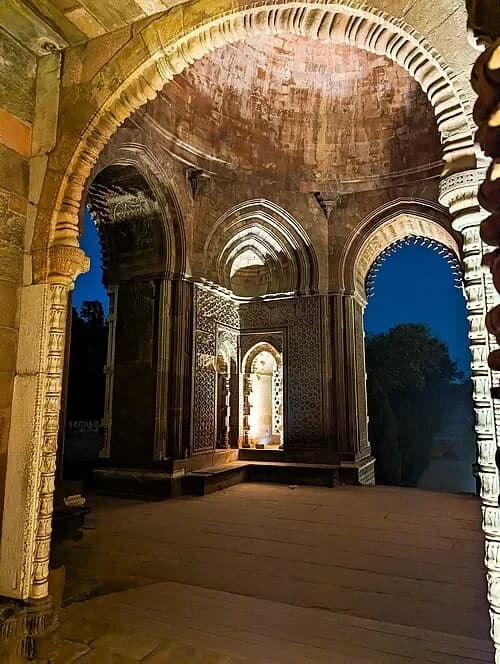
Alai Gate Interior
This grand structure is the Alai Darwaza, the southern entrance to the mosque complex commissioned by Sultan Alauddin Khilji in 1311. It is a landmark in the history of Indian architecture because it was the first building in the country to be constructed using 'true' Islamic architectural principles. Earlier structures in the complex relied on corbelled arches, which are made by overlapping stones until they meet at the top. In contrast, this gateway features arches built with a central keystone, allowing for wider and more stable openings. Similarly, it boasts a true dome, a hemispherical roof that was a new and technologically advanced feature for the region at the time. Notice the rich decoration on the facade: the red sandstone is inlaid with white marble, creating a vibrant, two-tone pattern. The intricate latticework and geometric designs represent the peak of the Khilji dynasty's artistic reach. The Alai Darwaza was meant to be one of four grand gateways, but it is the only one that was completed, standing today as one of the finest examples of early Indo-Islamic craftsmanship in the entire world heritage site.
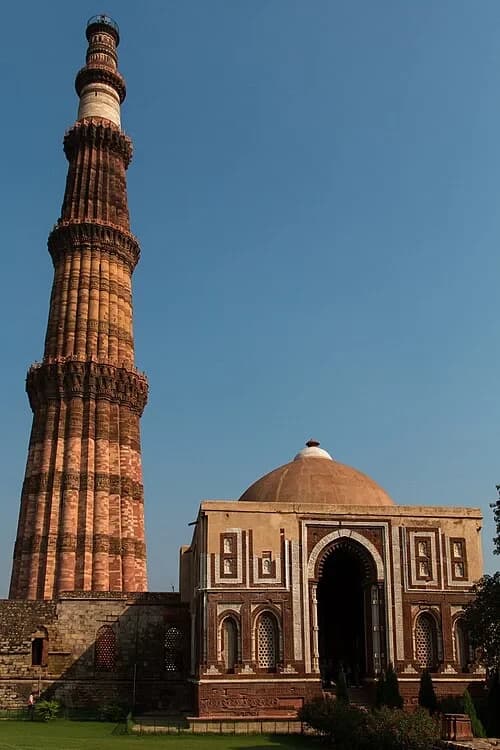
The Southern Gate
If you look toward the very top of the minaret, you will notice a significant change in appearance. While the lower three stories are made of red sandstone, the upper levels incorporate bands of white marble. This color contrast isn't just an aesthetic choice; it marks a specific moment in the tower's history. In 1368, the minaret was struck by lightning, which severely damaged the top story. The ruler at the time, Firuz Shah Tughlaq, did more than just repair the damage; he added two new stories using the white marble you see today. This evolution over a 169-year period shows how different dynasties contributed to the site’s survival. The marble provides a bright highlight against the sky, contrasting with the earthy, deep red tones of the base. This vertical timeline of materials reflects the changing tastes and available resources of the Delhi Sultanate over nearly two centuries. By observing these layers, you can see how the monument survived natural disasters and the passage of time, with each successive ruler leaving their own signature on this iconic structure that remains visible for miles.
The Tomb of Iltutmish
The final resting place of Sultan Iltutmish, who completed the tower. The interior is famous for its dense, delicate stone carvings.
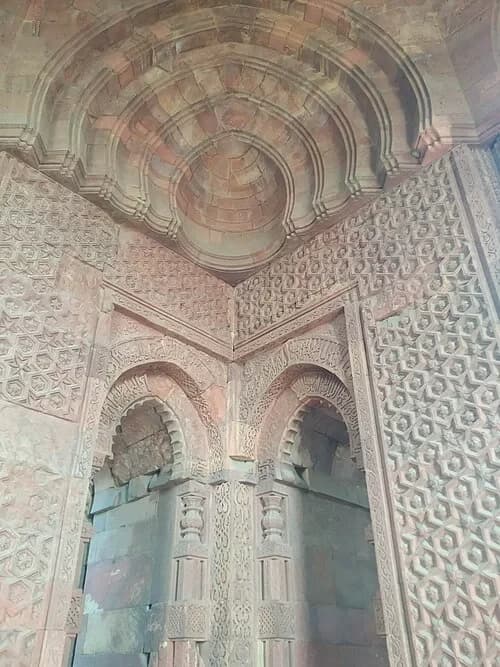
The Carvings of Iltutmish
Rising nearby is a massive, circular structure of rubble and stone that looks like a truncated tower. This is the Alai Minar, the unfinished project of Sultan Alauddin Khilji. He intended this tower to be twice the size of the Qutb Minar, which would have made it one of the tallest structures in the world at the time. However, only the first story, standing about 24.5 meters high, was ever completed. When Alauddin Khilji died in 1316, the project came to an abrupt halt. No ruler who followed him chose to spend the enormous resources required to finish such an ambitious monument. Today, it stands as a stark contrast to its perfectly finished neighbor. Without its decorative stone casing, you can see the rough core of the structure—a mix of large stones and mortar that gives us a rare look at the inner construction methods of the 14th century. The sheer diameter of the base gives you a sense of just how enormous the final tower would have been if it had been completed. It remains a fascinating reminder of a ruler's ambition that exceeded his time, left forever as a giant, rough-hewn stump on the landscape.
Want to hear the rest?
Download the Stanza app to unlock all 18 stops and full GPS-guided navigation.
Frequently Asked Questions
How long does the Qutb Minar audio tour take?
The Qutb Minar audio guide includes 18 narrated stops. Most visitors spend 45 minutes to 1.5 hours exploring the complete tour, though you can listen at your own pace and skip or revisit any stop.
Is the Qutb Minar audio guide available in my language?
Stanza supports 15 languages: English, Spanish, French, German, Italian, Portuguese, Russian, Japanese, Chinese, Korean, Arabic, Hindi, Polish, Dutch, Hebrew. Check the guide in the app to confirm the languages currently available for this tour.
Can I use the audio guide offline at Qutb Minar?
Yes! Download the complete Qutb Minar tour — including all audio, maps, and images — before your visit. The Stanza app works completely offline, so you don't need WiFi or mobile data at the venue.
How much does the Qutb Minar audio guide cost?
The Stanza app is free to download. The current listed price for the Qutb Minar audio guide is $1.99; app-store region and currency may affect the final price.
How do I use the Stanza audio guide at Qutb Minar?
Download the free Stanza app, search for "Qutb Minar", and download the tour. When you arrive at the venue, the app uses GPS to detect your location and automatically plays the relevant narration as you move between points of interest — completely hands-free.
What makes the Stanza audio guide different from other Qutb Minar tours?
Stanza offers GPS-triggered narration that plays automatically as you walk through Qutb Minar — no need to manually select stops. The tour is available in 15 languages, works fully offline, and includes 18 expertly narrated stops with images and historical context.
What other audio guides are available near Qutb Minar?
Stanza offers multiple audio guides in Delhi, India and nearby areas. After downloading the app, browse the map to discover all available tours near Qutb Minar. Each guide can be downloaded for offline use.