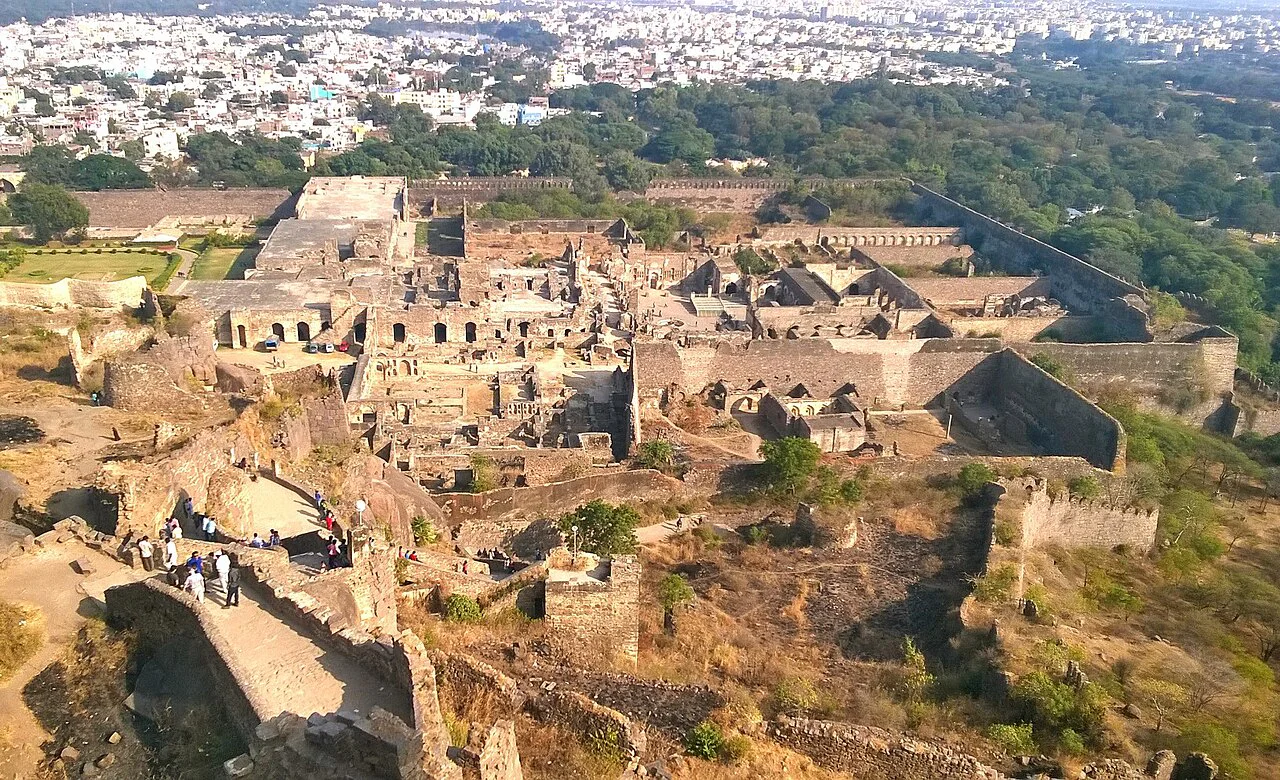
Stanza · Audio guide
Golconda Audio Guide
A place to remember. A story to take with you.
Golconda is a fortified citadel and ruined city located on the western outskirts of Hyderabad. It flourished as a trade centre for large diamonds due to its proximity to diamond mines.
Download Stanza, then search for “Golconda”.
About the tour
One guide. Your kind of visit.
Golconda is a fortified citadel and ruined city located on the western outskirts of Hyderabad. It flourished as a trade centre for large diamonds due to its proximity to diamond mines.
Ready when you are.
- 01Get the free Stanza app.
iOS & Android
- 02Find your guide.
“Golconda”
- 03Download before you go.
Works offline
Audio guide / 18 narrated stops
Inside the guide
Get to know a few of the stories before you go. Open a stop to read more.
01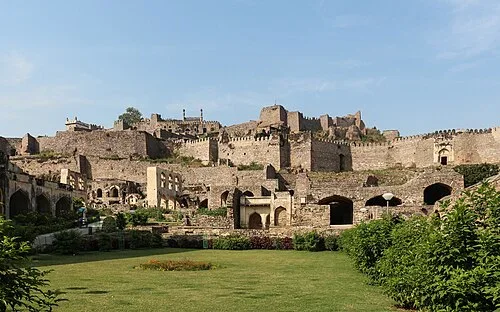 The Grand Entrance and Acoustic Portico
Golconda Fort: View of the Citadel
Welcome to Golconda, the fortress capital that gave the world its word for untold riches. From here the whole citadel comes into view: granite walls climbing the hillside in layers, courtyards spreading out below. The story begins long before the sultans. This was first a stronghold of the Kakatiya kings, who first raised mud walls on the hill. In 1518 Sultan Quli Qutb Shah made it the capital of his own kingdom, and his dynasty rebuilt it in granite. Over three reigns the mud fort grew into a citadel of massive stone, its outer wall running several kilometres around the city. Within the defences stood royal apartments, halls, mosques, temples and stables. Four separate forts, eight gateways and four drawbridges made one enormous machine. The name Golconda became so bound up with diamonds that European writers used it as shorthand for any vast fortune. This tour works its way upward: through the great gates, across the lower courts, into the royal family's private quarters, and finally to the pavilion at the summit and the guns on the ramparts.
Bernard Gagnon · CC BY-SA 3.0
02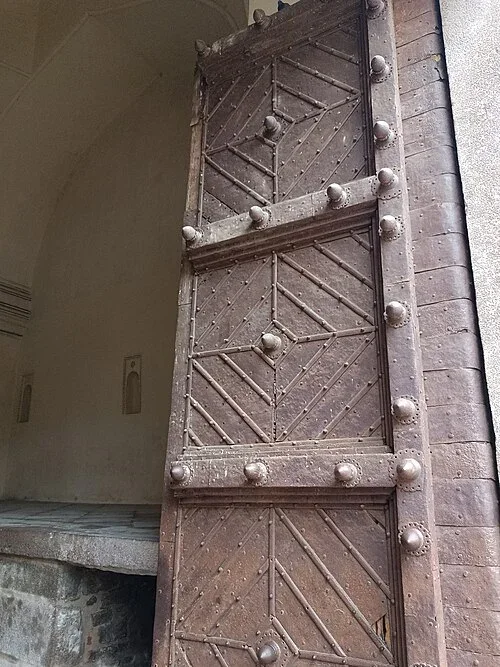 The Grand Entrance and Acoustic Portico
The Iron-Spiked Gateway
A war elephant could shatter a castle gate with a single rush of its bulk. That was standard tactics across medieval India, and defenders knew it. So Golconda's builders sheathed their great timber doors in long iron spikes, set point out. An elephant battering the gate would drive its own forehead onto the blades. The doors here are massive planks, crossed with iron strapping and studded so thickly they read more like metal than wood. The system worked as intended. No attacking army ever broke these doors down by force.
Photo: Tarunsamanta · CC BY-SA 4.0
03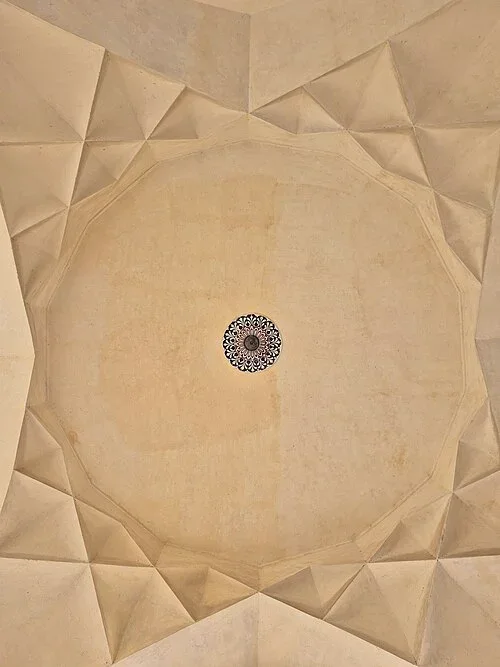 The Grand Entrance and Acoustic Portico
The Acoustic Dome at Fateh Darwaza
Under this dome, the architecture turns into an instrument. The ceiling above is a web of plaster facets, sharp planes meeting in a ring around a painted rosette at the centre. Stand at the right point beneath it and clap once, and the sound travels. It arrives clearly at the Bala Hissar pavilion on the hilltop, nearly a kilometre away. This is the Fateh Darwaza, the Victory Gate, and the clap was Golconda's alarm system. A disturbance at the gate reached the palace at the summit in a heartbeat, long before any messenger could run uphill. Whether the builders shaped the dome for this purpose, or discovered the effect and celebrated it, people still debate. The gate itself carries the name from a bitter day. Aurangzeb's triumphant Mughal army marched in through it in 1687.
Listen in the appPhoto: Kuldeepburjbhalaike · CC BY-SA 4.0
04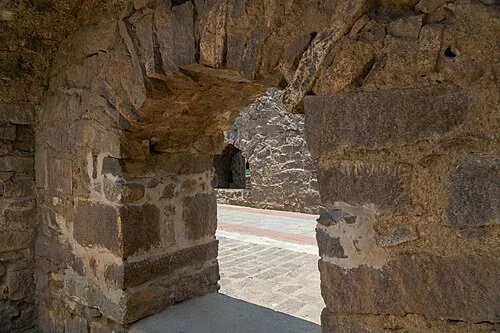 Lower Citadel and Administrative Quarters
Akkanna and Madanna's Offices
These granite archways belonged to the administrative offices of the Golconda court, named for Akkanna and Madanna, the two Hindu ministers who ran the kingdom's affairs at their height. From here the sultanate managed the trade that made its name. Rough gems came in from the Kollur Mine and the Krishna river country, then passed through the citadel to be graded, cut and stockpiled. European travellers who saw the treasury described it as the most secure vault they knew of anywhere. Two stones from that vault outgrew the kingdom itself. One was the Koh-i-Noor, today in the British crown jewels. The other became the Hope Diamond, now in Washington.
Listen in the appPhoto: Aliva Sahoo · CC BY-SA 4.0
05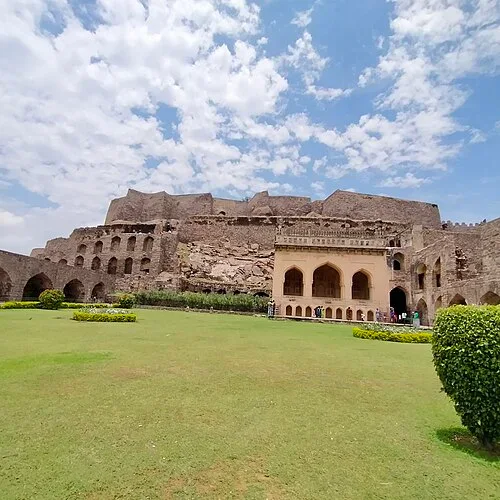 Lower Citadel and Administrative Quarters
The Shepherd's Hill: Nagina Bagh and the Lower Court
The founding story of this hill is a legend, and it is a good one. A shepherd boy, so the tale goes, found a sacred idol on the barren slope. When the Kakatiya king heard of it, he named the place Golla Konda, Shepherd's Hill, and raised the first fortification there, traditionally credited to King Prataparudra. What began as a shepherd's discovery passed through the hands of the Bahmani kings, and then to a governor they sent here named Sultan Quli Qutb-ul-Mulk. As Bahmani power crumbled, he fortified the city and made it his seat. The garden courts around this lawn came later, but the hill they occupy is the same one the shepherd walked.
Listen in the appPhoto: Aliva Sahoo · CC BY-SA 4.0
06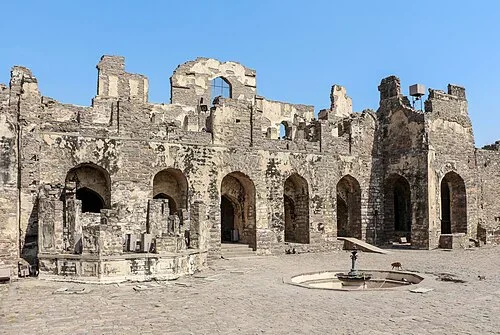 Royal Zenana, Rani Mahal, and the Baths
The Rani Mahal
Past the administrative courts, the fortress turns domestic. This was the Rani Mahal, the quarter of the royal women, set within the working fortress itself. What survives is a long ruined facade of arcades, arches opening onto arches, facing a paved court. The buildings inside Golconda's walls read like a town rather than a garrison: private chambers, halls of audience, gardens, a mortuary bath, stables for camels. Life here carried on with all the ceremony of a capital, with the granite ramparts close at hand. The poet John Keats, writing in the nineteenth century, reached for exactly this image of the place. His poem begins: 'Hast thou from the caves of Golconda, a gem, pure as the ice-drop that froze on the mountain?'
Listen in the appBernard Gagnon · CC BY-SA 3.0
07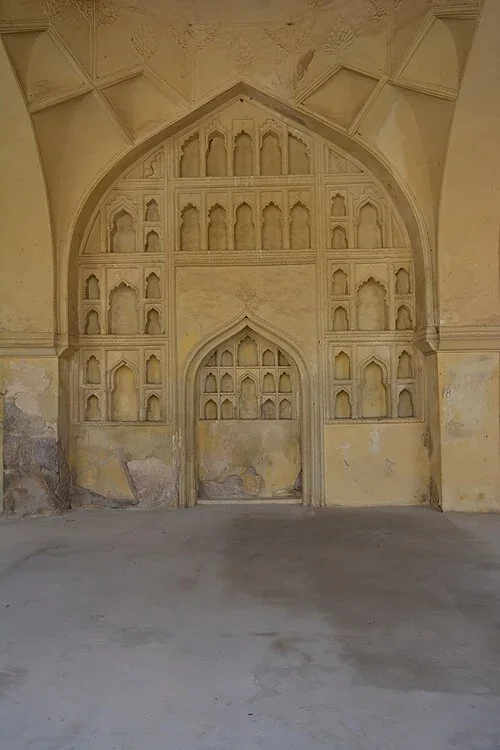 Royal Zenana, Rani Mahal, and the Baths
The Queen's Dressing Room
From outside, Golconda is all granite and gun positions. Inside the royal quarters, the craft changes completely. This chamber, known traditionally as the queen's dressing room, carries a wall of finely worked plaster: a great arched recess framed in tiers of small niches, each one shaped like a tiny arched alcove of its own. The style is Indo-Islamic, the blended language of the Deccan courts, where carved stucco softened every private room. Walls like these held lamps, perfumes, and the small treasured objects of daily court life. Nothing about the room announces defence. That contrast was the point: a fortress on the outside, a palace within.
Listen in the appPhoto: Suzane007 · CC BY-SA 4.0
08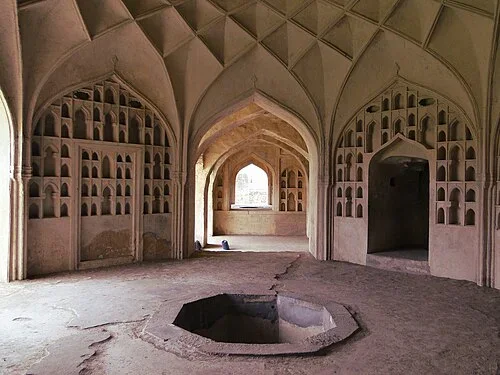 Royal Zenana, Rani Mahal, and the Baths
The Royal Bath
Royal comfort had its own infrastructure. The sunken basin set into the floor here is the heart of the royal bath, ringed by vaulted chambers whose walls are carved with rows of arched niches. Baths of this kind, built on the pattern of the hammams of Persia and further west, needed more than a pool. They required raised floors over heating, cisterns, and a steady supply of water carried into a hilltop fortress. The niches around the vaulted rooms would have held oils, towels and the attendants' things. The sultans of Golconda traced their own origins to Persia, and the taste for bathing culture came with them. Even a fortress, it seems, was expected to keep its royalty clean and warm.
Listen in the appPhoto: Ronakshah1990 · CC BY-SA 4.0
09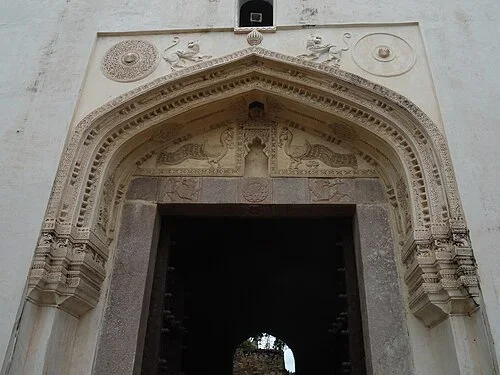 Bala Hissar Darwaza: The Inner Citadel Gate
Bala Hissar Darwaza: The Inner Gate
The Bala Hissar Darwaza, the citadel's gate on the eastern side, is a carved document. Around its pointed arch runs a border of scrollwork in stone. In the spandrels, the curved corners beside the arch, sit yalis, the lion-like beasts of Hindu temple sculpture, and they appear again on the granite lintel below, flanking a round disc. Above the doorway, two peacocks with long ornate tails spread around an arched niche. Every one of these motifs belongs to Hindu design, carved under a Muslim sultanate's rule. The stonework preserves the memory of what this hill was before the Qutb Shahis: a Hindu stronghold of the Kakatiya kings, its older artistic language absorbed into the new court's architecture. The Bala Hissar gate stands at the foot of the final climb, and its carvings greet the visitor in two traditions at once.
Listen in the appPhoto: Bhaskaranaidu · CC BY-SA 3.0
10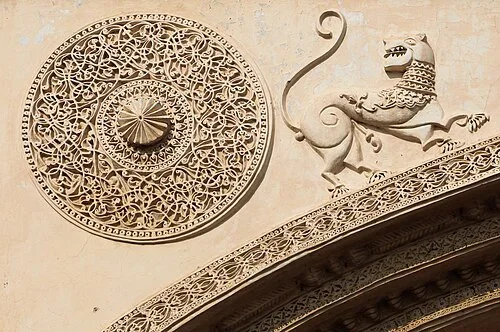 Bala Hissar Darwaza: The Inner Citadel Gate
Yali and Roundel: A Carving Close Up
Carved in stone beside the roundel crouches a yali, a beast that never lived outside sculpture. Hindu temple builders imagined it as a guardian, part lion, with a fierce tufted face and a tail that curls high over its back. Some yalis are given an elephant's trunk or a parrot's beak, so the creature can shift its shape from carving to carving. Across South India they stand at temple doorways, meant to frighten evil away before it crosses the threshold. Here the same beast appears on the inner gate, and the hand that cut it was a temple carver's. Its claws, its snarl and the medallion of interlaced leaves beside it carry on the skills of stoneworkers whose tradition long outlived the kingdom that first employed them.
Listen in the appBernard Gagnon · CC BY-SA 3.0
- 11
The Ashlah Khana: Arsenal of the Middle Ramparts
The arcaded range where the fortress kept its weapons, horses and supplies.
- 12
Ramadas Bandikhana: The Poet's Prison
The rock-cut cell where the poet Ramadas is believed to have carved Rama and his companions.
- 13
The Mosque of Ibrahim
A small royal mosque beside the palace, where daily prayer shaped life at the citadel's heart.
- 14
Sri Jagdamba Temple
A gilded shrine said to date from the first Kakatiya walls, still alive with worshippers.
- 15
The Baradari: Royal Pavilion at the Summit
The three-arched pavilion on the granite dome where the sultans held court.
- 16
The Qutb Shahi Tombs from the Summit
From the summit, the domed tombs where the dynasty's kings lie within sight of their court.
- 17
Cannon on the Ramparts
Eighty-seven bastions and a ten-kilometre wall, built for the age of gunpowder.
- 18
The Siege of 1687: How the Fortress Fell
The eight-month siege of 1687, and the open gate that ended the dynasty.
Golconda
Frequently asked questions
How much does the guide cost?
Free app download. Listed guide price: $1.99. Guide price shown in the app. Audio guide only. Venue admission is separate.
Can I listen without internet?
Yes. Download the guide’s audio, images, and maps in the app before your visit. Your downloaded content is then available offline.
Can I listen in my language?
This audio guide is available in 15 languages, including English.
Do I need to follow a schedule?
No. This is a self-guided experience. Choose your stops, pause whenever you like, and return to a story at your own pace.
At your own pace
Explore Golconda.
Download Stanza, then search for “Golconda”.
Free app download · Guide price shown in the app
Keep exploring
Audio guides — India
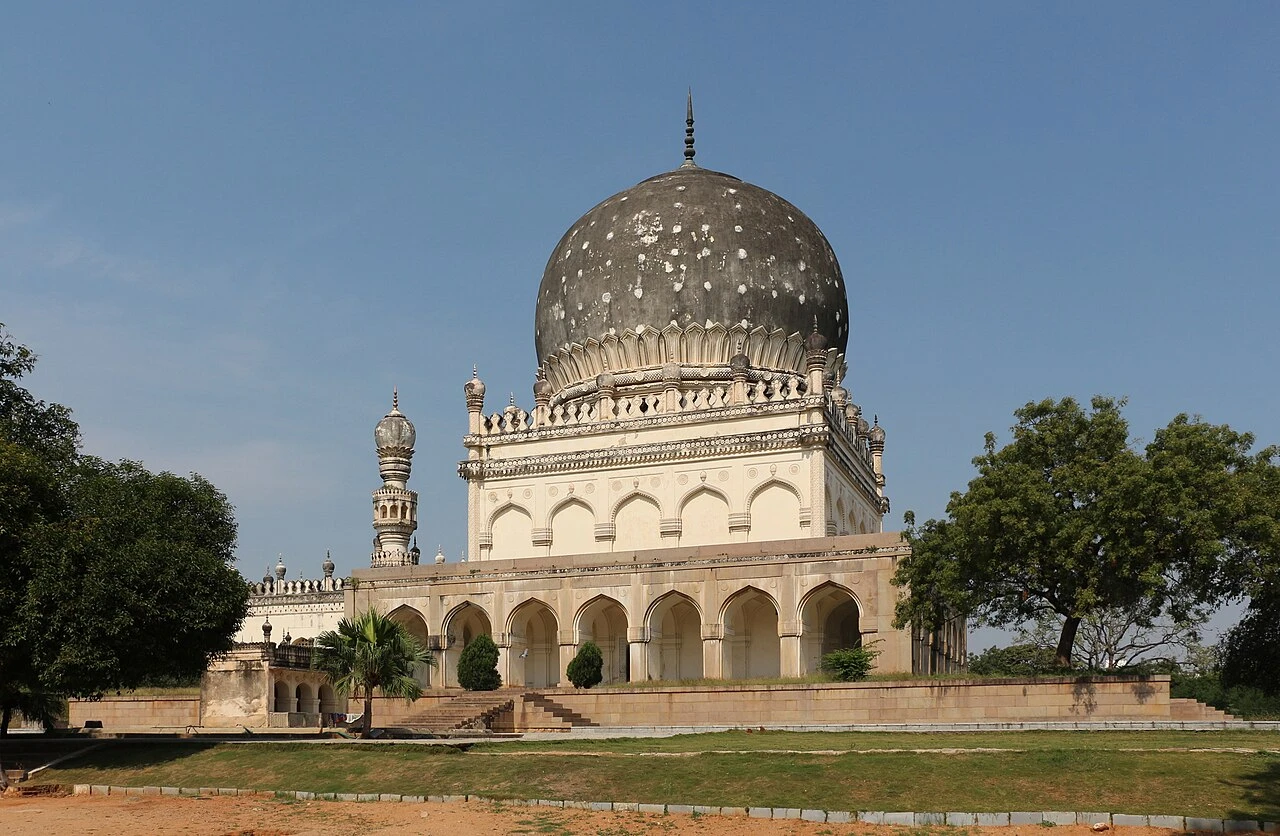
Hyderabad · 2 km
Qutb Shahi Tombs
Content & sources
Bernard Gagnon · CC BY-SA 3.0
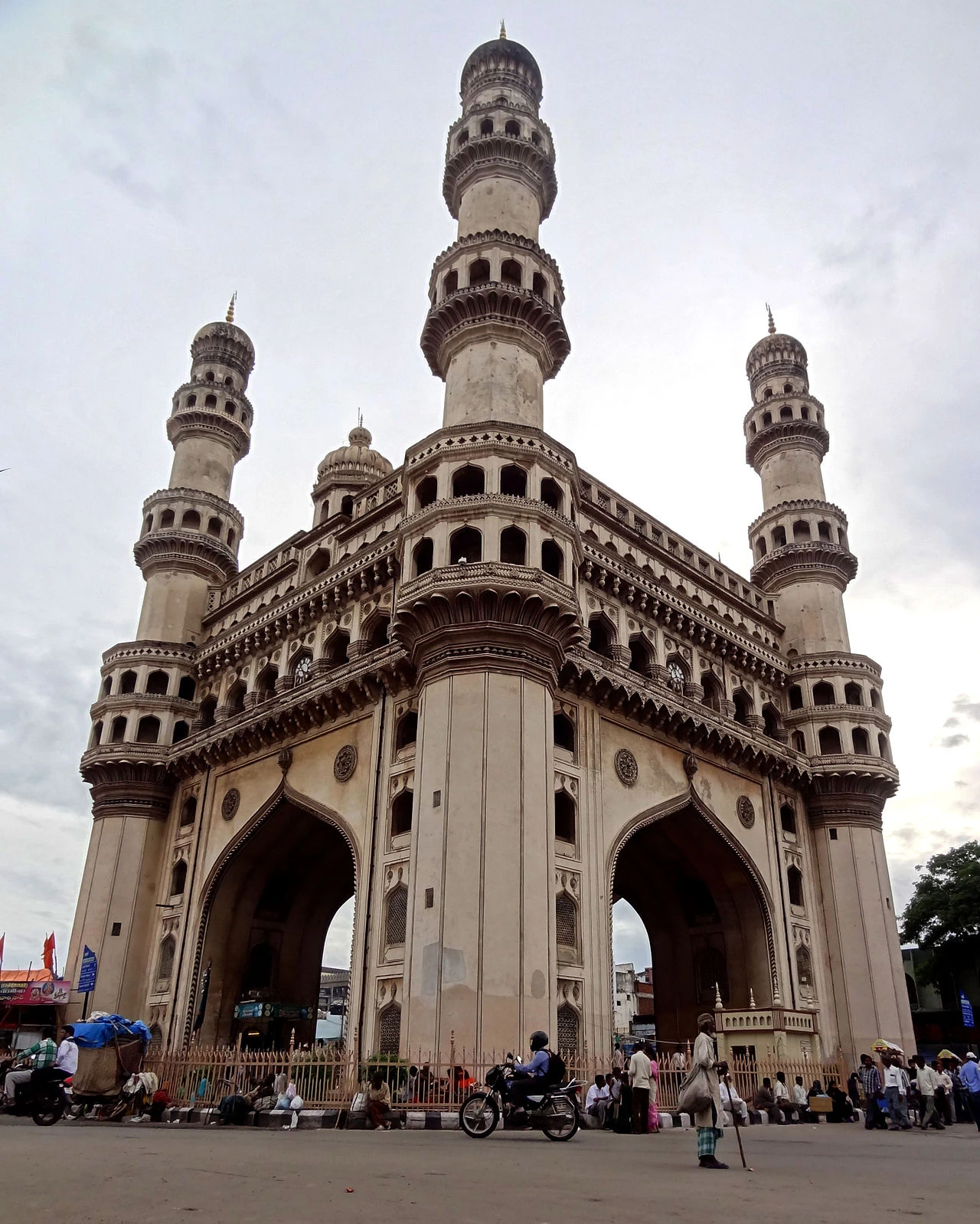
Hyderabad · 8 km
Charminar
Content & sources
Gopikrishna Narla · CC BY-SA 3.0
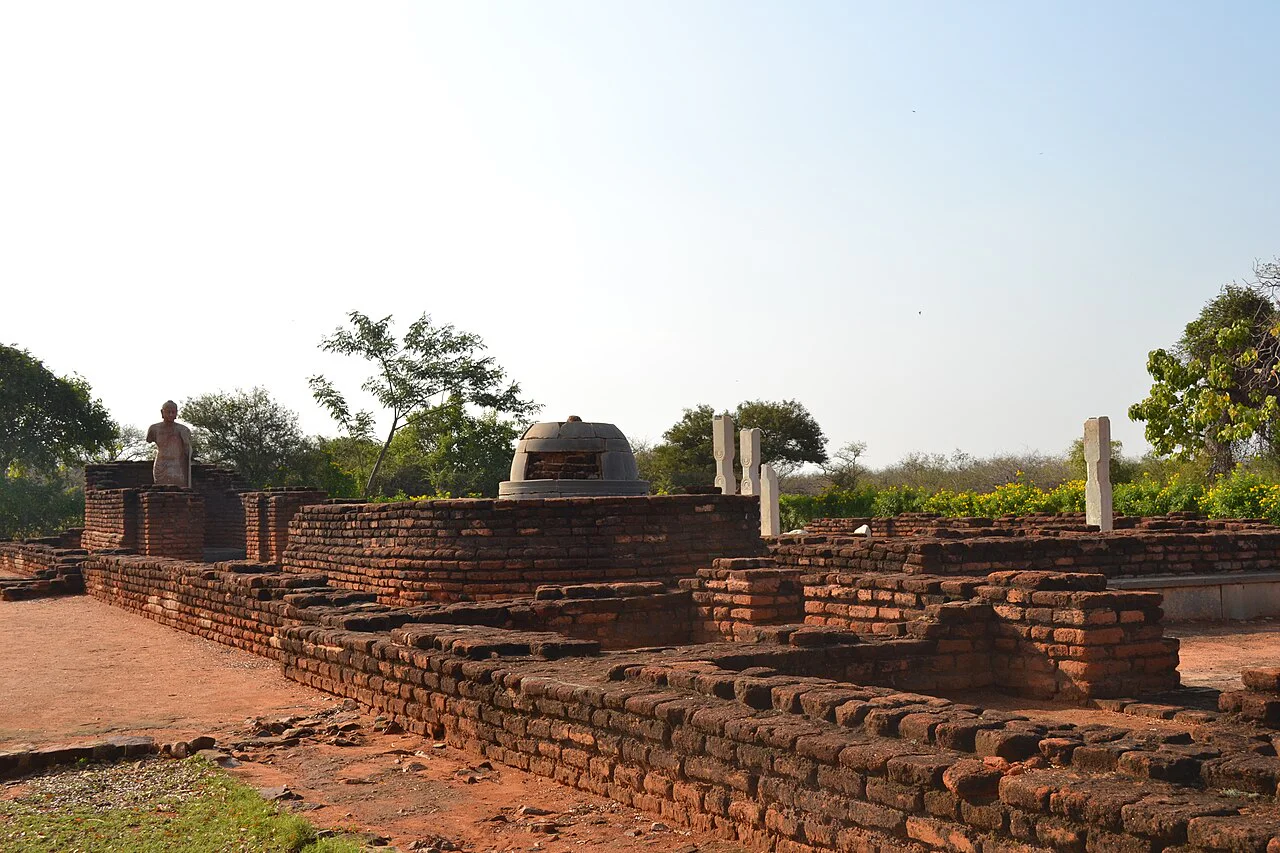
Anupu · 131 km
Nagarjunakonda
Content & sources
Sabyk2001 · CC BY-SA 3.0
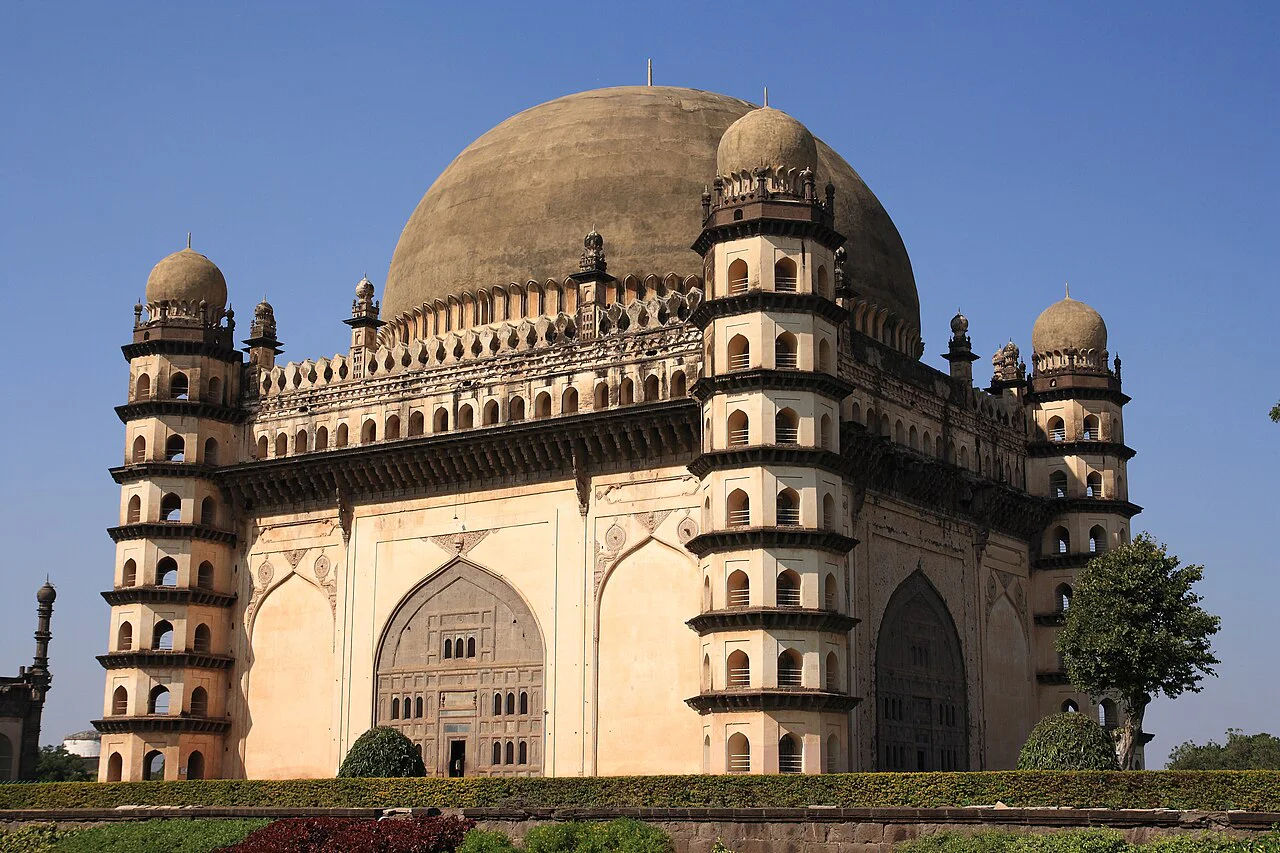
Vijayapura
Gol Gumbaz
Content & sources
Photo: Meesanjay · CC BY-SA 3.0