 Stanza / Audio guide
Content & sources
Stanza · Audio guide
Naqsh-e Rostam Audio Guide
A place to remember. A story to take with you.
Naqsh-e Rostam is an ancient archaeological site and necropolis located in Fars province, Iran. It contains the rock-cut tombs of four Achaemenid kings and various reliefs spanning over a millennium of…
Download Stanza, then search for “Naqsh-e Rostam”.
About the tour
One guide. Your kind of visit.
Naqsh-e Rostam is an ancient archaeological site and necropolis located in Fars province, Iran. It contains the rock-cut tombs of four Achaemenid kings and various reliefs spanning over a millennium of Iranian history.
Ready when you are.
- 01Get the free Stanza app.
iOS & Android
- 02Find your guide.
“Naqsh-e Rostam”
- 03Download before you go.
Works offline
Audio guide / 14 narrated stops
Inside the guide
Get to know a few of the stories before you go. Open a stop to read more.
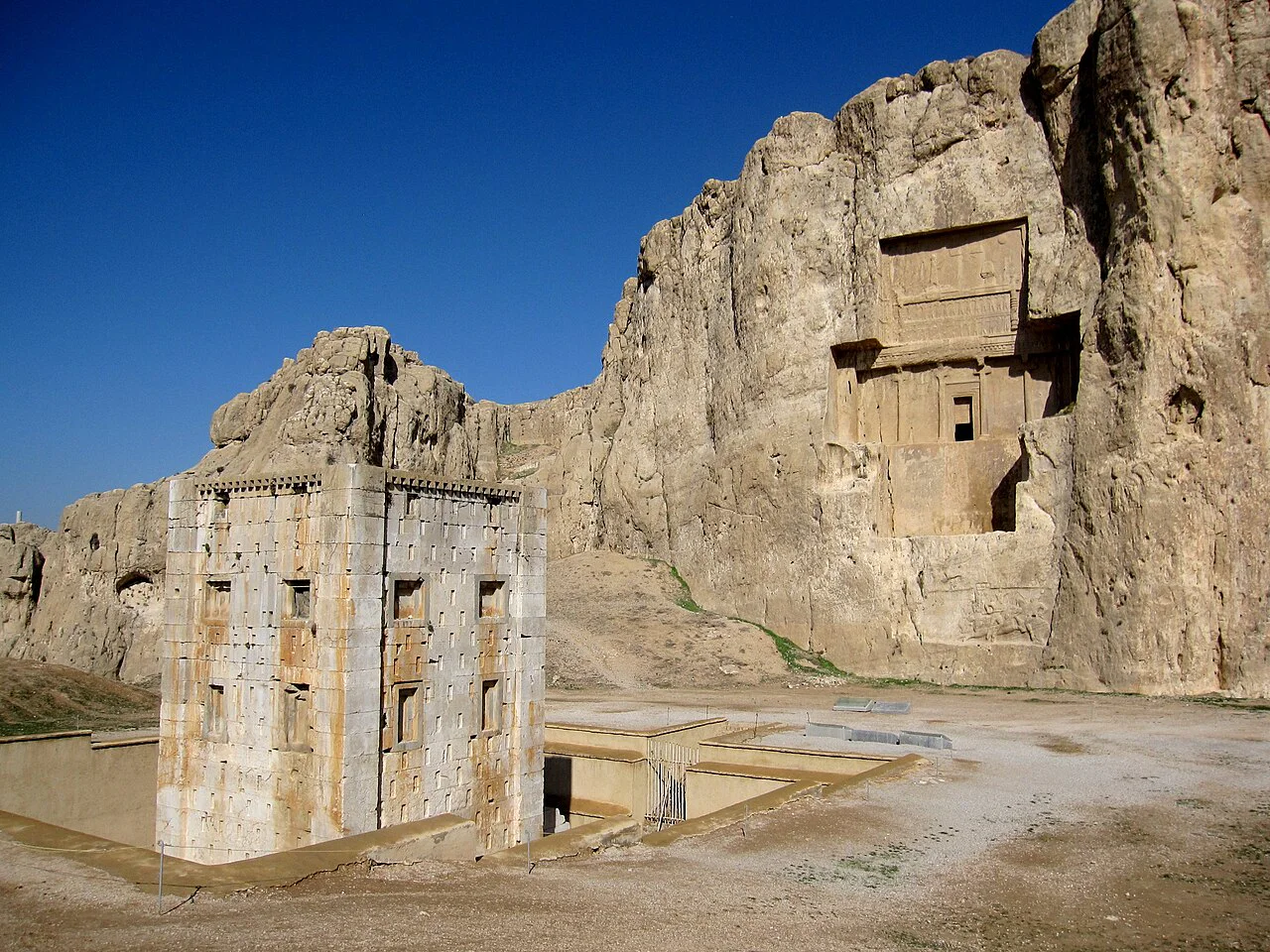
01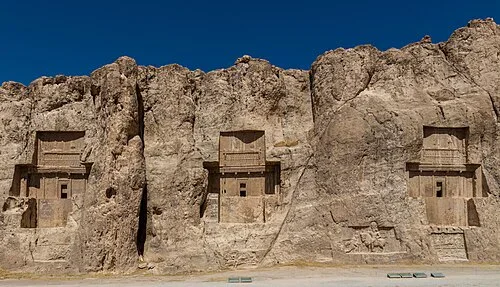 Necropolis Promenade & Mount Hosein Overview
Naqsh-e Rostam: The Cliff of Kings
Welcome to Naqsh-e Rostam, a name that means 'Mural of Rostam'. The name probably arose once people came to link the carved Sasanian kings with Rostam, the hero of Ferdowsi's Shahnameh, though the real makers were kings. High in the cliff face, four cross-shaped tombs hold the remains of Achaemenid kings, among them Darius the Great and his son Xerxes. Near the ground, Sasanian kings carved reliefs of battles and coronations, borrowing the old tombs for their own glory. And beneath all of it lie faint traces of the Elamites, whose carvings came first. Archaeologists from the University of Chicago dug here for several seasons in the late 1930s, led by Erich Schmidt.
Diego Delso · CC BY-SA 4.0
02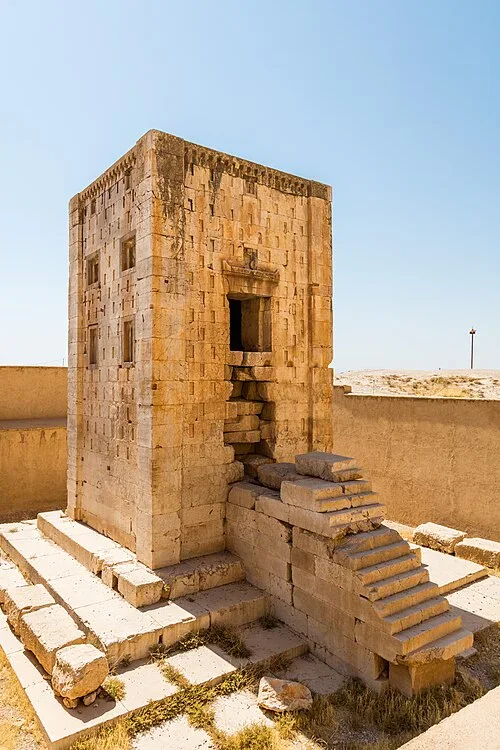 Ka'ba-ye Zartosht (Cube of Zoroaster)
Before the cliff stands a square tower of pale limestone, built in the fifth century BC. Persians call it the Ka'ba-ye Zartosht, the Cube of Zoroaster, though that name is a recent usage; in Sasanian times it was known as bon-khanak. It copies an older sister building at Pasargadae that locals named the Prison of Solomon. What the tower was for has long been argued over. Some say a fire temple, some a tomb, others a treasury or a vault for holy texts. Centuries after it was built, Sasanian kings found a use for its walls. Shapur the First set his inscription here, and after him Kartir, the high priest and the most powerful of the Zoroastrian clergy of his age, carved his own. Whatever the first builders intended, the tower ended its career as a noticeboard for kings and priests.
Diego Delso · CC BY-SA 4.0
03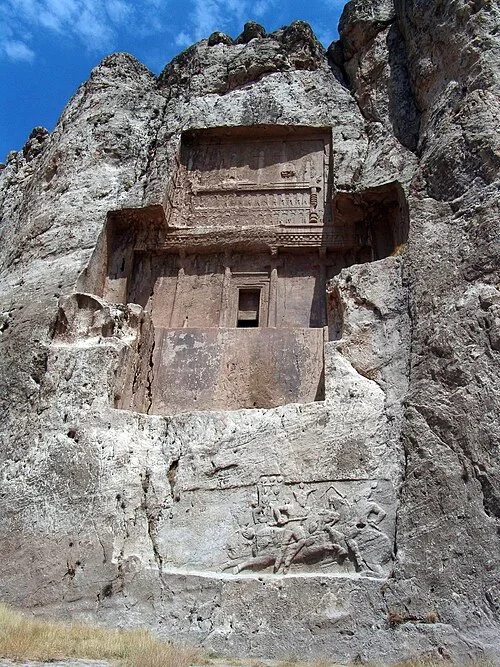 Tomb of Darius II & Sasanian Cavalry Combat
Tomb of Darius II
Four tombs, one design. The cross shape holds the whole plan. At the top, the king stands with his bow before a fire altar, under a winged figure often identified as the Zoroastrian fravahar. His platform rests on two rows of figures, fifteen in each row, and each one is named in a short inscription as a province of the empire, dressed in the costume of its homeland. Below them, the middle band imitates a palace portico, complete with columns capped by double bull's heads. At the centre of the cross, a doorway opens onto a small chamber where the king lay in a sarcophagus. This tomb is traditionally given to Darius the Second, though no inscription on the rock names him. Once the design is clear here, the other facades read like copies of the same page.
Listen in the appدرفش کاویانی · CC BY-SA 3.0
04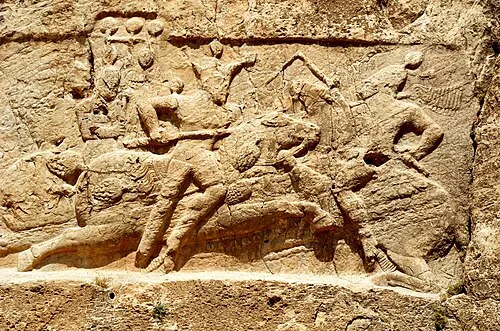 Tomb of Darius II & Sasanian Cavalry Combat
Equestrian Combat Relief of Shapur II
Down at eye level, the Sasanians went to war in stone. A king gallops at full tilt, and his enemy is tumbling from the saddle. The carving is usually given to Shapur the Second, though some scholars argue for Bahram the Second. What is beyond argument is the placement. The combat was cut directly beneath a royal Achaemenid tomb, high above. The Sasanians did that more than once, setting their deeds in the shadow of the old kings so their own glory would seem its continuation. The genre repeats along the cliff, king on horseback and enemy unseated, each panel a piece of royal self-display.
Listen in the appAlireza Javaheri · CC BY 3.0
05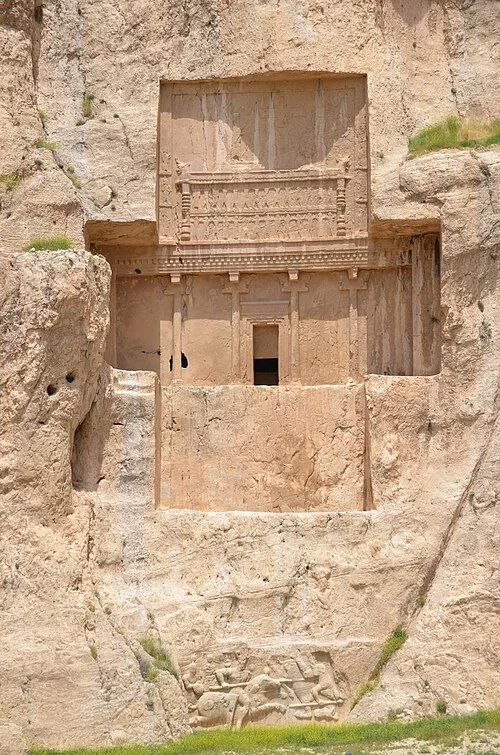 Tomb of Artaxerxes I & Equestrian Relief of Hormizd II
Tomb of Artaxerxes I and the Combat of Hormizd II
One frame here catches two stories at once. High in the rock is a tomb cross given to Artaxerxes the First, with a question mark attached, because no inscription names its occupant. Tomb identities on this cliff are inferred from position and pattern, not carved into the stone. Near the ground is a joust, and this one has a name. Hormizd the Second drives his enemy from the saddle, an opponent identified only tentatively, perhaps Papak of Armenia.
Listen in the appCarole Raddato from Frankfurt, Germany · CC BY-SA 2.0
06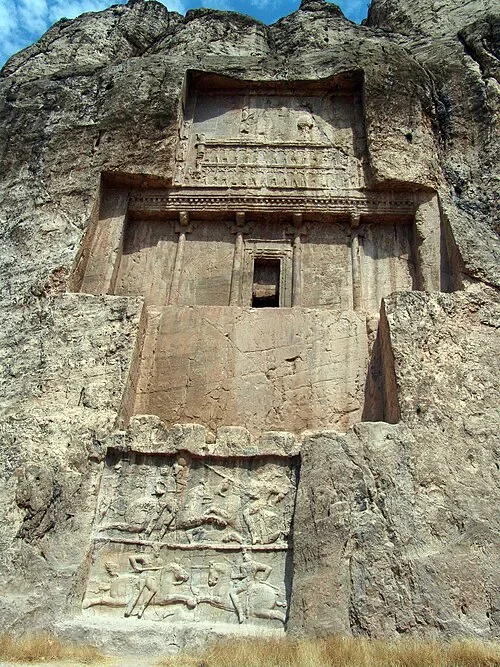 Tomb of Darius the Great & Royal Inscriptions
Tomb of Darius the Great
The tomb of Darius the Great is assumed to be the oldest of the four. It is also the only tomb with an extensive inscription on its facade, divided into two parts that scholars call DNa and DNb. In that text Darius names himself, which is why this attribution stands firm while the others remain guesses. The inscription sits to the left of the king in the upper panel, cut in cuneiform where the rock meets the sky.
Listen in the appدرفش کاویانی · CC BY-SA 3.0
07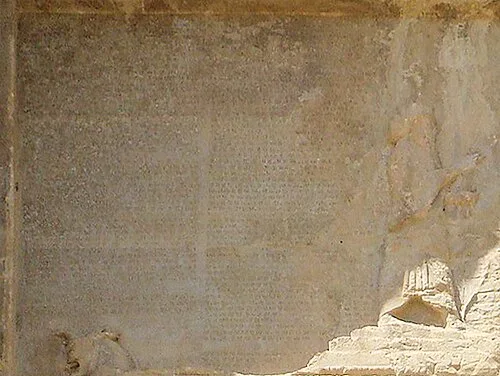 Tomb of Darius the Great & Royal Inscriptions
The DNa Inscription: Darius in His Own Words
Darius speaks here in his own voice, in what scholars take to be the last decade of his reign, around 490 before our era. It opens: 'A great god is Ahura Mazda, who created this earth, who created yonder sky, who created man, who created happiness for man, who made Darius king, one king of many, one lord of many.' Then the introduction: 'I am Darius the great king, king of kings, son of Hystaspes, an Achaemenid, a Persian, son of a Persian, an Aryan, having Aryan lineage.' The countries follow, from Media and Egypt to the Greeks and Thrace, from Bactria and Gandhara to the Indus, the largest empire of antiquity. Darius even dares the reader to count the figures who bear the throne, 'then shall it become known to you: the spear of a Persian man has gone forth far.' He closes with a prayer: 'May Ahuramazda protect me from harm, and my royal house, and this land.'
Listen in the appآرش · CC BY-SA 3.0
08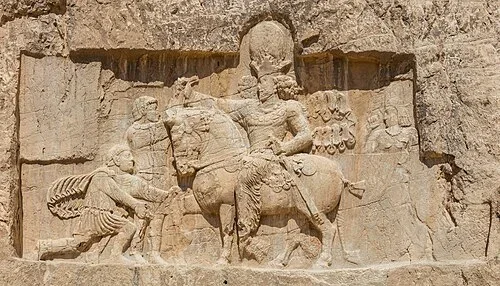 Triumph of Shapur I over Roman Emperors
Triumph of Shapur I over the Roman Emperors
The most famous carving on the cliff records a battle the Romans never lived down. Around AD 260, at Edessa, the Sasanian king Shapur the First captured the emperor Valerian, the only Roman emperor ever taken as a prisoner of war. In the relief, Shapur sits his horse and grips Valerian's wrist. Philip the Arab, an earlier emperor who paid Shapur tribute to buy peace, holds the king's horse. Beneath the hooves lies the dead Gordian the Third, killed in battle, though scholars have offered other readings of these figures. Behind the king stands Kartir, the high priest whose own inscription waits on the Cube of Zoroaster. Romans long remembered the capture of their emperor as a disgrace.
Listen in the appDiego Delso · CC BY-SA 4.0
09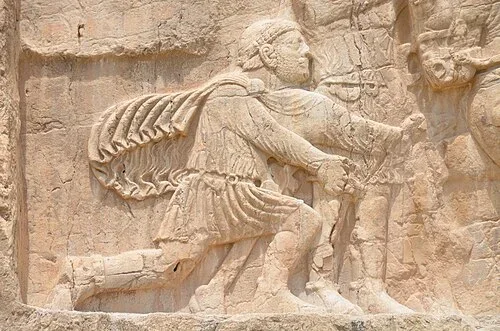 Triumph of Shapur I over Roman Emperors
The Kneeling Emperor: A Detail of Submission
In the carving, the sculptor's grammar of defeat becomes legible. Rank shows in posture. One Roman's wrist is held in the king's grip, and the grip makes him a prisoner. The kneeling figure in this detail reaches toward the king, one knee down, his cloak streaming behind him. Which Roman he is, scholars still debate; for a long time he was taken to be Valerian, though that is not the only reading. The drapery folds and the straining leg show a sculptor working at the height of his craft.
Listen in the appCarole Raddato from Frankfurt, Germany · CC BY-SA 2.0
10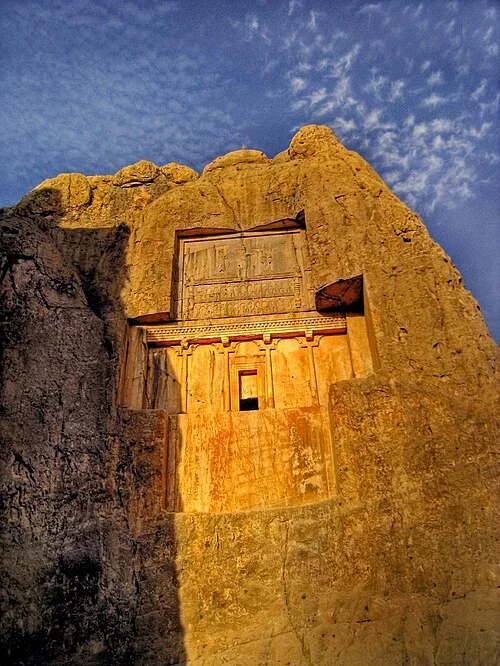 Tomb of Xerxes I
Xerxes, son of Darius and his successor, has his tomb at one end of the cliff row, the king whose name is tied to the invasion of Greece. His facade repeats his father's program exactly. Of all the tombs, his panel of throne-bearers is among the best preserved, so the individual provinces can still be told apart by their dress.
Listen in the appPhoto: Roodiparse · Public domain
- 11
Investiture of Ardashir I
The founding image of the Sasanian Empire: a god himself hands the king his ring.
- 12
Traces of the Elamite Snake Throne
Faint traces of the oldest carving on the cliff, buried under a later king's audience scene.
- 13
Investiture of Narseh and the Goddess Anahita
The last investiture on the cliff, where a goddess, not a god, hands over the ring.
- 14
The Unfinished Panel: Where the Carving Stopped
A vast smoothed rectangle of rock, prepared for a carving that never came.
Naqsh-e Rostam
Frequently asked questions
How much does the guide cost?
Free app download. Listed guide price: $1.99. Guide price shown in the app. Audio guide only. Venue admission is separate.
Can I listen without internet?
Yes. Download the guide’s audio, images, and maps in the app before your visit. Your downloaded content is then available offline.
Can I listen in my language?
This audio guide is available in 15 languages, including English.
Do I need to follow a schedule?
No. This is a self-guided experience. Choose your stops, pause whenever you like, and return to a story at your own pace.
At your own pace
Explore Naqsh-e Rostam.
Download Stanza, then search for “Naqsh-e Rostam”.
Free app download · Guide price shown in the app
Keep exploring
Audio guides — Iran
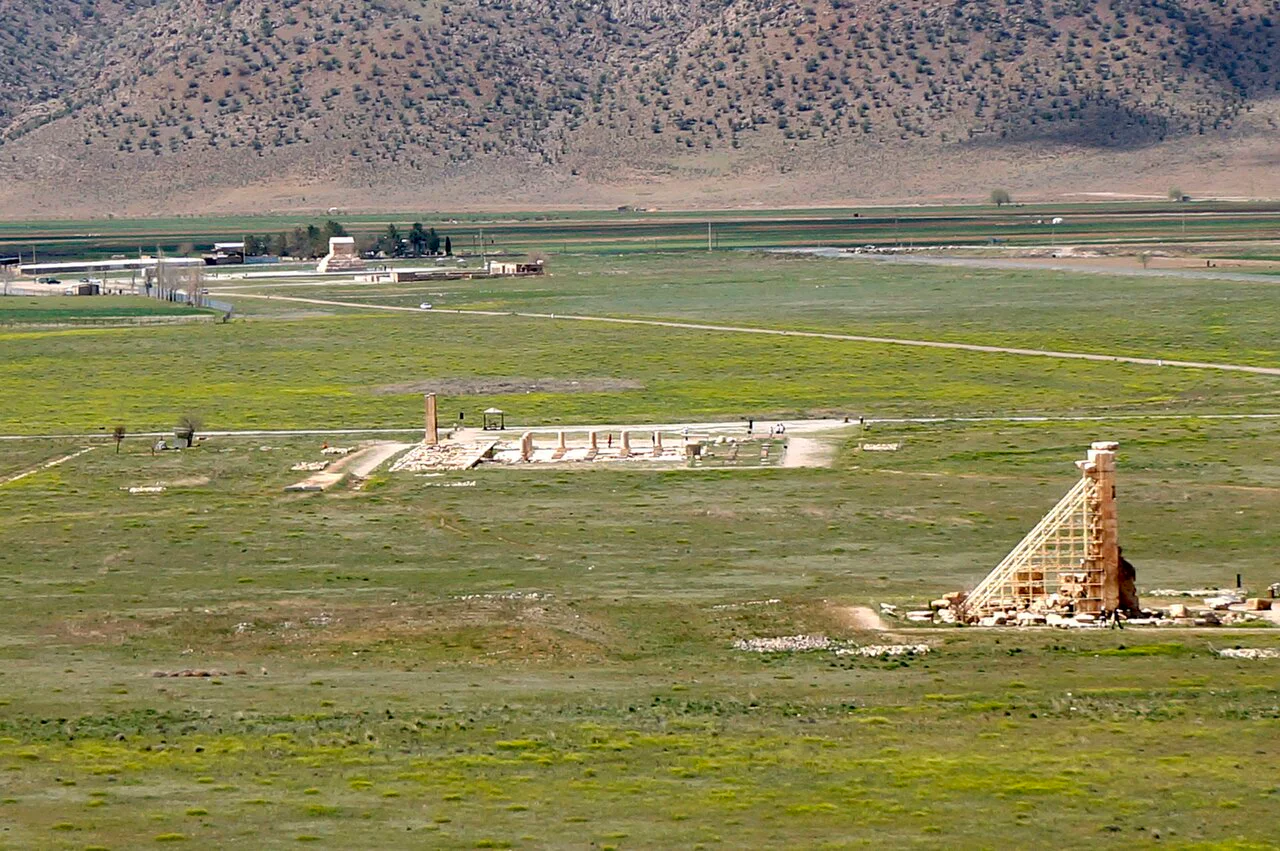
Sa'adat Shahr · 38 km
Pasargadae
Content & sources
Soheil Callage · CC BY-SA 4.0
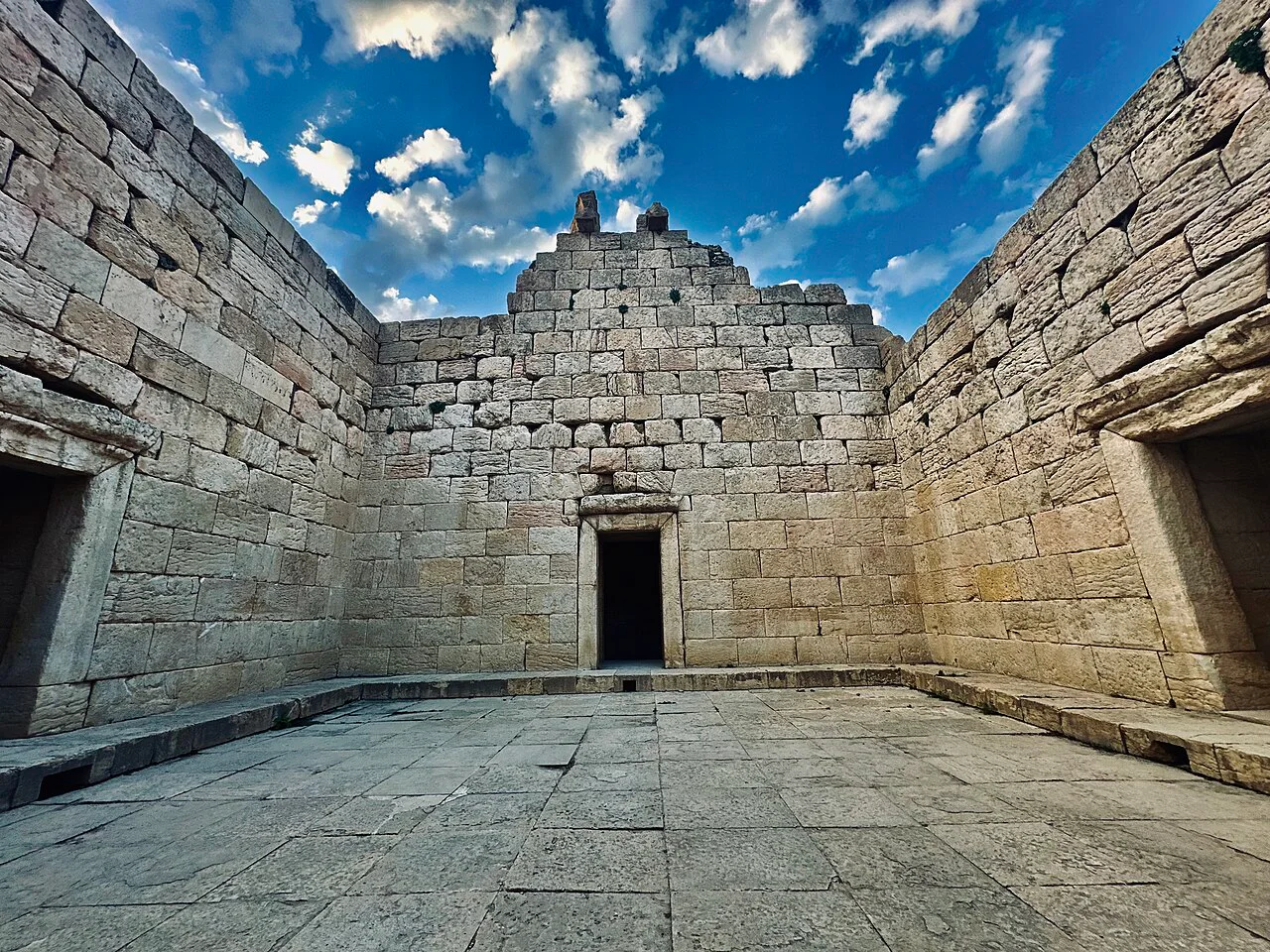
Kazerun · 128 km
Bishapur
Content & sources
Photo: Behnam9395 · CC0
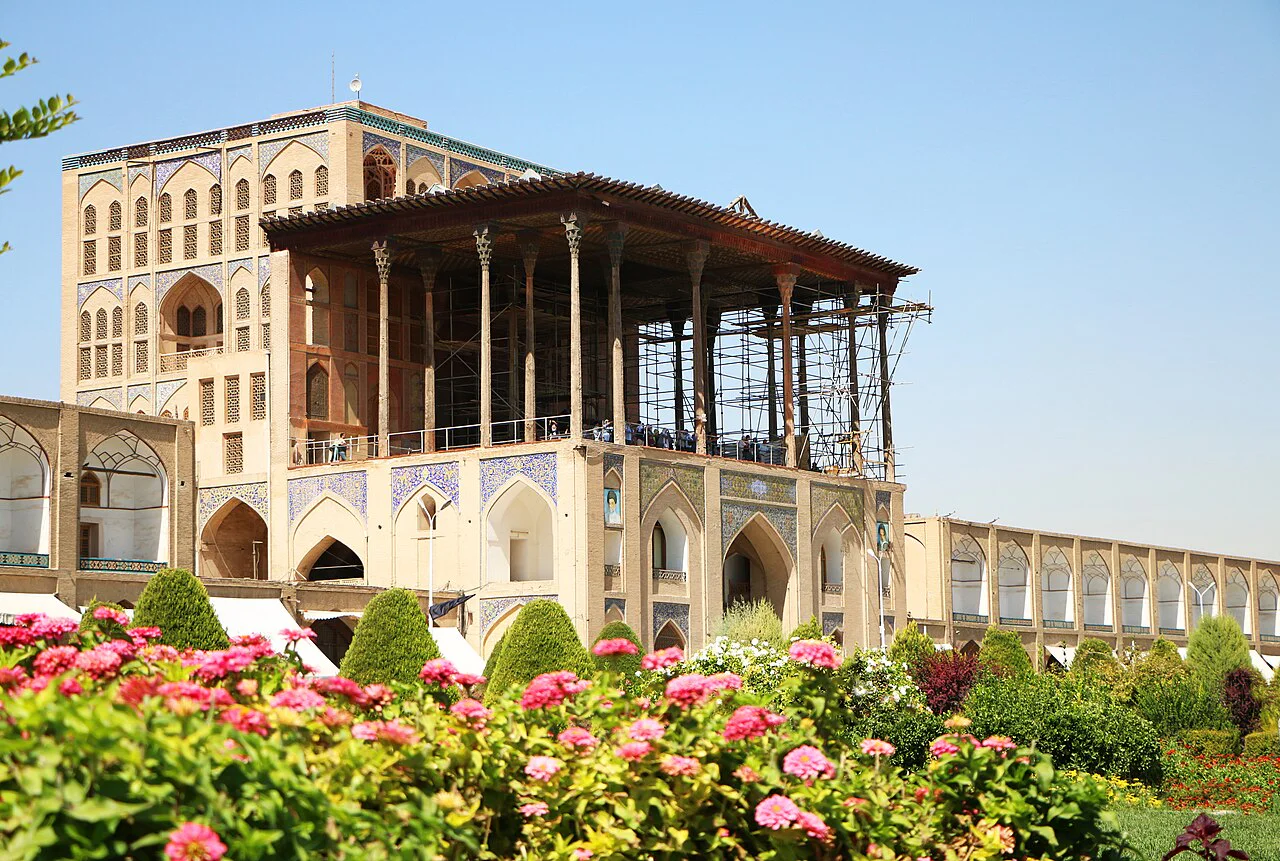
Isfahan
Ali Qapu
Content & sources
Photo: Zahradibaji · CC BY-SA 4.0
Shush
Chogha Zanbil
Content & sources
Photo: Shauni · CC BY-SA 3.0