Stanza · Audio guide
Pasargadae Audio Guide
A place to remember. A story to take with you.
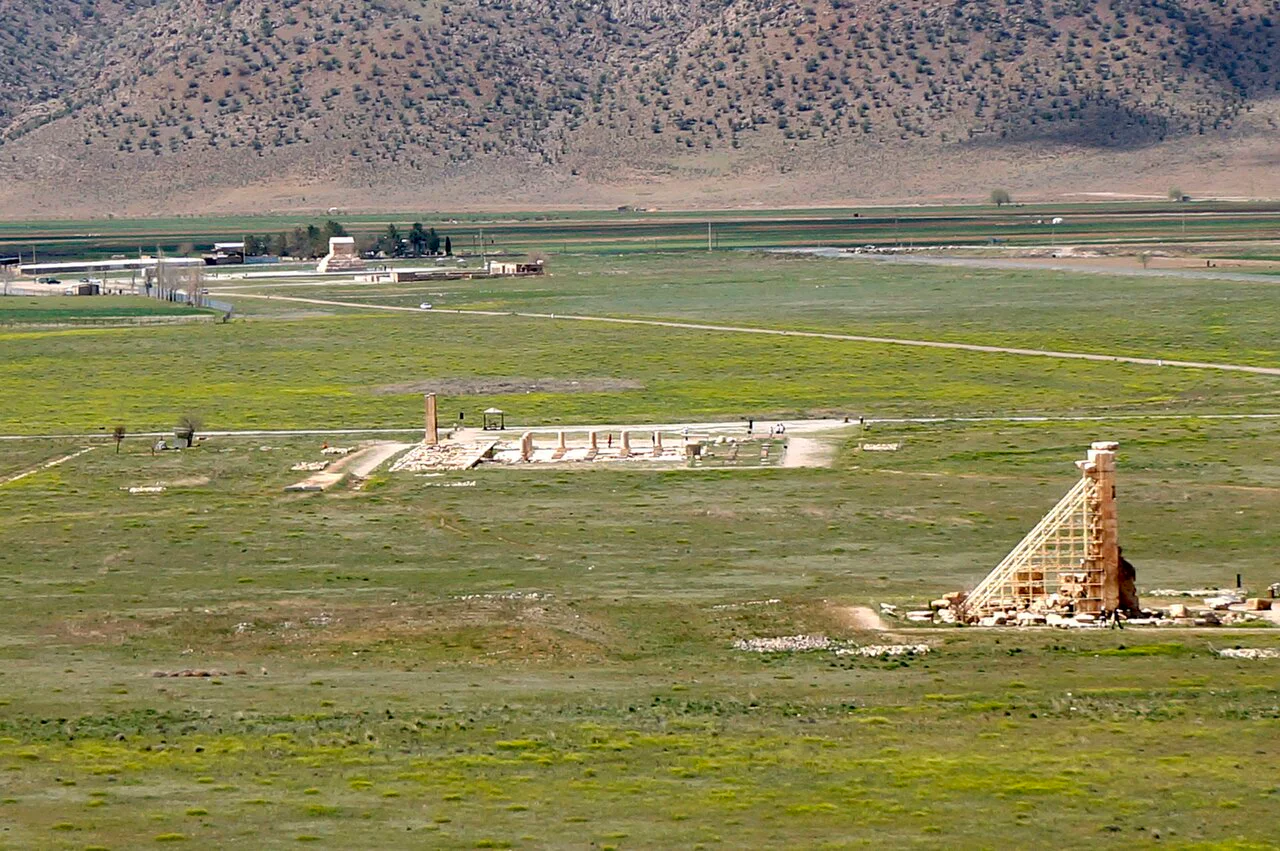
Pasargadae was the capital of the Achaemenid Empire under Cyrus the Great. It is a UNESCO World Heritage Site that contains the Tomb of Cyrus.
Download Stanza, then search for “Pasargadae”.
About the tour
One guide. Your kind of visit.
Pasargadae was the capital of the Achaemenid Empire under Cyrus the Great. It is a UNESCO World Heritage Site that contains the Tomb of Cyrus.
Ready when you are.
- 01Get the free Stanza app.
iOS & Android
- 02Find your guide.
“Pasargadae”
- 03Download before you go.
Works offline
Audio guide / 22 narrated stops
Inside the guide
Get to know a few of the stories before you go. Open a stop to read more.
01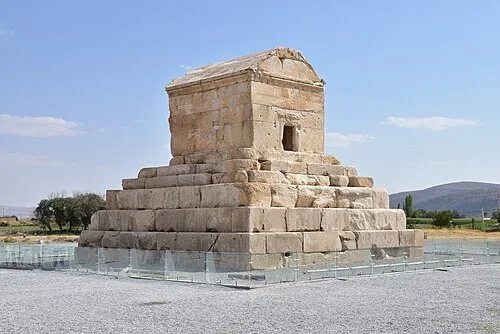 Tomb of Cyrus the Great
Cyrus the Great founded Pasargadae in the sixth century BCE, the first capital of the Achaemenid Empire. He built it near the battlefield where he defeated the Median king Astyages in 550 BCE. The city takes its name from Cyrus's own royal clan. It kept its role as capital until Darius moved the court to Persepolis. The stepped stone monument beside the entrance path is the most important building on the site. It is honoured as the tomb of Cyrus himself, the founder of the Persian Empire. No firm archaeological proof pins the grave to Cyrus. What survives is the testimony of Greek historians, who wrote that Alexander believed it was his. Around the tomb stretch the ruins of palaces, gardens and a hilltop fortress, the remains of a royal city in the plain of Fars.
Bernd81 · CC BY-SA 4.0
02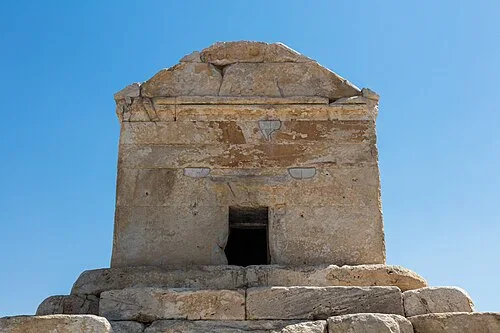 Tomb of Cyrus the Great
Tomb Chamber and Gable
Six broad steps lift the burial chamber above the plain, and the roof over it is a simple gable. Inside, the room is a little over three metres long. Its width and height are each just over two metres. The main decoration is a rosette carved over the door, within the gable. The stepped platform recalls the ziggurats of Mesopotamia and Elam. The chamber itself resembles tombs of Urartu, in the mountains farther north. Most striking of all, its dimensions match almost exactly the tomb of Alyattes, father of the Lydian king Croesus. Some scholars see deliberate homage in that. By Herodotus's account, Croesus was spared by Cyrus and joined his court. Others think the two tombs simply drew on a shared Anatolian tradition.
Diego Delso · CC BY-SA 4.0
03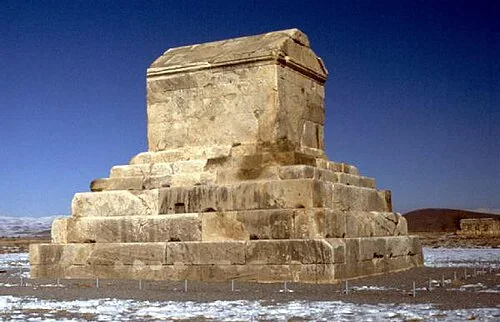 Tomb of Cyrus the Great
Alexander at the Tomb
When Alexander the Great looted and destroyed Persepolis, he paid a visit to this tomb. The historian Arrian, writing in the second century, recorded what happened next. Alexander sent one of his warriors, Aristobulus, into the monument. Aristobulus found a golden bed, a table set with drinking vessels, and a gold coffin. There were ornaments studded with precious stones, and an inscription on the tomb. That inscription has since vanished without a trace. Writers even disagree about what it said. One version, reported by Strabo and Arrian, runs: Passer-by, I am Cyrus, who gave the Persians an empire, and was king of Asia. Alexander ordered the interior restored and the tomb sealed again.
Listen in the appBehrad18n · Copyrighted free use
04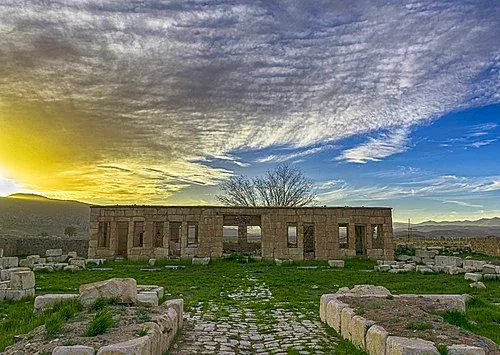 Muzaffarid Caravanserai
Long after the imperial city fell silent, the plain stayed on the map. In the fourteenth century the Muzaffarid dynasty raised a caravanserai here, a walled inn for travellers crossing Fars. Caravanserais were the rest stops of the overland routes, where riders, merchants and their animals could spend a night behind thick stone walls. The empire of Cyrus was long gone by then. But the road through this valley was not, and the inn kept the plain at work as a staging point for travellers.
Listen in the appDiego Delso · CC BY-SA 4.0
05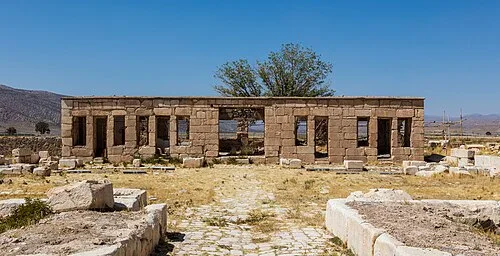 Muzaffarid Caravanserai
Stones from the King's Palaces
Many of the stones in these caravanserai walls were salvaged from the ruined palaces of Cyrus nearby. Builders of the fourteenth century found ready-cut masonry lying in the plain and put it back to work. Monuments have often fed later buildings this way. Blocks that once belonged to a royal hall ended up walling a roadside inn.
Listen in the appDiego Delso · CC BY-SA 4.0
06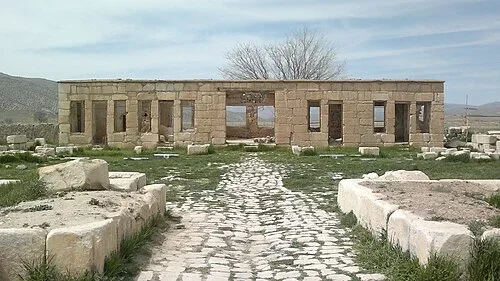 Muzaffarid Caravanserai
Courtyard of the Caravanserai
Caravanserais were built to a pattern that made long journeys workable. Riders and pack animals came in off the road to a cobbled forecourt like the one here. A row of rooms faced the yard, giving merchants a place to sleep and to keep their goods for the night. One night's shelter, then the road again. That was the rhythm the building was made for.
Listen in the appFarbodebrahimi · CC BY-SA 3.0
07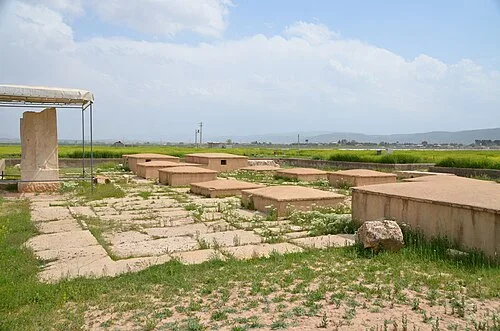 Gate R (The Gate Palace)
Gate R - Entrance to the Royal Precinct
Gate R stood at the eastern edge of the palace area, the formal threshold of Cyrus's royal precinct. It is the oldest known freestanding propylaeum, a Greek word for a monumental gateway building. A gate hall did more than mark an entrance. It filtered arrivals, staged ceremony, and impressed envoys before they ever reached the king. Centuries later, the builders of Persepolis raised their own Gate of All Nations. Gate R may have been its architectural predecessor.
Listen in the appCarole Raddato from Frankfurt, Germany · CC BY-SA 2.0
08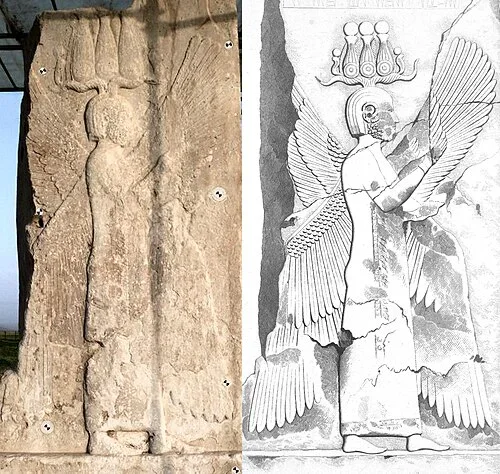 Gate R (The Gate Palace)
The Winged Genius Relief
On a doorjamb of the gate palace stands the most discussed carving at Pasargadae, a figure with four wings. For decades travellers took it for a portrait of Cyrus the Great himself. An inscription said to have stood above it was reported to read, I am Cyrus, the King, an Achaemenid. That inscription is gone, and the identification has faded with it. Scholars now generally treat the figure as a protective winged genius rather than a certain image of the king. Early copies of the carving record details that have since worn away from the stone.
Listen in the appPhotograph: Pentocelo Drawing: 1851 Flandin, Eugène (1809-1876) (Public Domain) · CC BY-SA 3.0
09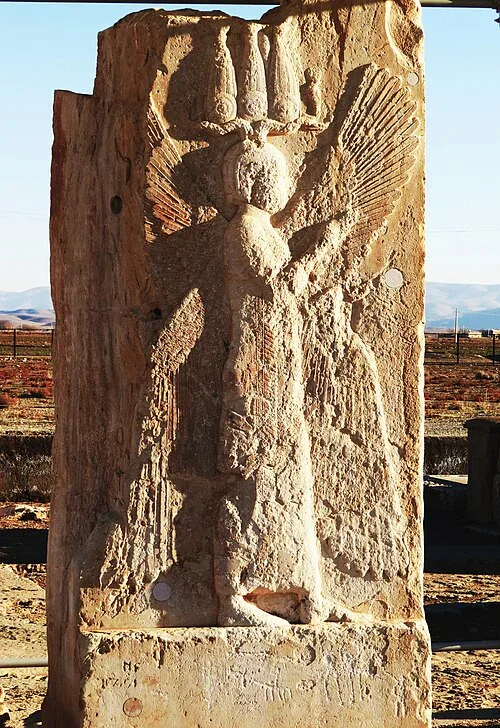 Gate R (The Gate Palace)
Reading the Relief's Motifs
The winged figure is an assembly of borrowed styles. Four wings spread from its back. The horned headdress carries elements in an Egyptian manner, and the long robe follows Elamite dress. Scholars read the mixture as deliberate, an image pieced together from Egypt, Assyria and Elam to speak for a kingship without borders. Which motif came from exactly where is still argued between specialists. Taken as a whole, the carving presents the empire as universal, in a single figure.
Listen in the appPhoto: Parsbod · CC BY-SA 4.0
10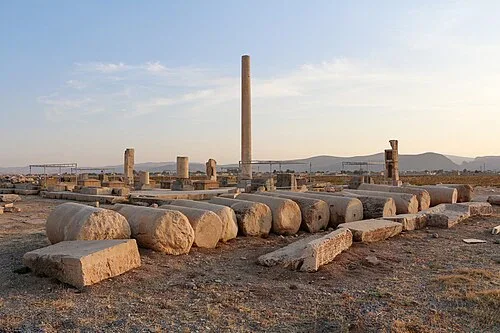 Palace S (The Audience Palace)
Palace S - The Audience Hall
This field of fallen column drums was once the Audience Palace, the great reception hall of Cyrus's capital. A hypostyle hall, a roof carried on many columns, filled the building. Foreign envoys came here to be received by the king, in a hall built to overawe them. This was diplomacy staged in the first capital of the Persian Empire. Today most of the columns lie where they fell, their drums scattered across the ground. A single shaft still rises against the sky.
Listen in the appBernard Gagnon · CC BY-SA 4.0
- 11
The Standing Column
The lone standing column and the Greek craftsmen who helped raise Cyrus's palaces.
- 12
A King's Signature on the Palace
The palaces of Pasargadae carry cuneiform panels that name Cyrus himself as their builder, signatures set into the stone.
- 13
The Persian Garden's Oldest Plan
Pasargadae preserves the earliest known chahar bagh, the fourfold Persian garden, complete with its stone water channels.
- 14
Palace P - The Private Palace
Cyrus's private residence, a columned hall whose porticoes opened straight onto the royal gardens.
- 15
I am Cyrus, Achaemenid King
The trilingual palace inscription announcing Cyrus in Old Persian, Elamite and Akkadian, the languages of his empire.
- 16
How Pasargadae Was Rediscovered
How Herzfeld, Stein and Schmidt turned the ruined capital into a recorded archaeological site.
- 17
Prison of Solomon - The Enigma
A fourteen-metre stone tower whose purpose has never been settled: fire temple, tomb, or treasury of regalia.
- 18
Inside the Tower's Walls
The tower's face as you see it: false windows, blind openings and rows of recesses in finely cut stone.
- 19
The Cambyses Question
Masonry long called the Tomb of Cambyses, plus the proposal that Cyrus's wife Cassandane lay in the stone tower.
- 20
Tal-e Takht - The Citadel
The fortified platform begun by Cyrus as a palace terrace, later turned by Darius into garrison and treasury.
- 21
Masonry Without Mortar
Citadel walls of mortarless limestone, locked by dovetail metal staples whose sockets are still visible.
- 22
The Plain from the Citadel
The whole site read from the citadel heights, and the dam reservoir that now threatens it.
Pasargadae
Frequently asked questions
How much does the guide cost?
Free app download. Listed guide price: $3.99. Guide price shown in the app. Audio guide only. Venue admission is separate.
Can I listen without internet?
Yes. Download the guide’s audio, images, and maps in the app before your visit. Your downloaded content is then available offline.
Can I listen in my language?
This audio guide is available in 15 languages, including English.
Do I need to follow a schedule?
No. This is a self-guided experience. Choose your stops, pause whenever you like, and return to a story at your own pace.
At your own pace
Explore Pasargadae.
Download Stanza, then search for “Pasargadae”.
Free app download · Guide price shown in the app
Keep exploring
Audio guides — Iran
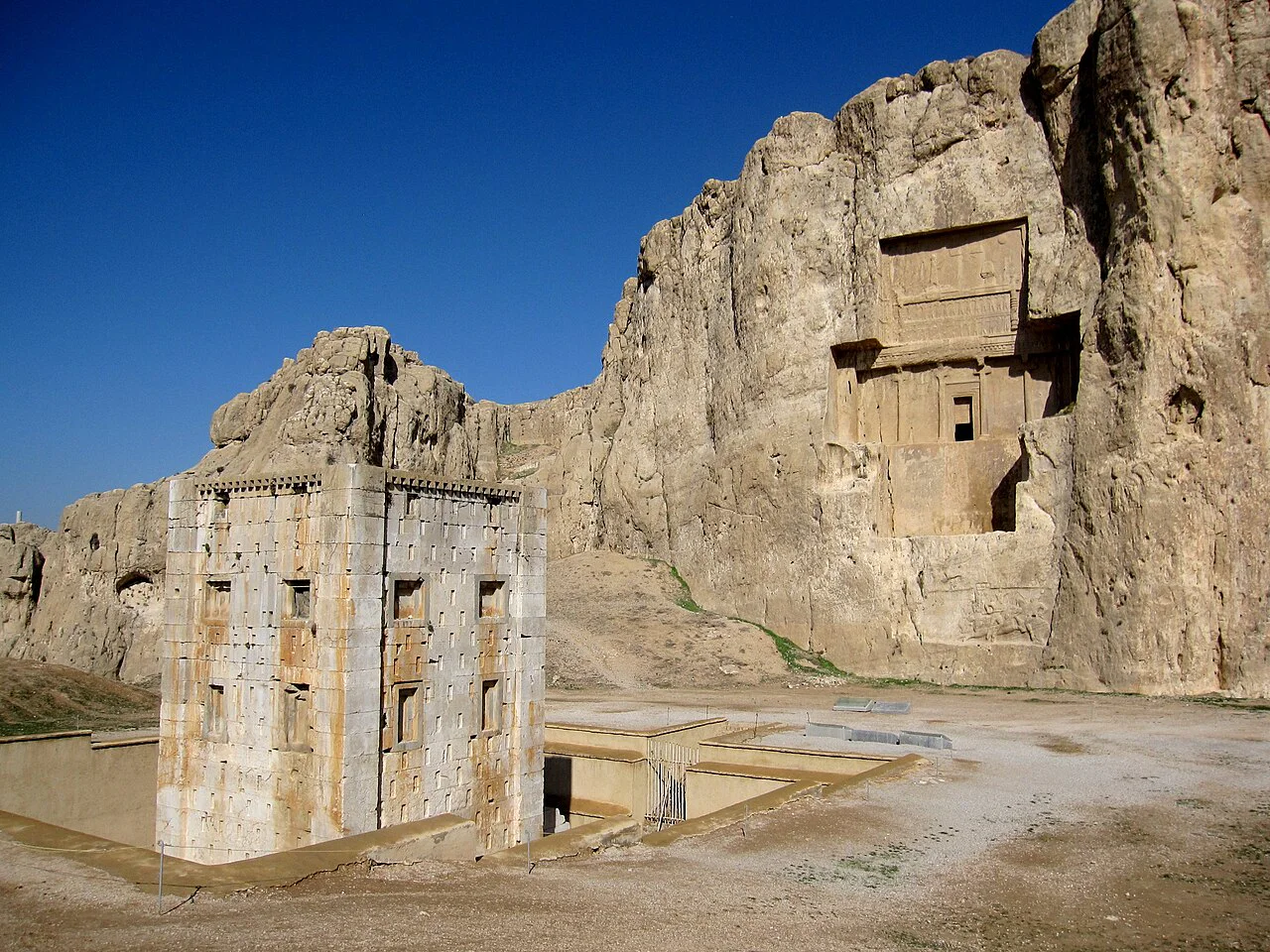
Marvdasht · 38 km
Naqsh-e Rostam
Content & sources
Stefan Krasowski from New York, NY, USA · CC BY 2.0
Kazerun
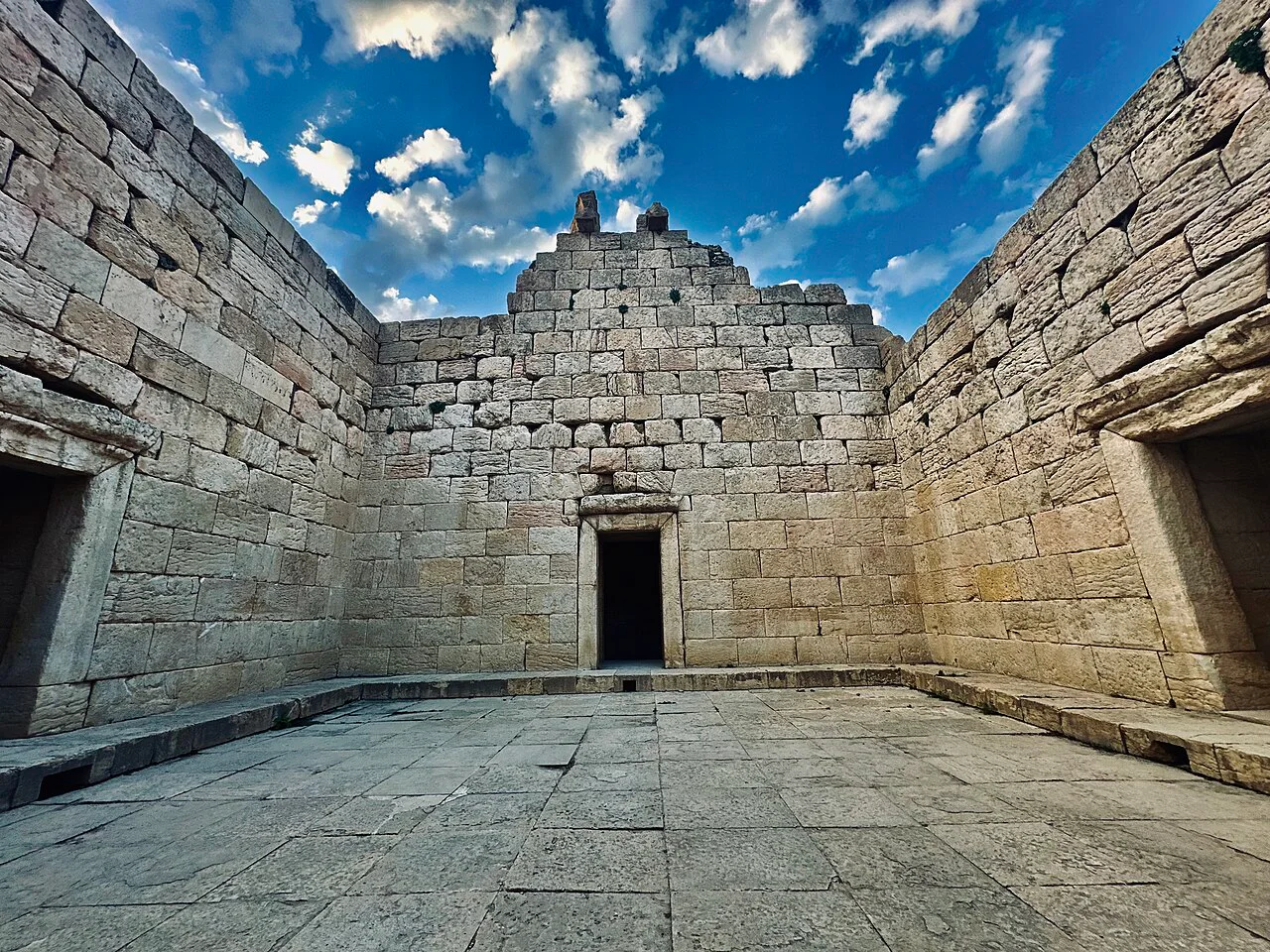
Bishapur
Content & sources
Photo: Behnam9395 · CC0
Isfahan
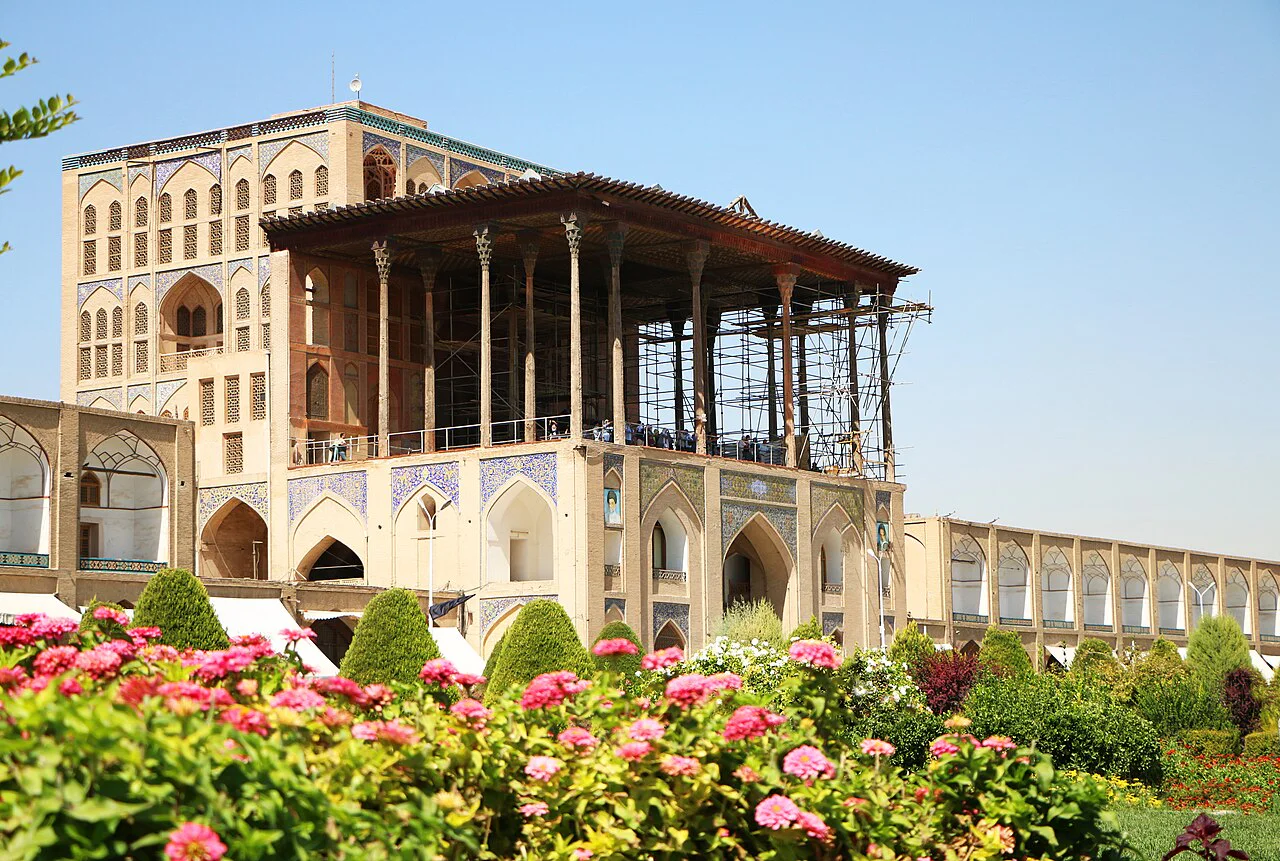
Ali Qapu
Content & sources
Photo: Zahradibaji · CC BY-SA 4.0
Shush
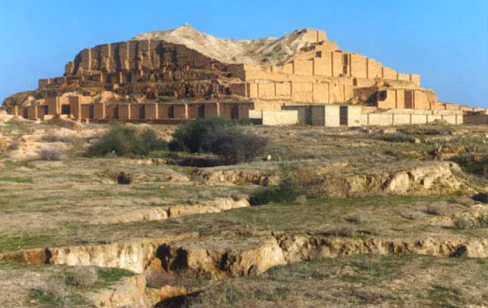
Chogha Zanbil
Content & sources
Photo: Shauni · CC BY-SA 3.0