Stanza · Audio guide
Takht-e Soleymān Audio Guide
A place to remember. A story to take with you.
Takht-e Soleymān is an archaeological site in West Azerbaijan, Iran that dates back to the Sasanian Empire. It is an Iranian national heritage site located near the town of Takab.
Download Stanza, then search for “Takht-e Soleymān”.
About the tour
One guide. Your kind of visit.
Takht-e Soleymān is an archaeological site in West Azerbaijan, Iran that dates back to the Sasanian Empire. It is an Iranian national heritage site located near the town of Takab.
Ready when you are.
- 01Get the free Stanza app.
iOS & Android
- 02Find your guide.
“Takht-e Soleymān”
- 03Download before you go.
Works offline
Audio guide / 16 narrated stops
Inside the guide
Get to know a few of the stories before you go. Open a stop to read more.
01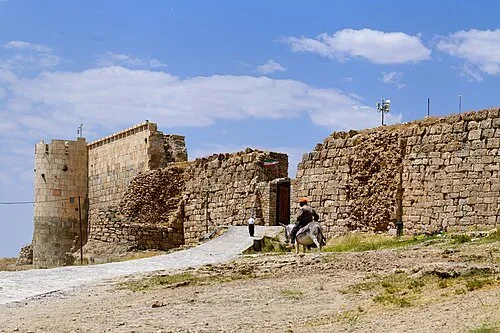 The Fortified South Gate
The Southern Gate of Takht-e Soleyman
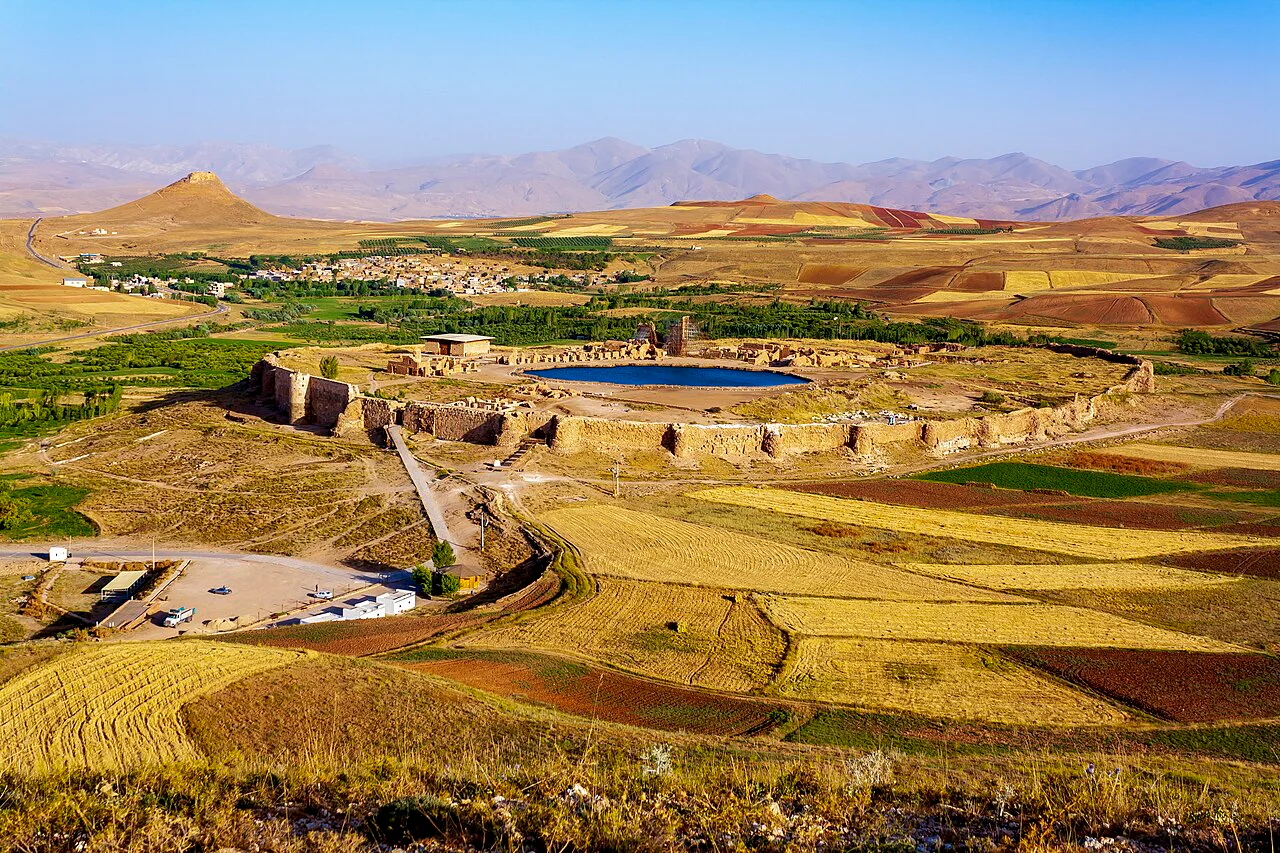
Welcome to Takht-e Soleyman, the Throne of Solomon, a fortified hill in West Azerbaijan in northwestern Iran. Two great dynasties built their power on this one plateau, and both stories are still here to be walked through. First came the Sasanians, who raised a supreme Zoroastrian fire sanctuary on the hill. Some six centuries after its fall, the Mongol Ilkhanids built their summer palace straight on top of its ruins. The place was famous long before either of them. It appears on the Peutinger Map, a Roman road map of the fourth century, marked as a stop worth knowing about. In 2003 UNESCO listed it as a World Heritage Site. The gate ahead leads up onto a plateau that a spring built and two empires layered.
Mehrdad Shahbazi · CC BY-SA 4.0
02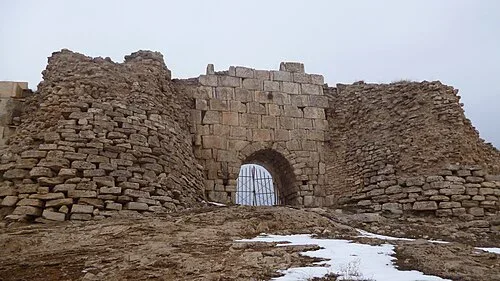 The Fortified South Gate
The Fortified Entrance and Oval Wall
The whole complex is wrapped in a defensive wall of heavy cut stone, and it runs in an oval rather than a square. That shape follows the hill itself, which the spring below formed over thousands of years. Inside the ring, the wall encloses the entire central courtyard with its lake. A wall on this scale was not raised for a casual shrine. This was a royal sanctuary, and later an imperial residence, and it was built to look the part. From the outer gate, a short flight of steps climbs to the elevated plateau within. That small rise was the whole transition, from the open valley into the sacred and fortified ground.
Photo: Shayan imani · CC BY-SA 4.0
03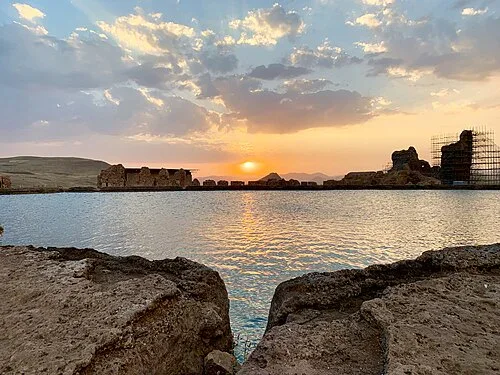 The Artesian Spring Lake
The Central Spring Lake
Every story on this hill starts with water. At the center of the complex lies a spring pond of striking depth and clarity, fed constantly from below. Its water carries dissolved calcium, and wherever it flows it leaves mineral behind. Over thousands of years those deposits hardened and built the travertine mound the entire site stands on. The hill is, in a sense, the spring's own creation. The water is heavily mineral-laden and never meant for drinking. That strange, deep, ever-flowing pool is what first drew worshippers here, and the temple foundations around its edge are bound to that reverence. It remains the physical and spiritual heart of the whole complex.
Listen in the appPhoto: Asal Vaseghnia · CC BY-SA 4.0
04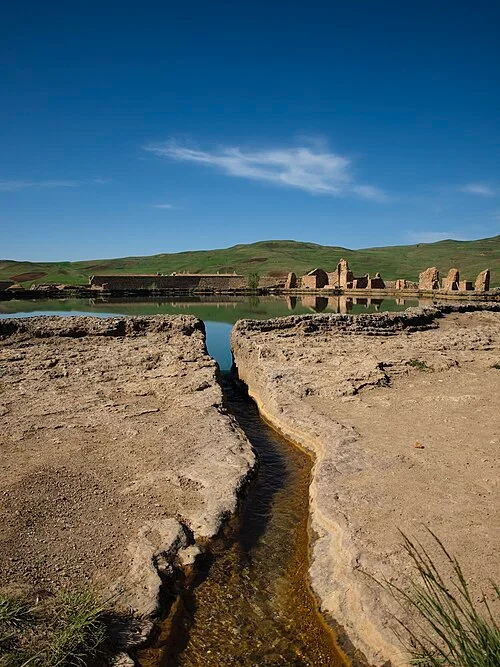 The Artesian Spring Lake
Channels Flowing from the Lake
The spring does more than fill the pond. Its surplus water is led off through channels and stone conduits that run within the fortified complex. These outflow channels cut through hardened travertine, the spring's own mineral deposit. Water still moves through it today, shaping the surface as it always has. Standing beside one of these cut channels, the geology stops being an abstraction.
Listen in the appPhoto: Ali nikkhesal61 · CC BY-SA 4.0
05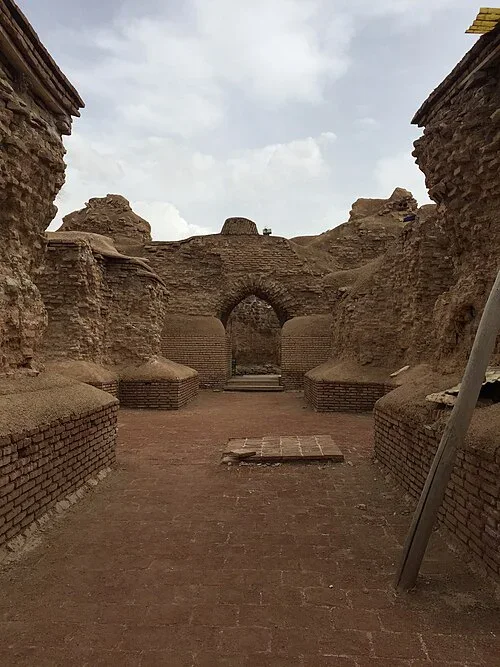 Adur Gushnasp Zoroastrian Fire Temple
Adur Gushnasp Fire Temple, North Side
This was Adur Gushnasp, one of the three Great Fires of the Sasanian Empire, and the one dedicated to the warrior class. Sasanian rulers could not simply take the throne. Each newly crowned King of Kings was expected to humble himself before one of the Royal Fires as a condition of ascending. For the warrior kings, that fire was this one. Tradition held that the new sovereign traveled here on a grueling barefoot pilgrimage from the imperial capital at Ctesiphon, far to the southwest. At the fire he offered gifts and took up the crown. The foundations of the temple around the pond are tied to that legend. Centuries later, under the Ilkhanate, parts of the sanctuary were rebuilt as a mosque.
Listen in the appMahmoudReza Nourani · CC BY-SA 4.0
06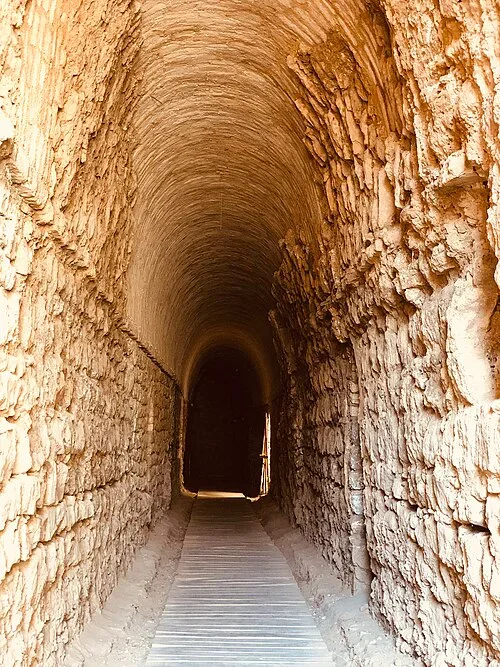 Adur Gushnasp Zoroastrian Fire Temple
Corridors of the Fire Temple
A sanctuary of this rank needed serious engineering, and these long vaulted corridors show the method. Sasanian builders raised the temple complex on heavy vaults of baked brick, strong enough to carry the halls above. Beneath them ran subterranean stone conduits, part of the water system that served the sanctuary. The technique matters as much as the result. Brick vaulting let the builders span wide spaces without timber, which was scarce on this bare highland plain. The corridor runs straight ahead into shadow, the arch repeating bay after bay. Walking it, the scale of the Sasanian building project becomes concrete: this was a structure planned as a whole, circulation and all, not a cluster of shrines added over time.
Listen in the appPhoto: Saeidirankhah · CC BY-SA 4.0
07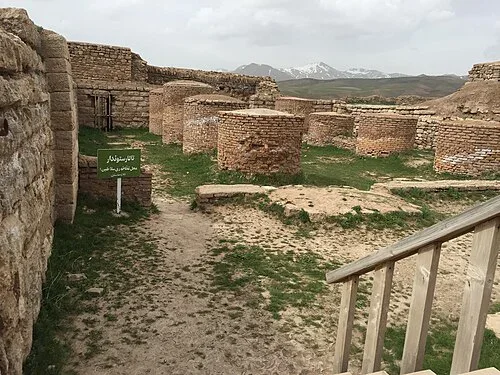 The Temple of Anahita
East of the fire temple lies a grand square courtyard, attributed to Anahita, the ancient Iranian goddess of waters, fertility and wisdom. The attribution is the traditional one, and it fits a site built around a sacred spring. On each side of the courtyard stand rectangular columns, with brick vaults opening into narrow corridors behind them. Rooms lead off those corridors. The columns and walls are of thick, cut stone, substantial enough to have survived in recognizable form. The courtyard also carries evidence of later hands. At some point in the Sasanian or early Islamic period, a wall was drawn straight across it, dividing the space into an open half and a covered one. The complex, it seems, was never finished being adapted.
Listen in the appMahmoudReza Nourani · CC BY-SA 4.0
08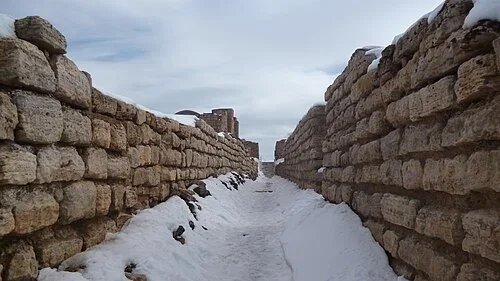 The Temple of Anahita
Cut-Stone Corridor in Winter
The same plateau under winter snow looks like a different place entirely. Here the Sasanian masons worked in their other material: walls of heavy, precisely cut stone blocks, laid in even courses along an open corridor. Nothing shelters them. The plateau sits on a grassy plain ringed by mountains, and the weather arrives unbroken from every side. Snow drifts right up against the stonework and along the corridor floor. It is a plain, quiet corner of the site, and it makes one point clearly. This was massive, weather-enduring construction, built by masons who expected their walls to stand on this bare plain for a very long time. They were right.
Listen in the appPhoto: Shayan imani · CC BY-SA 4.0
09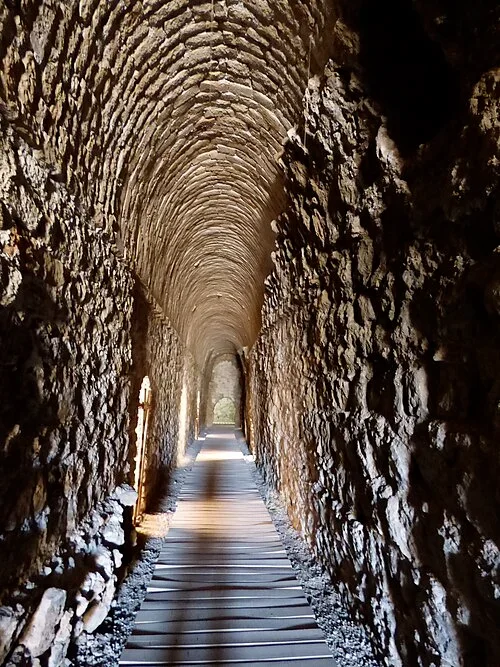 Subterranean Corridors and Khosrow II's Throne Room
The Subterranean Vault and the Fall of the Sanctuary
In 624 the Byzantine emperor Heraclius led his army through Asia Minor into the Caucasus. He took Armenia, then the region around Ganzak, moving to blunt the Persian advance. His march carried a score to settle. In 614, Sasanian forces had sacked Jerusalem, set fire to the Church of the Holy Sepulchre and carried off the relic of the True Cross. So here in Azerbaijan, where the priests' traditions placed the birthplace of Zoroaster, Heraclius struck at the holiest sanctuary of the Sasanian age. The great fire temple was torn down and burned. The chronicles tell of a second loss, grander and stranger: the Takht-e Taqdis, the throne of Khosrow II. Legend describes a domed marvel where artificial stars circled overhead and machines made thunder. It perished in that same campaign. Where the famous throne actually stood, no one can say. These long brick vaults are Sasanian substructures of a kind that does survive on the hill, but they cannot be tied to that story.
Listen in the appPhoto: Mael mael · CC BY-SA 4.0
10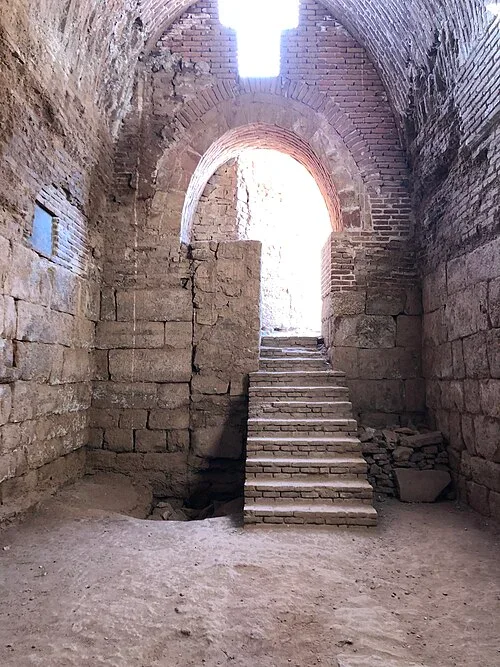 Subterranean Corridors and Khosrow II's Throne Room
The Princes' Chamber
This vaulted chamber stands on a hill that was already a place people gathered long before the emperors and their fires. Tradition calls the ancient city here Ganjak, and the Persian accounts rank it as the greatest center of Iranian teaching, religion and worship before Islam. A holy city, then, not merely a fortress, with scholars and pilgrims filling a sanctuary on this lonely plain. The ground beneath holds even older layers. Excavation has brought up traces of occupation from the fifth century before Christ, under the Achaemenids, and later settlements from the Parthian era. Some Persian traditions give the place an older name still, Faraaspa, and call it a capital of the Parthian empire. That claim has never been confirmed. What the digging does show is simpler: people were living on this hill centuries before the Sasanians ever raised their fires. The vaulted chamber with its stair climbing back to daylight belongs to the later sanctuary, built over all of it.
Listen in the appPhoto: Saeidirankhah · CC BY-SA 4.0
- 11
The Ilkhanid Palace by the Lake
Why Abaqa Khan built his summer palace on the ruins of a fire temple, and what that choice was worth to him.
- 12
The West Iwan and Throne Chambers
Trials, envoys and enthronements in the Mongol palace, and the floor evidence for a honeycomb-vaulted dome.
- 13
Wall Tile with Dragon
A star-shaped tile with a Chinese dragon, and the crowded chorus of motifs on the palace walls.
- 14
The Site Museum: A Sasanian Carving
Sasanian stonework in the site museum, and the coins that show how far the sanctuary's reach extended.
- 15
Overlook toward Zendan-e Soleyman
How the name of Solomon protected the ruins, and the crater across the valley where legend says he locked up demons.
- 16
Takht-e Soleyman from Above
The whole site from above: a hill built by a spring, claimed by two empires, and kept by a legend.
Takht-e Soleymān
Frequently asked questions
How much does the guide cost?
Free app download. Listed guide price: $2.99. Guide price shown in the app. Audio guide only. Venue admission is separate.
Can I listen without internet?
Yes. Download the guide’s audio, images, and maps in the app before your visit. Your downloaded content is then available offline.
Can I listen in my language?
This audio guide is available in 15 languages, including English.
Do I need to follow a schedule?
No. This is a self-guided experience. Choose your stops, pause whenever you like, and return to a story at your own pace.
At your own pace
Explore Takht-e Soleymān.
Download Stanza, then search for “Takht-e Soleymān”.
Free app download · Guide price shown in the app
Keep exploring
Audio guides — Iran
Gazor Khan
Alamut Castle
Content & sources
Ninara from Helsinki, Finland · CC BY 2.0
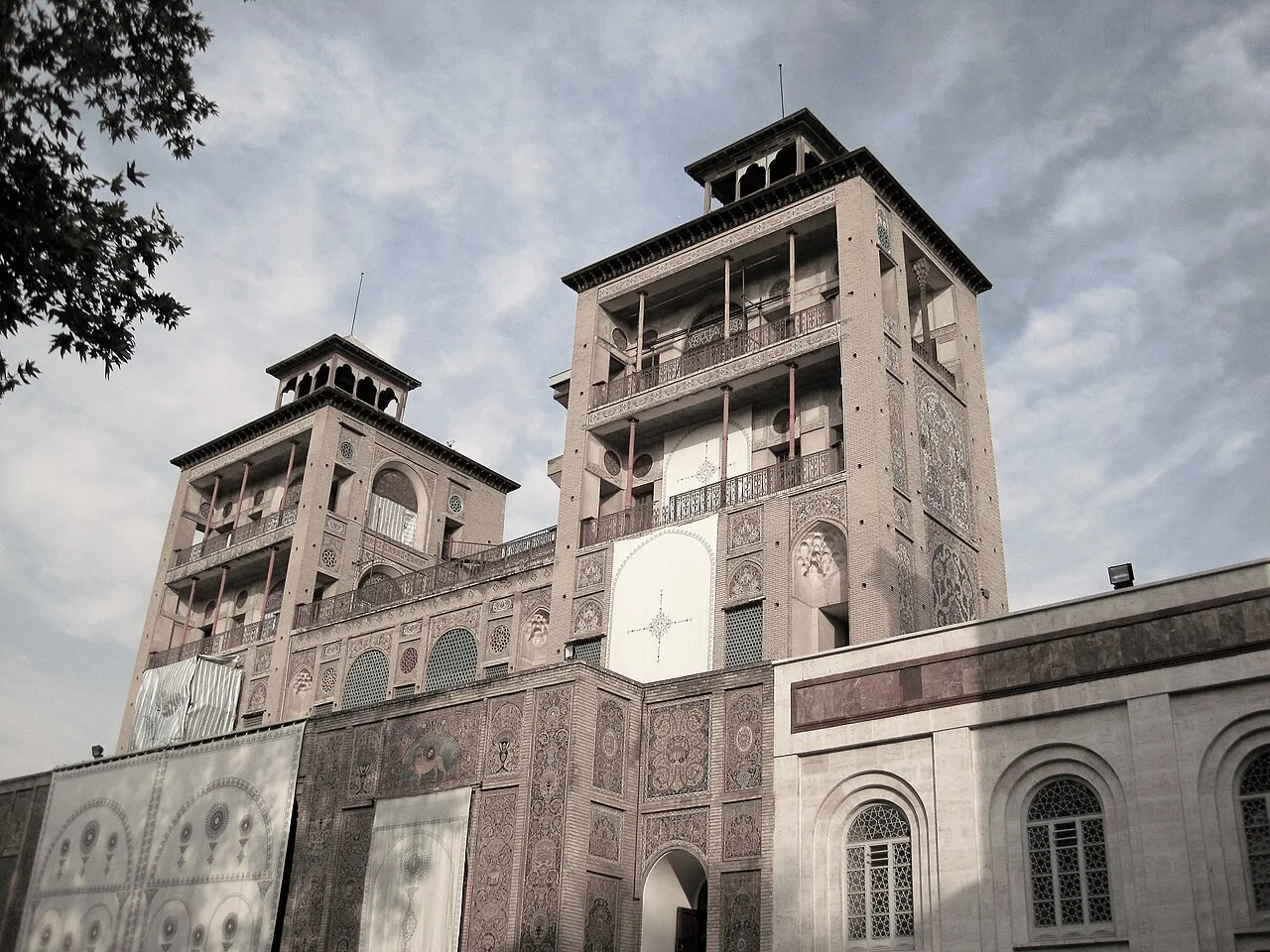
Tehran
Golestan Palace
Content & sources
Photo: Miladpoorali · CC BY-SA 4.0
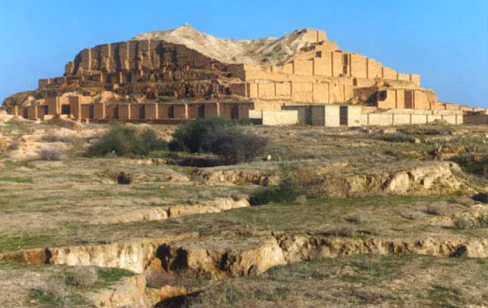
Shush
Chogha Zanbil
Content & sources
Photo: Shauni · CC BY-SA 3.0
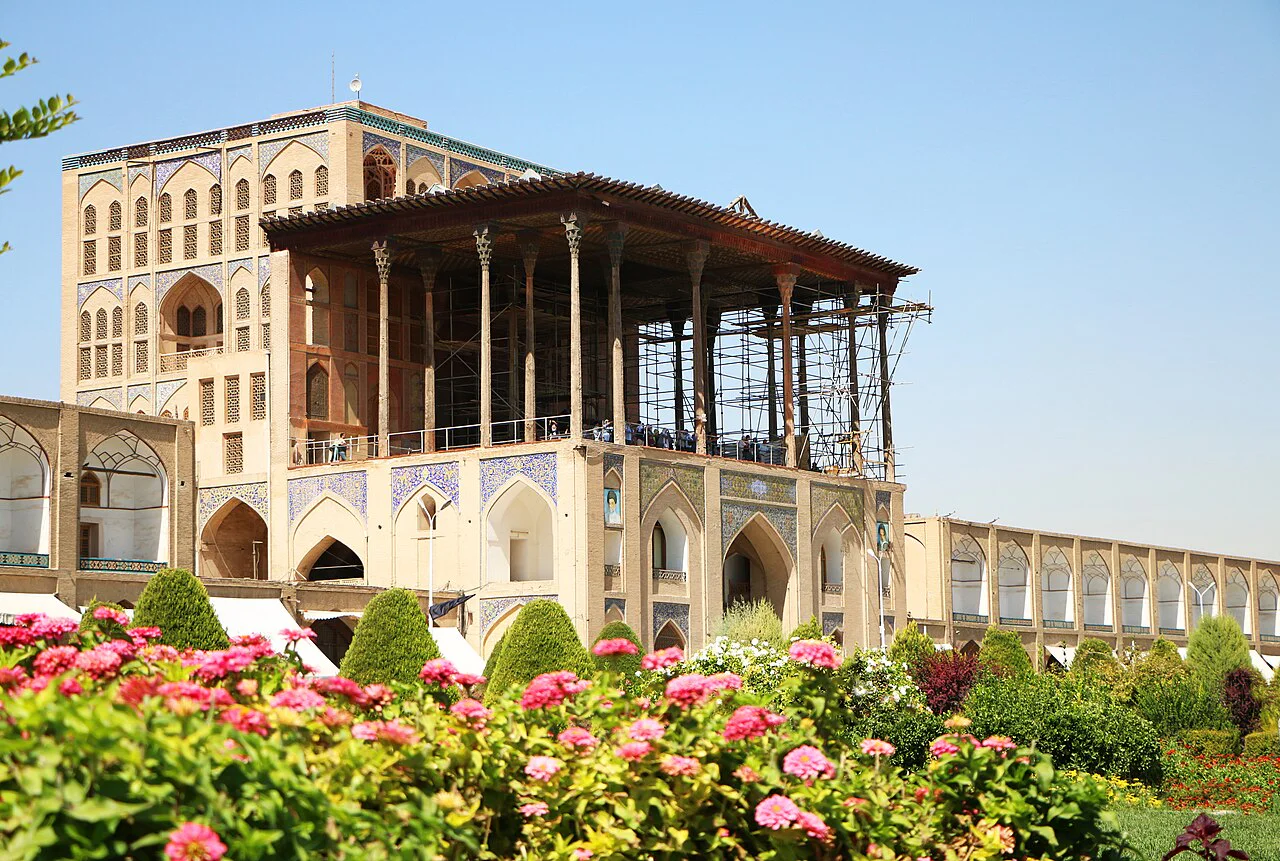
Isfahan
Ali Qapu
Content & sources
Photo: Zahradibaji · CC BY-SA 4.0