Stanza · Audio guide
Basilica di Santa Maria degli Angeli Audio Guide
A place to remember. A story to take with you.
The Basilica of Saint Mary of the Angels is a papal minor basilica located in the plain at the foot of the hill of Assisi, Italy. It is situated in the frazione of Santa Maria degli Angeli.
Download Stanza, then search for “Basilica di Santa Maria degli Angeli”.
About the tour
One guide. Your kind of visit.
The Basilica of Saint Mary of the Angels is a papal minor basilica located in the plain at the foot of the hill of Assisi, Italy. It is situated in the frazione of Santa Maria degli Angeli.
Ready when you are.
- 01Get the free Stanza app.
iOS & Android
- 02Find your guide.
“Basilica di Santa Maria degli Angeli”
- 03Download before you go.
Works offline
Audio guide / 12 narrated stops
Inside the guide
Get to know a few of the stories before you go. Open a stop to read more.
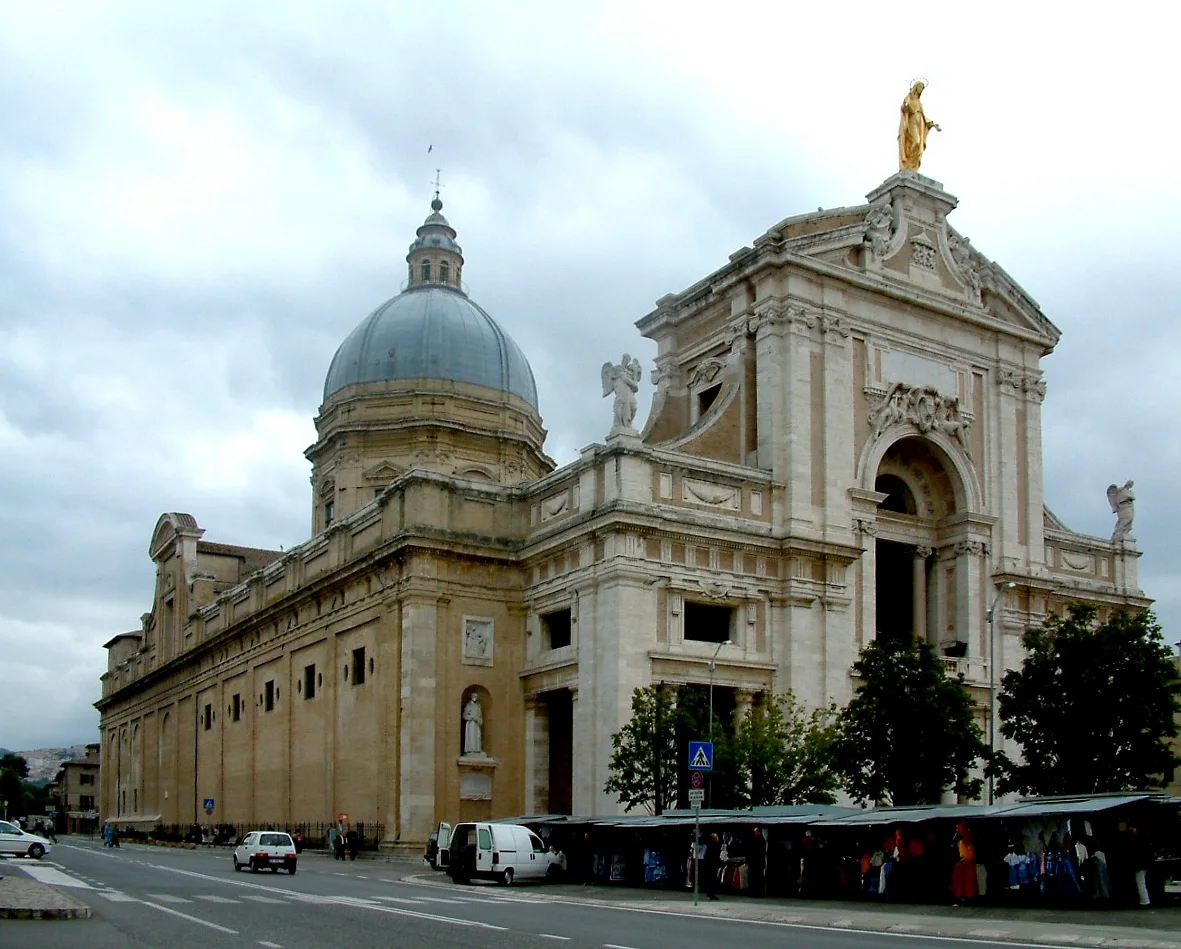
01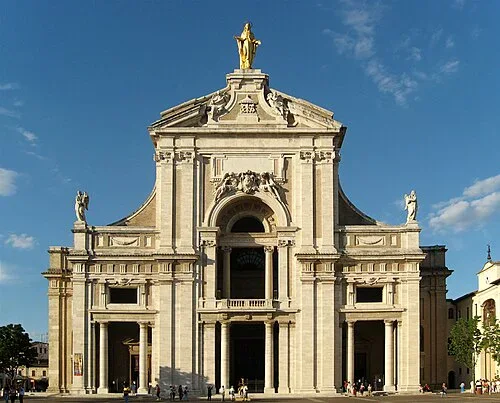 Piazza della Porziuncola and the Monumental Façade
Façade of the Basilica of Saint Mary of the Angels
Santa Maria degli Angeli is a papal basilica on the flat ground at the foot of the hill of Assisi. At its heart stands a much smaller chapel, the Porziuncola. Vast numbers of pilgrims came to Assisi to receive the Pardon of Assisi, and the little chapel became far too small for them. So a larger basilica was planned around it. Building began in March 1569, under Pope Pius the Fifth. Donations paid for the work, so it moved slowly, and money often ran short. Two famous architects, Galeazzo Alessi and Vignola, designed the building in a bold style that led on to the Baroque. The basilica was finally completed in 1679. Today it is still an active Franciscan pilgrimage church. UNESCO included it among the Franciscan sites of Assisi in 2000.
Ludmiła Pilecka, retouched by Patrol110, Von.grzanka and last one by Lestat · CC BY 3.0
02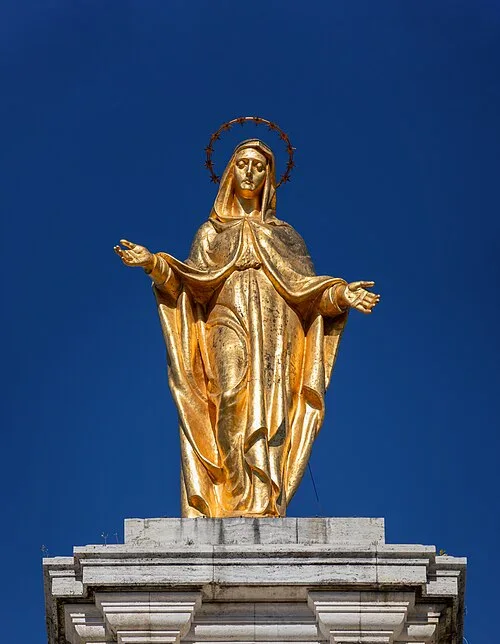 Piazza della Porziuncola and the Monumental Façade
Gilded Madonna on the Façade
The gilded figure above the façade is the Madonna degli Angeli, which means Our Lady of the Angels. She is made of gilded bronze, and her arms are held wide open. The sculptor Guglielmo Colasanti modeled her. The Ferdinando Marinelli foundry in Florence cast her. The architect Cesare Bazzani designed the façade and worked on it through the 1920s. The façade was completed in 1930. Earlier, Luigi Poletti had remodeled it in a neoclassical style. Bazzani reworked it radically, aiming for a monumental look worthy of a sanctuary this important. The statue was set on top of it that same year.
Photo: Terragio67 · CC BY-SA 4.0
03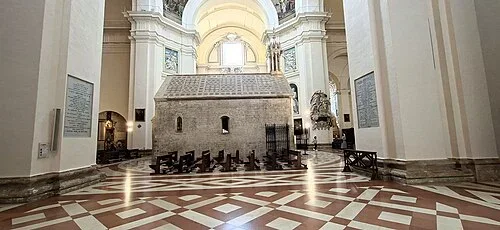 The Reconstructed Nave
The Porziuncola Chapel Within the Basilica
The Porziuncola is the most sacred place for Franciscans, and its name means little portion in Italian. This stone chapel dates from the ninth century. The Benedictine monks gave the chapel to Francis. It was here that the young Francis understood his calling. He gave up the world to live in poverty among the poor, and so the Franciscan movement began. Today it stands inside the basilica, under its dome, a church within a church.
Listen in the appPhoto: Effems · CC0
04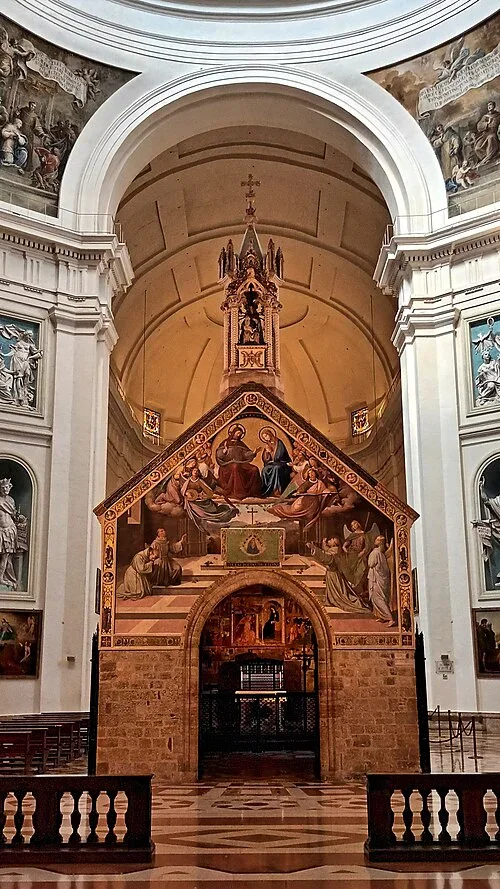 The Porziuncola and Alessi's Dome
Porziuncola Doorway and Its Gable Fresco
The Pardon of Assisi was an indulgence tied to the Porziuncola. An indulgence is a grace that remits the penalty due for sins. Above the arched doorway, a fresco shows the moment the pardon is said to have been granted. Christ and the Virgin sit enthroned in the upper part, with angels around them. Francis kneels before them to receive the grace. The doorway below is closed by an iron gate.
Listen in the appPhoto: Fczarnowski · CC BY-SA 4.0
05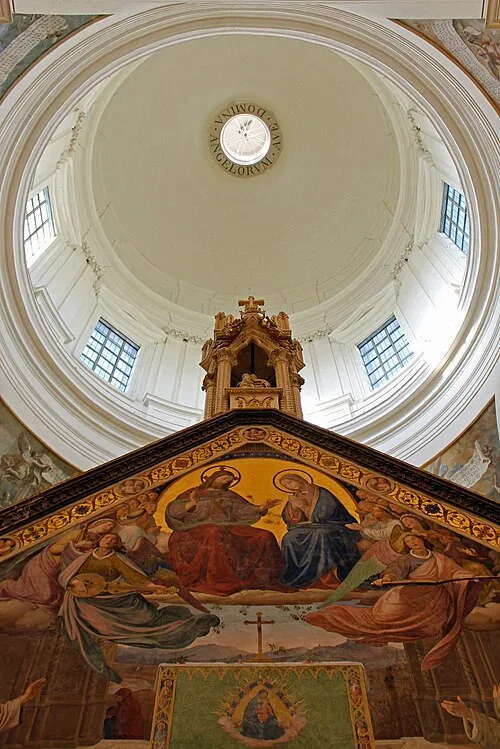 The Porziuncola and Alessi's Dome
Alessi's Dome above the Porziuncola
The dome above the Porziuncola was finished in 1667. It sits on a ring of wall called a drum, and the drum is octagonal, with windows around it. In March 1832, a violent earthquake struck the basilica. It brought down the central nave, part of one side aisle, and the choir. The dome survived, though a wide crack ran through it. The apse and the side chapels stayed standing. Luigi Poletti began the rebuilding in 1836. He rebuilt the nave and aisles in the neoclassical Doric style. The basilica reopened for worship in 1840, and the dome still rises over the Porziuncola.
Listen in the appPhoto: Alekjds · CC BY-SA 4.0
06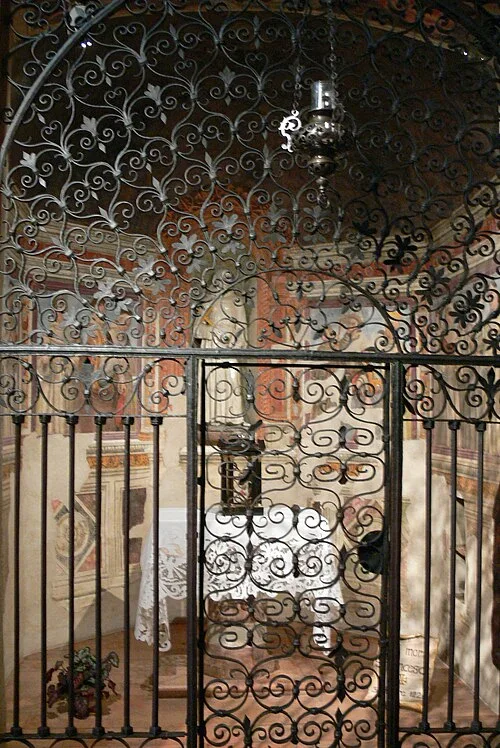 Cappella del Transito
Iron Screen at the Transito Cell
The wrought-iron screen closing this room is covered in scrolls and leaves, and a metal lamp hangs from a chain above it. The room is the Chapel of the Transito, the cell linked with Francis's death. Pope Pius the Fifth had the buildings around the Porziuncola taken down, but this one was left standing. It had started out as a little hut, a basic infirmary for the sick. Today the cell is still preserved beneath the choir, against the columns on the right side of the dome.
Listen in the appWolfgang Sauber · CC BY-SA 3.0
07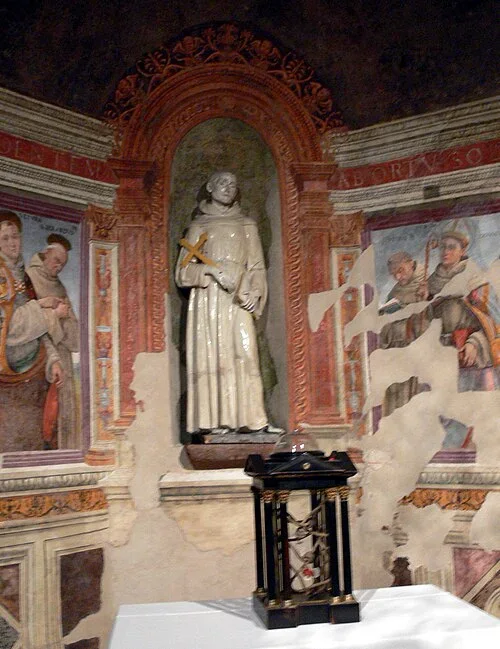 Cappella del Transito
Interior of the Transito Cell
Francis died in this small room in October 1226. Tradition holds that he finished composing his Canticle of the Creatures here. It is a hymn praising God through the created world. Behind the altar stands a statue of Francis, made of glazed terracotta by Andrea della Robbia around 1490. The glaze gives the figure a pale, smooth finish, and he holds a cross. A cord said to have belonged to Francis is kept here as a relic. Along the walls, Giovanni Spagna painted frescoes in 1520 showing Francis's first companions, each named above his portrait.
Listen in the appWolfgang Sauber · CC BY-SA 3.0
08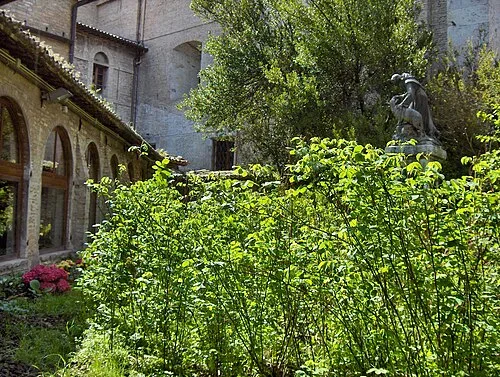 The Miraculous Rose Garden and Rose Chapel
Rose Garden Courtyard and Bronze Statue
One night, according to tradition, Francis was tempted to give up the life he had chosen. To overcome his doubt, he rolled naked in a patch of brambles. Where his body touched the thorns, the brambles turned into dog roses without thorns. The story was already being told at the end of the thirteenth century. Since then, a dog rose called Rosa canina assisiensis has been grown in this garden. Leafy bushes fill the garden around a bronze statue. Here, Francis is said to have talked to turtle doves, inviting them to praise the Lord. The garden is the last remnant of the ancient wood where Francis and his friars lived.
Listen in the appPhoto: JoJan · CC BY-SA 3.0
09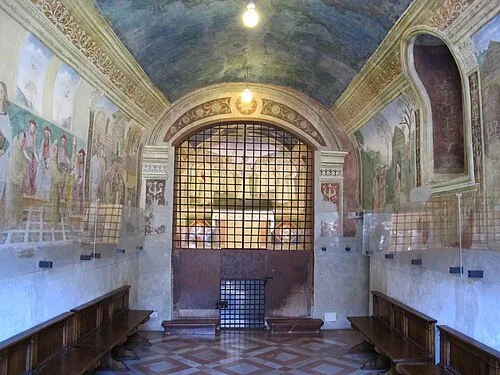 The Miraculous Rose Garden and Rose Chapel
Rose Chapel Interior
Francis rested in this small cell, and then spent the rest of the night in prayer and penance. Here, too, he met Saint Anthony of Padua. A chapel was built on the spot in the thirteenth century, after his death. Saint Bernardine of Siena enlarged it in the fifteenth century. In the early sixteenth century, several painters covered its walls with frescoes. Among them was Tiberio d'Assisi, an Umbrian painter. His scenes show the early Franciscan community and the first saints of the order. One shows the miracle of the roses, and another the granting of the indulgence. Wooden benches line the room, and a metal grille closes a recess at the far end.
Listen in the appPhoto: Sailko · CC BY-SA 3.0
10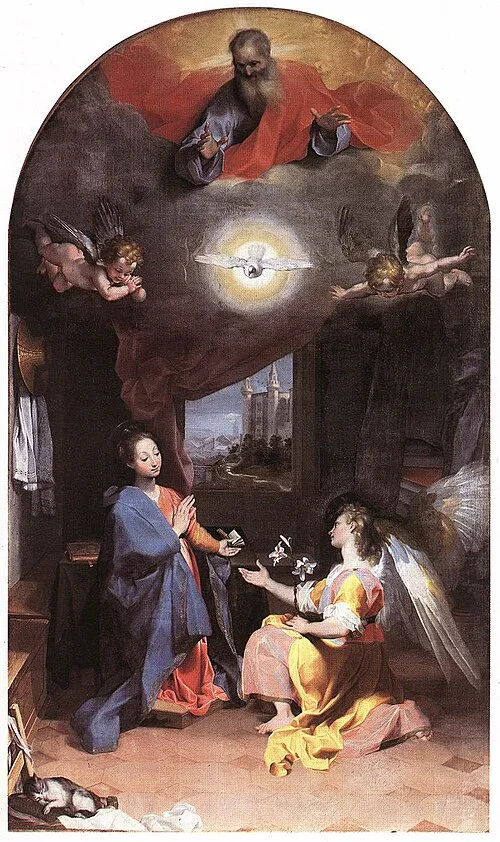 Side Chapels: Barocci's Annunciation
Federico Barocci's Annunciation
In 1591, a noblewoman named Laura Pontani Coli bought one of the side chapels of the basilica. It was first dedicated to the Annunciation, the angel's visit to Mary. She commissioned the altarpiece from the painter Federico Barocci. The painting dates from the 1590s, and it is a second version of an Annunciation Barocci had made for Loreto. That earlier version now hangs in the Vatican art gallery. Today this altarpiece hangs in a side chapel of the transept, the arm of the basilica that crosses the nave. At the top, God the Father appears among clouds, and the Holy Spirit shows as a white dove in light. Below, the Virgin kneels in blue, her hands pressed together. An angel in yellow and pink kneels opposite her, offering white lilies. Through a window, a town with towers shows in the distance. A cat sleeps on the floor in the lower corner.
Listen in the appFederico Barocci · Public domain
- 11
Friary Cloister Corridor
The friary that grew up around the Porziuncola, its old rooms now holding a museum of paintings and finds.
- 12
Saint Francis Between Two Angels
A thirteenth-century wooden panel showing Francis between two angels, on which tradition says his body was laid.
Basilica di Santa Maria degli Angeli
Frequently asked questions
How much does the guide cost?
Free app download. Listed guide price: $0.99. Guide price shown in the app. Audio guide only. Venue admission is separate.
Can I listen without internet?
Yes. Download the guide’s audio, images, and maps in the app before your visit. Your downloaded content is then available offline.
Can I listen in my language?
This audio guide is available in 15 languages, including English.
Do I need to follow a schedule?
No. This is a self-guided experience. Choose your stops, pause whenever you like, and return to a story at your own pace.
At your own pace
Explore Basilica di Santa Maria degli Angeli.
Download Stanza, then search for “Basilica di Santa Maria degli Angeli”.
Free app download · Guide price shown in the app
Keep exploring
Nearby audio guides
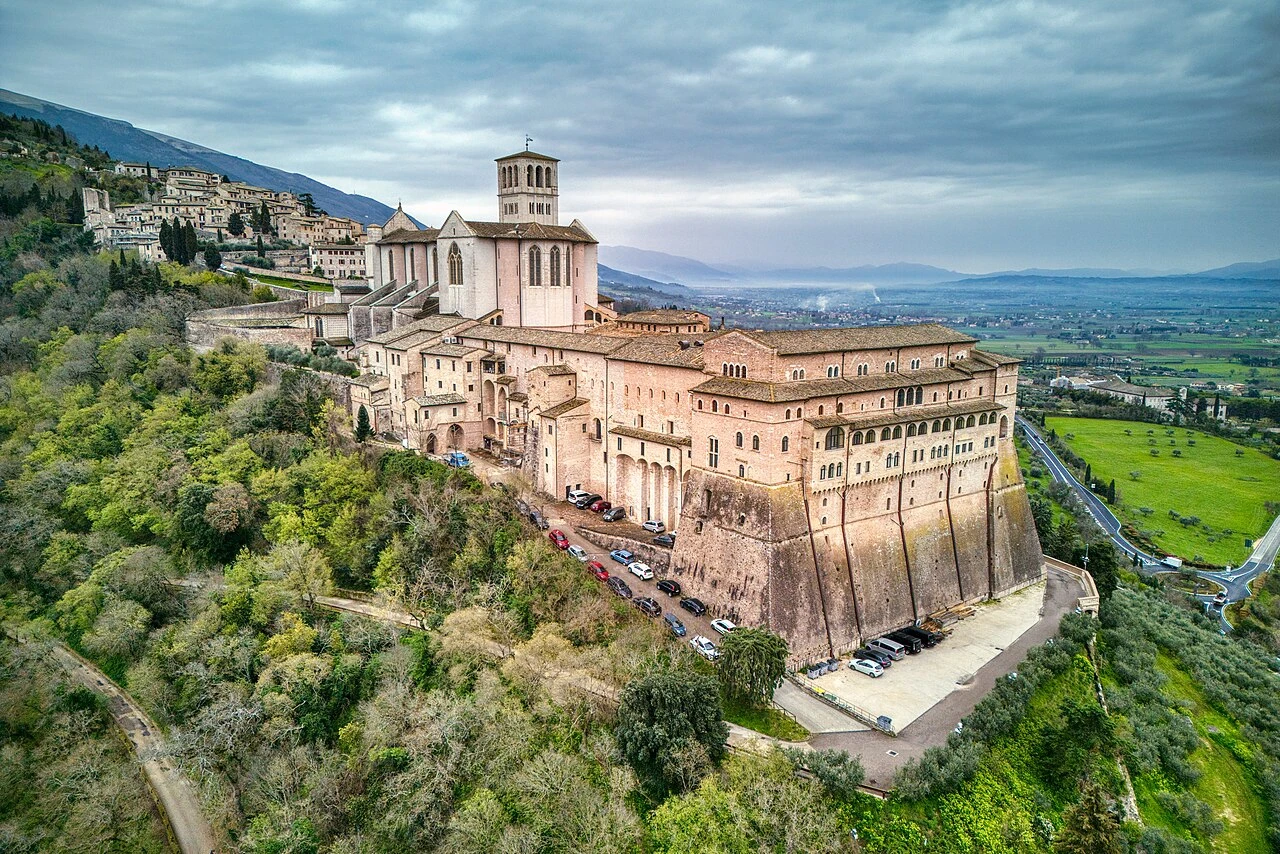
Assisi · 3 km
Basilica of St. Francis of Assisi
Content & sources
Hagai Agmon-Snir حچاي اچمون-سنير חגי אגמון-שניר · CC BY-SA 4.0
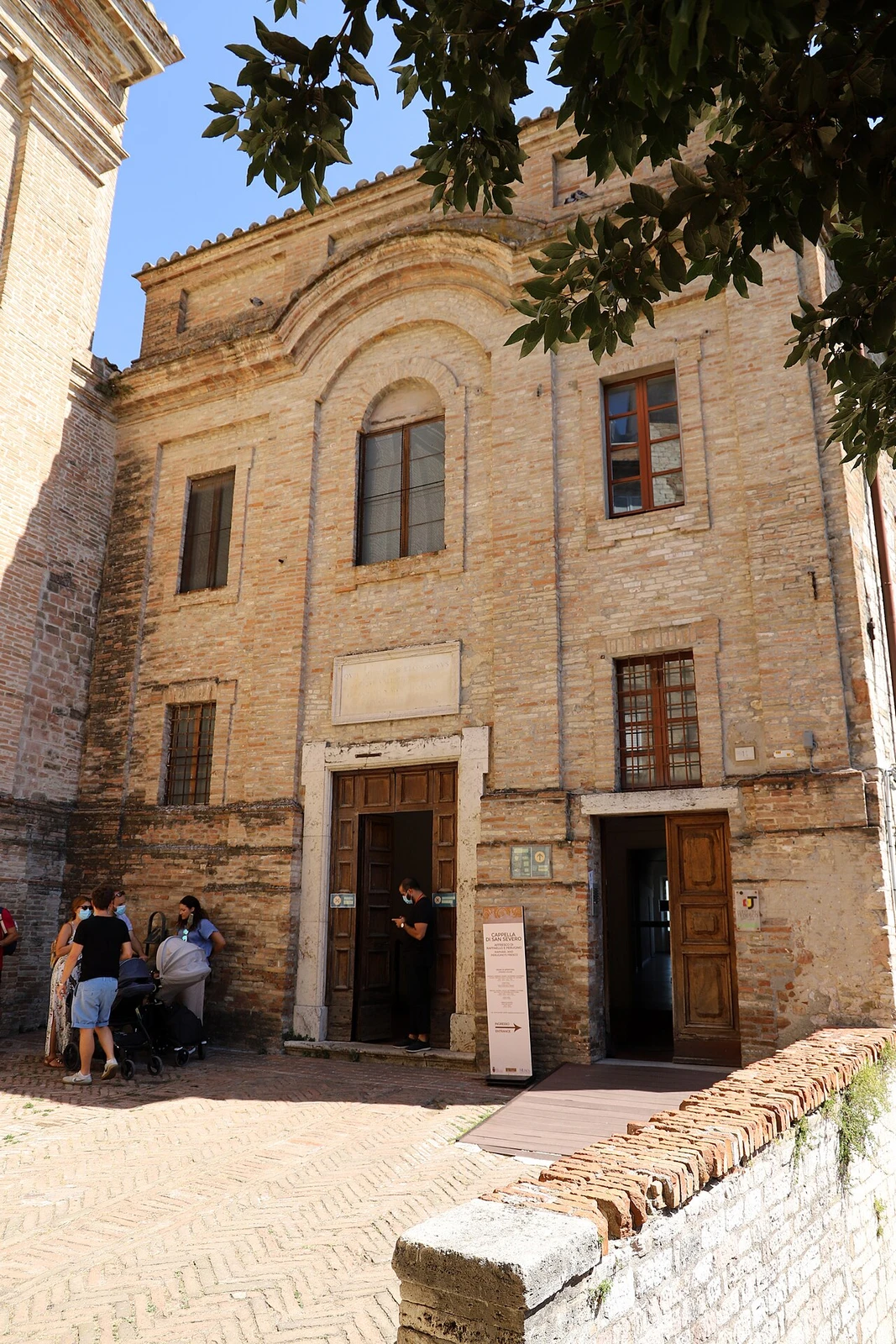
Perugia · 16 km
San Severo Chapel
Content & sources
Photo: Sailko · CC BY 3.0
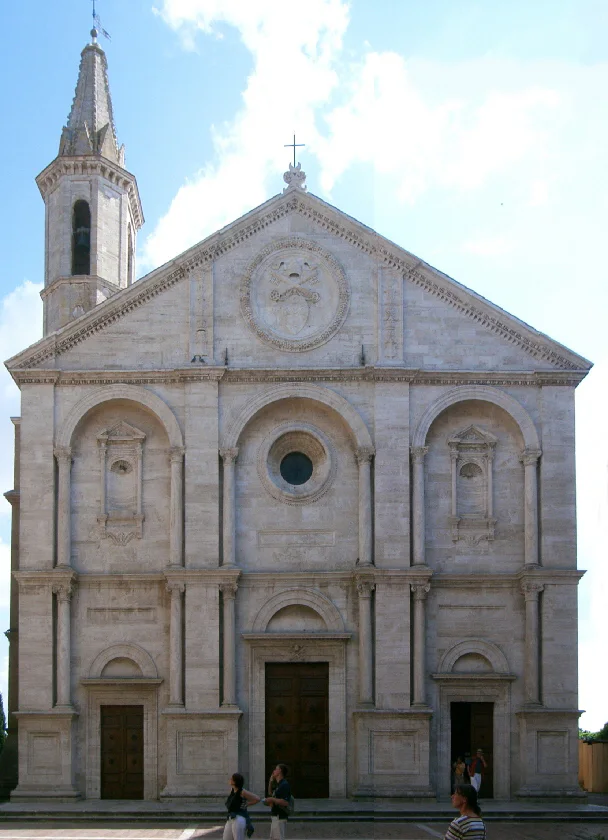
Pienza · 73 km
Duomo di Pienza
Content & sources
Photo: Beckstet · CC BY-SA 3.0
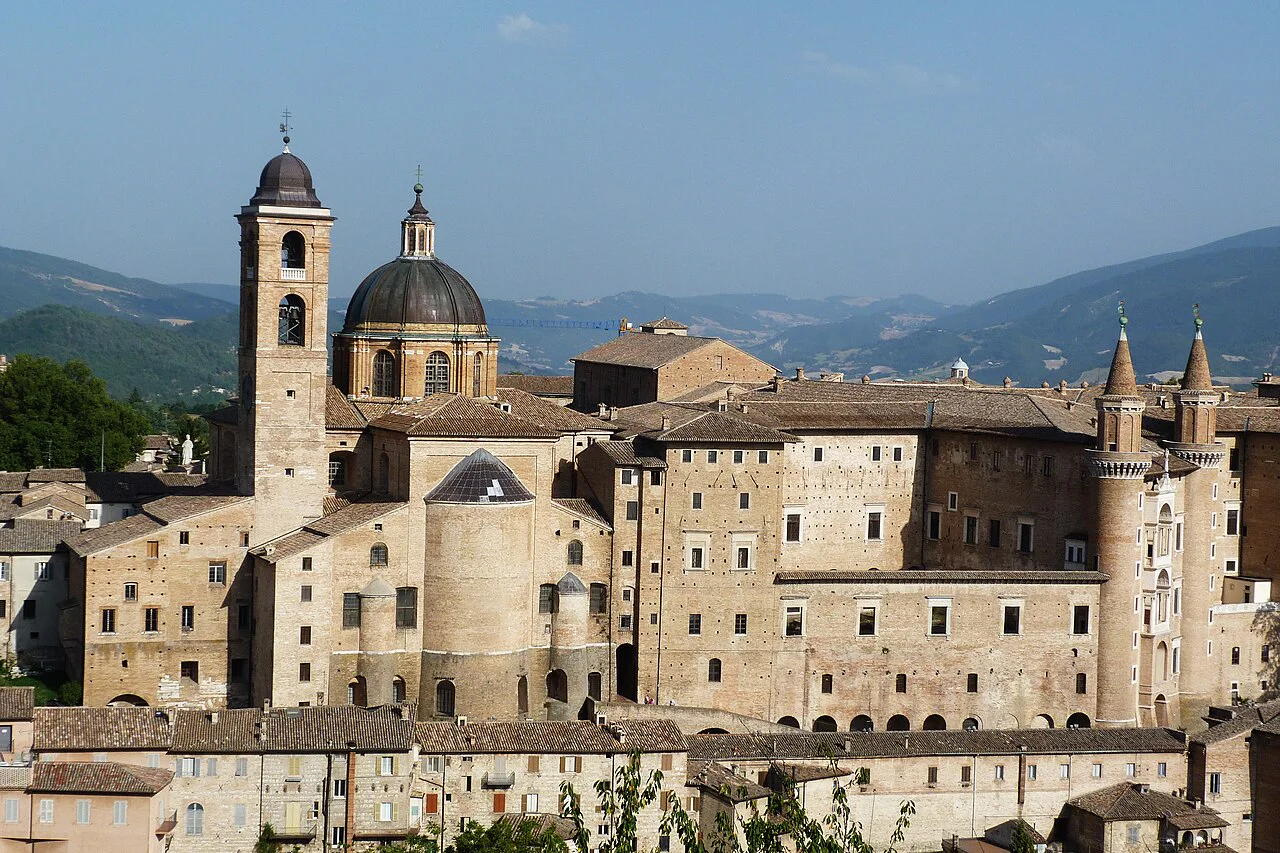
Urbino · 74 km
Palazzo Ducale
Content & sources
Stefano Sansavini · CC BY-SA 4.0