Stanza · Audio guide
Duomo di Pienza Audio Guide
A place to remember. A story to take with you.
Pienza Cathedral is a Roman Catholic cathedral dedicated to the Assumption of the Virgin Mary. It is located in Pienza, in the province of Siena, Italy.
Download Stanza, then search for “Duomo di Pienza”.
About the tour
One guide. Your kind of visit.
Pienza Cathedral is a Roman Catholic cathedral dedicated to the Assumption of the Virgin Mary. It is located in Pienza, in the province of Siena, Italy.
Ready when you are.
- 01Get the free Stanza app.
iOS & Android
- 02Find your guide.
“Duomo di Pienza”
- 03Download before you go.
Works offline
Audio guide / 8 narrated stops
Inside the guide
Get to know a few of the stories before you go. Open a stop to read more.
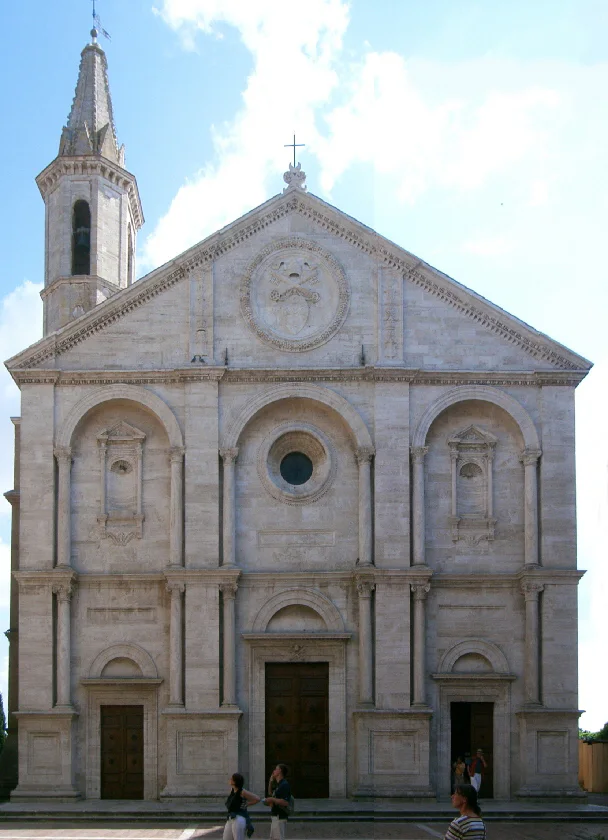
01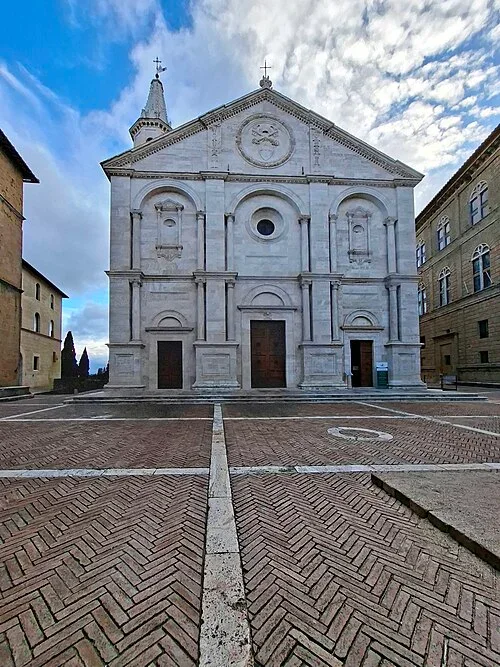 Piazza Pio II and the Ideal Renaissance Setting
The Duomo and Piazza Pio II
Welcome to Pienza, and to the cathedral that made this small Tuscan hill town famous. The church is dedicated to the Assumption of the Virgin, and it was built between 1459 and 1462 by Pope Pius the Second of the Piccolomini family. He had been born in this village, and as pope he rebuilt it and gave it a new name, Pienza. The cathedral was meant to be the sacred heart of the new town. Church and palaces were designed together as a single composition by the architect Bernardo Rossellino. The square in front takes the shape of a slightly irregular trapezoid, and that shape was forced on it. The site is very tight, the streets enter at awkward angles, and the buildings had to sit at differing angles to each other. So Rossellino pushed the cathedral as far back as the ground would allow, and kept about twenty-five metres of open paving in front. The square simply took the shape that was left. Since 1986 the church has been a co-cathedral of the diocese of Montepulciano-Chiusi-Pienza.
Photo: Argentieri.Andrea · CC BY-SA 4.0
02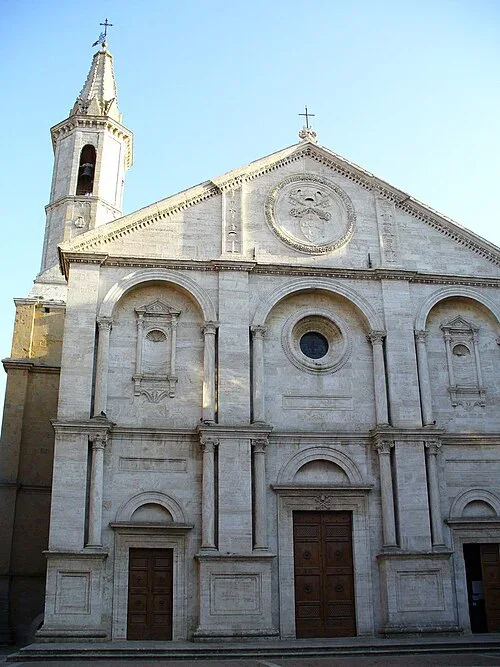 The Renaissance Facade and Papal Insignia
The Renaissance Facade
Four pilasters divide the white travertine front into three zones, one for each of the three naves inside. A horizontal cornice cuts the facade into two storeys. Below stand the three entrance doors; above, three arches carried on columns. Under the side arches there are niches in the classical manner, and at the centre opens a round window, the oculus. Bernardo Rossellino designed this front, and behind it stands the mind of Leon Battista Alberti, the great theorist of Renaissance architecture. Alberti is now considered the true intellectual author of Pienza and of this cathedral. Still, some details look backwards rather than forwards. The two-pitched roof and the round central window recall the Gothic churches of the Franciscans, and the hall churches of Germany. The slender bell tower beside the facade has its own scar. It was damaged in the earthquake of 1545 and restored by 1570.
jeffwarder · CC BY-SA 3.0
03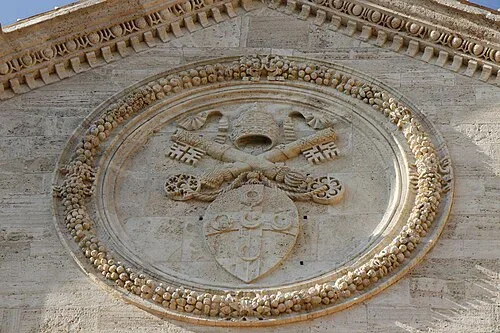 The Renaissance Facade and Papal Insignia
The Pope's Arms on the Tympanum
High on the facade, in the triangular tympanum, a carved medallion holds the arms of Pope Pius the Second. The emblem of the Holy See is all there: the papal tiara, the crossed keys, and beneath them the family shield. A wreath of carved fruit and flowers rings the whole disc. Heraldry like this makes a claim that architecture alone cannot. It puts one man's name and arms over the entrance of a cathedral, in a town that did not exist in this form before him. Pius ordered the church built, paid for it, and stamped it as his own. Most cathedrals belong to a city or a bishop. This one announces, in stone, that it belongs to a pope.
Listen in the appPhoto: Monica Rondoni · CC BY-SA 4.0
04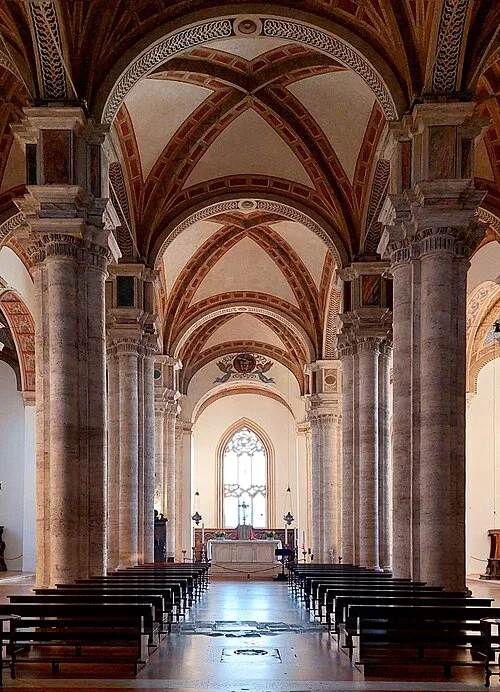 The Luminous Hallenkirche Nave
The Luminous Hall Church Nave
Inside, the surprise is the shape of the space. The cathedral has three naves of exactly the same height, and the central one is only a little wider than the two beside it. Rows of pilasters with half-columns and decorated capitals divide them. In most Italian churches the middle nave towers over dark side aisles. Here everything rises together, and tall windows along the outer walls pour light in evenly from all sides. This is the layout Germans call a Hallenkirche, a hall church. Pius the Second had travelled often in northern Europe, and he admired those bright churches with their great windows. He directed that his cathedral in Pienza reproduce that flooded-with-light quality. The Gothic windows on the outer walls and on the apse exist for exactly this purpose.
Listen in the appPhoto: Argentieri.Andrea · CC BY-SA 4.0
05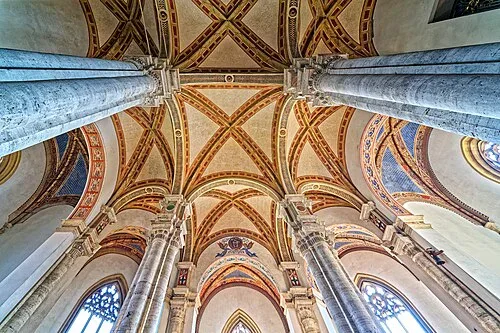 The Luminous Hallenkirche Nave
The Cross Vaults of 1462
The vaults overhead carry the design through. Three naves run side by side, each covered by cross vaults resting on pillars with half-columns set against them. The painted ribs fan out above in patterns of terracotta and gold. And the whole thing rose at astonishing speed. Work began in 1459, and on 29 August 1462 the cathedral was consecrated. Three years from foundation to dedication is fast for any church. It says something about the urgency of a pope building in his own backyard.
Listen in the appPhoto: Holger Uwe Schmitt · CC BY-SA 4.0
06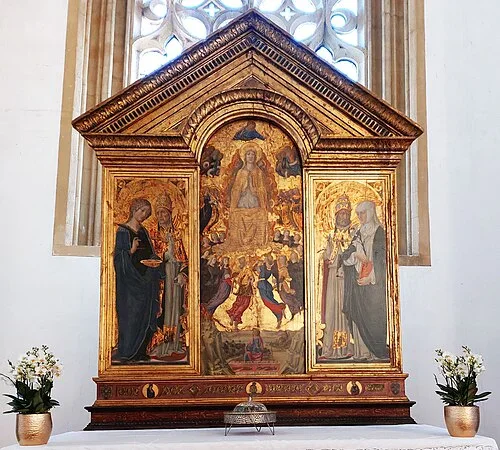 Sienese Renaissance Altarpieces
Vecchietta's Assumption of the Virgin
Pius the Second furnished his new cathedral with paintings commissioned from the most celebrated artists of the day. Among them is this altarpiece of 1463 by the Sienese master Vecchietta, whose real name was Lorenzo di Pietro. The Assumption of the Virgin fills the central panel, the Virgin rising heavenward amid angels. Flanking panels carry saints, among them Catherine of Siena, one of Siena's own. The subject was no accident. The cathedral itself is dedicated to the Assumption, so the altarpiece shows the church's own mystery. Notice the frame as much as the painting. It is a classical architectural tabernacle, with a pediment on top and gilded panels at the sides, not the segmented polyptych of the late Gothic workshop. The frame itself argues for the Renaissance.
Listen in the appPhoto: Anna.Massini · CC BY 4.0
07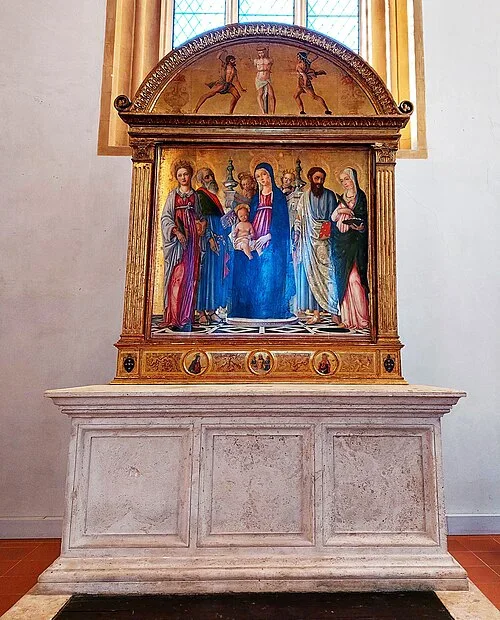 Sienese Renaissance Altarpieces
Matteo di Giovanni's Pala di San Matteo
Matteo di Giovanni's Pala di San Matteo was painted around 1462, in the very years the cathedral was rising. The Madonna and Child stand at the centre, ringed by Saints Catherine of Alexandria, Matthew, Bartholomew and Lucy. Above them, in the lunette, Christ is shown at the Flagellation. The whole panel rests on a substantial pedestal of travertine, kin to the stone of the facade. Set beside Vecchietta's Assumption, it shows what Pius was really doing. These are Sienese painters, working in the same years, in matching classical frames. This is not a cathedral that gathered altarpieces piecemeal from donors over the centuries. It is a single artistic programme, designed for one papal church, all at once.
Listen in the appPhoto: Anna.Massini · CC BY 4.0
08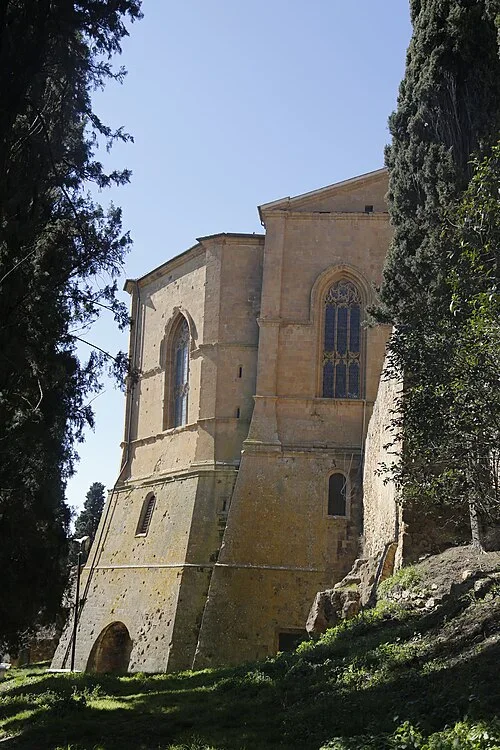 The Hanging Apse and Valley Precipice
The Apse on the Cliff Edge
The rear of the cathedral is its boldest gamble. The church sits so far back that the apse with part of the transept now rests on the steep slope of the hill. Massive sloping buttresses brace the walls against the drop towards the valley. The wager showed its cost early. The eastern end began settling almost as soon as the building was finished, and the problem has never entirely gone away. Between 1911 and 1934, engineers carried out major underpinning and consolidation works beneath the structure. During those works they uncovered something unexpected: the foundations of the old Romanesque church that had stood here before. It was much smaller, and it faced east to west, while Pius's cathedral turned to answer the square. The daring that shaped this town is the same daring the hill has been testing ever since.
Listen in the appPhoto: Assianir · CC BY-SA 3.0
Duomo di Pienza
Frequently asked questions
How much does the guide cost?
Free app download. Listed guide price: $0.99. Guide price shown in the app. Audio guide only. Venue admission is separate.
Can I listen without internet?
Yes. Download the guide’s audio, images, and maps in the app before your visit. Your downloaded content is then available offline.
Can I listen in my language?
This audio guide is available in 15 languages, including English.
Do I need to follow a schedule?
No. This is a self-guided experience. Choose your stops, pause whenever you like, and return to a story at your own pace.
At your own pace
Explore Duomo di Pienza.
Download Stanza, then search for “Duomo di Pienza”.
Free app download · Guide price shown in the app
Keep exploring
Nearby audio guides
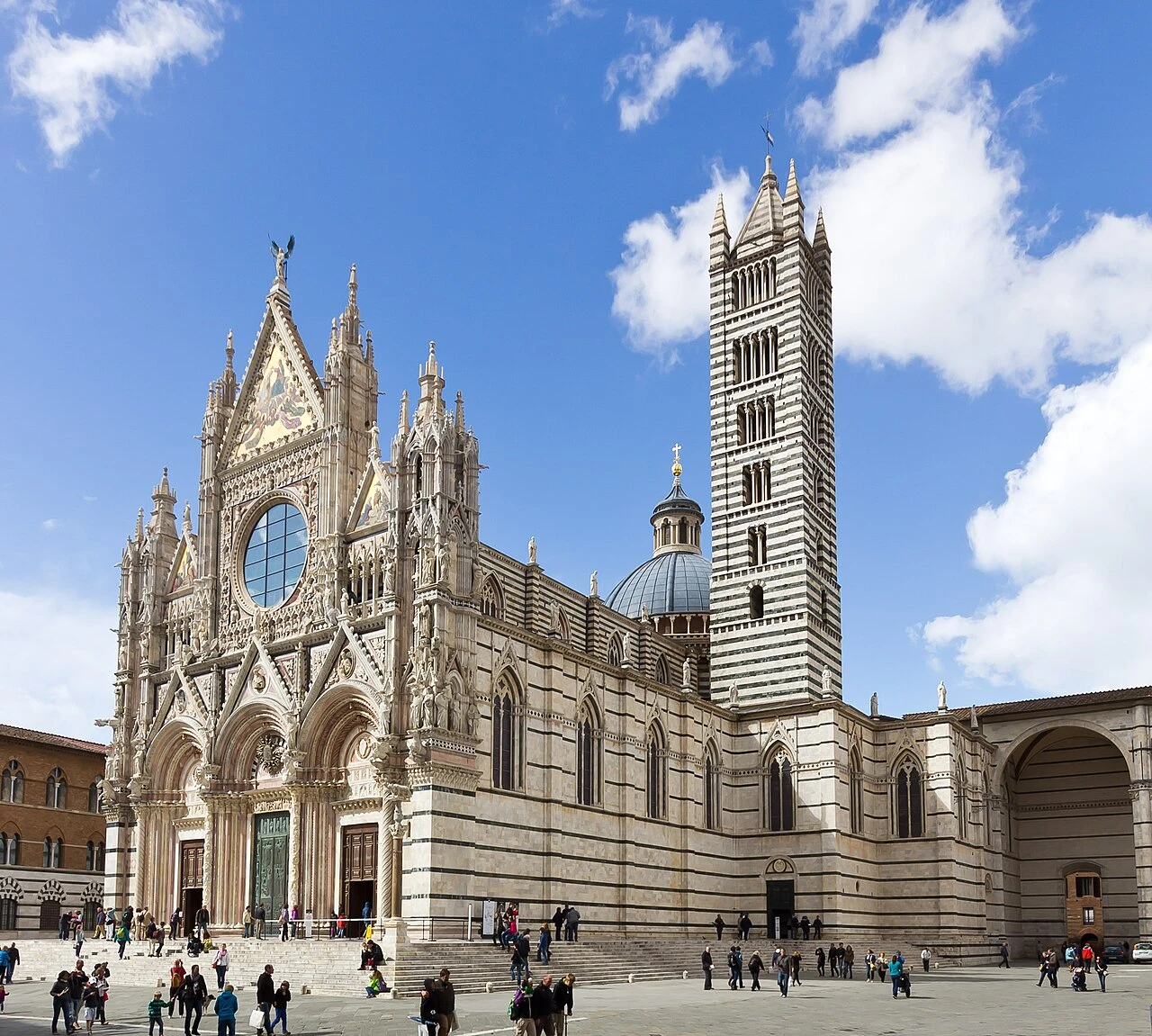
Siena · 39 km
Siena Cathedral
Content & sources
Raimond Spekking · CC BY-SA 4.0
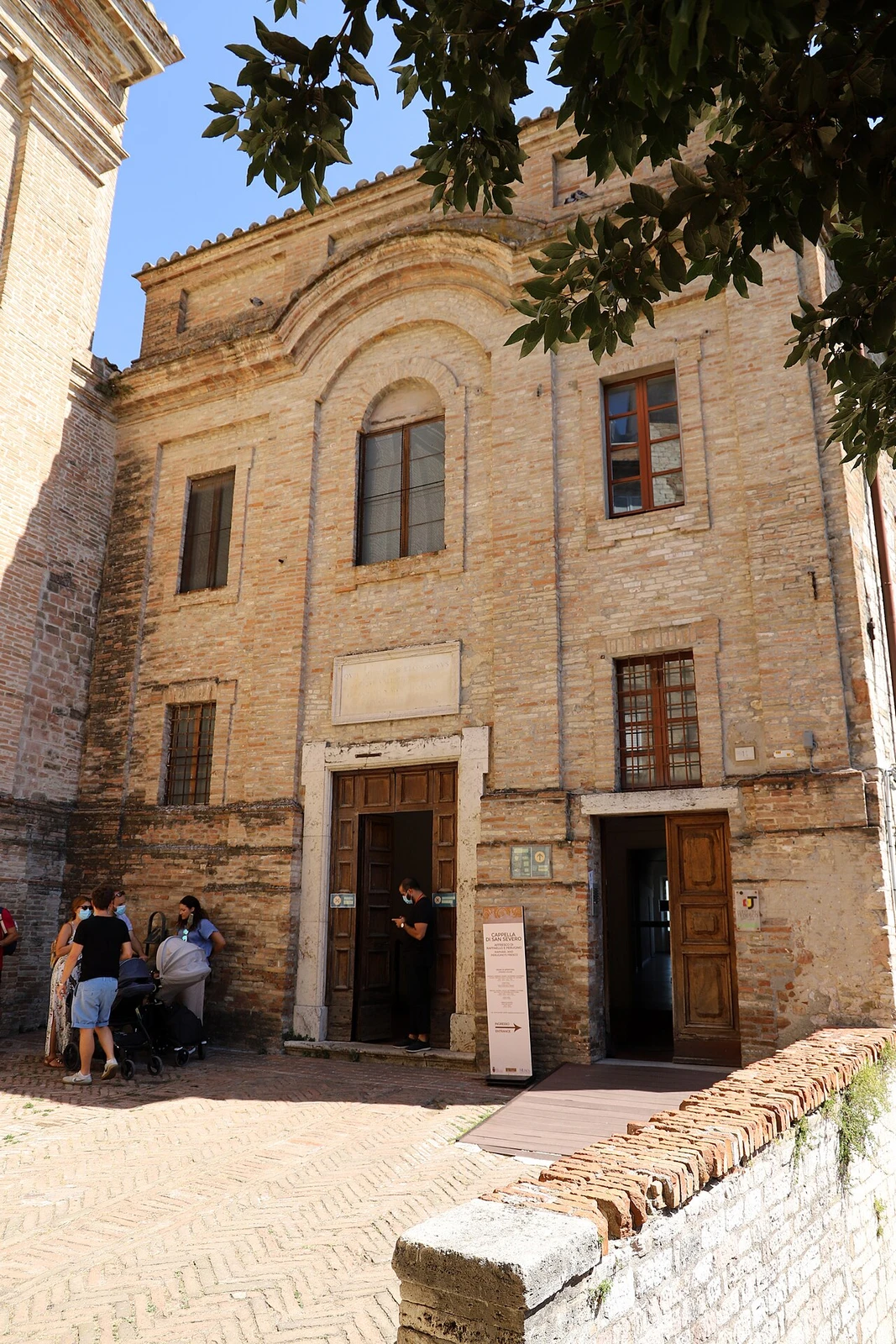
Perugia · 58 km
San Severo Chapel
Content & sources
Photo: Sailko · CC BY 3.0
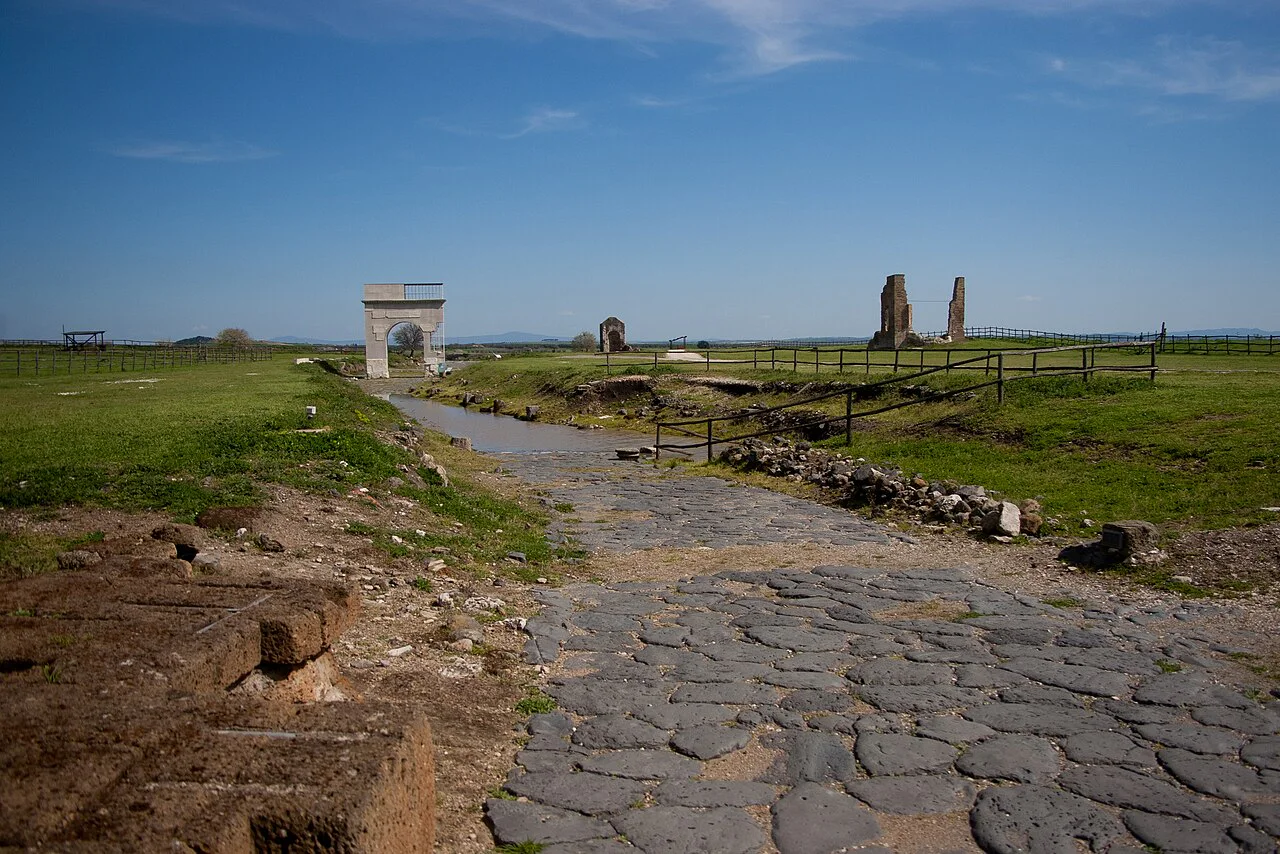
Montalto di Castro · 73 km
Vulci
Content & sources
Robin Iversen Rönnlund · CC BY-SA 3.0
Assisi · 73 km
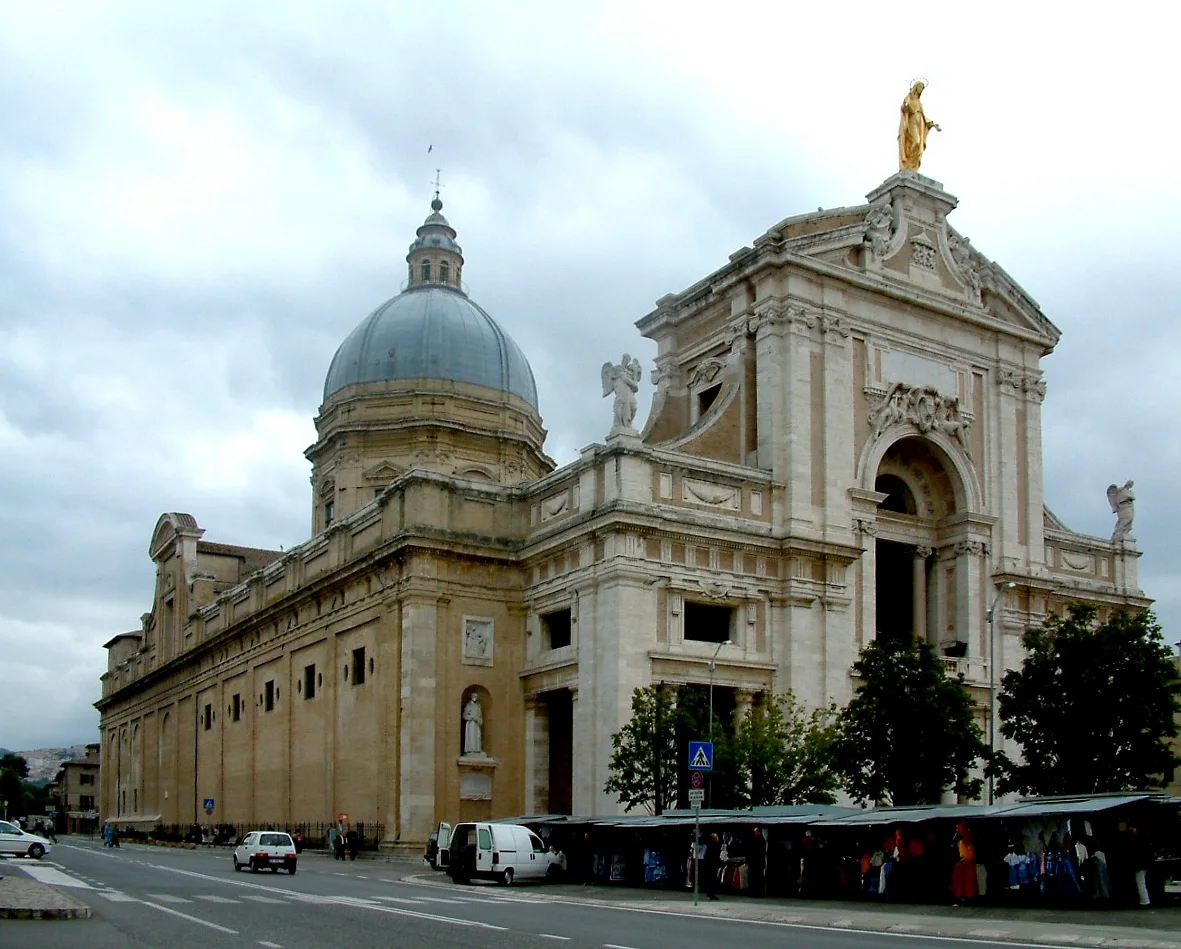
Basilica di Santa Maria degli Angeli
Content & sources
Photo: Erbsloeh · CC BY-SA 3.0