Stanza · Audio guide
Vulci Audio Guide
A place to remember. A story to take with you.
Vulci was a rich Etruscan city located in northern Lazio, central Italy. It is an archaeological site that provides insight into ancient Etruscan civilization.
Download Stanza, then search for “Vulci”.
About the tour
One guide. Your kind of visit.
Vulci was a rich Etruscan city located in northern Lazio, central Italy. It is an archaeological site that provides insight into ancient Etruscan civilization.
Ready when you are.
- 01Get the free Stanza app.
iOS & Android
- 02Find your guide.
“Vulci”
- 03Download before you go.
Works offline
Audio guide / 17 narrated stops
Inside the guide
Get to know a few of the stories before you go. Open a stop to read more.
01 Decumanus Maximus and the Urban Plateau
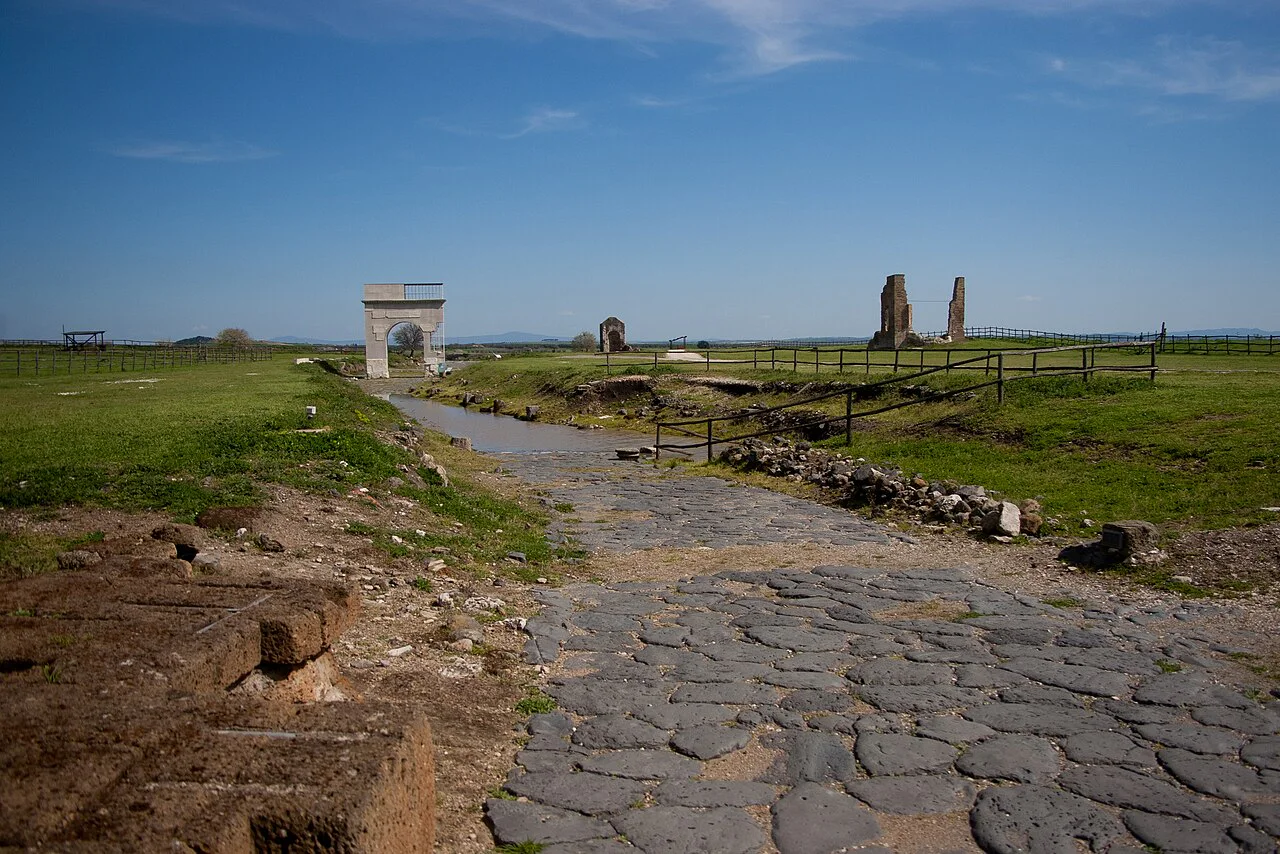
Arrival on the Plateau of Vulci
The Vulci were a people who gave their name to their city. They were one of the twelve peoples of Etruria, a number that belongs to legend. The twelve later formed a league of twelve cities, called the dodecapolis, to protect their interests. The city spread over a plateau of about a hundred and twenty-six hectares. The plateau rises roughly seventy meters above the sea. The city lies on the Fiora River, about eighty kilometers northwest of Rome. Ancient writers mention Vulci only rarely, so much of its history comes mainly from archaeology. The city wall went up in the fourth century BC, before the wars with Rome. It runs about six and a half kilometers around the plateau, and it once had five gates. Three of those gates are now exposed. Outside it, a ditch yielded finds linked to a fertility cult, dating from the Hellenistic period until the end of the first century AD.
Listen in the appRobin Iversen Rönnlund · CC BY-SA 3.0
02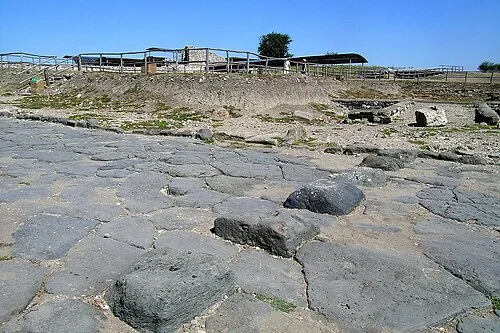 Decumanus Maximus and the Urban Plateau
The Decumanus Maximus Basalt Paving
The stones for Vulci's roads came from lava that surfaces in the bed of the Fiora River. The main road, called the Decumanus Maximus, runs east to west from the West Gate. Some experts think that title is used too loosely for it. The paving is dark volcanic stone, set together in irregular, many-sided pieces. A surviving milestone gives the distance to Rome as seventy Roman miles, about a hundred kilometers. The Romans built the Via Aurelia through the city in the third century BC. The road outside the north gate was repaved, probably under the emperor Trajan, in the early second century AD.
Walter Gams · CC BY-SA 3.0
03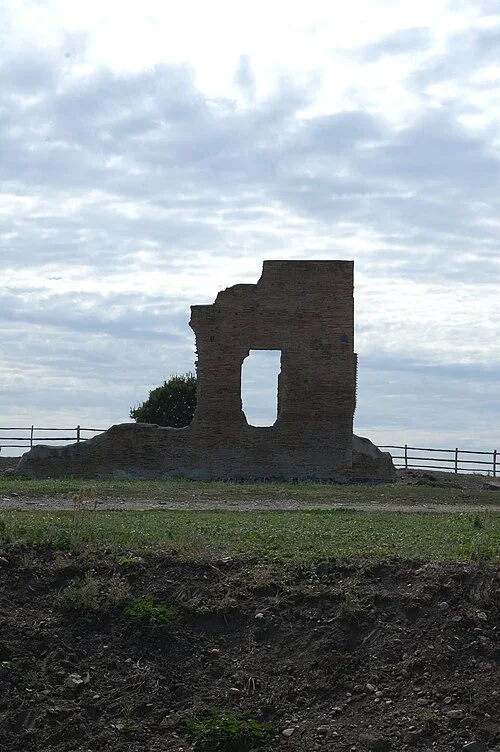 Decumanus Maximus and the Urban Plateau
Roman Vulci and the Arch of Publius Sulpicius Mundus
Vulci kept resisting Rome after the Etruscans lost at Lake Vadimo. The city held out until 280 BC. Then Tiberius Coruncanius, a Roman commander, won a triumph over it, the formal Roman victory celebration. Rome then took the coast from the city, cutting the base of its power. The city seems to have declined after that. Rome also founded the colony of Cosa in Vulci's territory. Even so, the city kept a respectable economy into the age of Augustus. A branch of the Via Aurelia ran through it, and that helped. Publius Sulpicius Mundus, a Roman senator around 100 BC, left instructions in his will for a triumphal arch. In 2003 excavators found the arch's foundations on the Decumanus, on the west side of the Roman forum. Many fragments allowed the arch to be reconstructed, and a long inscription dedicates it to him. The arch is often dated to the same period, but another view ties it to the renewal of the city under Augustus. On the south side of the Decumanus lies a building believed to be a late Roman basilica. Later the city became a bishop's seat. It seems to have been finally abandoned in the eighth century AD.
Listen in the appPhoto: Catinmotion · CC0
04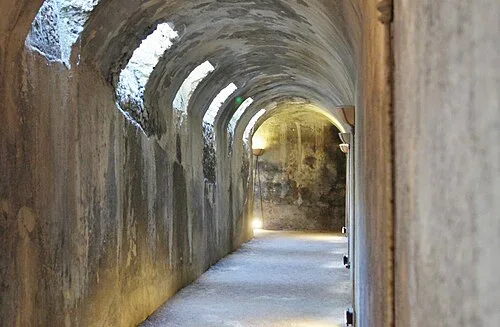 Domus del Criptoportico and Urban Sanctuary
The Cryptoporticus of the Domus
The grand house known as the Domus of the Cryptoporticus takes its name from the vaulted passage beneath it. A cryptoporticus is a covered porch that runs partly underground. This one has a barrel vault, a long arched roof, lit and aired by eighteen windows that open at garden level. The passage was mainly used to keep wine and oil, which need the right conditions. The house began in the late second and early first century BC. Its first phase was followed by many changes in the Augustan period. The private baths were cut down to three rooms in those changes. They had a dressing room, a hot-air room, and a hot-water room. The mosaic floors survive intact, raised on brick columns so that hot air could flow beneath. A lead pipe found in the baths names the probable owner, Marcus Vinicius. Beside the house lies the Mithraeum, a shrine to the god Mithras. Its high platforms, held up by small vaulted rooms, may have marked grades of initiation into the cult.
Listen in the appPhoto: Rjdeadly · CC BY-SA 4.0
05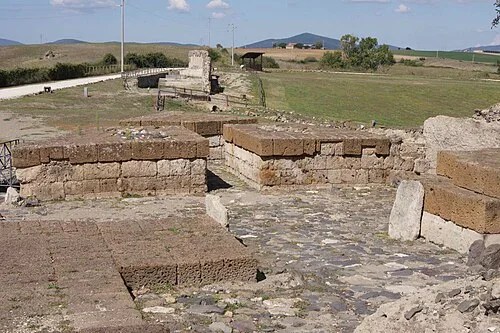 Domus del Criptoportico and Urban Sanctuary
The Tempio Grande Sacred Terrace
The Tempio Grande, or Great Temple, was among the largest temples in archaic Etruria. Decorative terracotta pieces date its first building to about 500 BC. A colonnade ran around all four sides, and extra columns doubled the front. A projecting platform with a central staircase led up to it. Its base is roughly thirty-six meters long. With the stepped front, the whole platform reaches nearly fifty meters. A second building phase came around the middle of the fourth century BC. In the early Roman imperial period, the wooden upper structure was rebuilt in travertine stone and concrete. Many of its upper pieces have since collapsed and lie around the monument. Among them is a fragment of architrave, the stone beam that rested on the columns, and it carries an inscription.
Listen in the appPhoto: Rjdeadly · CC BY-SA 4.0
06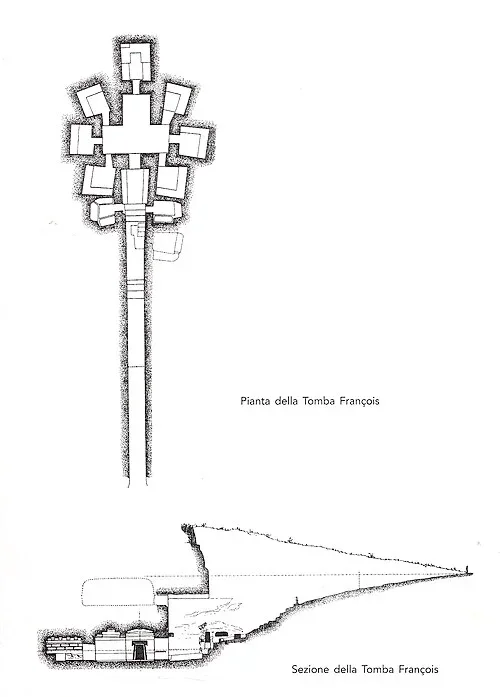 The Necropolises and the François Tomb
Plan of the François Tomb
The François Tomb is a grand underground family tomb in the Ponte Rotto cemetery, a name that means the Broken Bridge. In 1857, Alessandro François and his partner, Adolphe Noël des Vergers, discovered it. The tomb dates to the later fourth century BC. It seems to belong to the Saties family. A tomb like this is called a hypogeum, an underground burial chamber. A long entrance passage, called a dromos, runs down from the surface toward the chambers. The rooms are arranged around a wide central hall, and the main chamber is shaped like a T. The tomb is now badly ruined, but its painted walls made it famous at once.
Listen in the appThis illustration was made by louis-garden. Please credit this : louis-garden An email to Louis-garden or a message here would be appreciated too. More pictures (not free) at My Photos Site · CC BY-SA 3.0
07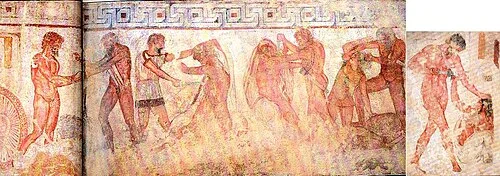 The Necropolises and the François Tomb
The Liberation of Caile Vipinas
In one painted scene, the legendary figure Mastarna frees his comrade by fighting off the men who held him. That comrade was one of the Vipinas brothers, both heroes of Vulci. The Romans believed that a hill in their city, the Caelian Hill, was named after one of these brothers. The painted cycle as a whole celebrates the tomb's owner and, beside him, the old heroes of Vulci. The paintings were removed from the tomb in 1862 and are now kept in Rome. Centuries later, the Emperor Claudius gave a speech, preserved on a bronze tablet called the Lyon Tablet. In it, he identified Mastarna with Servius Tullius, a king of early Rome.
Listen in the appAutore sconosciuto · Public domain
08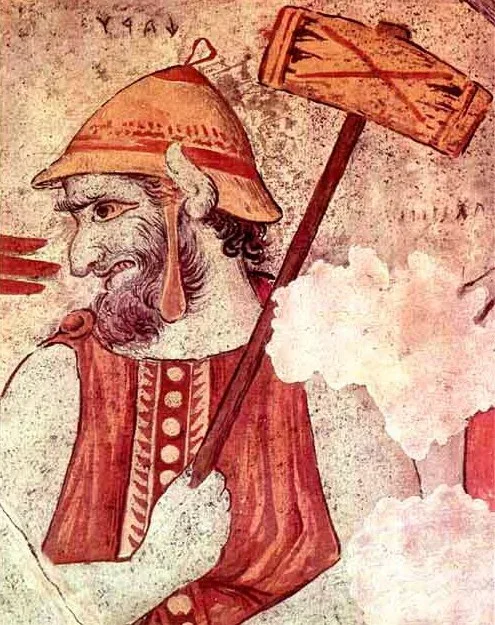 The Necropolises and the François Tomb
Charun, Demon of the Etruscan Underworld
Charun, the figure with a large hammer over his shoulder, was a demon of the Etruscan underworld. His name was borrowed from Charon, the ferryman of Greek myth, but the Etruscan Charun was a different being. He is not a boatman. His task was to meet the dead and escort them to their final destination, not to punish them, and the hammer was his sign. Artists often gave him pointed ears and snakes around his arms. In some scenes he is menacing, and his grotesque look may have been meant to drive off evil spirits. Here he stands in the scene from the Iliad in which the Greek heroes Achilles, Agamemnon and Ajax kill Trojan prisoners in honor of their dead friend Patroclus. Another underworld spirit, Vanth, is there with him. Elsewhere in the paintings appears Vel Saties, the tomb's owner, together with his dwarf servant, Arnza.
Listen in the appUnknown author · Public domain
09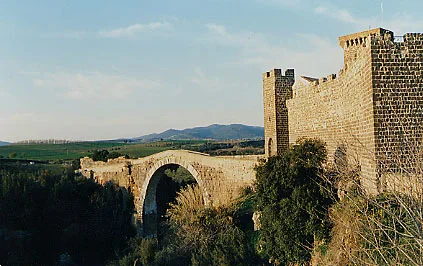 Ponte dell'Abbadia and the Fiora River Gorge
Ponte dell'Abbadia over the Fiora
The Ponte dell'Abbadia carried an ancient road across the Fiora on a single main arch. That arch spans about twenty meters. It stands thirty meters above the stream. The Romans built it on top of an earlier Etruscan bridge. Its tufo supports, a soft volcanic stone, are very probably the piers of that Etruscan bridge. Unusually, the Romans also carried an aqueduct, a water channel, across the bridge. The channel ran on toward Vulci, about a kilometer and a half away.
Listen in the appNeri.jp · Public domain
10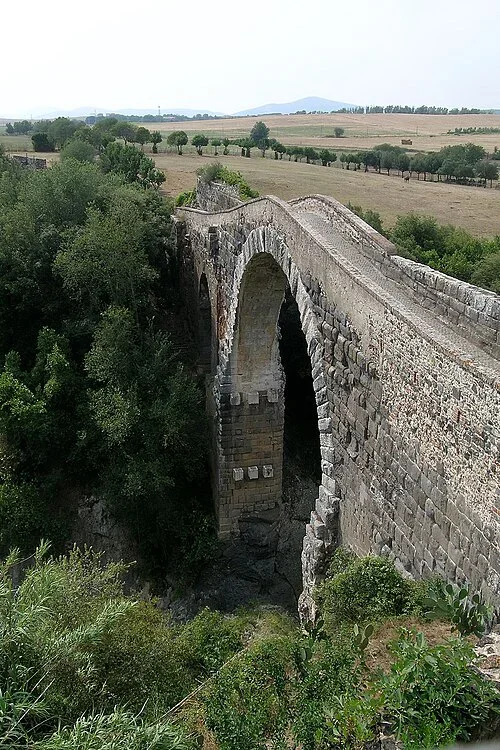 Ponte dell'Abbadia and the Fiora River Gorge
The Petrified Waterfall
When the aqueduct on top of the bridge fell into disrepair, its overflow spilled over the parapet. The water left a hanging curtain of stalactites, pale and yellowish white against the bridge. George Dennis, who wrote about Vulci in the nineteenth century, described it as a vast cataract. It seemed to have rolled over the top of the bridge and been petrified in its fall. It was caught before it could reach the ground. The stalactites stand out about two metres from the wall. They hang five or six metres down. Their colour sets off the grey and reddish stone of the masonry.
Listen in the appWalter Gams · CC BY-SA 3.0
- 11
The Fiora River Gorge
How a river quay grew into a larger coastal port, and how Vulci's wine reached Celtic traders on the Gulf of Lion.
- 12
Castello dell'Abbadia
A medieval fortress beside the bridge, named for an abbey, and now the home of the national archaeological museum.
- 13
From Farnese Fief to Papal Customs House
Rough stone walls and a tall tower around the courtyard, and water from an ancient aqueduct still feeding the gardens.
- 14
How the Finds Reached the Castle
A wooden walkway leads to the arched door, the way into the fortress museum.
- 15
The Treasure Hunt: Excavating Vulci
The digs that sent Vulci's tomb treasures to museums around the world, and a tunnel hunt for a tomb that never existed.
- 16
The Hut Urn: Where Vulci Began
A house-shaped urn for ashes, the early roots of Vulci, and a Sardinian woman's tomb full of bronzes.
- 17
The Attic Amphora: Closing Reflection
Vulci at its wealthiest, the foreign goods its citizens prized, and George Dennis's verdict on the city's fame.
Vulci
Frequently asked questions
How much does the guide cost?
Free app download. Listed guide price: $1.99. Guide price shown in the app. Audio guide only. Venue admission is separate.
Can I listen without internet?
Yes. Download the guide’s audio, images, and maps in the app before your visit. Your downloaded content is then available offline.
Can I listen in my language?
This audio guide is available in 15 languages, including English.
Do I need to follow a schedule?
No. This is a self-guided experience. Choose your stops, pause whenever you like, and return to a story at your own pace.
At your own pace
Explore Vulci.
Download Stanza, then search for “Vulci”.
Free app download · Guide price shown in the app
Keep exploring
Nearby audio guides
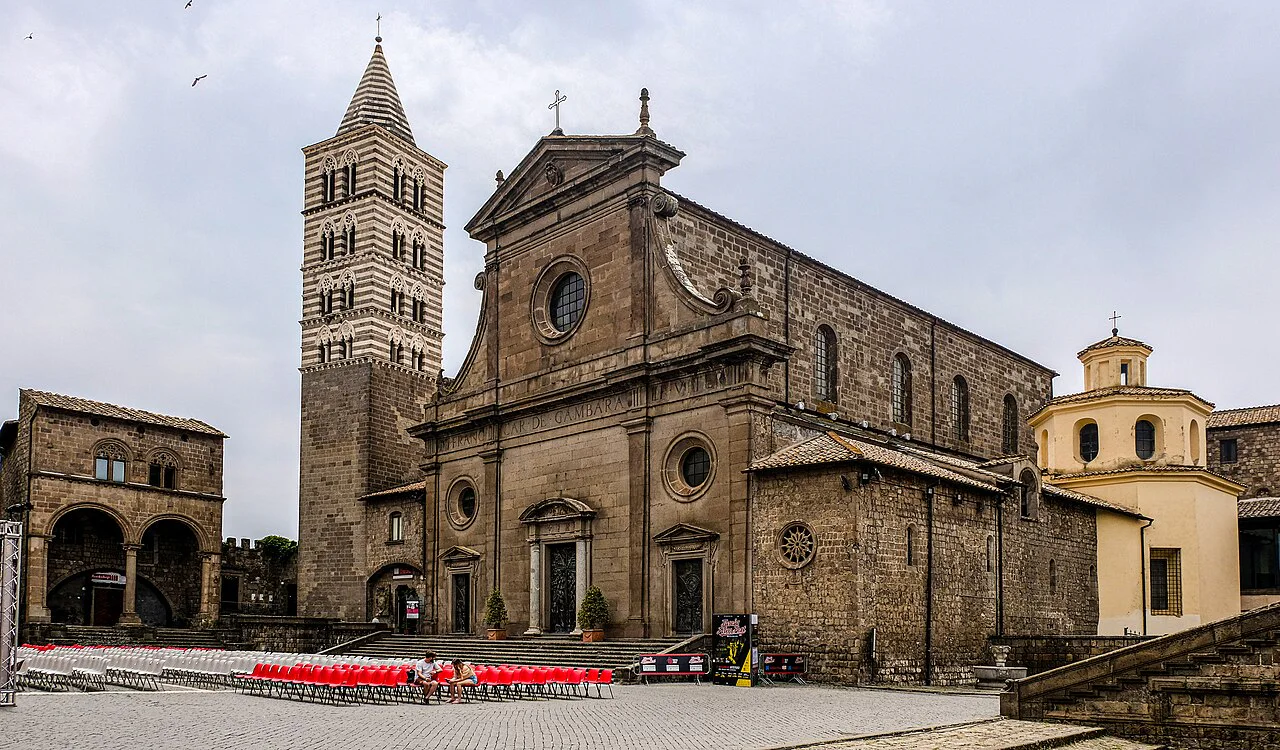
Viterbo · 39 km
Duomo di Viterbo
Content & sources
Kasa Fue · CC BY-SA 4.0
Pienza · 73 km
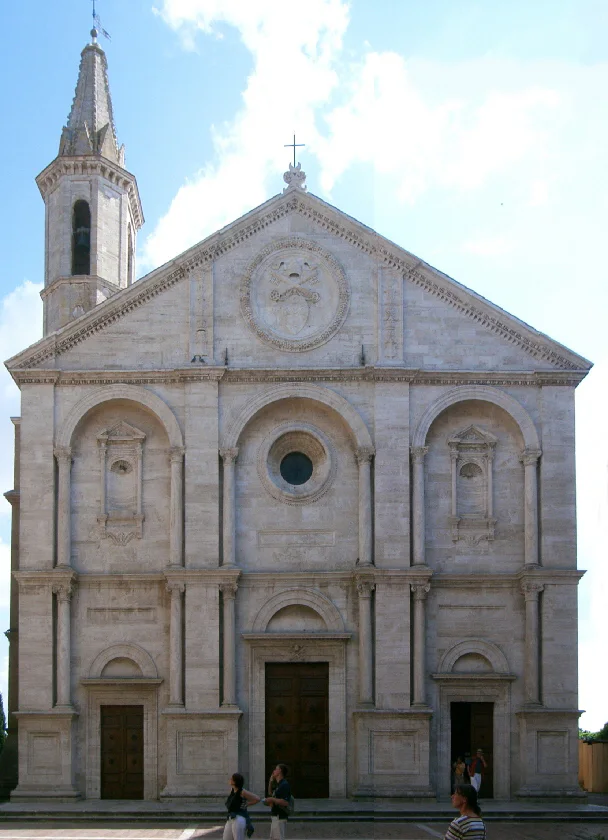
Duomo di Pienza
Content & sources
Photo: Beckstet · CC BY-SA 3.0
89 km
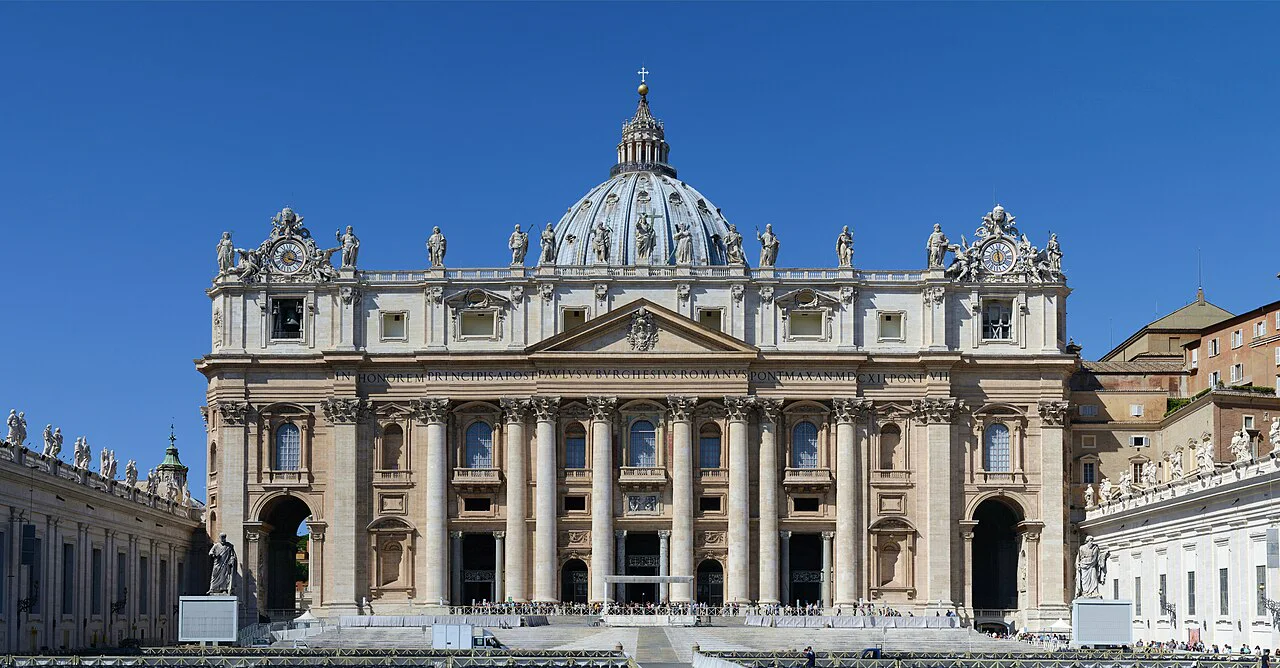
St. Peter's Basilica
Content & sources
Photo: Alvesgaspar · CC BY-SA 4.0
Rome · 90 km
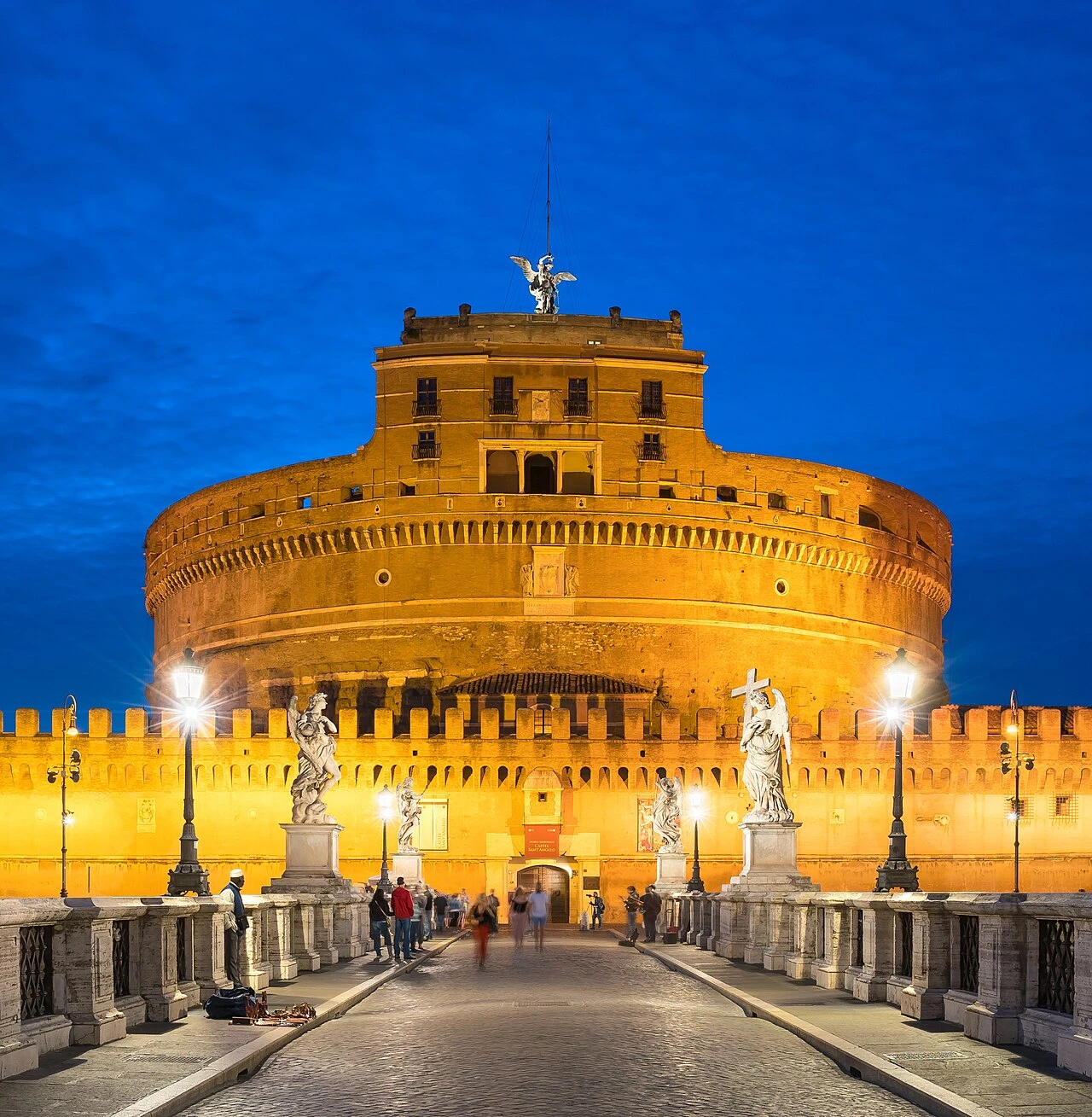
Castel Sant'Angelo
Content & sources
Thomas Wolf, www.foto-tw.de · CC BY-SA 3.0 de