Stanza · Audio guide
Duomo di Viterbo Audio Guide
A place to remember. A story to take with you.
Viterbo Cathedral is a Roman Catholic cathedral and the principal church of the city of Viterbo. It serves as the seat of the Bishop of Viterbo and is dedicated to Saint Lawrence.
Download Stanza, then search for “Duomo di Viterbo”.
About the tour
One guide. Your kind of visit.
Viterbo Cathedral is a Roman Catholic cathedral and the principal church of the city of Viterbo. It serves as the seat of the Bishop of Viterbo and is dedicated to Saint Lawrence.
Ready when you are.
- 01Get the free Stanza app.
iOS & Android
- 02Find your guide.
“Duomo di Viterbo”
- 03Download before you go.
Works offline
Audio guide / 9 narrated stops
Inside the guide
Get to know a few of the stories before you go. Open a stop to read more.
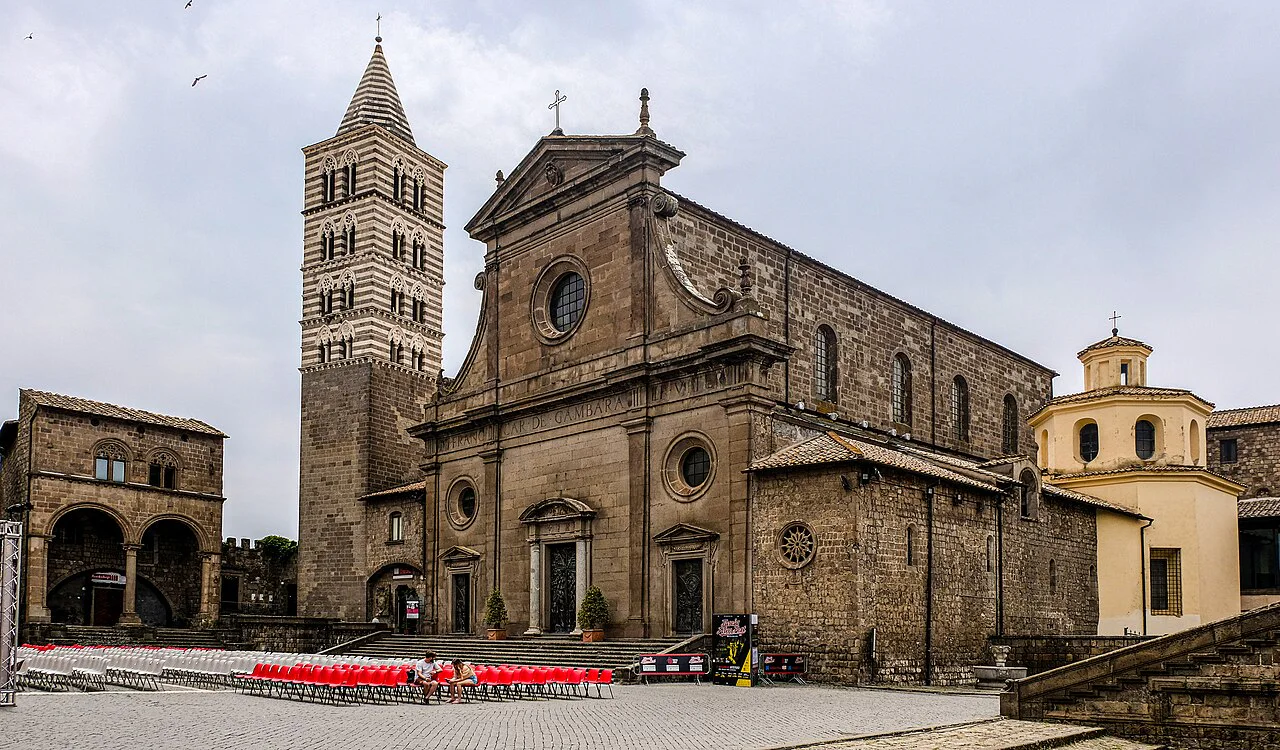
01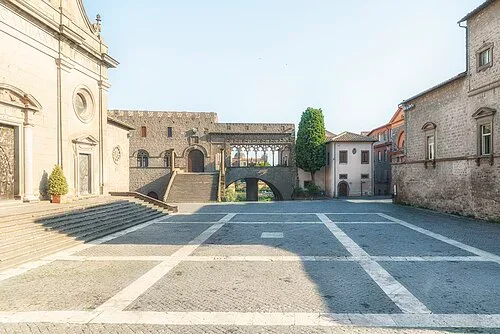 Piazza di San Lorenzo & The Papal Seat
Piazza di San Lorenzo: The Hilltop Cathedral
Welcome to the cathedral of Viterbo, and to the story of a hilltop square that briefly became the capital of the Christian world. This tour follows the church of San Lorenzo and the palace beside it, from the thirteenth century to the present day. The square you see here is Piazza di San Lorenzo, the highest point of the city, where the cathedral has stood since the twelfth century. It was once an awkward spot: as the town spread downhill, the church was left somewhat isolated on the hill's edge, and its bishops spent years granting special privileges to draw people back up. Then, in the middle of the thirteenth century, everything changed. The popes fled the disorders of Rome and settled here, and in 1266 the palace on the north side of the square was enlarged to house the papal court. It is this palace that gives the square its single great story. When Pope Clement IV died in 1268, the cardinals gathered in the palace to choose his successor, and they took so long that their presence was bankrupting the town's businesses. The infuriated people of Viterbo locked them inside and removed the palace roof, leaving the cardinals exposed to the weather. Only when a pope was finally chosen did they return the slates and unlock the door. From that confinement comes the word conclave, from the Latin for 'with keys'. The loggia where those cardinals walked has its own fragility: around 1300, half of it tumbled into the valley below, and it was never rebuilt. The doors of the cathedral open onto this square, and inside, the story continues.
Fabio Ciminelli · CC BY-SA 4.0
02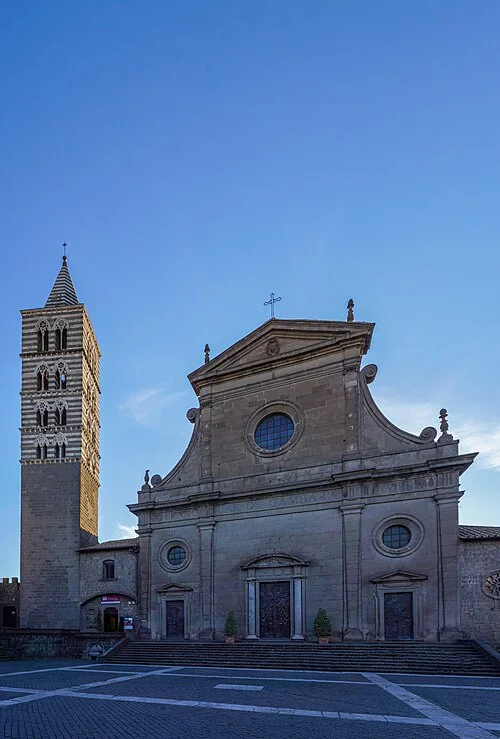 The Renaissance Facade
The face of this cathedral is a Renaissance mask over a medieval body. It was Cardinal Gianfrancesco Gambara, bishop of Viterbo from 1568 to 1580, who transformed the church: he demolished the Romanesque facade, the roof and the central apse, and rebuilt the west front in the classical style of his age. He paid for the work from the wealth of his family, one of the great houses of northern Italy. The new front stands apart from everything around it, because it was not built from the local stone used by the medieval buildings of the square, but from imported materials. It is sparsely decorated, with a round rose window at its centre, plain and without stained glass, and two smaller round windows above the side entrances. A short flight of steps leads up to the doors from the square. The rebuilding carried a heavy cost, and not only in stone. Pope Alexander IV had taken refuge in Viterbo and was buried in this cathedral in 1261. His tomb was lost, perhaps during the renovations of the fifteenth and sixteenth centuries, and the location of his remains is unknown to this day. One story holds that his grave simply vanished in the rubble of the works; another, that his body was quietly reburied in a secret place. The striped tower beside the facade is the only piece of the original exterior still standing, and it closes this tour later on.
Photo: NikonZ7II · CC BY-SA 4.0
03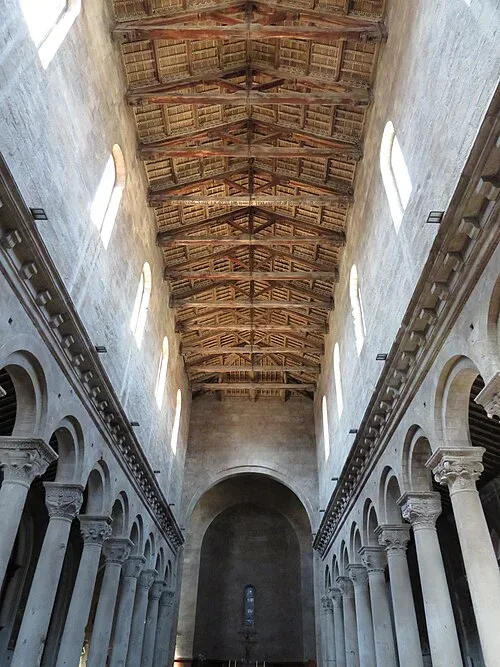 Central Nave & Romanesque Colonnade
The Romanesque Nave
Behind the Renaissance shell lies a much older church. Pope Celestine III raised Viterbo to a diocese in 1192, and this church of Saint Lawrence became the seat of the bishop. What was built then is still the skeleton of the interior: a basilica of three naves, divided by two long rows of stone columns joined by round Romanesque arches. The roof above them has its own story of hiding and recovery. First a vaulted ceiling, built in the seventeenth century and decorated in 1681, hid the intricate trusses and beams that had carried the roof for centuries. Then a lower ceiling was added in 1861. Then came the war. In 1944, during the bombing that heavily damaged Viterbo and its cathedral, a bomb exploded inside the church and caused immense harm. The restoration that followed gave the builders their chance: they removed many of the later additions and brought the interior back to what is believed to be its Romanesque form. Eight of the ten side chapels opened in the sixteenth century were walled up, along with the baroque apse. That is why the timber trusses are open to view today, the way the twelfth-century builders meant them to be seen.
Listen in the appPhoto: Enric · CC BY-SA 4.0
04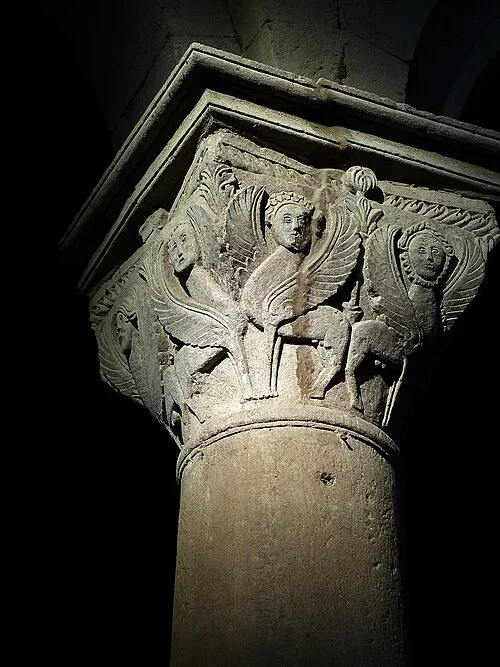 Central Nave & Romanesque Colonnade
A Carved Capital
Carved into the top of one of the nave columns, winged figures with human faces peer out of the stone. This capital is a rare survivor. Centuries of renovation swept away most of the cathedral's original frescoes and ornament, so carving like this is one of the few direct voices of the medieval builders left in the church. It dates to the Romanesque building of the twelfth century, the same campaign that raised the columns around it. Figures like these, half beast and half human, with wings and crowned heads, were a favourite subject of Romanesque sculptors across Italy, though what they meant to the masons who cut them here is not recorded. The colonnade can look plain from a distance, a rhythm of grey stone and round arches. Up close, it turns out to be a survivors' gallery, each capital carrying a piece of the decoration the rest of the church has lost.
Listen in the appPhoto: Justinawind · CC BY-SA 4.0
05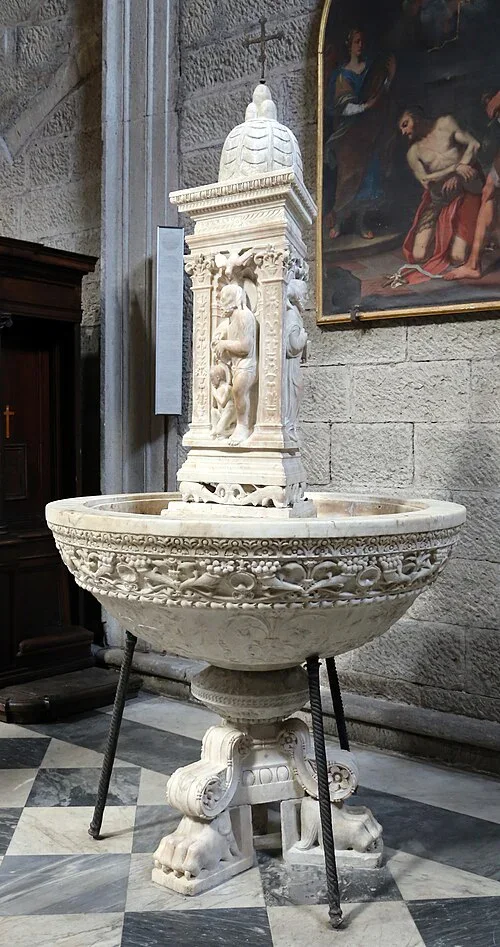 The Renaissance Baptismal Font
The 1470 Baptismal Font
In the right aisle stands a marble font where generations of Viterbo's children were baptised. It was carved in 1470 by Francesco di Ancona, and it is his craftsmanship that gives the object its character. A circular basin, finely decorated around its rim, rests on a base with lion-paw feet. Above the basin rises a small temple-like canopy, crowned with a cross. The work did not stop with Francesco: later hands added to what he began, and the additions are part of the font as it stands. Its date matters here. This is Renaissance craft arriving in the cathedral a full century before Cardinal Gambara's demolition, a quieter and gentler renewal than the one that followed. Where the cardinal tore down, Francesco simply added something beautiful for the parish's most intimate sacrament. The font has kept its place in the life of the church ever since.
Listen in the appPhoto: Sailko · CC BY-SA 4.0
06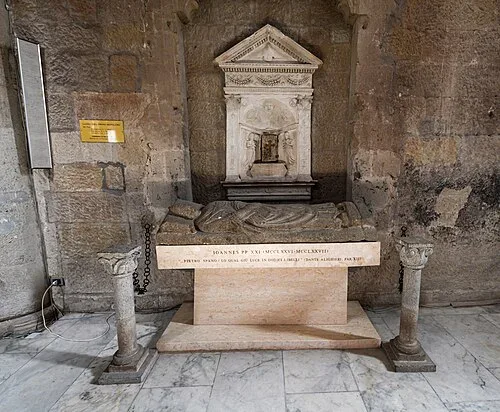 Tomb of Pope John XXI
At the end of the left aisle lies the only pope of Portuguese origin, and his death is one of the strangest in the history of the papacy. In life he was Pedro Julião; as pope he took the name John XXI. He died in 1277, a few days after the vaulted ceiling of his study in the adjacent Papal Palace collapsed on him as he slept, probably because of a flaw in its construction. He was buried in this cathedral, where two popes in all were laid to rest. His tombstone has been moved several times within the church over the centuries, so the grave you see is not in its original position. The monument itself is modern: this honorific tomb was placed here in May 2000, by special decree of Pope John Paul II, seven centuries after the accident.
Listen in the appPhoto: Castro Pretorio · CC BY-SA 4.0
07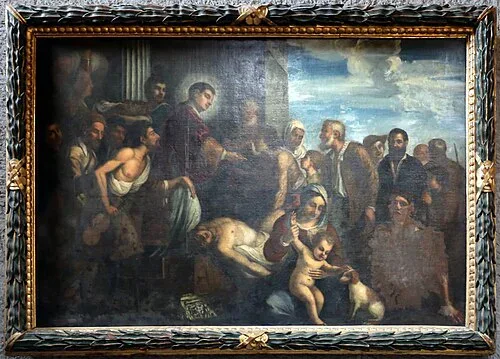 The Presbytery & Marian Shrines
Saint Lawrence with the Poor
The cathedral takes its name from Lawrence, deacon and martyr of the early church, and this painting shows him in that role. It is the work of Carlo Maratta, a painter from the Marche who lived from 1625 to 1713 and was one of the leading Baroque masters of Rome. In the picture, Lawrence stands among the poor, the people he served as a deacon, and the scene carries the charitable side of his cult rather than the violence of his martyrdom. The dedication goes back before the cathedral itself: the parish church that stood on this site in the twelfth century already bore the name of Saint Lawrence, and the new cathedral inherited it when the diocese was created. Paintings like this belong to the later layers of the building, the Baroque artistic life that filled the church after the medieval ornament was swept away. Maratta gave the cathedral a portrait of its own patron, painted by one of the most sought-after hands of his century.
Listen in the appPhoto: Sailko · CC BY-SA 4.0
08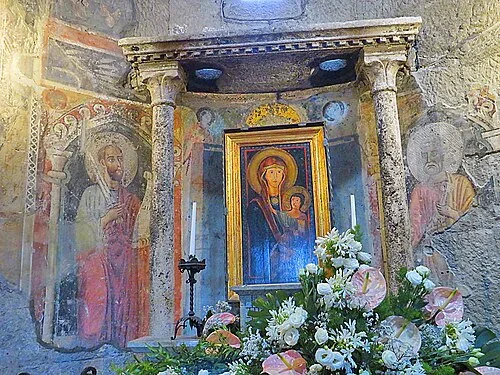 The Presbytery & Marian Shrines
The Madonna della Carbonara
Near the apse, in a small shrine with candles and fresh flowers, sits the oldest image in the cathedral. It is a Madonna and Child on panel, painted in the twelfth century by an unknown artist in the Byzantine style, with the solemn gold-framed frontality that style brought to Italy. The panel is known as the Madonna della Carbonara, and it was moved here from a local parish church. It is one of only two notable early artworks to survive the centuries of renovation that transformed this building, alongside a blessing Christ of 1472. Scholars see something remarkable in it: the image appears to be an earlier version of the famous Madonna venerated in the Basilica of Santa Maria Maggiore in Rome, as if this small Viterbo panel anticipated one of the most honoured icons in the city of the popes. The comparison rests on the judgement of those who have studied it, not on a settled history. What is certain is its age and its endurance, a face more than eight centuries old still receiving flowers in the church that has changed around it.
Listen in the appPhoto: Enric · CC BY-SA 4.0
09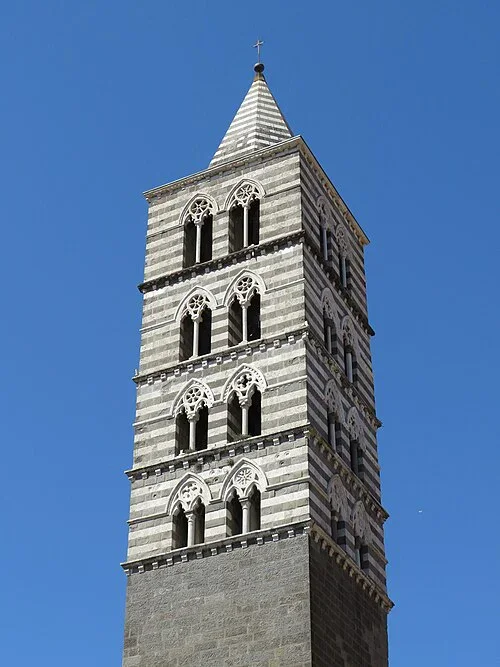 The Polychrome Gothic Campanile
The Polychrome Campanile
The tower ends the tour with a simple fact: it is the only original exterior work still visible on the cathedral. Every other face of the church has been rebuilt, repaired or replaced, but the campanile has kept its appearance through every renovation, war and rebuilding the tour has described. It is Gothic in style, rising in tiers marked by paired arched windows that house the bells. Its most striking feature is the masonry: horizontal bands of white travertine from the local hills alternate with blue-green basalt, giving the tower its striped dress. The same polychrome manner was used on the great cathedral of Orvieto, and this tower belongs to that family of buildings. The white stone and the dark stone both come from this land, which is what the Renaissance facade, with its imported materials, chose not to do. The tower is a vertical record of the medieval craft and ambition that raised this church in the twelfth century and made Viterbo the seat of popes in the thirteenth. From its top, the bells have watched over the square where cardinals were once locked in, the papal palace where a pope was killed by a falling vault, and the small icon that outlasted them all.
Listen in the appPhoto: Enric · CC BY-SA 4.0
Duomo di Viterbo
Frequently asked questions
How much does the guide cost?
Free app download. Listed guide price: $0.99. Guide price shown in the app. Audio guide only. Venue admission is separate.
Can I listen without internet?
Yes. Download the guide’s audio, images, and maps in the app before your visit. Your downloaded content is then available offline.
Can I listen in my language?
This audio guide is available in 15 languages, including English.
Do I need to follow a schedule?
No. This is a self-guided experience. Choose your stops, pause whenever you like, and return to a story at your own pace.
At your own pace
Explore Duomo di Viterbo.
Download Stanza, then search for “Duomo di Viterbo”.
Free app download · Guide price shown in the app
Keep exploring
Nearby audio guides
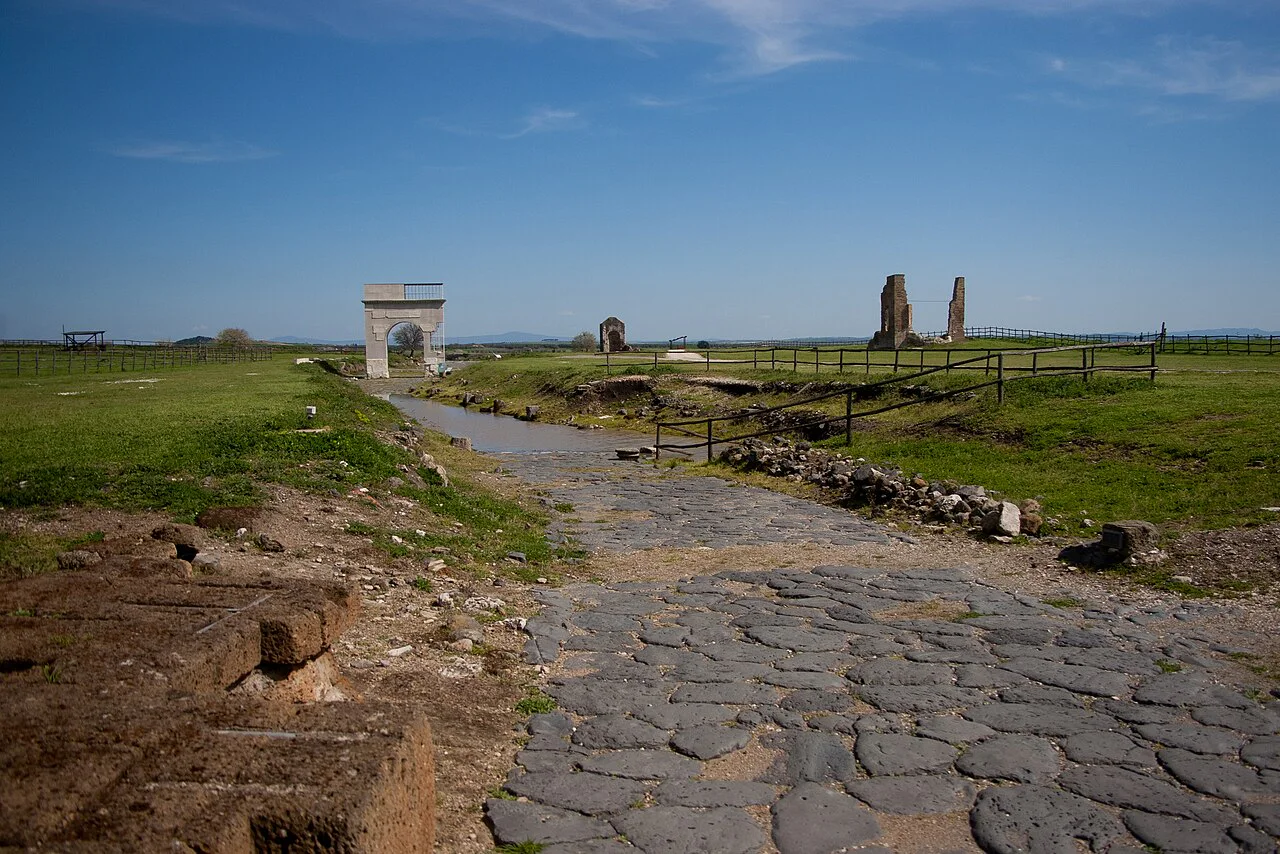
Montalto di Castro · 39 km
Vulci
Content & sources
Robin Iversen Rönnlund · CC BY-SA 3.0
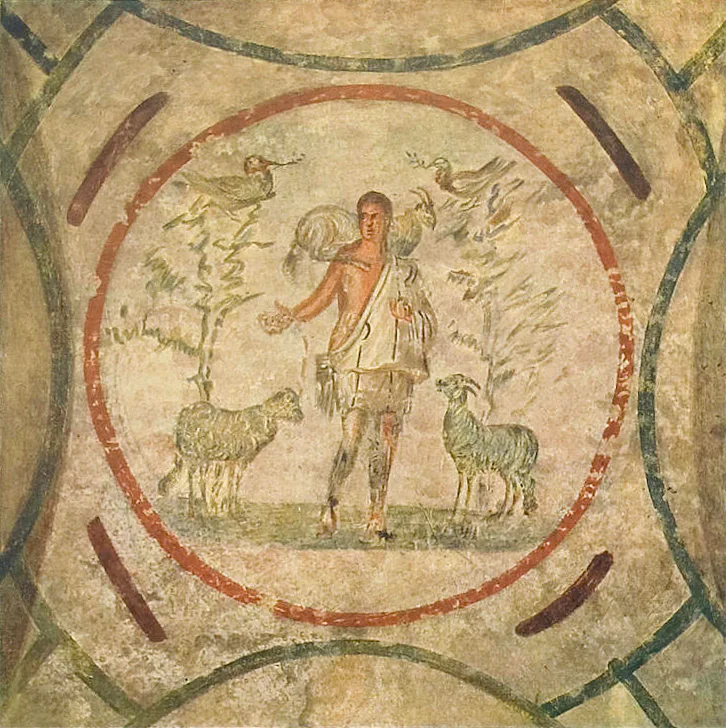
Rome · 64 km
Catacombe di Priscilla
Content & sources
Unknown author · Public domain
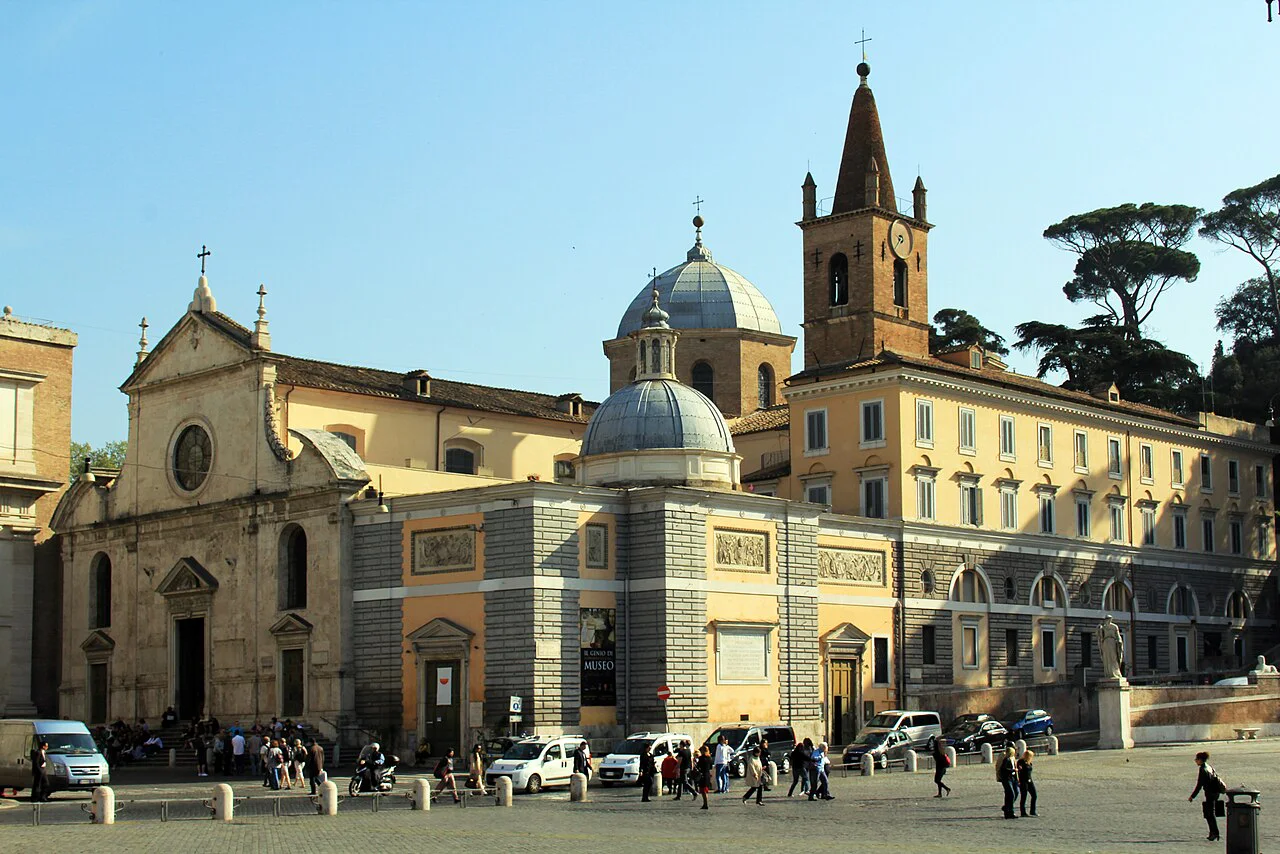
Rome · 64 km
Basilica di Santa Maria del Popolo
Content & sources
Photo: Karelj · Public domain
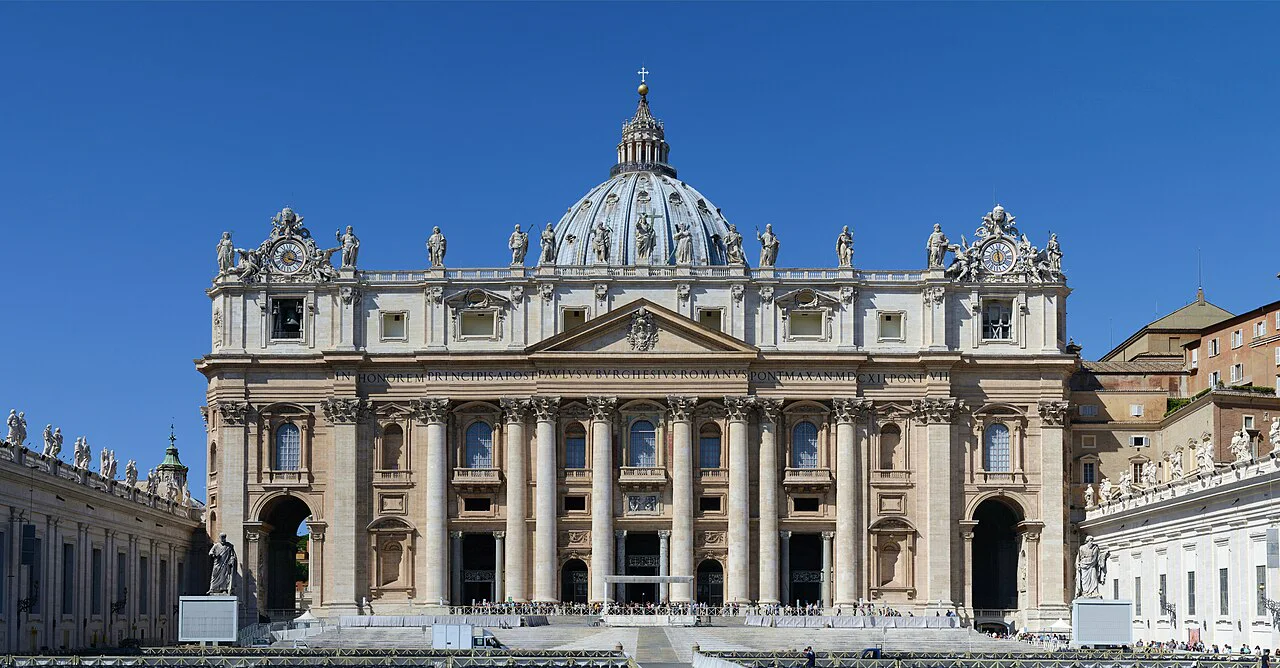
64 km
St. Peter's Basilica
Content & sources
Photo: Alvesgaspar · CC BY-SA 4.0