Stanza · Audio guide
Catacombe di Priscilla Audio Guide
A place to remember. A story to take with you.
The Catacomb of Priscilla is a large archaeological site on the Via Salaria in Rome, Italy, situated in what was a quarry in Roman times. It was used for thousands of Christian burials from the late 2nd…
Download Stanza, then search for “Catacombe di Priscilla”.
About the tour
One guide. Your kind of visit.
The Catacomb of Priscilla is a large archaeological site on the Via Salaria in Rome, Italy, situated in what was a quarry in Roman times. It was used for thousands of Christian burials from the late 2nd century through the 4th century.
Ready when you are.
- 01Get the free Stanza app.
iOS & Android
- 02Find your guide.
“Catacombe di Priscilla”
- 03Download before you go.
Works offline
Audio guide / 11 narrated stops
Inside the guide
Get to know a few of the stories before you go. Open a stop to read more.
01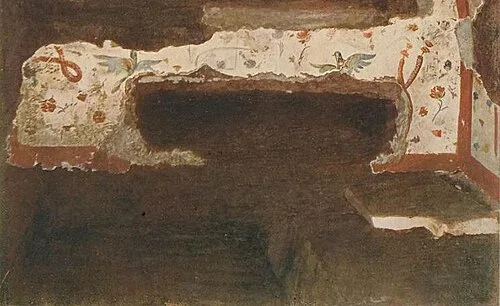 Subterranean Tufa Galleries and Loculi
A Painted Tomb in the Queen of Catacombs: Arrival and Orientation
Welcome to the Catacombs of Priscilla, on the Via Salaria in Rome. This ground began as a tufa quarry, dug by Romans for building stone. From the late second century, the Christian community turned the empty galleries into a cemetery. They kept burying their dead here until the fifth century. The network grew to more than thirteen kilometres of passages. It runs on three levels. The deepest galleries lie about thirty-five metres down, and around forty thousand burials found a place in the rock. The name comes, tradition says, from a noblewoman called Priscilla, of the senatorial Acilii Glabriones family. Her family name appears inscribed in the underground halls, though exactly who she was is still argued over. Even an ordinary grave received care here. The grave niche framed by a painted arch carries flowers and birds on its plaster. Decoration like that was made for someone ordinary, not for an emperor.
anonimus · Public domain
02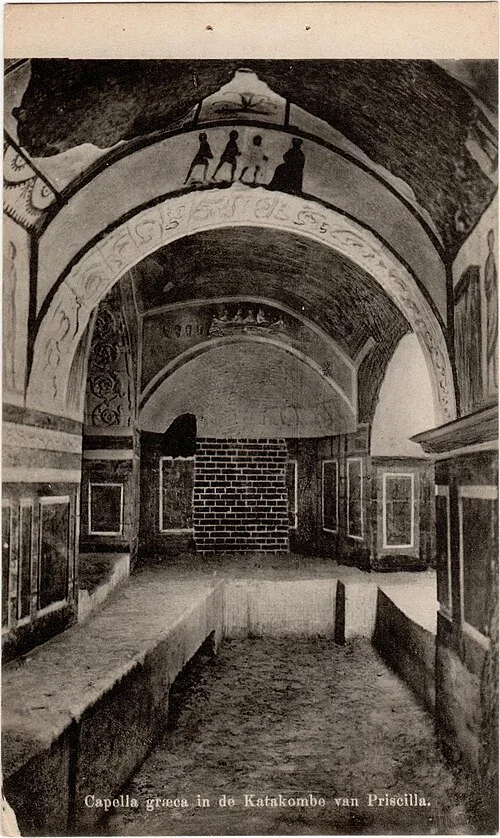 The Greek Chapel (Cappella Greca)
The Greek Chapel
The Greek Chapel is a square chamber split in two by a great arch. Its painters worked in the second century, in the Pompeian style. Faux marble and stucco cover the walls, with scenes from the Old and New Testament. Then the chamber's luck ran out. Burials stopped in the fifth century, and when barbarian invasions swept Rome the catacombs were looted. Forgotten for long centuries, they were dug open again in the nineteenth century by Giovanni Battista de Rossi and his young colleague Josef Wilpert. Their excavation brought this chamber back to light, and it soon grew famous enough to be sold on picture postcards. The brick wall closing the far arch is a later change, a sign the space was reworked long after its painters were gone.
AnonymousUnknown author (photographer), AnonymousUnknown author (publisher) · Public domain
03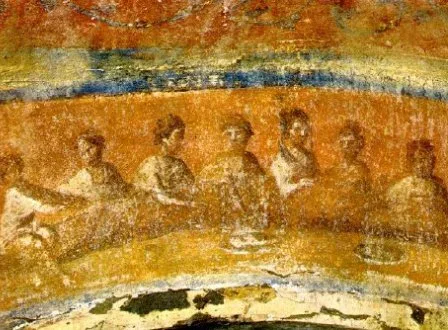 The Greek Chapel (Cappella Greca)
Fractio Panis: The Breaking of the Bread
On the vault of the Greek Chapel, seven figures sit around a table laid with bread and cups. One of them is breaking the loaf. This is the Fractio Panis, the breaking of bread, painted in the third century. It counts as the earliest known picture of the Eucharist, the meal at the heart of Christian worship. The figures recline in the Roman manner, at what looks like a funeral banquet. What has kept scholars talking is who they are. From the way the figures appear, most, if not all, could be women. Above the dead of this chamber, the community painted its central rite, the meal that joined the living together and the dead to them.
Listen in the appUnknown author · Public domain
04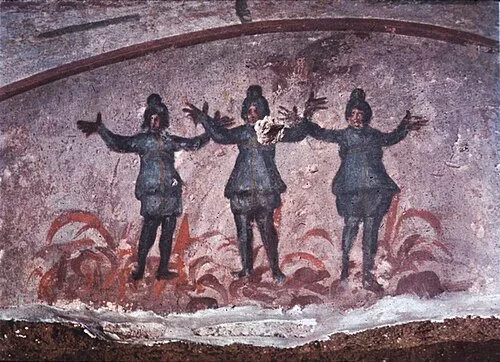 The Greek Chapel (Cappella Greca)
The Three Youths in the Fiery Furnace
Three young men stand in a furnace, arms spread wide in prayer, untouched by the flames painted red around them. They are Shadrach, Meshach and Abednego from the Book of Daniel, thrown into the fire by a king and saved. Around the Greek Chapel, scenes like this one repeat: Daniel among the lions, Moses drawing water from the rock, Susannah threatened by the elders. Each one is a rescue from death, painted beside the graves of people who hoped to be rescued too. Even the Susannah scene has been questioned. Some researchers now argue it shows the life of a prestigious Christian woman of the second century instead, an idea that remains contested.
Listen in the appPhoto: Leinad-Z~commonswiki · Public domain
05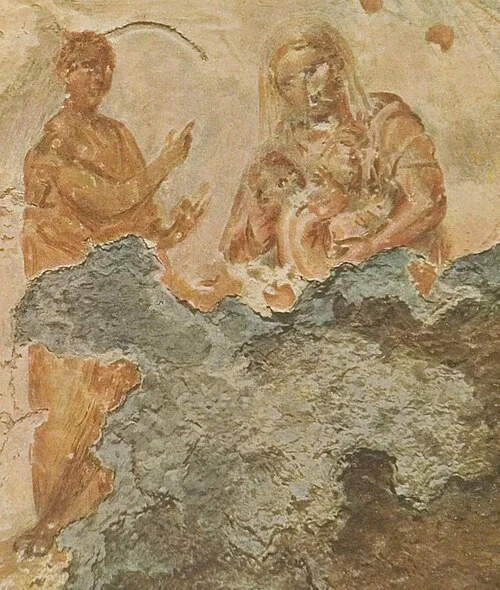 Niche of the Earliest Virgin and Child
The Oldest Image of the Virgin and Child
Mary sits with the infant Jesus on her knee, and beside her the prophet Balaam points to a star. Painted in stucco on the ceiling of a niche, this little scene is dated to the first half of the third century. Style and location point to the years between 230 and 240. It may be the oldest surviving image of the Virgin in Christian art. The niche sheltered a tomb that was venerated, probably the grave of a martyr. The honour given to the dead below and the image painted above belong together.
Listen in the appUnknown author · Public domain
06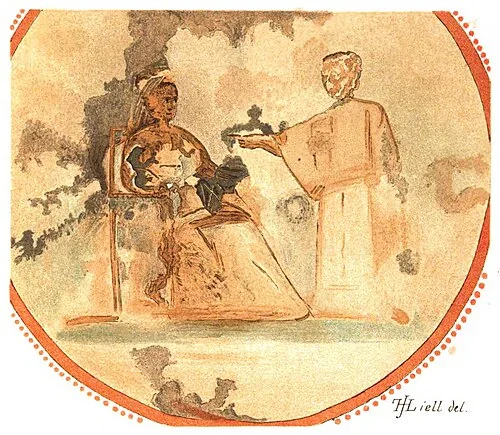 Niche of the Earliest Virgin and Child
A Possible Annunciation, Known Through Copies
A seated woman in a veil, and a standing figure approaching her with an outstretched hand. Some have called this an Annunciation, the angel greeting Mary, but that reading is disputed, and scholars argue over much of what these paintings show. What is beyond argument is the company it keeps. With the Madonna and Child nearby, Priscilla may hold the earliest cluster of images of Mary that survives anywhere. Many of these frescoes were already damaged when copyists reached them. Scenes like this one survive as careful watercolour copies, made from the fading originals.
Listen in the appanonymous artist, reproduction by H. F. Jos Liell · Public domain
07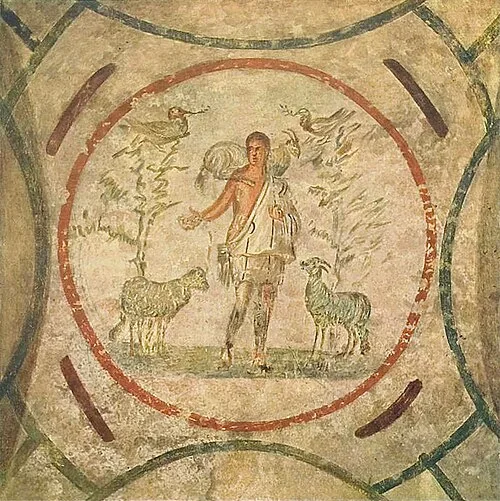 The Cubiculum of the Velata
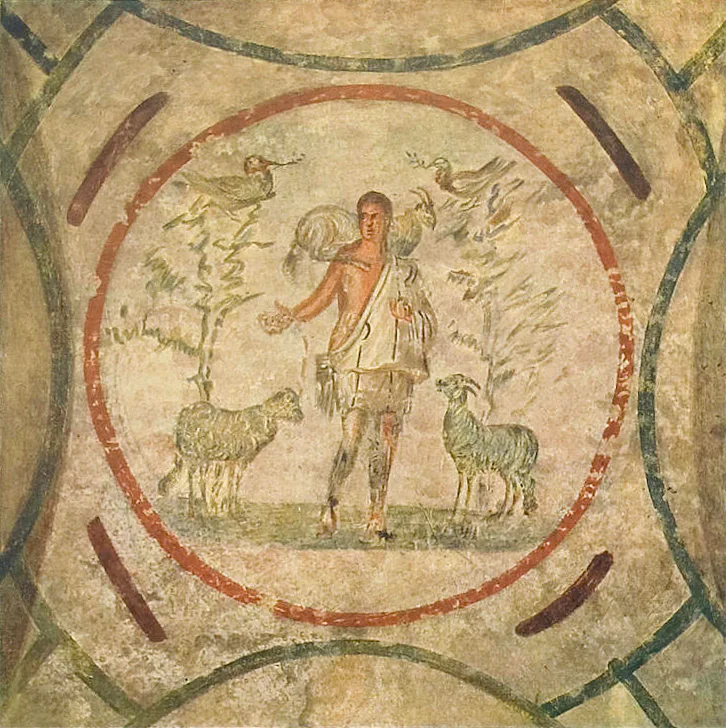
The Good Shepherd Ceiling of the Cubiculum
At the centre of this burial chamber's ceiling, a young shepherd carries a kid across his shoulders. Sheep and birds fill the compartments around him. This is the Good Shepherd, one of the best-loved images of third-century Christian burial art. The shepherd who keeps his flock safe stood for the care of the soul after death. The room itself is a cubiculum, a private grave chamber, painted in the third century for one woman and her family.
Listen in the appUnknown author · Public domain
08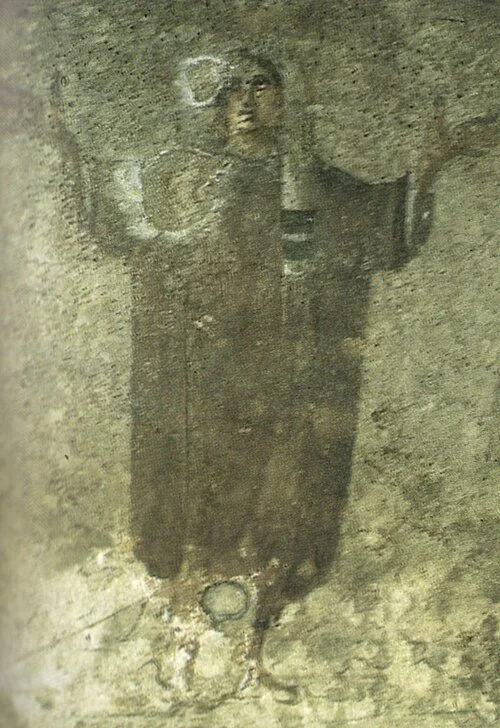 The Cubiculum of the Velata
The Veiled Woman in Prayer (Velata)
A woman stands with her arms raised, palms open, veiled. The pose is called orans, the ancient posture of prayer. She very likely lies buried in this chamber, the Cubiculum of the Velata, named for her veil. The paintings around her read as the stages of her life. In one, a man shows the garment of a consecrated virgin to two children, one of them a girl. In another, the girl prays as a consecrated virgin. In the third, she appears as a mother, though some read that image as Mary with Jesus instead. Her name is lost. Elsewhere in the catacomb, inscriptions honour church widows, among them a woman called Regina, whose dedication credits her with standing in her church. Women appear here prominently, in prayer and in memory.
Listen in the appUnknown author · Public domain
09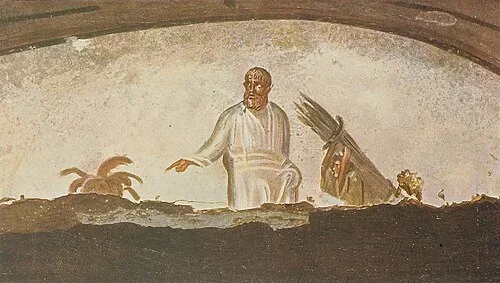 The Cubiculum of the Velata
The Sacrifice of Isaac: Wilpert's Plate 78
Abraham, hand raised, chooses the spot for Isaac's sacrifice. Around the vault of the veiled woman's chamber, scenes of rescue surround her grave: Isaac spared at the last moment, the three youths saved from the fire, Jonah given back from the sea. The promise painted over her was deliverance, God saving from death. This image of Abraham comes from Josef Wilpert's great printed folio, Die Malereien der Katakomben Roms. As the frescoes faded, painters copied them for his publication, and those plates are how much of this ceiling scheme became known at all.
Listen in the appunknown artist 3rd century A.D., Rome · Public domain
10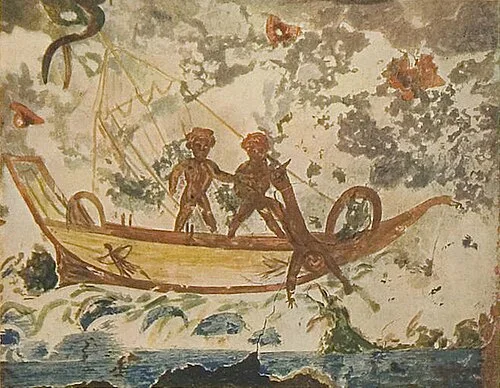 The Salvation Frescoes and Christian Symbolism
Jonah and the Sea Monster
Two figures work at a small boat while a sea monster rises from stylized waves. Jonah tumbles toward its open jaws, under a trellis-like shelter and a gourd vine. Jonah, swallowed whole and given back alive after three days, became the most widespread image of resurrection hope in early Christian burial art. Here the story is painted with real liveliness, bright waves and a curving hull. Scenes of survival like this one covered the graves of ordinary believers.
Listen in the appunknown artist, 3th century A.D., Rome photo made under direction of Joseph Wilpert, published 1903 photos in the book made by Pompeo Sansaini hand coloring of photos by Carlo Tabanelli · Public domain
- 11
The Adoration of the Magi - and Why This Was the 'Queen of the Catacombs'
The Magi process toward mother and child, in one of the oldest nativity images, in the cemetery they called the Queen of the Catacombs.
Catacombe di Priscilla
Frequently asked questions
How much does the guide cost?
Free app download. Listed guide price: $0.99. Guide price shown in the app. Audio guide only. Venue admission is separate.
Can I listen without internet?
Yes. Download the guide’s audio, images, and maps in the app before your visit. Your downloaded content is then available offline.
Can I listen in my language?
This audio guide is available in 15 languages, including English.
Do I need to follow a schedule?
No. This is a self-guided experience. Choose your stops, pause whenever you like, and return to a story at your own pace.
At your own pace
Explore Catacombe di Priscilla.
Download Stanza, then search for “Catacombe di Priscilla”.
Free app download · Guide price shown in the app
Keep exploring
Nearby audio guides
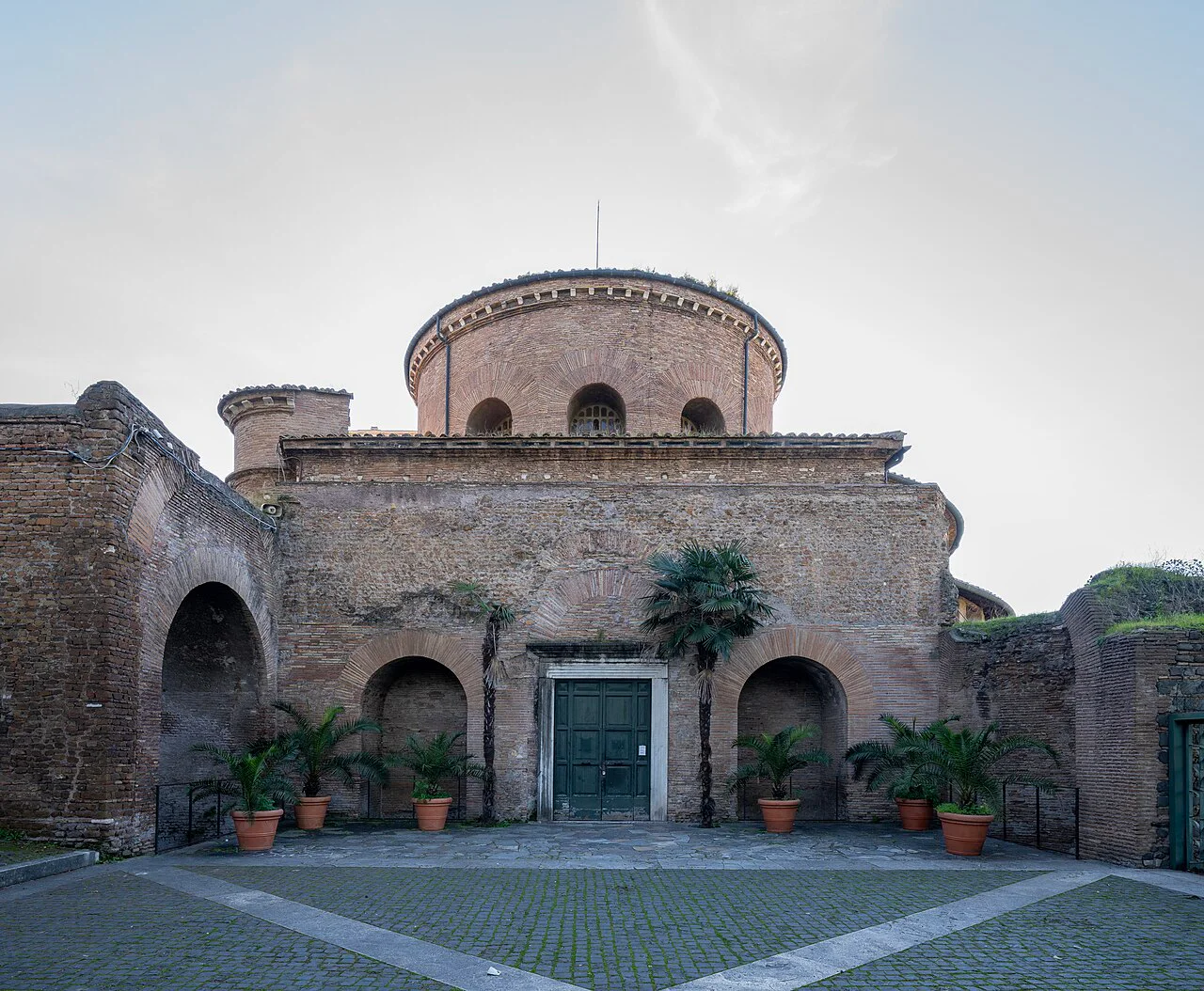
Rome · 1 km
Mausoleo di Santa Costanza
Content & sources
Photo: Grosseto2 · CC BY 4.0
Rome · 3 km
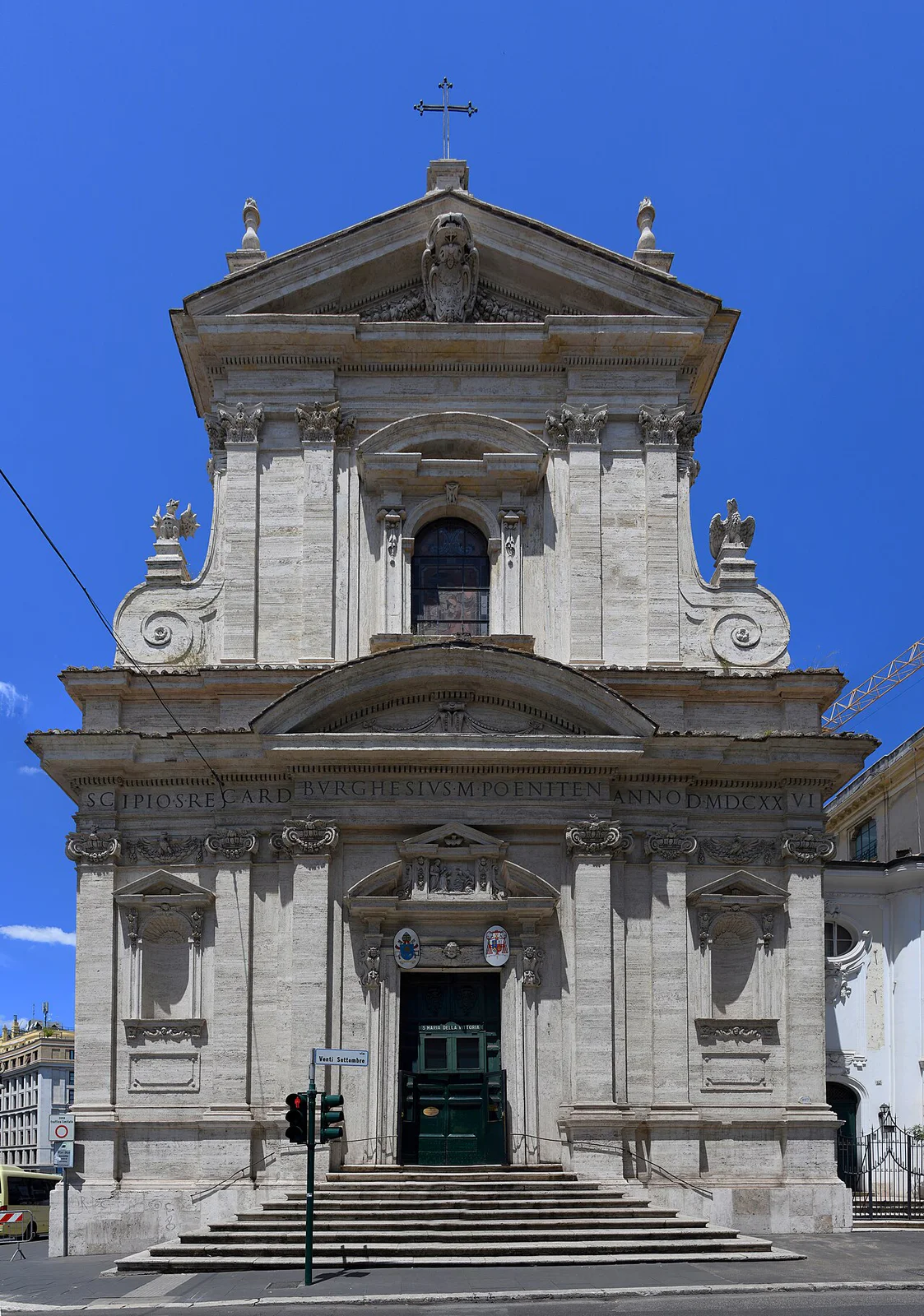
Chiesa di Santa Maria della Vittoria
Content & sources
Photo: Architas · CC BY-SA 4.0
Rome · 3 km
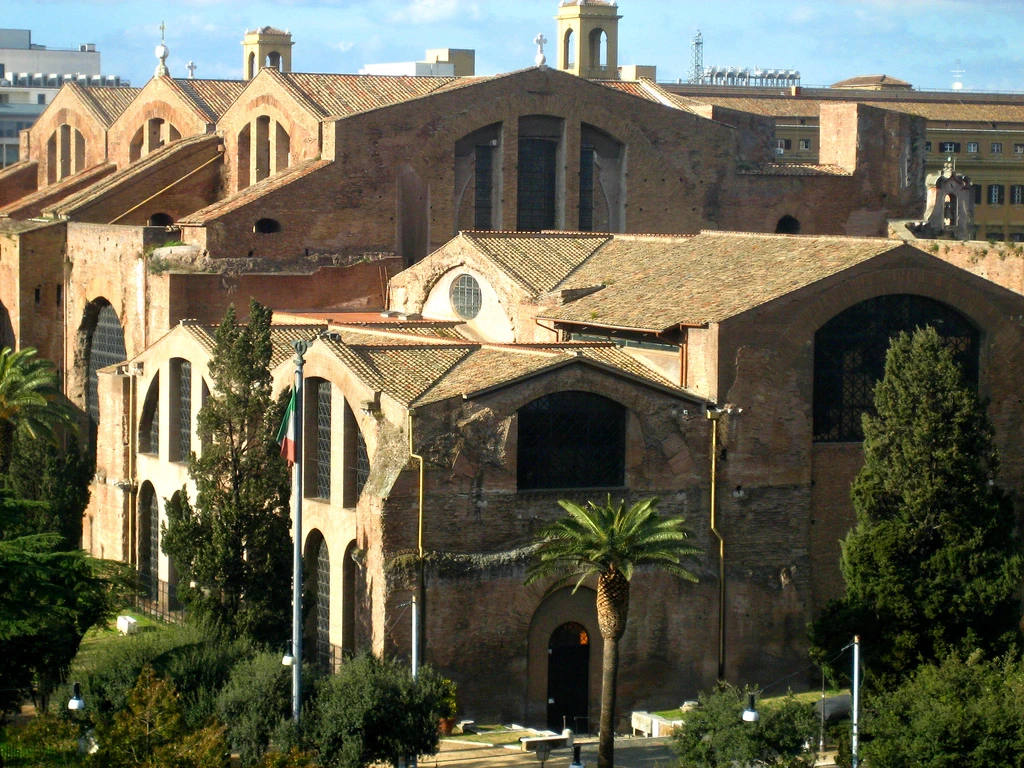
Terme di Diocleziano
Content & sources
Photo: Joris · CC BY 2.0
Rome · 3 km
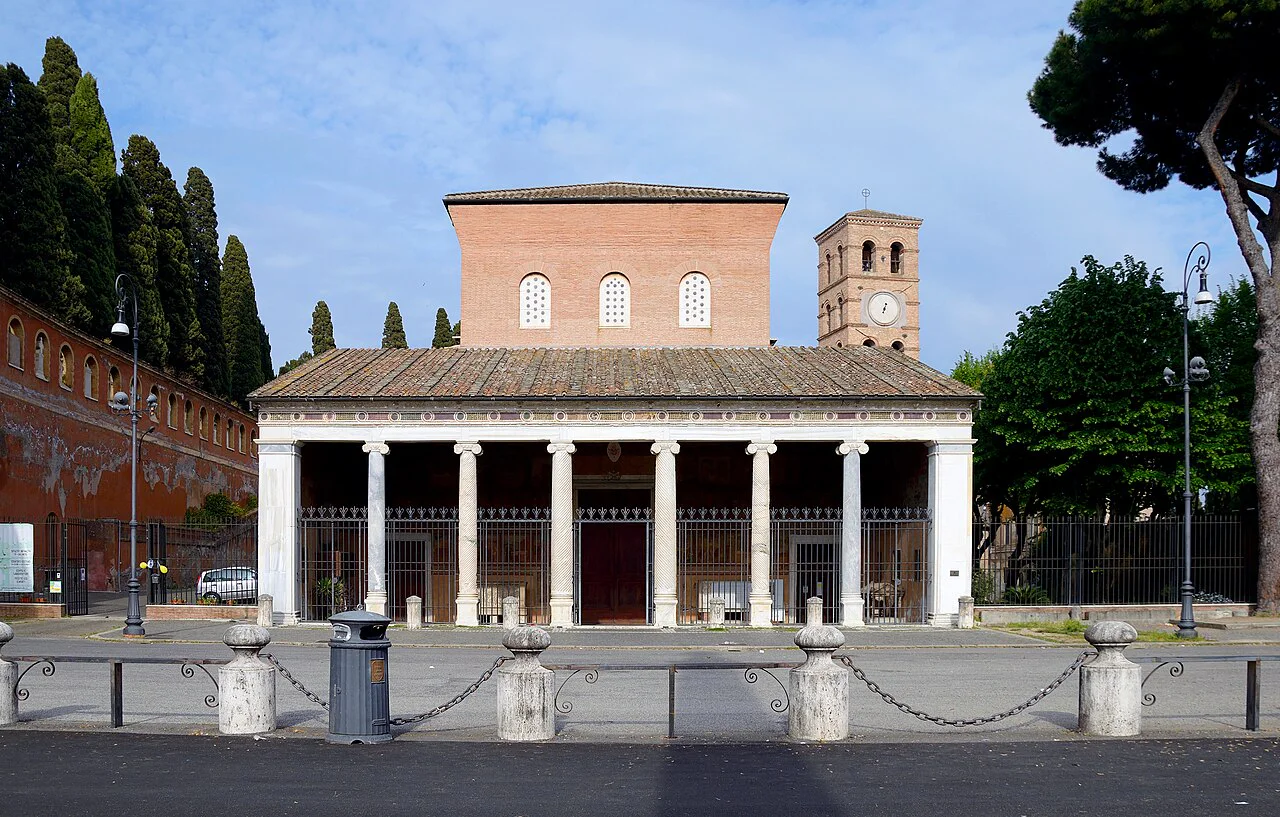
Basilica di San Lorenzo fuori le mura
Content & sources
Photo: Livioandronico2013 · CC BY-SA 4.0