Stanza · Audio guide
Terme di Diocleziano Audio Guide
A place to remember. A story to take with you.
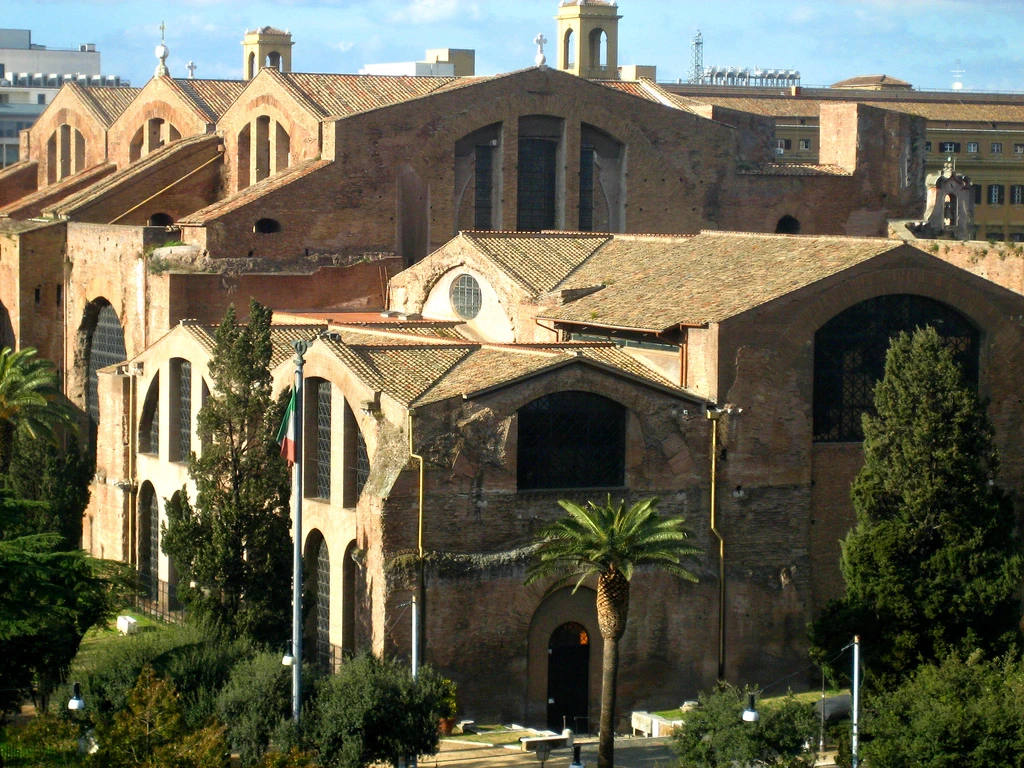
The Baths of Diocletian were the largest and most impressive of the imperial public bathing complexes in ancient Rome. Today, the site houses parts of the National Roman Museum and the Basilica of Santa Maria…
Download Stanza, then search for “Terme di Diocleziano”.
About the tour
One guide. Your kind of visit.
The Baths of Diocletian were the largest and most impressive of the imperial public bathing complexes in ancient Rome. Today, the site houses parts of the National Roman Museum and the Basilica of Santa Maria degli Angeli e dei Martiri.
Ready when you are.
- 01Get the free Stanza app.
iOS & Android
- 02Find your guide.
“Terme di Diocleziano”
- 03Download before you go.
Works offline
Audio guide / 14 narrated stops
Inside the guide
Get to know a few of the stories before you go. Open a stop to read more.
01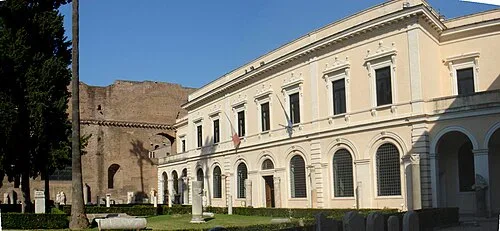 Main Entrance and Imperial Complex Overview
Museum Entrance and the Baths of Diocletian
Welcome to the Baths of Diocletian, the largest bath complex imperial Rome ever built. The pale building at this entrance belongs to the National Roman Museum, and it sits directly against the surviving walls of the ancient thermae, the brick ruins rising to one side. In its day this was a place of bathing, exercise and leisure for the crowded quarters of the Viminal, Quirinal and Esquiline hills. Ordinary Romans came here the way later generations came to public squares and clubhouses. After the emperors were gone, the ruins took on new lives as a monastery, a church, and finally this museum, founded here in 1889. The tour follows that whole arc, from the ancient baths to their Renaissance reuse and the modern city that grew around them.
user:Lalupa · Public domain
02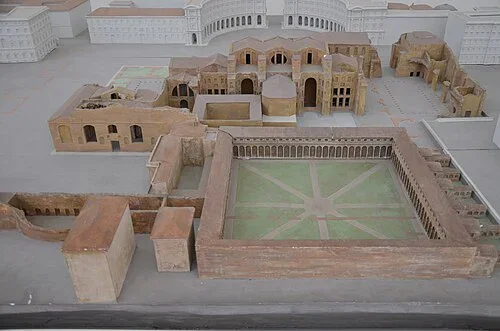 Main Entrance and Imperial Complex Overview
Scale Model of the Baths Complex
The model on your screen helps to picture the entire scheme at a glance. Work began in the year 298, when the emperor Maximian commissioned the baths to honour his co-emperor Diocletian, on his own return from Africa. They were finished around 306, after both men had laid down power, under Constantius, the father of Constantine. Brick stamps from the site suggest the project was so vast that brick production across Rome was redirected under the emperor's control. The whole enclosure covered about thirteen hectares, and the central block alone stretched roughly two hundred and eighty metres long. It was about one hundred and sixty metres deep. Water came from the Aqua Marcia, an aqueduct that had served the city since the second century BC, and Diocletian ordered its supply increased for the baths. In the ancient plan, the central block ran on a single axis from the cold room through the warm room to the hot room, with halls arranged symmetrically around them. To the southwest, a great curved exedra was flanked by two large buildings, probably libraries, and beyond them two circular halls closed the corners.
Carole Raddato from Frankfurt, Germany · CC BY-SA 2.0
03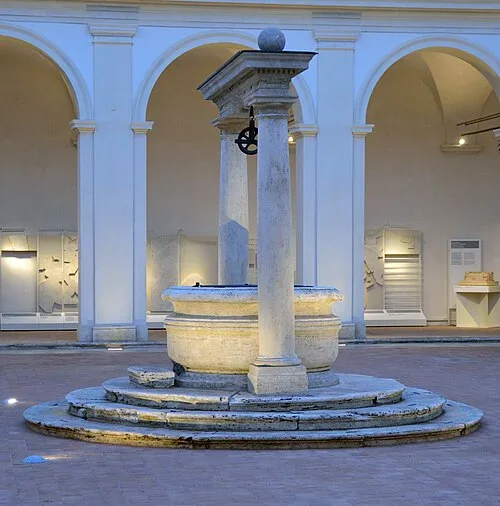 The Small Cloister and Epigraphic Collection
The Small Cloister of the Charterhouse
A stone well stands at the centre of this quiet cloister, raised on its pillar under a little canopy. It is the anchor of a very different chapter from the emperors'. From the 1560s a community of Carthusian monks was attached to the church that had grown inside the bath ruins, and this small courtyard was part of their house. After 1575, under Pope Gregory the Thirteenth, several of the surviving great halls of the baths were converted into grain and oil stores for the city of Rome. The largest baths of ancient Rome became, in effect, a warehouse. Around these arcades the museum now displays its collection of Roman inscriptions, the written record of the city carved in stone.
Listen in the appPhoto: Livioandronico2013 · CC BY-SA 4.0
04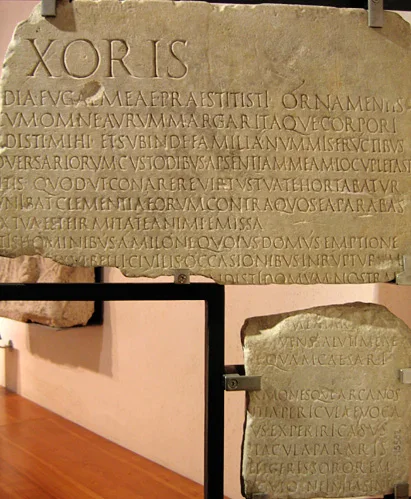 The Small Cloister and Epigraphic Collection
The Laudatio Turiae Inscription
One inscription here has a fame of its own: the Laudatio Turiae, a long funerary speech carved in tall Roman letters. In it a husband praises his wife, her virtues, her fidelity, and the courage she showed through the civil wars that tore Rome apart. It reads as a private voice preserved in marble. That is what the Romans did with writing: they set it in stone, in public, to last. Laws and official dedications, acts of generosity, grief and love all travelled down the centuries on slabs like these. This museum holds one of the great collections of that written Rome, and this broken column of text is among its most celebrated pieces.
Listen in the appVRoma Project · CC BY-SA 3.0
05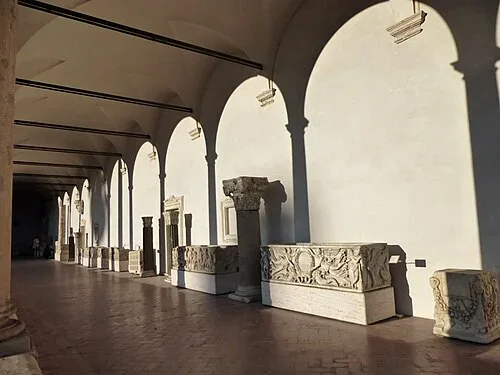 The Great Cloister of Michelangelo
Michelangelo's Great Cloister
These monumental arcades are credited to Michelangelo, who not only designed the church within the ruins but also planned the main cloister of the Carthusian house. The idea is serene and audacious at once: a calm classical frame of arches and windows, built amid the wreckage of the imperial baths. Today the cloister serves as an open-air gallery. Ancient sarcophagi with carved figures, columns, altars and statues stand in a long line along the walks, catching the light through the arches. Sculpture that once adorned temples, tombs and baths now keeps company in this one quiet square of green and stone.
Listen in the appPhoto: Lalupa · CC BY-SA 4.0
06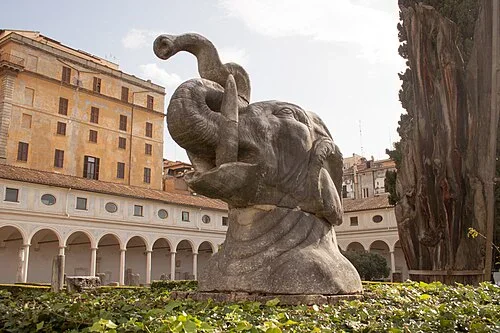 The Great Cloister of Michelangelo
Elephant Head Sculpture in the Cloister Garden
Among the hedges of the old monastery garden, a marble elephant lifts its trunk. The head is carved on a grand scale, far larger than any living animal, its curled trunk and wrinkled skin picked out in stone. No one here claims a precise story for it. It belongs to the character of this place, where ancient and later fragments of every kind have been gathered among the cloister walks, a garden assembled piece by piece from Rome's long past.
Listen in the appSelf-photographed by Szilas in the Museo Nazionale Romano - Terme di Diocleziano · Public domain
07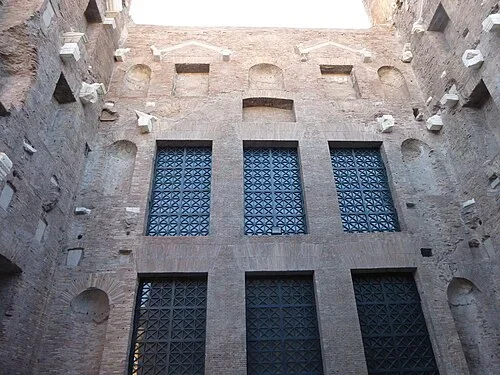 The Natatio Ruins
The Natatio — the Open-Air Pool Wall
This towering brick wall belonged to the natatio, the great open-air swimming pool of the complex. Its sheer face still shows the rows of niches and tall windows that once articulated the space, and those niches would have held marble facing and statues, in the manner of imperial palace architecture. Here bathers swam in the open air, in a pool the size of a piazza. The ancient story of the baths ends near this spot. They ran until about 537, when the Ostrogoths cut the aqueducts that fed the city, and without water the greatest baths of Rome went out of use.
Listen in the appPhoto: Lalupa · CC BY-SA 4.0
08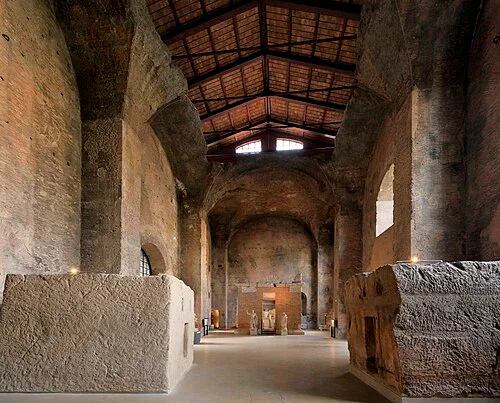 Aula X and Monumental Ancient Halls
Aula Ten — A Surviving Great Hall
Inside one of the baths' great halls, the scale of the place finally lands. The vaults overhead are original Roman brickwork, the exposed masonry of a single room within a complex of thirteen hectares. This hall also holds one of the site's strangest afterlives. From 1879 to 1910 it housed the studio of Moses Jacob Ezekiel, an American sculptor who lived and worked among these ruins and sold his works across the world. He filled the vaulted space with ancient marbles and bronzes, medieval parchments and silks, and a grand piano, and turned it into a celebrated salon. Visitors to the ruins included the composer Franz Liszt and Ulysses Grant, the general and former president. The museum later reclaimed the space, and the heavy blocky monuments set along the walls are ancient tombs, saved from Rome's outskirts and rebuilt here as part of the display.
Listen in the appPhoto: Falk2 · CC BY-SA 4.0
09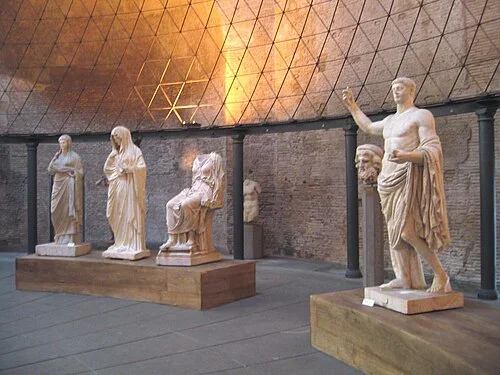 The Octagonal Hall (Aula Ottagona)
The Octagonal Hall once flanked the caldarium, the great hot-bath hall at the end of the central axis. Two octagonal rooms like this one stood on either side of it, and the caldarium itself had a cross-vaulted middle bay and three projecting apses, on a scale its predecessors never attempted. The hall survived centuries in which the baths were treated as a quarry, its halls put to private uses and even to breaking horses. The worst blow came between 1586 and 1589, when Pope Sixtus the Fifth, building his villa on the Esquiline, demolished the remains around the caldarium with the help of explosives, on the order of a hundred thousand cubic metres of masonry. Later clearing for the station square and the surrounding streets took more. This hall then had a scientific afterlife, serving as Rome's planetarium from 1928 until the 1980s. Today it displays ancient sculpture under its soaring geometry.
Listen in the apprene boulay · CC BY-SA 3.0
10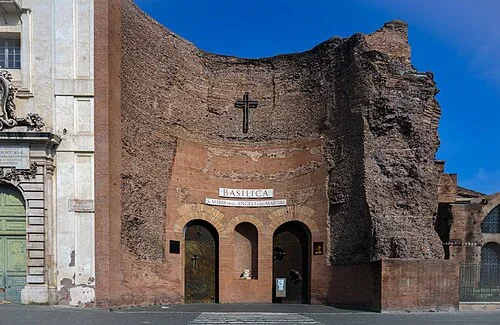 Basilica of Santa Maria degli Angeli e dei Martiri
Santa Maria degli Angeli e dei Martiri — the Ruined Facade
The ragged, curving brick wall with the modern doors is not a church facade at all. It is the ancient bath itself, ruin and basilica fused into one front. In the 1560s Pope Pius the Fourth ordered a basilica raised within the remains, to commemorate Christian martyrs who, by long tradition, died during the construction of the baths. Christian tradition held that the complex had been built by enslaved Christians, and Diocletian was remembered as the emperor of the last great persecution, launched in 303. The martyrdom is a story preserved by the church's dedication, not a settled fact. Michelangelo received the commission and made use of the frigidarium and tepidarium, the great surviving halls of the baths, shaping the church within them. A chapel dedicated to the Angels had already stood against these ancient walls, and out of it grew the Basilica of Santa Maria degli Angeli e dei Martiri.
Listen in the appPhoto: NikonZ7II · CC BY-SA 4.0
- 11
Inside the Basilica — the Frigidarium as Transept
The church transept is the ancient frigidarium, with its granite columns and Roman vaults almost intact.
- 12
The Meridian Line on the Basilica Floor
A meridian line in the marble floor, where the noon sun marks the zodiac at the summer solstice.
- 13
San Bernardo alle Terme — a Corner Rotunda of the Baths
San Bernardo alle Terme, a corner rotunda of the bath enclosure, its coffered dome and oculus overhead.
- 14
Piazza della Repubblica and the Ancient Exedra
Piazza della Repubblica traces the curve of the ancient exedra, and the modern city closes around the baths.
Terme di Diocleziano
Frequently asked questions
How much does the guide cost?
Free app download. Listed guide price: $1.99. Guide price shown in the app. Audio guide only. Venue admission is separate.
Can I listen without internet?
Yes. Download the guide’s audio, images, and maps in the app before your visit. Your downloaded content is then available offline.
Can I listen in my language?
This audio guide is available in 15 languages, including English.
Do I need to follow a schedule?
No. This is a self-guided experience. Choose your stops, pause whenever you like, and return to a story at your own pace.
At your own pace
Explore Terme di Diocleziano.
Download Stanza, then search for “Terme di Diocleziano”.
Free app download · Guide price shown in the app
Keep exploring
Nearby audio guides
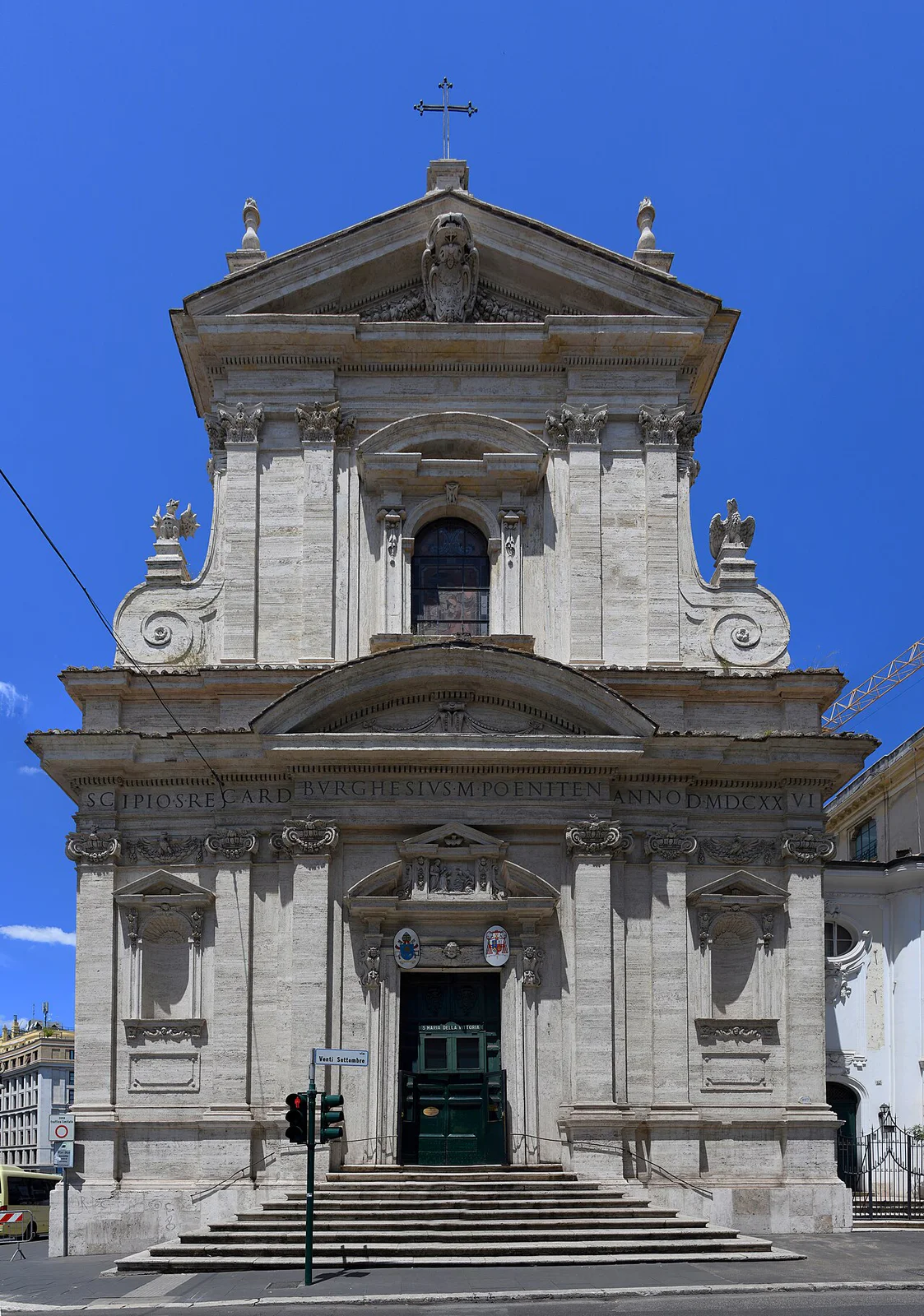
Rome · 1 km
Chiesa di Santa Maria della Vittoria
Content & sources
Photo: Architas · CC BY-SA 4.0
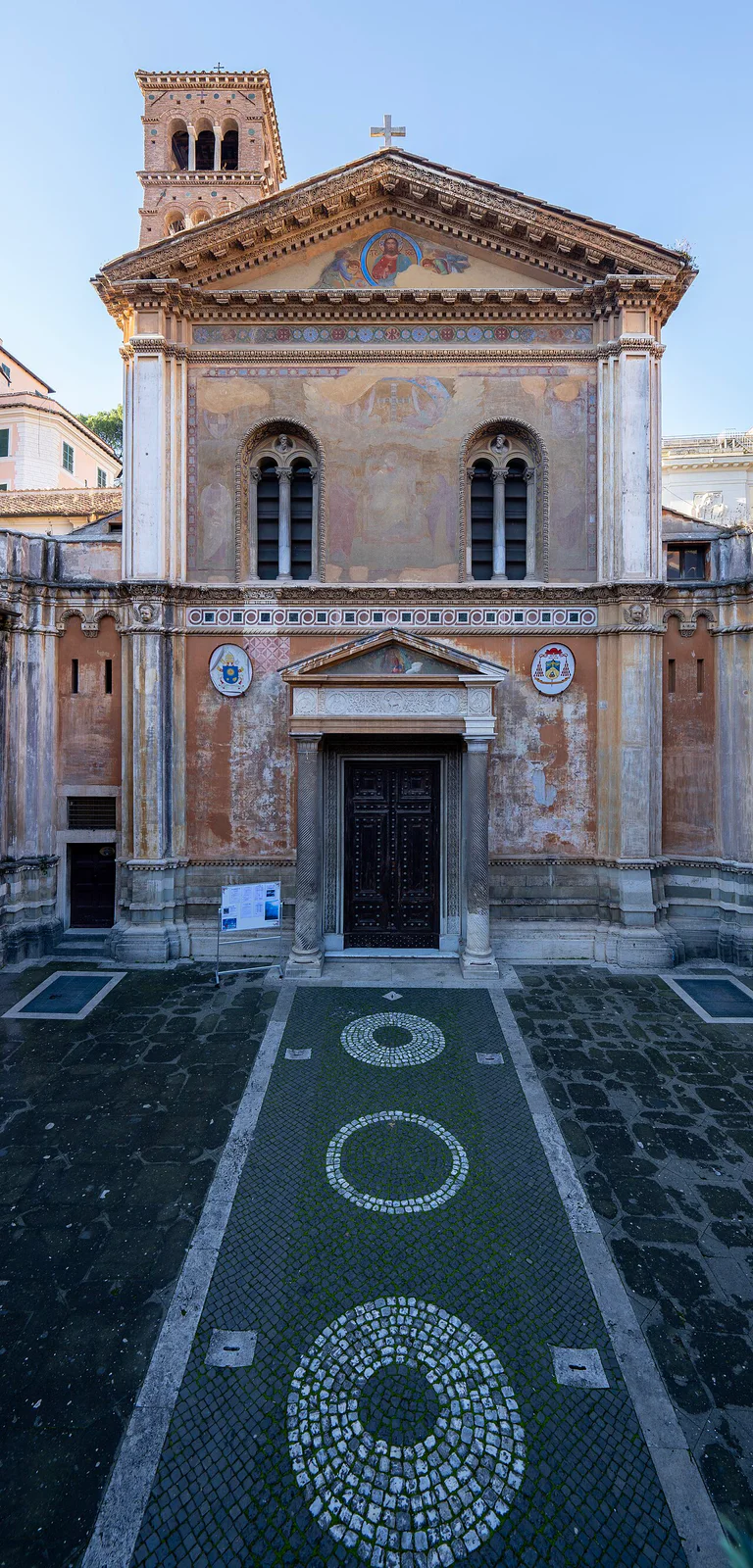
Rome · 1 km
Basilica di Santa Pudenziana
Content & sources
Photo: Rione I Monti · CC BY 4.0
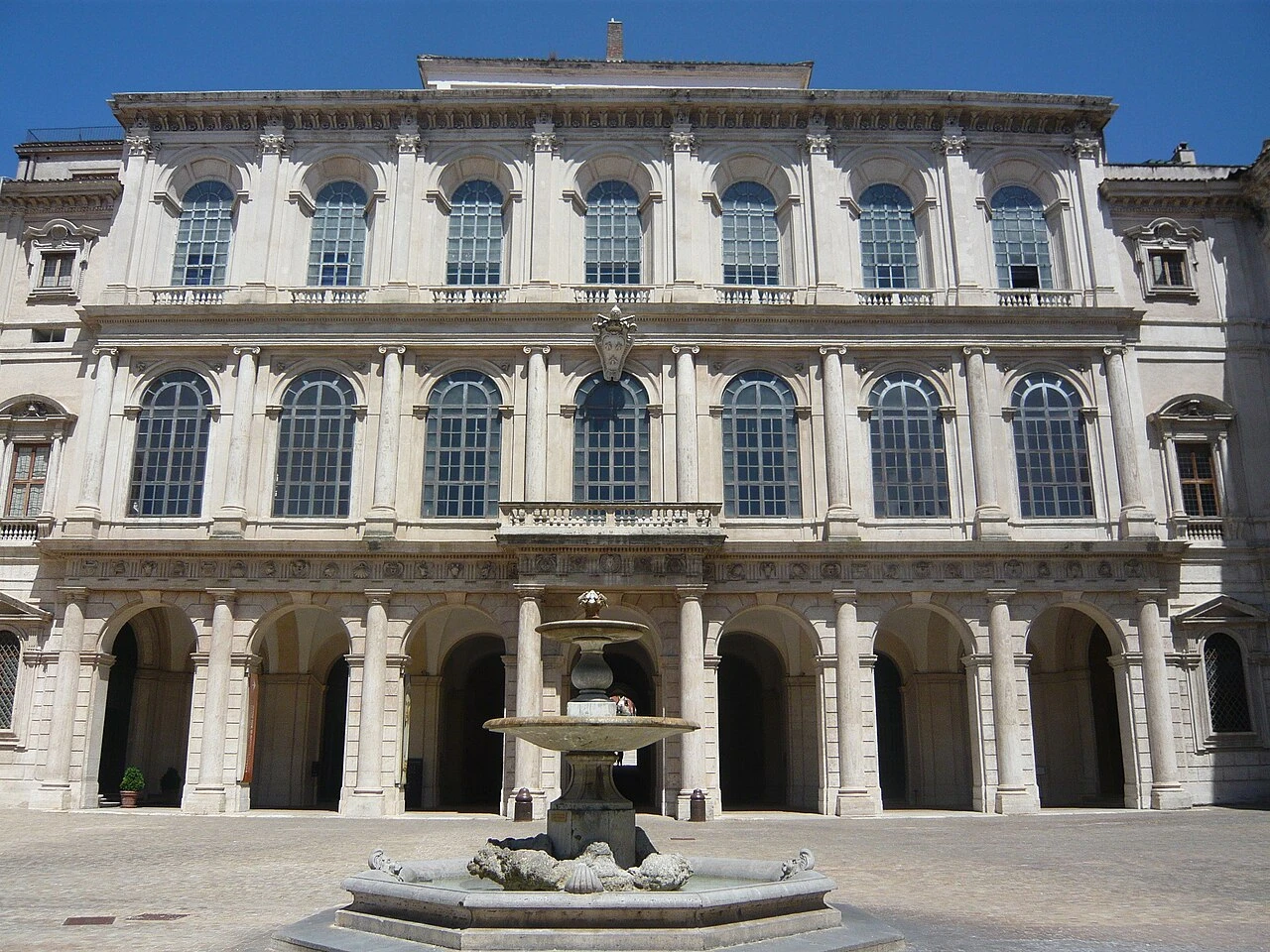
Rome · 1 km
Palazzo Barberini
Content & sources
Photo: Mallowtek · CC BY-SA 3.0
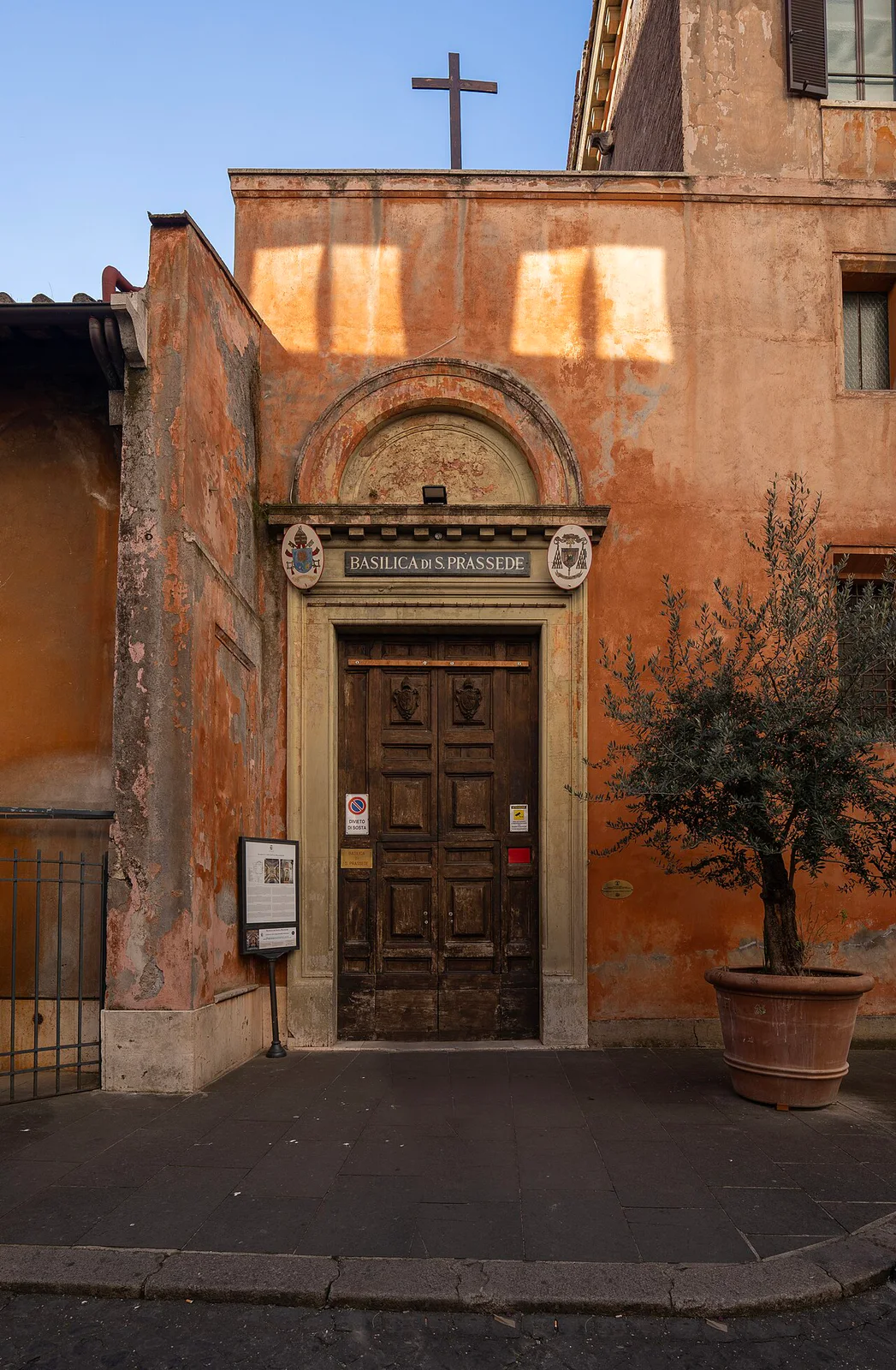
Rome · 1 km
Basilica di Santa Prassede
Content & sources
Photo: Rione I Monti · CC BY 4.0