Stanza · Audio guide
Palazzo BarberiniAudio guide
A place to remember. A story to take with you.
A grand 17th-century Baroque palace commissioned by Pope Urban VIII, currently housing the Galleria Nazionale d'Arte Antica. It is renowned for its intricate architecture, featuring contributions from…
Download Stanza, then search for “Palazzo Barberini”.
About the tour
One guide. Your kind of visit.
A grand 17th-century Baroque palace commissioned by Pope Urban VIII, currently housing the Galleria Nazionale d'Arte Antica. It is renowned for its intricate architecture, featuring contributions from Bernini, Borromini, and Pietro da Cortona.
Ready when you are.
- 01Get the free Stanza app.
iOS & Android
- 02Find your guide.
“Palazzo Barberini”
- 03Download before you go.
Works offline
Audio guide / 18 narrated stops
Inside the guide
Get to know a few of the stories before you go. Open a stop to read more.
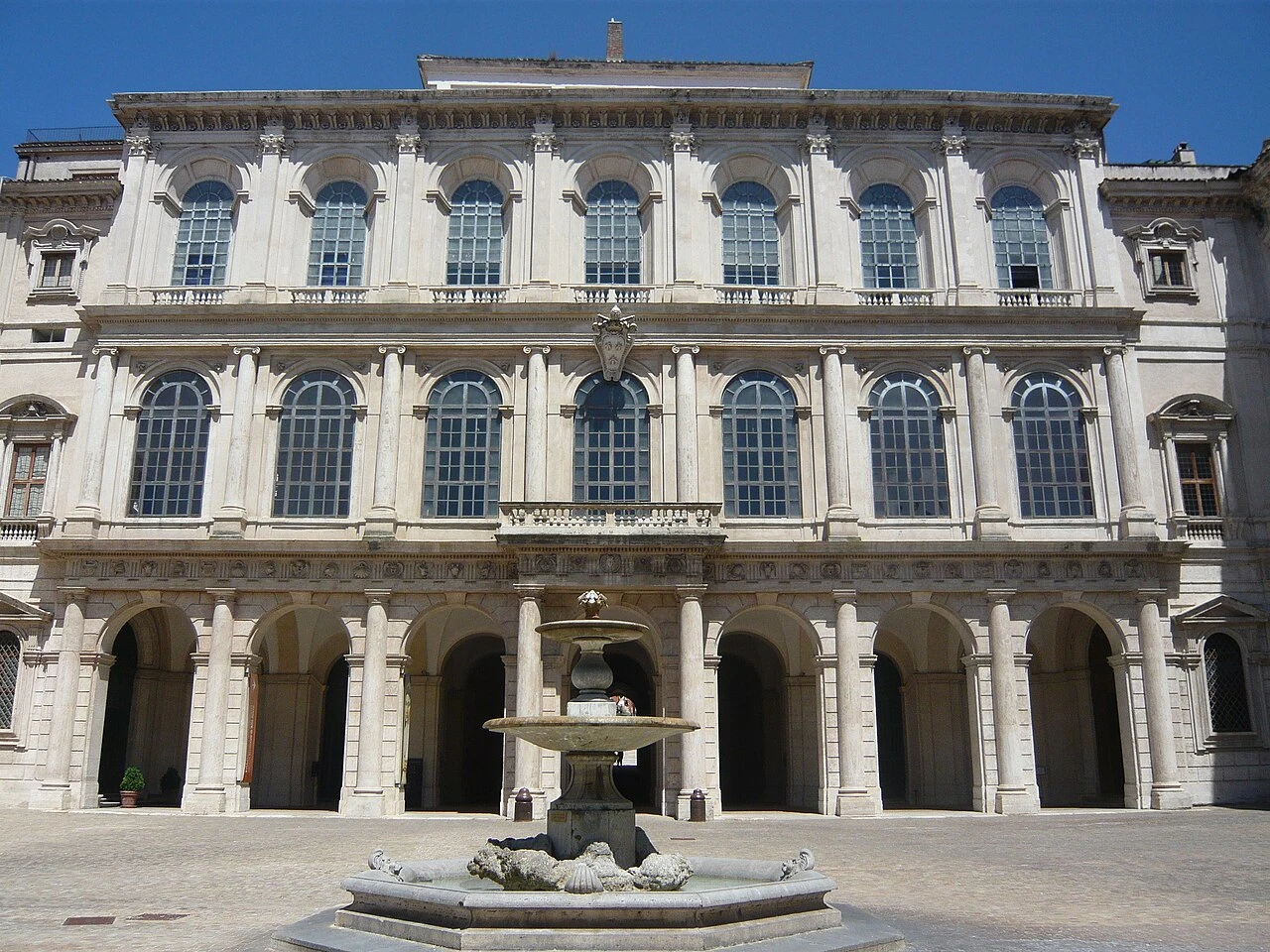
01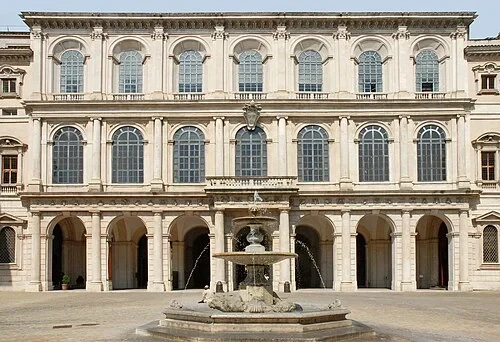 Main Entrance and the Grand FacadeThe Grand Facade
Unlike the traditional, closed-block Roman residences of the time, this palace features a distinctive H-shaped footprint. Construction began in 1625 under Carlo Maderno, but it eventually became a legendary collaboration between three titans of Baroque architecture: Maderno himself, Gian Lorenzo Bernini, and Francesco Borromini. Notice the central loggia, which boasts three tiers of arches. This specific architectural choice creates an inviting appearance more characteristic of a suburban villa than a fortified urban palace. By pulling the central section back and extending the side wings, the architects allowed natural light to flood the interior while creating a courtyard that feels integrated with the surrounding city. This design was highly influential, moving away from the fortress-like facades of previous centuries toward a more theatrical and public-facing style. As you examine the facade, you can see the different hands at work—from the classical foundations to the more experimental and ornate details that would come to define the Roman High Baroque.
Jean-Pierre Dalbéra from Paris, France · CC BY 2.0
02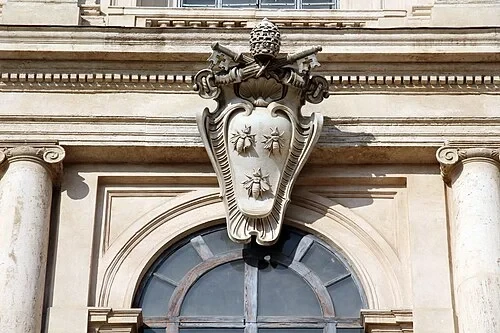 Main Entrance and the Grand FacadeThe Barberini Bees
These three bees are the heraldic symbol of Maffeo Barberini, the man who rose to become Pope Urban VIII in 1623. In the 17th century, visual branding was essential for broadcasting status, and the Barberini family utilized the bee motif extensively throughout this palace. Above the bees, you can see the iconic papal tiara and the crossed keys of Saint Peter. These elements aren't merely decorative; they serve as a potent reminder that this building was more than a family residence. It was a seat of immense political and religious authority. The keys represent the spiritual power to bind and loose on earth, while the tiara signifies the Pope's temporal sovereignty. Together with the bees, this imagery communicated the family's divine selection and their central role in the governance of the Catholic Church. Look closely at the stonework to see how the bees appear to be moving upward, a symbolic representation of the family's rapid ascent to power. This heraldry is repeated across the facade and inside the palace, ensuring that every visitor understood exactly whose domain they were entering.
Fred Romero from Paris, France · CC BY 2.0
03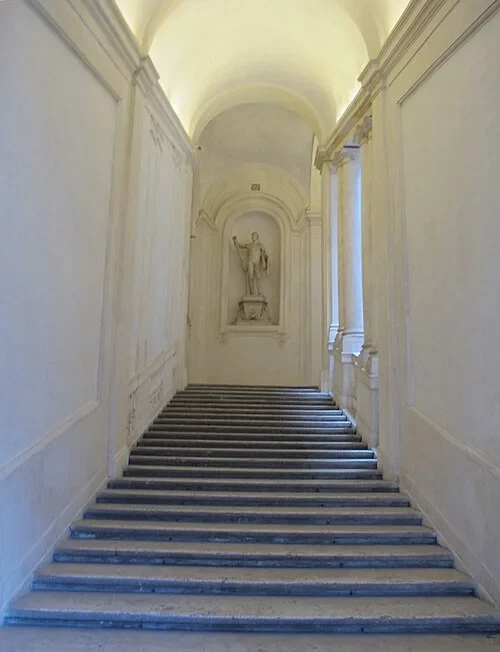 Bernini’s Grand Square StaircaseBernini’s Grand Staircase
Located in the north wing, this ceremonial entrance was crafted by Gian Lorenzo Bernini to impress those arriving for official business. Notice the square, stable geometry of the stairs, which creates a feeling of monumental permanence. Bernini used paired columns along the landings to reinforce the sense of architectural strength and order. One of the most striking features here is the abundance of natural light streaming in through large, strategically placed windows. This use of light was a signature of Bernini’s theatrical style, turning a functional element like a staircase into a dramatic, sun-soaked stage for formal processions. Dignitaries and guests of the Pope’s nephews would have ascended these steps, their movements framed by the classical rhythm of the columns. The width of the steps and the gentle incline were specifically designed to allow for a slow, dignified pace during state visits. Unlike the more private areas of the house, this space was intended for public display, intended to reflect the prestige and cultural sophistication of the Barberini name through the clean lines and grand scale of High Baroque design.
Listen in the appPhoto: Sailko · CC BY-SA 3.0
04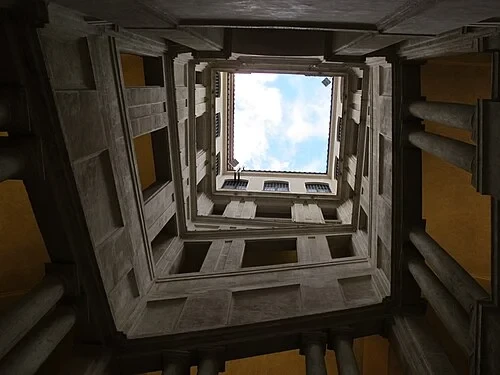 Bernini’s Grand Square StaircaseThe Geometry of Power
From this vantage point, the architectural discipline of Bernini’s design becomes truly apparent. The repetitive rhythm of the paired columns, stacked level upon level, creates a powerful vertical perspective that draws the eye toward the top of the palace. This rigorous square geometry was intended to convey stability and authority, mirroring the established power structures of the Roman Church. As you look up, the layers of stone seem to recede, providing a sense of nearly infinite height within the confined space of the stairwell. This design follows traditional architectural principles, emphasizing right angles and massive forms. It stands in stark contrast to the experimental, fluid spiral staircase found on the opposite side of the palace, which we will visit later in the tour. While that spiral represents innovation and mathematical complexity, this square well represents the solid, unshakeable foundation of the Barberini family's status. The play of light and shadow across the vertical surfaces further emphasizes the depth of the structure, turning the simple act of looking upward into a lesson in Baroque proportions and the deliberate staging of architectural power.
Listen in the appPhoto: Sailko · CC BY-SA 3.0
05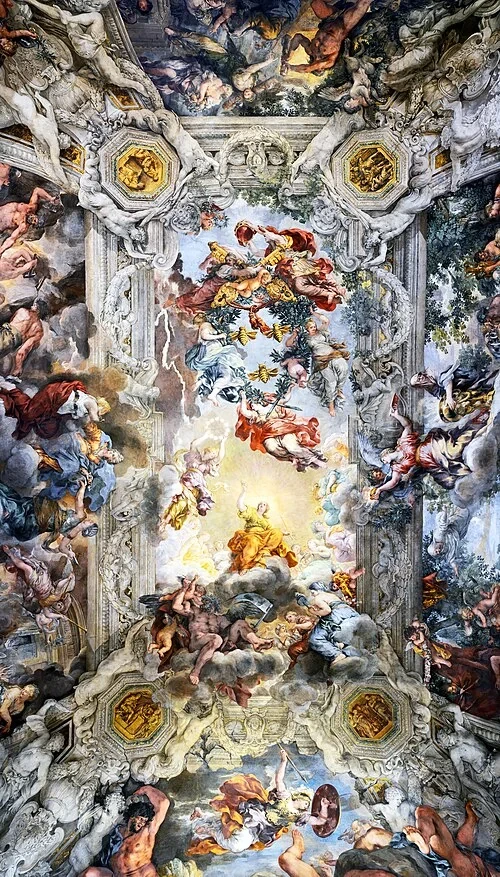 The Gran Salone: Triumph of Divine ProvidenceTriumph of Divine Providence
This breathtaking ceiling utilizes the 'sotto in su' technique, an Italian phrase meaning 'from below upwards.' By masterfully manipulating perspective, the artist makes the solid roof appear to open into a vast, open heaven. The central theme of this work is the glorification of the Barberini family, depicting them as being specifically chosen and elevated by Divine Providence. In the very center of the composition, look for a giant, swirling cluster of bees. These are not just any insects; they are the Barberini bees, held aloft by allegorical figures. This swarm symbolizes the virtuous and industrious reign of Pope Urban VIII. Surrounding this central scene are various mythological and allegorical stories that illustrate the family's many triumphs over vice and their commitment to religion and justice. The boundary between the real room and the painted world is intentionally blurred, with figures appearing to sit on the physical cornices of the hall. This immersive experience was designed to overwhelm the viewer, using scale and light to create a sense of awe that reinforced the perceived divine right of the Barberini to lead both the city and the Church.
Listen in the appPhoto: Livioandronico2013 · CC BY-SA 4.0
06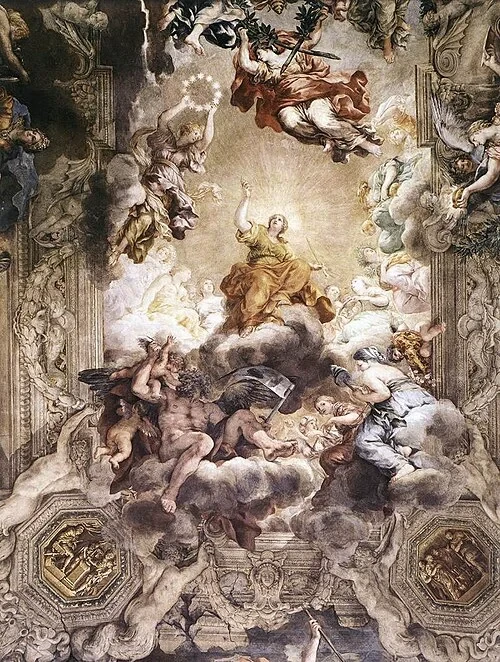 The Gran Salone: Triumph of Divine ProvidenceThe Mastery of Cortona
The level of technical skill on display here redefined what was possible in large-scale fresco painting. Pietro da Cortona employed an advanced form of chiaroscuro, using extreme light and deep shadows to give the figures a tangible, three-dimensional quality. Some characters appear so lifelike that they seem to be falling out of the ceiling directly into the room below. This sense of frantic, swirling energy was a radical departure from the calm, orderly, and static compositions favored during the Renaissance. Instead of clear, isolated figures, Cortona created a dense, interconnected web of motion and emotion. Every corner of the fresco is packed with detail, requiring the viewer's eye to constantly move across the surface. This monumental project was an exhausting undertaking, taking the artist seven years of meticulous labor to complete. The sheer complexity of the perspective and the number of figures involved made it one of the most ambitious artistic achievements of the 17th century. By moving away from balanced symmetry, Cortona captured the dynamic and often chaotic spirit of the Baroque era, where art was used to provoke an immediate, emotional response in the observer.
Listen in the appPietro da Cortona · Public domain
07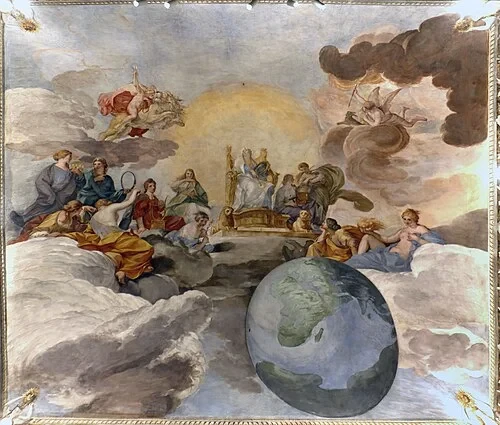 Sala della Divina SapienzaAllegory of Divine Wisdom
While Cortona’s work is a whirlwind of motion, this ceiling by Andrea Sacchi represents the 'classicist' camp of the Baroque. Sacchi preferred a more restrained approach, using fewer figures and a highly readable, balanced composition. This room was dedicated to the intellectual and theological side of the Barberini family, emphasizing their wisdom and spiritual insight rather than their raw political power. At the center of the scene is the throne of Divine Wisdom, surrounded by personifications of various virtues. Notice the representation of the Earth in the foreground, which grounds the celestial scene and connects the divine realm to the physical world the Barberinis governed. The colors here are more subdued, and the spacing between figures allows each one to be clearly identified and contemplated. This style was meant to reflect the family's patronage of science and philosophy, presenting them as enlightened rulers who sought harmony between faith and reason. By placing these two different styles—Cortona’s dynamic energy and Sacchi’s classical order—within the same palace, the Barberinis demonstrated their mastery over all facets of contemporary culture and thought.
Listen in the appPhoto: Fabrizio Garrisi · CC0
08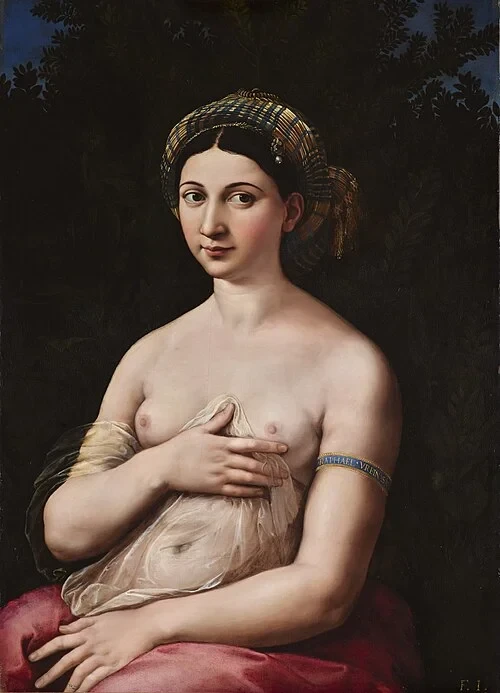 Renaissance Masterpieces: La FornarinaThe Baker's Daughter
Known as 'La Fornarina' or the baker's daughter, Margherita Luti was the woman Raphael loved until his death. The most significant detail is the blue ribbon on her upper left arm, which bears the artist's signature: 'Raphael Urbinas.' In the 16th century, placing one's name so prominently on a subject's body was a scandalous declaration of possession and affection. Legend has it that Raphael was so infatuated with Margherita that he frequently neglected his prestigious papal commissions to spend time with her. Her depiction here is a study in contrasts; she strikes a modest, Venus-like pose, yet her direct gaze is remarkably intimate and self-assured. Note the incredibly delicate, transparent veil she holds against her chest, which showcases Raphael's technical mastery in painting light and texture. The dark foliage in the background makes her warm skin tones appear to glow. This painting offers a rare glimpse into the private life of a Renaissance master, moving away from religious icons to celebrate human beauty and personal devotion. Her soft features and the slight smile suggest a deep level of comfort and familiarity between the artist and his muse.
Listen in the appRaphael · Public domain
09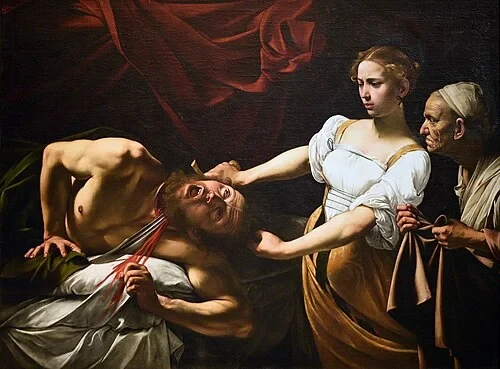 The Caravaggio RoomJudith Beheading Holofernes
This masterpiece captures the exact moment the Jewish widow Judith assassinates the Assyrian general Holofernes. Caravaggio used an extreme form of 'chiaroscuro,' or light and dark contrast, to make the figures pop against a deep, murky background, creating the effect of a scene illuminated on a theater stage. Notice the psychological tension: the young Judith pulls back in visible disgust even as she performs the violent act with grim determination. Beside her, the decrepit old maidservant leans in with an expression of eager, almost predatory anticipation. The anatomical precision is startling, from the realistic spurts of blood to the straining tendons in the general's neck. Holofernes' eyes are wide with the shock of sudden realization and terminal agony. Unlike earlier artists who portrayed this scene with a sense of triumph or grace, Caravaggio focused on the raw, ugly reality of the murder. The red curtain draped above adds to the theatricality, framing the violence. This painting revolutionized Baroque art by proving that biblical themes could be depicted with the same unvarnished realism as everyday street life, forcing the viewer to confront the physical toll of the struggle for survival.
Listen in the appCaravaggio · CC BY-SA 4.0
10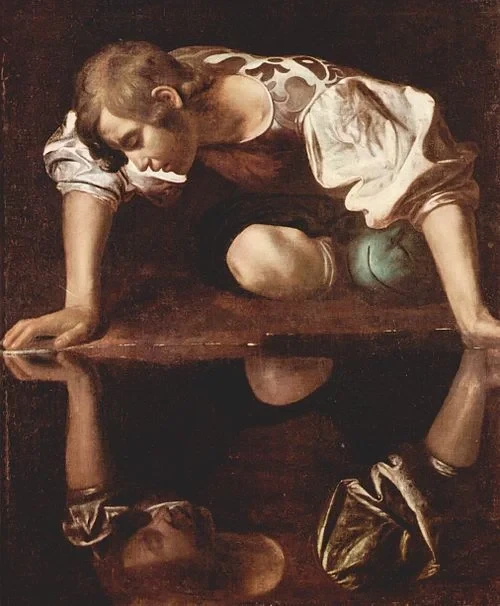 The Caravaggio RoomNarcissus
The figure of Narcissus and his reflection in the water form a perfect, closed loop, visually representing the character's total self-absorption. Caravaggio’s signature realism is evident in the grimy details, such as the dirt on the boy’s knee and the frayed, worn fabric of his white sleeve. These touches bring the myth down to earth, making the scene feel immediate and contemporary rather than ancient and distant. The water itself is dark and murky, serving as a mirror that reflects not just the boy's beauty, but also his impending doom. There is a profound sense of isolation here; the deep shadows that surround Narcissus swallow up the landscape, leaving him alone with his own image. This mastery of shadow creates a somber and introspective atmosphere, emphasizing the internal nature of the boy's struggle. The composition forces your eye to circle around the two halves of the image—the living boy and the shimmering reflection—over and over again, mimicking the inescapable trap of Narcissus's vanity. It is a haunting study of how obsession can lead to a complete withdrawal from the world, ending in silent, solitary tragedy.
Listen in the appCaravaggio · Public domain
Palazzo Barberini
Frequently asked questions
How much does the guide cost?
Free app download. Listed guide price: $3.99. Guide price shown in the app. Audio guide only. Venue admission is separate.
Can I listen without internet?
Yes. Download the guide’s audio, images, and maps in the app before your visit. Your downloaded content is then available offline.
Can I listen in my language?
Stanza supports 15 languages. Check the app for the languages available for this guide.
Do I need to follow a schedule?
No. This is a self-guided experience. Choose your stops, pause whenever you like, and return to a story at your own pace.
At your own pace
Explore Palazzo Barberini.
Download Stanza, then search for “Palazzo Barberini”.
Free app download · Guide price shown in the app
Keep exploring
Nearby audio guides
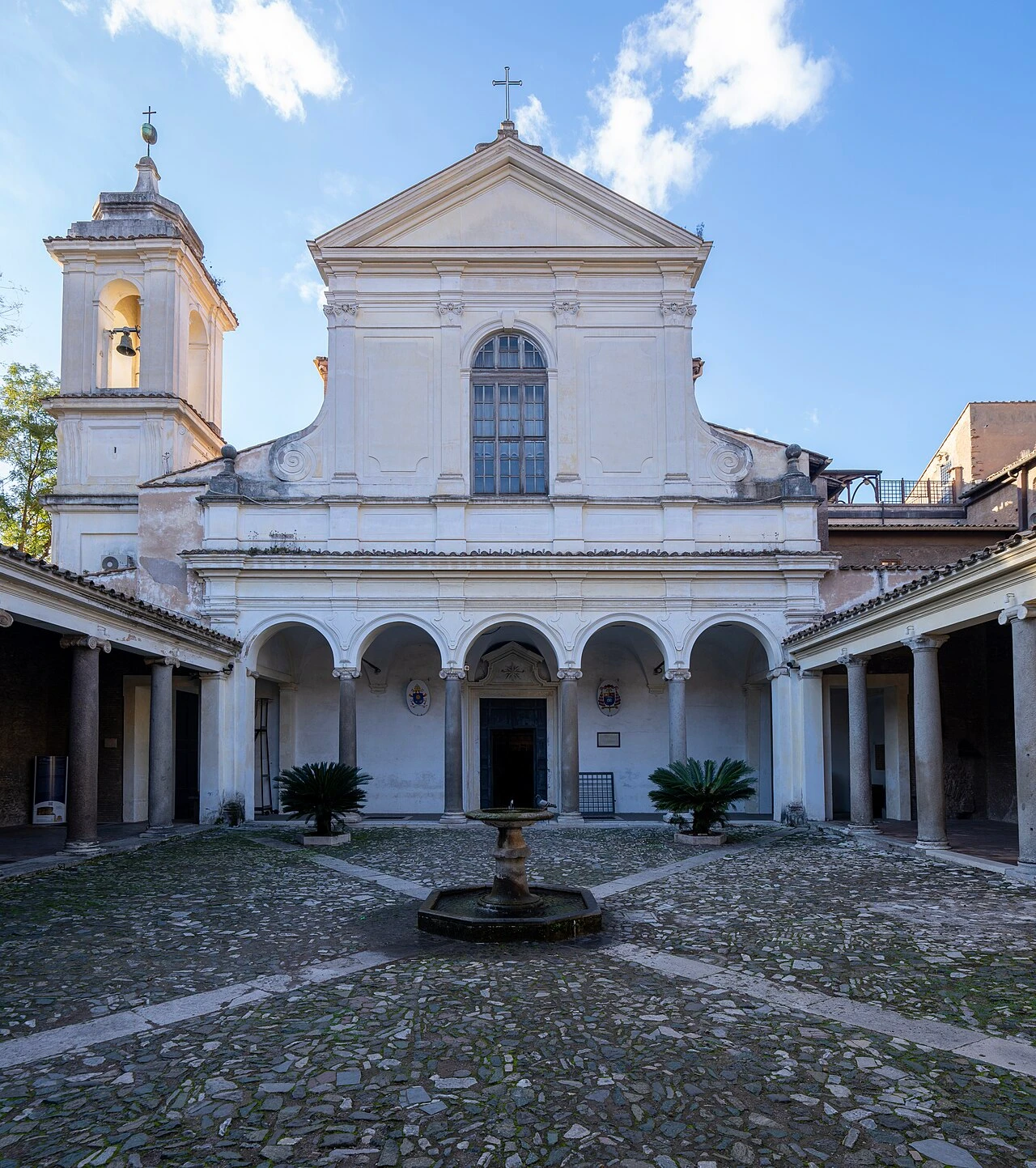
Rome
Basilica di San Clemente
Content & sources
Photo: Labicanense · CC BY-SA 4.0
Rome
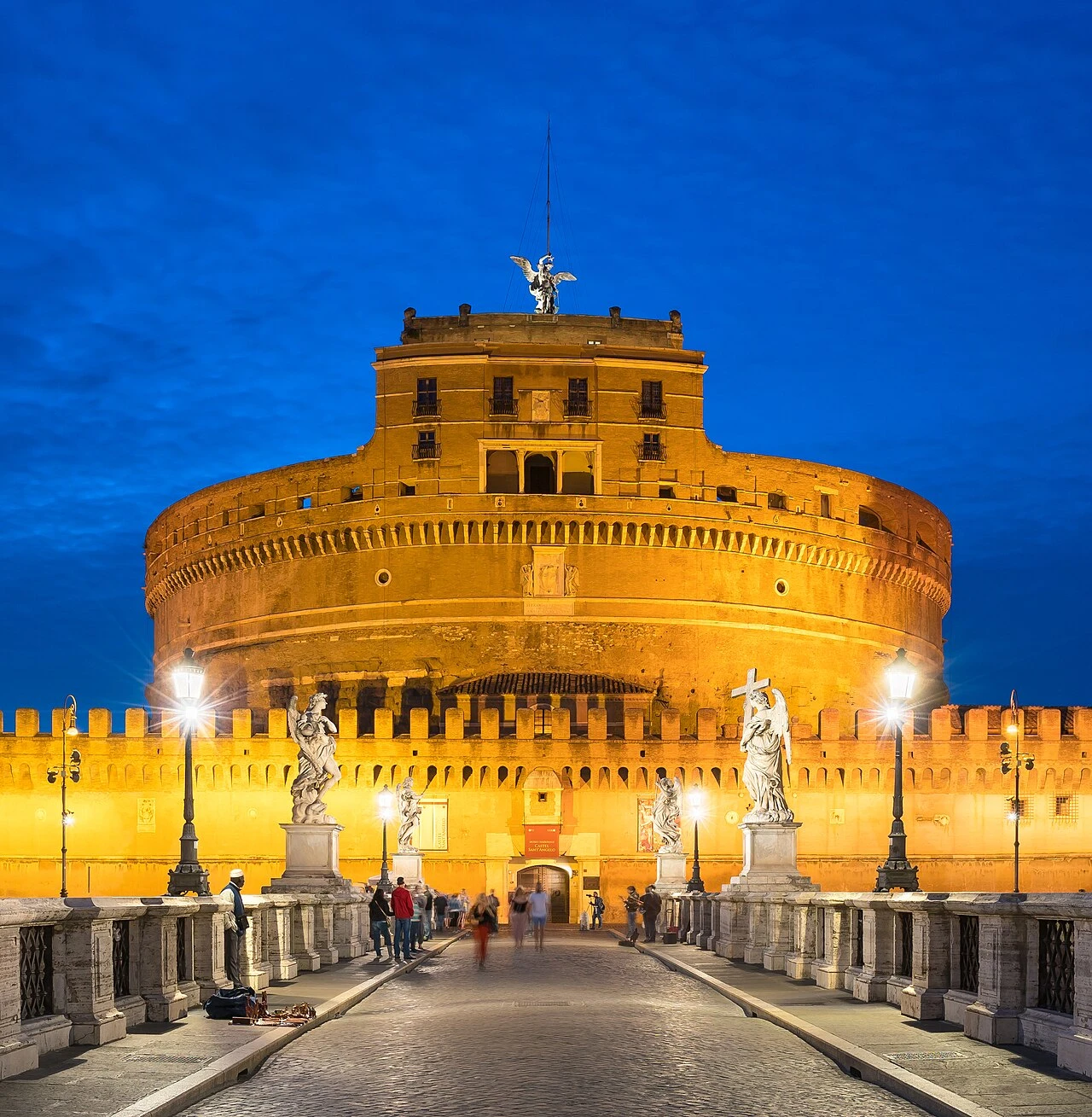
Castel Sant'Angelo
Content & sources
Thomas Wolf, www.foto-tw.de · CC BY-SA 3.0 de
Rome
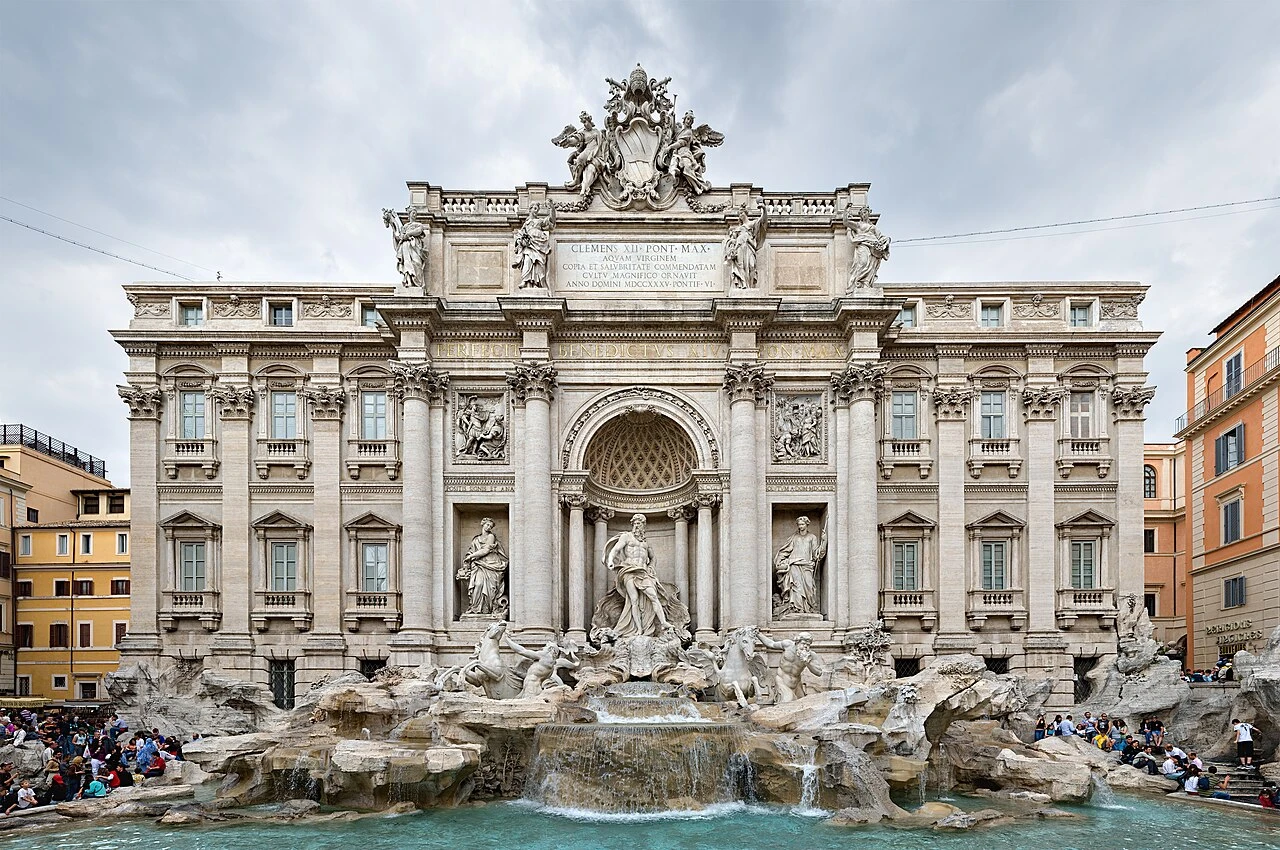
Fontana di Trevi
Content & sources
Photo: Diliff · CC BY 3.0
Rome