Stanza · Audio guide
Chiesa di Santa Maria della Vittoria Audio Guide
A place to remember. A story to take with you.
Santa Maria della Vittoria is a Catholic titular minor basilica and Discalced Carmelite conventual church in Rome. It is famously the home of Gian Lorenzo Bernini's masterpiece the Ecstasy of Saint Teresa.
Download Stanza, then search for “Chiesa di Santa Maria della Vittoria”.
About the tour
One guide. Your kind of visit.
Santa Maria della Vittoria is a Catholic titular minor basilica and Discalced Carmelite conventual church in Rome. It is famously the home of Gian Lorenzo Bernini's masterpiece the Ecstasy of Saint Teresa.
Ready when you are.
- 01Get the free Stanza app.
iOS & Android
- 02Find your guide.
“Chiesa di Santa Maria della Vittoria”
- 03Download before you go.
Works offline
Audio guide / 8 narrated stops
Inside the guide
Get to know a few of the stories before you go. Open a stop to read more.
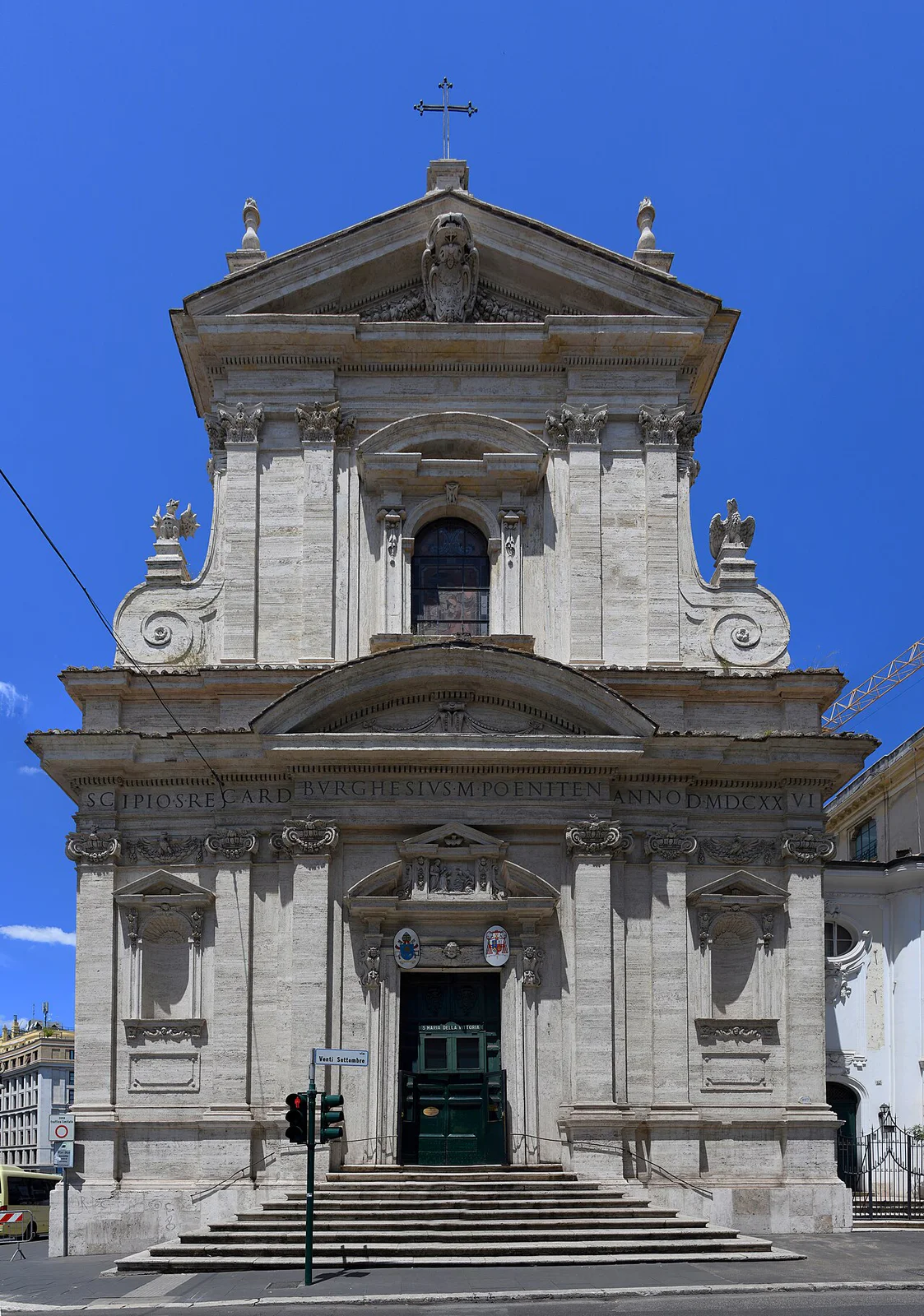
01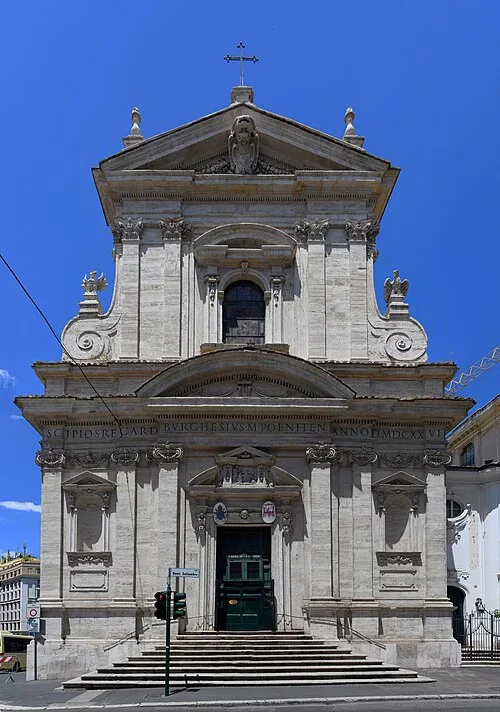 Travertine Façade on Via XX Settembre
Façade on Via XX Settembre
Welcome to Santa Maria della Vittoria, a Carmelite church on the Via XX Settembre in Rome. Over the next stops we move from this travertine front to Bernini's most famous sculpture inside. The church was begun in 1608 for the Discalced Carmelites, from designs by Carlo Maderno, the architect of St Peter's nave. It is the only church Maderno designed and saw through to completion himself. The façade came later, put up between 1624 and 1626 by Giovanni Battista Soria, and it deliberately echoes Maderno's Santa Susanna just across the small square. The money for it carries a story. The Carmelites had been paying for the building from their own funds. Then excavations brought an ancient statue to light, the sleeping Hermaphroditus. Cardinal Scipione Borghese, nephew of Pope Paul V, claimed the sculpture for his collection. In return he financed the rest of the façade and lent the order his own architect, Soria. The bargain took effect in 1624, and the work was finished two years later. One question hangs over the name above the door: why does a Carmelite church call itself 'of Victory'? The answer is told at the high altar, later on this tour.
Photo: Architas · CC BY-SA 4.0
02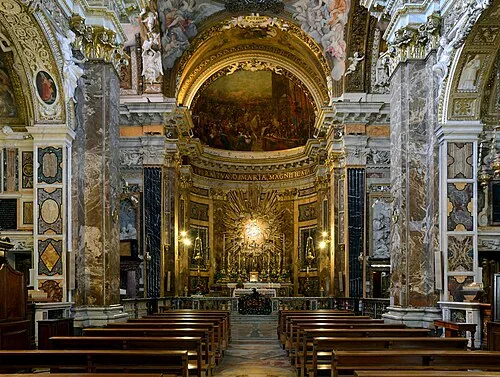 Maderno's Nave and the Vault of Triumph
Maderno's Nave
Carlo Maderno gave this church a single wide nave, about thirty-five metres long and nineteen across, roofed by a low vault. Instead of aisles, three chapels on each side interconnect behind arches. Colossal Corinthian pilasters with gilded capitals carry the entablature above them. The walls are dressed in contrasting marbles, veined and polished, and white and gilded stucco angels and putti stand out from the stone in full relief. None of this richness was Maderno's doing. He died before the interior was embellished, and his successors enriched it step by step over the following decades. In 1833 a fire damaged the interior, and restoration had to follow. The line of pews runs straight to the high altar at the far end, where the church's name finally gets its explanation.
Photo: Livioandronico2013 · CC BY-SA 4.0
03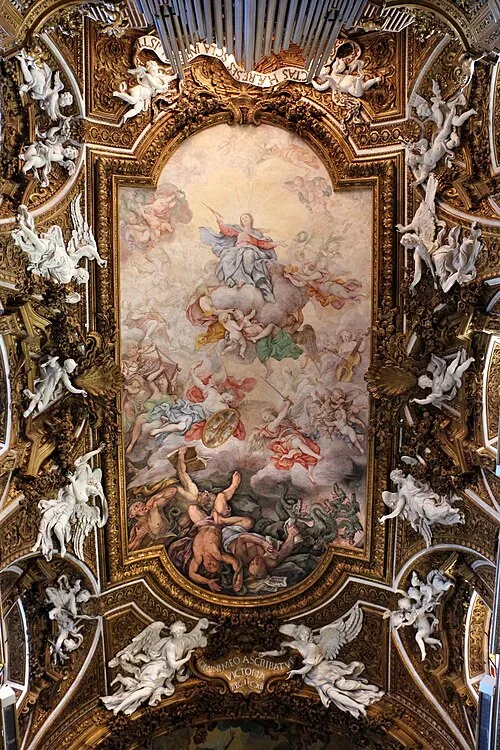 Maderno's Nave and the Vault of Triumph
Cerrini's Vault: The Virgin Triumphant
Overhead, the vault announces the idea this church was built on. In 1675 Giovanni Domenico Cerrini frescoed the Virgin Mary triumphing over Heresy, while rebel angels tumble from heaven around her. The scene sits in shaped compartments with feigned painted frames. White stucco angels swarm over the gilded architecture at its edges, spilling out of the painting into real space. This is the imagery of the Counter-Reformation: the Virgin as a victorious warrior, heresy as a beaten enemy cast down. The ceiling declares that the true faith prevails, which is the very message the building itself was renamed to celebrate. Painting, stucco and architecture merge here into a single stage set. That fusion has a famous Italian name, the bel composto, and it reaches its high point in Bernini's chapel in the left transept.
Listen in the appPhoto: Sailko · CC BY 3.0
04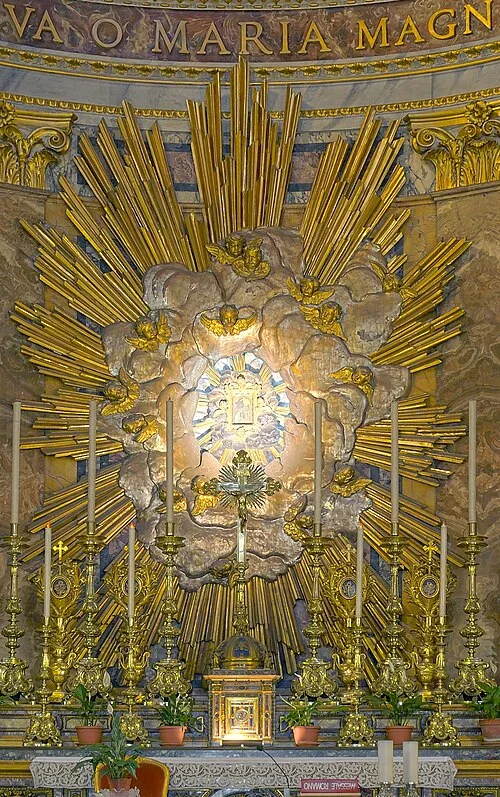 The High Altar and Bohemian Icon
The High Altar and the Bohemian Icon
The high altar holds the reason for the church's name. It began life dedicated to Saint Paul, built as a chapel for the Discalced Carmelites. Then, in 1620, Catholic forces won the Battle of White Mountain near Prague, a victory that reversed the Reformation in Bohemia. The church was renamed for the Virgin as Our Lady of Victory. Above the altar sits a copy of the image of the Madonna that came from Bohemia; the original was lost in the fire of 1833. The Carmelites tell that it went with the imperial army to the battle; the tale belongs to their tradition. A brief of Pope Innocent X, given between 1644 and 1655, confirmed the dedication to Madonna Regina della Vittoria, Mary Queen of Victory. The gilded rays bursting around the image turn that victory into visible light.
Listen in the appLivioandronico2013 (detail by Rabanus Flavus) · CC BY-SA 3.0
05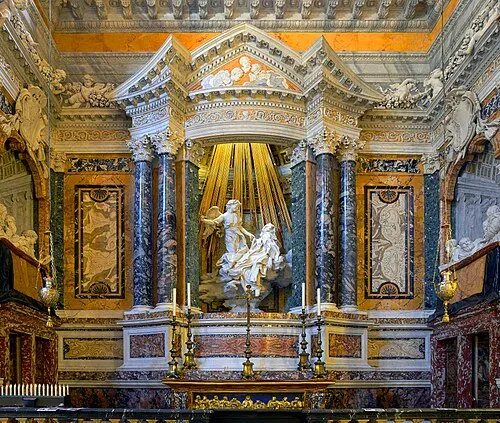 The Cornaro Chapel and Theater Boxes
The Cornaro Chapel: A Stage in Marble
In the left transept, one chapel is a complete work of theater. Cardinal Federico Cornaro, a Venetian, commissioned Gian Lorenzo Bernini to design the whole of it, architecture and sculpture together, and Bernini worked on it from 1644 to 1652. The timing matters. Pope Urban VIII had died, and the new pope, Innocent X, disliked Bernini's style and dropped him. Cut off from Vatican commissions, Bernini took private work like this at the height of his powers. The chapel is built as a stage. Its centerpiece is lit by a window placed so it cannot be seen from the viewing point. Light drops from above onto the marble group, as if channeled by the gilded bronze rays behind it. On the outside wall of the church, three projecting marble corbels still carry the structure holding that window, a small masterpiece of engineering disguised as a miracle.
Listen in the appPhoto: Livioandronico2013 · CC BY-SA 4.0
06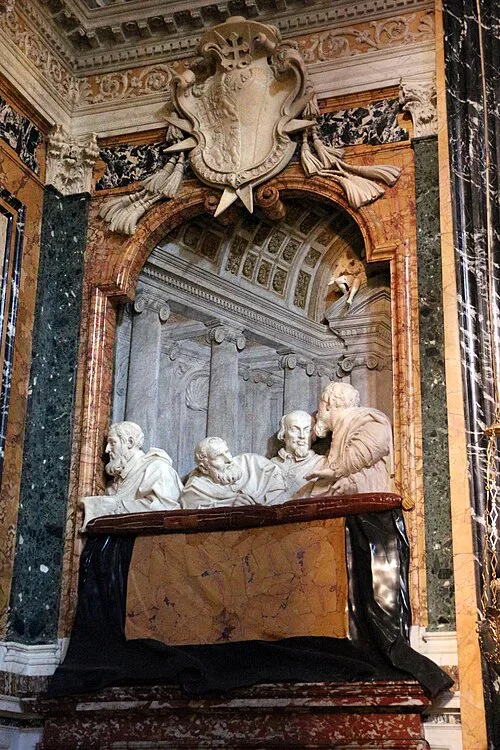 The Cornaro Chapel and Theater Boxes
The Cornaro Family in Their Opera Boxes
On the side walls of the chapel, Bernini carved balconies in high relief that read as theater boxes, set in illusionistic architecture with the Cornaro coat of arms above. Eight men of the Venetian Cornaro family appear across the two reliefs, caught in animated conversation, turning toward the altar as if they had taken their seats for a performance. They are not watching the viewer. They watch the vision at the altar, sacred history staged as a play with the family holding front-row places for eternity. Bernini turned a devotional chapel into a theater and gave his patron and his kin a permanent role in it. Which portrait shows which member of the family, no one today can say.
Listen in the appPhoto: Sailko · CC BY 3.0
07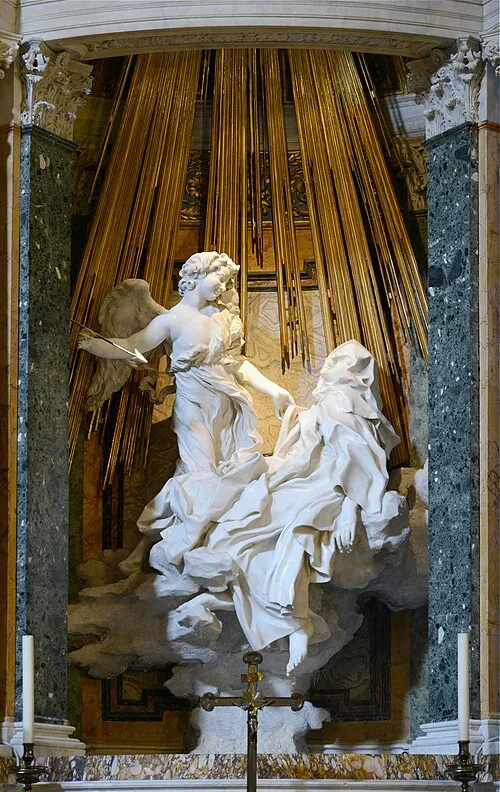 The Ecstasy of Saint Teresa
At the center of the chapel, in white marble, Saint Teresa of Ávila swoons on a cloud while a smiling angel draws back her mantle to pierce her heart with a golden dart. Teresa described this vision herself in her autobiography: a seraph driving a golden shaft into her heart, bringing her immense joy and pain at once. Bernini carved the moment with none of classical art's restraint. Her habit dissolves into deep, tumbling folds, her body slumps, her lips part. The sculpture has been argued over since Bernini's lifetime. Critics accused it of crossing a line of decency: a saint shown impossibly young and idealized, half-fallen, her wimple coming undone, her bare feet on display. Discalced Carmelites, her own order, wore sandals with heavy stockings for modesty. No artist before or after Bernini, his critics said, dared to show a saint's experience this way.
Listen in the appGian Lorenzo Bernini · CC BY-SA 4.0
08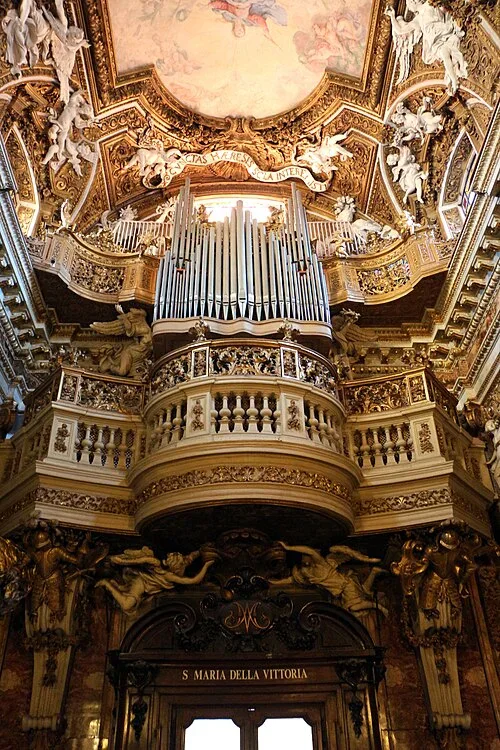 The Cantoria and Exit View
The Cantoria and the Church of Victory
At the back of the nave, the organ stands on a baroque gallery, a cantoria, decorated by Mattia de Rossi in 1680. Its reliefs include imperial armor, trophies of war worked into a music loft. Even the gallery keeps playing the church's theme. In 1683 Catholic forces defeated the Ottoman army at Vienna, and captured Ottoman standards were later hung in this church, further proof in its builders' eyes that the Virgin led Catholic armies to victory. This remains a working Discalced Carmelite church, not a museum. From the battle of 1620 to the trophies of the 1680s, the whole building keeps one dedication: Our Lady of Victory.
Listen in the appPhoto: Sailko · CC BY 3.0
Chiesa di Santa Maria della Vittoria
Frequently asked questions
How much does the guide cost?
Free app download. Listed guide price: $0.99. Guide price shown in the app. Audio guide only. Venue admission is separate.
Can I listen without internet?
Yes. Download the guide’s audio, images, and maps in the app before your visit. Your downloaded content is then available offline.
Can I listen in my language?
This audio guide is available in 15 languages, including English.
Do I need to follow a schedule?
No. This is a self-guided experience. Choose your stops, pause whenever you like, and return to a story at your own pace.
At your own pace
Explore Chiesa di Santa Maria della Vittoria.
Download Stanza, then search for “Chiesa di Santa Maria della Vittoria”.
Free app download · Guide price shown in the app
Keep exploring
Nearby audio guides
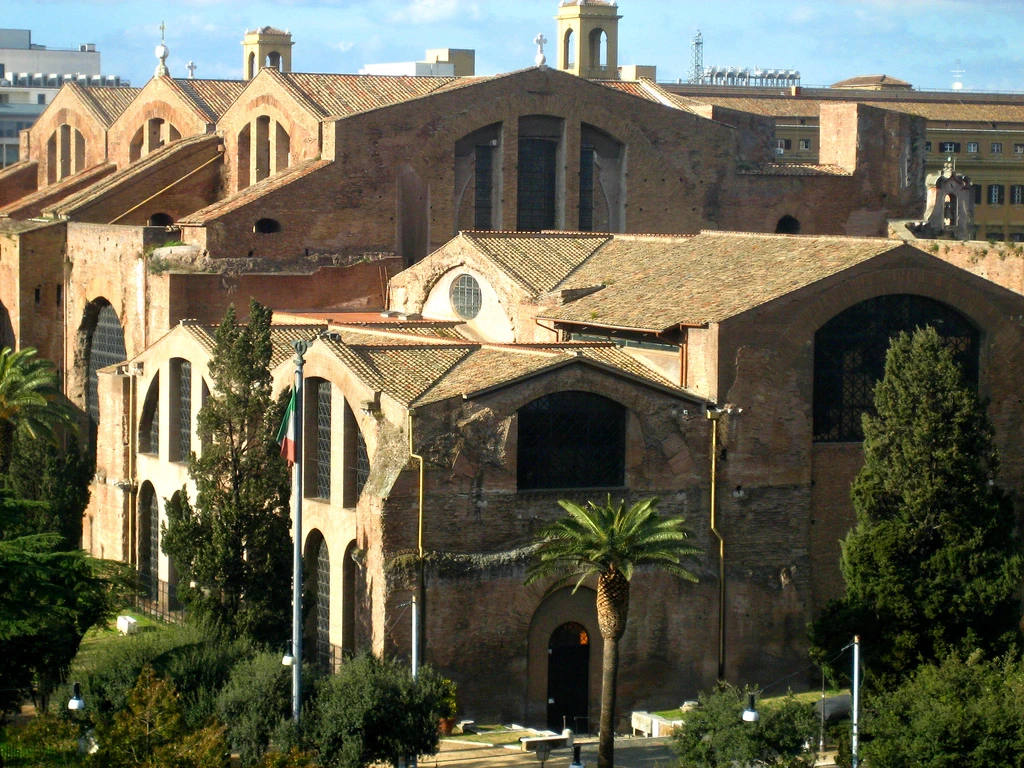
Rome · 1 km
Terme di Diocleziano
Content & sources
Photo: Joris · CC BY 2.0
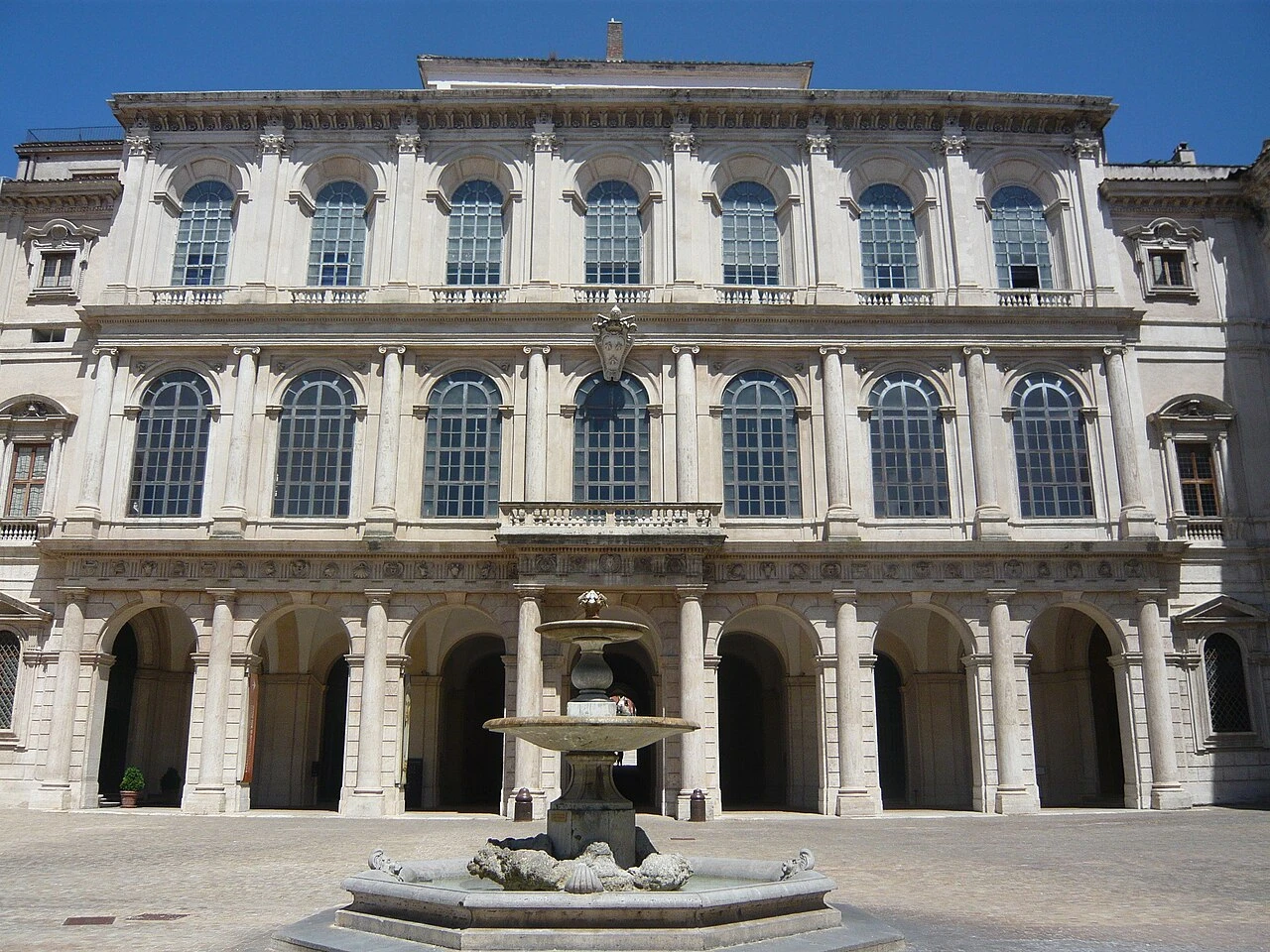
Rome · 1 km
Palazzo Barberini
Content & sources
Photo: Mallowtek · CC BY-SA 3.0
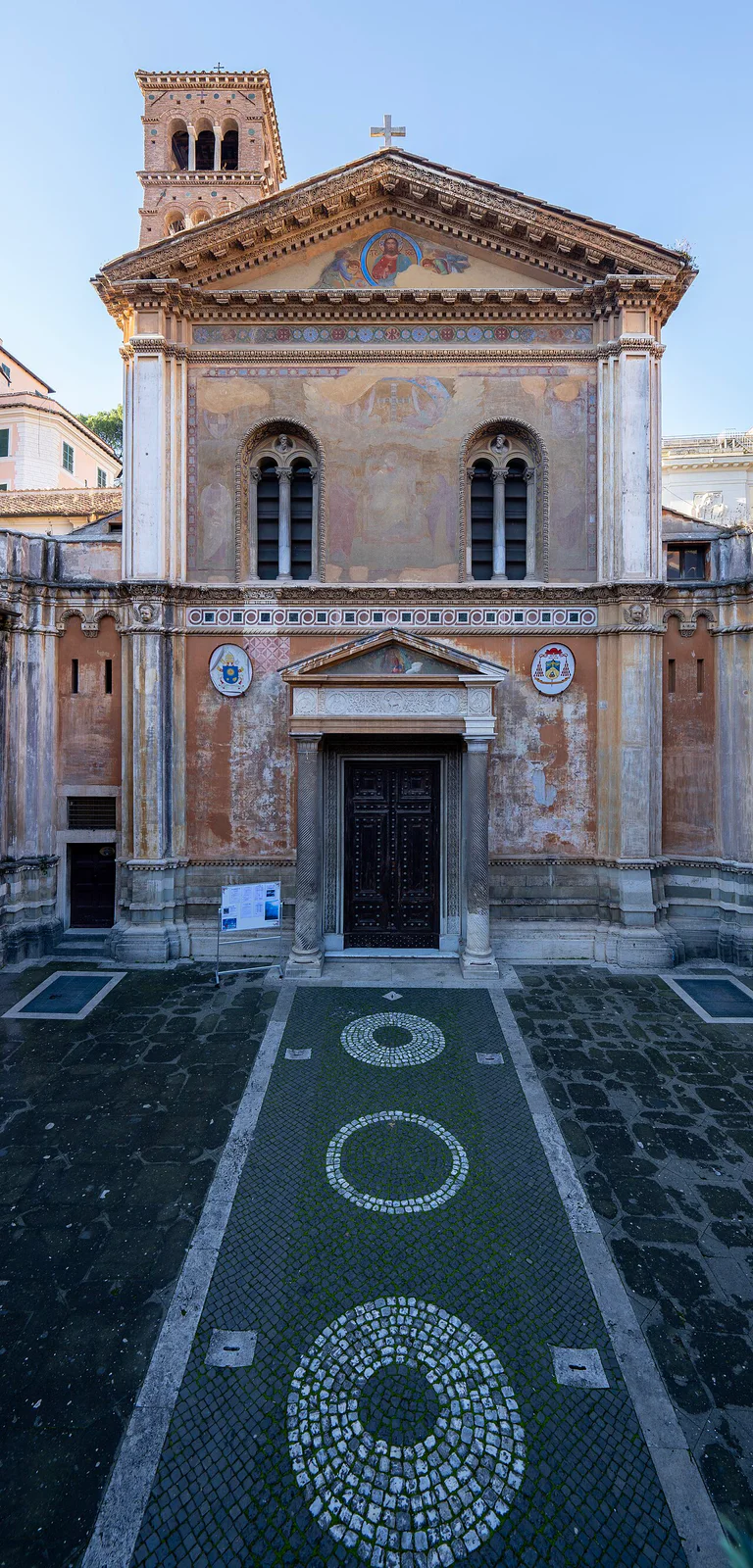
Rome · 1 km
Basilica di Santa Pudenziana
Content & sources
Photo: Rione I Monti · CC BY 4.0
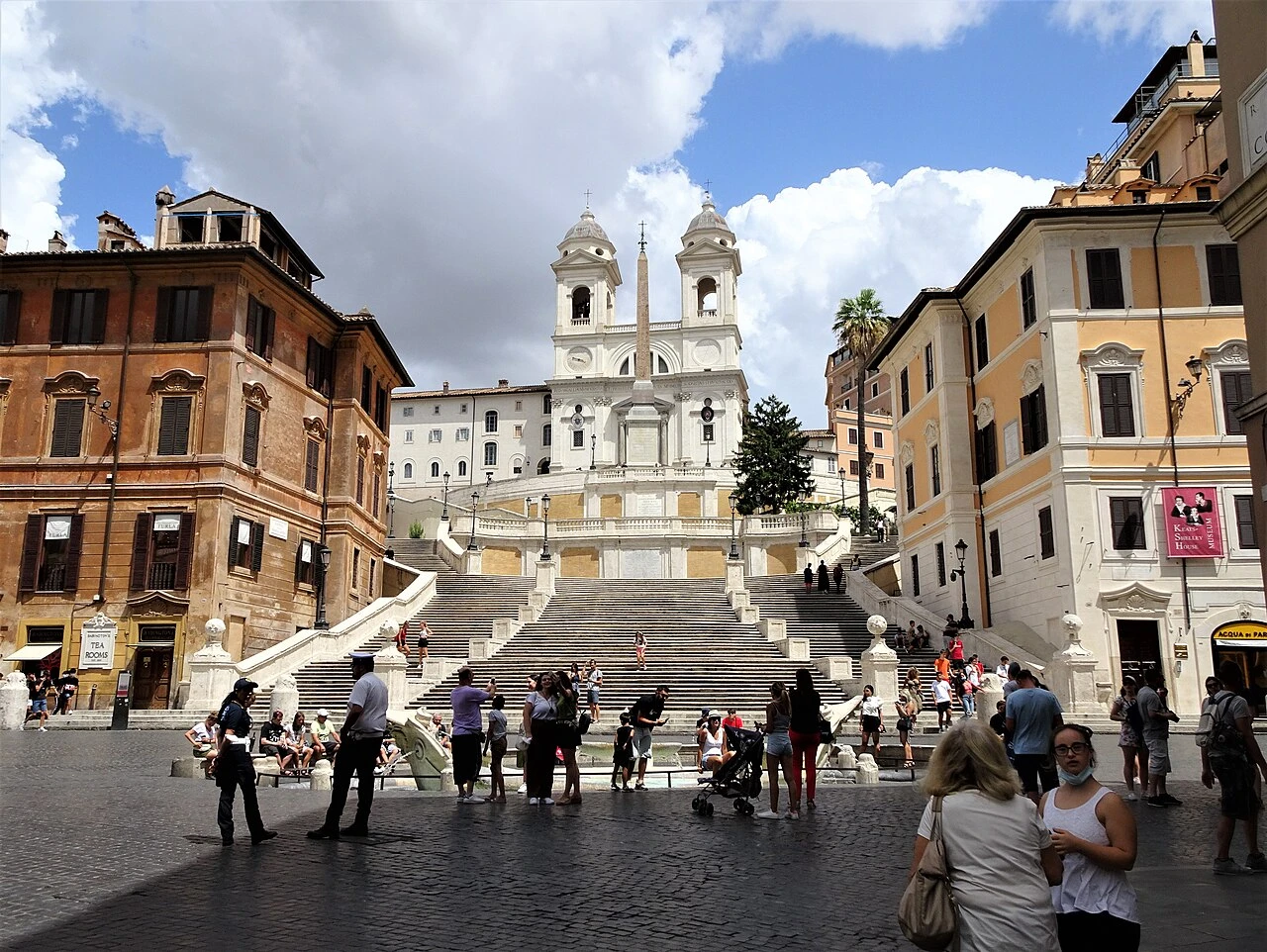
Rome · 1 km
Spanish Steps
Content & sources
Photo: Hugo DK · CC BY-SA 4.0