Languages
15Scalinata di Trinità dei Monti Audio Guide
Scalinata di Trinità dei Monti is a landmark in Rome, Italy. Explore it with Stanza's GPS-triggered offline audio guide — available in 15 languages.
Quick Facts
16
Stops
15
Languages
100%
Offline
📍 Rome, Italy · 41.9061°N, 12.4828°E
About Scalinata di Trinità dei Monti
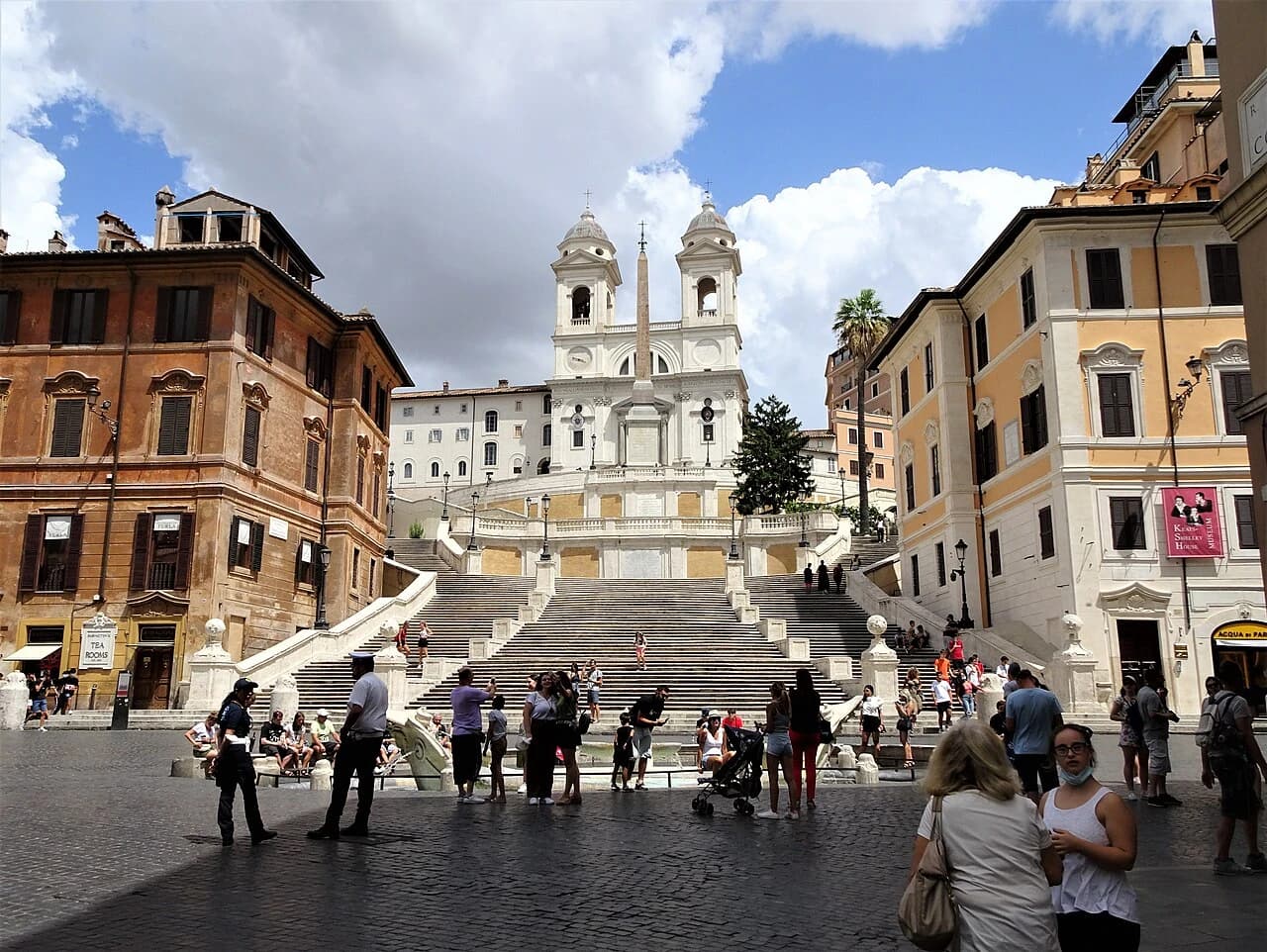
The Spanish Steps are a monumental set of 135 steps in Rome, Italy. They connect the Piazza di Spagna with the Trinità dei Monti church, serving as a famous meeting place and architectural landmark.
Scalinata di Trinità dei Monti is also known as Scalinata di Trinità dei Monti.
This self-guided audio tour features 16 narrated stops organized across 7 sections. As a landmark, Scalinata di Trinità dei Monti offers a unique cultural experience in the heart of Rome, Italy.
The Stanza audio guide is available in 15 languages and works entirely offline — download the complete tour including audio narration, maps, and images before your visit. As you walk through Scalinata di Trinità dei Monti, GPS-triggered narration plays automatically at each point of interest.
Last updated:
What you will hear
Piazza di Spagna: The Grand Entrance
Establishes the base of the monument and its international diplomatic history. Includes the main square and the Spanish Embassy that gives the area its name.
The Spanish Steps
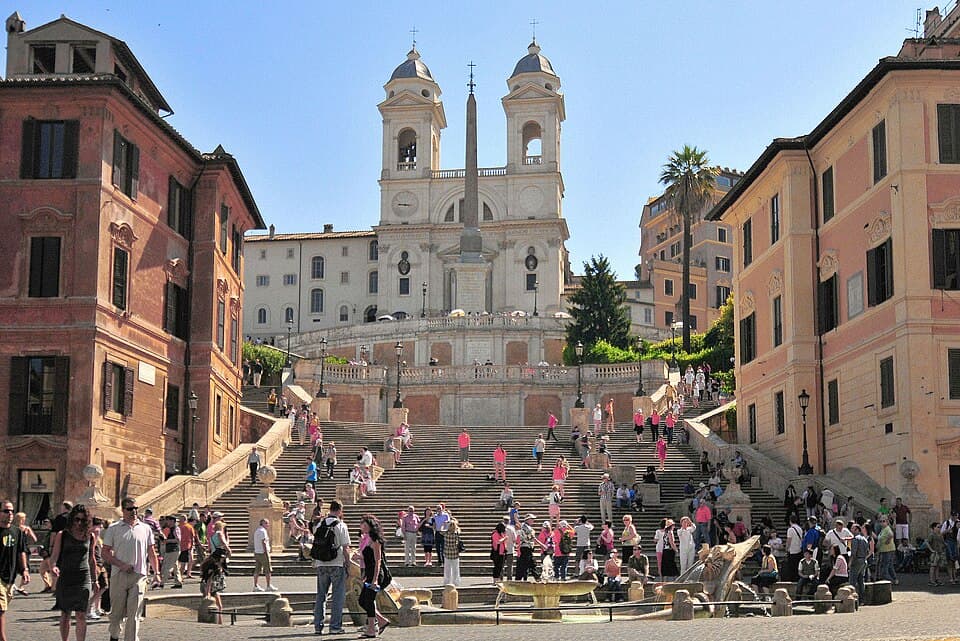
Welcome to the heart of Rome’s Rione Campo Marzio. You are standing before the Scalinata di Trinità dei Monti, popularly known as the Spanish Steps. This monumental staircase is much more than a simple path between two points; it is designed as a grand urban theater. Built between 1723 and 1725, the staircase consists of 135 travertine steps that climb a steep 29-meter slope. Its construction was made possible by a significant legacy from the French diplomat Étienne Gueffier, who wanted to create a more majestic way to connect the French church of Trinità dei Monti at the top with the Spanish square at the base. The steps are a masterpiece of Baroque urban planning, using a complex arrangement of ramps, curves, and vistas. Rather than a straight, utilitarian climb, the architect created a series of garden-like terraces that allow pedestrians to stop, breathe, and enjoy the changing perspective of the city as they ascend. This 'living room' of Rome has historically been a place for people to gather, socialize, and observe the vibrant street life. As you look at the staircase, imagine the generations of Romans and travelers who have stood exactly where you are, making this spot one of the most photographed and beloved locations in the Eternal City.
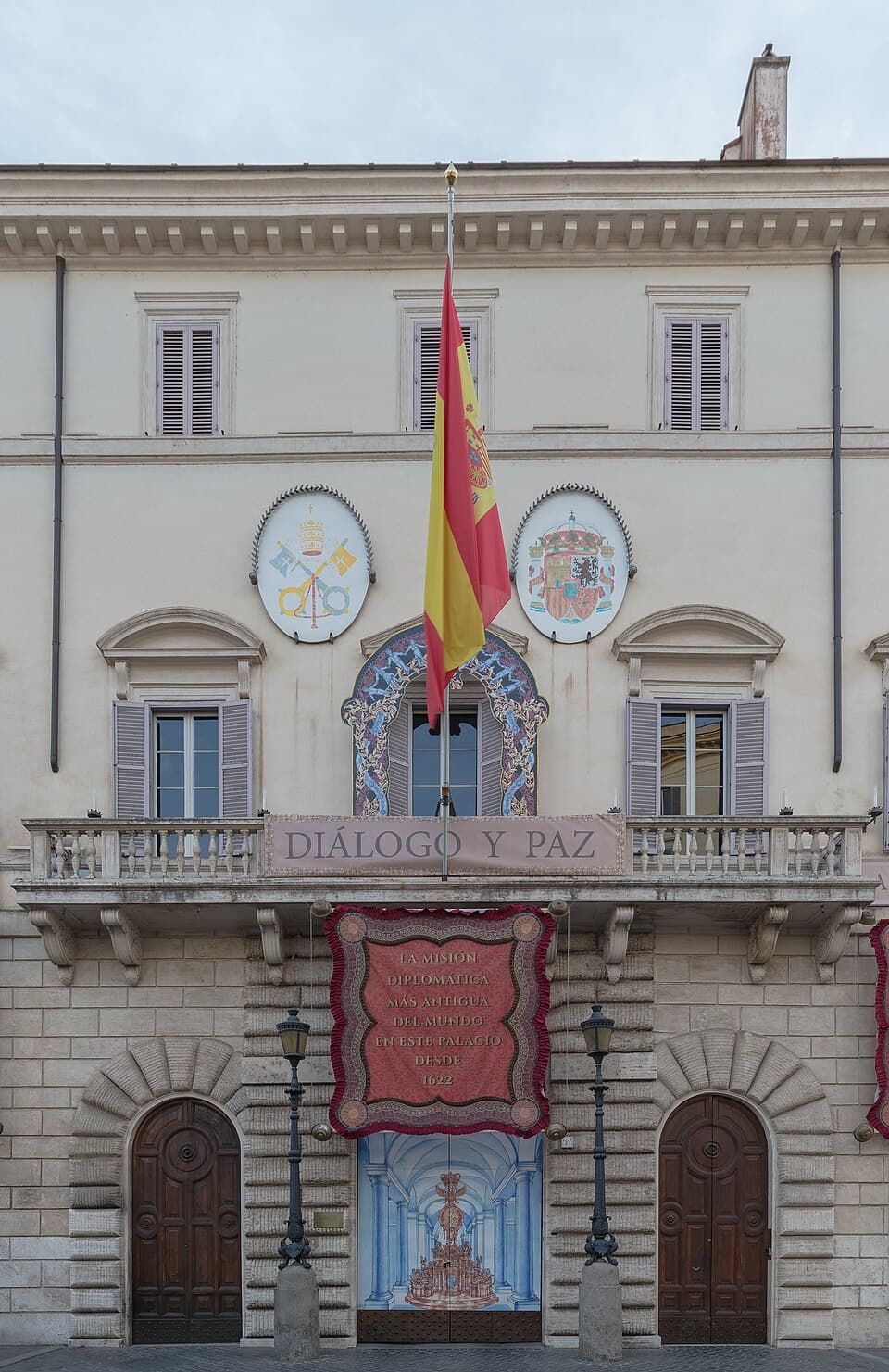
The Spanish Embassy
You might find it curious that a staircase funded by a French diplomat and leading to a French church is globally known as the 'Spanish' Steps. The explanation lies in the building nearby, the Palace of Spain. Since 1647, this palace has housed the Spanish Embassy to the Holy See, making it the oldest embassy in the world still in its original location. During the 17th and 18th centuries, the influence of the Spanish crown over this particular neighborhood was so dominant that the entire square below became known as Piazza di Spagna, or the Spanish Square. If you look closely at the facade of the building, you can see the intricate heraldry and crests that signal its diplomatic status. This building was the nerve center of Spanish power in Rome, and the area around it was even considered extraterritorial Spanish land for a time. When the steps were finally built in the 1700s, the name of the square had become so entrenched in the local vocabulary that the new staircase was naturally referred to as the steps belonging to the Spanish Square. This building serves as a reminder of the complex web of European politics and religious influence that shaped the architecture of Rome during the Baroque era.
Fontana della Barcaccia
Focuses on the Bernini masterpiece at the foot of the steps and the legend of the sunken boat.
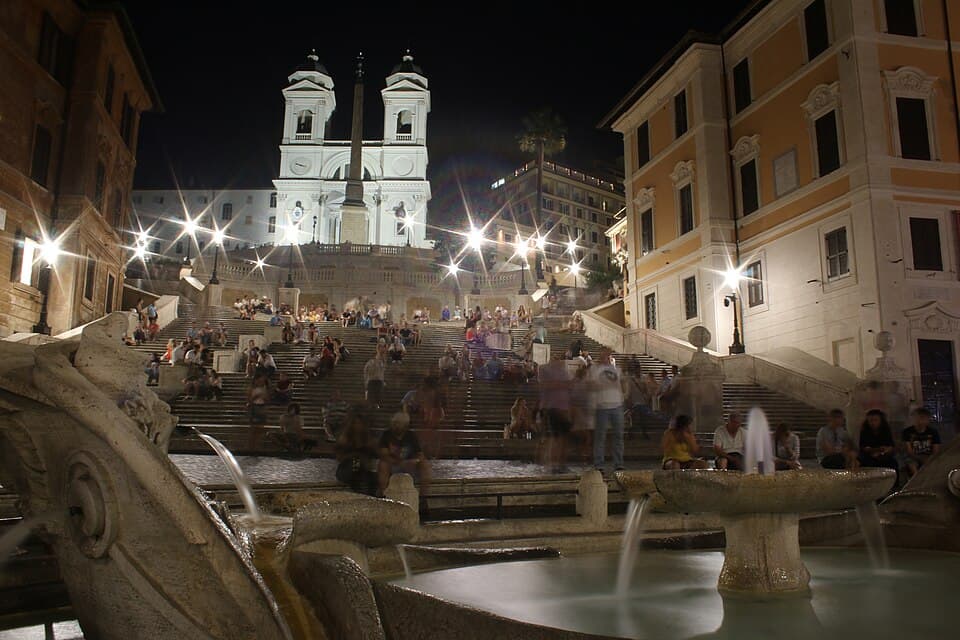
The Main Staircase
As you stand on these historic steps, you are standing on three centuries of history carved into travertine stone. However, the way visitors interact with this monument changed significantly in 2019. To combat overcrowding and wear, the city of Rome introduced strict new regulations regarding decorum on the staircase. While it was once a tradition to sit on the steps with a gelato or a book, doing so now can result in a fine of 250 euros. Even more serious violations, such as damaging the stone, can carry penalties of up to 400 euros. These measures were put in place to protect the fragile masonry from the millions of visitors who walk here annually. The importance of these rules was highlighted in 2022 during a widely reported incident where a driver drove a Maserati down the steps, causing significant fractures to the delicate travertine. This event shocked the city and underscored the need for vigilant protection of the site. Today, you will often see local officers ensuring that the steps remain clear for pedestrians. By maintaining the staircase as a path for movement rather than a place for sitting, the city hopes to preserve the structural integrity and the clean, white aesthetic of the stone for centuries to come.
The Corners of History: Keats and Babington's
Covers the literary and social history of the square, featuring the house where John Keats died and the historic English tea room.
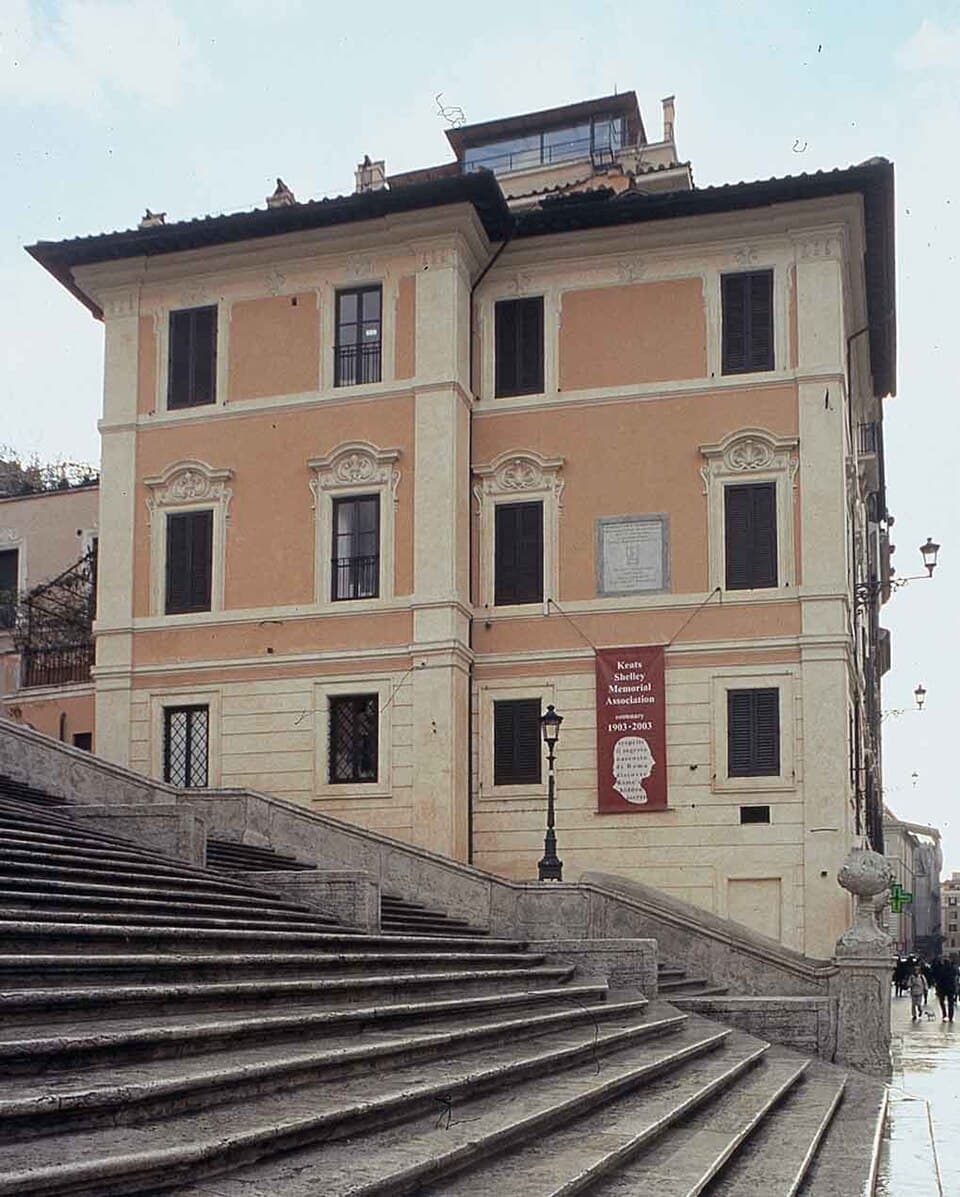
The Keats-Shelley House
Look toward the building on the right side of the steps, distinguished by its warm, ochre facade. This is the Keats-Shelley House, a place of pilgrimage for lovers of English literature. In November 1820, the young poet John Keats arrived here, hoping that the milder Roman climate would help cure his advanced tuberculosis. Sadly, his health continued to decline, and he passed away in a small room on the second floor in February 1821, at the tragic age of only twenty-five. Today, the house serves as a museum and memorial dedicated to the lives and works of the Romantic poets who were so deeply inspired by Italy, including Percy Bysshe Shelley and Lord Byron. Inside, the room where Keats spent his final months has been preserved, still looking out over the same view of the steps and the Barcaccia fountain that he would have seen from his bed. The house contains an extensive library and a collection of manuscripts, letters, and personal relics. It stands as a poignant reminder of the human stories that have unfolded in the shadow of Rome's great monuments, connecting the grandeur of the architecture to the intimate, often tragic, lives of the people who resided here.
The Climb: 135 Steps of Travertine
Explains the architectural design by Francesco de Sanctis, the 'butterfly' layout, and modern regulations including the sitting ban.
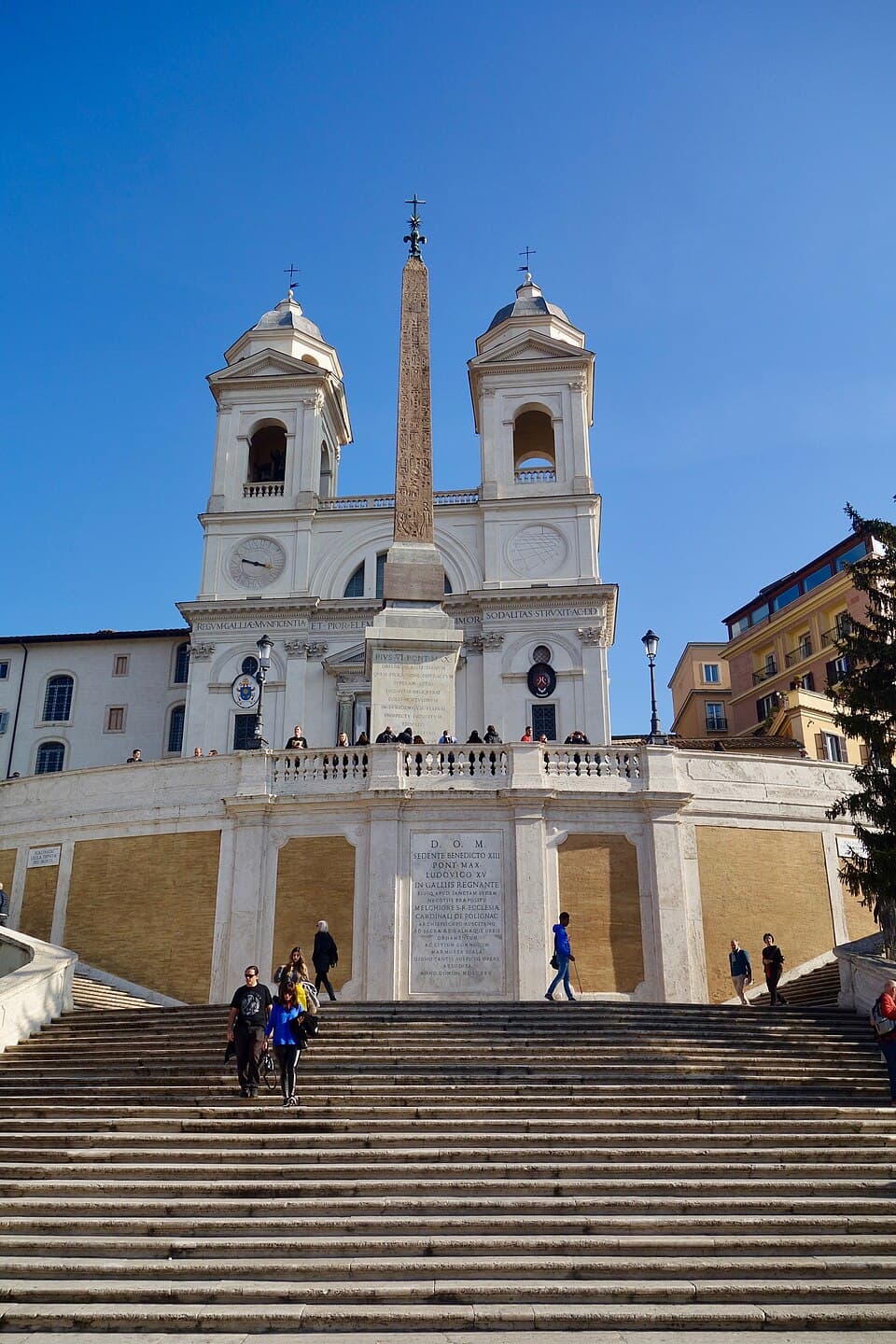
The Upper Ramps
If the stone beneath your feet looks particularly clean and bright, it is thanks to a major restoration project completed in 2016. Over the decades, the porous travertine stone had become darkened by air pollution, stained by water runoff, and worn by the footsteps of millions of tourists. The luxury fashion house Bulgari, which has its flagship store nearby on Via dei Condotti, stepped in to fund a 1.5 million euro cleaning and repair effort as a gift to the city. Restorers worked meticulously to remove the deep-seated grime and biological growth that had turned parts of the staircase a dull grey. They also repaired thousands of small cracks and stabilized loose sections of the masonry. The result was a dramatic transformation; the staircase regained the luminous, white-to-cream glow it possessed when it was first unveiled in the 18th century. This project highlighted a growing trend in Rome where private luxury brands sponsor the upkeep of public monuments. As you climb these upper ramps, notice how the restored stone reflects the brilliant Roman sunlight, creating a stark and beautiful contrast against the deep blue of the sky and the warm colors of the surrounding buildings.
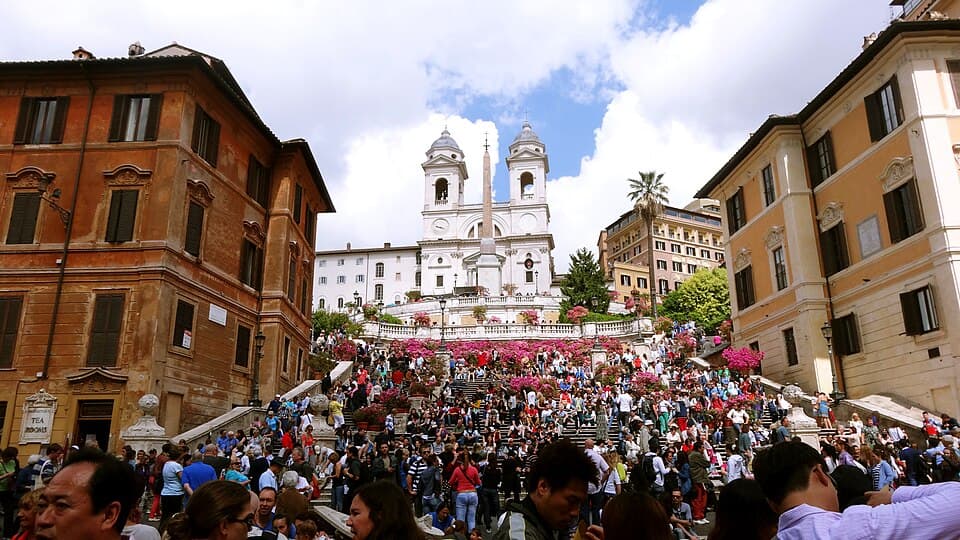
The Butterfly Layout
The architect of the steps, Francesco de Sanctis, did not just design a staircase; he created a complex geometric puzzle. If you were to look down on the structure from a drone or a high window, you would see that the two symmetrical, triangular ramps on either side resemble the delicate wings of a butterfly. This 'butterfly wing' layout was a revolutionary approach to handling such a steep incline, as it allowed the architect to break up the climb into manageable sections. De Sanctis used a sophisticated play of alternating curves and straight lines to lead the eye upward and keep the ascent from feeling monotonous or overly strenuous. The design is a peak example of the Late Baroque style, where movement and drama are prioritized. This layout also provides the perfect stage for the city's annual Spring celebration, the Azalea Festival. Every April and May, the ramps you see here are lined with hundreds of pots of vibrant pink and white azaleas. The flowers follow the curves of the staircase, emphasizing the butterfly shape and transforming the stone structure into a cascading garden of color, a tradition that has delighted locals and visitors for over eighty years.
The Summit Obelisk
The vertical focal point at the top of the climb, an ancient Roman imitation of Egyptian styles.
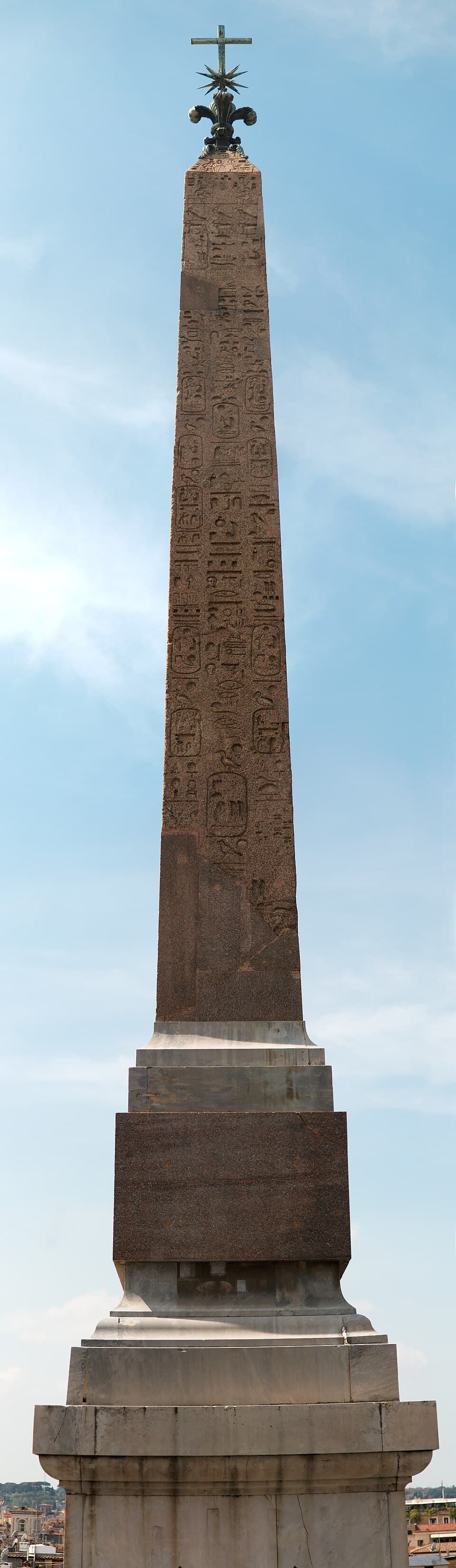
The Sallustiano Obelisk
The vertical focal point at the summit of the steps is the Sallustiano Obelisk. While it looks like an authentic Egyptian artifact, it is actually an ancient Roman 'imitation' likely carved in the 2nd century AD. It was originally created to decorate the Gardens of Sallust, a vast private estate located nearby in ancient times. The Roman stonecutters who carved this monument were attempting to mimic the style of much older Egyptian obelisks that had been brought to Rome as trophies of empire. You might notice that the hieroglyphs on the surface look slightly different than those on Egyptian originals. That is because the Roman artisans copied the symbols directly from the Flaminio Obelisk in Piazza del Popolo, but since they could not actually read the ancient script, they made several mistakes in the 'translation.' To a trained eye, some of the symbols are inverted or placed in the wrong order. In 1789, Pope Pius VI ordered the obelisk to be moved to its current location to provide a monumental finish to the view from the bottom of the steps. Topped with a bronze cross containing a relic, it serves as a bridge between Rome's pagan past and its Christian history.
Trinità dei Monti: The French Connection
Explores the 16th-century church that serves as the crown of the staircase, highlighting its French patronage.
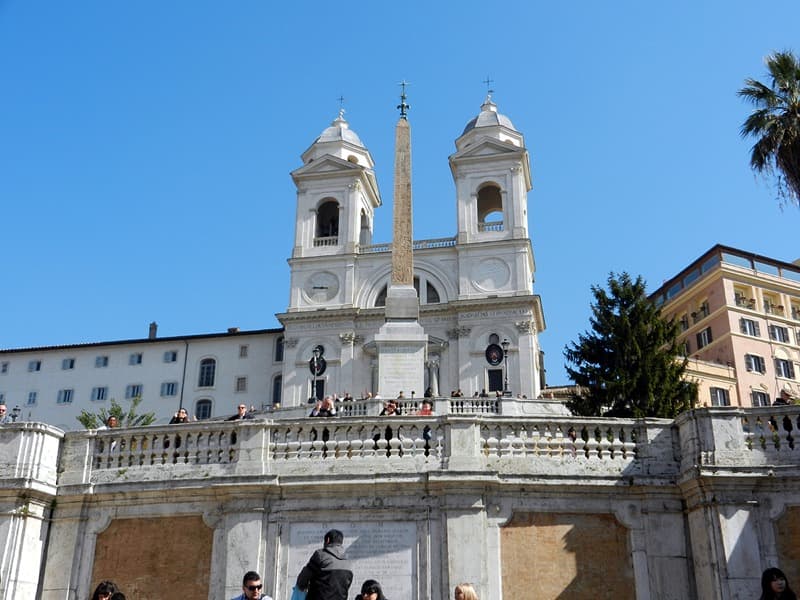
View from the Summit
As you peer down from the summit, the 29-meter drop to the fountain below creates a powerful sense of height and drama. This is the best place to appreciate the 'urban theater' aspect of the Spanish Steps. The architect, Francesco de Sanctis, intended for this entire area to be a place where people didn't just walk, but where they came to 'see and be seen.' The terraces and landings were designed specifically to allow for strolling and posing, much like the galleries of a theater. Historically, this area was a popular gathering spot for artists' models. In the 19th century, men and women from the surrounding countryside would dress in traditional folk costumes and wait here for work, hoping to be hired by the painters and sculptors who kept studios in the nearby Via Margutta. This created a lively, colorful scene that became synonymous with the romantic image of Rome. Even today, the steps function as a stage for fashion shows and public events. Looking down, you can see the constant movement of the crowds below, a perpetual human drama that has played out on these stones for three hundred years. The scale of the stairs and the openness of the view combine to make this one of the most exhilarating sensory experiences in the city.
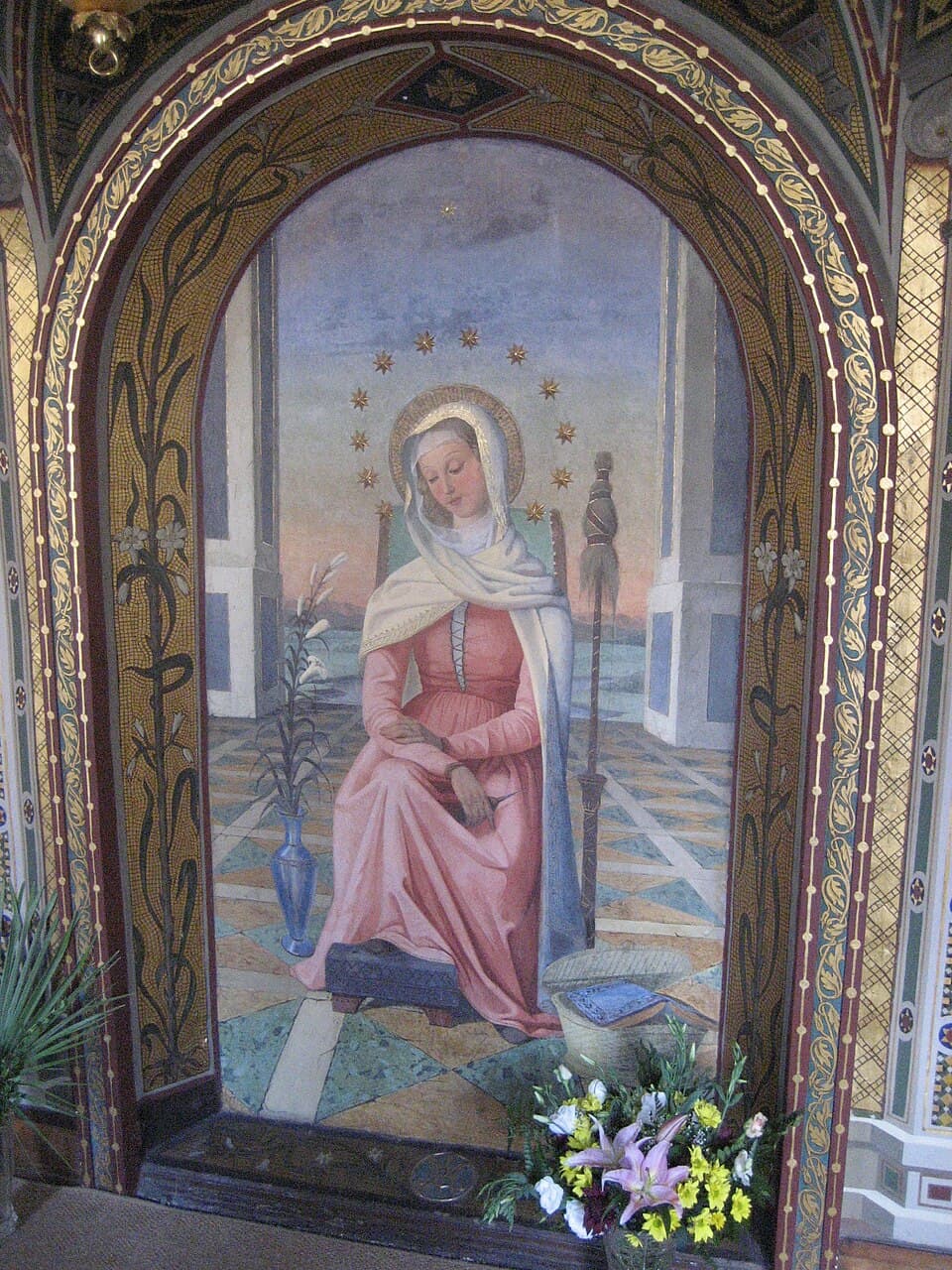
Mater Admirabilis Fresco
Inside the church of Trinità dei Monti, you can find the famous fresco known as 'Mater Admirabilis.' The painting has a delightful legend attached to its creation in 1844. It was painted by a young French novice and nun named Pauline Perdreau on a wall in the convent. Pauline chose to depict the Virgin Mary as a young girl in a contemplative mood, wearing a dress of a delicate pink hue rather than the traditional, more formal blue often seen in religious art. When the fresco was first completed, the Mother Superior of the convent was reportedly unhappy with the colors, finding them far too bright and garish. She ordered that the painting be covered with a large sheet to hide it from view. However, according to local tradition, when the sheet was finally removed several weeks later, the colors had miraculously softened and blended, revealing the gentle, luminous glow that you see today. Pope Pius IX was so moved by the image when he saw it that he gave it the title 'Mother Most Admirable.' Today, the fresco is a site of great devotion, and the small chapel where it resides offers a quiet, spiritual contrast to the bustling crowds and grand architecture just outside the church doors.
Pincian Hill Landmarks
Contextualizes the steps within the surrounding Pincian Hill architecture, including the 'Monster House'.
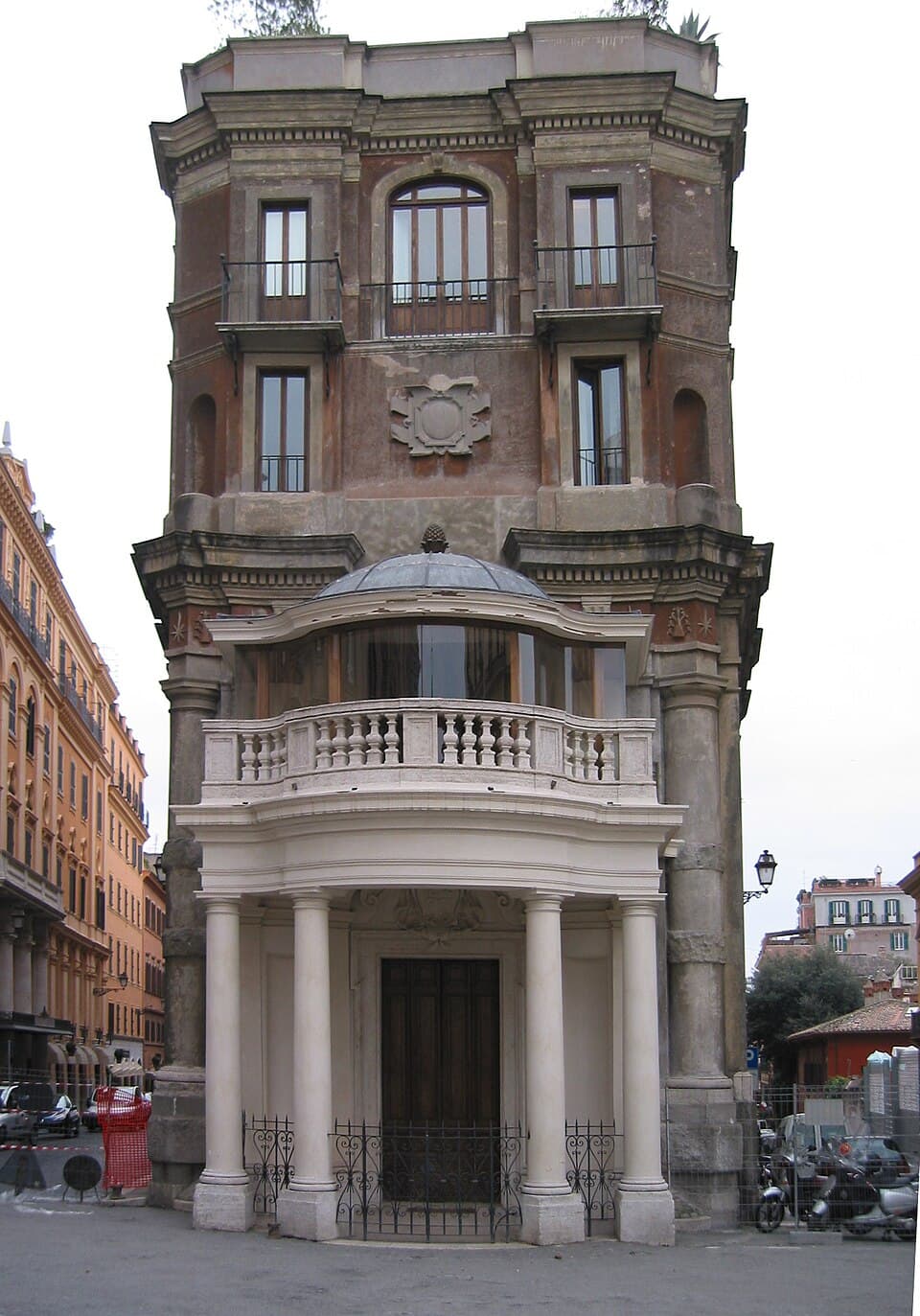
Palazzo Zuccari Facade
Just a short distance from the top of the steps, you will encounter one of Rome's most eccentric architectural curiosities: the Palazzo Zuccari, often referred to as the 'Casina delle Mostre' or the House of Monsters. Built in the late 16th century by the painter Federico Zuccari, the building's facade features windows and doors that are framed by the carved, gaping maws of giant, fantastical monsters. These stone faces, with their wide eyes and enormous teeth, seem ready to swallow anyone who approaches. Zuccari designed the facade this way to astonish and amuse his guests. The intention was to create a dramatic contrast; visitors would enter through the terrifying, monstrous mouths to find themselves in a peaceful, elegant garden of delights inside. It was a play on the theme of 'the beauty within,' a popular concept in Mannerist art and philosophy. Federico Zuccari intended his home to be a total work of art, reflecting his own creative and slightly eccentric personality. Today, the building houses the Bibliotheca Hertziana, a world-renowned art history library. Even though its function has changed, the 'monsters' continue to surprise and delight passersby, standing as a testament to the whimsy and creativity that can be found in the corners of Rome’s historic streets.
Want to hear the rest?
Download the Stanza app to unlock all 16 stops and full GPS-guided navigation.
Frequently Asked Questions
How long does the Scalinata di Trinità dei Monti audio tour take?
The Scalinata di Trinità dei Monti audio guide includes 16 narrated stops. Most visitors spend 45 minutes to 1.5 hours exploring the complete tour, though you can listen at your own pace and skip or revisit any stop.
Is the Scalinata di Trinità dei Monti audio guide available in my language?
Stanza supports 15 languages: English, Spanish, French, German, Italian, Portuguese, Russian, Japanese, Chinese, Korean, Arabic, Hindi, Polish, Dutch, Hebrew. Check the guide in the app to confirm the languages currently available for this tour.
Can I use the audio guide offline at Scalinata di Trinità dei Monti?
Yes! Download the complete Scalinata di Trinità dei Monti tour — including all audio, maps, and images — before your visit. The Stanza app works completely offline, so you don't need WiFi or mobile data at the venue.
How much does the Scalinata di Trinità dei Monti audio guide cost?
The Stanza app is free to download. The current listed price for the Scalinata di Trinità dei Monti audio guide is $4.99; app-store region and currency may affect the final price.
How do I use the Stanza audio guide at Scalinata di Trinità dei Monti?
Download the free Stanza app, search for "Scalinata di Trinità dei Monti", and download the tour. When you arrive at the venue, the app uses GPS to detect your location and automatically plays the relevant narration as you move between points of interest — completely hands-free.
What makes the Stanza audio guide different from other Scalinata di Trinità dei Monti tours?
Stanza offers GPS-triggered narration that plays automatically as you walk through Scalinata di Trinità dei Monti — no need to manually select stops. The tour is available in 15 languages, works fully offline, and includes 16 expertly narrated stops with images and historical context.
What other audio guides are available near Scalinata di Trinità dei Monti?
Stanza offers multiple audio guides in Rome, Italy and nearby areas. After downloading the app, browse the map to discover all available tours near Scalinata di Trinità dei Monti. Each guide can be downloaded for offline use.