Stanza · Audio guide
Siena CathedralAudio guide
A place to remember. A story to take with you.
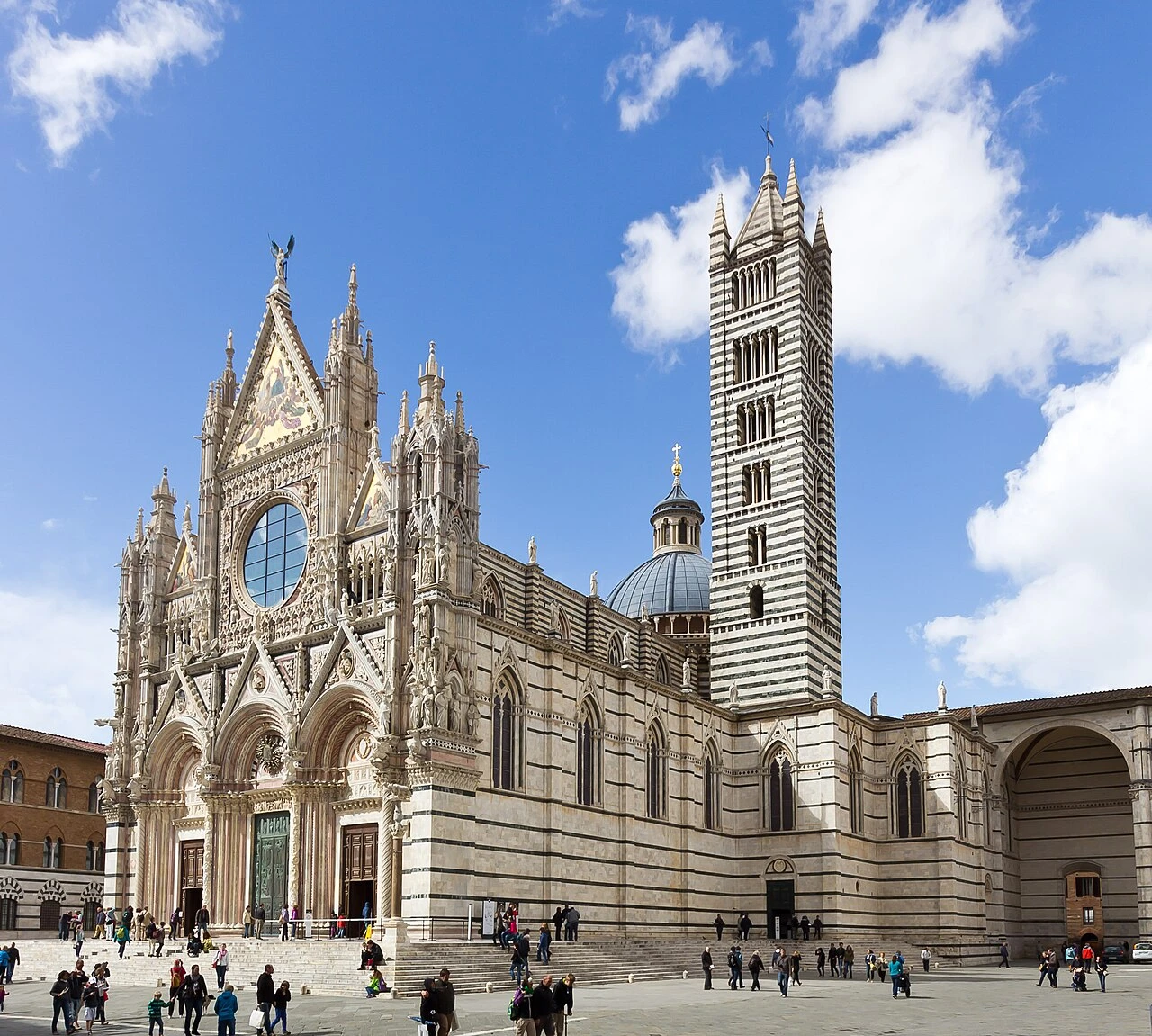
Siena Cathedral is a medieval church in Siena, Italy, renowned for its intricate Gothic architecture. It serves as the city's Catholic cathedral.
Download Stanza, then search for “Siena Cathedral”.
About the tour
One guide. Your kind of visit.
Siena Cathedral is a medieval church in Siena, Italy, renowned for its intricate Gothic architecture. It serves as the city's Catholic cathedral.
Ready when you are.
- 01Get the free Stanza app.
iOS & Android
- 02Find your guide.
“Siena Cathedral”
- 03Download before you go.
Works offline
Audio guide / 27 narrated stops
Inside the guide
Get to know a few of the stories before you go. Open a stop to read more.
01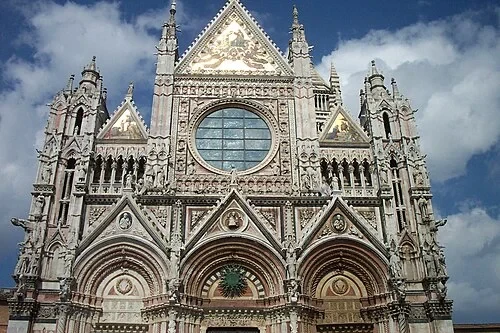 The West Facade: A Gothic MasterpieceThe West Facade
This grand entrance marks the beginning of your journey into one of Italy’s most significant religious sites. While the cathedral's construction began in 1196, the elaborate facade you see was largely the vision of Giovanni Pisano, who worked on the lower portion during the late 13th century. It is a landmark example of Italian Gothic style, distinguished by its use of polychrome marble. The stones—white from Carrara, red from Gerfalco, and green from Prato—create a rhythmic, painterly effect across the structure. This color palette isn't just decorative; it reflects the wealth and artistic ambition of medieval Siena. The facade is densely packed with intricate carvings and statues, many of which are now replicas of Pisano’s originals. These figures seem to occupy the space dynamically, a departure from the stiffer Romanesque style that preceded it. The three large arches at the base lead into the cathedral's interior, while the upper portion features a massive rose window and pointed gables. Notice how the different marble colors interact with the changing sunlight, shifting the building's appearance throughout the day.
joselomba · CC BY-SA 3.0
02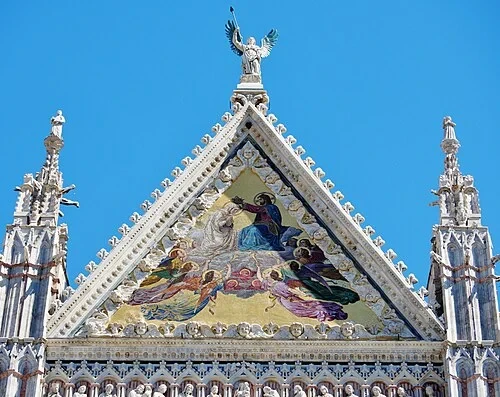 The West Facade: A Gothic MasterpieceThe Golden Mosaics
High above the crowd, the gables of the west facade are filled with brilliant mosaics that contrast sharply with the carved stone below. These were not part of the original medieval design; they were added in the 19th century by Venetian artisans. The most prominent scene, located in the central triangular gable, depicts the Coronation of the Virgin Mary, a subject deeply resonant with the people of Siena, who dedicated their city to her. Flanking this are smaller mosaics showing the Nativity of Jesus and the Presentation of Mary in the Temple. These works utilize traditional Venetian techniques, where small glass tiles, or tesserae, are backed with thin layers of gold leaf. On a clear day, the Sienese sun strikes these surfaces, creating a radiant glow that can be seen from across the piazza. This luminous effect serves a theological purpose, drawing the viewer's eye away from the earthly street level and toward the heavens. The bright colors and shimmering gold provide a visual climax to the complex architectural layers of the facade.
Photo: Zairon · CC BY 4.0
03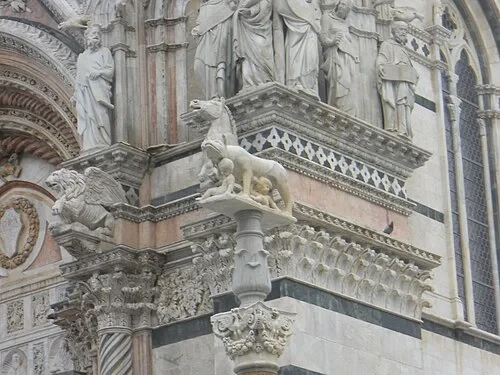 The She-Wolf and the Cathedral SquareThe Sienese She-Wolf
Throughout the cathedral’s exterior and interior, you will frequently encounter the image of a she-wolf nursing two twin boys. While this is the famous symbol of Rome, in this context, it tells the story of Siena’s legendary founding. Local tradition holds that the city was established by Senius and Aschius, the sons of Remus and nephews of Romulus. After their father was killed by Romulus, the brothers fled Rome to escape their uncle’s wrath. Legend says they rode two horses given to them by the gods—one pure white and the other deep black. When they reached this spot, they founded the city, and their horses' colors became the basis for the Balzana, the black and white shield of Siena. This myth allowed the Sienese to claim a noble, Roman lineage while also asserting their independence from their powerful neighbor to the south. The she-wolf symbol was officially adopted by the city in the medieval period to reinforce this connection. You can see this influence mirrored in the building itself, particularly in the alternating bands of white and dark marble that define its aesthetic.
Listen in the appErik Drost · CC BY 2.0
04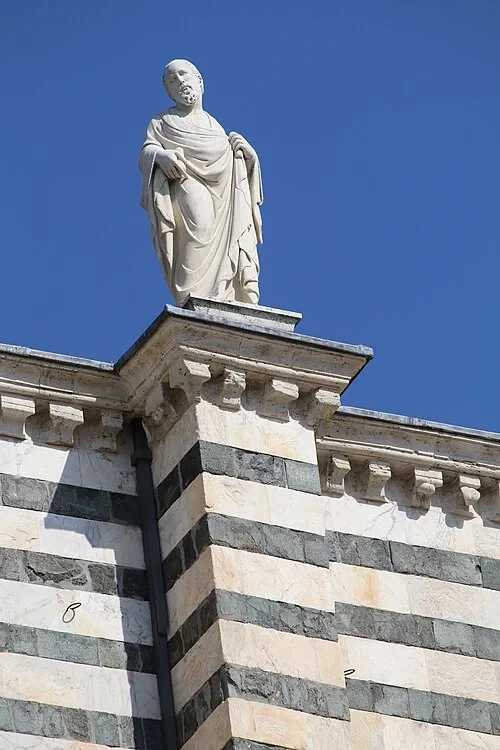 The She-Wolf and the Cathedral SquareStatue on Striped Walls
The exterior walls of the cathedral present a striking visual rhythm created by horizontal layers of contrasting marble. These alternating bands of white and a very dark, greenish-black stone are the most recognizable feature of the Sienese architectural style. These colors weren't chosen at random; they are the colors of the Balzana, the civic coat of arms for the Republic of Siena. This architectural choice integrated the city's political identity directly into its most important religious building. Placed at various heights along these striped walls are numerous statues, often referred to as the Balia. These figures represent prophets, sibyls, and philosophers from antiquity, many of which were originally carved by Giovanni Pisano and his workshop. They appear to lean out from the building, engaged in dramatic gestures as if watching over the city below. The dark marble, which can look almost black in certain lights, provides a bold background that makes the lighter statues and the white marble bands stand out. This technique of dichromy emphasizes the building's massive volume while breaking up the surface into a complex, striped pattern.
Listen in the appPhoto: FrDr · CC BY-SA 4.0
05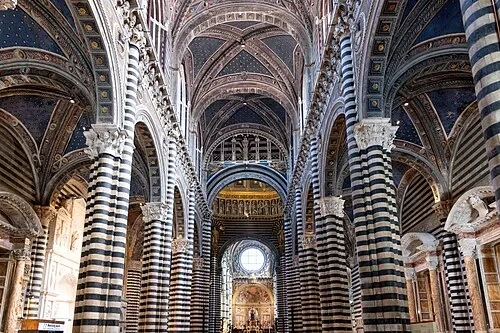 The Nave: Bicolor Marble PillarsThe Vast Nave
Stepping inside, the sheer scale of the cathedral becomes apparent. The central nave stretches exactly 89.4 meters from the entrance to the high altar, creating a powerful sense of depth. This space is defined by a repetitive rhythm of massive pillars and arches, all clad in the city’s signature black and white stripes. Looking upward, the vaulted ceilings are decorated in a deep sky motif, featuring hundreds of gilded stars set against a rich blue background. This design was intended to transform the interior into a representation of the cosmos. The floor beneath you is equally complex, covered in a vast series of marble mosaics that tell stories from the Bible and classical mythology. The visual pull created by the parallel rows of columns naturally leads your gaze toward the crossing, where the dome rises above the altar. This interior space took over a century to complete, and you can see how different architectural styles, from Romanesque to Gothic, blend together. The interplay of the striped masonry and the starry vaults creates a uniquely immersive environment that feels grounded in local identity.
Listen in the appEric Kilby · CC BY-SA 2.0
06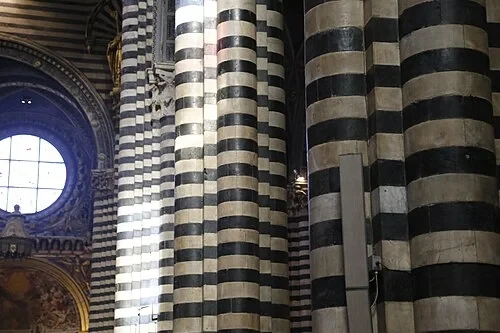 The Nave: Bicolor Marble PillarsBicolor Marble Pillars
The pillars you see supporting the weight of the roof are remarkable examples of medieval engineering and decorative skill. Each column is composed of thick, horizontal slabs of white marble and a dark, greenish-black stone. This dark marble is often called serpentine and was sourced locally from quarries in Prato. Building these columns was an incredibly slow and precise task. This specific phase of the cathedral's construction lasted approximately 152 years, meaning that the stonecutters who started the work never saw it finished; the project was passed down through generations of artisans. To maintain structural integrity while achieving this aesthetic, the blocks had to be perfectly squared and leveled. The resulting stripes do more than just reflect the city’s colors; they create an optical illusion that makes the heavy stone pillars appear more dynamic. Up close, you can see the slight variations in the texture and color of the stone, revealing the natural origins of the material. The capitals at the top of each column are decorated with intricate foliate patterns, marking the transition between the vertical support and the arches above.
Listen in the appPhoto: Assianir · CC BY-SA 4.0
07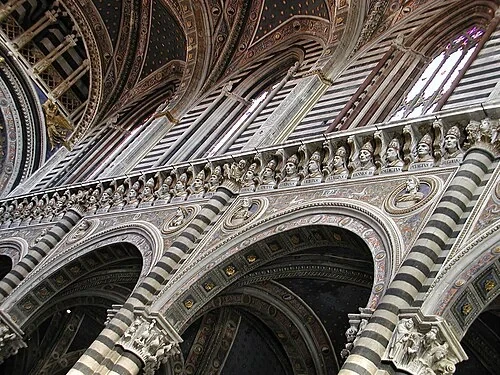 The Frieze of the PopesThe Frieze of Popes
Just below the vaulted ceiling, a continuous cornice runs the entire length of the nave and the choir. Set into this ledge are 171 busts made of plaster, each representing a different Pope. The series begins with Saint Peter at the far end and follows the chronological order of the papacy up to the early 15th century. Each figure is labeled with the Pope's name on a small plaque below. This massive undertaking was more than just a history lesson; it was a strong political statement. During the Middle Ages, Siena was a powerful and often defiant city-state. By placing the entire lineage of the Church in such a prominent position, the city's leaders were publicly declaring their spiritual and political alignment with the authority of Rome. The busts were created in a relatively short period by a group of local sculptors, which explains the stylistic consistency among them. They are positioned so that they look slightly downward, as if observing the ceremonies taking place in the nave below. This creates a sense of continuous historical presence, connecting current visitors with the long tradition of the institution.
Listen in the appPhoto: Softeis~commonswiki · CC BY-SA 3.0
08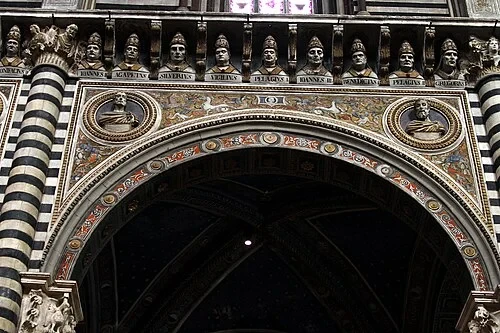 The Frieze of the PopesBusts of the Emperors
If you look at the triangular spaces, or spandrels, located between the main arches of the nave, you will see a second set of portraits. These 36 busts depict various Holy Roman Emperors from different eras. Their placement directly beneath the Popes is highly symbolic of the medieval world’s political structure. In the 13th and 14th centuries, Italian politics were often dominated by the struggle between the supporters of the Pope and the supporters of the Emperor. By including both groups in the cathedral’s decoration, Siena was illustrating the idea that the world was governed by two powers, the spiritual and the secular, which were meant to support each other. These imperial busts are smaller than the papal ones above them, suggesting a hierarchy where secular power is subordinate to divine authority. The figures are carved with individual traits, though many are stylized representations rather than true likenesses. This double frieze turns the upper reaches of the nave into a visual record of the dual authorities that shaped the lives of everyone in medieval Europe.
Listen in the appJosé Luiz · CC BY-SA 4.0
09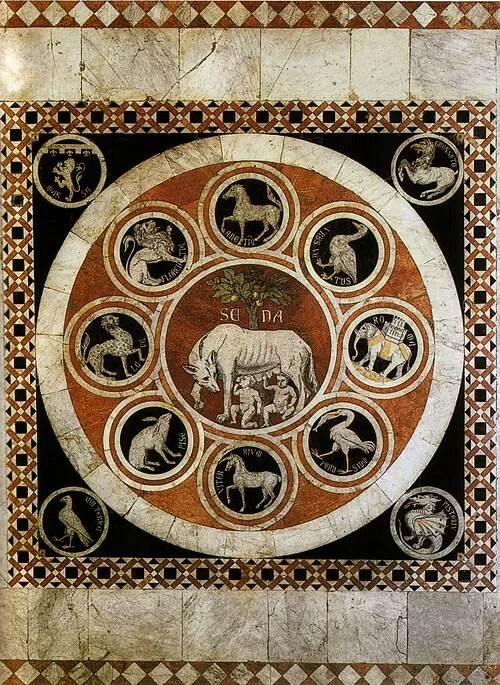 The Pavement: Sienese Wolf and Allied CitiesThe She-Wolf Floor Mosaic
You are standing near one of the most famous decorative floors in the world, comprised of 56 distinct panels made using marble inlay and graffito techniques. This specific panel, dating to the 14th century, is one of the oldest in the collection and is deeply rooted in local pride. At the center is the she-wolf nursing the twins, the foundation symbol we encountered outside. Surrounding the central circle are smaller medallions containing animals that represent other Italian cities. You can find the lion representing Florence, the stork for Perugia, and the elephant for Rome, among others. In the medieval mind, these animals weren't just decorations; they were the heraldic symbols of the cities they represented. This mosaic served as a map of Siena’s political world, showing its allies and rivals gathered around its own central symbol. The technique used here is called commesso, where different colors of marble are precisely cut and fitted together like a puzzle to create the image. Because this is a high-traffic area, parts of the floor are often covered for protection, but this particular panel remains a key highlight for its historical and symbolic richness.
Listen in the appsee filename or category · Public domain
10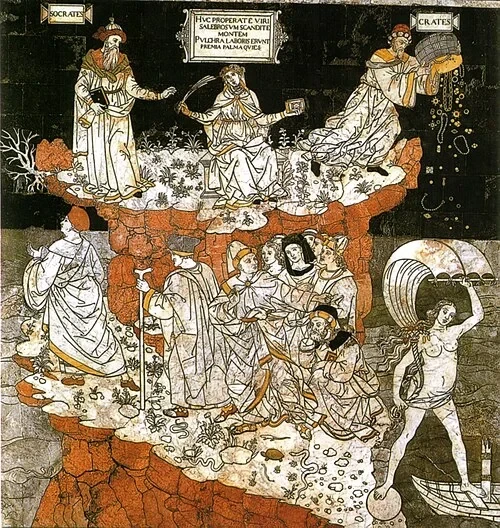 The Pavement: The Hill of WisdomAllegory of the Hill of Wisdom
This elaborate marble panel is one of the most intellectually complex sections of the cathedral floor. Designed by the Renaissance master Pinturicchio in 1505, it presents an allegory of the human struggle to achieve wisdom. The lower part of the scene shows a group of figures landing on a rocky shore after navigating a turbulent sea representing Fortune. One figure, representing Fortune herself, stands precariously with one foot on a sphere and the other on a boat, holding a wind-filled sail to show her unpredictable nature. Above her, a steep and treacherous path leads up the Hill of Wisdom. At the very summit, you can see the ancient Greek philosophers Socrates and Crates. Socrates receives a palm branch, symbolizing victory over earthly desires, while Crates empties a basket of jewels into the sea, showing his rejection of worldly wealth in favor of intellectual pursuit. The mosaic teaches that the path to virtue is difficult and requires turning away from material goods. The fine lines and shaded effects were achieved by etching into the marble and filling the grooves with black pitch.
Listen in the appPinturicchio · Public domain
Siena Cathedral
Frequently asked questions
How much does the guide cost?
Free app download. Listed guide price: $1.99. Guide price shown in the app. Audio guide only. Venue admission is separate.
Can I listen without internet?
Yes. Download the guide’s audio, images, and maps in the app before your visit. Your downloaded content is then available offline.
Can I listen in my language?
Stanza supports 15 languages. Check the app for the languages available for this guide.
Do I need to follow a schedule?
No. This is a self-guided experience. Choose your stops, pause whenever you like, and return to a story at your own pace.
At your own pace
Explore Siena Cathedral.
Download Stanza, then search for “Siena Cathedral”.
Free app download · Guide price shown in the app
Keep exploring
Nearby audio guides
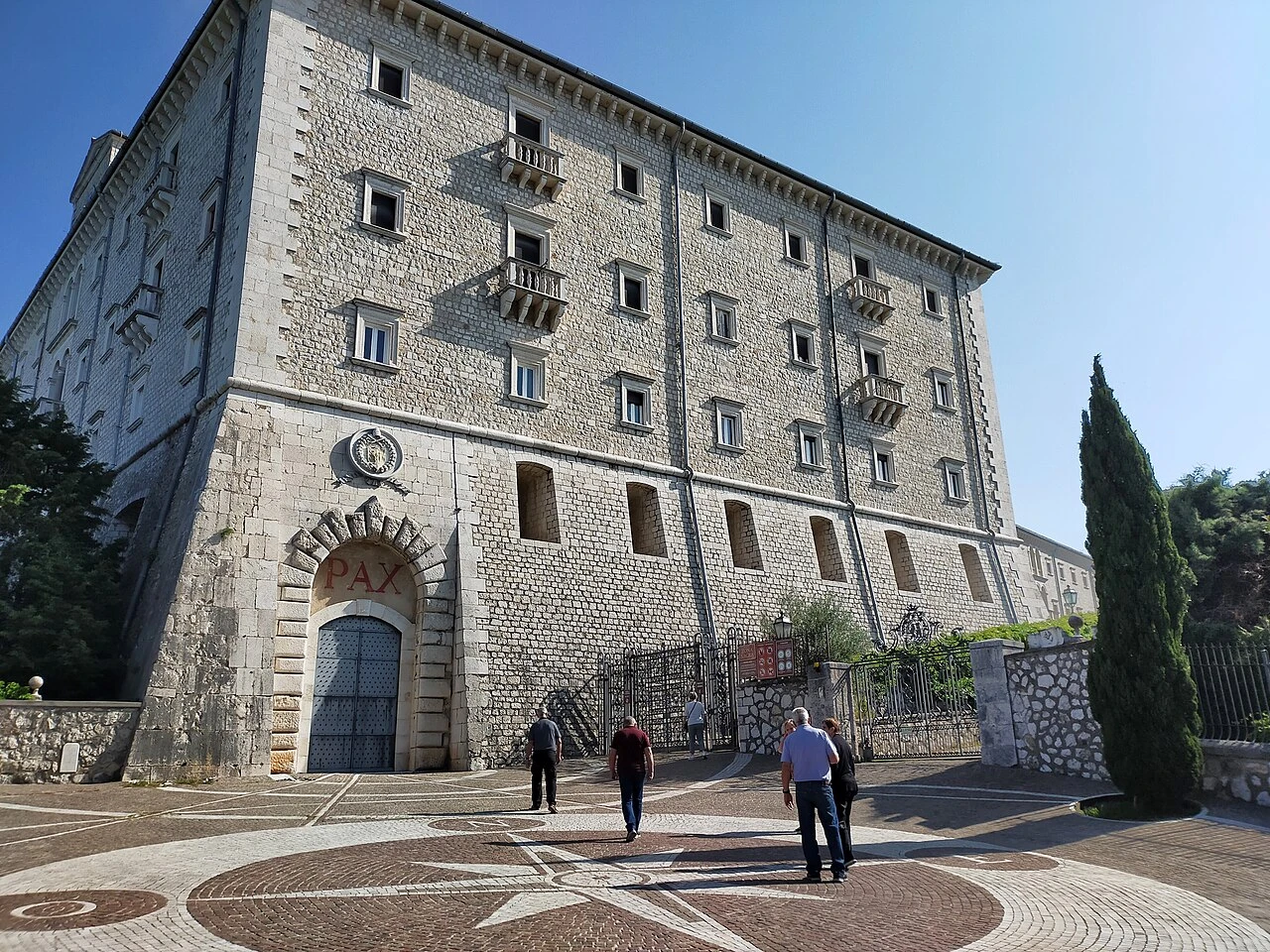
Cassino
Abbey of Monte Cassino
Content & sources
Photo: Marica Massaro · CC BY-SA 4.0
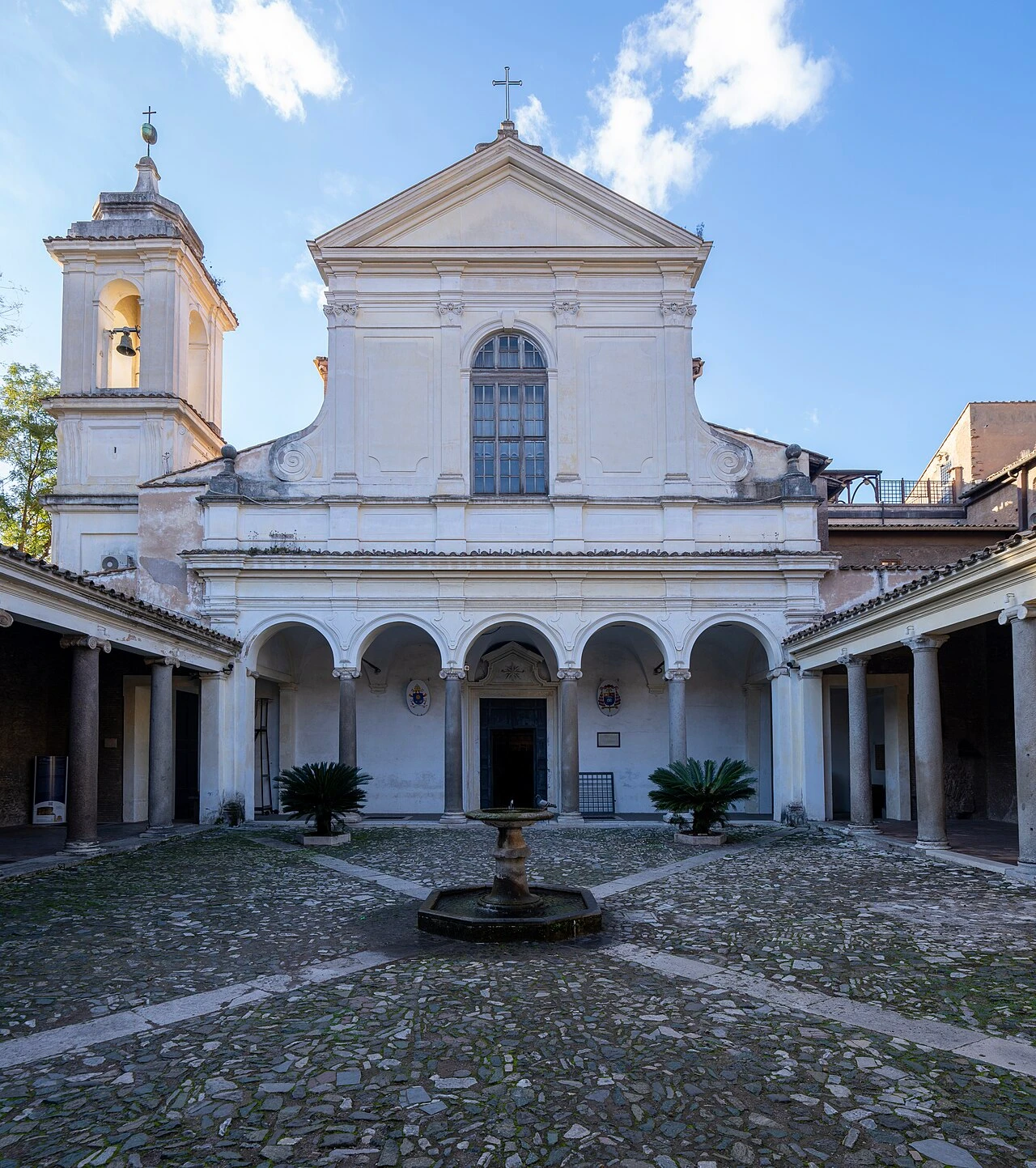
Rome
Basilica di San Clemente
Content & sources
Photo: Labicanense · CC BY-SA 4.0
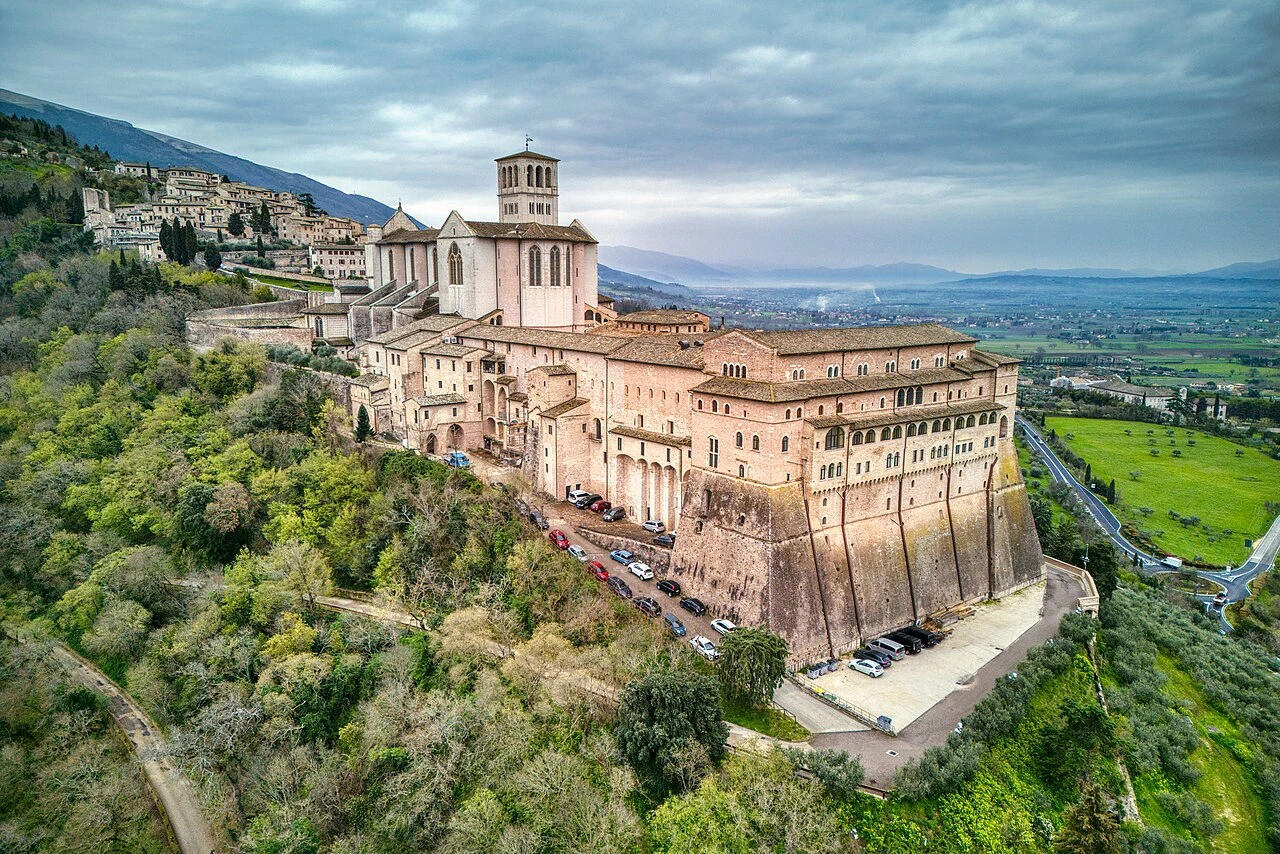
Assisi
Basilica di San Francesco
Content & sources
Hagai Agmon-Snir حچاي اچمون-سنير חגי אגמון-שניר · CC BY-SA 4.0
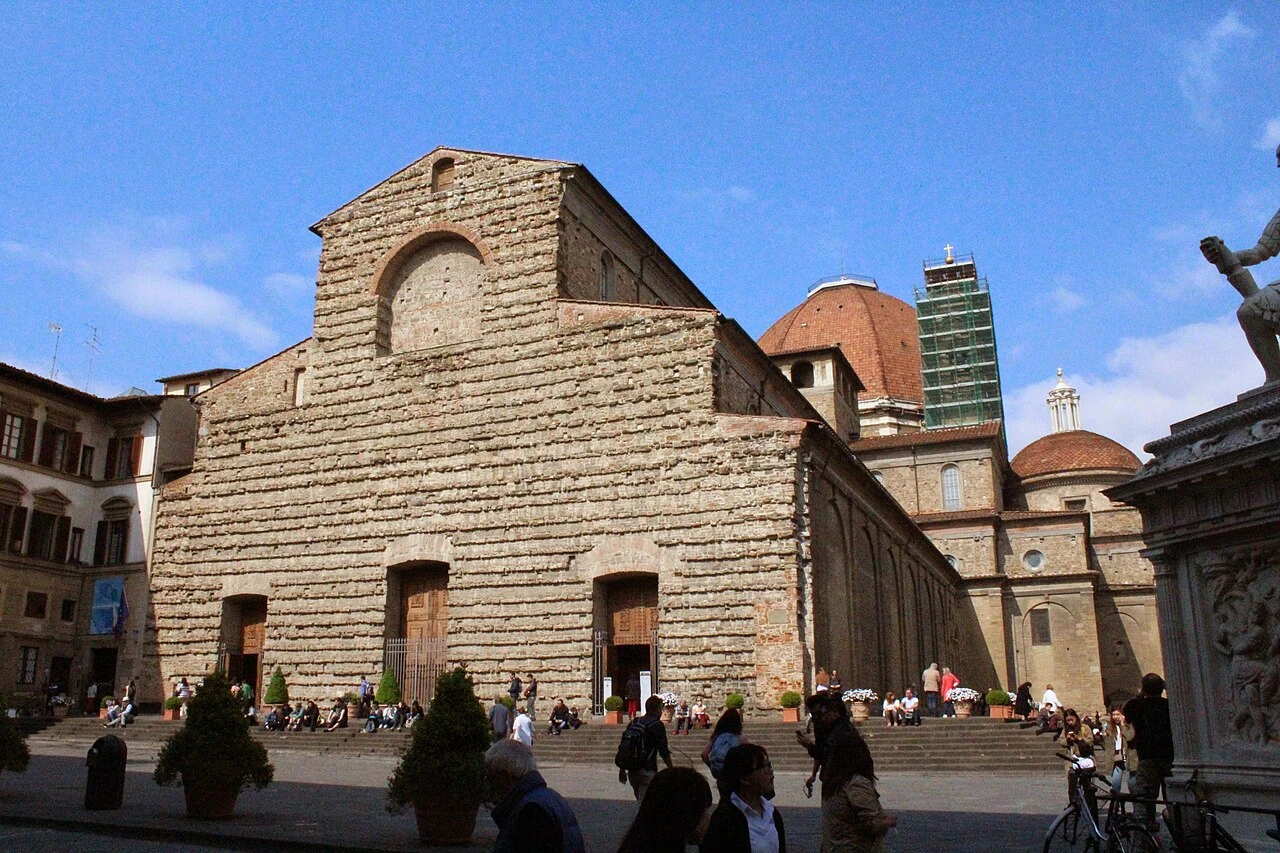
Florence
Basilica di San Lorenzo
Content & sources
Nelson Pérez · CC BY-SA 3.0