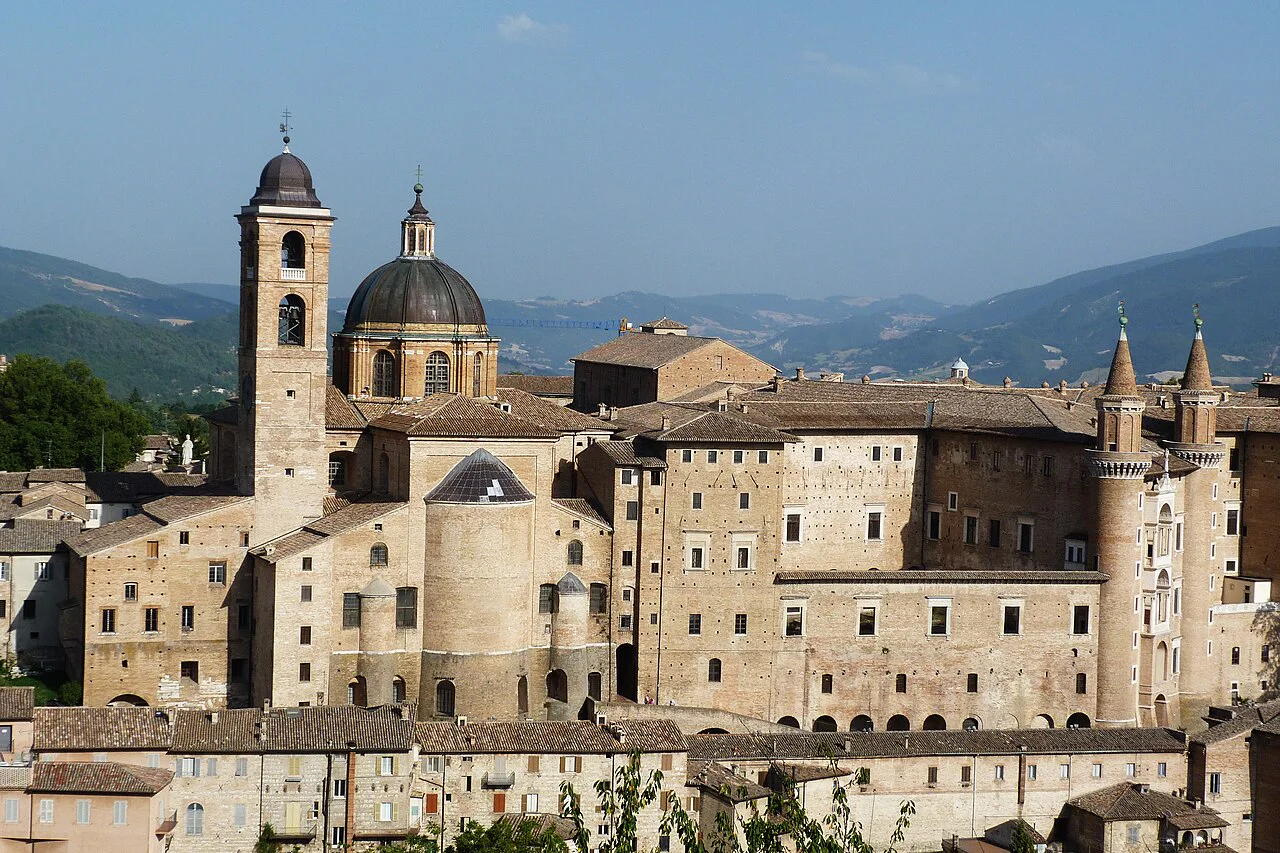
Stanza · Audio guide
Palazzo Ducale Audio Guide
A place to remember. A story to take with you.
The Ducal Palace is a Renaissance building located in Urbino, Italy. It is considered one of the most important monuments in Italy and has been a UNESCO World Heritage Site since 1998.
Download Stanza, then search for “Palazzo Ducale”.
About the tour
One guide. Your kind of visit.
The Ducal Palace is a Renaissance building located in Urbino, Italy. It is considered one of the most important monuments in Italy and has been a UNESCO World Heritage Site since 1998.
Ready when you are.
- 01Get the free Stanza app.
iOS & Android
- 02Find your guide.
“Palazzo Ducale”
- 03Download before you go.
Works offline
Audio guide / 16 narrated stops
Inside the guide
Get to know a few of the stories before you go. Open a stop to read more.
01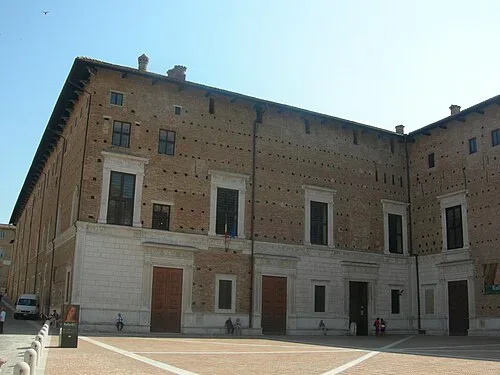 Piazza Duca Federico & Palace Exterior Entrance
Entrance Facade in Piazza Duca Federico
Welcome to the Ducal Palace of Urbino, one of the great monuments of the Italian Renaissance. This tour follows it from the outer walls to the duke's most private rooms. Work began around 1454 for Federico da Montefeltro, a mercenary captain who turned his hill town into a court. The building now holds the Galleria Nazionale delle Marche, one of the most important collections of Renaissance art anywhere, and UNESCO placed it on the World Heritage list in 1998. Baldassare Castiglione knew the palace at its height. In March 1507 he set his Book of the Courtier here, in the Hall of Vigils, as the setting for conversations about the ideal courtier. His judgement on the building has never been bettered. It seemed, he wrote, not a palace, but a city in the form of a palace.
Zlatan88 at Italian Wikipedia · CC BY-SA 3.0
02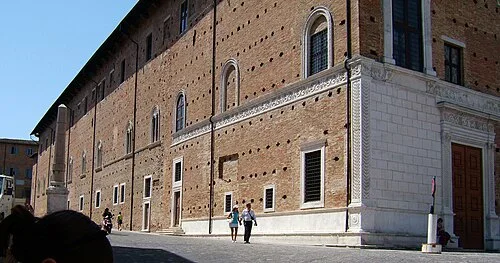 Piazza Duca Federico & Palace Exterior Entrance
Palace Facade on Piazza Rinascimento
On this side the palace shows a long, austere face of plain brick, bent like an open book around the square. Francesco di Giorgio Martini completed this L-shaped facade and laid out the square in front of it. The bare walls hide how rich the interiors are. Once the Montefeltro line ended, the palace became a working public building. The tribunal sat on the second floor into the nineteenth century. The ground floor held the notarial archive, the salt and tobacco warehouse, and the Monte di Pietà, the town's public pawnshop. Part of the palace even served as the judicial prison. That civic life ended around 1889, when the building was declared a national monument and its Renaissance rooms began to be recovered.
andyhay · CC BY 2.0
03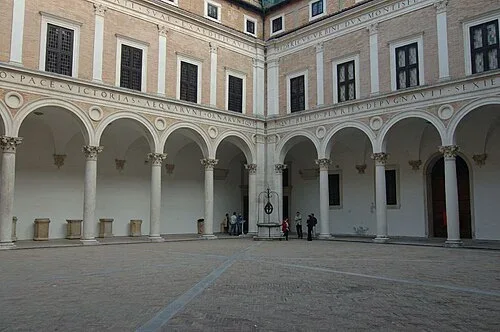 Central Arcaded Courtyard (Cortile d'Onore)
Arcaded Courtyard (Cortile d'Onore)
The arcaded courtyard is the heart of the palace, and it was made by Luciano Laurana, an architect from Dalmatia. Between 1464 and 1472 he bound the older, scattered ducal buildings into one harmonious whole. Round-headed arches run on Corinthian columns below, with oculi opening above them. The capitals were copied with real precision from Flavian-era Roman examples, and along the stringcourses run inscriptions cut in classical Roman capitals. Laurana was not only a builder of elegant architecture. He also fortified the palace and the city itself, using oblique walls designed so that cannon fire could not bring them down. Beauty and defence were the same project here. Laurana left Urbino in 1472 for Naples, before the palace's living quarters were begun, and who finished them is not known with certainty.
Listen in the appGaspa · CC BY 2.0
04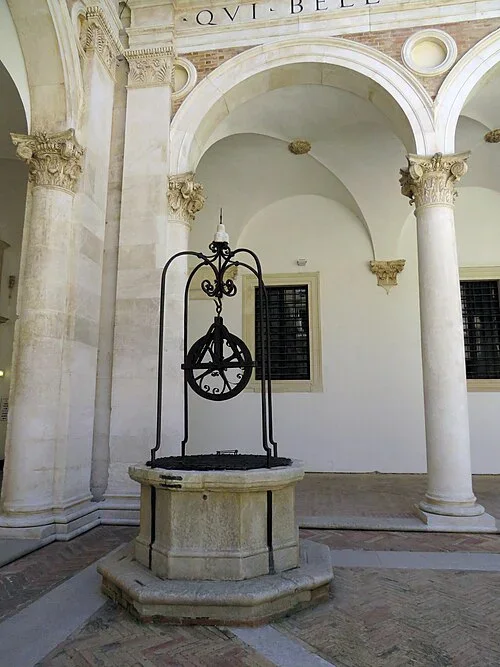 Central Arcaded Courtyard (Cortile d'Onore)
Courtyard Well
Among all this classical grandeur sits something purely practical: a stone well head, ringed by wrought iron. It makes a simple point about how this place was conceived. Federico wanted a residence that worked like a self-contained city, with administration, hospitality and daily life under one roof. A city needs water, so water stood at hand in the very centre of the building. Courtyards across Italy carried wells like this one, and the pulley and ironwork here are worked with a care that goes beyond mere utility.
Listen in the appPhoto: Enric · CC BY-SA 4.0
05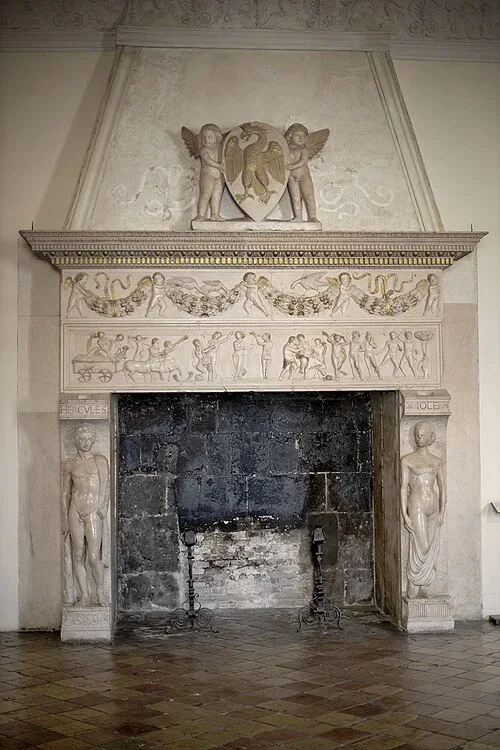 Palazzetto della Jole (Early Renaissance Apartments)
Camino della Jole (Hercules Fireplace), 1456-57
This carved fireplace is the oldest Renaissance decoration in the palace. It was made in 1456 and 1457 by Michele di Giovanni da Fiesole, called il Greco. Federico, newly secure in power, called in Florentine architects led by Maso di Bartolomeo, trained in Brunelleschi's circle. Their task was to join the two old ducal buildings with a new palace between them. Over about ten years the result was the palazzetto della Jole, three floors of austere, typically Tuscan architecture. Its interiors carried sober classical accents, concentrated on celebrating Hercules and the virtues of war. You can see the theme in the carving: Hercules and Jole named on the pilasters, putti holding garlands above, and the Montefeltro eagle shield carried by winged figures at the top.
Listen in the appPhoto: Fabrizio Garrisi · CC BY-SA 4.0
06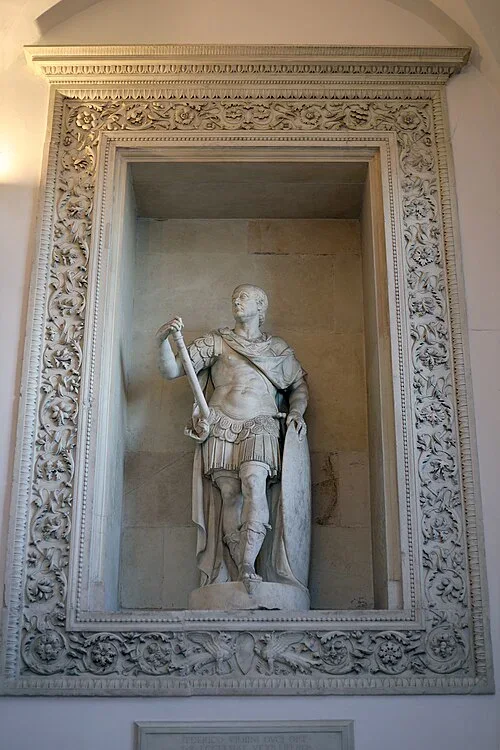 Grand Staircase (Scalone d'Onore)
Statue of Federico da Montefeltro by Girolamo Campagna
The Grand Staircase rises here, built by Laurana as the ceremonial ascent to the noble floor. It was among the earliest monumental staircases in an Italian palace, a stage for anyone arriving to be received by the duke. Long after the Montefeltro line had ended, the staircase gained its marble figure. Between 1604 and 1606 the sculptor Girolamo Campagna carved Federico in Carrara marble, working from a design by Ambrogio Barocci. The duke who had been dead for over a century appears in Roman armour, baton in hand, set in a niche framed by dense carved foliage. The dynasty was gone, but the palace still presented its founder to every climber as an antique hero.
Listen in the appPhoto: Fabrizio Garrisi · CC BY-SA 4.0
07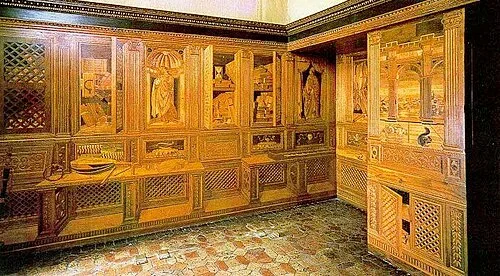 Duke's Apartments & The Intarsia Studiolo
The Studiolo of Federico da Montefeltro
The Studiolo is a very small room, about three and a half metres each way, and it is the highlight of the palace. Federico built it facing away from the city, towards his rural lands, for study and contemplation. By 1476 the walls were covered in intarsia, wood inlay of astonishing illusion. Simulated cupboards stand half open, latticework doors reveal shelves, and benches seem to hold musical instruments, books, an hourglass, a writing desk, an astrolabe and an armillary sphere, even caged parrots. Everything is flat wood made to look three-dimensional, and each object stands for one of the Liberal Arts. Above the woodwork run twenty-eight portraits of great authors, painted by Joos van Wassenhove with reworking by Pedro Berruguete. Remarkably, this room survives nearly intact, when so much of the palace's original furnishing has been scattered.
Listen in the appFrancesco di Giorgio · Public domain
08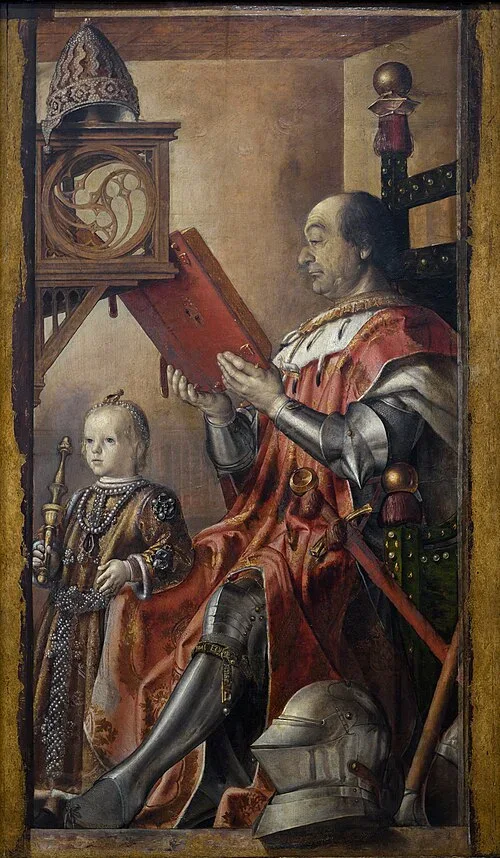 Duke's Apartments & The Intarsia Studiolo
Pedro Berruguete, Federico da Montefeltro with His Son Guidobaldo
Here Federico shows himself as he wanted to be seen in life: the warrior and the scholar in one figure. He sits in armour under a rich mantle, reading a codex, an expensive luxury at the time and a nod to his humanist interests. His helmet and command baton lie on the floor at his side. Beside him stands his young son Guidobaldo, the future duke, richly dressed and holding a baton of command of his own. The painter was Pedro Berruguete, though Joos van Wassenhove is a strong rival for the attribution, and scholars still debate which of them made it. Federico's daily routine matched the image: he read Greek literature, a learned and deliberately pagan touch, atypical of a medieval palazzo. After he became duke, his monogram changed from F C, Federico Conte, to FE DUX, Federico Duke. Centuries later, in 1717 and 1718, the duke's apartment was fitted out for James Stuart, the exiled Catholic pretender to the English throne.
Listen in the appPhoto: Julian Lupyan · CC0
09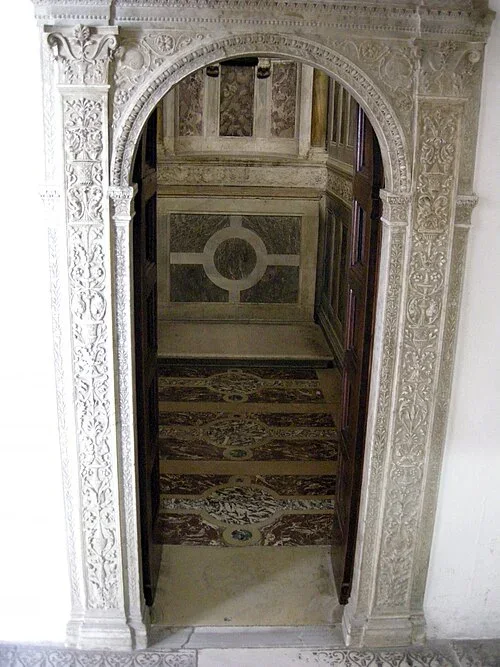 The Twin Chapels (Cappella del Perdono)
Cappella del Perdono (Twin Chapels)
Downstairs from the Duke's study, two chapels stand side by side, built as a matched pair. One is the Christian Chapel of Absolution. The other was called the Temple of the Muses. A Latin couplet carved in the vestibule between them makes the pairing plain. You see a pair of chapels, joined together with a small separation: the one part is sacred to the Muses, the other sacred to God. The richly carved marble doorway, dense with foliage and figures, has been attributed to the sculptor Pietro Lombardo. The Temple of the Muses may have served as a study for Guidobaldo, Federico's son. Its walls originally carried paintings of the Muses as sober musicians, works perhaps by Giovanni Santi, the father of Raphael.
Listen in the appPhoto: Sailko · CC BY-SA 3.0
10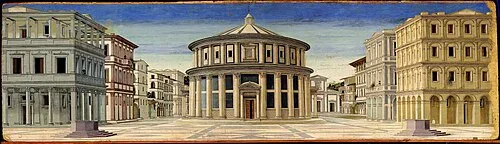 Galleria Nazionale delle Marche - Masterpieces of the Renaissance
The Ideal City (formerly attributed to Piero della Francesca)
The gallery fills the palace's noble floors, with paintings gathered for the Montefeltro court and its successors. Among them is a long panel, about two metres wide, known as the Ideal City. It was long given to Piero della Francesca, and its old label still carries that name. Today the attribution is disputed, and both the painter and the original purpose remain debated. Whatever its authorship, the panel shows exactly what the Montefeltro circle admired. A paved square, empty of people, is framed by classical palaces and a central round building, all drawn in strict, measured perspective. It is the same pursuit of proportion and order that governs the palace's own courtyard, translated into paint.
Listen in the appRaphael · Public domain
- 11
Piero della Francesca, The Flagellation of Christ
A small panel with serene geometry and three mysterious foreground figures, and no agreed meaning.
- 12
Raphael, Portrait of a Young Woman (La Muta)
Raphael's silent, unreadable young woman, and how Urbino won back a painting by its greatest son.
- 13
Predella Panels by Paolo Uccello
Paolo Uccello's predella scenes, and the fifteenth-century masters gathered in this collection.
- 14
Subterranean Vaults
The brick-vaulted service world beneath the palace, reopened to visitors after centuries hidden.
- 15
Helical Ramp (Rampa Elicoidale)
Francesco di Giorgio's spiral ramp, built so carts and horses could climb from the marketplace into the palace.
- 16
Facciata dei Torricini (Twin Towers Facade)
Twin towers and triumphal loggias on the cliff: the face Federico turned towards the world.
Palazzo Ducale
Frequently asked questions
How much does the guide cost?
Free app download. Listed guide price: $0.99. Guide price shown in the app. Audio guide only. Venue admission is separate.
Can I listen without internet?
Yes. Download the guide’s audio, images, and maps in the app before your visit. Your downloaded content is then available offline.
Can I listen in my language?
This audio guide is available in 15 languages, including English.
Do I need to follow a schedule?
No. This is a self-guided experience. Choose your stops, pause whenever you like, and return to a story at your own pace.
At your own pace
Explore Palazzo Ducale.
Download Stanza, then search for “Palazzo Ducale”.
Free app download · Guide price shown in the app
Keep exploring
Nearby audio guides
Urbino · 1 km
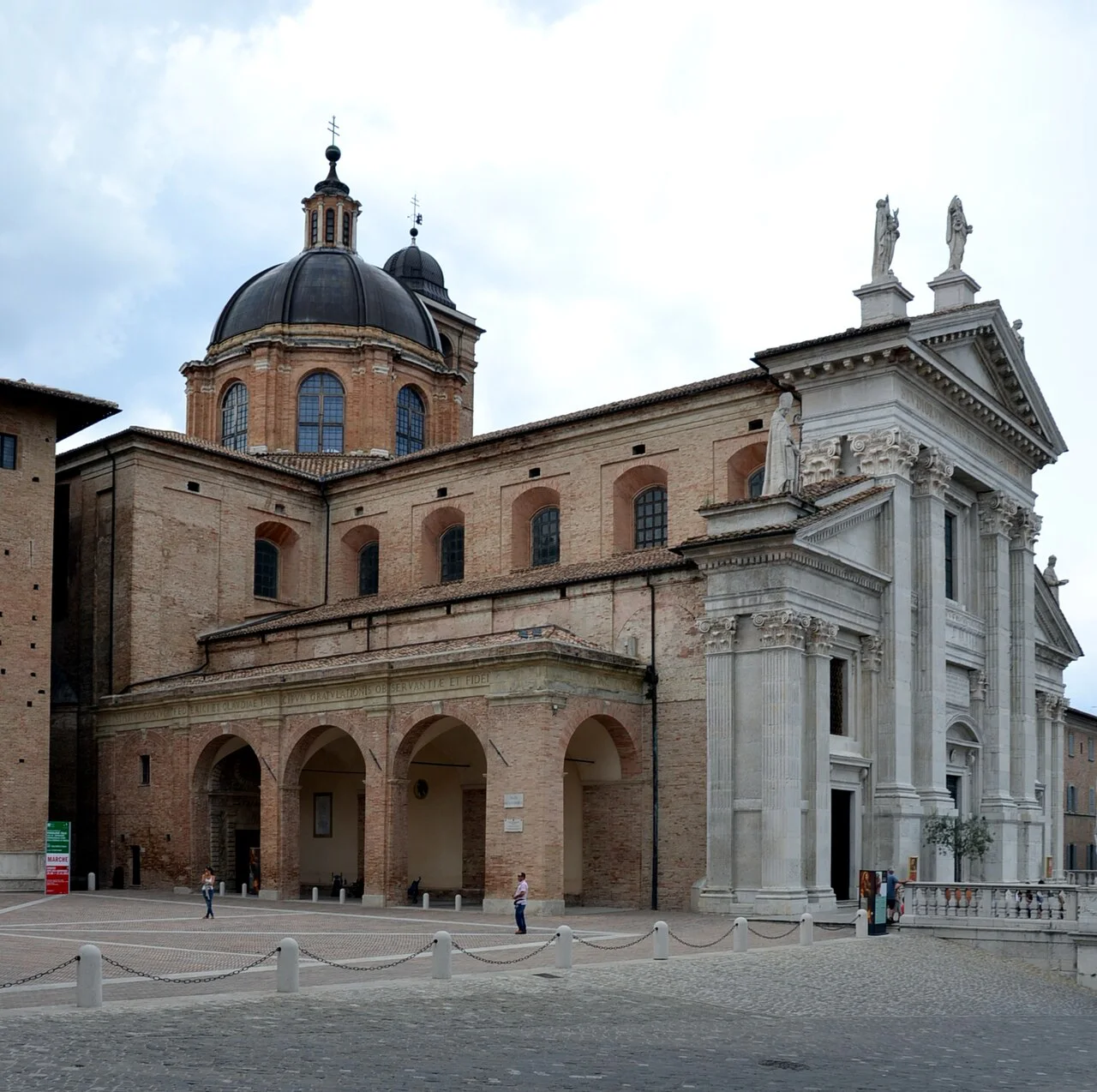
Duomo di Urbino
Content & sources
Photo: Ulrichulrich · CC BY 3.0
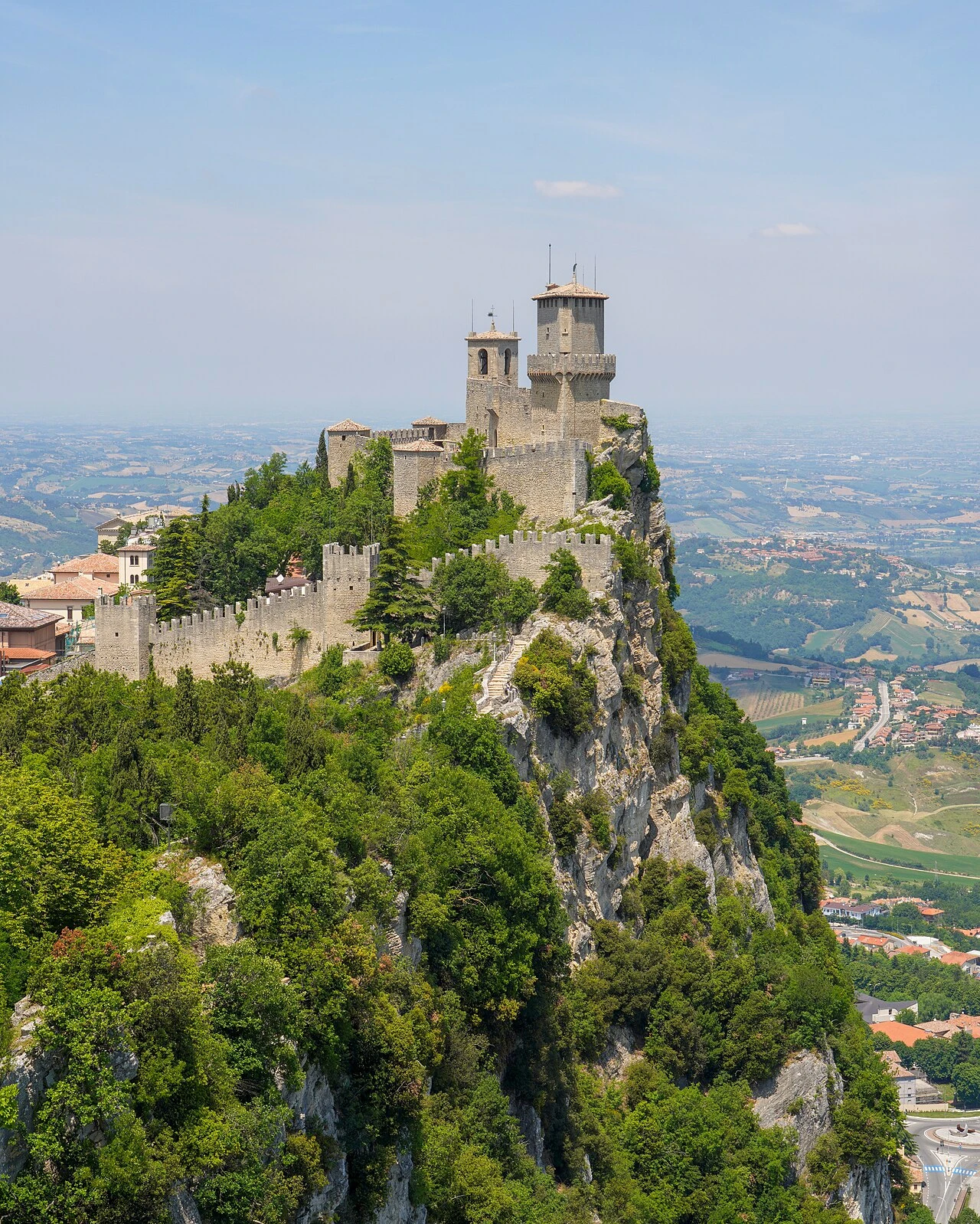
San Marino · 28 km
Guaita Tower
Content & sources
Photo: Commonists · CC BY-SA 4.0
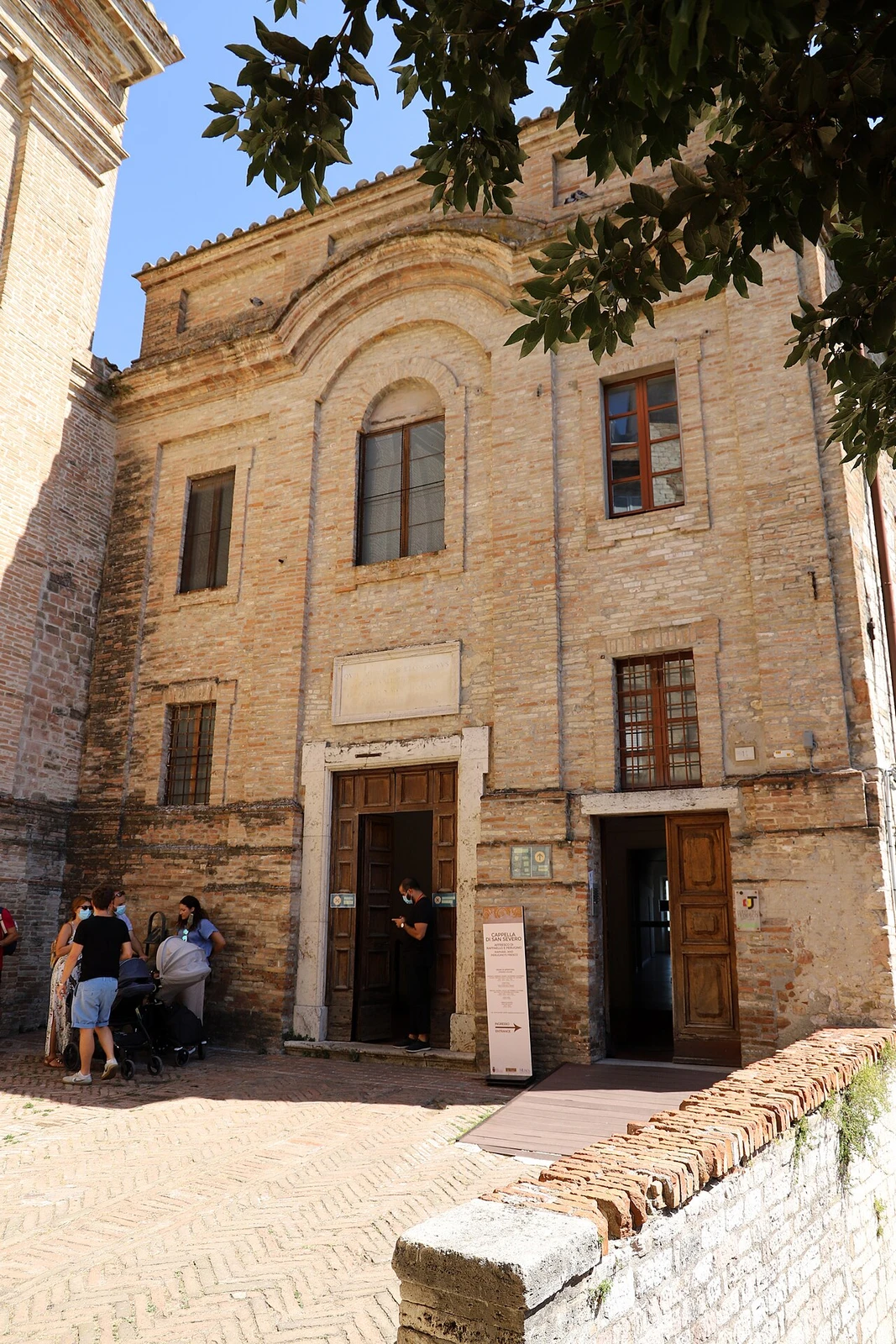
Perugia · 71 km
San Severo Chapel
Content & sources
Photo: Sailko · CC BY 3.0
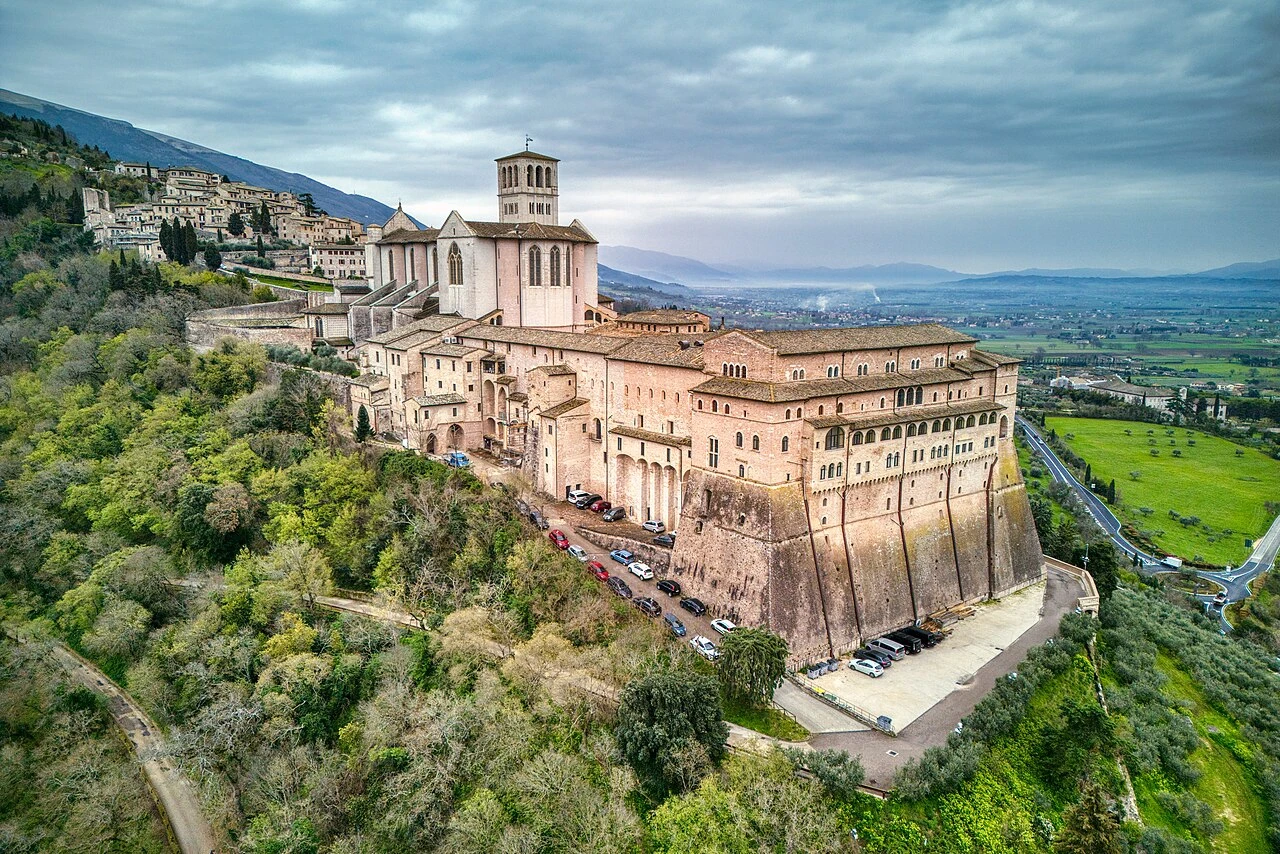
Assisi · 72 km
Basilica of St. Francis of Assisi
Content & sources
Hagai Agmon-Snir حچاي اچمون-سنير חגי אגמון-שניר · CC BY-SA 4.0
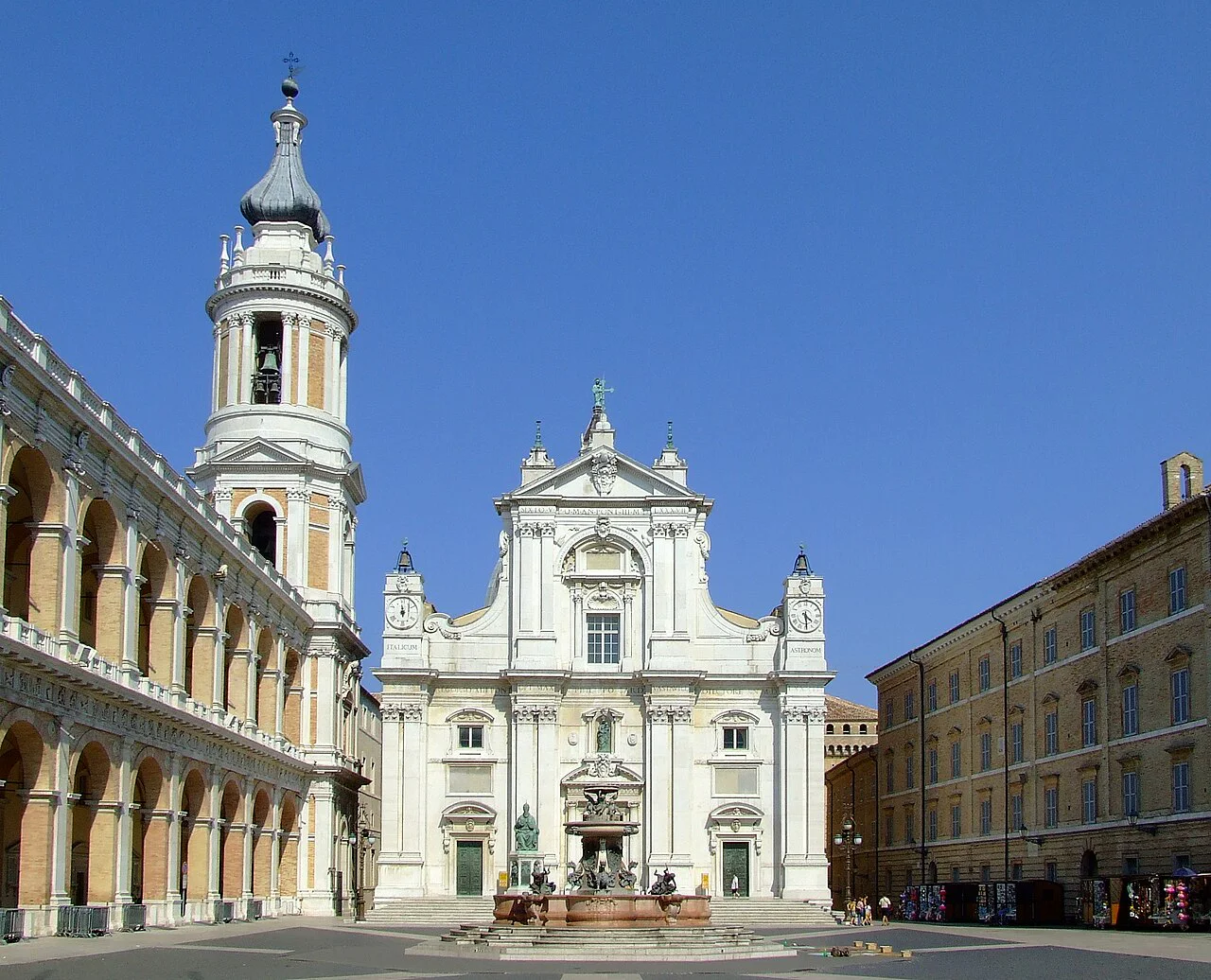
Loreto · 85 km
Basilica della Santa Casa
Content & sources
Loreto250706.JPG: Mroselli derivative work: Rabanus Flavus · CC BY-SA 2.5