 Stanza / Audio guide
Stanza · Audio guide
Basilica della Santa Casa Audio Guide
A place to remember. A story to take with you.
The Basilica della Santa Casa is a Marian shrine located in Loreto, Italy. It is widely known for preserving the house of the Holy Family.
Download Stanza, then search for “Basilica della Santa Casa”.
About the tour
One guide. Your kind of visit.
The Basilica della Santa Casa is a Marian shrine located in Loreto, Italy. It is widely known for preserving the house of the Holy Family.
Ready when you are.
- 01Get the free Stanza app.
iOS & Android
- 02Find your guide.
“Basilica della Santa Casa”
- 03Download before you go.
Works offline
Audio guide / 13 narrated stops
Inside the guide
Get to know a few of the stories before you go. Open a stop to read more.
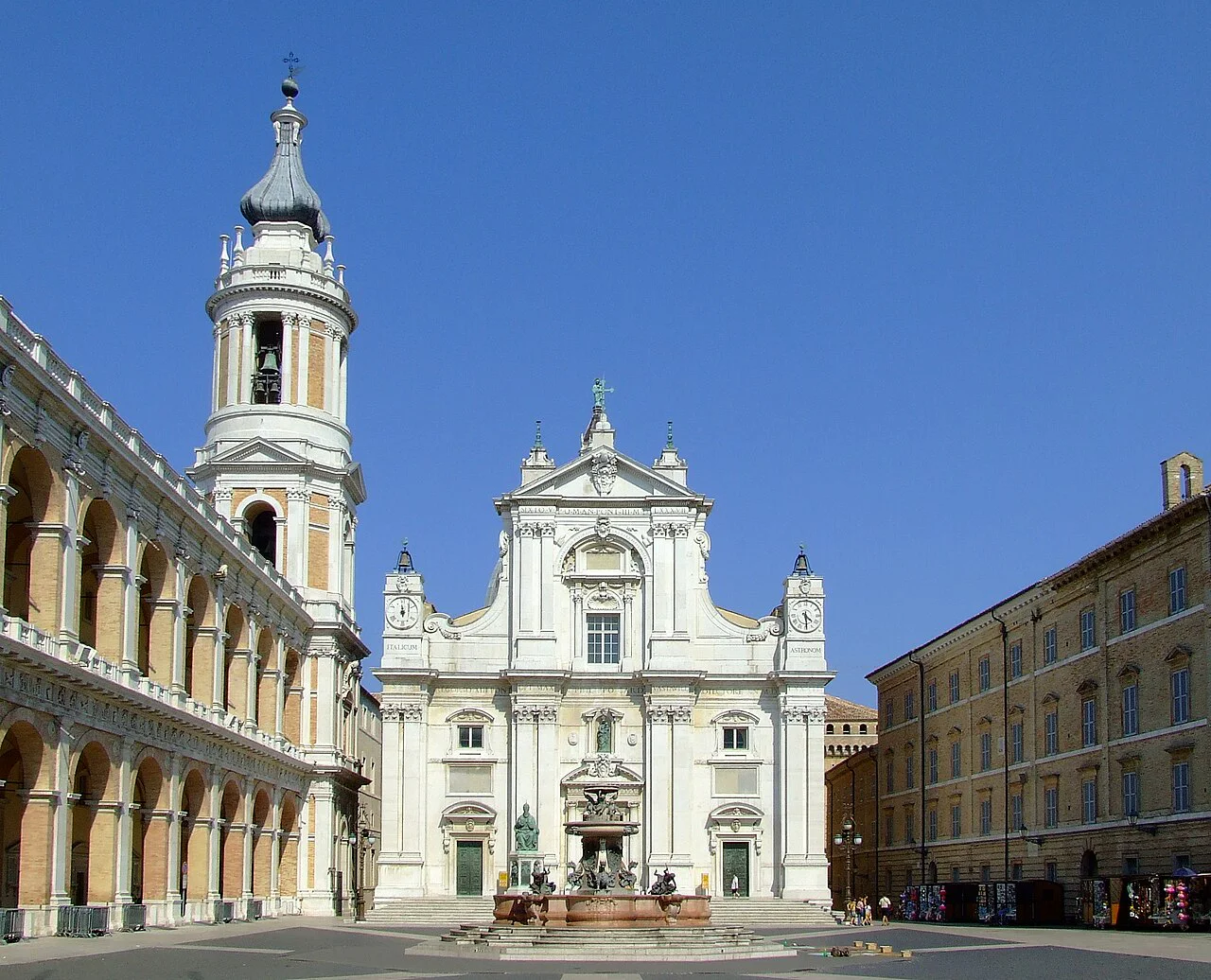
01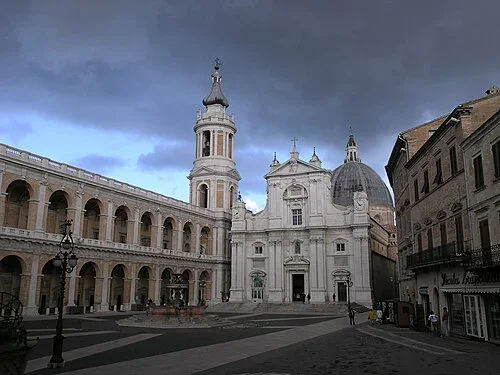 Piazza della Madonna & Monumental Façade
Piazza della Madonna and the Basilica Façade
Pilgrims have been coming to this square since at least the fourteenth century. Their road, the Via Lauretana, ends at Piazza della Madonna in the Italian town of Loreto. The church that faces the square is the Basilica della Santa Casa, the Basilica of the Holy House. Its heart is a small stone house, which tradition holds was the home of Mary in Nazareth. That belief has drawn pilgrims to Loreto for centuries. Today the basilica holds the rank of pontifical minor basilica. It is one of the most visited shrines to Mary in the whole Catholic Church.
Peter Geymayer at German Wikipedia (Original text: Peter Geymayer) · Public domain
02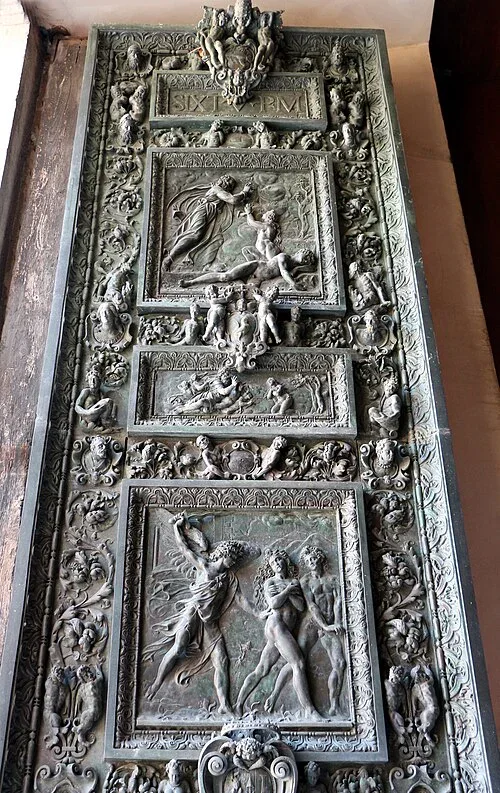 Piazza della Madonna & Monumental Façade
Central Bronze Portal
The central bronze door took more than twenty years to finish. Work began in 1590 in the workshop of Girolamo Lombardo, and his sons worked beside him. It was not completed until 1611. Figures stand out in high relief, pressing from the metal inside thick borders of carved garlands and small faces. Near the top, a panel carries an inscription. Six large scenes and six small ones show stories from the Old Testament. Tiburzio Vergelli, one of the workshop's pupils, also made the bronze font inside the church.
Photo: Sailko · CC BY 3.0
03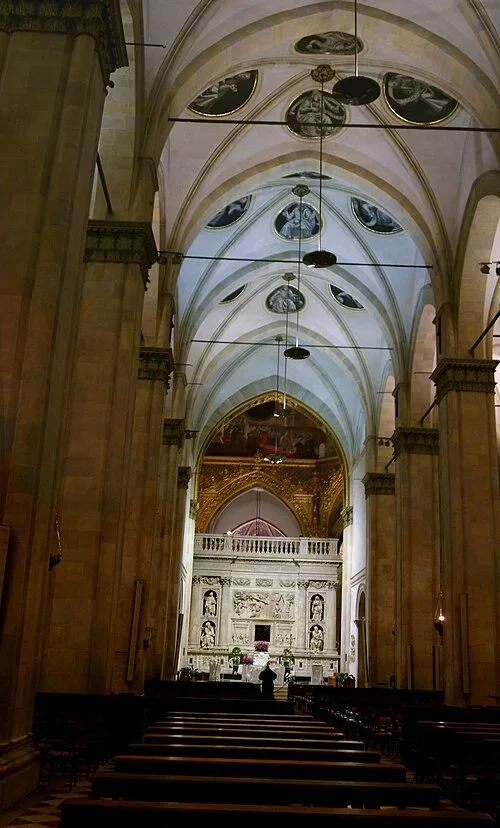 Central Nave & Giuliano da Sangallo's Cupola
Interior Nave of the Basilica
The church was begun in 1468 in the Gothic style. Its first architect was probably Marino di Marco Cedrino, and Baccio Pontelli came later. It was built as a large hall, still Gothic in feel, to hold a great crowd of the faithful. Its length is about ninety-three metres. Tall stone piers rise along the nave, and pointed vaults stretch above them. Later work had been added over the years. In 1885 Giuseppe Sacconi was given the general restoration of the basilica. His aim was to bring the Gothic forms back to light. He removed later work that had little artistic or historical value, and at times restored in the Gothic style. Oval medallions with painted scenes line the vault above the nave. Sacconi chose to keep two chapels with their original decoration, the chapel of the Dukes of Urbino and the chapel of the Crucifix.
Listen in the appPhoto: Zitumassin · Public domain
04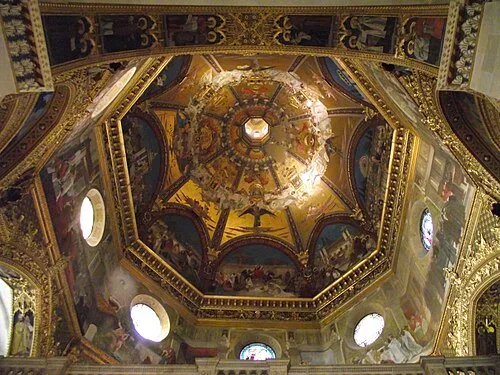 Central Nave & Giuliano da Sangallo's Cupola
Interior of the Basilica Dome
The dome's vault went up in just nine months. Giuliano da Maiano had already raised the octagonal drum, the tall base of the dome, up to its cornice. Giuliano da Sangallo, a Florentine, began the vault in September 1499. He set the last stone on a Saturday in May 1500. In his diary he wrote that he laid that last stone with great solemnity and devotion. Painted scenes fill the vault, framed in gold, and round windows sit low in the walls. The dome is clearly Renaissance in style, and it gives Loreto its distinctive skyline. It can be seen across a wide territory, from the sea to the valleys of the hills nearby.
Listen in the appPhoto: Parsifall · CC BY-SA 4.0
05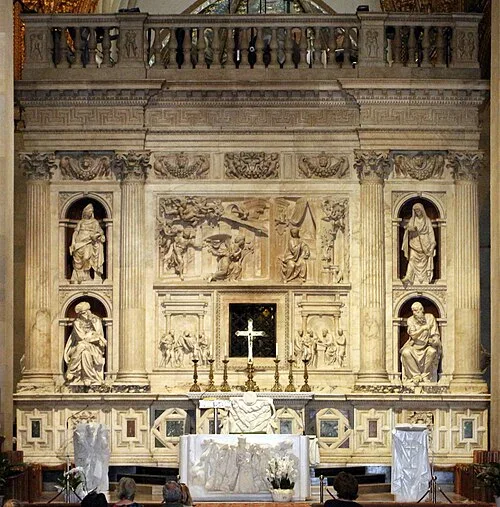 Bramante's Marble Casing
Marble Casing of the Holy House (Bramante's Design)
In 1507 Pope Julius the Second took Loreto out of the diocese of Recanati and placed it under direct papal control. The next year he asked the architect Donato Bramante to design a new sculpted casing for the Holy House. The house inside is simple. The marble that wraps around it is anything but. The carving covers 610 square metres. It took seventy years and enormous sums to finish. Its four sides show the Annunciation, the Nativity, the arrival of the house at Loreto and the Nativity of the Virgin. Columns with carved capitals rise across the front, with statues standing in niches between them. Relief panels run above, and a dark opening sits in the centre, with a cross and candlesticks in front of it. Work continued under later popes, down to Paul the Third.
Listen in the appPhoto: Sailko · CC BY 3.0
06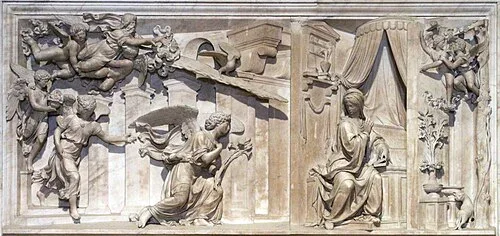 Bramante's Marble Casing
Annunciation Relief (Attributed to Andrea Sansovino)
Andrea Sansovino is credited with this relief of the Annunciation, which was finished in 1523. It shows the angel's visit to Mary. A winged figure in flowing robes stands in the middle, and a seated woman sits at the right beside a curtained bed. Cherubs fill the corners above. The relief sits above what is called the Angel's Window, the opening through which the Annunciation is said to have happened. The casing, though, was not carved by one hand. One account gives Sansovino only a small share of the whole, and most of the work went to others. Baccio Bandinelli worked on the Nativity of the Virgin in 1518, but he left it unfinished after quarrels with Sansovino. Raffaello da Montelupo finished it. Sansovino himself was removed from the work in 1526.
Listen in the appPhoto: Sailko · CC BY 3.0
07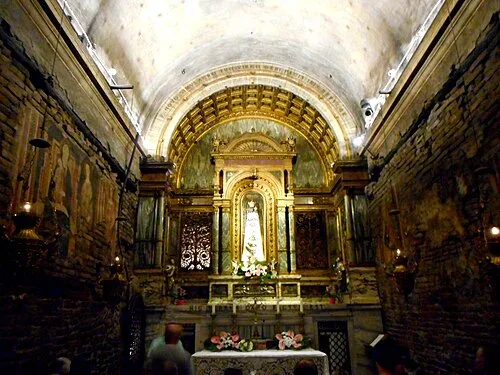 Interior of the Holy House & The Black Madonna
Interior of the Holy House
The Holy House is a plain structure of three stone walls, with a door on the north side and a window on the west. Late medieval traditions linked it to the house in Nazareth where Mary grew up and where the Annunciation took place. The house's known history reaches back only to the close of the Crusades, around the fourteenth century. The legend says angels carried the house from Nazareth. Tradition dates the miraculous move to the twelfth of May, 1291. The port of Acre, the Crusader capital, fell six days later. Another explanation points to a noble Byzantine family called Angelos. Angelos means angels in both Greek and Latin. In modern times, churchmen traced the story's origins to that family. In 1900 the papal physician Giuseppe Lapponi said he had read in the Vatican archives about the Angelos family. He claimed the family saved the stones from destruction and carried them to Loreto. In that account, Nikephoros, ruler of Epirus from the same family, sent the stones to Italy as a wedding gift for his daughter in late 1294. Sixteenth-century relief carvings suggest the house travelled by sea. Stones that researchers consider authentic still carry Roman numerals, marked by scratching or in coal. Those marks suggest the walls were taken apart with care, to be rebuilt somewhere else.
Listen in the appCarlo Raso · Public domain
08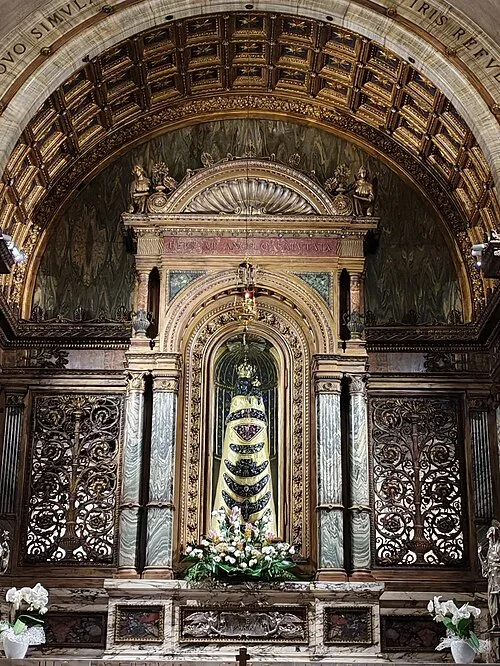 Interior of the Holy House & The Black Madonna
Statue of Our Lady of Loreto
The statue above the altar was made to replace an older one. The original was a Black Madonna holding the Christ Child, and its style suggests it dates from the fifteenth century. A legend credits Saint Luke with carving it in olive wood. From the sixteenth century, the original figures were covered in a jewelled mantle. In February 1921 a fierce fire broke out inside the Holy House and destroyed the old statue. Pope Pius the Eleventh ordered a new one at once, carved to resemble the old. Its wood came from a cedar of Lebanon in the Vatican Gardens. A sculptor modelled the new figure, and a painter carved and painted it. Pope Benedict the Fifteenth had already named Our Lady of Loreto patroness of air passengers, almost a year before the fire. In 1922 the new statue was crowned in Saint Peter's Basilica in the Vatican and carried solemnly back to Loreto.
Listen in the appPhoto: Parsifall · CC BY 4.0
09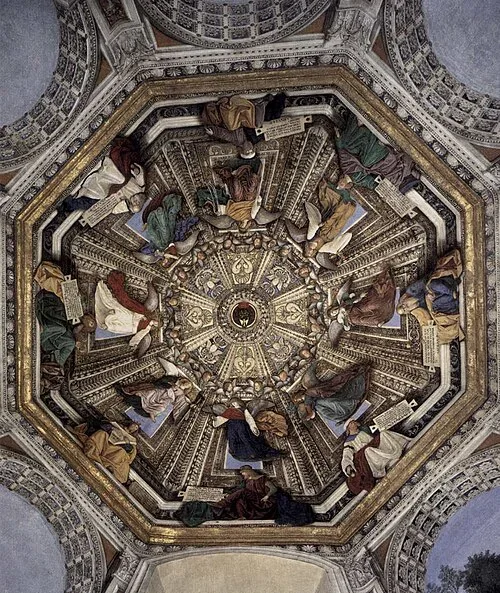 The Early Renaissance Sacristies
Melozzo da Forlì Vault, Sacristy of Saint Mark
The Sacristy of Saint Mark keeps the frescoes that Melozzo da Forlì painted between 1477 and 1479. A sacristy is the room where a church keeps its altar objects and the robes of its clergy. The vault above is usually credited to Melozzo. He painted the figures to be seen from far below, so they seem to lean out over the viewer. Painters call this foreshortening, drawing a body at a steep angle so that its limbs appear to reach out of the wall. Most of the figures hold white scrolls, and they circle a central medallion decorated with ornament.
Listen in the appMelozzo da Forlì · Public domain
10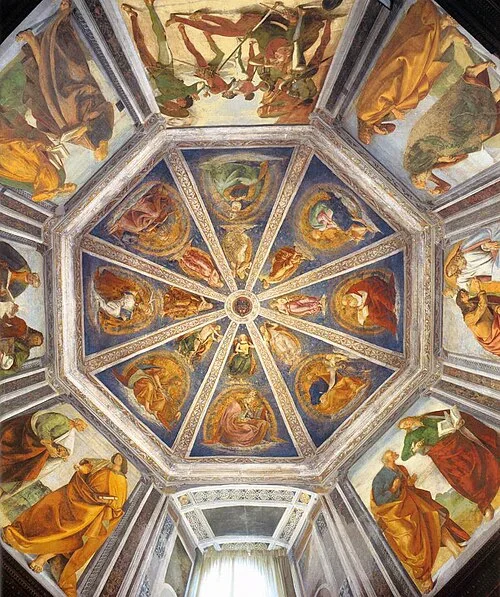 The Early Renaissance Sacristies
Luca Signorelli Vault, Sacristy of Saint John
The Sacristy of Saint John holds frescoes by Luca Signorelli, who was still young when he took the commission. He was already known in the Marche as one of Piero della Francesca's better students. The commission came from Girolamo Basso della Rovere, who ruled Loreto for about thirty years. The vault has eight segments. A spiral of eight angel musicians runs around it. Then the four Evangelists and the Doctors of the Church alternate around the vault. Framed medallions ring the vault, and large standing figures fill the corners. Scholars disagree about the date. One view puts the work in the later 1470s. Another puts it probably between 1481 and 1485. At the centre of the vault is the coat of arms of Girolamo Basso della Rovere.
Listen in the appLuca Signorelli · Public domain
- 11
Hall of the Treasury (Sala del Tesoro)
A hall built to hold a shrine's votive gifts, its painted vault, and the 1797 looting that emptied much of it.
- 12
Fortified Ramparts of the Apses
The brick towers and patrol walkways of a shrine town fortified by Pope Sixtus the Fifth in 1586.
- 13
Vanvitelli Campanile
A tower by the architect of Caserta, whose nine bells ring the Litany of Loreto out over the square.
Basilica della Santa Casa
Frequently asked questions
How much does the guide cost?
Free app download. Listed guide price: $0.99. Guide price shown in the app. Audio guide only. Venue admission is separate.
Can I listen without internet?
Yes. Download the guide’s audio, images, and maps in the app before your visit. Your downloaded content is then available offline.
Can I listen in my language?
This audio guide is available in 15 languages, including English.
Do I need to follow a schedule?
No. This is a self-guided experience. Choose your stops, pause whenever you like, and return to a story at your own pace.
At your own pace
Explore Basilica della Santa Casa.
Download Stanza, then search for “Basilica della Santa Casa”.
Free app download · Guide price shown in the app
Keep exploring
Nearby audio guides
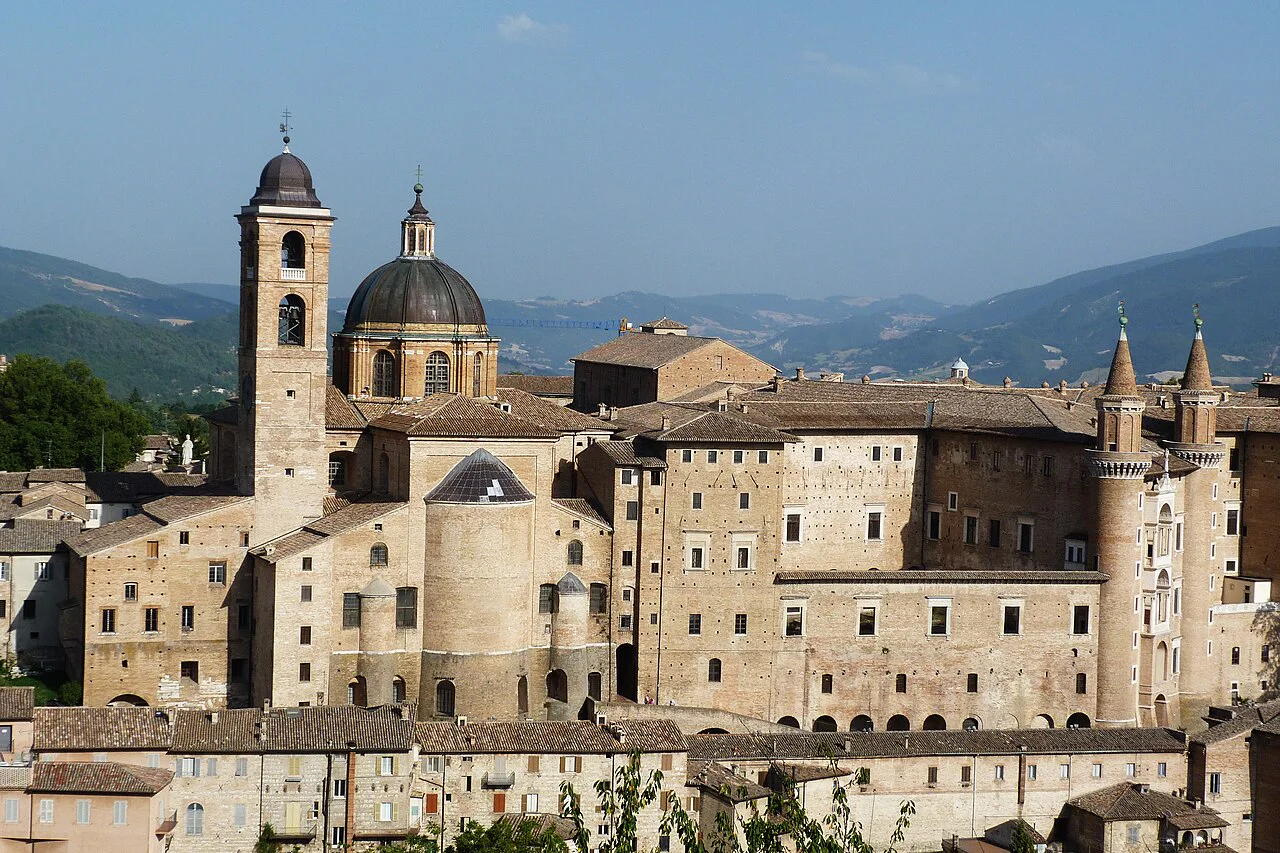
Urbino · 85 km
Palazzo Ducale
Content & sources
Stefano Sansavini · CC BY-SA 4.0
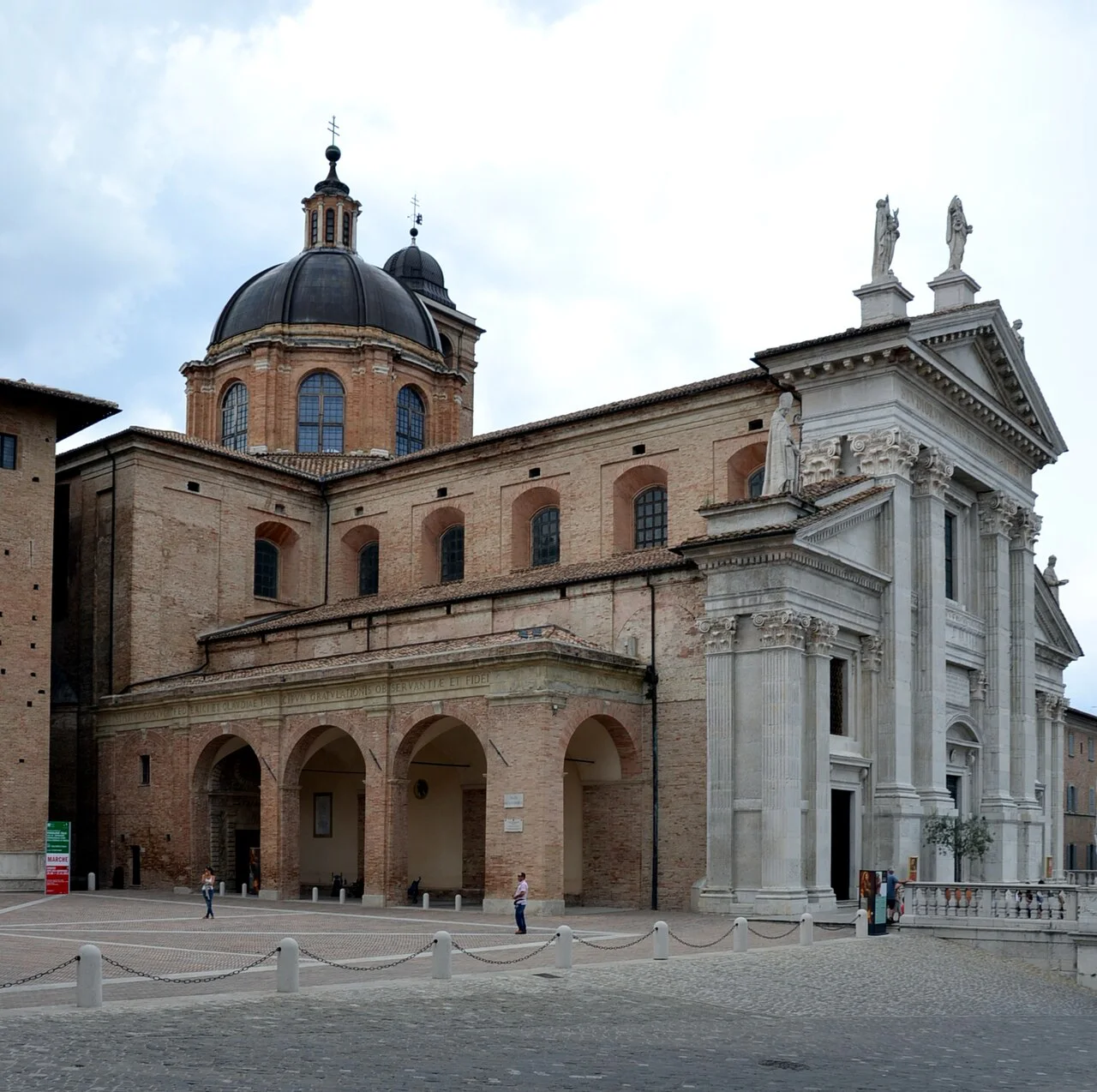
Urbino · 85 km
Duomo di Urbino
Content & sources
Photo: Ulrichulrich · CC BY 3.0
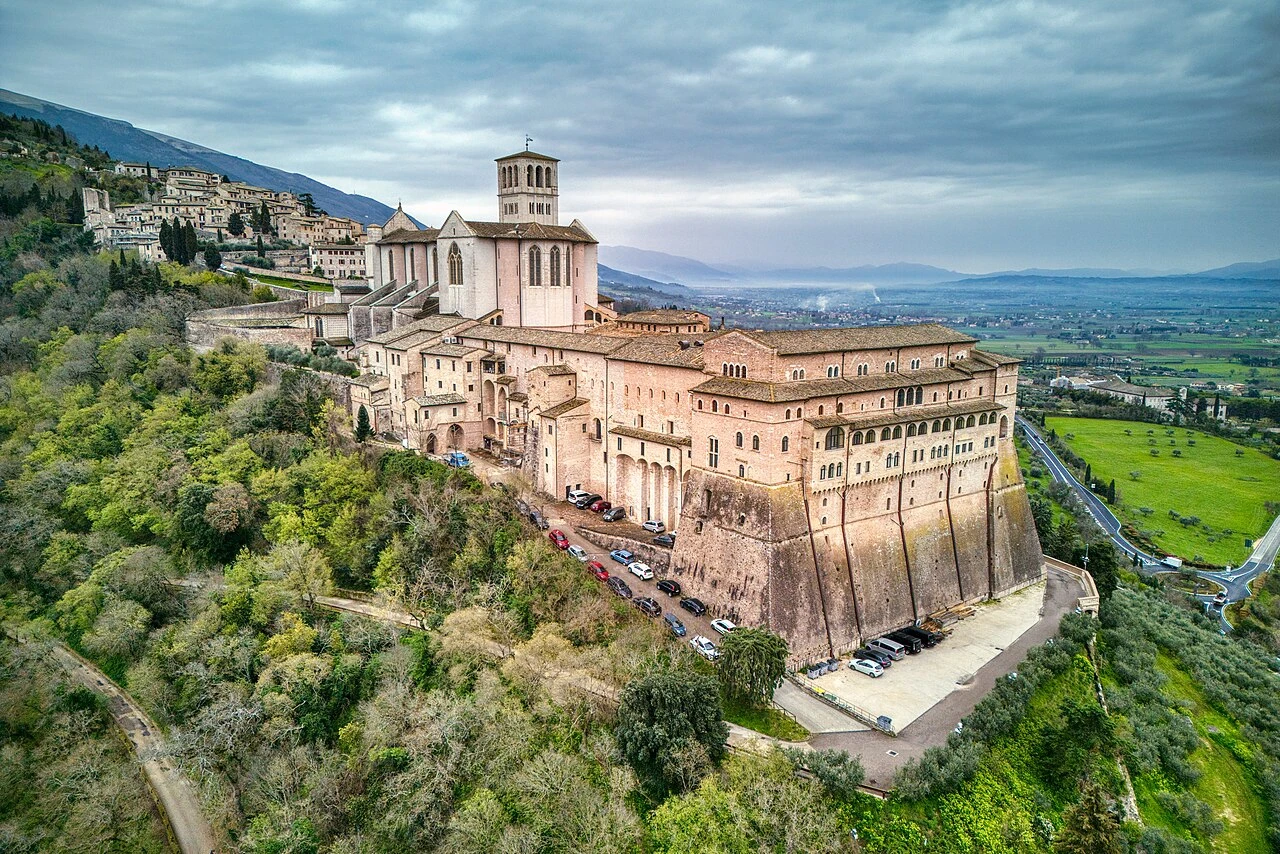
Assisi · 91 km
Basilica of St. Francis of Assisi
Content & sources
Hagai Agmon-Snir حچاي اچمون-سنير חגי אגמון-שניר · CC BY-SA 4.0
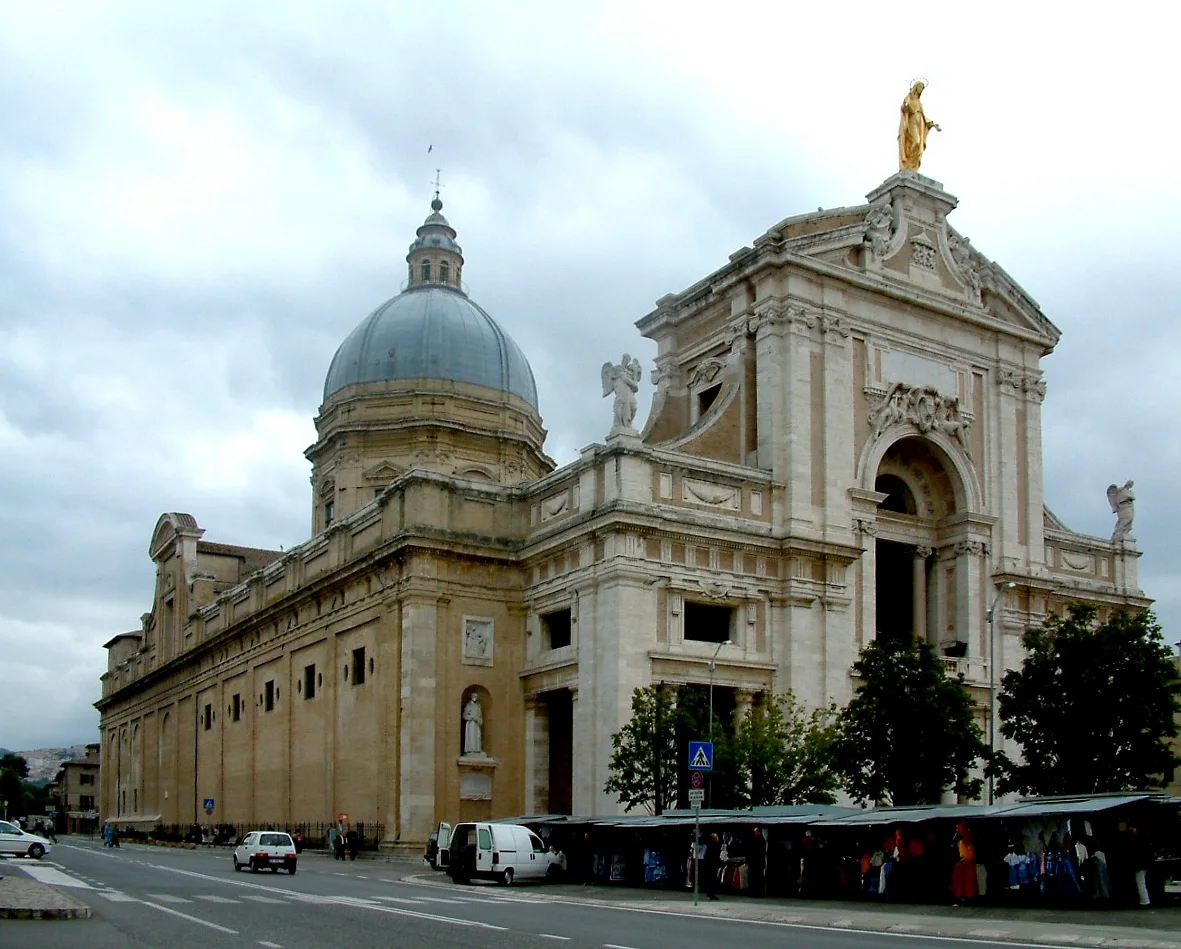
Assisi · 94 km
Basilica di Santa Maria degli Angeli
Content & sources
Photo: Erbsloeh · CC BY-SA 3.0