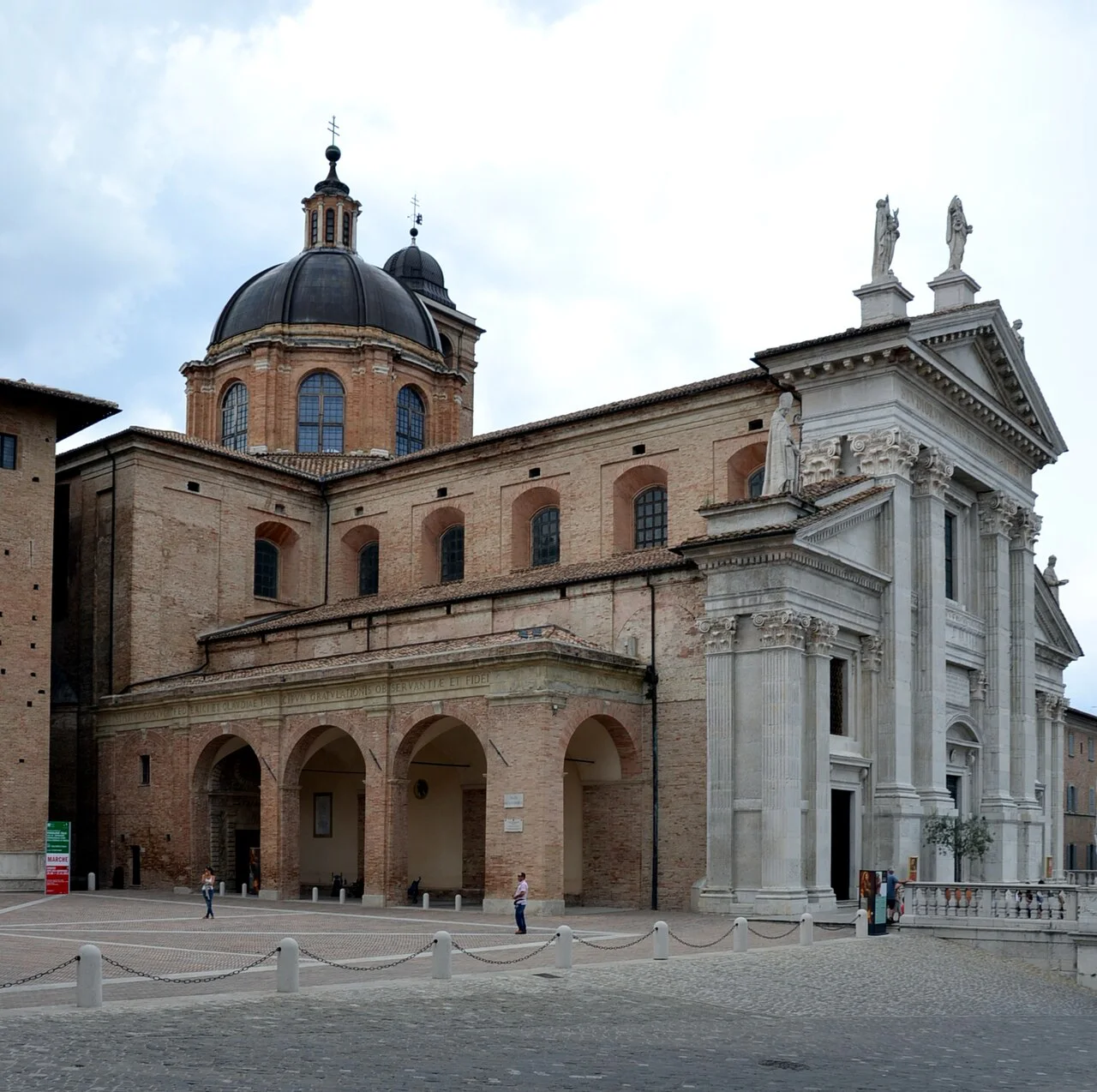
Stanza · Audio guide
Duomo di Urbino Audio Guide
A place to remember. A story to take with you.
Urbino Cathedral is a Catholic cathedral in Urbino, Italy, dedicated to the Assumption of the Blessed Virgin Mary. It is part of the Historic Centre of Urbino, which is a UNESCO World Heritage Site recognized…
Download Stanza, then search for “Duomo di Urbino”.
About the tour
One guide. Your kind of visit.
Urbino Cathedral is a Catholic cathedral in Urbino, Italy, dedicated to the Assumption of the Blessed Virgin Mary. It is part of the Historic Centre of Urbino, which is a UNESCO World Heritage Site recognized for its Renaissance architecture.
Ready when you are.
- 01Get the free Stanza app.
iOS & Android
- 02Find your guide.
“Duomo di Urbino”
- 03Download before you go.
Works offline
Audio guide / 11 narrated stops
Inside the guide
Get to know a few of the stories before you go. Open a stop to read more.
01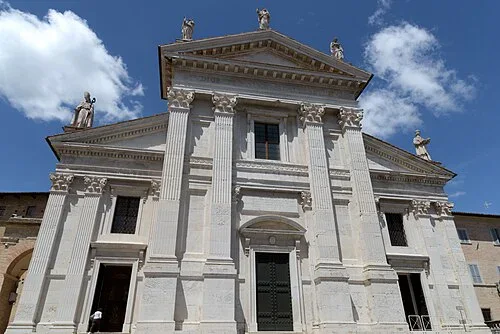 Piazza Duca Federico & Facade Staircase
The Facade in Furlo Stone
Welcome to the Duomo of Urbino, the cathedral of Santa Maria Assunta and the seat of the city's archbishop. A church has stood on this spot since 1021, when the bishop moved his seat inside the walls. Until then the cathedral of San Sergio had served the city from outside them. The facade is the work of Camillo Morigia, completed in 1782 in pale stone quarried at the Furlo gorge. Five statues crown it: Faith, Hope and Charity on the pediment, Saint Augustine on the left slope and Saint John Chrysostom on the right. Along the frieze runs a Latin line, Studiorum Universitati Fastigium, a public thank-you to the university, which paid for the roof. The historic centre around the cathedral was listed by UNESCO in 1998.
Photo: Julian Lupyan · CC0
02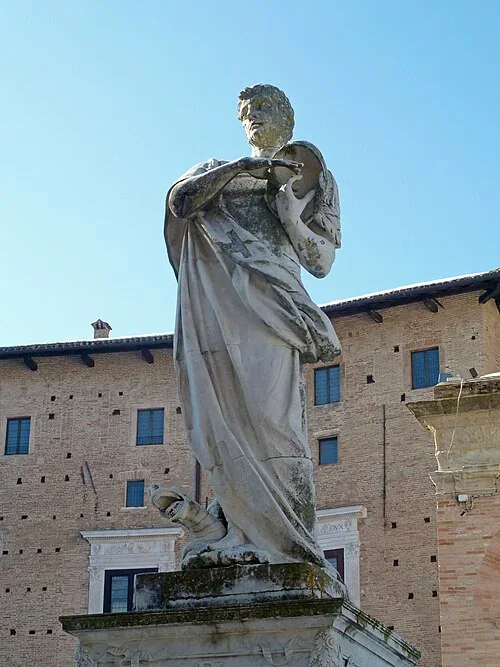 Piazza Duca Federico & Facade Staircase
Saint Crescentino and the Grand Staircase
San Crescentino, patron of Urbino, stands at the foot of the staircase, a dragon subdued beneath his feet. Opposite him waits the co-patron, Blessed Mainardo, once a bishop of this city. The broad steps took their present shape in 1859, from a design by Archbishop Alessandro Angeloni. Until the late eighteenth century the facade carried the town's public bells and its clock. A guard in the Palazzo Comunale across the square rang them by pulling a long rope strung right across the piazza. Years of that tugging strained the structure of the facade. The bells came down, and the two saints took up their post at the stairs instead.
Photo: Kimahri88 · CC BY-SA 4.0
03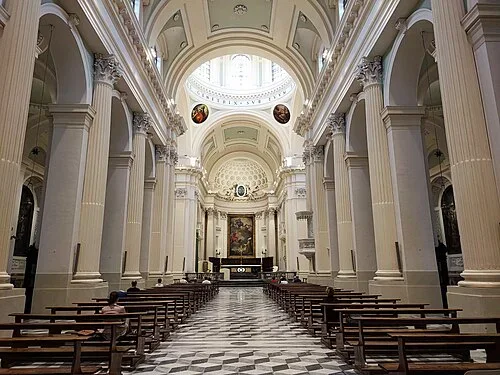 Central Nave & Neoclassical Barrel Vault
Valadier's Luminous Nave
White columns rise three aisles deep under a long barrel vault, all the work of the Roman architect Giuseppe Valadier. He laid the church out as a Latin cross, bright and orderly, a deliberate contrast to the medieval and Renaissance streets outside. Two sculptors dressed the architecture in stucco. Antonio Trentanove modelled the angels in the upper zone. Francesco Antonio Rondelli made the rosettes and the capitals, and the angels beside the left altar of the transept.
Listen in the appPhoto: Sottobosco90 · CC BY-SA 4.0
04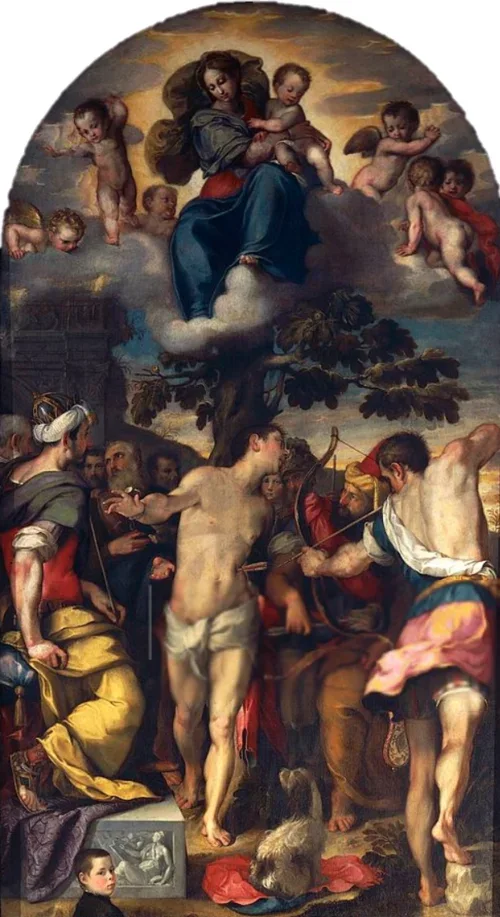 Right Aisle Altars & Barocci's St. Sebastian
Barocci's Martyrdom of Saint Sebastian
A young man, stripped and tied to a tree, turns his head as an archer draws back. Federico Barocci painted this Martyrdom of Saint Sebastian in 1558, for a chapel in the earlier Renaissance cathedral. The Bonaventura family commissioned the work, and their son appears at the lower edge of the canvas. It is one of the first paintings in which Barocci's personal style emerges clearly, all soft colour and restless movement. In 1982 thieves cut that boy's portrait from the bottom of the painting. The fragment stayed missing for thirty-five years. Italian authorities recovered it in 2017, and after restoration it was reintegrated into the canvas.
Listen in the appFederico Barocci · Public domain
05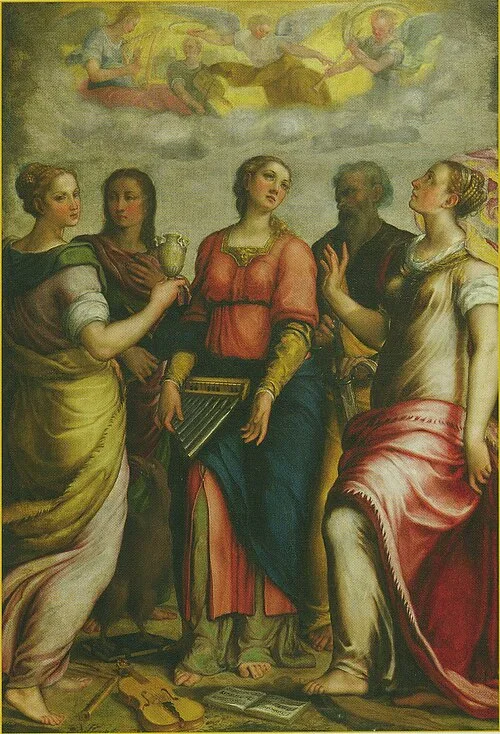 Right Aisle Altars & Barocci's St. Sebastian
Santa Cecilia
Saint Cecilia stands at the centre holding a small organ, her eyes lifted toward the angels making music above. Federico Barocci painted her between 1556 and 1561, one of the first works of his career. His model was the celebrated altarpiece of the same saint by Raphael, a painter born in this very city. Raphael's Cecilia hangs in Bologna, and Barocci borrowed her pose and her rapt attention. Around her stand John the Evangelist, Mary Magdalene, Paul and Catherine of Alexandria.
Listen in the appFederico Barocci · Public domain
06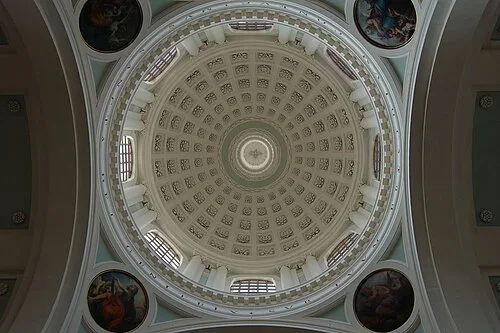 Crossing & The Coffered Cupola
The Coffered Cupola
On 12 January 1789 an earthquake shook Urbino and brought the dome crashing down. It was the work of Muzio Oddi, an architect of the city itself, finished early in the seventeenth century. The fall wrecked the Renaissance interior, and the whole church had to be rebuilt. The job went to Giuseppe Valadier, and by 1801 the cathedral stood complete in its new Neoclassical style. The coffered dome above the crossing rises about fifty metres over the floor. In the four corners beneath it, roundels of the Four Evangelists were painted late in the eighteenth century by artists of the Roman school, among them Domenico Corvi and Giuseppe Cades.
Listen in the appFrancesco Gasparetti (Flickr user Gaspa) · CC BY 2.0
07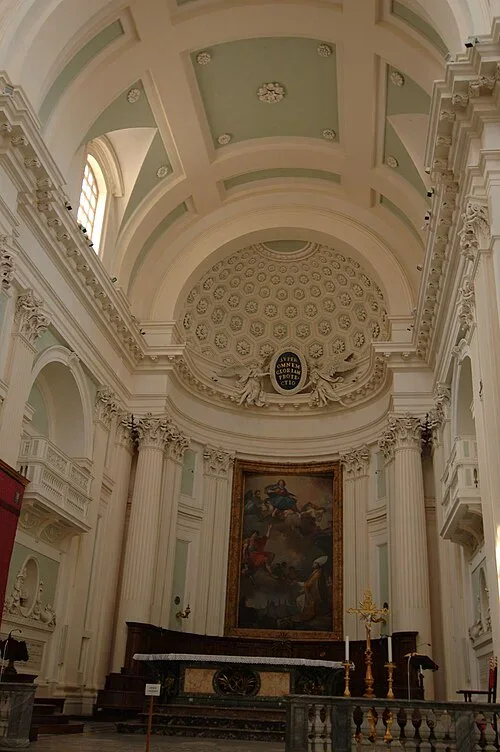 Presbytery & Clement XI High Altar
The High Altar of Clement XI
The high altar came as a gift from Pope Clement XI, worked in marbles of many colours. Its design is attributed to Francesco Fontana, and its reliefs are cast in gilded bronze. When the dome fell, the altar was taken apart and put back together piece by piece. Inside it rest the relics of San Crescentino, the patron whose statue watches over the staircase outside. Above hangs the altarpiece that Christopher Unterberger painted in 1794, the Madonna carried into heaven between Crescentino and Mainardo. A small colour sketch for it is kept in the diocesan museum nearby.
Listen in the appGaspa · CC BY 2.0
08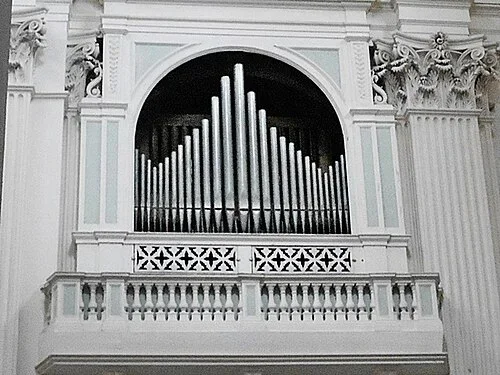 Presbytery & Clement XI High Altar
The Cathedral Organ
High on its tribune, the cathedral's organ carries on a tradition that reaches back centuries. The instrument itself was built by the Girotto firm in 1979. Its musical life began much earlier. In 1507 Duke Guidobaldo the First instituted a musical chapel here, in the Chapel of the Holy Sacrament, to sing the liturgy. Musicians have served the cathedral ever since, from ducal patronage down to this white array of pipes in the transept.
Listen in the appPhoto: Tuscanycalling · CC BY-SA 3.0
09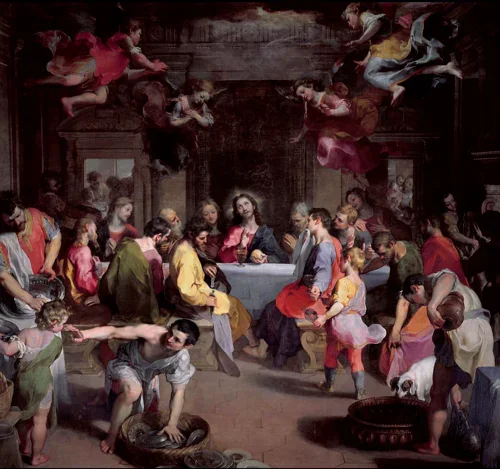 Cappella del Santissimo Sacramento
Barocci's Last Supper
Christ sits at the centre of a long, crowded table, and the room around him is alive. Servants kneel with baskets, a dog sniffs the floor, angels tumble through the air above. Federico Barocci worked on this Last Supper for nearly a decade, from 1590 to 1599, painting it for this very chapel. It is counted the undisputed masterpiece of his maturity. He was also asked to paint a Fall of the Manna for the opposite wall, but refused, worn by the labour and unconvinced by the fee. Alessandro Vitali took the commission on instead, and delivered his canvas in 1607.
Listen in the appFederico Barocci · Public domain
10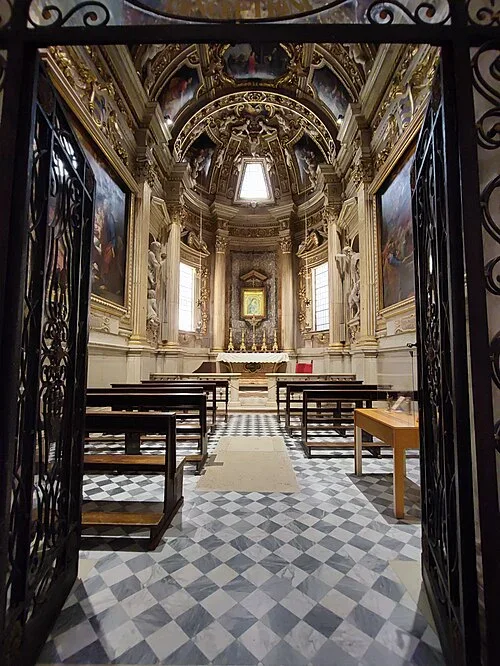 Cappella del Santissimo Sacramento
The Chapel of the Most Holy Sacrament
Behind the wrought-iron gate, this chapel and its twin are the last surviving testimony of the earlier Renaissance cathedral. Duke Federico da Montefeltro began that rebuilding in the 1480s, on a design attributed to Francesco di Giorgio Martini. The new church was consecrated in 1534, though its dome was still decades away. From the early sixteenth century a confraternity cared for this chapel under ducal patronage. A corridor linked it directly to the Palazzo Ducale, so the dukes could follow the services from their own palace. The gate itself was forged in 1511 by Giampaolo di Stefano Tintinna of Gubbio. Some give the design of that gate to Martini himself.
Listen in the appPhoto: Sottobosco90 · CC BY-SA 4.0
- 11
The Baptismal Font
Trentanove's radiant Baptism of Christ above the font, where the cathedral's unbroken life of worship comes full circle.
Duomo di Urbino
Frequently asked questions
How much does the guide cost?
Free app download. Listed guide price: $0.99. Guide price shown in the app. Audio guide only. Venue admission is separate.
Can I listen without internet?
Yes. Download the guide’s audio, images, and maps in the app before your visit. Your downloaded content is then available offline.
Can I listen in my language?
This audio guide is available in 15 languages, including English.
Do I need to follow a schedule?
No. This is a self-guided experience. Choose your stops, pause whenever you like, and return to a story at your own pace.
At your own pace
Explore Duomo di Urbino.
Download Stanza, then search for “Duomo di Urbino”.
Free app download · Guide price shown in the app
Keep exploring
Nearby audio guides
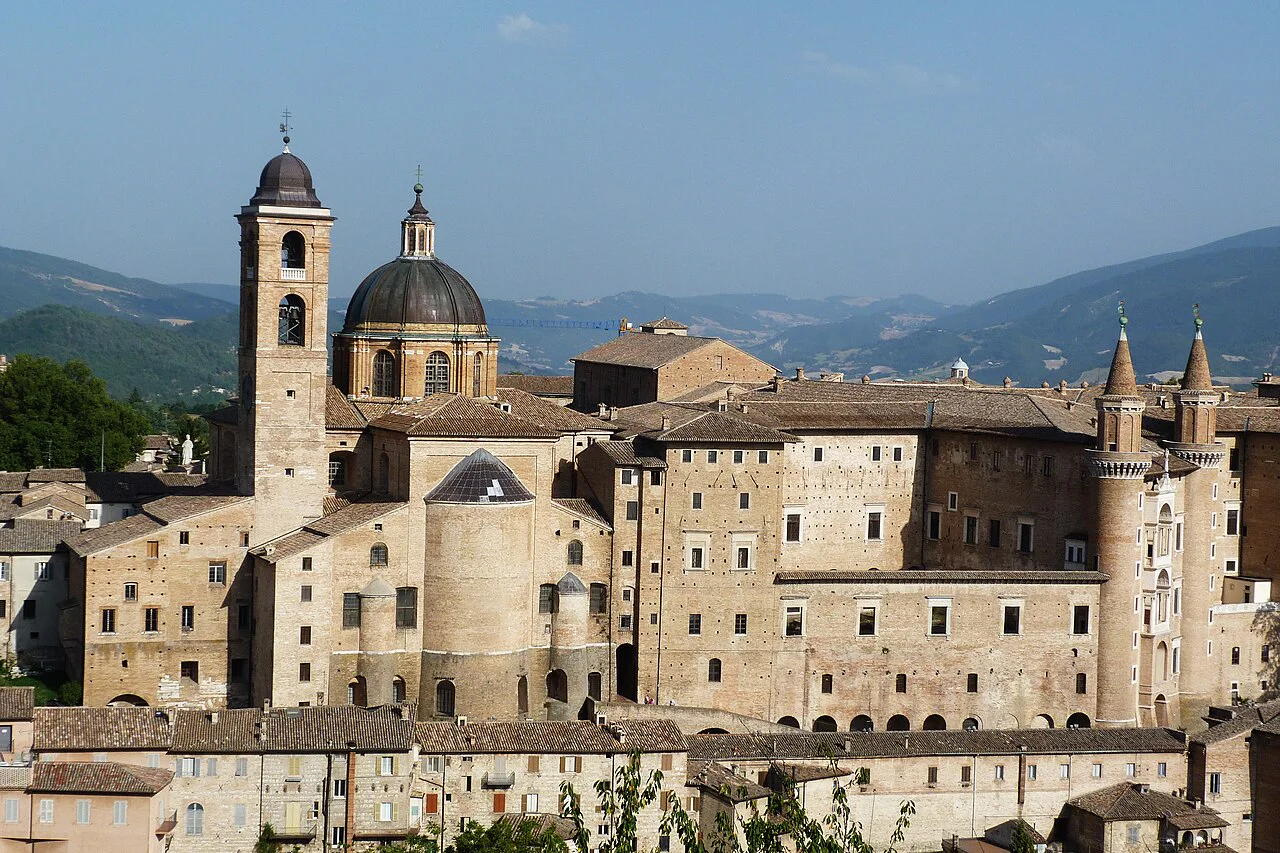
Urbino · 1 km
Palazzo Ducale
Content & sources
Stefano Sansavini · CC BY-SA 4.0
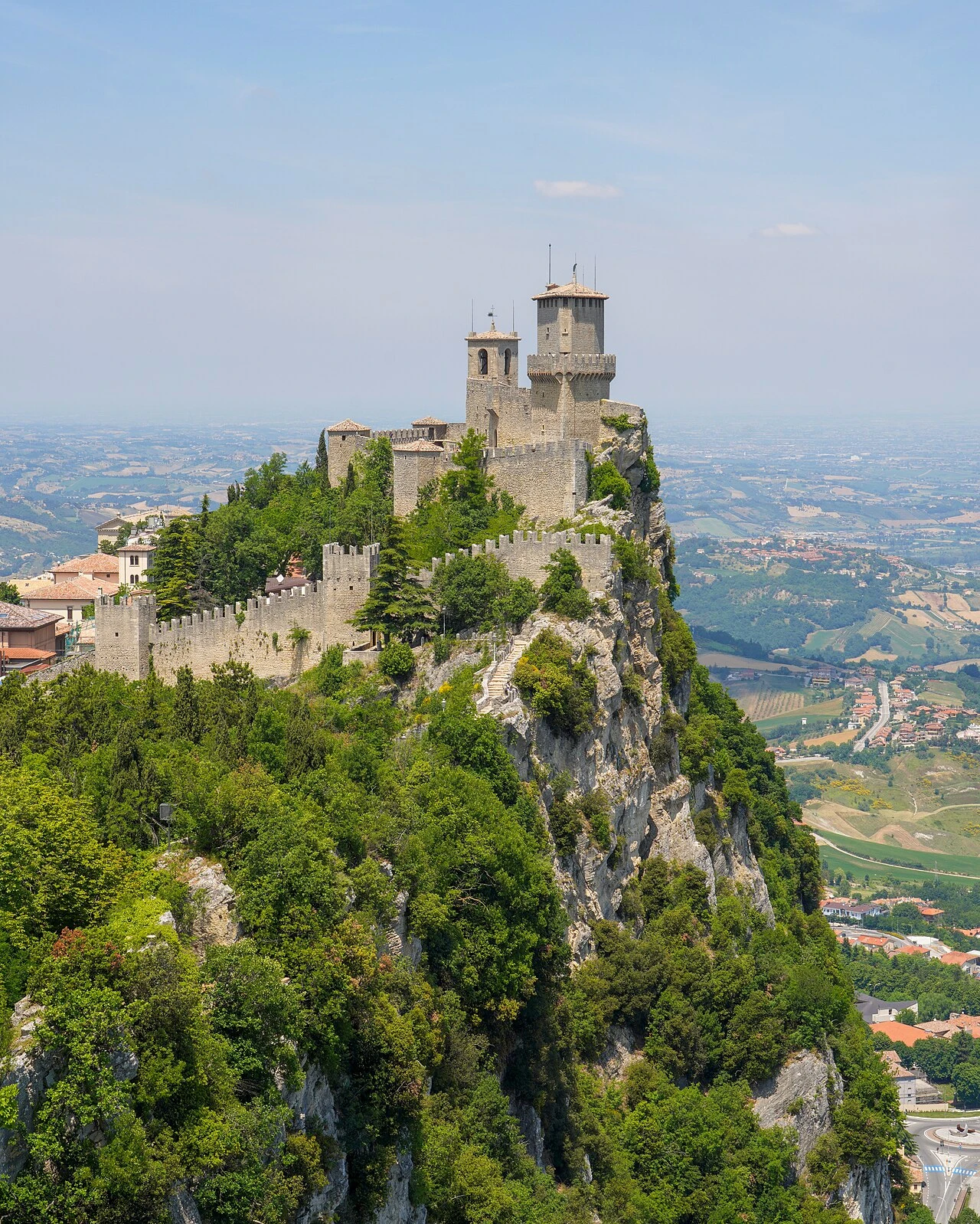
San Marino · 28 km
Guaita Tower
Content & sources
Photo: Commonists · CC BY-SA 4.0
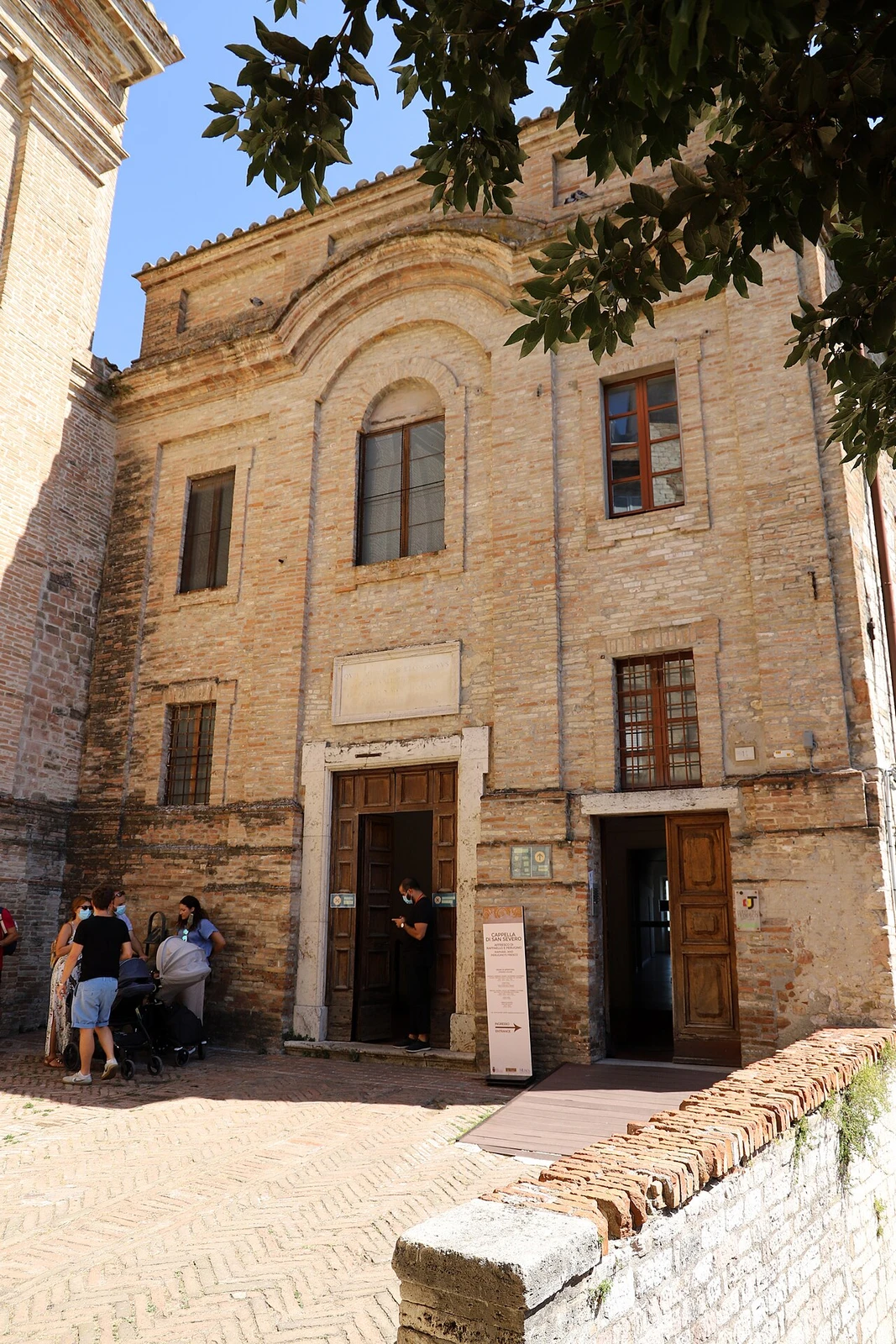
Perugia · 71 km
San Severo Chapel
Content & sources
Photo: Sailko · CC BY 3.0
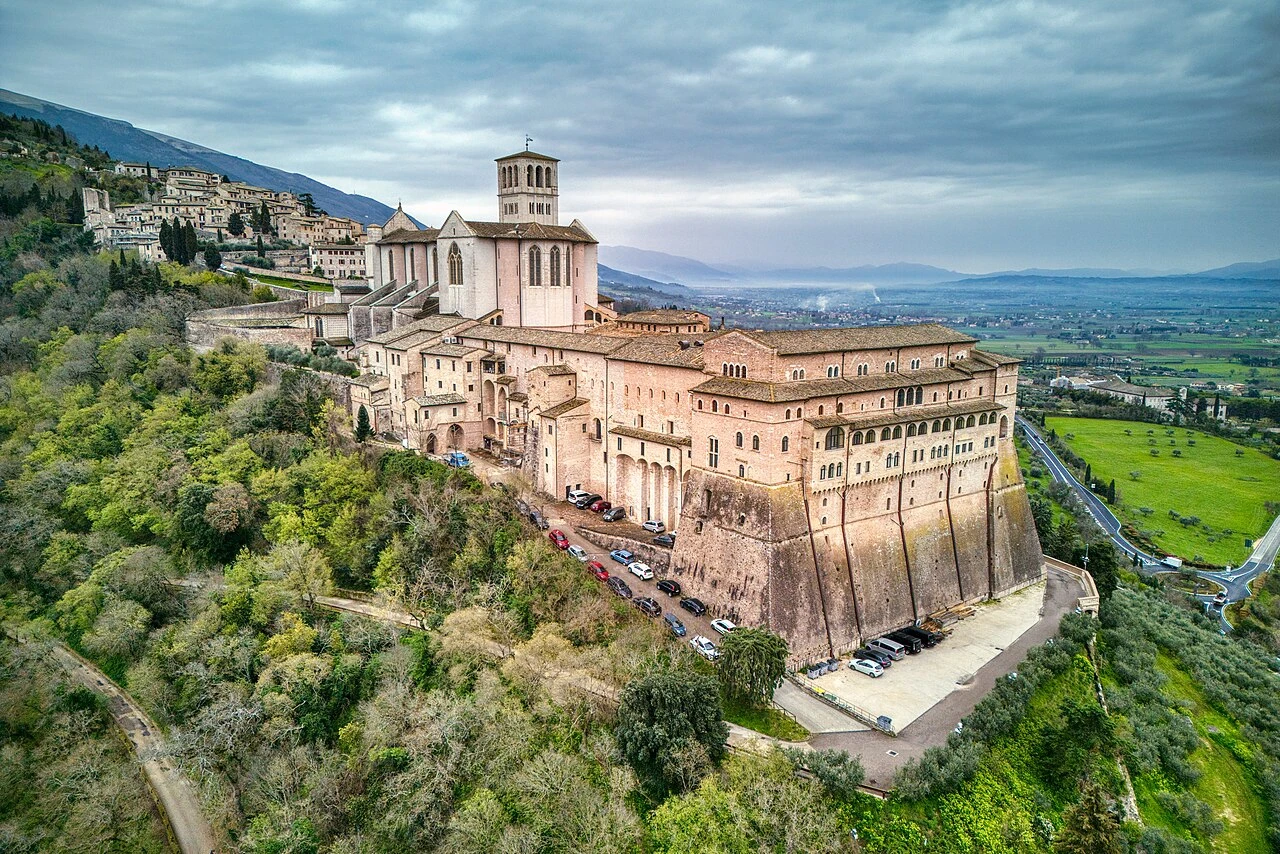
Assisi · 72 km
Basilica of St. Francis of Assisi
Content & sources
Hagai Agmon-Snir حچاي اچمون-سنير חגי אגמון-שניר · CC BY-SA 4.0
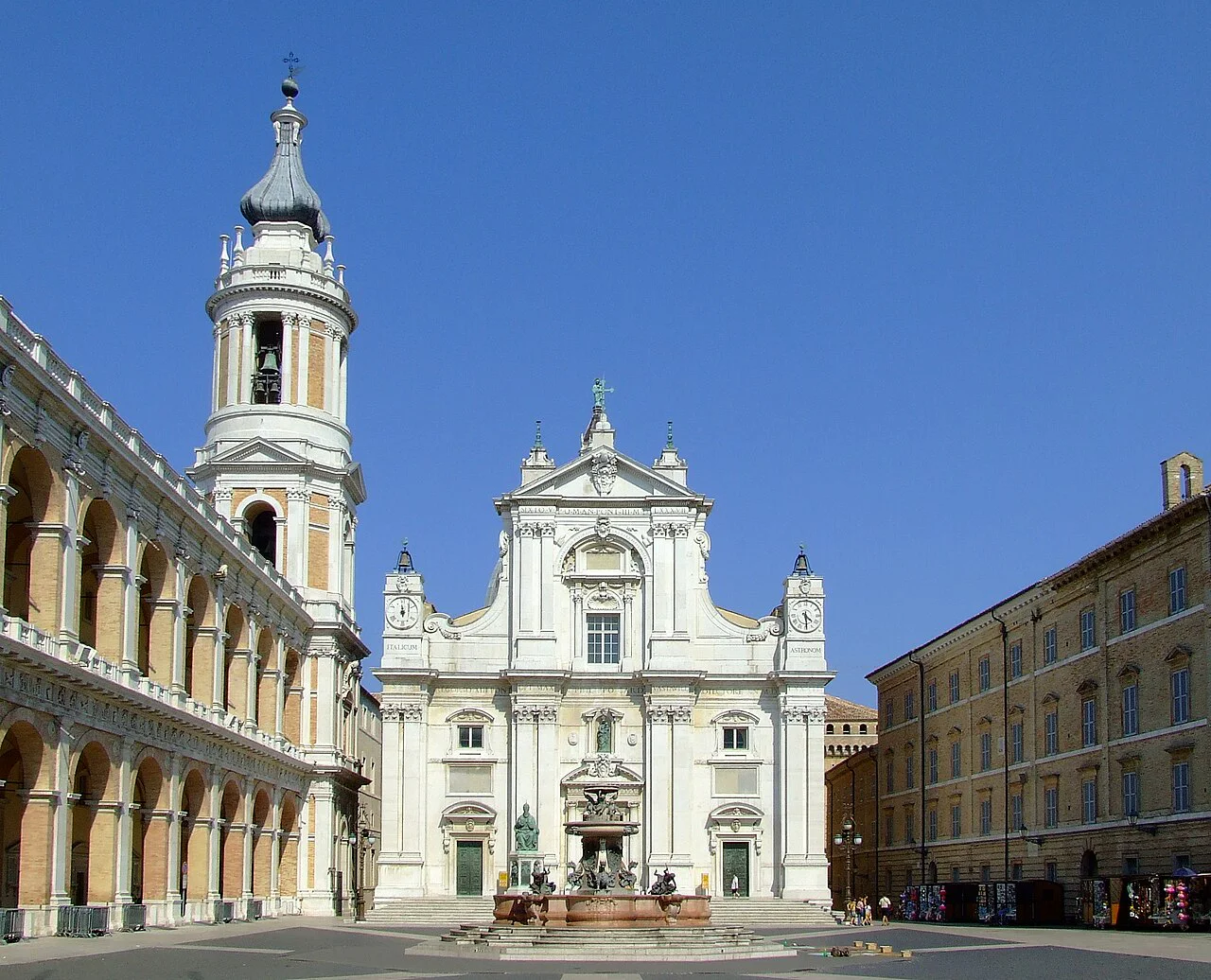
Loreto · 85 km
Basilica della Santa Casa
Content & sources
Loreto250706.JPG: Mroselli derivative work: Rabanus Flavus · CC BY-SA 2.5