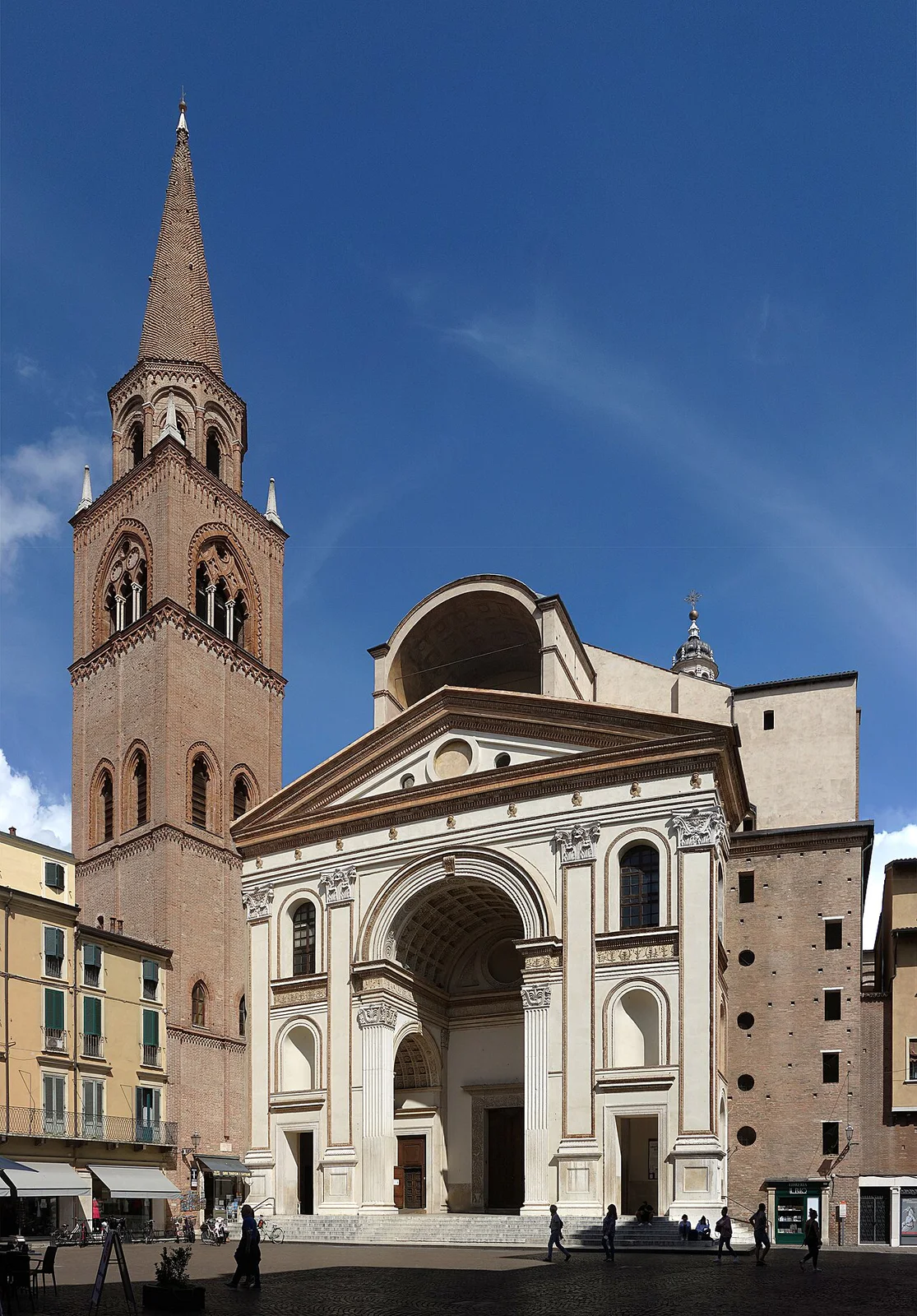
Stanza · Audio guide
Basilica di Sant'Andrea Audio Guide
A place to remember. A story to take with you.
The Basilica of Sant'Andrea is a Roman Catholic co-cathedral and minor basilica located in Mantua, Italy. It is considered one of the major works of 15th-century Renaissance architecture in Northern Italy.
Download Stanza, then search for “Basilica di Sant'Andrea”.
About the tour
One guide. Your kind of visit.
The Basilica of Sant'Andrea is a Roman Catholic co-cathedral and minor basilica located in Mantua, Italy. It is considered one of the major works of 15th-century Renaissance architecture in Northern Italy.
Ready when you are.
- 01Get the free Stanza app.
iOS & Android
- 02Find your guide.
“Basilica di Sant'Andrea”
- 03Download before you go.
Works offline
Audio guide / 13 narrated stops
Inside the guide
Get to know a few of the stories before you go. Open a stop to read more.
01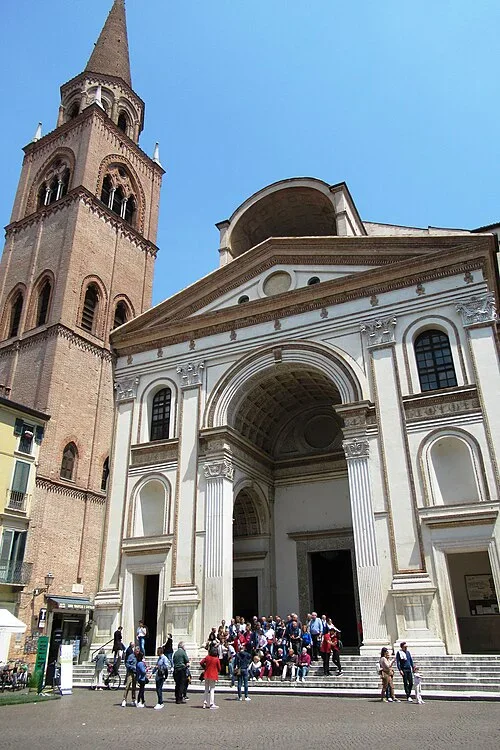 Piazza Andrea Mantegna and the Renaissance Façade
The Basilica Facade and Piazza Mantegna
The Basilica of Sant'Andrea is a Roman Catholic co-cathedral and minor basilica, a title of special honour. Work on it began in 1472 for the Gonzaga marquis who ruled Mantua. He chose Leon Battista Alberti, a Renaissance architect, to design the new church. It was meant to welcome the pilgrims who came to honour a relic of the Holy Blood. It was also meant to be a symbol of the family's power over the city. Alberti changed the church's direction, so it lined up with the road that linked the Ducal Palace and the Palazzo Te. The building was not finished until many years after Alberti died. The older brick bell tower on the left was already standing when the new work began.
Photo: J.Broukal · CC BY-SA 4.0
02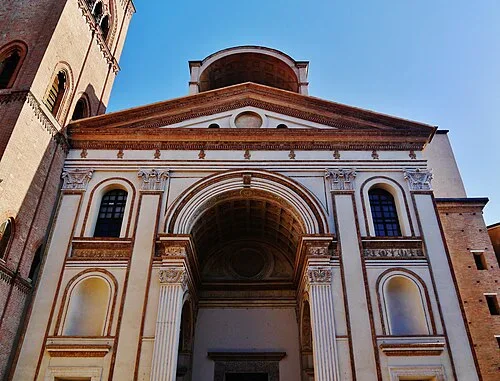 Piazza Andrea Mantegna and the Renaissance Façade
The Triumphal-Arch Facade and Giant Order
The front of the basilica is built like a giant triumphal arch. Its tall central opening is framed by Corinthian pilasters set into the wall, with smaller openings on either side. Most of it is brick, covered with hardened stucco for a smooth finish. The design is said to follow the Arch of Trajan at Ancona, an ancient Roman arch. Alberti's new idea was to combine two levels of supports on one front. A lower order of columns is integrated with a taller set of pilasters, called a giant order. A pediment tops the whole front. Above it rises a curved vaulted structure. Its purpose is not known for certain, but it probably shaded the window that opens into the church behind.
Photo: Zairon · CC BY-SA 4.0
03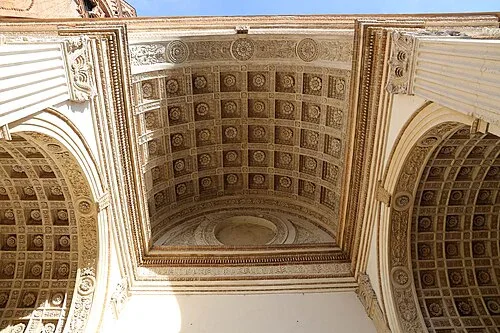 The Barrel-Vaulted Entrance Portico
Coffered Vault of the Entrance Portico
Square coffers fill the curved ceiling of the entrance. The ceiling is a barrel vault, shaped like half of a tunnel. Each coffer is a sunken panel, and the panels run in neat rows. Alberti may have wanted the great vault over the nave to be coffered too. Smaller arches meet this entrance vault at each side. At the far end, a round medallion sits in the curve.
Listen in the appPhoto: Sailko · CC BY 3.0
04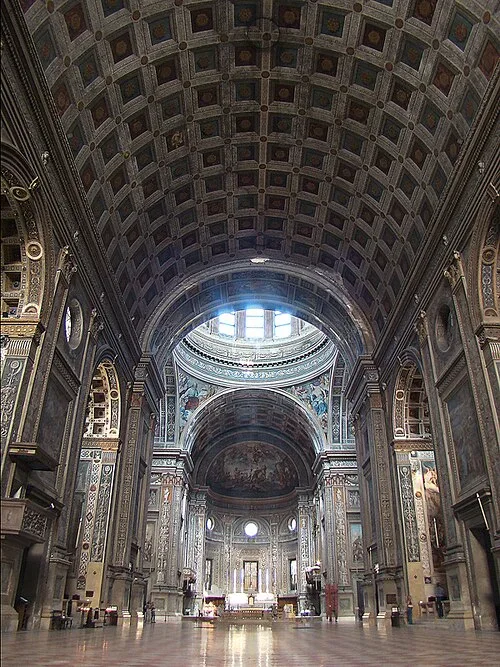 The Monumental Nave and Barrel Vault
The Aisle-less Nave Looking Toward the Altar
Before Alberti's design, a plan by Antonio Manetti probably called for a church with three aisles. That earlier plan was similar to the churches of Brunelleschi. Alberti replaced it with one long hall, and chapels open off its walls. The reason was practical. Alberti reasoned that columns along the aisles would block the view of ceremonies. He wrote that his church should be “more spacious, more eternal, more worthy, more joyous.” For the overall design he drew on an Etruscan temple, as the Roman writer Vitruvius described it. That temple had a front porch of widely spaced columns and no colonnade around it.
Listen in the appPhoto: Tango7174 · CC BY-SA 4.0
05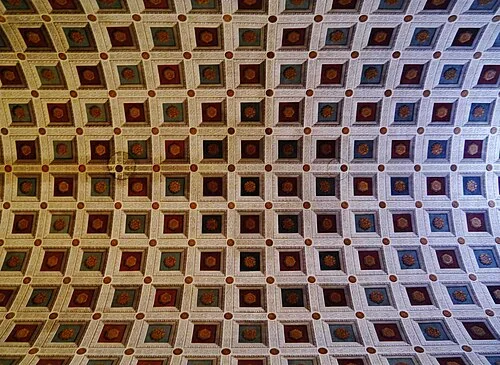 The Monumental Nave and Barrel Vault
Coffered Vault of the Nave
The nave is covered by a barrel vault, a long curved roof. It was one of the first vaults this size since ancient times. The builders may have looked to the Basilica of Maxentius in Rome for the idea, though that link is only a likely guess. But money ran short, so the vault was built as a plain curve. The square sunken panels were painted onto its surface instead. Work on the building paused around 1494. It did not resume until 1530. Now a grid of square panels runs overhead, each with a rosette at its centre.
Listen in the appPhoto: Zairon · CC BY-SA 4.0
06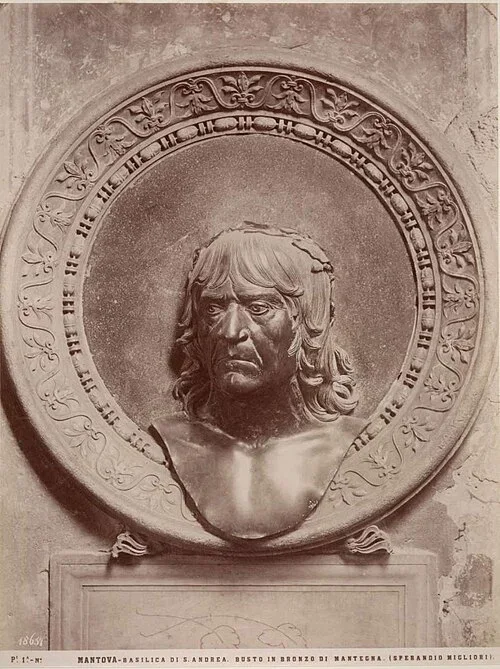 Andrea Mantegna's Funerary Chapel
Bronze Bust of Andrea Mantegna in an Old Photograph
This is the bronze bust of Andrea Mantegna, who worked as court painter to the Gonzaga family for more than forty years. After his death, a chapel in this church was set aside for his tomb. Members of the Gonzaga family were buried in the basilica too, but this memorial honours a painter. The tomb carries a bronze bust of Mantegna, made in the late fifteenth century. It is usually credited to Gianmarco Cavalli, though other names have been suggested. The bust sits inside a round frame of carved garlands, above a plain base. Its face has deep lines across the brow, and long hair falls to the shoulders.
Listen in the appAndrea Mantegna · Public domain
07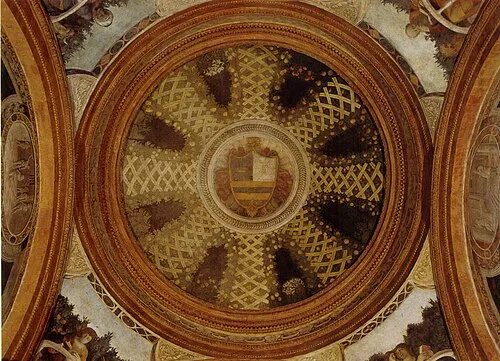 Andrea Mantegna's Funerary Chapel
Correggio's Painted Dome in Mantegna's Funerary Chapel
After Mantegna died, his two sons and a young painter were given the task of decorating the chapel. The young painter was Antonio Allegri, known as Correggio. Mantegna's own designs guided the decoration, which was painted around 1507. Correggio painted a large part of it. At the centre sits a coat of arms given to Mantegna, held within a ring of moulding. Some attribute the dome itself to Mantegna's sons. The four Evangelists in the corners are probably Correggio's work. Each leans out from a little painted balcony, as if coming toward the viewer.
Listen in the appAntonio da Correggio · Public domain
08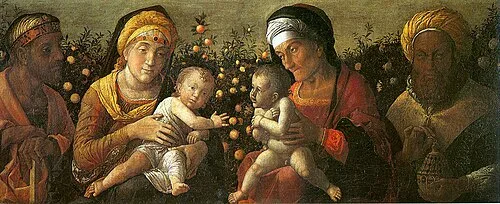 Andrea Mantegna's Funerary Chapel
Mantegna's Holy Family and Family of Saint John the Baptist
Mantegna meant this painting for his own funerary chapel, and its subject suits the chapel's dedication to Saint John the Baptist. On the left, the Virgin Mary holds the Christ child, with Saint Joseph beside them. On the right stand the young Saint John, Saint Elizabeth, and Zechariah. Zechariah holds an ornate vessel that may be an incense burner. Elizabeth partly hides Zechariah from view. Light falls from the left, leaving Joseph, who is turned away, in shade. All the figures are in the foreground, close together. Behind them spreads a dense grove of citrus trees, heavy with fruit. Mantegna returned to such groves often in his late works. His Baptism of Christ also hangs in the chapel, and his son Francesco probably finished it.
Listen in the appAndrea Mantegna · Public domain
09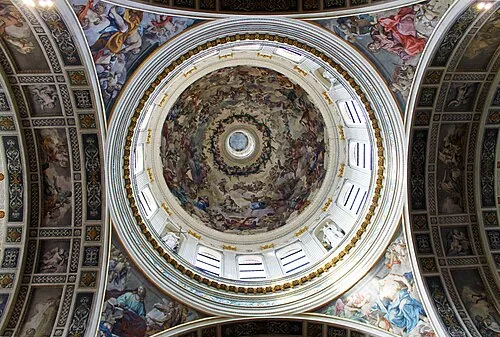 The Crossing and Filippo Juvarra's Baroque Dome
Juvarra's Dome Above the Crossing
Filippo Juvarra designed the dome over the crossing in 1732, long after the church was begun. The first plans may not have included a dome at all. The dome stands some eighty metres tall. Juvarra drew on the dome of Sant'Andrea delle Fratte in Rome, the work of Borromini. Inside, painted figures fill the curved underside, and windows in the drum let in light. A gilded ring marks the base of the dome. The strong tremors that struck Emilia in May 2012 damaged the dome.
Listen in the appPhoto: 231286M · CC BY-SA 4.0
10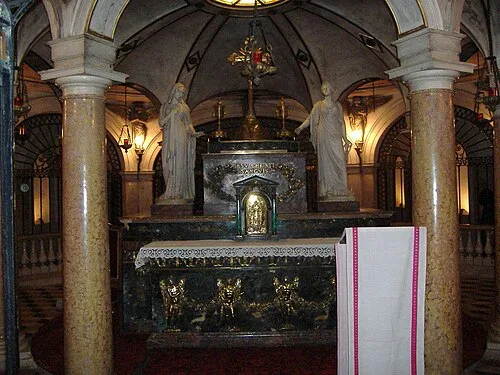 The Subterranean Crypt and Relic of the Holy Blood
The Sacred Vessels Altar Chamber
According to tradition, the Roman centurion Longinus brought this relic to Mantua. He had scooped up earth soaked with blood from the foot of the cross. The relic is called the Most Precious Blood of Christ, and it is kept here, in the chapel of the Sacred Vessels. The emperor Charlemagne obtained its authentication from Pope Leo the Third. That was in 804. On the feast of the Ascension, a small vial was brought up from the crypt. It came up through a hole in the floor, directly under the dome. Crowds of pilgrims came for that feast. Two white statues stand near the altar, and a gilded cross hangs above it.
Listen in the appGiovanni Bufalo · Public domain
- 11
The Presbytery Seen from the Nave
A pavilion paid for by a duchess, and the Good Friday procession that still carries the relic through the streets.
- 12
Fresco of the Invention of the Most Precious Blood after Giulio Romano
A fresco after Giulio Romano's design, beside the story of a canvas carried off to the Louvre.
- 13
The Gothic Brick Bell Tower of 1414
The brick Gothic bell tower of 1414, kept standing when Alberti's church rose beside it.
Basilica di Sant'Andrea
Frequently asked questions
How much does the guide cost?
Free app download. Listed guide price: $0.99. Guide price shown in the app. Audio guide only. Venue admission is separate.
Can I listen without internet?
Yes. Download the guide’s audio, images, and maps in the app before your visit. Your downloaded content is then available offline.
Can I listen in my language?
This audio guide is available in 15 languages, including English.
Do I need to follow a schedule?
No. This is a self-guided experience. Choose your stops, pause whenever you like, and return to a story at your own pace.
At your own pace
Explore Basilica di Sant'Andrea.
Download Stanza, then search for “Basilica di Sant'Andrea”.
Free app download · Guide price shown in the app
Keep exploring
Nearby audio guides
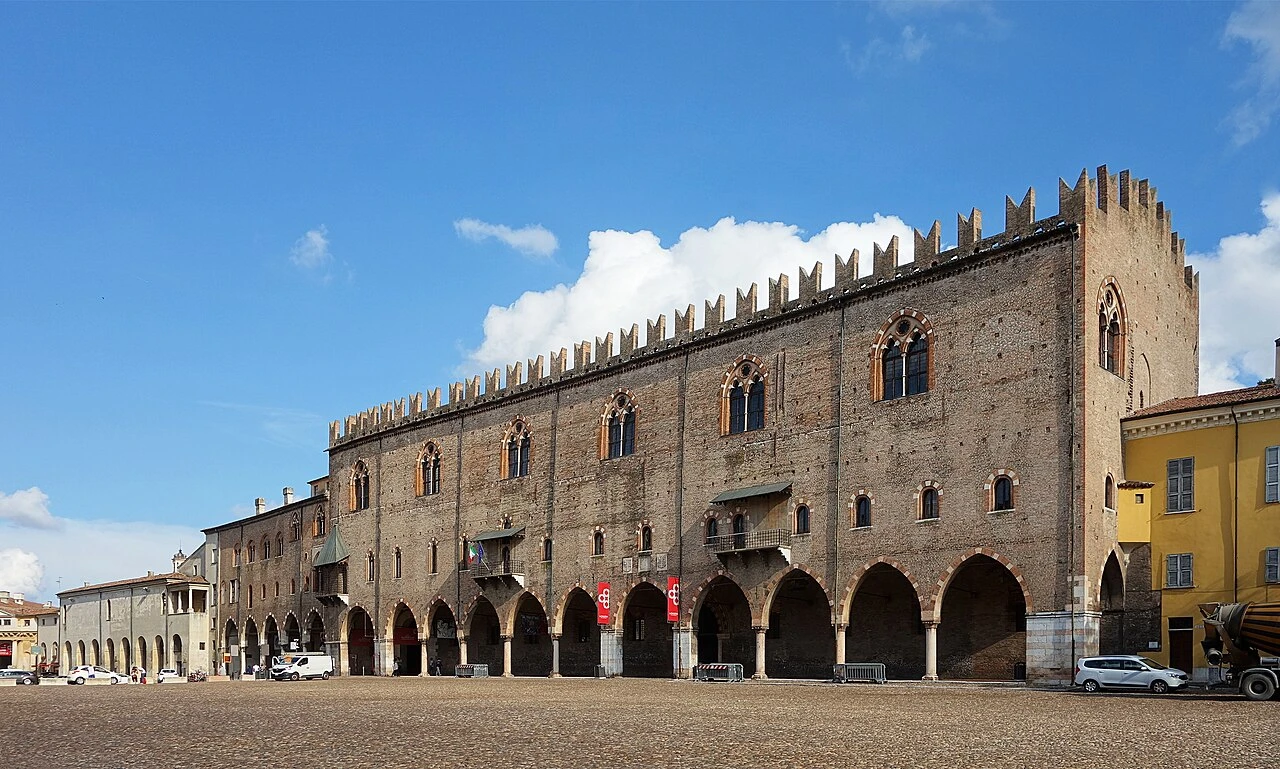
Mantua · 1 km
Palazzo Ducale di Mantova
Content & sources
Photo: Velvet · CC BY-SA 4.0
Mantua · 1 km
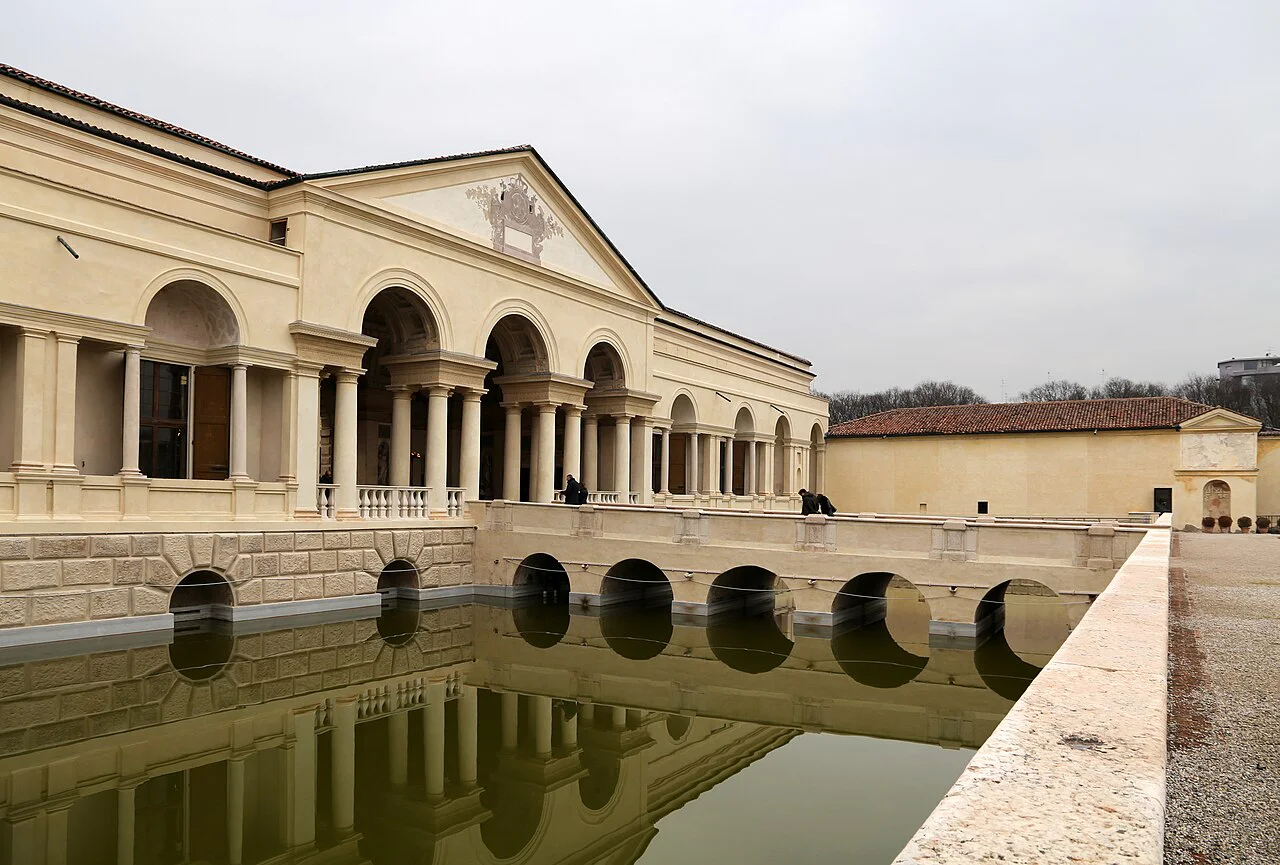
Palazzo Te
Content & sources
Photo: Sailko · CC BY 3.0
Verona · 35 km
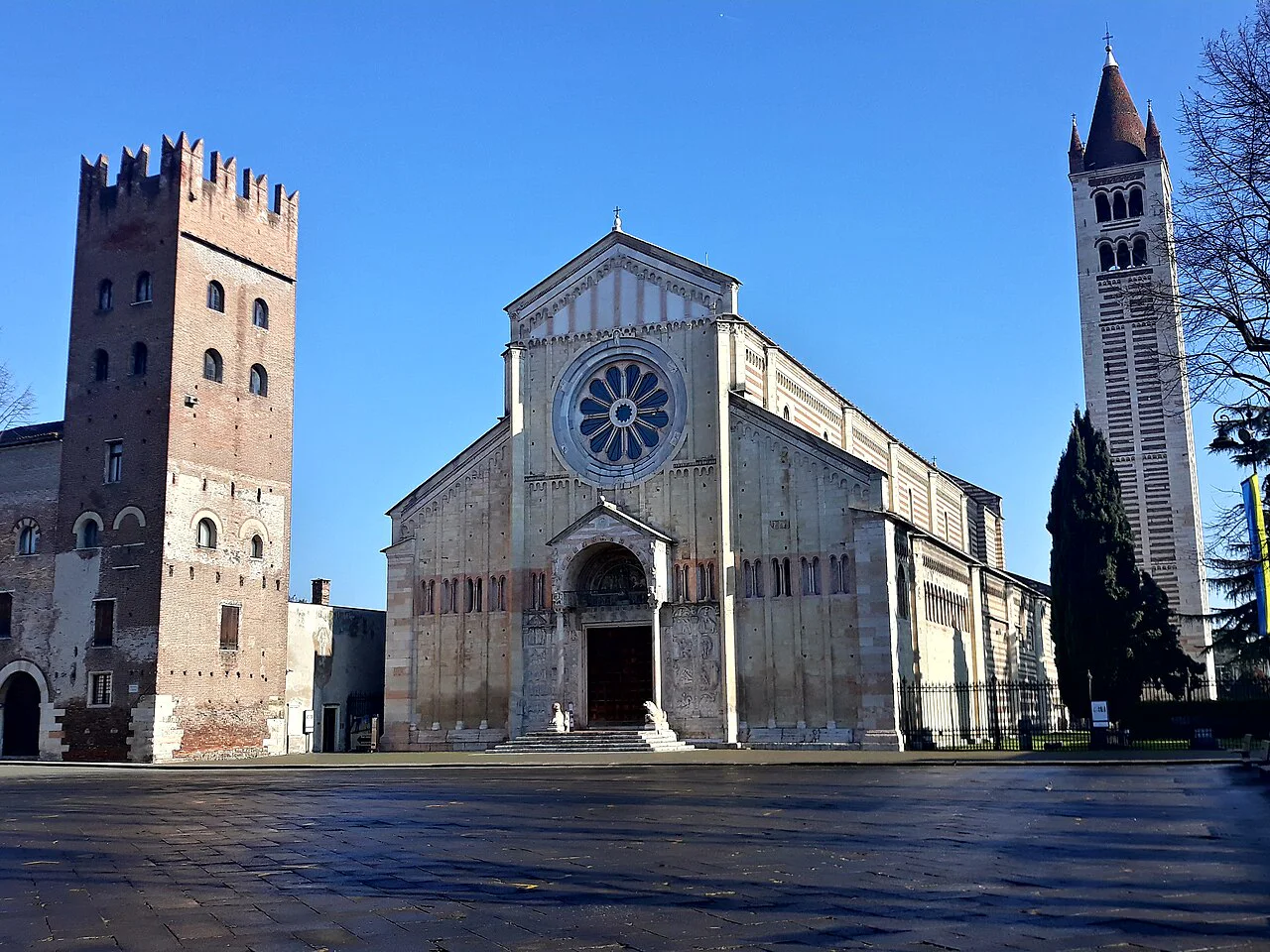
Basilica di San Zeno
Content & sources
Photo: Adert · CC BY-SA 4.0
Verona · 35 km
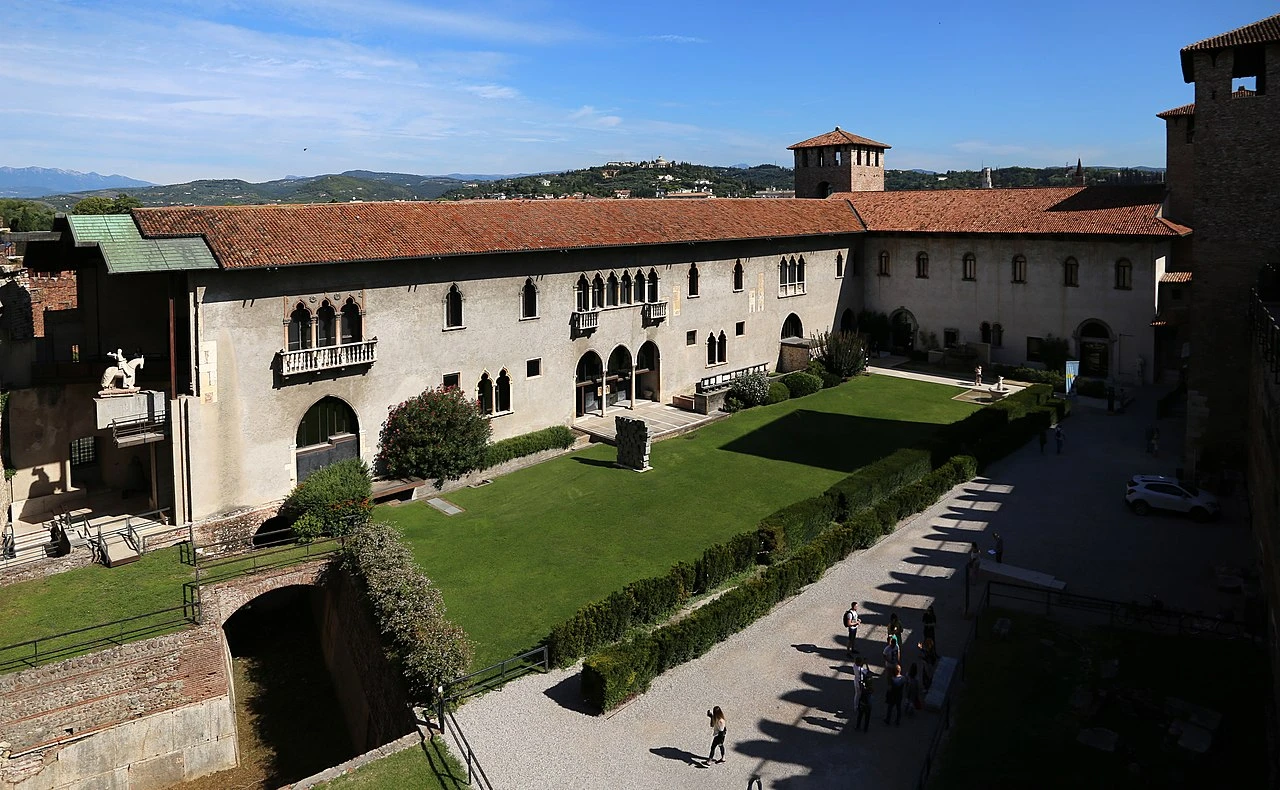
Castelvecchio Museum
Content & sources
Photo: Sailko · CC BY-SA 4.0