Stanza · Audio guide
Palazzo Te Audio Guide
A place to remember. A story to take with you.
Palazzo del Te is a palace located in the suburbs of Mantua, Italy. It is an example of the mannerist style of architecture and the acknowledged masterpiece of Giulio Romano.
Download Stanza, then search for “Palazzo Te”.
About the tour
One guide. Your kind of visit.
Palazzo del Te is a palace located in the suburbs of Mantua, Italy. It is an example of the mannerist style of architecture and the acknowledged masterpiece of Giulio Romano.
Ready when you are.
- 01Get the free Stanza app.
iOS & Android
- 02Find your guide.
“Palazzo Te”
- 03Download before you go.
Works offline
Audio guide / 16 narrated stops
Inside the guide
Get to know a few of the stories before you go. Open a stop to read more.
01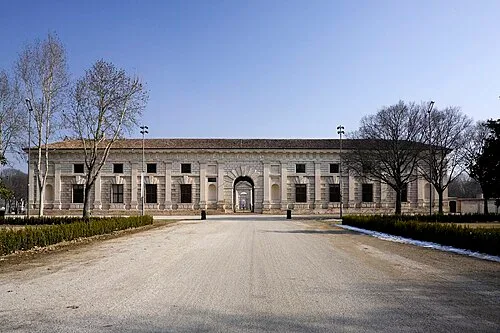 Northern Facade and the Courtyard of Honor
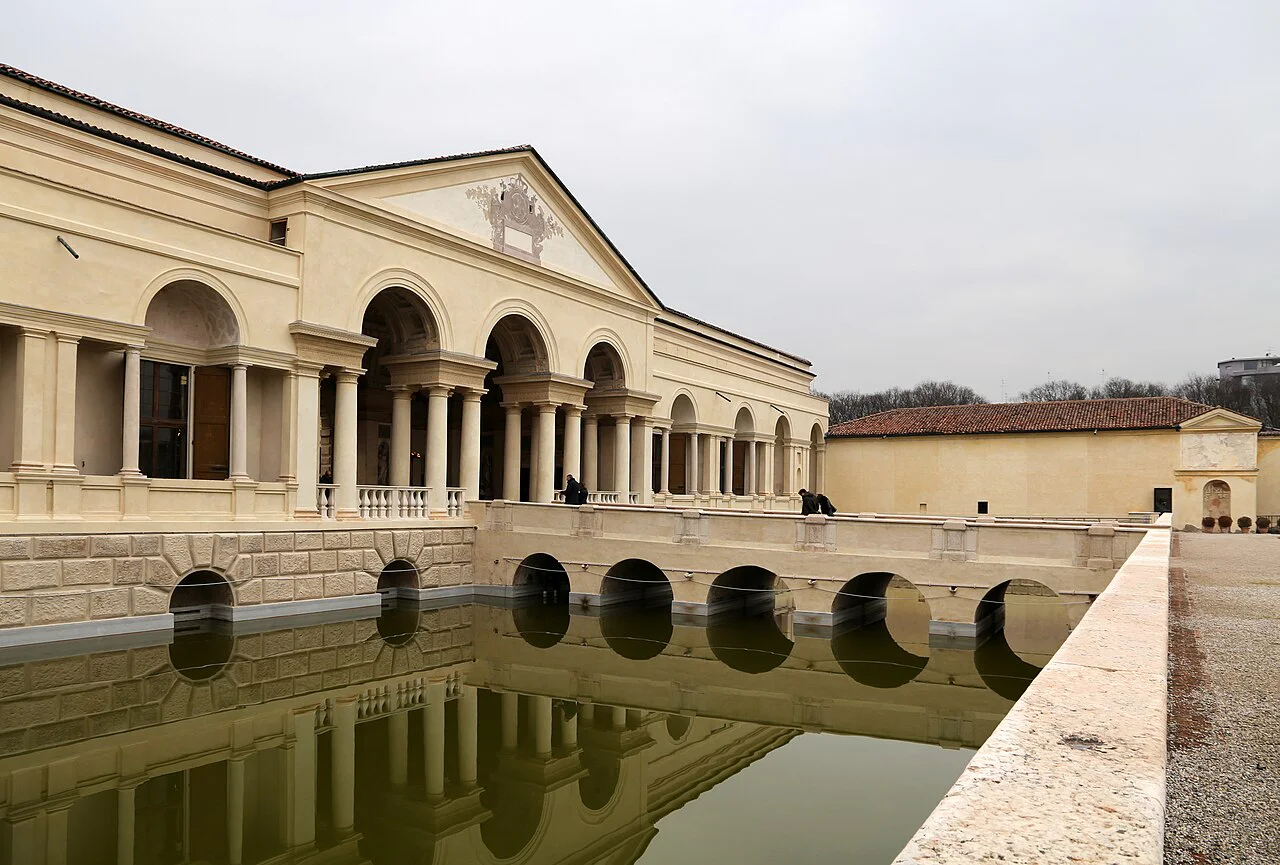
Main Façade and Entrance
Welcome to Palazzo Te, on the marshy edge of Mantua. In 1524, Federico the Second Gonzaga, Marquess of Mantua, set a young painter to work on a hideaway here. Giulio Romano had trained in Raphael's workshop in Rome, and Federico gave him a strange plot of ground: a low island in the marshes, just outside the city walls, where the family had kept its stables since 1502. What rose there over the following decade was a palace of leisure, built for hospitality and escape. Federico had grown up among the ease and refinement of Roman villas, and he wanted a place far from court ceremony and from his formidable mother, Isabella d'Este. The building shows it. It stretches long and low, its height only about a quarter of its width, a shape borrowed from the ancient villa, made for gardens, water and wide horizons. The rough, rusticated stonework sets it apart at once from the family's official residence, the Ducal Palace in town.
Magagnini Carlo Alberto · CC BY-SA 4.0
02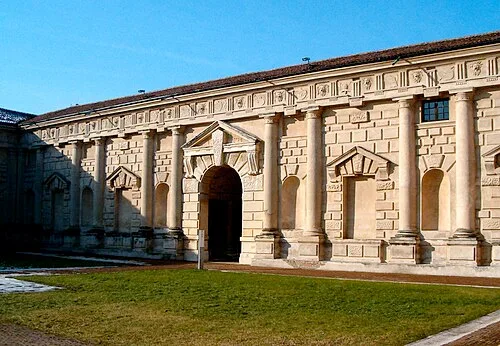 Northern Facade and the Courtyard of Honor
Cortile d'Onore: Mannerist Facade
Architects are supposed to keep a building up. In this courtyard, Giulio Romano makes the stone look as if it is sliding down. Along the Doric frieze run the triglyphs, the little blocks with three grooves that classical rules fix firmly in place. Here several of them have slipped, hanging loose as if the building had been shaken by an earthquake. The marble columns are left almost raw, the spaces between them are deliberately uneven, and the wall plaster is broken and blemished across whole surfaces. None of this is decay or error. It is wit, a brilliant break from the calm balance of Raphael, his old master, and one reason the palace counts as Giulio Romano's acknowledged masterpiece. The plan behind it is orderly enough: a square house around a square court, with an entrance on each of the four sides, following the ancient writer Vitruvius's description of a Roman domus. The court was even once laid out with a labyrinth at its centre. The falling stone is the joke you keep.
Photo: Marcok · CC BY-SA 3.0
03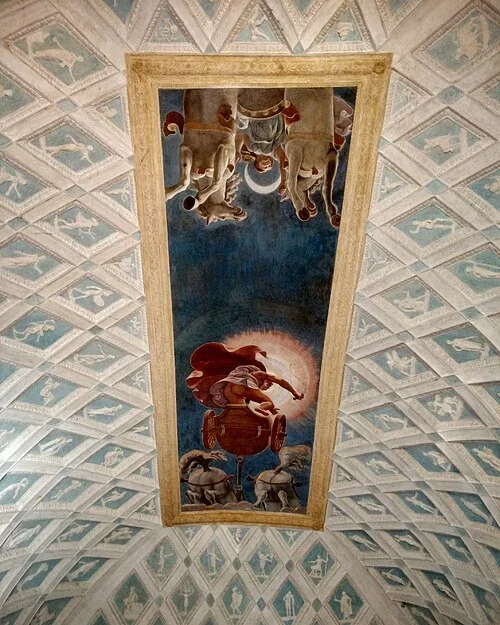 Chamber of the Sun and Moon
The sky painted over this small room never stands still. The vault opens like a window, and through it two chariots cross: the Sun sinking toward dusk, the Moon rising in its place. It is an allegory of time, passing without pause. A long tradition gives this fresco to Francesco Primaticcio, the most brilliant of Giulio Romano's pupils; no document confirms it, but the quality of the work fits the claim. The room itself was modest in rank. Court papers call it a salotto, a drawing room, and its job was to prepare guests for what lay beyond: the more reserved chambers of the Emblems and of Ovid, the private heart of the villa.
Listen in the appPhoto: WhiteGuard · CC BY-SA 4.0
04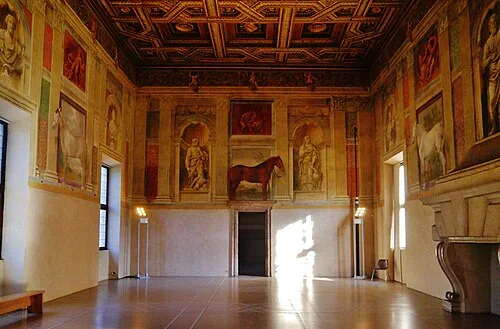 Hall of the Horses
Six horses stand in this hall, painted at life size, and they were not decoration for its own sake. This was the reception room where the Gonzaga welcomed guests and celebrated their greatest occasions, and the family chose to fill it with its beloved thoroughbreds. The steeds shine in full form against painted landscapes, set between painted Corinthian columns, alternating with gods and goddesses standing in false niches. Four of the painted horses are still known by name: Morel Favorito, Glorioso, Battaglia and Dario. Two of them still carry their names written beside them, five hundred years on.
Listen in the appPhoto: Zairon · CC BY-SA 4.0
05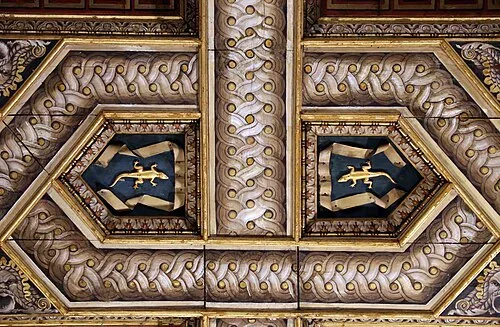 Hall of the Horses
The Salamander Impresa
A small golden creature hides in the gilded coffering of this ceiling: a salamander, or ramarro, the lizard Federico the Second chose as his personal emblem. Renaissance lore held that the salamander was the one animal insensible to the fires of love. That made it a sly joke at its owner's expense, because Federico was anything but insensible. Beside the lizard runs his motto: quod huic deest me torquet. What this creature lacks torments me. The emblem was his confession. This island of leisure was the place where he slipped away from official duties with Isabella Boschetti, his mistress, and the lizard repeated across the palace carried that attachment in plain sight, disguised as heraldry.
Listen in the appPhoto: Sailko · CC BY 3.0
06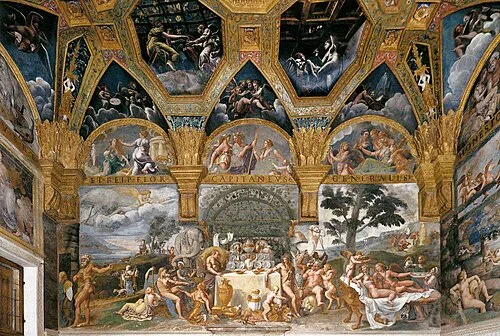 Chamber of Cupid and Psyche
: the Banquet
The Duke's dinner table once stood in this hall, surrounded by a banquet of the gods. The Chamber of Cupid and Psyche was Federico's grand setting for feasting, and Giulio Romano covered its walls with scenes from Apuleius's Golden Ass, the ancient novel that ends with the wedding of Cupid and Psyche. Gods and goddesses lounge around a laden table on the south wall, nymphs and satyrs crowding in from every side. Myth gave the painters their license: a dining room dressed as theatre, where sensuality came wrapped in classical story and courtly guests could enjoy the flirtation between art and appetite. Even the palace's odd name belongs to this leisurely world. Te most likely comes from a Lombard word for a linden grove that once grew here, though some derive it from the Latin word for a hut.
Listen in the appGiulio Romano · Public domain
07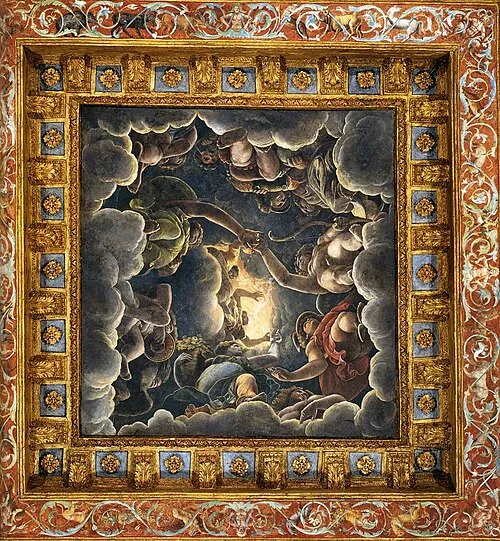 Chamber of Cupid and Psyche
The Marriage of Cupid and Psyche
In the square panel set into the ceiling, the story told on the walls below reaches its ending. The gods gather in a swirl of painted clouds, and two hands meet at the centre: Cupid joining hands with Psyche, the mortal girl admitted at last to Olympus. Around them the immortals lean in from every side, the whole scene framed in gilded and painted ornament. It is the triumph of love, painted directly over the Duke's table. The moral floated overhead: love, in the end, raises even a mortal to the company of the gods.
Listen in the appGiulio Romano · Public domain
08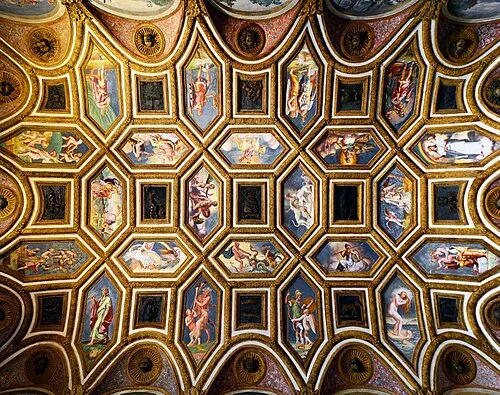 Chamber of the Winds
This ceiling is a horoscope. The Chamber of the Winds was decorated between 1527 and 1528 around a single theme: astrology, the belief that the stars steer human affairs. The court astrologer Luca Gaurico helped devise the program, and the room takes its name from the heads of the Winds that blow from the lunettes of the vault. Around them, hexagonal panels carry the personifications of the Months, alternating with stucco plaques of the Signs of the Zodiac, while twelve great medallions near the walls show the influence of the constellations. At the very centre of the vault sits the emblem that ties it all together: Mount Olympus, in stucco worked to look like bronze, with Vulcan and Vesta beside it. The Gonzaga placed the home of the gods at the heart of their own house.
Listen in the appPhoto: Livioandronico2013 · CC BY-SA 4.0
09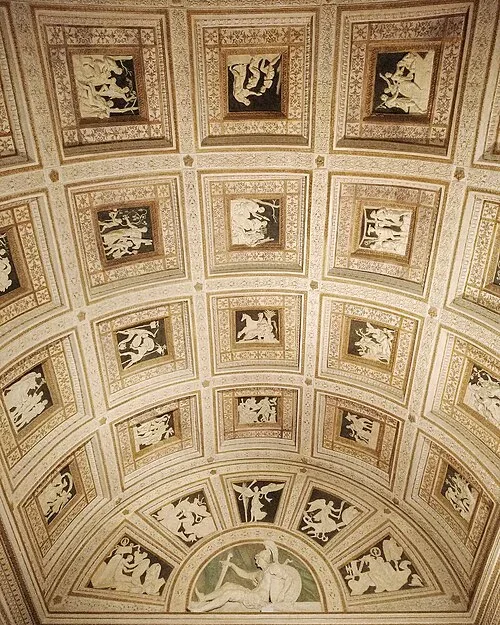 Chamber of the Stuccoes
The Chamber of the Stuccoes glows white, and almost everything overhead is plaster rather than paint. Francesco Primaticcio directed the decoration, in the years around 1530. Its barrel vault carries twenty-five bas-relief panels filled with figures from myth and classical history. Along the base of the vault runs a lavish military frieze on two registers, showing an ideal Roman war expedition, probably inspired by Trajan's Column in Rome. In the lunettes, Hercules and Mars stand at life size in high relief. All of it was meant for an emperor's eyes. In 1530 Charles the Fifth came to Mantua, and his host Federico the Second Gonzaga received him beneath these images of Roman conquest. The flattery worked. The Emperor raised Federico from Marquess to Duke of Mantua, and the palace had its reward built into its walls.
Listen in the appPhoto: WhiteGuard · CC BY-SA 4.0
10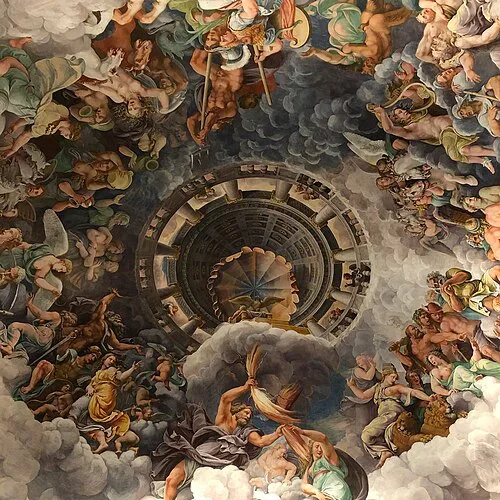 Chamber of the Giants
: the Invented Dome
The Chamber of the Giants has no ceiling, not really. Giulio Romano painted this vault in the 1530s, and he made the architecture disappear. The corners where walls meet the vault are camouflaged in paint, so the eye finds no edge, no frame, no boundary. In their place stands a dome that was never built, a vast painted sky opening on every side, clouds full of gods circling a glowing centre. Walls and ceiling flow into one continuous scene, and the whole room becomes a single illusion. This is counted the most famous fresco of Mannerism, the style that delighted in bending the classical rules Giulio Romano had learned from Raphael. The painted figures swell as they descend toward the floor, until the world of the fresco seems to reach the world of whoever stands inside it.
Listen in the appPhoto: FedericaGaspari · CC BY-SA 4.0
- 11
The Fall of the Giants
Jupiter's thunderbolts crush the giants on the walls, and a century later real soldiers left their names in the plaster.
- 12
Loggia of David
The workshop behind it all: ten years of plasterers, carvers and painters who left no surface plain.
- 13
Facade on the Fishponds
Why the painted halls sit raised above the ground, and how the fishponds mirror the garden facade.
- 14
Great Garden and the Esedra
The garden axis and the curved Esedra, and the palace's long road from barracks to restoration.
- 15
Secret Garden
The Duke's walled retreat: intimate rooms, a bathing cascade, and a garden hidden in a corner of the grounds.
- 16
The Shell Grotto
A vault built of shells and river stones, where artifice finally masters nature itself.
Palazzo Te
Frequently asked questions
How much does the guide cost?
Free app download. Listed guide price: $0.99. Guide price shown in the app. Audio guide only. Venue admission is separate.
Can I listen without internet?
Yes. Download the guide’s audio, images, and maps in the app before your visit. Your downloaded content is then available offline.
Can I listen in my language?
This audio guide is available in 15 languages, including English.
Do I need to follow a schedule?
No. This is a self-guided experience. Choose your stops, pause whenever you like, and return to a story at your own pace.
At your own pace
Explore Palazzo Te.
Download Stanza, then search for “Palazzo Te”.
Free app download · Guide price shown in the app
Keep exploring
Nearby audio guides
Mantua · 1 km
Basilica di Sant'Andrea
Content & sources
Photo: Velvet · CC BY-SA 4.0
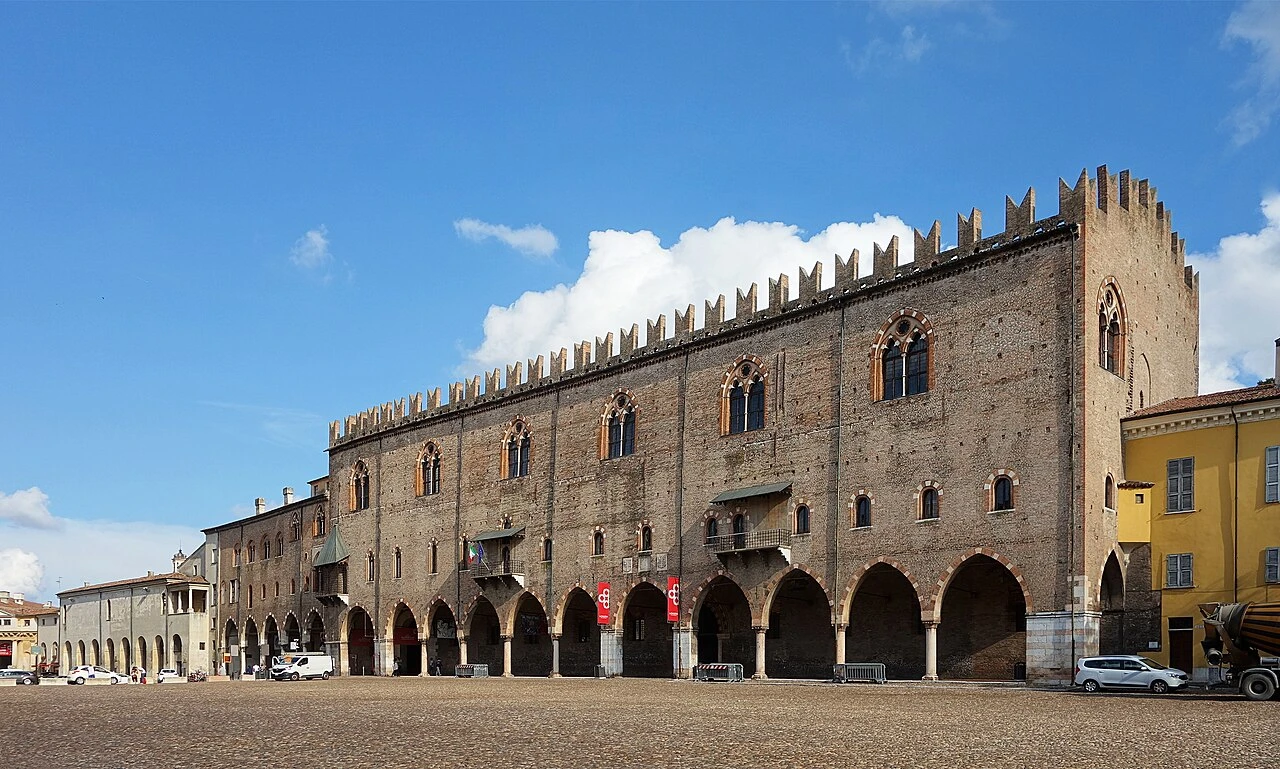
Mantua · 2 km
Palazzo Ducale di Mantova
Content & sources
Photo: Velvet · CC BY-SA 4.0
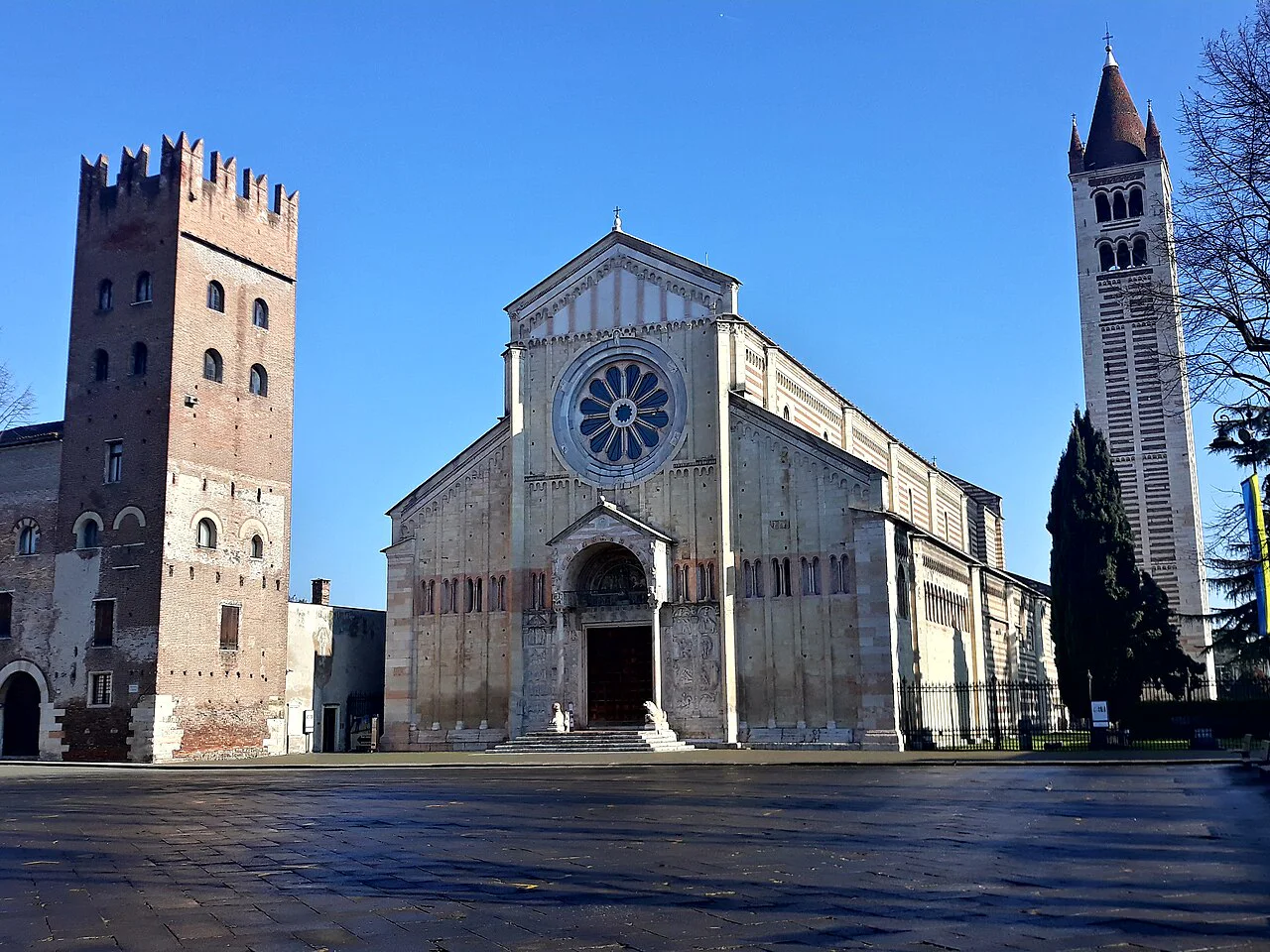
Verona · 36 km
Basilica di San Zeno
Content & sources
Photo: Adert · CC BY-SA 4.0
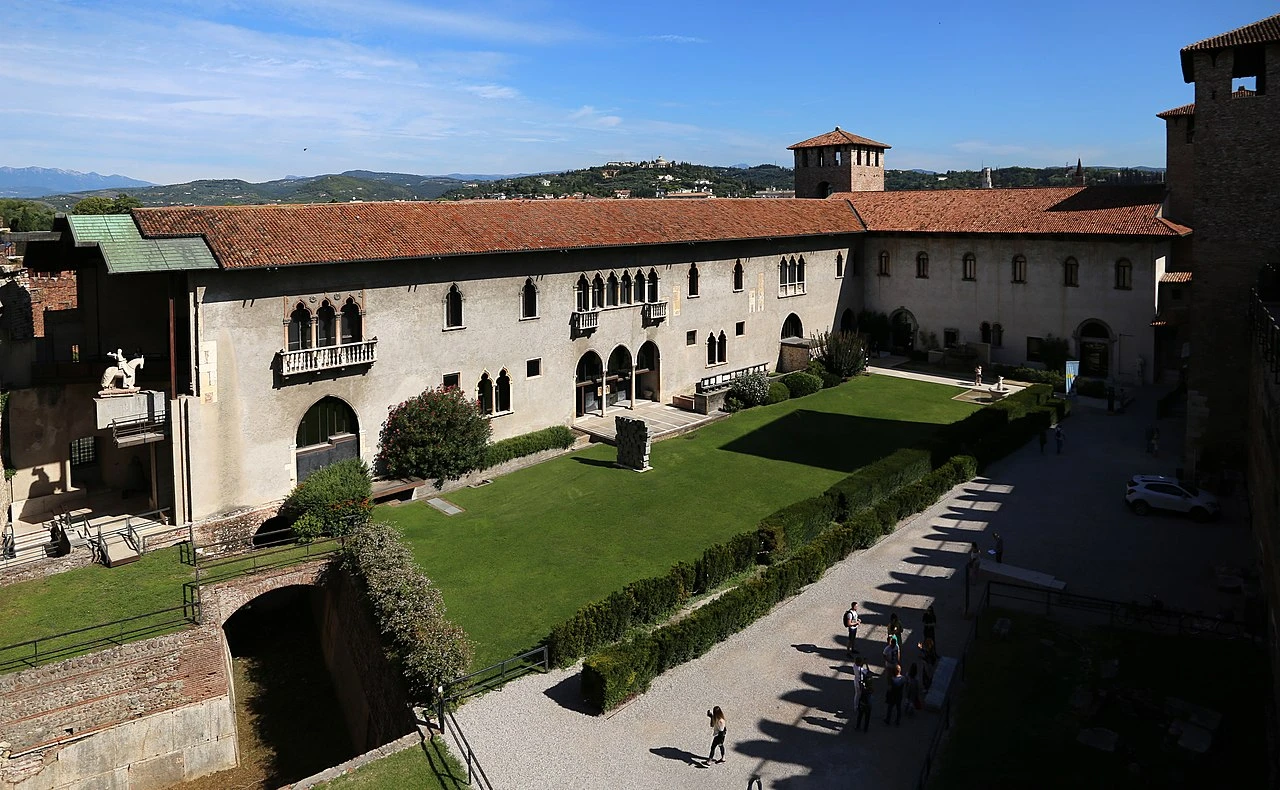
Verona · 36 km
Castelvecchio Museum
Content & sources
Photo: Sailko · CC BY-SA 4.0