Stanza · Audio guide
Duomo di Siracusa Audio Guide
A place to remember. A story to take with you.
The Cathedral of Syracuse is an ancient Catholic church that serves as the seat of the Catholic Archdiocese of Siracusa. Its structure is originally a Greek doric temple, which led to its inclusion in a…
Download Stanza, then search for “Duomo di Siracusa”.
About the tour
One guide. Your kind of visit.
The Cathedral of Syracuse is an ancient Catholic church that serves as the seat of the Catholic Archdiocese of Siracusa. Its structure is originally a Greek doric temple, which led to its inclusion in a UNESCO World Heritage Site.
Ready when you are.
- 01Get the free Stanza app.
iOS & Android
- 02Find your guide.
“Duomo di Siracusa”
- 03Download before you go.
Works offline
Audio guide / 12 narrated stops
Inside the guide
Get to know a few of the stories before you go. Open a stop to read more.
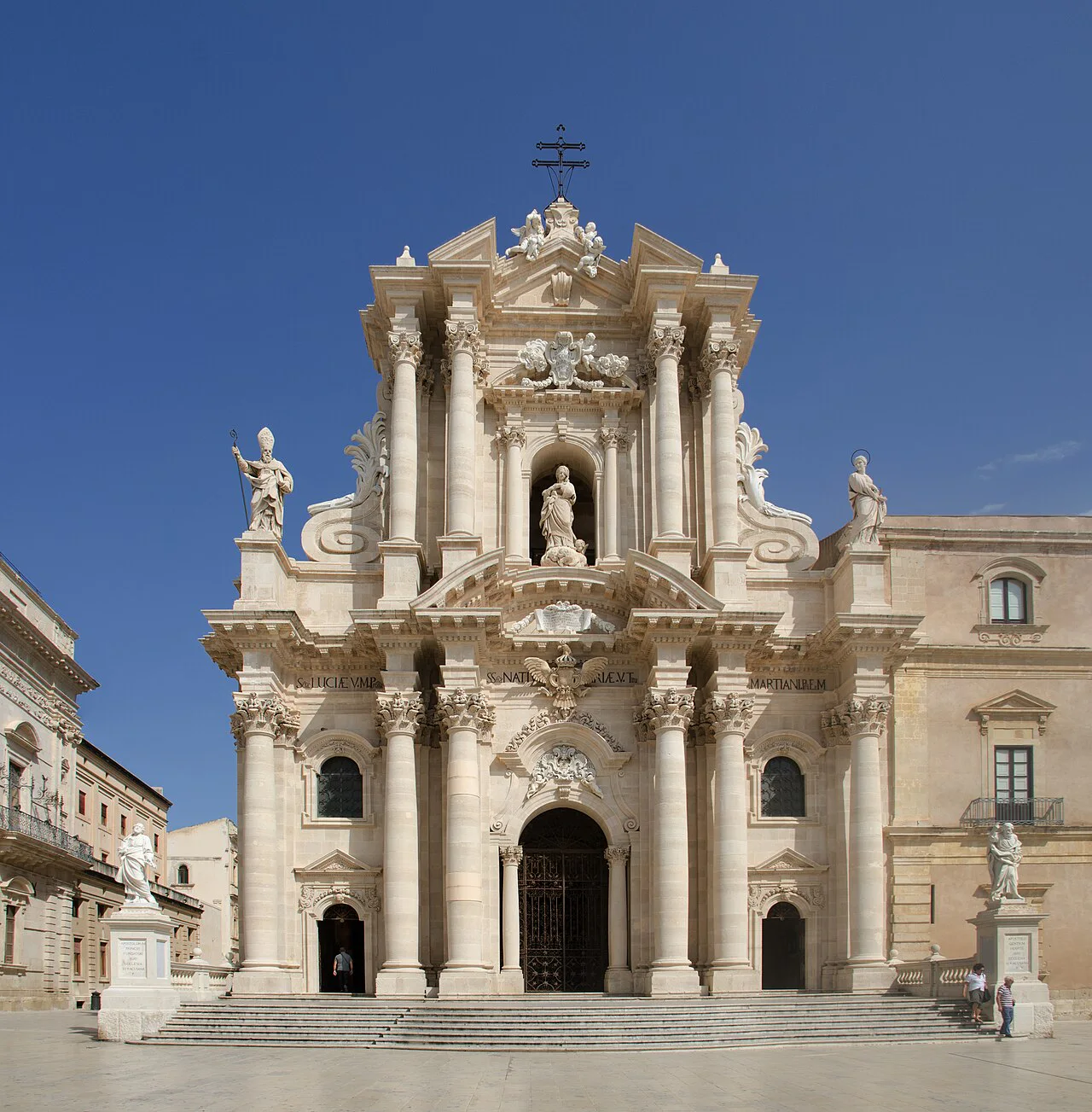
01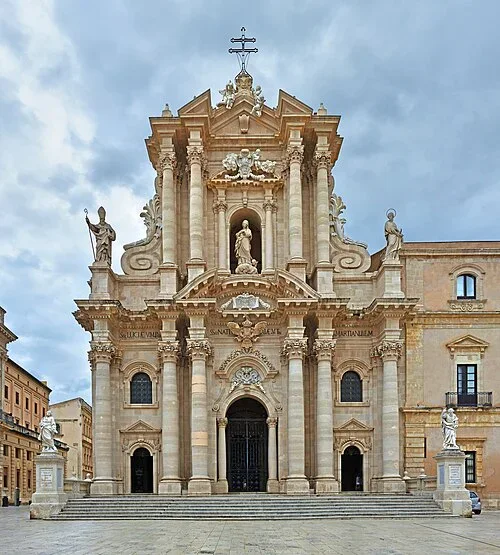 Piazza Duomo & High Sicilian Baroque Façade
The Baroque Façade on Piazza Duomo
Welcome to Syracuse Cathedral, seat of the archdiocese and dedicated to the Most Holy Nativity of Mary. It stands on Ortygia, the small historic island at the heart of the old city, and this guide works back through the ages layered inside it. The face the building shows to Piazza Duomo is its youngest part. In 1693 a great earthquake destroyed the medieval west front and the bell tower beside it. The tower had already been hurt by an earlier quake in 1542, and after 1693 it was never rebuilt. Bishop Tommaso Marini launched a competition for a new façade, and the best architects of Sicily answered it. The design was long credited to Andrea Palma. Today many give it instead to Giuseppe Mariani, a leading figure of the Baroque in Palermo. Work began in 1728 and finished twenty-five years later. What rose was High Sicilian Baroque, a late and theatrical flowering of the style, in two stacked tiers of columns. When UNESCO inscribed Syracuse as a World Heritage Site in 2005, its judges called these monuments the finest example of outstanding architectural creation, spanning Greek, Roman and Baroque cultures.
Photo: Ludvig14 · CC BY-SA 4.0
02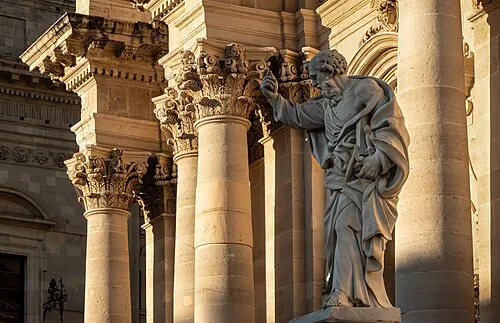 Piazza Duomo & High Sicilian Baroque Façade
Saint Paul at the Door
The full-length saints along this façade are the work of Ignazio Marabitti, a sculptor from Palermo who trained in Rome. He was reckoned the most noted Sicilian sculptor of his day, and outside his home city his best-known commissions included this cathedral. Among his figures stand Saints Peter and Paul, near the head of the steps. The inscription beneath Peter honours him as the Prince of the Apostles, founder of the church here. Paul's pedestal recalls a journey. On his way to Rome, the apostle spent three days in Syracuse. The Corinthian capitals of the façade carry acanthus leaves, cut deep and curling, cited as a classic example of the Baroque stone-carver's art.
Listen in the appPhoto: Julian Lupyan · CC0
03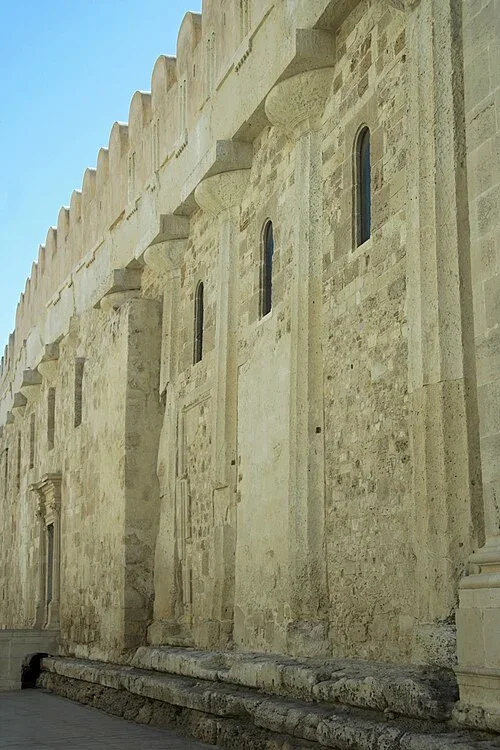 Northern Flank on Via Minerva
The Greek Temple's Outer Wall
The great pale columns locked into this rough wall are the oldest thing about the cathedral. They are the outer colonnade of a Greek temple dedicated to Athena. Scholars put its construction in the decades around 470 before Christ. Some date it earlier still, to the sixth century. It was a peripteral temple, ringed by a colonnade on every side. Thirty-six columns stood around it in all. Six carried each short front, and fourteen lined each long flank. Each column measured about two metres across and rose nearly nine metres, with twenty flutes running down its shaft. The rough masonry between the column tops is later Christian work, closing the gaps of the pagan colonnade. Excavations by the archaeologist Paolo Orsi in the early twentieth century showed the temple standing on even older foundations, with archaic and pre-Hellenic finds beneath it.
Listen in the appPhoto: Zde · CC BY-SA 4.0
04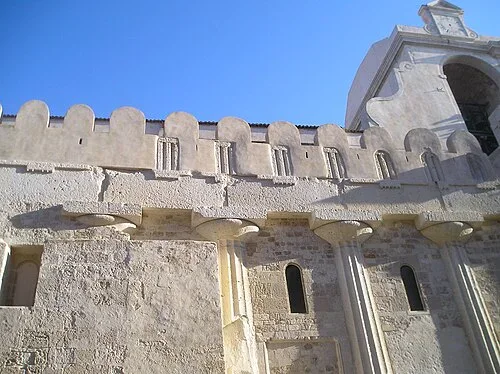 Northern Flank on Via Minerva
Cicero and the Plundered Temple
Cicero gave this temple its written fame. In 70 before Christ, in his speeches against Verres, the governor of Sicily, he listed the plundering of the temple's treasures among the governor's crimes. Thanks to him we know of the richness of its doors and the paintings that filled its interior, splendours that made it a wonder even to conquering generals. One of those generals, Marcus Claudius Marcellus, took Syracuse after a siege and left the temple practically untouched, out of respect. Plato and Athenaeus mention the temple in their writings as well.
Listen in the appVerity Cridland · CC BY 2.0
05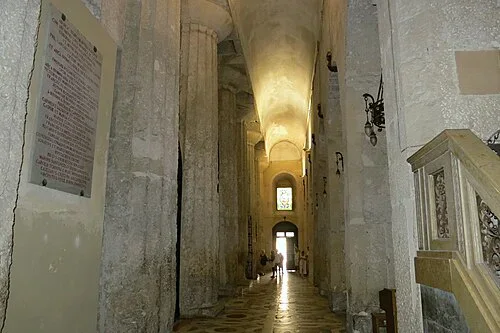 Main Nave & Embedded Temple Cella
Inside the Temple: the Aisle Colonnade
Inside, the temple and the church become a single building. In the seventh century, in the year 640, Bishop Zosimo moved the cathedral seat here from the church of San Giovanni. He gave the new basilica the dedication it still bears. His builders did not demolish the pagan temple. They cut eight wide arches into each long wall of the inner chamber, opening it into a nave with two aisles. The battered Doric columns built into the walls between the bays are the temple's own. Nineteen of the original columns survive, visible both inside and out. This is the clearest place in the building where Greek sacred architecture carries Christian worship.
Listen in the appPhoto: Zde · CC BY-SA 4.0
06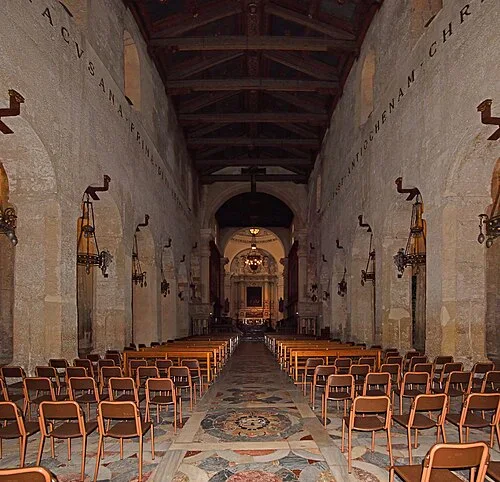 Main Nave & Embedded Temple Cella
The Nave: Mosque, Normans and the Collapse of 1100
The nave has changed flags more than once. In 878, under Islamic rule, the church became a mosque. Count Roger the First of Sicily retook the city in 1086, and the building returned to Christian worship. The Normans raised the walls of the nave, opened windows in them, and decorated the apse with mosaics. The roof, too, is of Norman origin. Then came disaster. In 1100 an earthquake brought the vault over the nave down during Sunday mass, and the nave was repaired. Many worshippers were crushed, while the priests near the altar survived, far from the falling ceiling. The nave keeps its medieval form to this day. Even the two pulpits added in 1926 were built in medieval style, one for the bishop and one for the clergy.
Listen in the appPhoto: Ludvig14 · CC BY-SA 4.0
07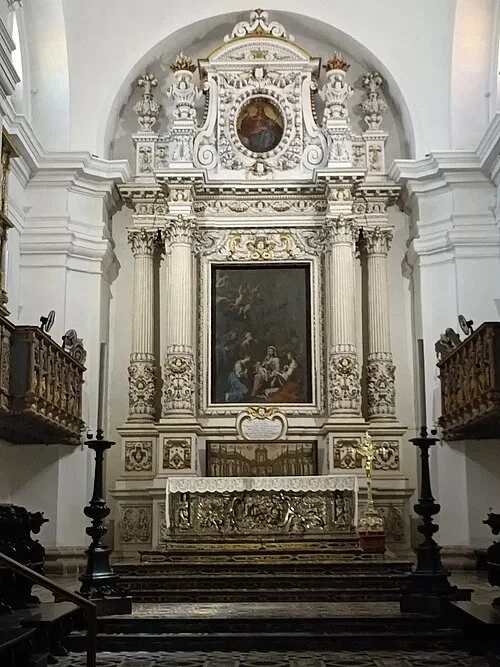 High Altar & Monolithic Mensa
High Altar and the Monolithic Mensa
The high altar holds the most direct link between the Greek temple and the Christian liturgy. Its table, the mensa, is a single enormous block, taken from the entablature of the temple, the beam that once ran across the tops of its columns. That entablature came down in the earthquake of 1693, and the builders of the new presbytery gave the fallen stone a second life as the altar of the cathedral. The presbytery was designed by the Syracusan architects Pompeo Picherali and Luciano Alì. Above the altar hangs a seventeenth-century painting of the Nativity of Mary, matching the cathedral's dedication. Its author is thought to be either Agostino Scilla or a painter called Leburn. On the altar front, a marble panel carved by the Florentine Filippo Valle in 1762 shows the Last Supper.
Listen in the appViaggiamocela · CC BY-SA 4.0
08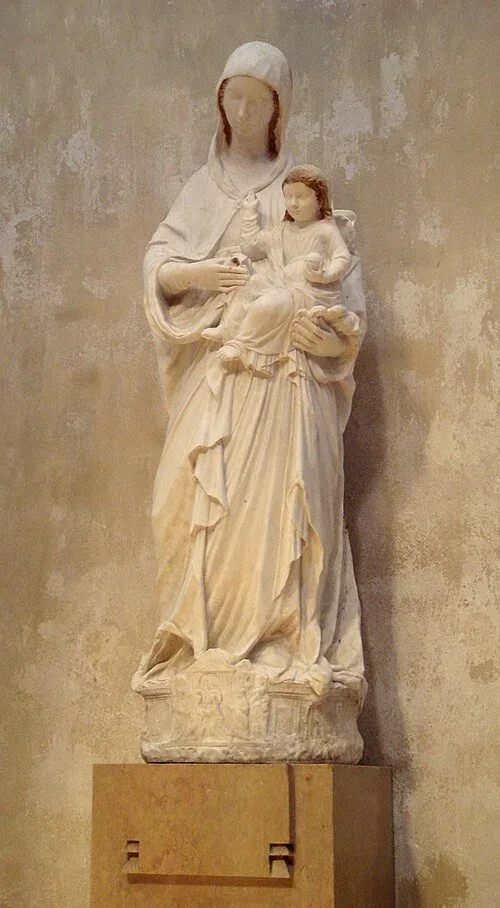 Left Aisle & Gagini School Renaissance Sculptures
Domenico Gagini's Madonna and Child
The left aisle doubles as a sculpture gallery, and that was a deliberate choice. Restorations between 1912 and 1927, in two campaigns, removed the Baroque altars that once lined this aisle. In their place the restorers set sixteenth-century statues in the spaces between the Doric columns, and reopened the medieval windows the altars had blocked. The Madonna and Child here is the oldest of them, carved in the fifteenth century by Domenico Gagini. His family workshop created several of the Renaissance marble sculptures in this church, and its saints stand along the aisle in a row.
Listen in the appGiovanni Dall'Orto. · Attribution
09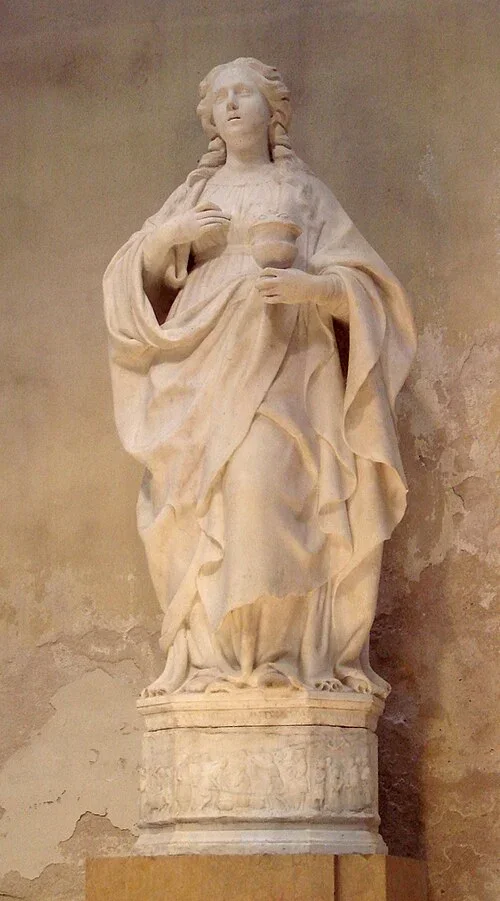 Left Aisle & Gagini School Renaissance Sculptures
Antonello Gagini's Saint Lucy
A young woman in white marble holds a chalice in her hands. She is Saint Lucy, carved by Antonello Gagini, son of Domenico, around 1526. The chalice is an emblem Renaissance artists gave the saint. Lucy was born a Syracusan, and the city honours her as its patroness. Her own chapel stands deeper in the church.
Listen in the appGiovanni Dall'Orto. · Attribution
10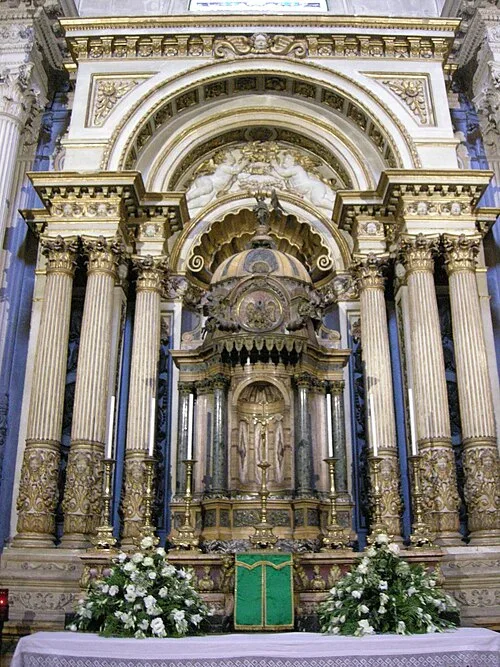 Chapel of the Blessed Sacrament
The Chapel of the Blessed Sacrament is called the most beautiful side chapel in the cathedral. It was built in 1616 by the brothers Andrea and Giovanni Vermexio, at the wish of the Spanish bishop Juan de Torres Osorio, whose name it also carries. Its plan is octagonal, ringed by reliefs and Corinthian columns rich with gilding. At the centre stands a tabernacle of gilded wood, shaped like a tiny temple, by Luigi Vanvitelli, the architect of the Royal Palace of Caserta. Overhead, the dome is divided into five compartments, each painted by the Messina artist Agostino Scilla with a scene from the Old Testament.
Listen in the appPhoto: Sailko · CC BY 2.5
- 11
Chapel of Saint Lucy, Patroness of Syracuse
The silver saint carried through the streets twice a year, and the cannonball that refused to explode.
- 12
The Baptistery Font: a Greek Vessel Reborn
A Greek mixing bowl, carried through three buildings, now baptises the cathedral's children.
Duomo di Siracusa
Frequently asked questions
How much does the guide cost?
Free app download. Listed guide price: $0.99. Guide price shown in the app. Audio guide only. Venue admission is separate.
Can I listen without internet?
Yes. Download the guide’s audio, images, and maps in the app before your visit. Your downloaded content is then available offline.
Can I listen in my language?
This audio guide is available in 15 languages, including English.
Do I need to follow a schedule?
No. This is a self-guided experience. Choose your stops, pause whenever you like, and return to a story at your own pace.
At your own pace
Explore Duomo di Siracusa.
Download Stanza, then search for “Duomo di Siracusa”.
Free app download · Guide price shown in the app
Keep exploring
Nearby audio guides
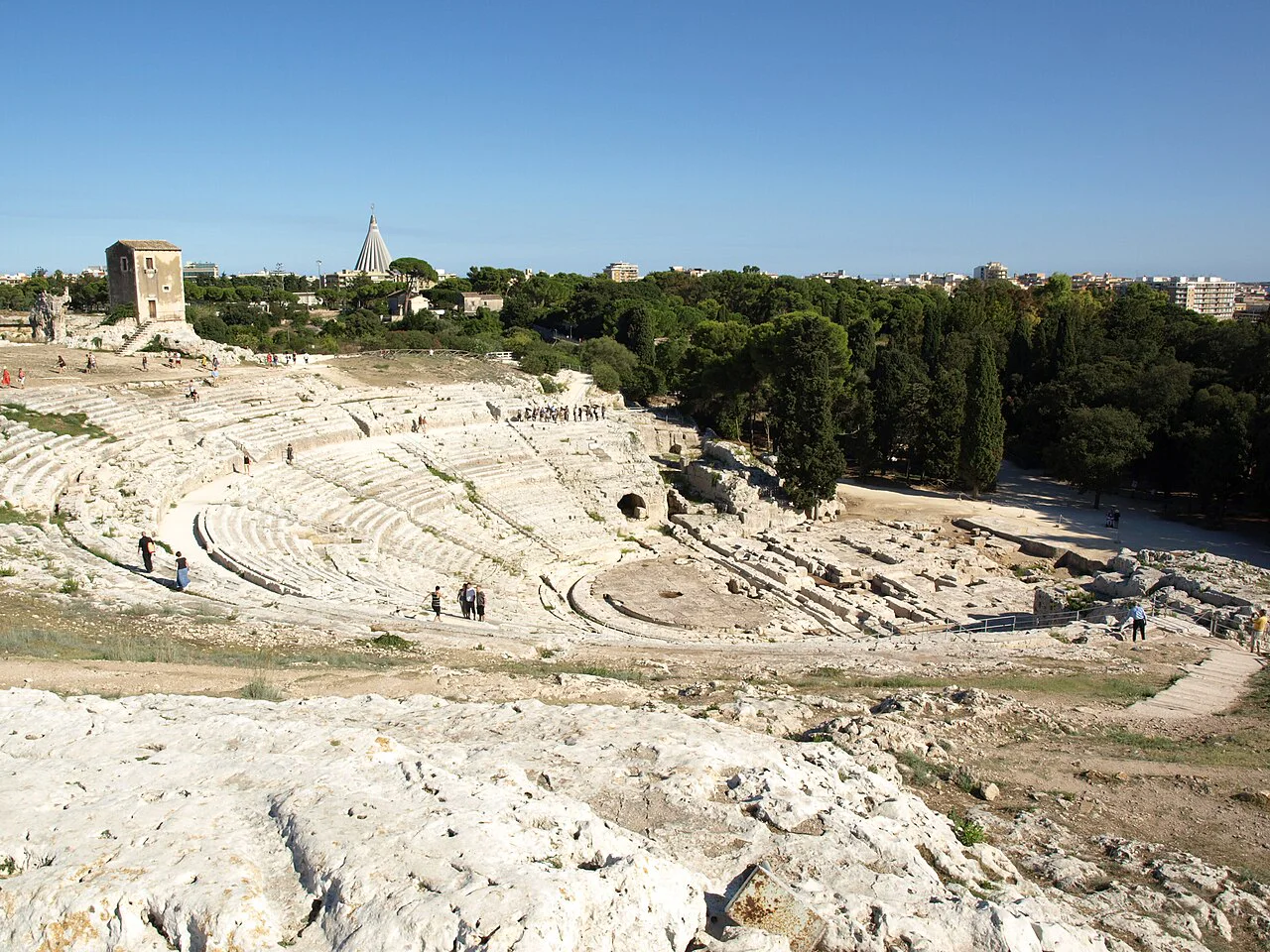
Syracuse · 2 km
Teatro greco di Siracusa
Content & sources
Photo: AlexanderVanLoon · CC BY-SA 3.0
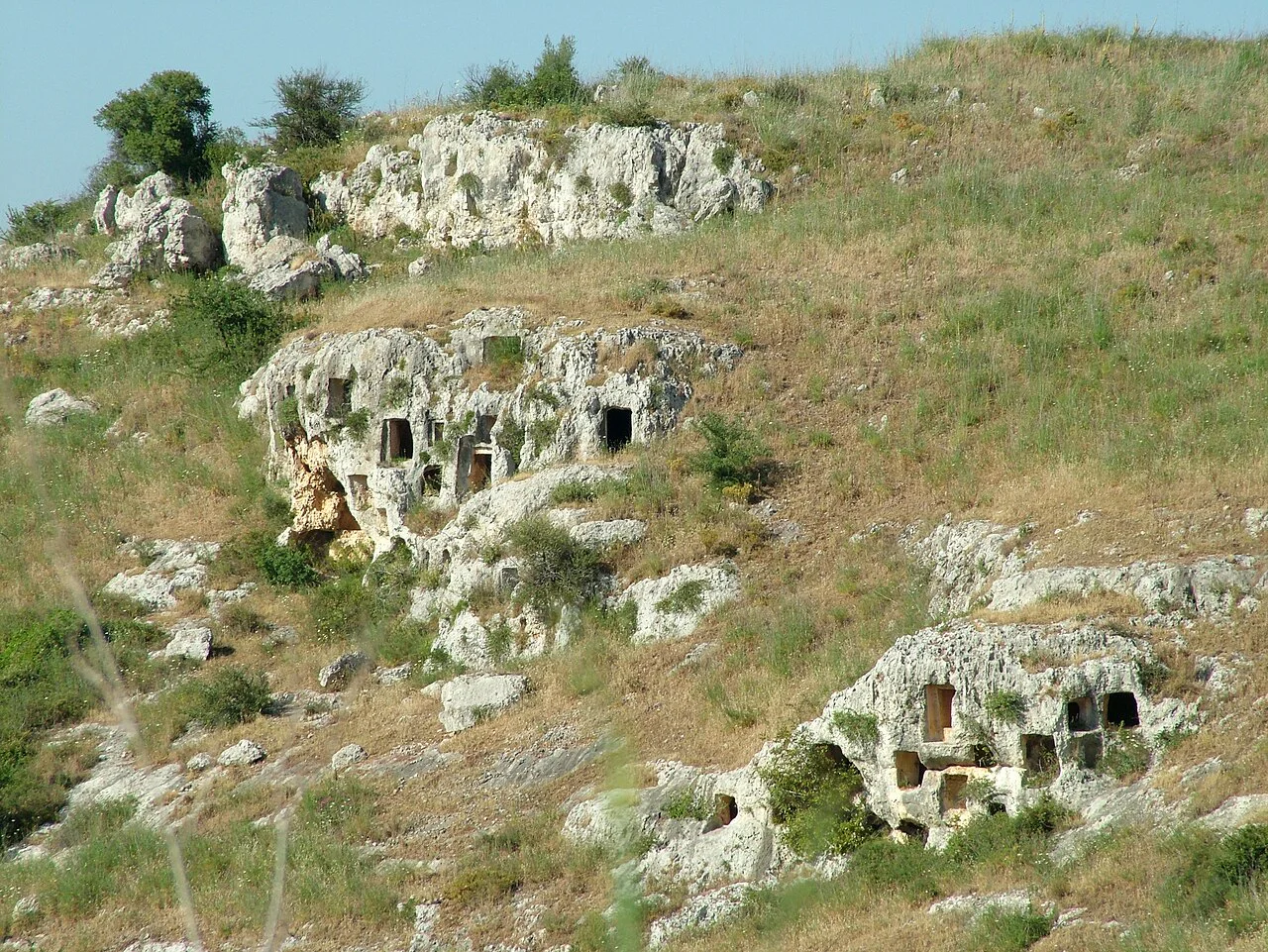
Sortino · 29 km
Pantalica
Content & sources
Photo: Clemensfranz · CC BY 2.5
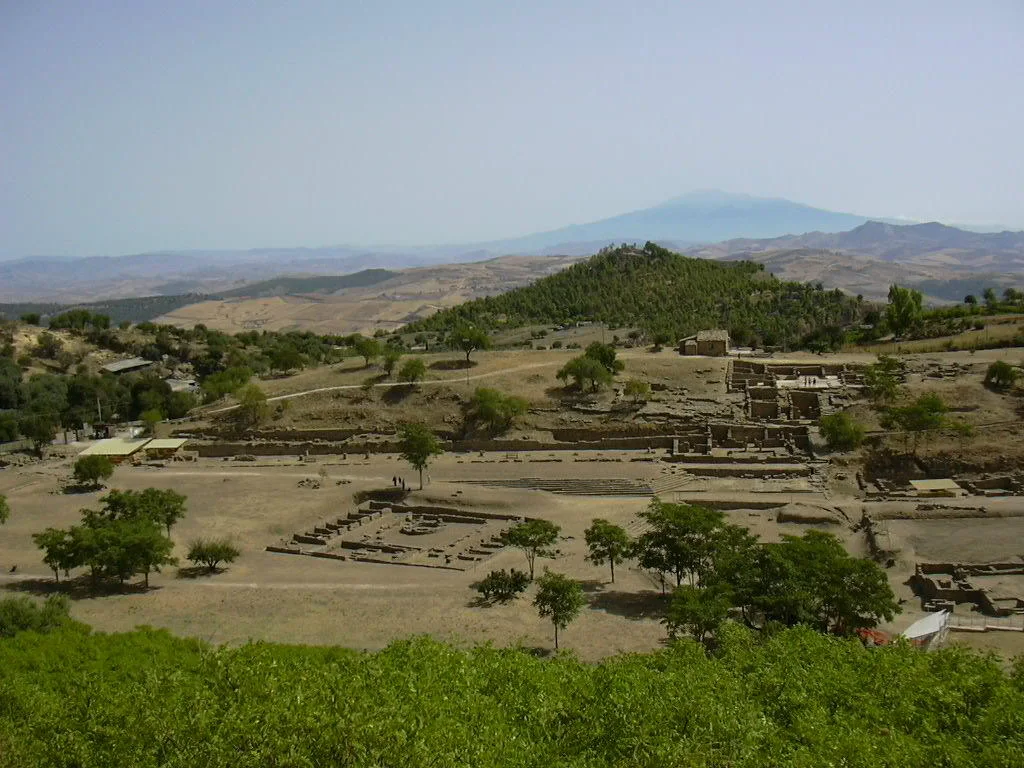
Aidone · 83 km
Morgantina
Content & sources
User:Morgantia07 · Public domain
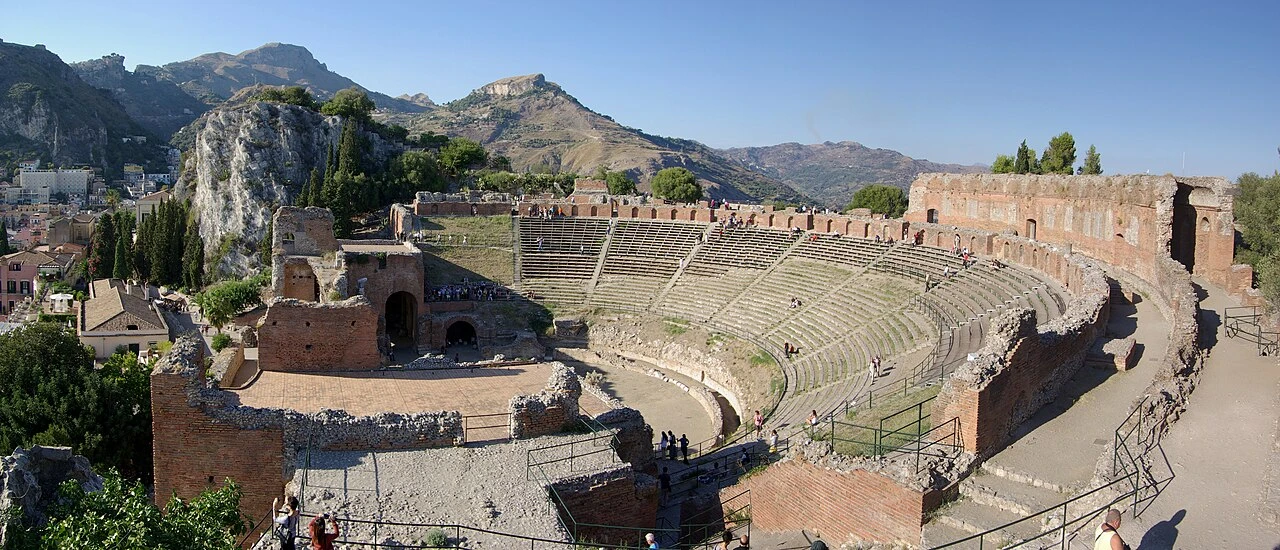
Taormina · 88 km
Ancient Theatre of Taormina
Content & sources
Photo: Berthold Werner · CC BY-SA 3.0