Stanza · Audio guide
Teatro Antico di TaorminaAudio guide
A place to remember. A story to take with you.
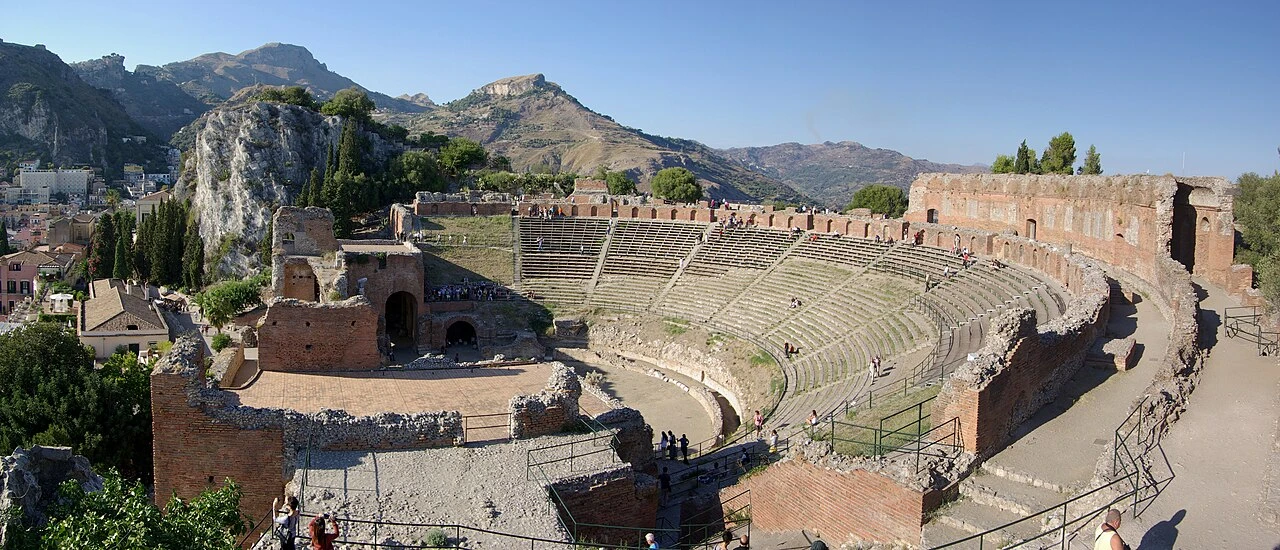
An ancient Greco-Roman theatre built into the hillside overlooking the Ionian Sea and Mount Etna. It is one of the most famous and well-preserved ancient monuments in Sicily.
Download Stanza, then search for “Teatro Antico di Taormina”.
About the tour
One guide. Your kind of visit.
An ancient Greco-Roman theatre built into the hillside overlooking the Ionian Sea and Mount Etna. It is one of the most famous and well-preserved ancient monuments in Sicily.
Ready when you are.
- 01Get the free Stanza app.
iOS & Android
- 02Find your guide.
“Teatro Antico di Taormina”
- 03Download before you go.
Works offline
Audio guide / 11 narrated stops
Inside the guide
Get to know a few of the stories before you go. Open a stop to read more.
01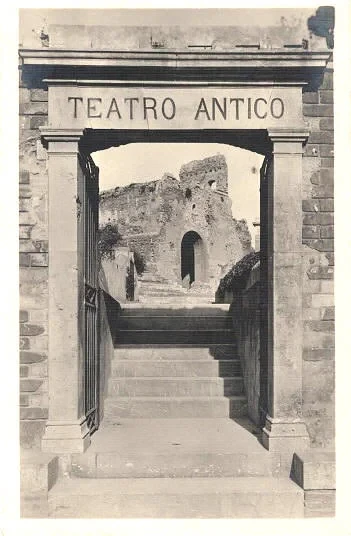 Main Entrance and ArrivalThe Gate of the Ancient Theatre
Welcome to the threshold of antiquity, where this old stone gateway inscribed with the words "Teatro Antico" has greeted travelers and scholars for generations. Stepping through this entrance marks your transition from the bustling modern streets of Taormina into a monumental space built on a staggering scale. The theater spans a maximum diameter of one hundred and nine meters, rises twenty meters high, and features a central orchestra area measuring thirty-five meters across. In its Roman-era prime, this massive complex was capable of packing in up to ten thousand spectators. Today, modern safety codes restrict modern events and concerts to an audience of forty-five hundred. As you pass under the stone lintel, think of the thousands of people who have walked this exact pathway, seeking entertainment, political gathering, or philosophical debate. This gateway stands as the physical boundary between our present world and the layered, classical history that unfolds just beyond the steps ahead.
Anonimo, Ed. Attanasio - Taormina Stab. Dalle Nogare & Armetti- Milano. · Public domain
02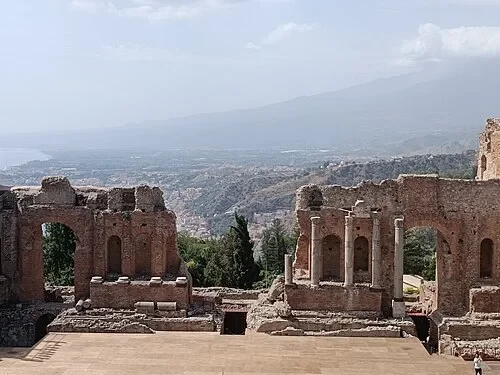 Orchestra and Arena FloorThe Roman Stage Wall
Before you stand the towering brick ruins of the stage backdrop, historically known as the Scaenae Frons. When the Romans extensively rebuilt and expanded this theatre in the second century AD, they radically transformed the space by replacing the original, open Hellenistic view with this massive, two-tiered wall. Roman builders sought monumental architectural grandiosity, constructing a high backdrop that intentionally blocked the natural horizon. This modification created a more controlled, intimate, and acoustically powerful environment, effectively turning the open hillside theater into an indoor-outdoor amphitheater. If you look closely at the lower section of this massive red brick structure, you can spot the large arched doorways. These openings served as the main entry points for ancient actors making their dramatic entrances onto the stage. The scale of this wall demonstrates how the Romans prioritized physical spectacle and acoustic isolation, shifting the original Greek design toward their own distinctive, grand architectural style.
Viaggiamocela · CC BY-SA 4.0
03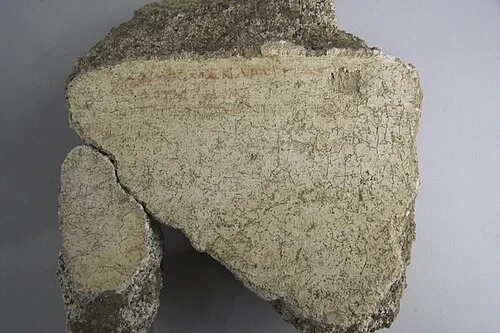 Orchestra and Arena FloorThe Hellenistic Library Stone
This plaster-covered fragment of inscribed stone reveals the deep Greek foundations of this site, dating back to the third century BC. The ancient Greek letters visible on the surface served as a catalog entry for a local library, specifically referencing the famous pre-Socratic philosopher Anaximander. This unique artifact highlights the original purpose of the theater under Greek rule. During the Hellenistic period, this space was not merely used for light amusement, but served as a crucial venue for intellectual discourse, classical Athenian tragedies, and democratic assemblies. The local populace gathered here to debate civic matters and experience intellectually rigorous drama. This high-minded, cultural Greek focus contrasts sharply with the raw, spectacular entertainment that the Romans introduced when they later remodeled the theater. While the Romans favored gladiatorial events, wild beast hunts, and grand visual spectacles, this modest stone block serves as a reminder of an era dedicated to philosophy, literature, and active democratic debate.
Listen in the appPhoto: Zde · CC BY-SA 3.0
04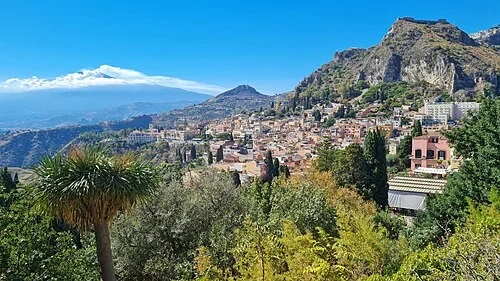 The Roman Stage Wall (Scaenae Frons)Etna and the Ionian Sea
Stretching out beyond the ancient ruins is the dramatic panorama of Mount Etna and the curving coastline of the Ionian Sea. This view reveals the brilliant landscape philosophy of the original Greek architects who designed this site in the third century BC. While Roman builders preferred to construct fully enclosed, inward-facing structures that blocked out the surrounding world, Greek designers worked in harmony with nature. They deliberately carved the semi-circular cavea directly into the slope of Mount Tauro to exploit the natural topography. This design decision transformed the active volcano and the glittering sea into a permanent, living backdrop for theatrical performances. The natural world was integrated directly into the drama, meaning that classical Greek plays were performed with the smoking peak of Etna and the Mediterranean horizon framing the actors. This approach to natural stagecraft turned the landscape itself into an active participant in the performance, demonstrating how Greek architects prioritized cosmic scale and scenic beauty.
Listen in the appPhoto: Derbrauni · CC BY 4.0
05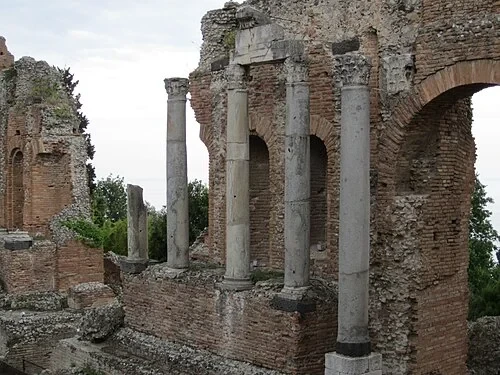 The Roman Stage Wall (Scaenae Frons)Columns of the Scaenae Frons
Positioned against the weathered red brick piers of the ruined stage backdrop are elegant columns topped with ornate Corinthian capitals. During the height of the Roman Empire, this entire stage wall was not the rough brick you see today, but rather a luxurious, multi-story facade clad in columns. Many of the pillars standing in place today are the result of meticulous nineteenth-century restoration efforts. Archaeologists carefully gathered, reassembled, and raised original fragments that had lain scattered in the orchestra and seating areas below for centuries. Notice the sharp visual contrast between the rough, dark red Roman brickwork and the smooth, pale columns standing before it. This juxtaposition allows us to visualize how colorful and decorated the stage would have looked to ancient spectators. By placing these recovered elements back onto their brick bases, restorers provided a glimpse into the architectural luxury of the imperial Roman theatre, highlighting the contrast between structural engineering and ornamental beauty.
Listen in the appMarco Vinci · CC BY-SA 3.0
06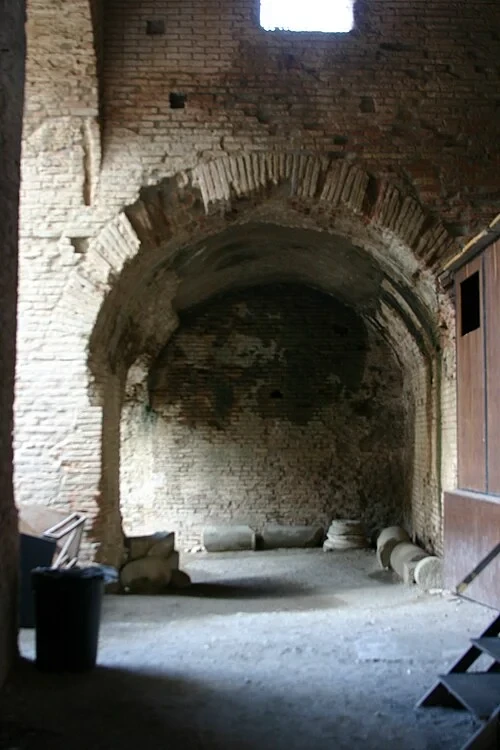 Vaulted CorridorsThe Vaulted Corridors
Stepping inside the cool, dark passages beneath the seating tiers brings you into the vaulted corridors, which are classic examples of Roman engineering. These brick structures were built to support the massive physical weight of the expanded seating cavea above. However, they also played a crucial role in the dramatic shift in the theater's function during the late Roman Empire. No longer a place solely for classical plays and intellectual discourse, the venue was converted into a violent arena for gladiatorial combat and wild beast hunts, known as venationes. These subterranean corridors served as holding zones for fighters and exotic animals. Here, in the damp darkness, gladiators and caged beasts waited in anticipation before being directed out into the blinding sunlight of the arena floor. The heavy brick arches overhead show how Roman engineers adapted older Greek structures to handle both massive physical loads and the logistical demands of popular blood sports.
Listen in the appJosé Luiz · CC BY-SA 4.0
07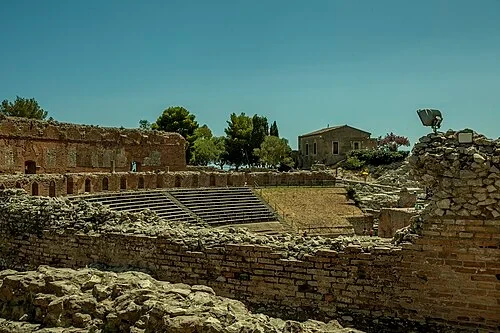 Lower Seating Tiers (The Cavea)The Cavea Steps
The stepped seating tiers of the cavea are divided into nine distinct sectors by eight narrow stone staircases. This vast semi-circular seating area was not just designed for visibility, but also to reflect the rigid social hierarchy of the Roman Empire. Where you sat was strictly determined by your social class and legal status. The local magistrates, pagan priests, and wealthy elite occupied the lowest tiers closest to the orchestra, which were originally clothed in fine marble to provide comfort and prestige. The middle rows accommodated ordinary Roman citizens. In contrast, women, foreign visitors, and enslaved people were segregated to the highest, steepest stone benches at the very top of the theatre, far from the performance. This physical division transformed the entertainment venue into a visual map of Roman class structures, reminding everyone in attendance of their exact position in society during every public gathering.
Listen in the appRodrigo Silva · CC BY 2.0
08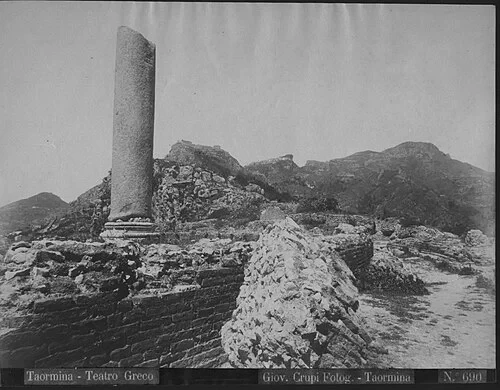 Lower Seating Tiers (The Cavea)The Romantic Ruin
This historic nineteenth-century photograph by Giovanni Crupi captures the theatre during the height of the European Grand Tour era. During this period, the site became a symbol of romantic decay and classical beauty. The famous German writer Johann Wolfgang von Goethe visited this spot in 1787 and was profoundly transfixed by the scenic ruin against the dramatic backdrop of Mount Etna. Goethe wrote extensively about his experience, famously declaring that no audience in history had ever enjoyed a theatrical view to match this one. His influential writings, along with images like this Crupi photograph, sparked a widespread romantic obsession with Sicily across Europe. Artists, writers, and wealthy travelers began journeying south to witness the picturesque juxtaposition of ancient architecture and wild nature. This influx of intellectual tourism permanently transformed Taormina from a quiet, isolated hillside village into an internationally famous cultural destination, laying the early foundations for the town's modern identity as a celebrated global travel hub.
Listen in the appGiovanni Crupi · Public domain
09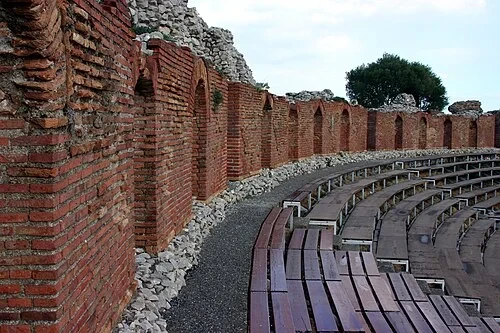 Upper Gallery and BelvedereThe Upper Portico Niches
Lining the highest tier of the cavea is a curving brick wall punctuated by a series of repeating arched niches. This structure was once part of a double portico, a covered gallery that completely enclosed the top of the theatre. This architectural feature served two highly practical purposes for ancient spectators. First, the solid rear wall and vaulted ceiling of the portico improved the theater's overall acoustics by reflecting sound waves back down toward the stage and seating areas, ensuring that voices could be heard even at the very top. Second, this upper gallery supported tall wooden masts that secured large canvas awnings. These fabric canopies were deployed over the seating area to shade the spectators seated in the upper sections from the intense Sicilian sun. Ironically, while those seated at the top were the poorest members of society, they benefited the most from this early temperature-control system that made the long afternoon performances bearable in the summer heat.
Listen in the appJosé Luiz · CC BY-SA 4.0
10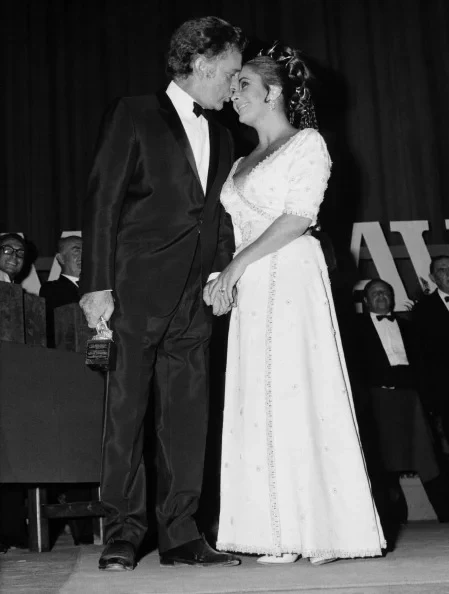 Upper Gallery and Belvedere11th David di Donatello Awards
This historical photograph captures Hollywood icons Elizabeth Taylor and Richard Burton during the eleventh David di Donatello awards ceremony held at the theatre in 1966. This moment perfectly illustrates the ancient venue's remarkable mid-twentieth-century cultural rebirth. Beginning in the 1950s, the theater transitioned from a quiet archaeological relic into a living, breathing performance space. It emerged as a highly glamorous hub for international cinema, fashion, and theater, hosting major film festivals and prestigious awards ceremonies under the Sicilian night sky. Celebrated screen actors, visionary directors, and world-class musical performers gathered within these ancient walls, bringing global media attention back to Taormina. By hosting these high-profile events, the theater proved that its classical architecture remained perfectly suited for modern cultural celebrations, seamlessly bridging its ancient past with the golden age of cinema. This prestigious event helped cement the site's ongoing reputation as a premier open-air stage, where historic ruins meet modern artistic expression.
Listen in the appUnknown author · Public domain
Teatro Antico di Taormina
Frequently asked questions
How much does the guide cost?
Free app download. Listed guide price: $3.99. Guide price shown in the app. Audio guide only. Venue admission is separate.
Can I listen without internet?
Yes. Download the guide’s audio, images, and maps in the app before your visit. Your downloaded content is then available offline.
Can I listen in my language?
Stanza supports 15 languages. Check the app for the languages available for this guide.
Do I need to follow a schedule?
No. This is a self-guided experience. Choose your stops, pause whenever you like, and return to a story at your own pace.
At your own pace
Explore Teatro Antico di Taormina.
Download Stanza, then search for “Teatro Antico di Taormina”.
Free app download · Guide price shown in the app
Keep exploring
Nearby audio guides
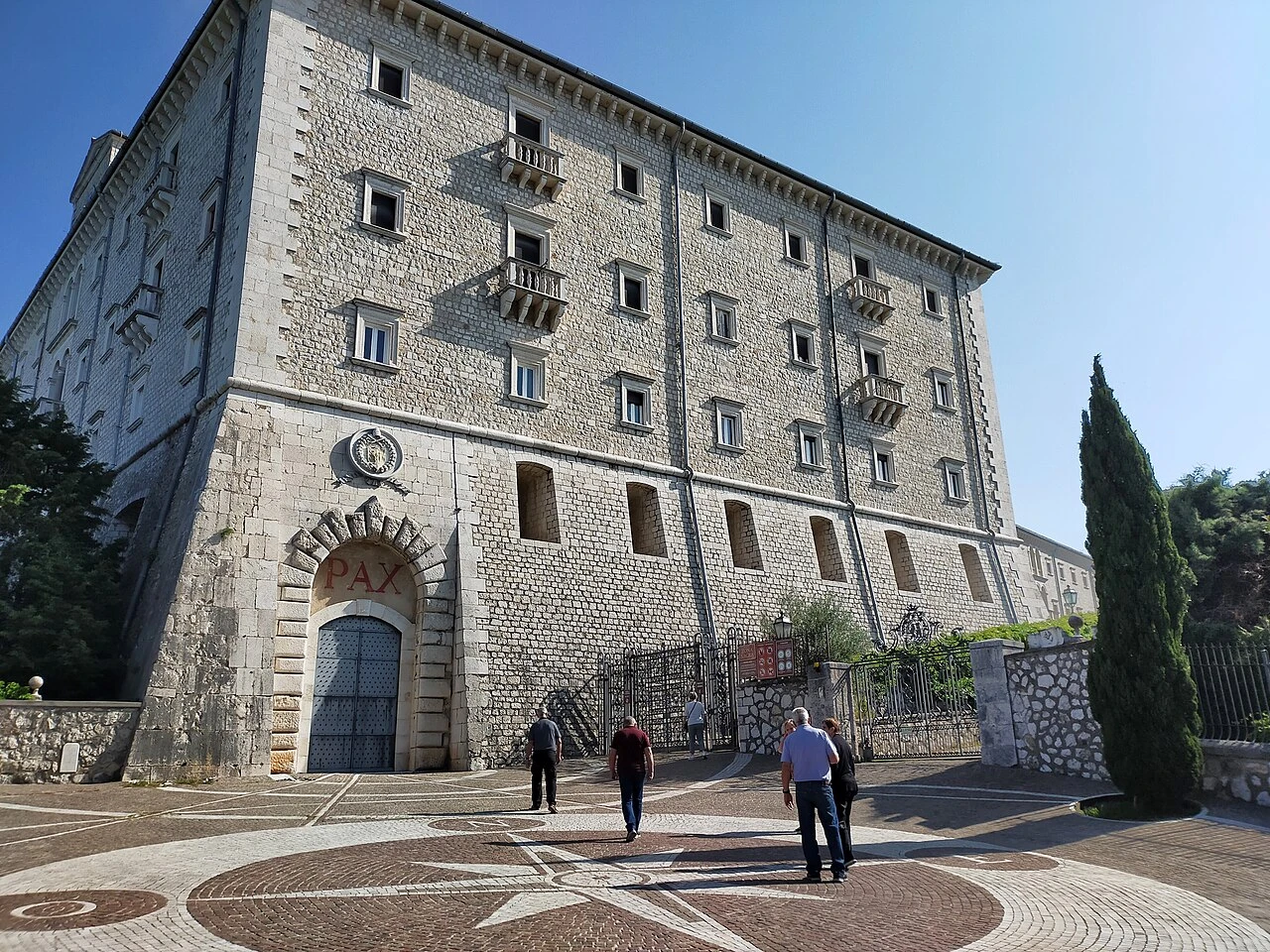
Cassino
Abbey of Monte Cassino
Content & sources
Photo: Marica Massaro · CC BY-SA 4.0
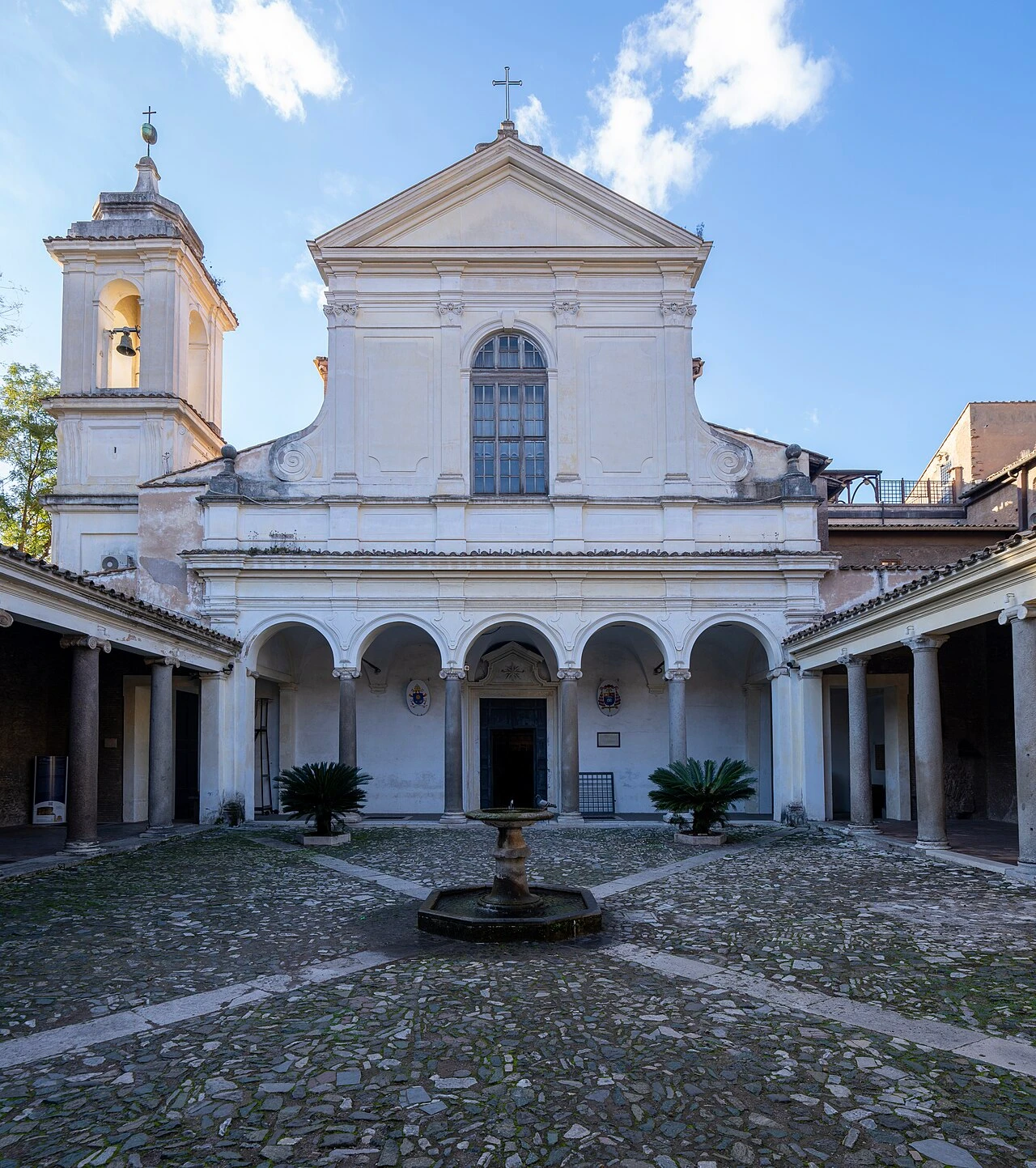
Rome
Basilica di San Clemente
Content & sources
Photo: Labicanense · CC BY-SA 4.0
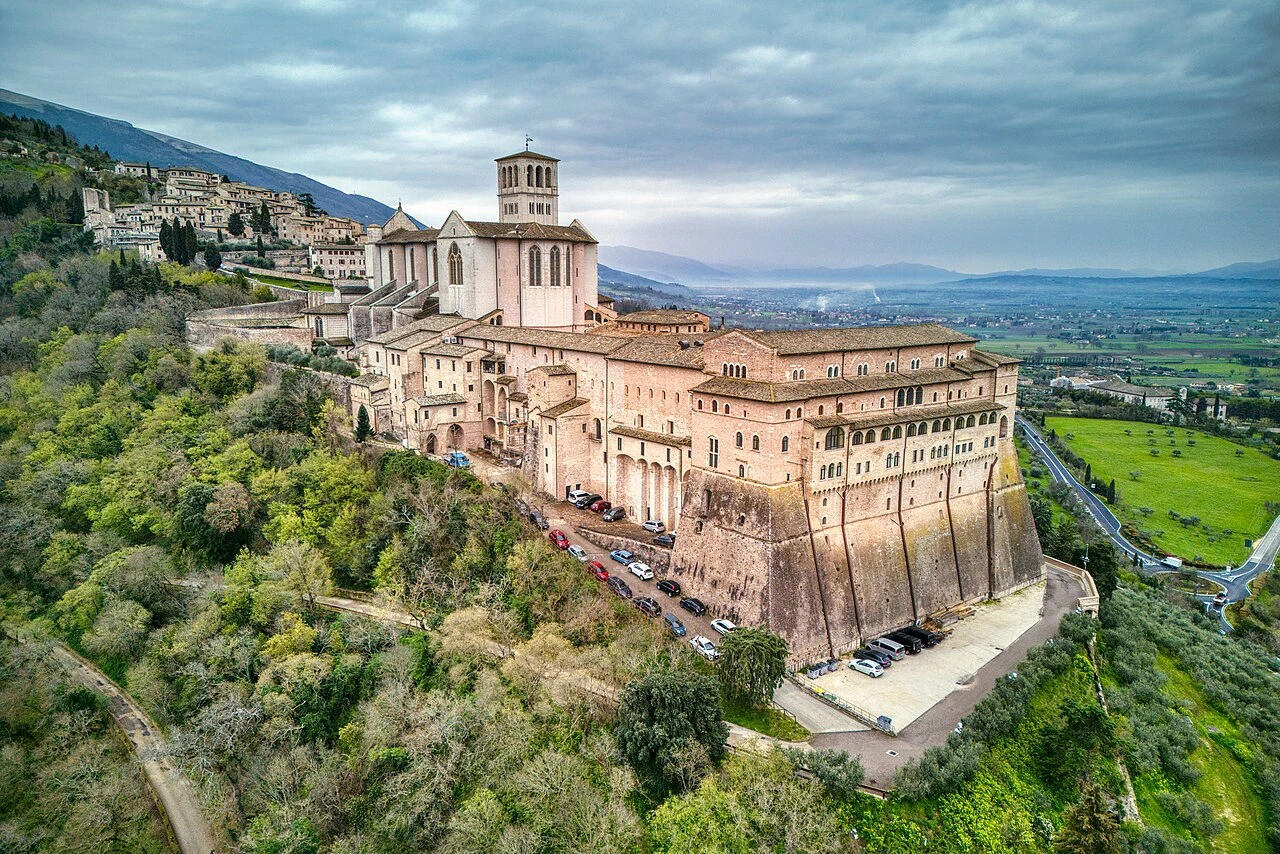
Assisi
Basilica di San Francesco
Content & sources
Hagai Agmon-Snir حچاي اچمون-سنير חגי אגמון-שניר · CC BY-SA 4.0
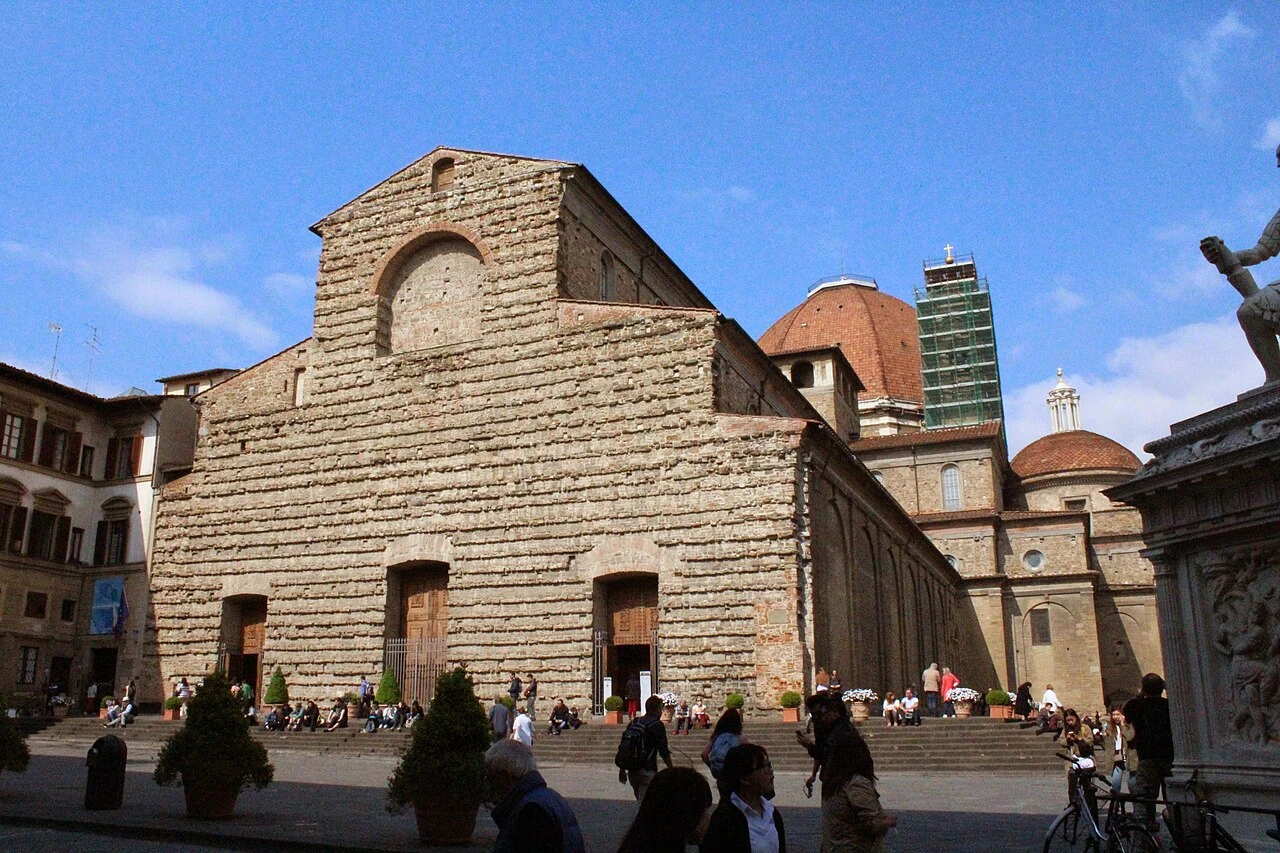
Florence
Basilica di San Lorenzo
Content & sources
Nelson Pérez · CC BY-SA 3.0