Languages
15会津若松城 Audio Guide
会津若松城 is a landmark in Aizuwakamatsu, Japan. Explore it with Stanza's GPS-triggered offline audio guide — available in 15 languages.
Quick Facts
15
Stops
15
Languages
100%
Offline
📍 Aizuwakamatsu, Japan · 37.4878°N, 139.9297°E
About 会津若松城
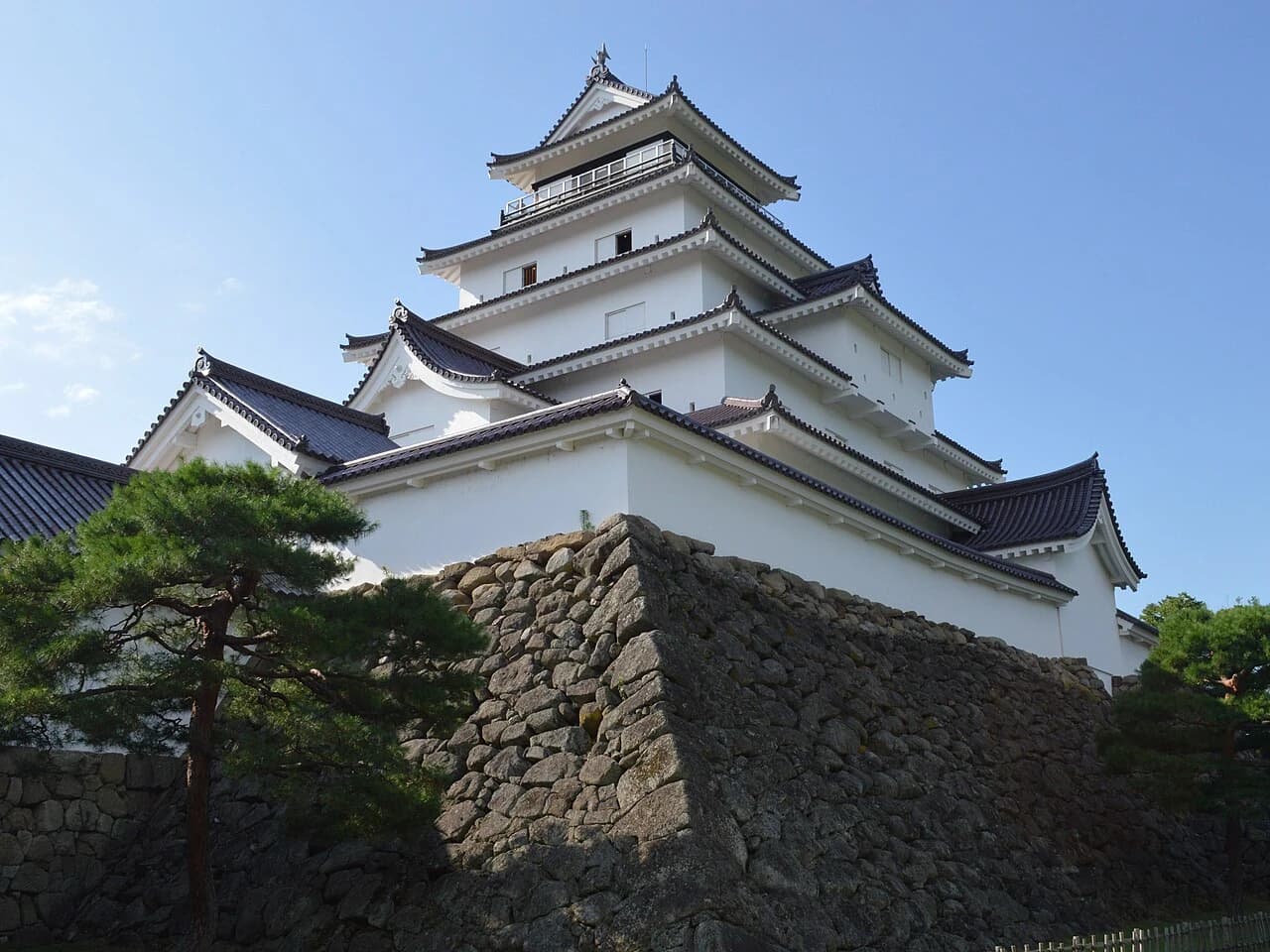
Aizuwakamatsu Castle, also known as Tsuruga Castle, is a historic Japanese castle located in Fukushima Prefecture. It served as a strategic defensive stronghold and a significant administrative center during the Edo period.
会津若松城 is also known as Tsuruga Castle, Aizu-Wakamatsu Castle, Wakamatsu Castle, Kurokawa Castle, and 7 other names in various languages.
This self-guided audio tour features 15 narrated stops organized across 7 sections. As a castle, 会津若松城 offers a unique cultural experience in the heart of Aizuwakamatsu, Japan.
The Stanza audio guide is available in 15 languages and works entirely offline — download the complete tour including audio narration, maps, and images before your visit. As you walk through 会津若松城, GPS-triggered narration plays automatically at each point of interest.
Last updated:
What you will hear
The Iron Gate and Main Entrance
Establishes the entrance experience using the primary gate and a wide establishing shot of the castle's approach.
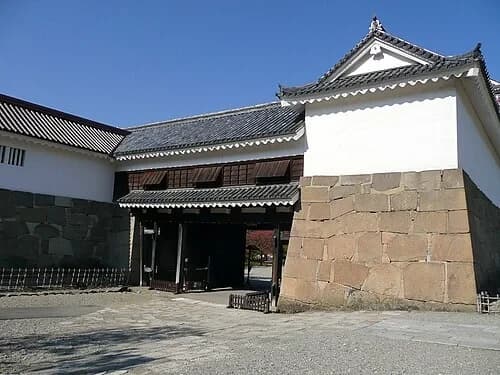
The Iron Gate
Welcome to one of Japan’s most resilient fortresses. Known officially as Aizuwakamatsu Castle, locals often call it Tsuruga-jo, which translates to "Crane Castle." This nickname comes from its elegant white walls that resemble a crane in flight. However, the gate you see here was built for strength, not beauty. Known as the Iron Gate, it features massive timber beams and doors heavily reinforced with iron plating to withstand battering rams and fire. Notice the layout around you; it is a "Masugata," a square-shaped defensive enclosure. This design was a clever trap. If an enemy managed to break through the outer gate, they would find themselves confined in this narrow stone-walled courtyard. While they struggled to breach the inner Iron Gate, defenders on the upper levels would rain down arrows and stones from above. This created a lethal kill zone that made the castle nearly impregnable for centuries. The heavy iron doors were meticulously maintained, serving as the final, hardened barrier to the inner sanctum of the clan's power. It remains a striking example of the sheer physical force required to secure a regional capital in feudal Japan.
Massive Stone Ramparts and Moats
Focuses on the engineering and defense systems, highlighting the original stone walls mentioned in the research essentials.
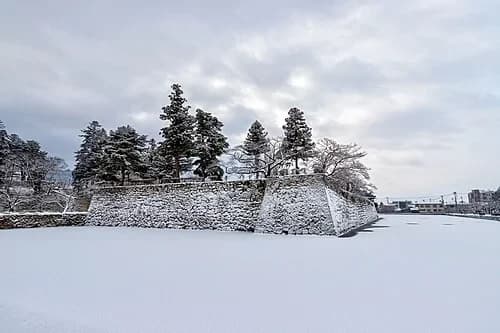
Stone Ramparts in Winter
The sheer scale of this 23-hectare complex is best appreciated by looking at the expansive system of moats that encircle the walls. In this part of Japan, the winter climate is famously severe, with heavy snow and freezing temperatures. The castle architects turned this environmental challenge into a tactical advantage. During the cold months, the moats were not just barriers of water; they became icy obstacles that were difficult and noisy to cross. Furthermore, even on the darkest nights, the water provided a highly reflective surface. Any scout or saboteur attempting to approach the stone walls would be silhouetted against the dark water or ice, making it nearly impossible for them to move unseen by sentries stationed above. This natural surveillance system worked in tandem with the high stone ramparts to ensure that no one could breach the perimeter without being detected. The wide moats also served a practical purpose during the rest of the year, providing a clear line of sight for defenders and preventing enemies from easily using ladders or siege engines against the main foundations. The distance between the outer banks and the stone walls was carefully measured to stay within the range of defending archers.
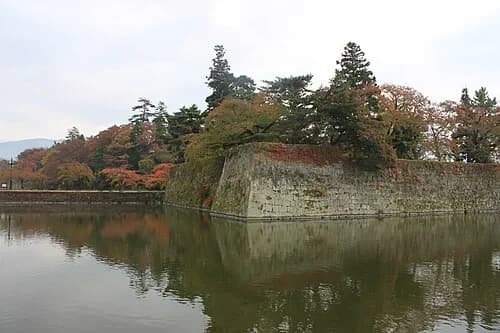
The Ancient Foundations
While many of the wooden buildings above are modern reconstructions, the massive stone walls beneath your feet are the original 17th-century foundations. These granite blocks have endured centuries of weather, conflict, and natural disasters. If you look closely at the arrangement of the stones, you can see the "Nozura-zumi" technique, which translates to "natural stone piling." Instead of cutting stones into perfect, uniform blocks, the builders used them in their natural, irregular shapes. They carefully selected each piece to fit snugly against its neighbors, filling smaller gaps with pebbles. This method might look less refined than later styles, but it was incredibly effective. Because the stones are not rigidly joined, the wall possesses a degree of flexibility. During an earthquake, the stones can shift and settle without the entire structure cracking or collapsing. This seismic resilience is one of the reasons these foundations remain standing today. The steep, inward-curving slope of the walls, known as "musha-gaeshi," was also designed to be impossible for even the most skilled samurai to climb, as the angle becomes steeper toward the top. You can see how the largest, heaviest stones are placed at the corners to provide maximum structural support.
The Tenshu and the Red-Tiled Roof
Features the signature red tiles and the main keep tower, using the verified POI image as the anchor.
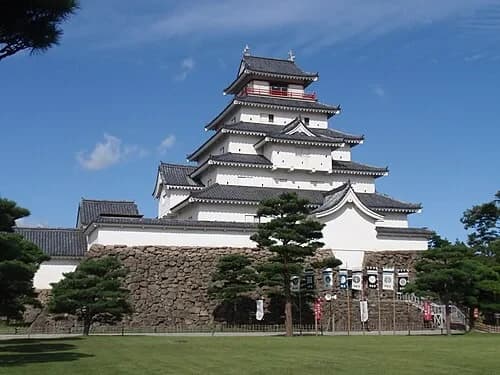
Wakamatsu Castle Tower
The most striking feature of the main tower is its roof, which makes it the only castle in Japan to sport red tiles. While most Japanese castles use standard grey or black tiles, the Aizu clan opted for these specialized red clay tiles. During a major restoration completed in 2011, historians and craftsmen worked together to bring back this specific Edo-period aesthetic. These tiles were not chosen just for their color; they were a technological necessity. In the 17th century, builders discovered that regular tiles would absorb water, freeze, and then crack under the pressure of Fukushima’s heavy snow. To solve this, the tiles were glazed with a lead-based material before firing. This created a durable, water-resistant finish that could withstand the thermal expansion and contraction caused by the freezing winters. The resulting deep red hue became a signature of the castle’s resilience and unique identity. From a distance, the contrast between the dark red roof and the brilliant white walls is unmistakable, serving as a functional piece of engineering that also became an iconic symbol of the region’s architectural ingenuity. The restoration involved firing thousands of individual tiles to ensure the color was perfectly consistent across all five levels of the tower.
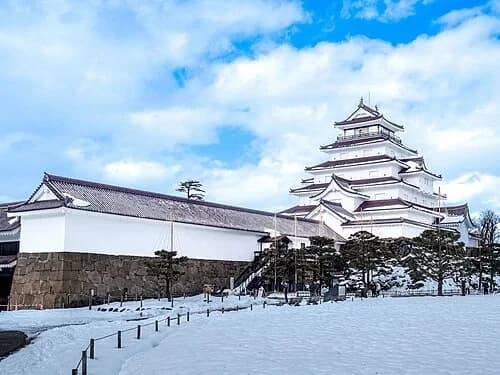
The Five-Story Keep
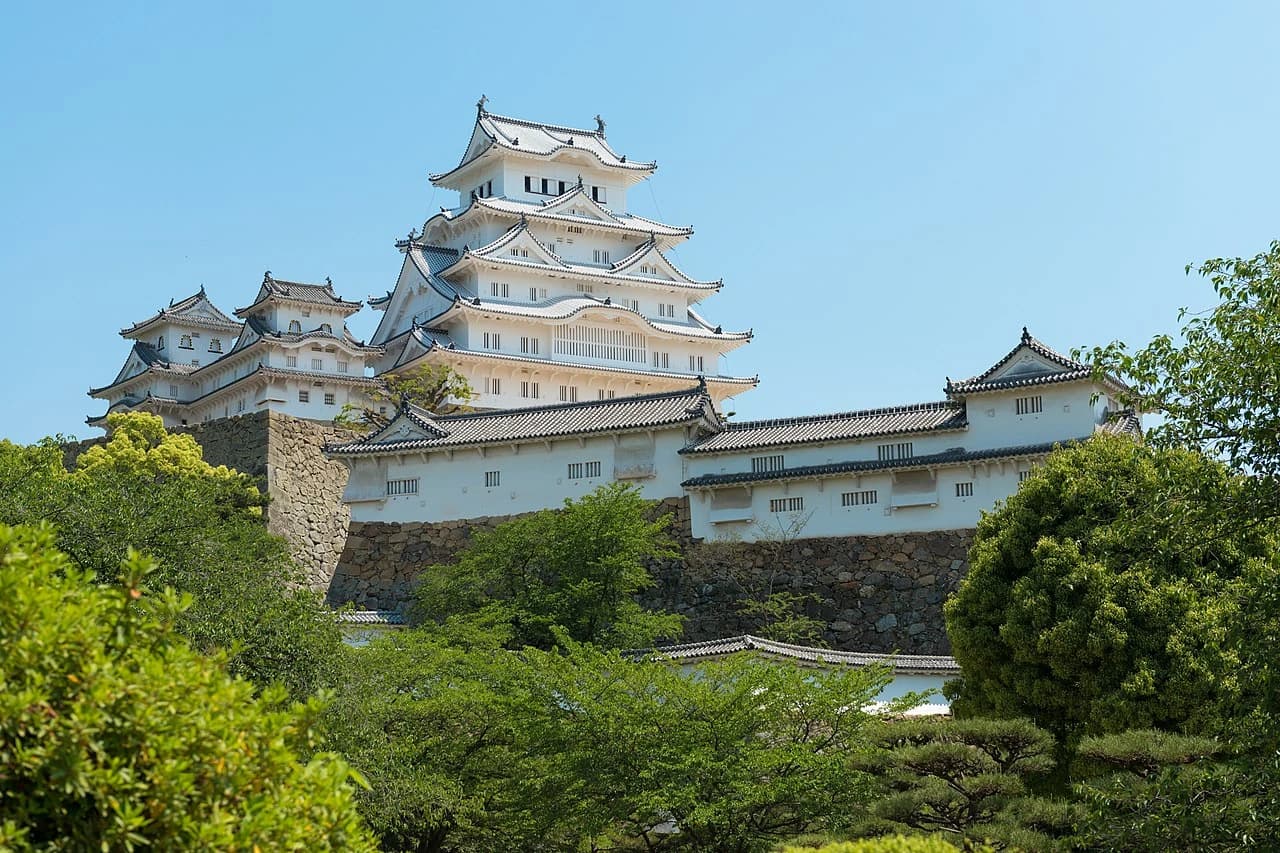
Reaching a height of approximately 30 meters, the main keep is a towering presence that dominates the local landscape. The current structure was completed in 1965, following the original floor plans to ensure historical accuracy in its outward appearance. While the exterior perfectly mimics the wood and plaster aesthetic of the 17th century, the internal structure was built using reinforced concrete. This choice was made to ensure the building’s longevity and safety, allowing it to function as a modern museum that houses thousands of artifacts. Architects carefully studied historical records and old photographs to recreate the complex rooflines and the specific proportions of the five distinct levels. Each story narrows slightly as it rises, a classic design that provides stability while creating an elegant, tapering profile. The reconstruction was a massive public effort, reflecting the deep pride the local community takes in their history. Inside, the floors are now filled with exhibits that detail the life of the samurai and the various lords who once looked out from these very heights across the Aizu basin. This five-story silhouette is what allows the castle to be seen from almost anywhere in the surrounding valley, standing as a landmark of regional pride.
The Siege of 1868
Covers the Boshin War history using the verified artwork depicting the battle and a regional overview.
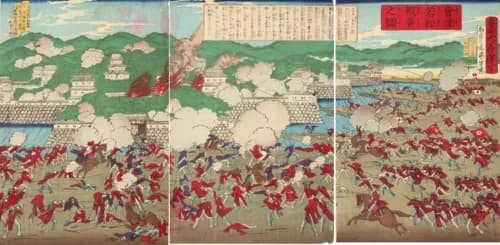
Siege of Aizu Castle
This artwork provides a window into the most dramatic chapter of the castle’s history: the Siege of Aizu during the Boshin War of 1868. For an entire month, the castle was bombarded by the modernized forces of the new Meiji government. In the print, you can see the sky filled with the dark smoke of cannon fire and the ground covered with soldiers in distinctive red uniforms, symbolizing the shifting tides of power in Japan. This conflict marked the violent conclusion of the 250-year-old Tokugawa Shogunate. The Aizu clan remained fiercely loyal to the Shogun even after his defeat, turning their home into the last major bastion of the old order. Inside the walls, thousands of people—including samurai, their families, and even children—endured the constant shelling. The castle eventually sustained over 2,500 direct hits from artillery. By the time the clan finally surrendered, the elegant white walls were riddled with holes and charred by fire. This ukiyo-e doesn't just show a battle; it records the end of an era, depicting the moment when the traditional samurai world was finally eclipsed by the forces of modern Japanese history. The red-clad troops in the foreground represent the dawn of a new political era for the entire nation.
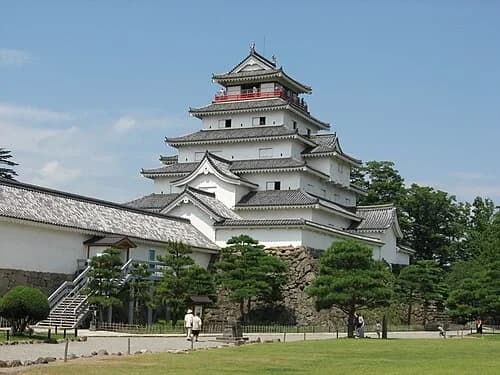
The Inner Bailey
While we often focus on the dramatic battles, the inner bailey was primarily a place of refined daily activity and governance. For generations, the Aizu-Matsudaira clan ruled from this space, balancing the requirements of military readiness with the complexities of regional administration. The area was once filled with palatial residences where the lord conducted official business and hosted formal ceremonies. It was also the center of education for the children of the elite. Young samurai were trained here not only in swordsmanship and archery but also in classical literature, ethics, and calligraphy. This rigorous upbringing was meant to create leaders who were as cultured as they were capable in combat. Life within these walls was governed by strict etiquette and a clear social hierarchy, reflected in the layout of the buildings and the gardens. Even during the peaceful years of the Edo period, the spirit of discipline remained central to the Aizu identity. Walking through this space today, you can imagine the quiet murmurs of officials, the rhythmic sounds of martial arts practice, and the formal processions of the lord’s retinue. The contrast between this orderly life and the eventual violence of the 1868 siege highlights the dual nature of samurai existence.
Samurai Legacy: The Castle Museum
Explores the artifacts found within the keep's museum, specifically the iconic roof ornaments.
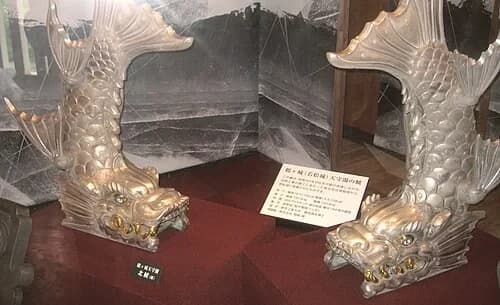
The Silver Guardian Fish
On display here are the 'Shachihoko,' the legendary creatures that once stood watch at the very top of the castle’s roof. These mythical beings are a hybrid, possessing the ferocious head of a tiger and the scaly body of a carp. In Japanese folklore, it was believed that Shachihoko could summon rain, making them essential protective talismans for wooden structures that were constantly at risk of fire. Beyond their spiritual function, they were also symbols of the lord’s authority and the castle's prestige. These particular examples are finished in silver, a rare and expensive choice that reflected the wealth and status of the Aizu domain. When the castle was at its height, these shimmering guardians would catch the sunlight, visible from miles away as they perched on either end of the main ridgepole. Typically, they are installed in pairs, often representing male and female counterparts. While they appear ornamental, their presence was a serious matter of architectural safety and spiritual defense. Today, they allow you to see the fine detail of the scales and the aggressive facial expressions that were meant to ward off evil spirits and physical disasters alike. These silver ornaments were specifically donated to restore the visual grandeur that the original castle was known for.
The Observation Gallery
Provides the strategic panoramic view from the top of the keep, as recommended in the enriching story essentials.
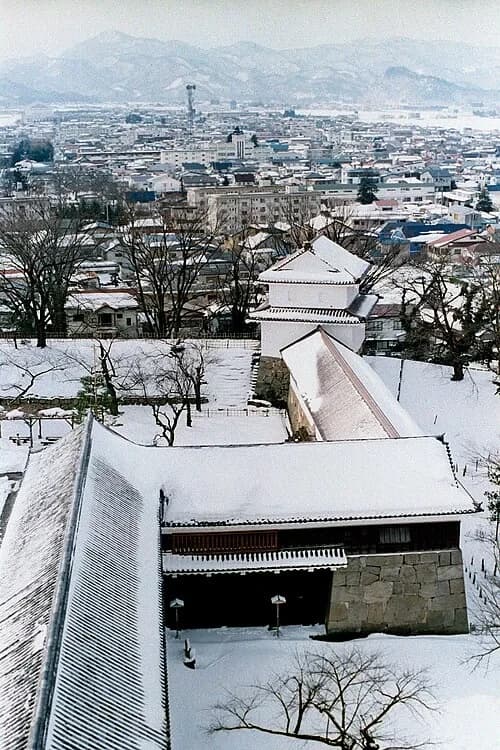
The Observation Gallery
Looking out from the top floor of the main keep, the strategic importance of this location becomes immediately clear. You are standing at the center of the Aizu basin, a wide plain completely ringed by mountains. This natural bowl provided the castle with a primary layer of defense, as any approaching army had to navigate difficult mountain passes before reaching the walls. Toward the east, you can see the hills where Meiji government forces positioned their modern Armstrong cannons during the siege of 1868. From those elevated positions, they were able to rain shells down onto the castle with devastating accuracy, eventually forcing the surrender of the Aizu defenders. Today, the view is much more peaceful, offering a panoramic look at the city of Aizuwakamatsu and the surrounding peaks that change colors with the seasons. You can see how the city grew around the castle, with streets originally laid out in a deliberate pattern to confuse invaders. This gallery was the ultimate command post, where the lords could survey their entire domain and monitor every movement on the roads leading into their territory. On a clear day, the snow-capped peaks in the distance provide a dramatic backdrop to the sprawl of the modern city below.
Rinkaku Tea House
Highlights the refined samurai culture through the restored tea house and its garden.
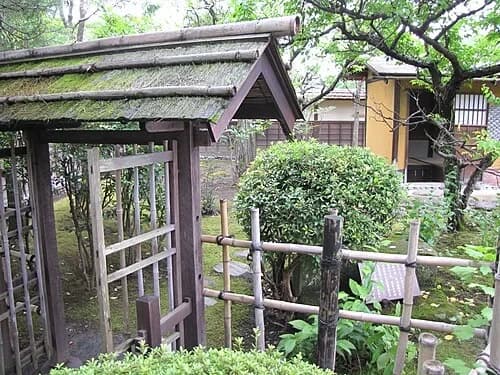
Rinkaku Tea House Gate
Passing through this gate brings you to the Rinkaku Tea House, a site deeply connected to the history of Japanese culture. It was built by Shoan, the son of Sen no Rikyu, who is widely considered the father of the modern Japanese tea ceremony. Following his father's tragic death, Shoan found refuge and patronage here under the castle lord, Gamō Ujisato. For high-ranking samurai, the "Way of Tea" was far more than a simple social gathering. It was an essential spiritual and intellectual pursuit. In the quiet, minimalist environment of the tea room, warriors could set aside their swords and find a moment of profound peace and clarity amidst the chaos of political conflict and military life. The ceremony emphasized harmony, respect, purity, and tranquility—values that provided a necessary counterweight to the violence of the era. The tea house itself was designed to be understated and rustic, focusing the participants' attention on the present moment and the beauty of simple objects. This legacy of cultural patronage highlights how the castle served not only as a military fortress but also as a vital center for the development of Japanese artistic traditions. Shoan’s presence here was a significant mark of prestige for the Aizu domain.
Want to hear the rest?
Download the Stanza app to unlock all 15 stops and full GPS-guided navigation.
Frequently Asked Questions
How long does the 会津若松城 audio tour take?
The 会津若松城 audio guide includes 15 narrated stops. Most visitors spend 45 minutes to 1.5 hours exploring the complete tour, though you can listen at your own pace and skip or revisit any stop.
Is the 会津若松城 audio guide available in my language?
Stanza supports 15 languages: English, Spanish, French, German, Italian, Portuguese, Russian, Japanese, Chinese, Korean, Arabic, Hindi, Polish, Dutch, Hebrew. Check the guide in the app to confirm the languages currently available for this tour.
Can I use the audio guide offline at 会津若松城?
Yes! Download the complete 会津若松城 tour — including all audio, maps, and images — before your visit. The Stanza app works completely offline, so you don't need WiFi or mobile data at the venue.
How much does the 会津若松城 audio guide cost?
The Stanza app is free to download. Free and paid audio guides are available; current prices are shown in the app.
How do I use the Stanza audio guide at 会津若松城?
Download the free Stanza app, search for "会津若松城", and download the tour. When you arrive at the venue, the app uses GPS to detect your location and automatically plays the relevant narration as you move between points of interest — completely hands-free.
What makes the Stanza audio guide different from other 会津若松城 tours?
Stanza offers GPS-triggered narration that plays automatically as you walk through 会津若松城 — no need to manually select stops. The tour is available in 15 languages, works fully offline, and includes 15 expertly narrated stops with images and historical context.
What other audio guides are available near 会津若松城?
Stanza offers multiple audio guides in Aizuwakamatsu, Japan and nearby areas. After downloading the app, browse the map to discover all available tours near 会津若松城. Each guide can be downloaded for offline use.