Stanza · Audio guide
石見銀山 Audio Guide
A place to remember. A story to take with you.
Iwami Ginzan was an underground silver mine located in the city of Ōda. It was the largest silver mine in Japanese history and remained active for nearly four hundred years.
Download Stanza, then search for “石見銀山”.
About the tour
One guide. Your kind of visit.
Iwami Ginzan was an underground silver mine located in the city of Ōda. It was the largest silver mine in Japanese history and remained active for nearly four hundred years.
Ready when you are.
- 01Get the free Stanza app.
iOS & Android
- 02Find your guide.
“石見銀山”
- 03Download before you go.
Works offline
Audio guide / 14 narrated stops
Inside the guide
Get to know a few of the stories before you go. Open a stop to read more.
01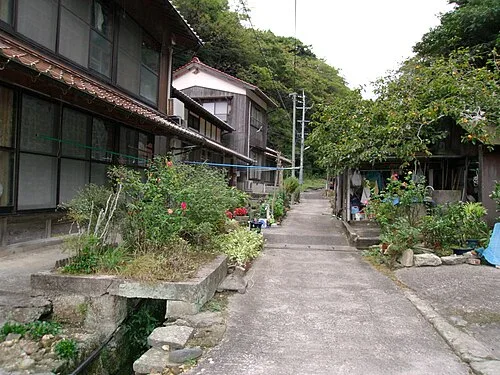 Omori Historic Town and the Global Silver Economy
Village Lane on the Silver Road
Welcome to the Iwami Ginzan Silver Mine, in the mountains of Shimane in western Japan. Over the next stops, this walk traces the lanes, shrines, tunnels and ports of an industry that changed the world economy. The lane here is lined with wooden houses and garden plants, and the ridges above are thick with trees. Nothing hints that this valley once held the largest silver mine in Japanese history. The story begins in 1526, when a merchant named Kamiya Jutei came inland and opened the first workings. An old local chronicle tells of an even earlier find, in 1309, when a lord from Suō was led to the silver by an oracle of the Pole Star. The mine stayed in use for nearly four hundred years.
Listen in the appPhoto: Indiana jo · CC BY-SA 4.0
02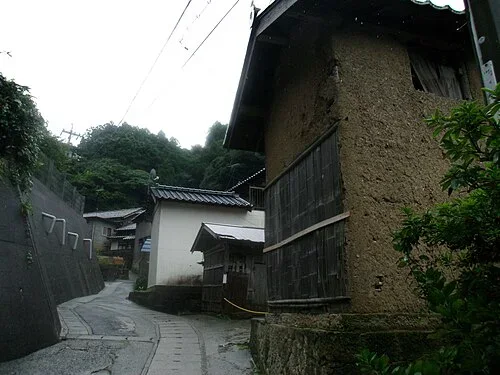 Omori Historic Town and the Global Silver Economy
Earthen-Walled Building on the Tomogaura Road
Earthen walls like these once lined the valley street of Ōmori, the town that grew up around the mine. What makes the place unusual is who lived side by side here. The mine's magistrate had his office in town, wealthy merchant families built their storehouses along the same street, and temple grounds sat between them. In most mining camps those worlds kept apart. Here the mine, the government and the merchants' money all needed each other, so they shared one narrow valley. In 1969 the mine's remains became a national Historic Site, and in 1987 the streets of Ōmori were protected as a preservation district for groups of traditional buildings. Those designations are why the earthen walls, tile roofs and wooden lattices lasted into this century.
Photo: Indiana jo · CC BY-SA 4.0
03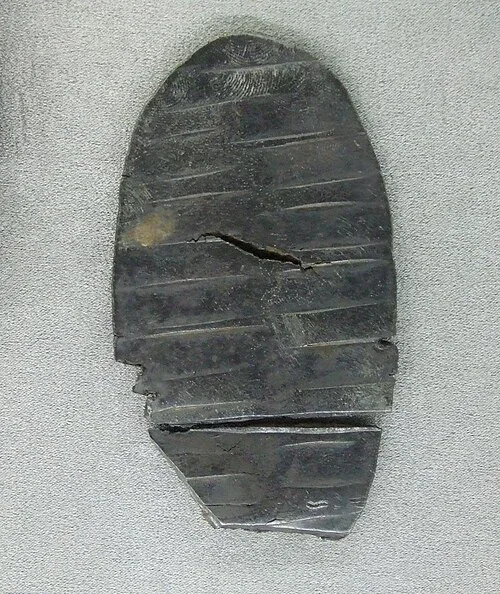 Omori Historic Town and the Global Silver Economy
Sekishu Chogin Silver Bar
A rough oval of dark silver, marked with the stripes of the refiner's blade. Bars like this carried the mountain's wealth out of Japan. The metal from Iwami was so pure that foreign traders trusted it on sight, and it became a brand of its own: Soma Silver, named after Sama, the old village at the mine, a name also spelled Soma. From the seventeenth century, silver from here served as basic currency for trade with China, Portugal and the Netherlands. In Europe and China, people ranked this mine alongside Potosí, the great Spanish colonial silver mountain in what is now Bolivia. At its peak in the early sixteen hundreds, the mine yielded about thirty-eight tons of silver a year. Japan as a whole then produced roughly two hundred tons annually. That made Japan the source of about one third of all the silver mined in the world.
Listen in the appPhoto: As6022014 · CC BY-SA 3.0
04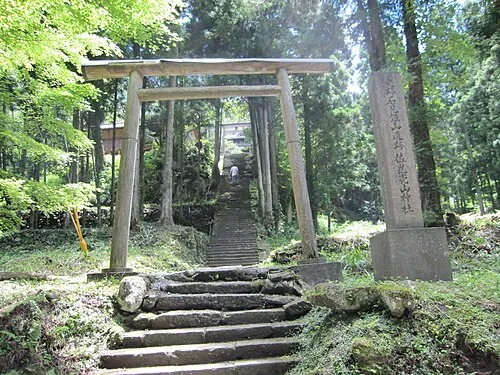 Sacred Mining Realm and Valley Excavations
Sahimeyama Shrine
Before the mine was anything else, the mountain was a home of gods. The long stone stair of Sahimeyama Shrine climbs through old trees toward the mining ground above. People who lived from the silver called the shrine simply Sanjin-san, the mountain god. Across Japan's mining country, workers asked the mountain deity for protection before going underground, and here too the shrine stood as the spiritual centre of the mining mountain. One account traces its founding to 1434, when the Ōuchi clan, then lords of the region, enshrined a deity of metal and mountains at the shogun's command. Whatever its exact beginnings, the stair leads straight toward the old workings, faith and industry sharing the same slope.
Listen in the appHoriuchi · Copyrighted free use
05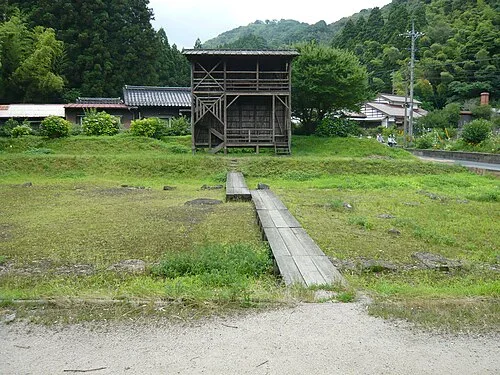 Sacred Mining Realm and Valley Excavations
Shimogawara Former Refinery Site
Raw ore from these veins was not pure silver. Turning it into the metal traders trusted took a technique that arrived from overseas. In 1533 the merchant Kamiya Jutei brought two refiners, Sotan and Keiju, from the port city of Hakata. They introduced the Haifuki-ho method, known in the West as cupellation. The ore was smelted with lead, which absorbed the impurities. The molten metal was then poured onto a hearth of bone ash, which soaked the lead back up and left the silver behind. The result was silver of a purity the region had never produced before. This grassy terrace at the foot of the mines, with its wooden platform and boardwalk, marks where that refining work was done.
Listen in the appPhoto: Opqr · CC BY-SA 3.0
06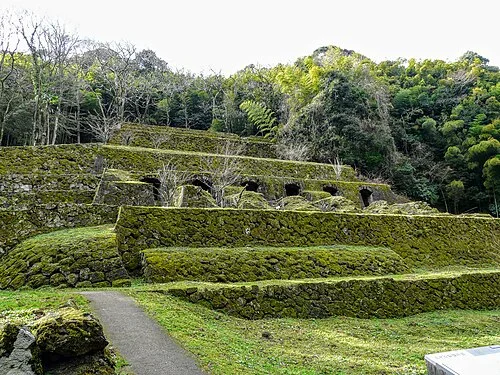 Shimizudani Refinery Industrial Ruins
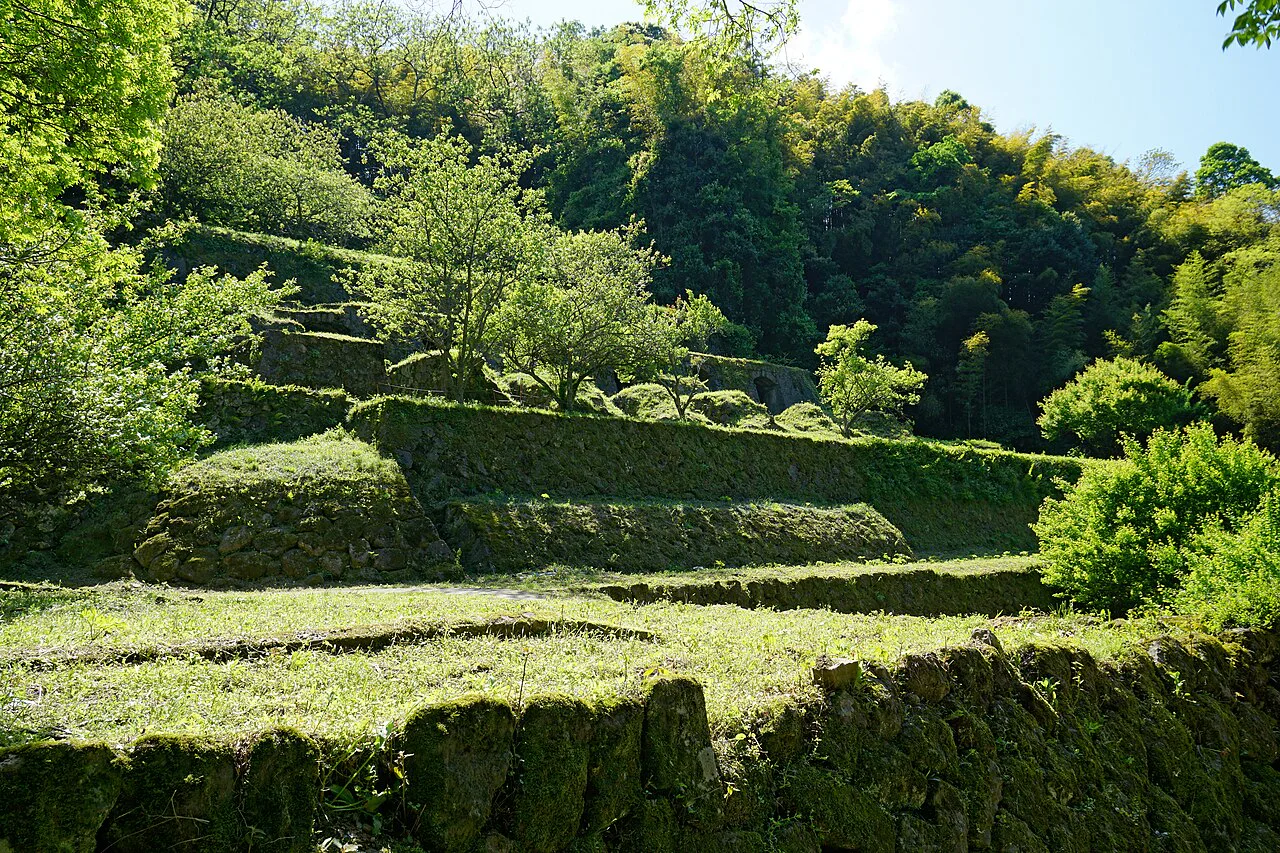
Shimizudani Refinery Ruins: the Stepped Terraces
The wide stone terraces of Shimizudani belong to the last chapter of the mine. In July 1866 the shogunate's rule over this valley came to an end. Armies from the Chōshū domain were advancing through the province, and the last magistrate of Ōmori, Nabeta Saburōemon, slipped away by night with his officials and made for Kurashiki. After the shogunate came a new government, and in 1868 it allowed the mine to be sold into private hands. A man named Tanaka Gitarō took the rights, but the earthquake of 1872 damaged the mine and work stopped for a time. Then, in 1886, the Fujita company of Osaka began a fresh attempt. It moved its mining offices and facilities from Ōmori to the Eikyū mine at Kojitani. By now silver from Iwami could no longer compete with the great mines opening elsewhere in the world, and output fell year by year. A collapse in the price of copper and worsening conditions underground finished the effort, and the mine closed in 1923.
Listen in the appPhoto: Naokijp · CC BY-SA 4.0
07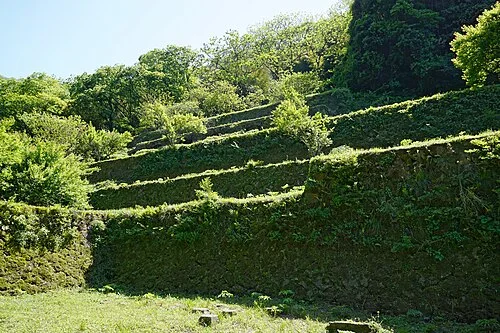 Shimizudani Refinery Industrial Ruins
Shimizudani Terraces Reclaimed by the Forest
Silver was already thin in the mountain long before the end. The best ore was used up in the Edo period, and later miners turned to the deep, permanent deposits of copper-bearing ore. Copper, not silver, became the main product of these veins. The mine had one more life ahead of it. In 1941, with Japan at war and copper needed for munitions, work began again to dig it out at home. Two years later, in 1943, floods poured into the tunnels and drowned the workings, and this time the mine was finished for good. The mining rights belonged to the DOWA company, whose engineers drilled test holes around the Ōkubo tunnel and found no vein worth the cost of digging, so nothing more was mined. In 2006 the rights were handed over to Shimane Prefecture. Meanwhile the refinery terraces had been left to the trees, and moss and roots have been working at the stone walls ever since.
Listen in the appPhoto: 663highland · CC BY-SA 4.0
08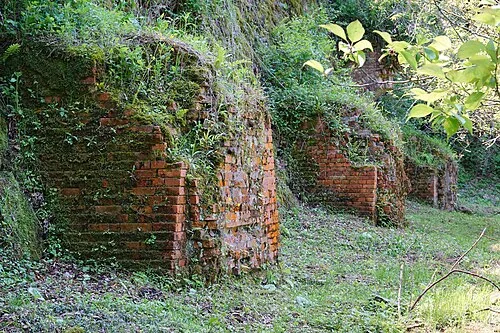 Shimizudani Refinery Industrial Ruins
Clean Air for the Miners
The red-brick bases here carried the smoke flues of the Fujita company's works, fired brick set among the stone of the terraces. Foul air was a danger to the men who worked underground on this mountain. In 1853 a new magistrate arrived, the fifty-sixth to hold the post, named Yashiro Masunosuke. He asked a herbal doctor from Kasaoka, Nakamura Kōun, to find out why miners fell sick. Nakamura came in 1855 with a Dutch-trained physician, Miya Taichū, and stayed until 1858. Their book set out the causes of the miners' illness and the remedy: ventilation, with ventilation pipes driven into the workings. It also described a face mask, the Fukumen, or lucky mask, kneaded with plum pulp. Plum trees had been planted around the mining town since the silver days, and they still mark its streets. The magistrate reported the book to Edo in 1857, and it was passed on to other mines, including Sado.
Listen in the appPhoto: 663highland · CC BY-SA 4.0
09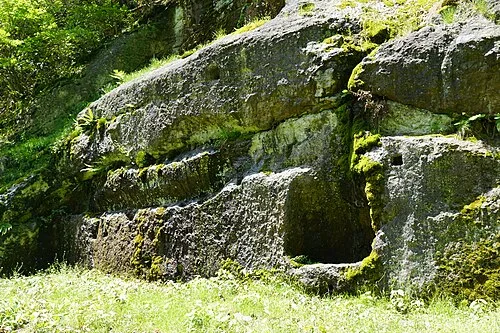 Subterranean Mine Tunnels: Kamaya and Ryugenji Mabu
Kamaya Mabu: Rock-Cut Mine Openings
The mountain was never dug from one great pit. Surveys of the mining area record around six hundred separate pits and shafts. Each one, called a mabu, is a tunnel driven straight into the ore vein. The mossy rock face here was cut open by hand, chisel by chisel, to reach the vein where it ran. Miners worked horizontally into the mountain rather than digging straight down. That choice shaped everything: no open scars across the hillsides, no great headframes, just quiet openings in the rock, hidden among the trees.
Listen in the appPhoto: 663highland · CC BY-SA 4.0
10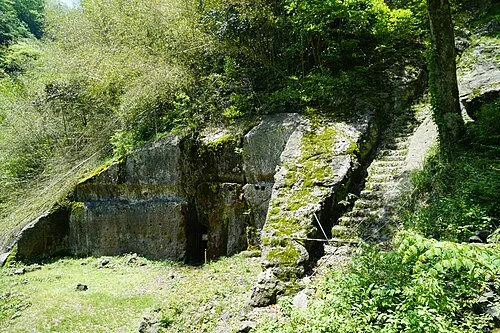 Subterranean Mine Tunnels: Kamaya and Ryugenji Mabu
Kamaya Mabu Entrance and Guarded Mountain
The silver of this mountain brought warlords to it. The mine was contested fiercely by feudal lords for decades. The fight ended in 1600, when Tokugawa Ieyasu's victory at the Battle of Sekigahara left the shogunate in control. Ieyasu sent the magistrate Okubo Nagayasu to take possession, and the mine became shogunate property. The whole mining zone was then secured with fences and barricades of pine trees, and Yamabuki Castle was built at its centre. The stone steps climbing past the shaft mouths belong to that guarded world, a controlled industrial zone rather than a free mining camp.
Listen in the appPhoto: 663highland · CC BY-SA 4.0
- 11
Inside the Ryugenji Mabu Tunnel
Inside the Ryugenji Mabu: chisel marks, wet stone and cut drainage channels in a tunnel open to visitors year-round.
- 12
The Ginzan Kaido Yunotsu-Okidomari Road
The stone-paved mountain highways that carried refined silver down to three ports on the Sea of Japan.
- 13
Mossy Steps on the Tomogaura Road
How controlled logging saved the forest, how the first UNESCO review said no, and how a one-hundred-and-ten-page rebuttal changed the verdict.
- 14
The Valley of the Silver Mountain: Closing View
The closing view over the valley, where the whole system from mine to sea can still be read on the ground.
石見銀山
Frequently asked questions
How much does the guide cost?
Free app download. Listed guide price: $1.99. Guide price shown in the app. Audio guide only. Venue admission is separate.
Can I listen without internet?
Yes. Download the guide’s audio, images, and maps in the app before your visit. Your downloaded content is then available offline.
Can I listen in my language?
This audio guide is available in 15 languages, including English.
Do I need to follow a schedule?
No. This is a self-guided experience. Choose your stops, pause whenever you like, and return to a story at your own pace.
At your own pace
Explore 石見銀山.
Download Stanza, then search for “石見銀山”.
Free app download · Guide price shown in the app
Keep exploring
Audio guides — Japan
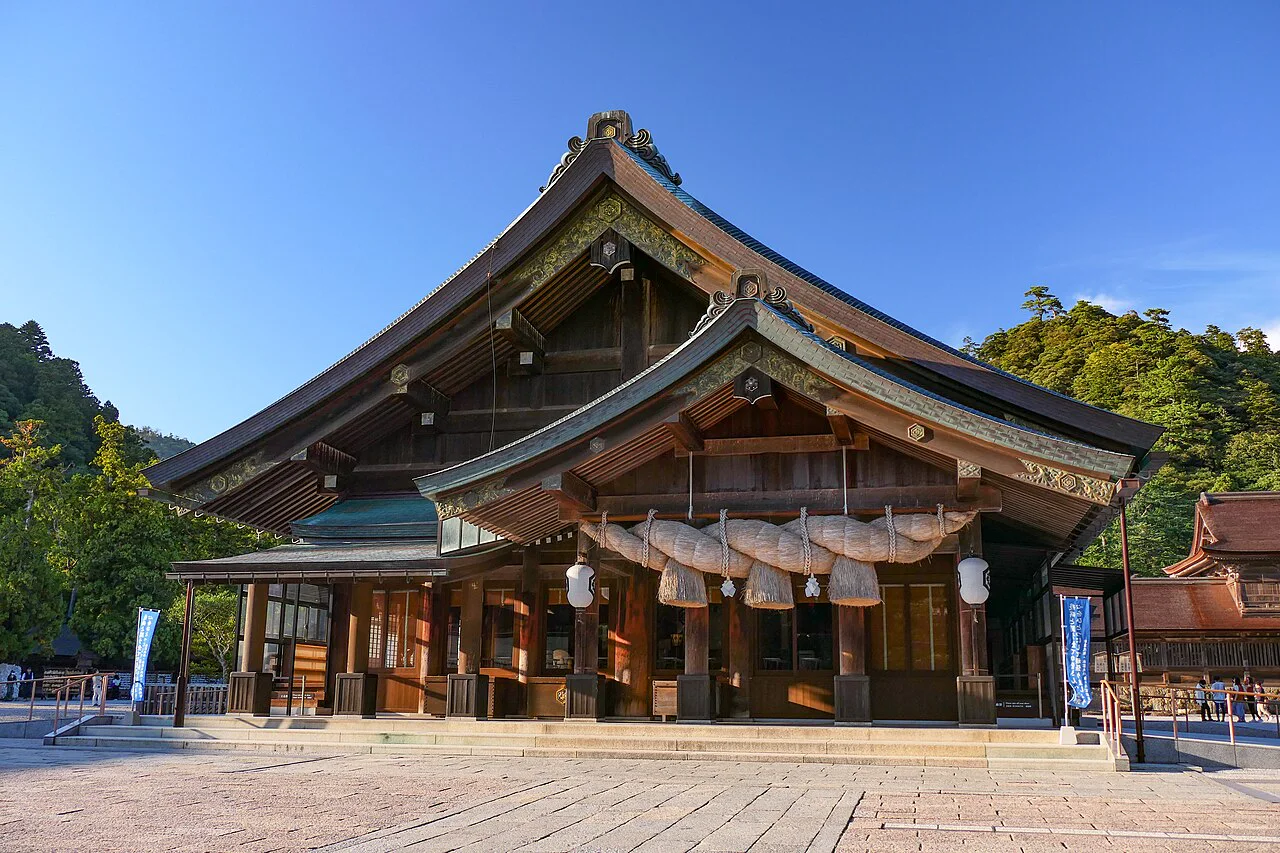
Izumo · 40 km
出雲大社
Content & sources
Photo: MaedaAkihiko · CC BY-SA 4.0
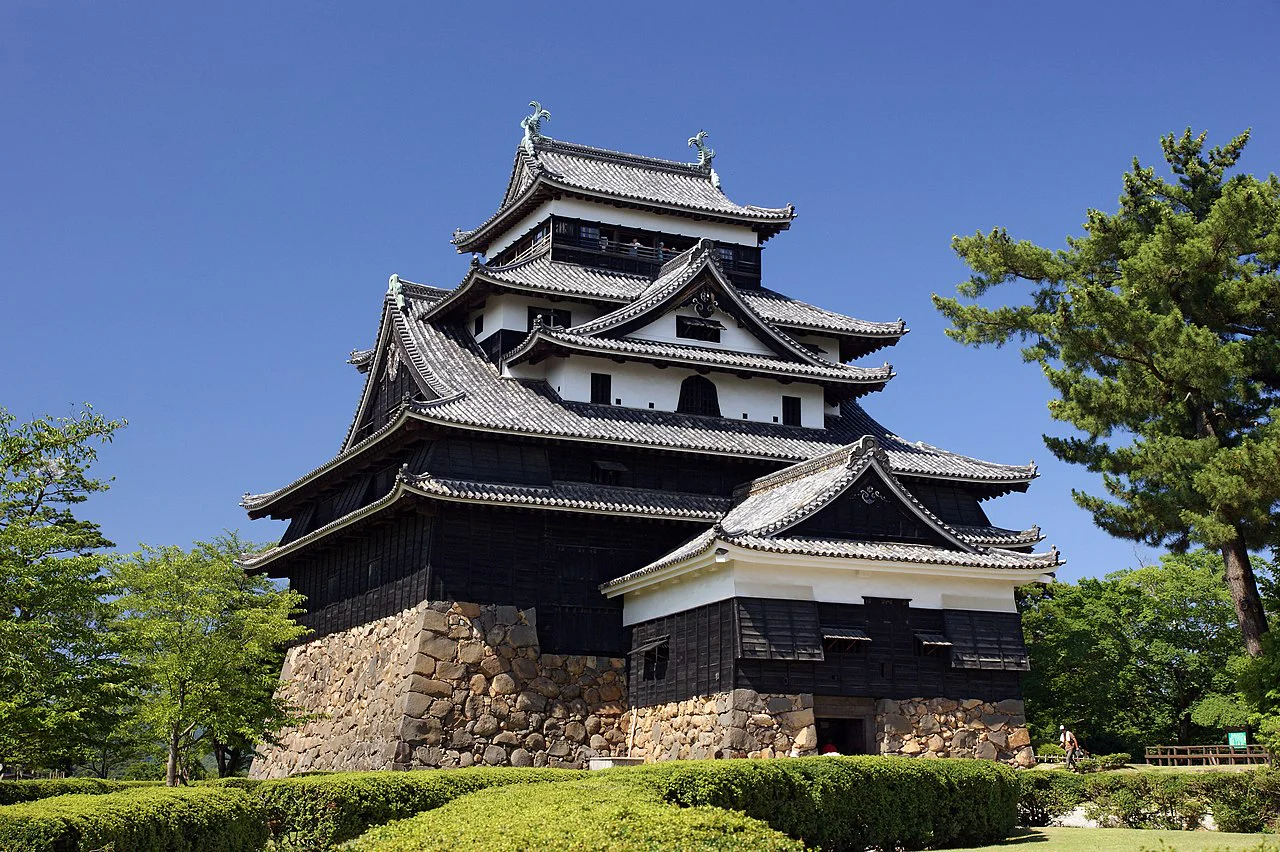
Matsue · 69 km
松江城
Content & sources
Photo: 663highland · CC BY 2.5
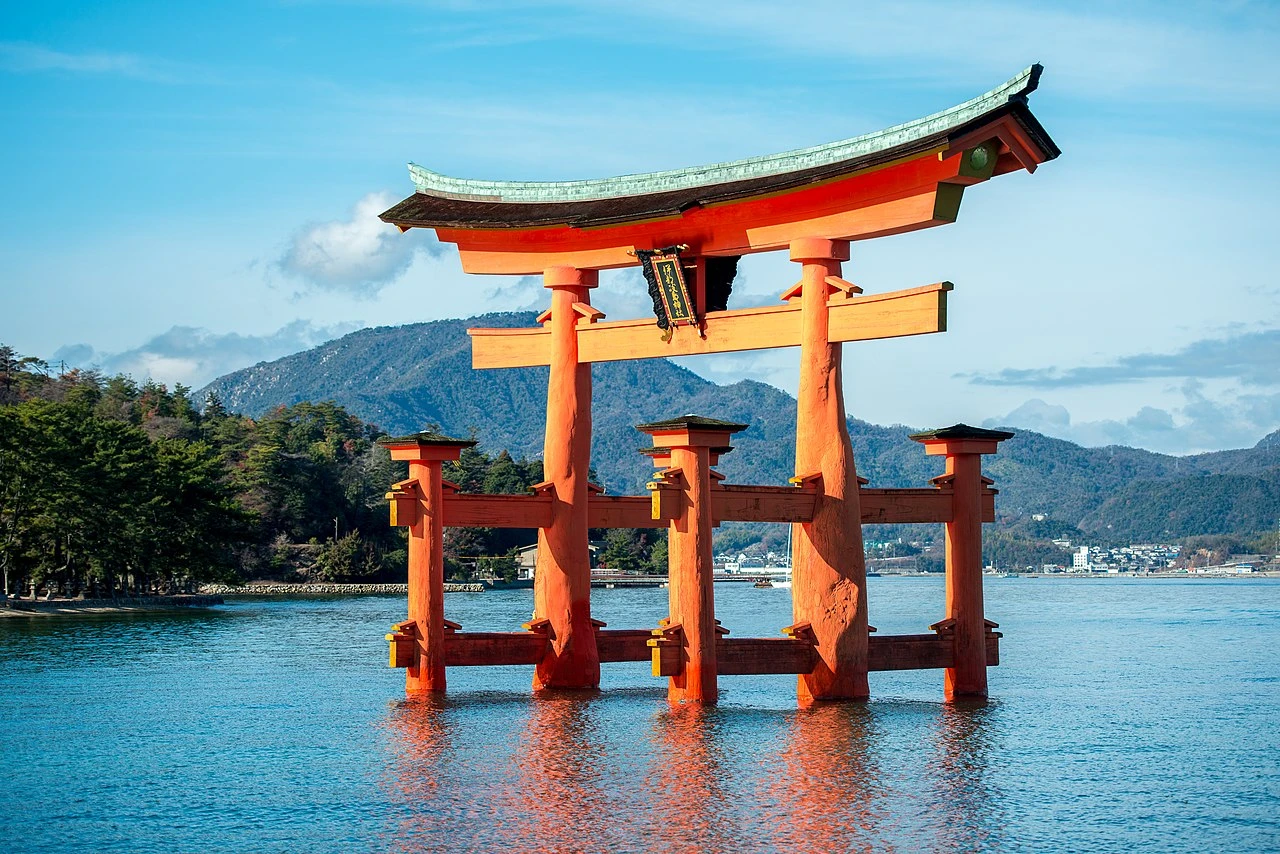
Hatsukaichi · 91 km
Itsukushima Shrine
Content & sources
Photo: JordyMeow · CC BY-SA 3.0
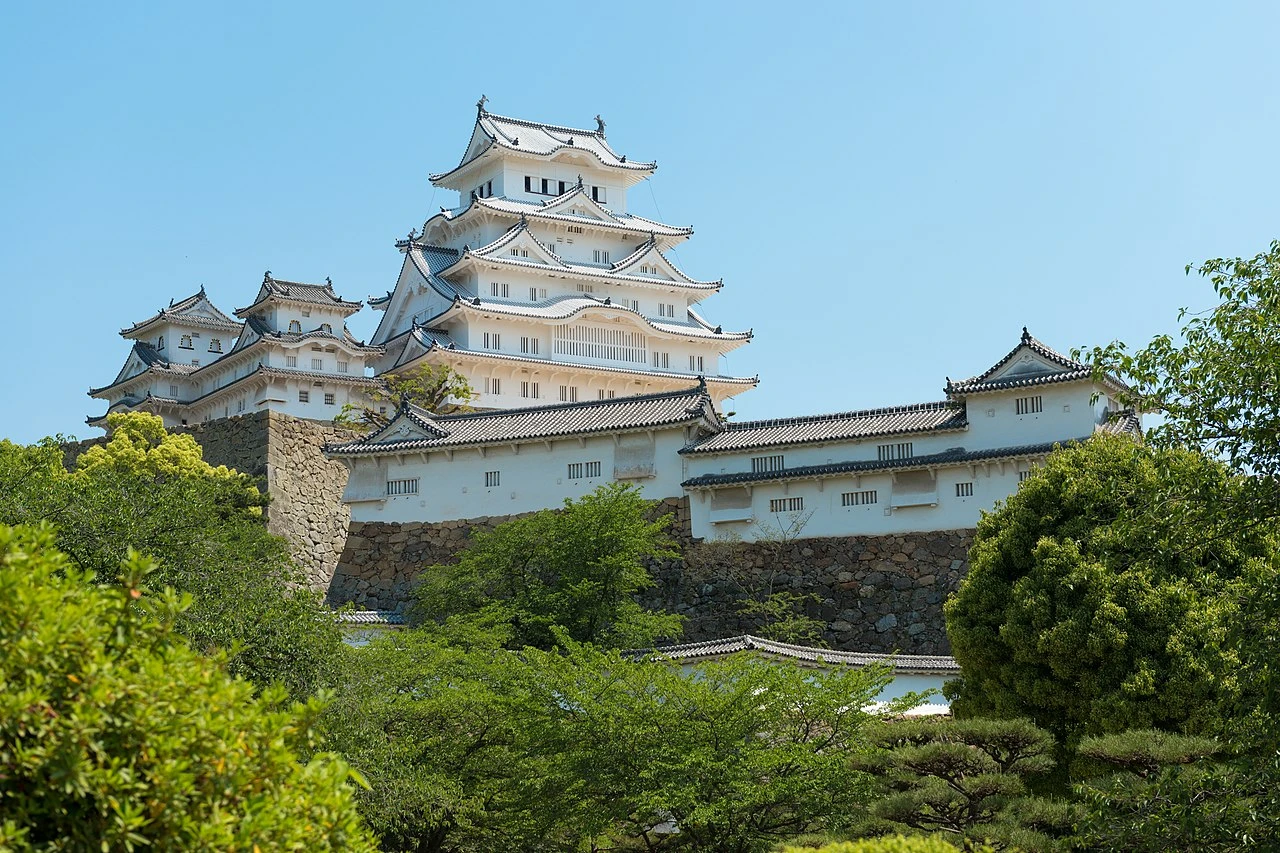
Himeji
Himeji Castle
Content & sources
Niko Kitsakis · CC BY-SA 4.0