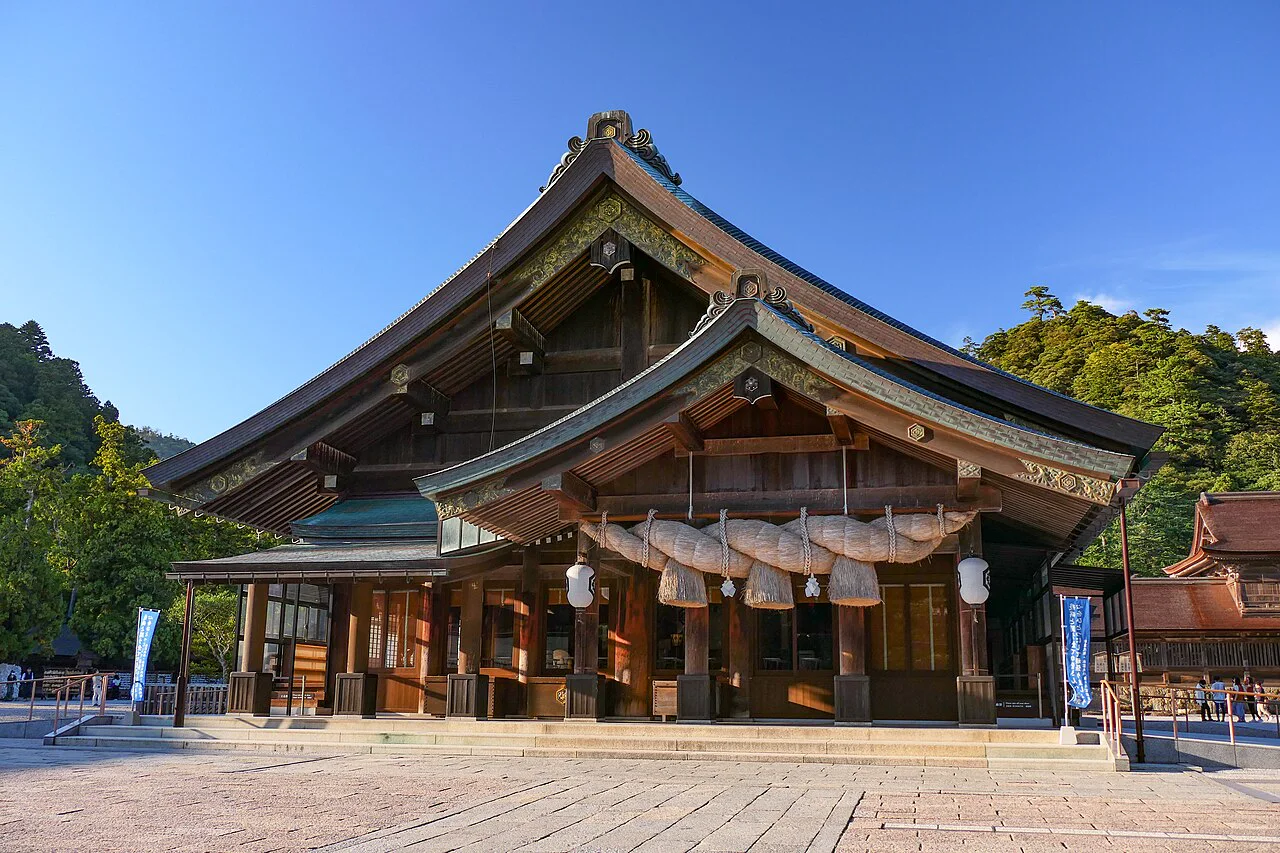
Stanza · Audio guide
出雲大社 Audio Guide
A place to remember. A story to take with you.
Izumo-taisha is one of the most ancient and important Shinto shrines in Japan. It is widely regarded as the oldest Shinto shrine in the country, predating the Ise Shrine.
Download Stanza, then search for “出雲大社”.
About the tour
One guide. Your kind of visit.
Izumo-taisha is one of the most ancient and important Shinto shrines in Japan. It is widely regarded as the oldest Shinto shrine in the country, predating the Ise Shrine.
Ready when you are.
- 01Get the free Stanza app.
iOS & Android
- 02Find your guide.
“出雲大社”
- 03Download before you go.
Works offline
Audio guide / 14 narrated stops
Inside the guide
Get to know a few of the stories before you go. Open a stop to read more.
01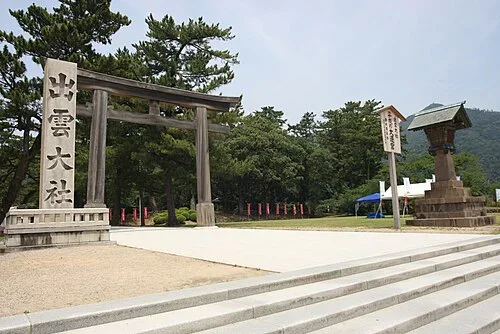 Seidamari Gate and the Sacred Pine Approach
Seidamari Entrance: The Grand Shrine of Izumo
A warm welcome to Izumo Taisha, the Grand Shrine of Izumo, one of the oldest and most important Shinto shrines in Japan. Over these stops we follow the path from this entrance to the god's own sanctuary. The shrine's official name is Izumo Ōyashiro. No record gives the date it was founded, and many regard it as older even than Ise. Its god is Ōkuninushi, credited in the old stories with the shaping of the land. He is guardian of happiness, and above all the deity who binds good relationships, especially marriage. Myth holds that the Japanese islands were once governed from Izumo, the land of the gods. This whole precinct is understood as an earthly palace, raised for a god who gave up rule of the visible land to govern the unseen world and human ties. The tall gate and the stone pillar bearing the shrine's name mark the threshold where that story begins.
Listen in the appiloverjoa · CC BY 3.0
02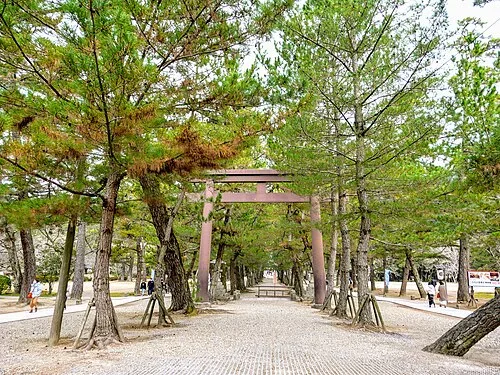 Seidamari Gate and the Sacred Pine Approach
The Pine-Lined Approach
Few approaches to a holy place lead downward. The gravel path here slopes gently away from the everyday world, drawing pilgrims down toward the sanctuary. Rows of tall pines stand close on either side, so the avenue feels like a green corridor. At most shrines the path climbs, as if toward the heavens. Here the descent itself is the preparation, a quieting before the god's palace. In the eighteenth and nineteenth centuries, as travel opened up across Japan, this became one of the country's great pilgrimage destinations. Generations of walkers came down this same avenue between the trees.
Photo: Naokijp · CC BY-SA 4.0
03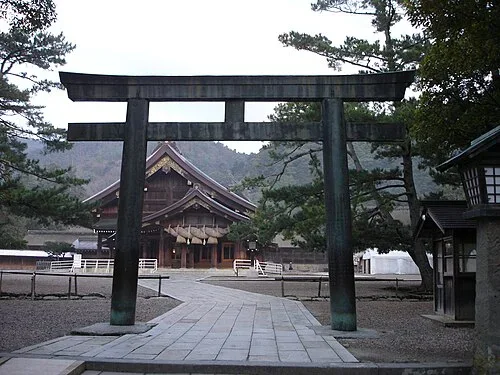 The Copper Torii and Haiden Worship Hall
The Bronze Torii and the Palace of the God
The bronze torii marks the entrance to the god's own compound. Why does a god need a palace? The old chronicles, the Kojiki and the Nihon Shoki, tell how Ōkuninushi granted his country to Ninigi-no-Mikoto, grandson of the sun goddess Amaterasu. Amaterasu was delighted. The Nihon Shoki has her tell him to cast a spell of establishing good relationships over people, to lead them happy lives. She promised a residence with colossal columns and thick, broad planks, built in her own architectural style, and named it Amenohisu-no-miya. The gathered gods then raised the grand palace at the foot of Mount Uga. So this is not a monument to a distant power. It is a home, granted by the sun goddess herself.
Listen in the appPhoto: Oonamochi · CC BY-SA 3.0
04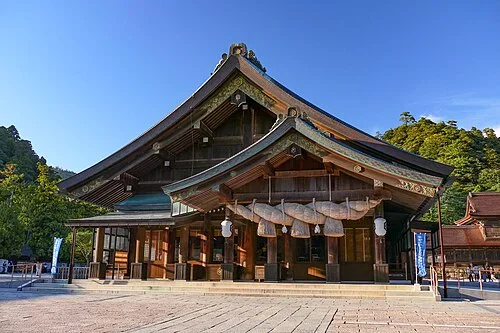 The Copper Torii and Haiden Worship Hall
The Haiden: Worship and the Four Claps
Worship here has its own rhythm. At most shrines, prayer is accompanied by two claps. At Izumo, worshippers clap four times, two pairs, before joining their hands in prayer. The custom belongs to this shrine alone, offered to Ōkuninushi as the deity of good relationships. The hall itself is younger than it looks. Fire destroyed its predecessor in 1953, and the present building was completed in 1959. The reconstruction was designed by Dr. Fukuyama Toshio, a scholar of shrine architecture, with funds raised from devotees across the country. So the hall where visitors pray today is itself an offering, gathered clap by clap from all over Japan.
Listen in the appPhoto: MaedaAkihiko · CC BY-SA 4.0
05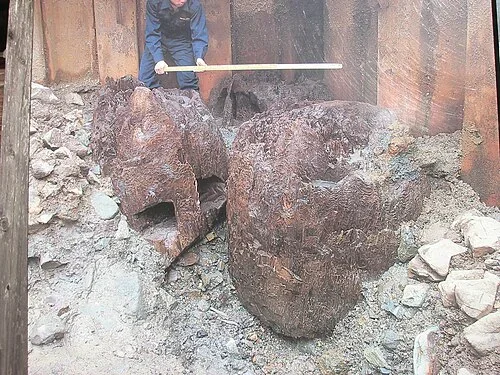 The Unearthed Sky Sanctuary Site
The Uzu-bashira: Pillars of the Ancient Shrine
In the year 2000, digging on the shrine grounds changed the story. Work on a small ceremony office uncovered three enormous cedar trunks, bound together with iron bands into a single giant column. It measures about three and a half meters across. Scholars identified it as an uzu-bashira, a bound pillar, and dated the timber to the twelfth or thirteenth century. For a long time, texts and drawings had described an ancient sanctuary of wildly oversized scale. Suddenly those accounts had physical proof in the soil. The excavated pillars are kept and shown at the shrine today, and the finds from the dig are protected as an Important Cultural Property.
Listen in the appPhoto: Jnn · CC BY-SA 3.0
06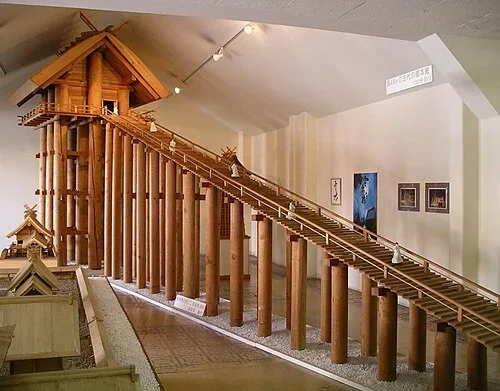 The Unearthed Sky Sanctuary Site
Model of the 48-Meter Sky Sanctuary
This wooden model shows what those pillars may once have held up. A Japanese record compiled around 950 describes the shrine as the tallest building in the land, at roughly 48 meters. That would have exceeded even the Great Buddha Hall of Tōdai-ji, itself said to stand about 45 meters. The wish for such height goes back to early Shinto cosmology. People believed the kami belonged to the world above the human one, to the most majestic parts of nature. A sanctuary of that height may have been an attempt to raise the god above the human realm entirely. The model, kept in a shop just before the main entrance, was built by local college students, working from the unearthed pillars and the old descriptions. Scholars still debate the ancient building's true form, so the model is best heard as an informed guess at an extraordinary structure.
Listen in the appBlue Lotus · CC BY 2.0
07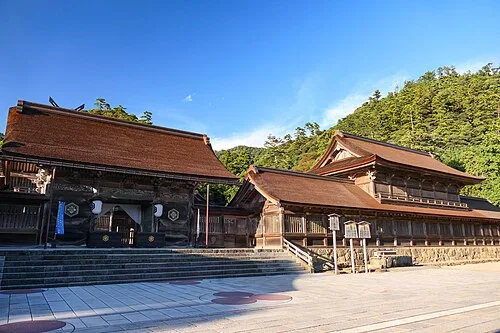 Yatsuashimon Gate and the National Treasure Honden
The Eight-Legged Gate of the Inner Sanctum
The carved wooden gateway with its layered roofs is the Hassokumon, the eight-legged gate. It marks the line where ordinary pilgrims stop and the god's own enclosure begins. Visitors do not pass through. They pray here from outside, bowing toward the sanctuary beyond the sacred fences. The inner sanctuary stays enclosed, and is only glimpsed over the boundary.
Listen in the appPhoto: MaedaAkihiko · CC BY-SA 4.0
08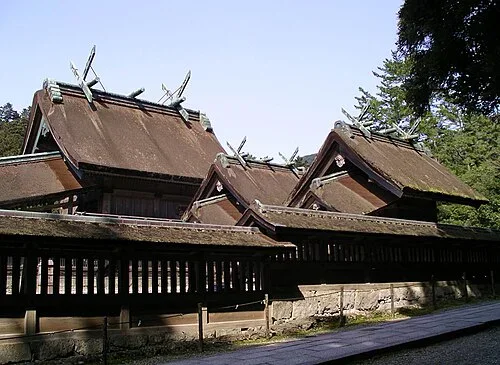 Yatsuashimon Gate and the National Treasure Honden
Taisha-zukuri: Japan's Oldest Shrine Style
The main hall gives its name to an entire architectural style, taisha-zukuri, the oldest style of shrine building in Japan. Its plan is strikingly asymmetrical. Nine support pillars stand inside, dividing the interior into sections and pushing the entrance off center. Most shrines favor symmetry, which makes this layout peculiar. An architecture historian noted that the plan resembles ancient domestic architecture, so the hall was built more like a home than a temple. That suits a god's dwelling, in a tradition where divine and human houses mirror each other. Along the roof ridge stand chigi, the scissor-shaped finials that mark a sacred building. Each rebuilding shifted the outer form with the times, yet the floor plan stayed virtually unchanged.
Listen in the appBlue Lotus · CC BY 2.0
09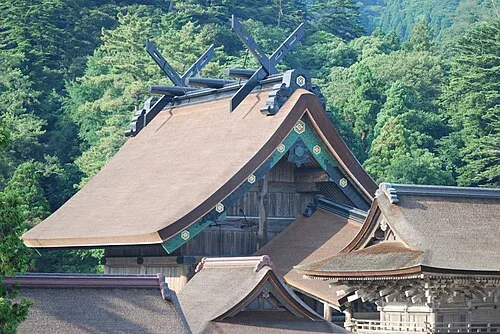 Yatsuashimon Gate and the National Treasure Honden
The National Treasure Honden of 1744
The sanctuary standing here was completed in 1744, in the middle of the Edo period. It rises 24 meters high. The base measures eleven meters square, and the hall counts today as the tallest single shrine sanctuary in Japan. In 1952 the hall and its attached buildings were designated a National Treasure. The shrine also follows an old tradition of periodic rebuilding, called Sengū, every sixty to seventy years. The rebuilding renews the kami's power and passes the traditional carpentry from one generation of builders to the next. The latest round of great repairs finished in 2013, when the god returned to a freshly renewed hall.
Listen in the appPhoto: Matsue · CC BY-SA 4.0
10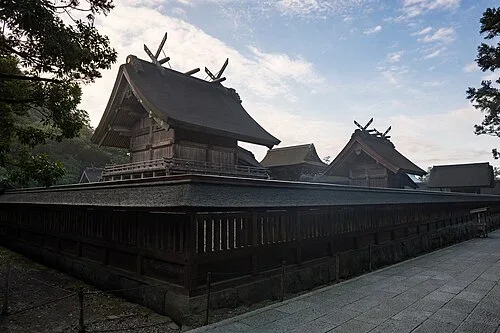 The Sacred Perimeter: West Prayer Wall and Rear Shrines
The West-Facing God and the Side Prayer Wall
From the southern gates, the sanctuary appears to face its worshippers squarely. Inside the inner chamber, though, the divine seat of Ōkuninushi is turned to the west, toward the Sea of Japan. Visitors at the front, then, bow toward the god's profile rather than his gaze. Along the western side of the enclosure there is a quieter spot, where people can pray facing the deity directly. Why the altar faces west, the precinct does not explain. What remains is a lived ritual detail: the god of bonds looks out toward the sea, and those who know the grounds find their own way to meet him.
Listen in the appBig Ben in Japan from Kawasaki, Japan · CC BY-SA 2.0
- 11
Soga-no-yashiro at the Foot of Mount Yakumo
A small shrine at the mountain's foot, dedicated to Ōkuninushi's ancestor Susanoo.
- 12
The Jūku-sha: Lodgings for Eight Million Gods
Each autumn the gods of all Japan gather here, and these long halls are their lodgings.
- 13
The Kaguraden and the House of Senge
A ritual stage built by the Senge family, priests of Izumo for some eighty generations.
- 14
The Great Shimenawa: Closing the Journey
Japan's largest sacred rope, hand-bound from rice straw, and what it ties together.
出雲大社
Frequently asked questions
How much does the guide cost?
Free app download. Listed guide price: $0.99. Guide price shown in the app. Audio guide only. Venue admission is separate.
Can I listen without internet?
Yes. Download the guide’s audio, images, and maps in the app before your visit. Your downloaded content is then available offline.
Can I listen in my language?
This audio guide is available in 15 languages, including English.
Do I need to follow a schedule?
No. This is a self-guided experience. Choose your stops, pause whenever you like, and return to a story at your own pace.
At your own pace
Explore 出雲大社.
Download Stanza, then search for “出雲大社”.
Free app download · Guide price shown in the app
Keep exploring
Audio guides — Japan
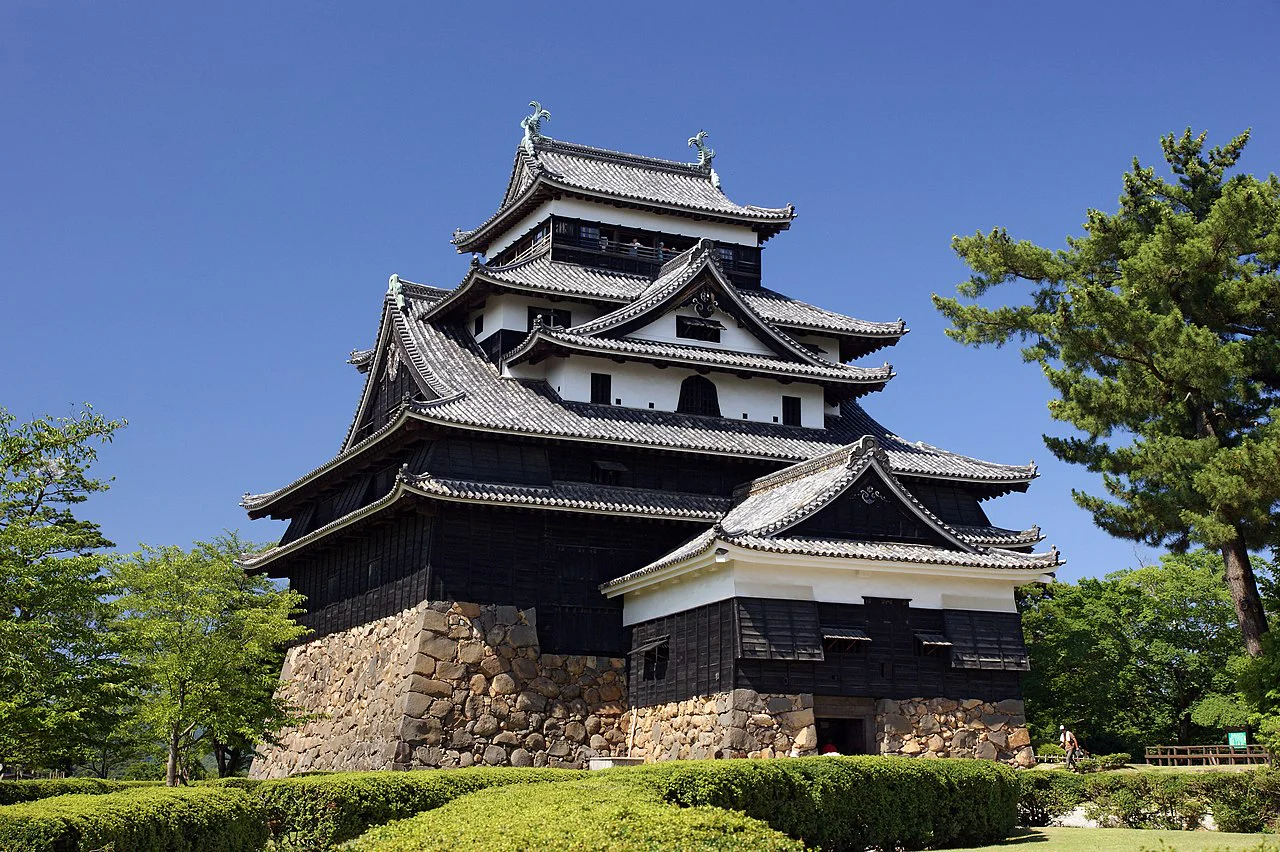
Matsue · 34 km
松江城
Content & sources
Photo: 663highland · CC BY 2.5
Ōda-shi · 40 km
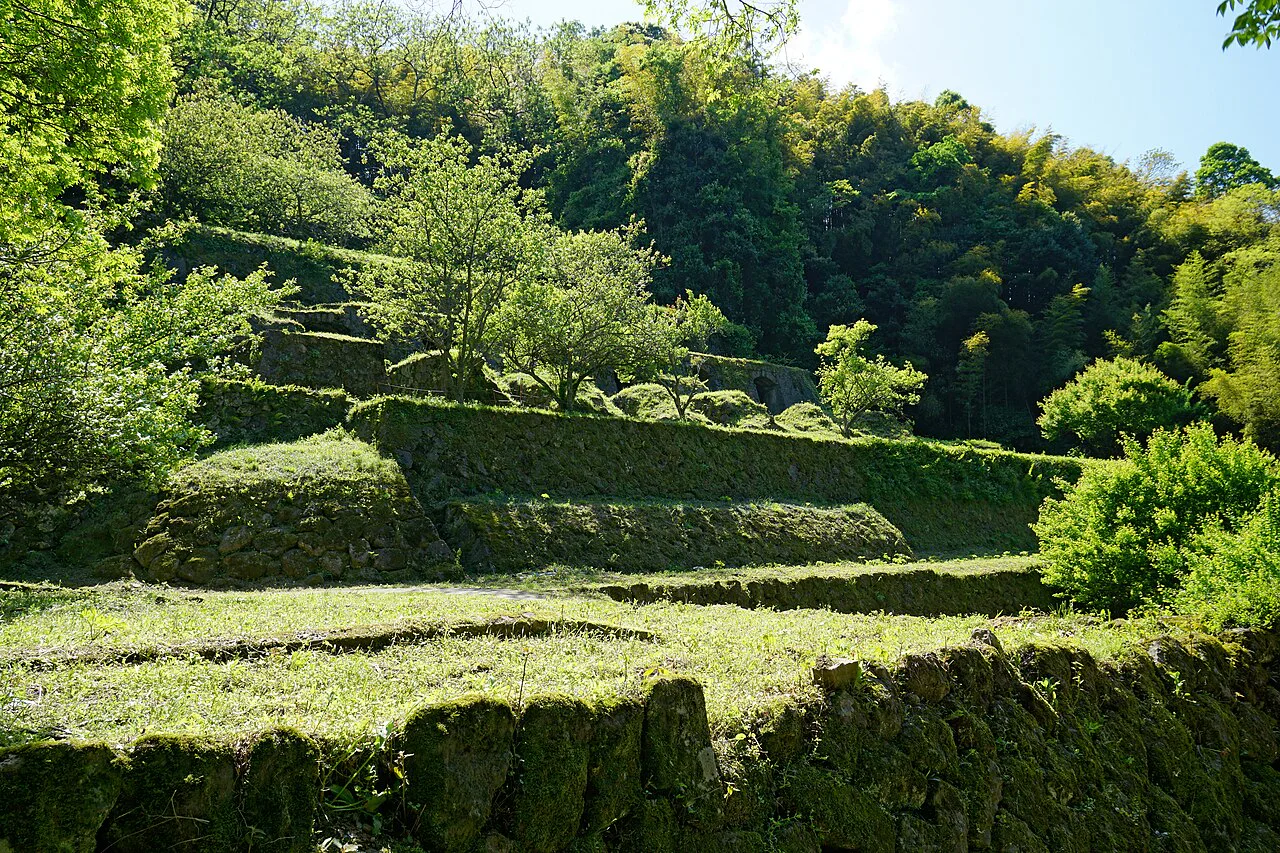
石見銀山
Content & sources
Photo: 663highland · CC BY-SA 4.0
Hatsukaichi · 127 km
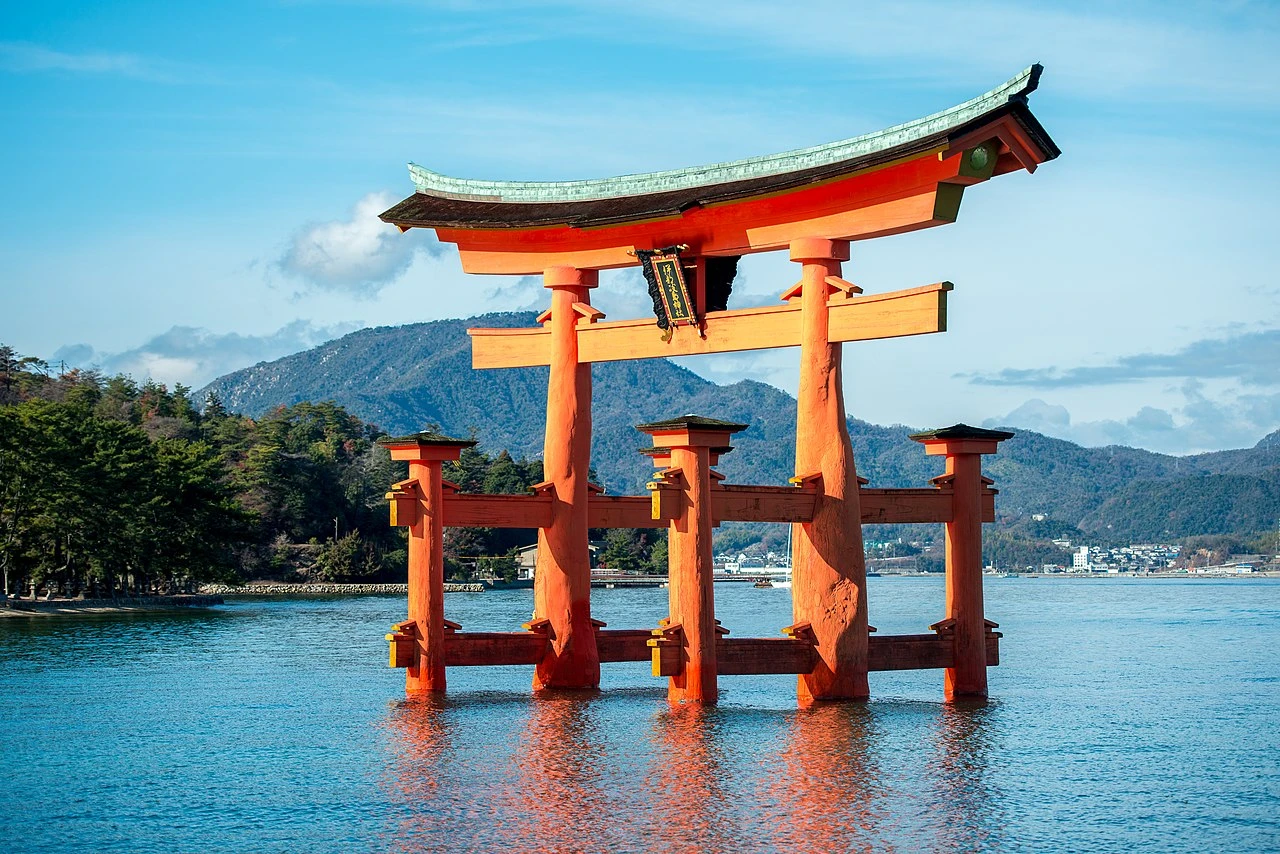
Itsukushima Shrine
Content & sources
Photo: JordyMeow · CC BY-SA 3.0
Himeji
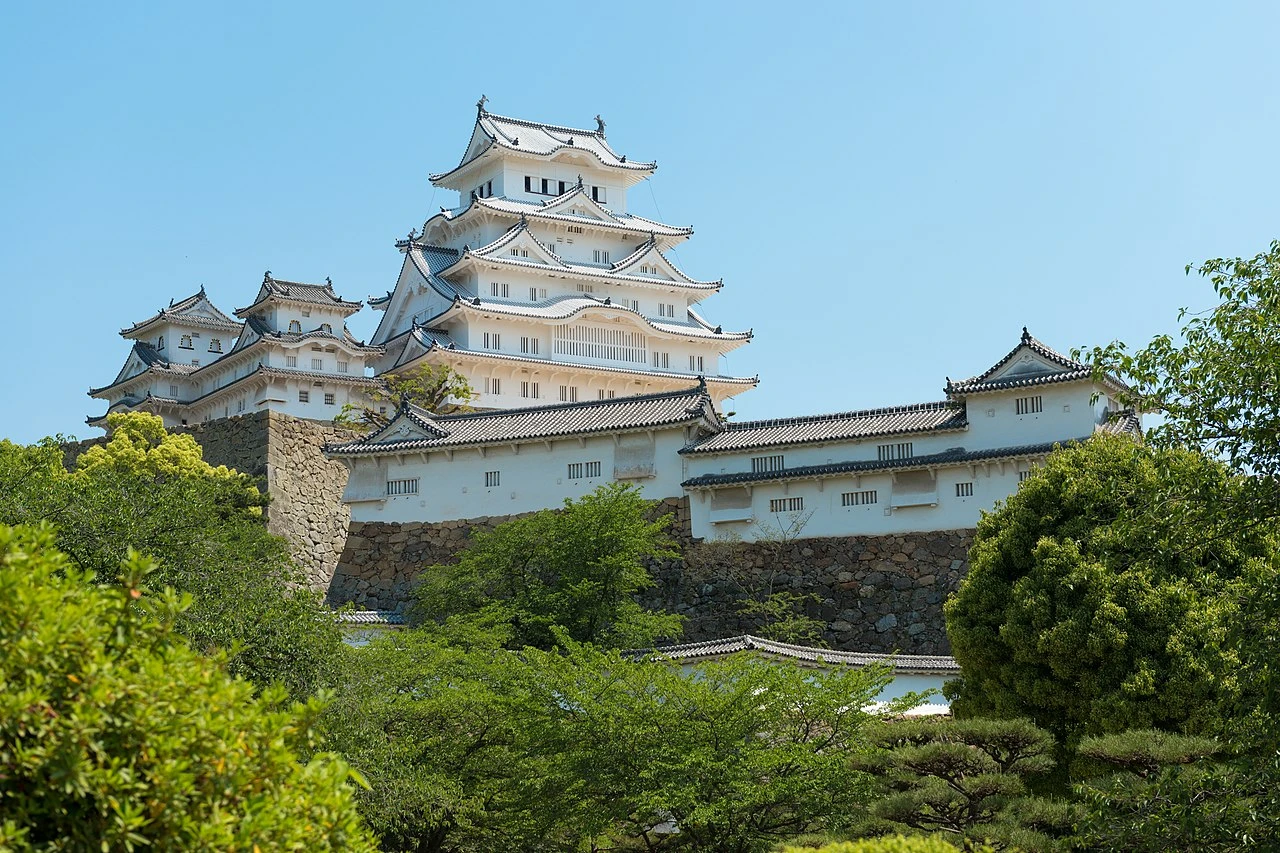
Himeji Castle
Content & sources
Niko Kitsakis · CC BY-SA 4.0